If you have spent twenty minutes staring at the same sentence, your brain likely checked out several paragraphs ago. At SuperKnowva, we know that mastering your material is only half the challenge; the other half is managing your energy. To keep your mind sharp, you have to prioritize the effective study break.
Rest isn't a reward for finishing your work; it’s the fuel that allows you to do the work in the first place. Let’s look at how to turn your downtime into a high-performance tool.
The Science of Why You’re Zoning Out
Why does focus decline after an hour? It is not a lack of willpower; it is biology. Researchers call it "vigilance decrement." The prefrontal cortex, the part of your brain that handles logic and focus, functions like a battery. It is powerful, but it requires significant energy.
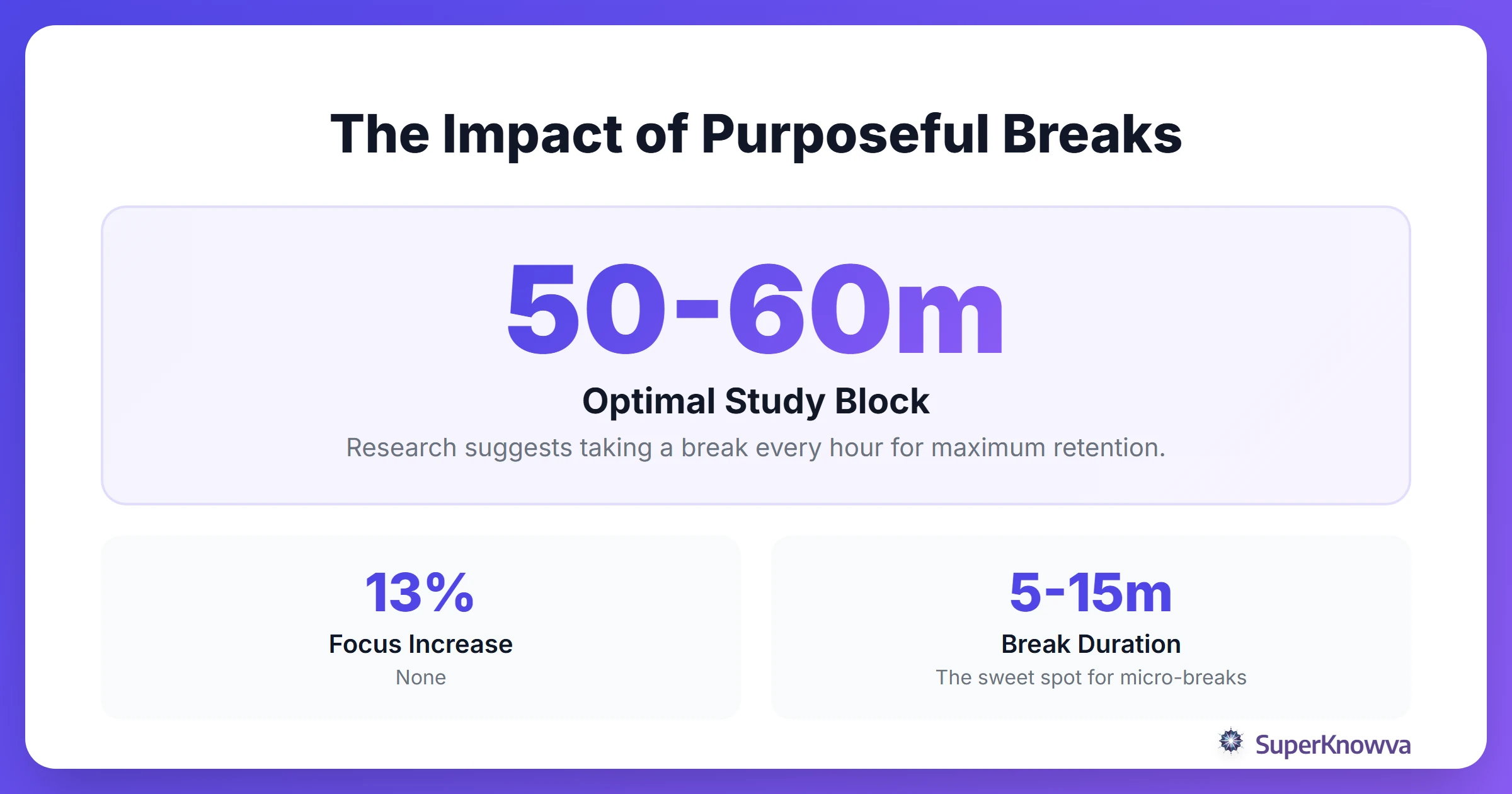
According to Cornell Health, taking purposeful breaks between 5 and 60 minutes is the only way to let that battery recharge. When you step away, your brain isn't just idling. It’s actually busy consolidating what you just learned and clearing out mental clutter so you can start the next round fresh.
By building mindful study intervals into your day, you aren't "wasting time." You’re performing a strategic reset that increases your long-term productivity.
Why Social Media is a "Fake" Break
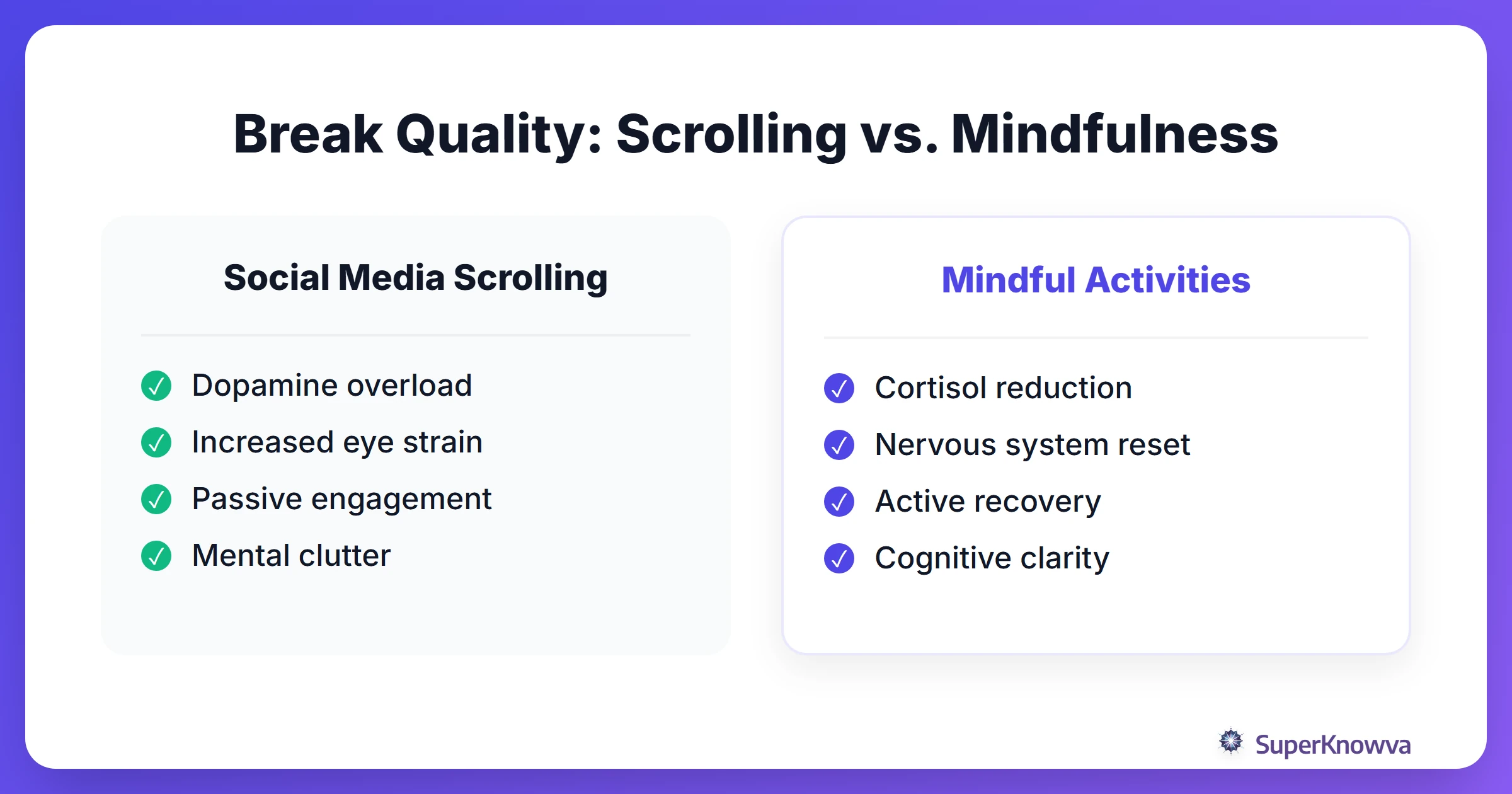
It’s tempting to reward a brutal chemistry session with ten minutes of TikTok. But have you ever noticed that you feel more drained after a scroll session? That’s the dopamine trap. While scrolling feels like you're doing nothing, your brain is actually working overtime to process a rapid-fire stream of images, text, and social cues.
Research from Cornell Health suggests that social media fails as a break because it continues to tax your visual and cognitive systems. You aren't recovering; you're just switching one type of mental strain for another. To truly refresh, you need to move from passive scrolling to active recovery: activities that let your nervous system actually downshift.
The Golden Rule: Break Before You Crash
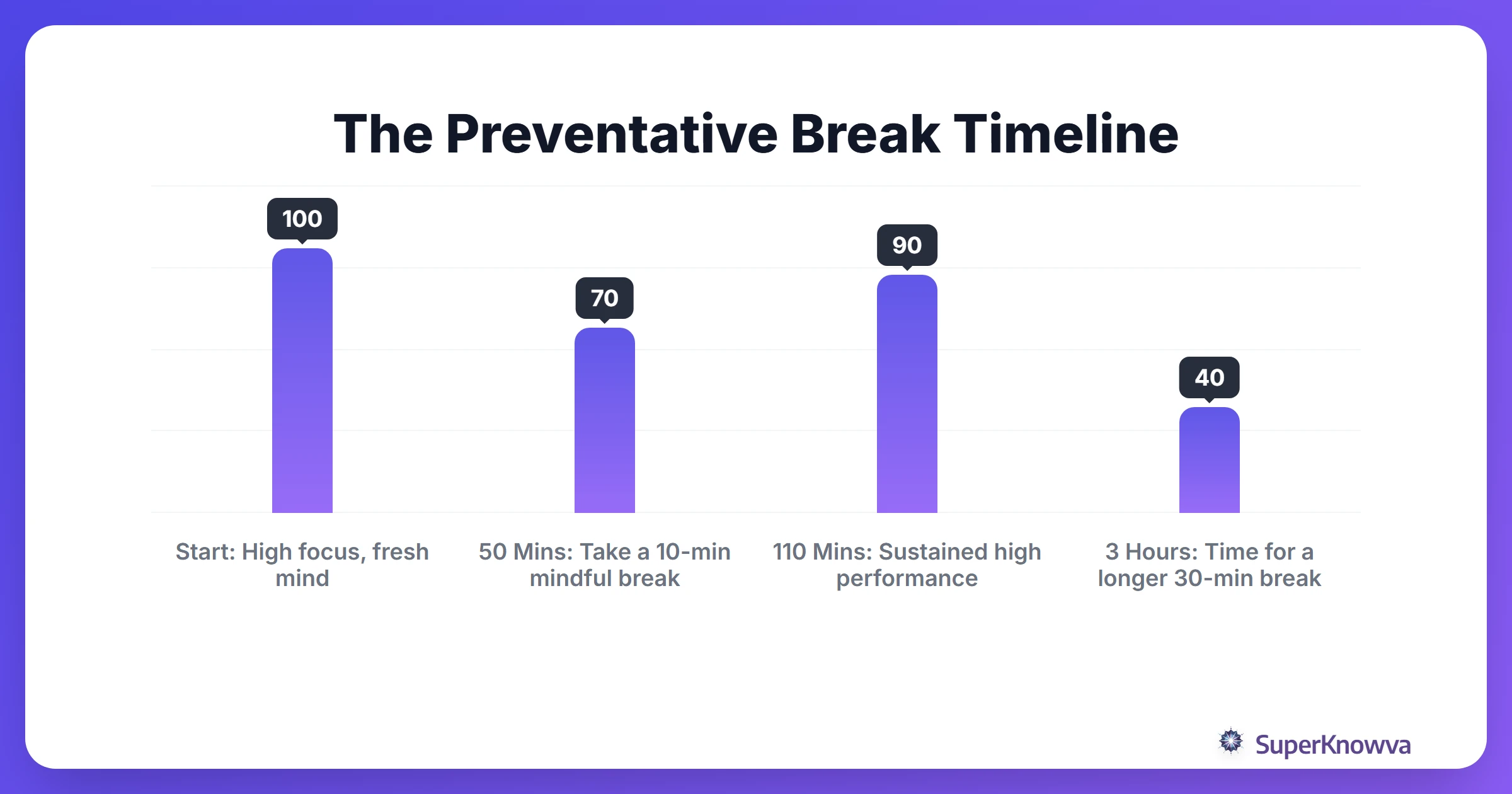
The biggest mistake? Waiting until you’re completely fried to stop. Borrowing from the "I'm Possible" bikeathon philosophy, the smartest strategy is to take your breaks before you think you need them.
The University of Rochester points out that "preventative" breaks help you avoid the massive crash that comes from over-exertion. Learning to step away early is a vital skill in spotting student burnout signs and getting ahead of the curve before finals week hits.
Watch for these "red line" signs:
- You’re re-reading the same line three times.
- You’re suddenly "hungry" (but really just bored or tired).
- You’ve slumped into a total C-shape at your desk.
- The material is making you feel unusually irritable.
Try using a timer to force a break even when you’re "in the zone." It feels counterintuitive, but it ensures you have the stamina to finish the marathon instead of sprinting into a wall.
5-Minute Mindful Micro-Breaks for Instant Focus
You don’t need a full hour to reset. Sometimes, five minutes is plenty to clear the fog. If you want to get serious about this, checking out specific meditation techniques for focus can give you a solid framework to follow.
In the meantime, try these quick concentration boosters:
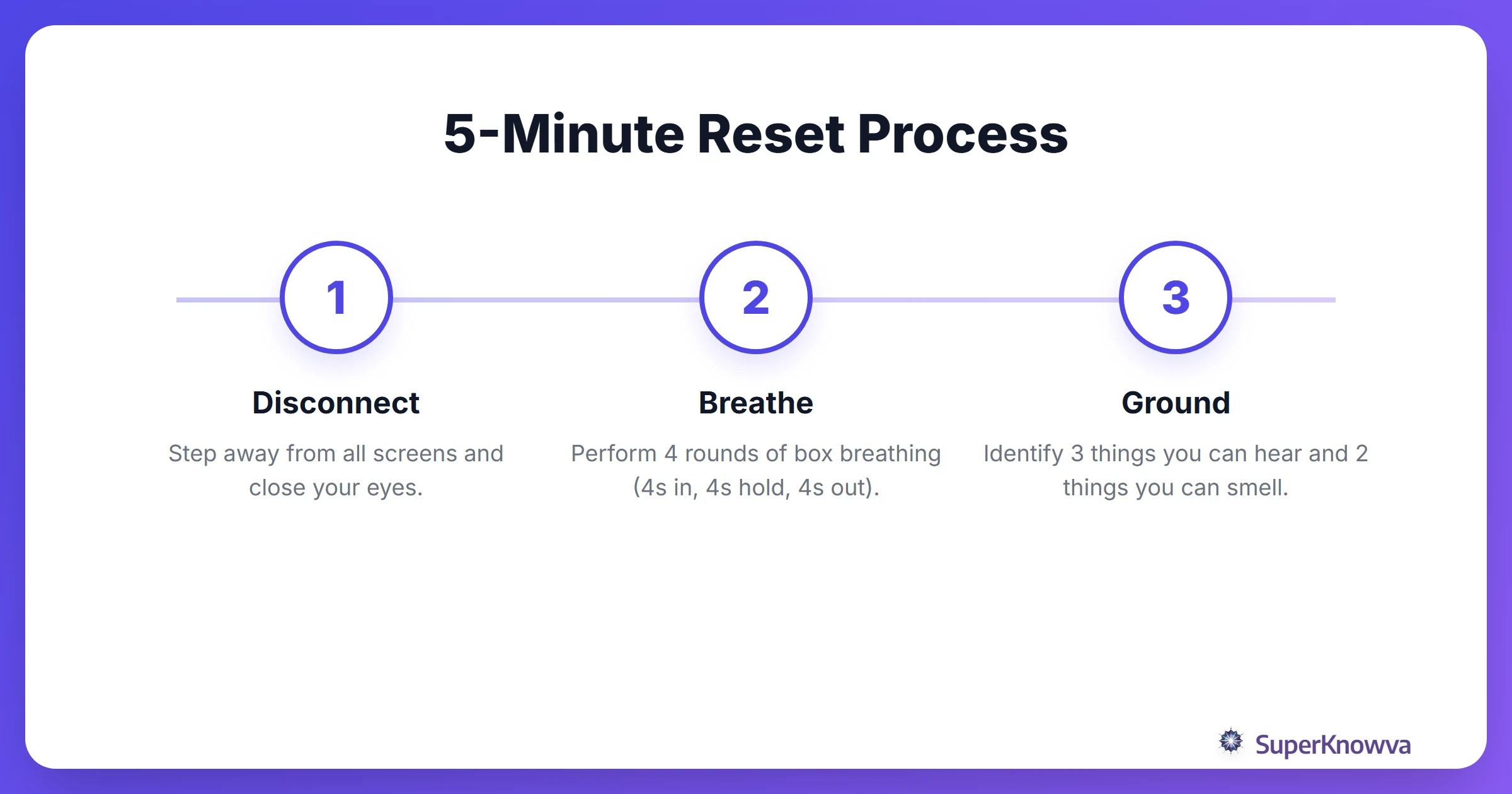
- Box Breathing: Inhale for 4, hold for 4, exhale for 4, hold for 4. It’s a physical "reset" button for your nervous system.
- The 20-20-20 Rule: Every 20 minutes, look at something 20 feet away for 20 seconds. Your eyes will thank you.
- 5-4-3-2-1 Grounding: Name 5 things you see, 4 you can touch, 3 you hear, 2 you smell, and 1 you can taste. This snaps you out of your head and back into the room.
Movement and Nature: The Ultimate Brain Refresh
If you want the best breaks, get moving. Physical activity is a proven way to clear your head, as we cover in our guide on how exercise boosts cognitive function. Even a quick walk around the block can shift your brain chemistry. "NatureRX," or simply spending time outside, is scientifically linked to lower stress and better memory retention.
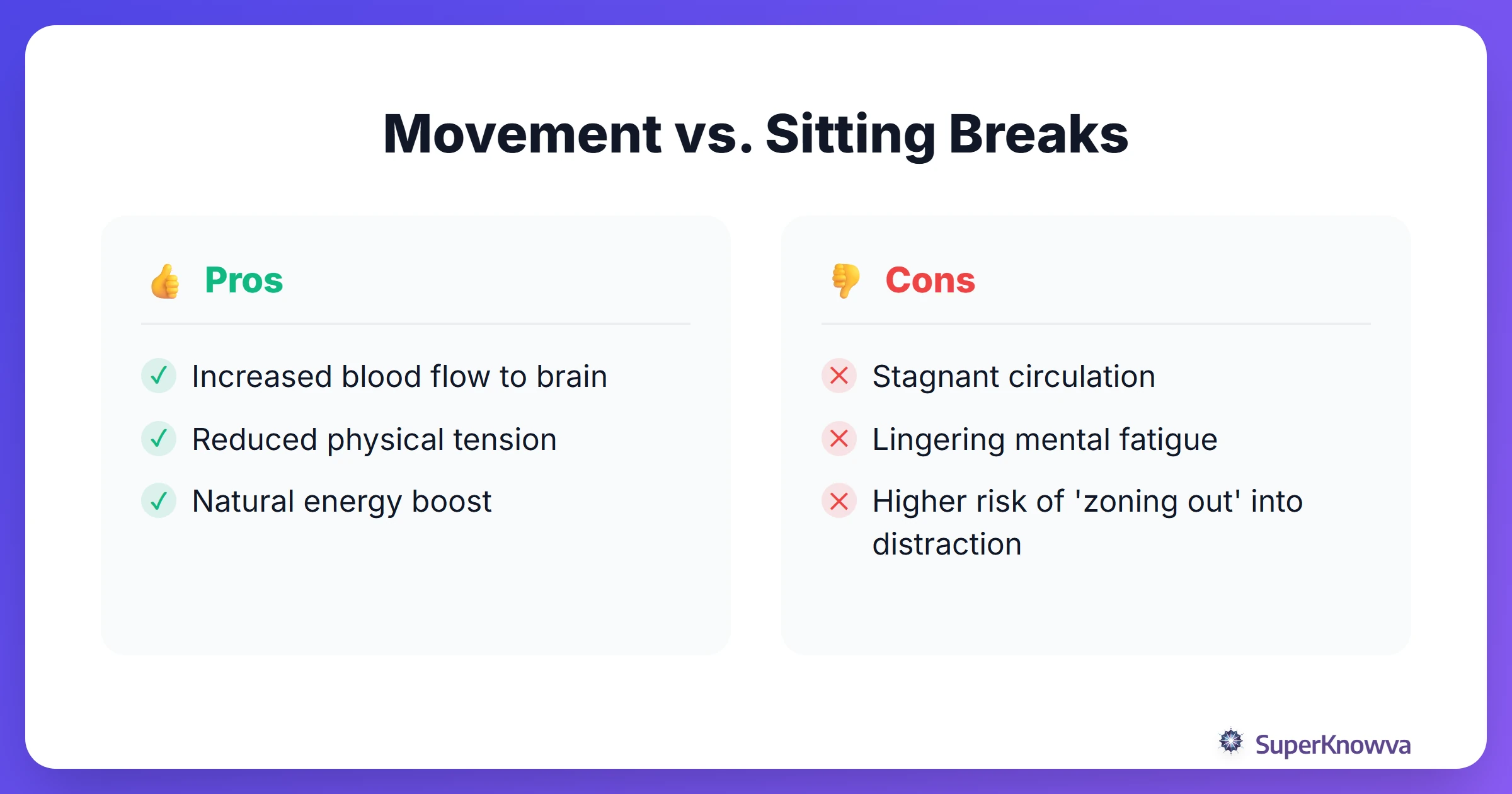
Can’t get outside? Do some basic stretches. Shake out your hands, do a few neck rolls, or try a standing forward fold. Getting blood flowing back to your brain is the fastest way to kill the "afternoon slump."
Creating a "No-Screen" Break Zone
To make purposeful rest work, you need a change of scenery. If you eat, scroll, and study all at the same desk, your brain never feels like it's actually "off duty."
Building these breaks into a consistent winter study routine helps when motivation is low during winter. Try putting together a "break toolkit" near a window or on a different chair. Keep a sketchbook, a physical book, or some healthy snacks there.
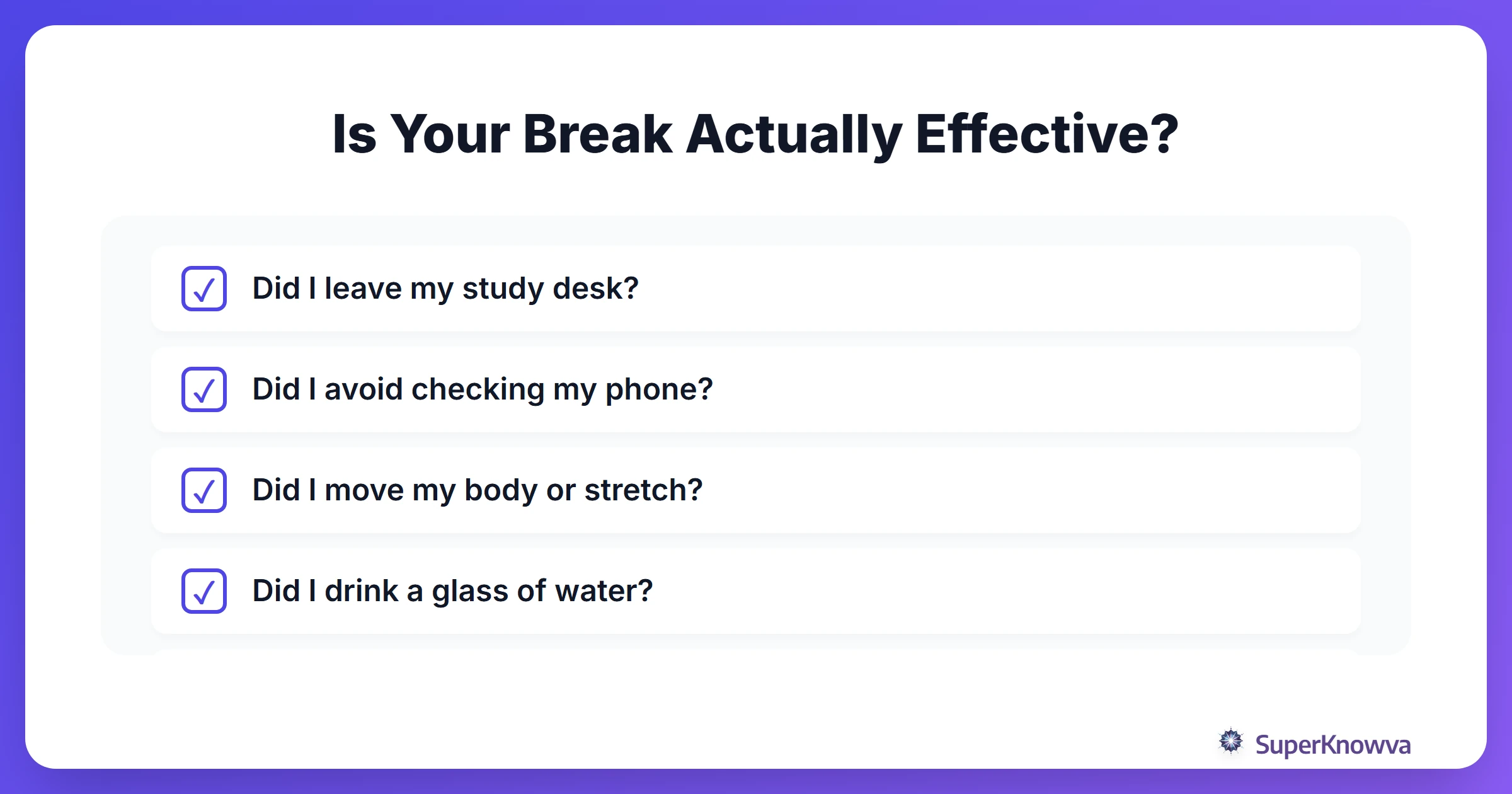
Set boundaries with your roommates or family so your break time is protected. The goal is to return to your desk feeling recharged and ready to go, not just slightly less distracted.
Final Thoughts
Learning to take effective study breaks is essential for preventing study burnout and protecting your student wellness. When you give your brain the purposeful rest it’s asking for, you’ll find that your focus stays steady and even improves. Next time you sit down with SuperKnowva for a study session, remember: the break is just as important as the book.