Does the library feel like a pressure cooker lately? While your friends are posting beach photos or catching up on three months of missed sleep, you’re likely hunched over a desk, staring down the most intimidating exam of your life: the MCAT.
The pressure is heavy. The volume of material is immense, and the stakes are high. A top-tier score is not just about the hours you spend studying. It is about the quality of your focus. Incorporating mindfulness for pre med students is not a wellness trend. It is a strategy backed by science.
Let's look at how you can weave mindfulness into your summer routine to kill the anxiety and actually remember what you're studying.
The Summer Pre-Med Grind: Why Stress is Your Biggest Obstacle
The summer grind is a demanding period for medical school hopefuls. Between MCAT prep, shadowing hours, and prerequisite courses, your brain can become overwhelmed. This chronic stress triggers a "fight or flight" response, which is the opposite of what you need for deep learning.
When your nervous system is stuck on high alert, your prefrontal cortex (the part of your brain that handles complex logic and memory) starts to shut down. It’s hard to memorize the Krebs cycle when your brain thinks it's running from a predator. That’s why it’s so important to recognize student burnout signs and recovery strategies before the pressure becomes a wall you can't climb. Mental wellness isn't a distraction from your studies; it’s the foundation that keeps you from hitting a breaking point by July.
The Science of Zen: How Mindfulness Protects Your Brain
Mindfulness isn't about "clearing your mind" or thinking about nothing. It’s about staying present without judging yourself for every stray thought. A recent study published in BMC Medical Education Study on Mindfulness highlights how effective these programs are for pre-clinical students, showing a massive drop in psychological distress.
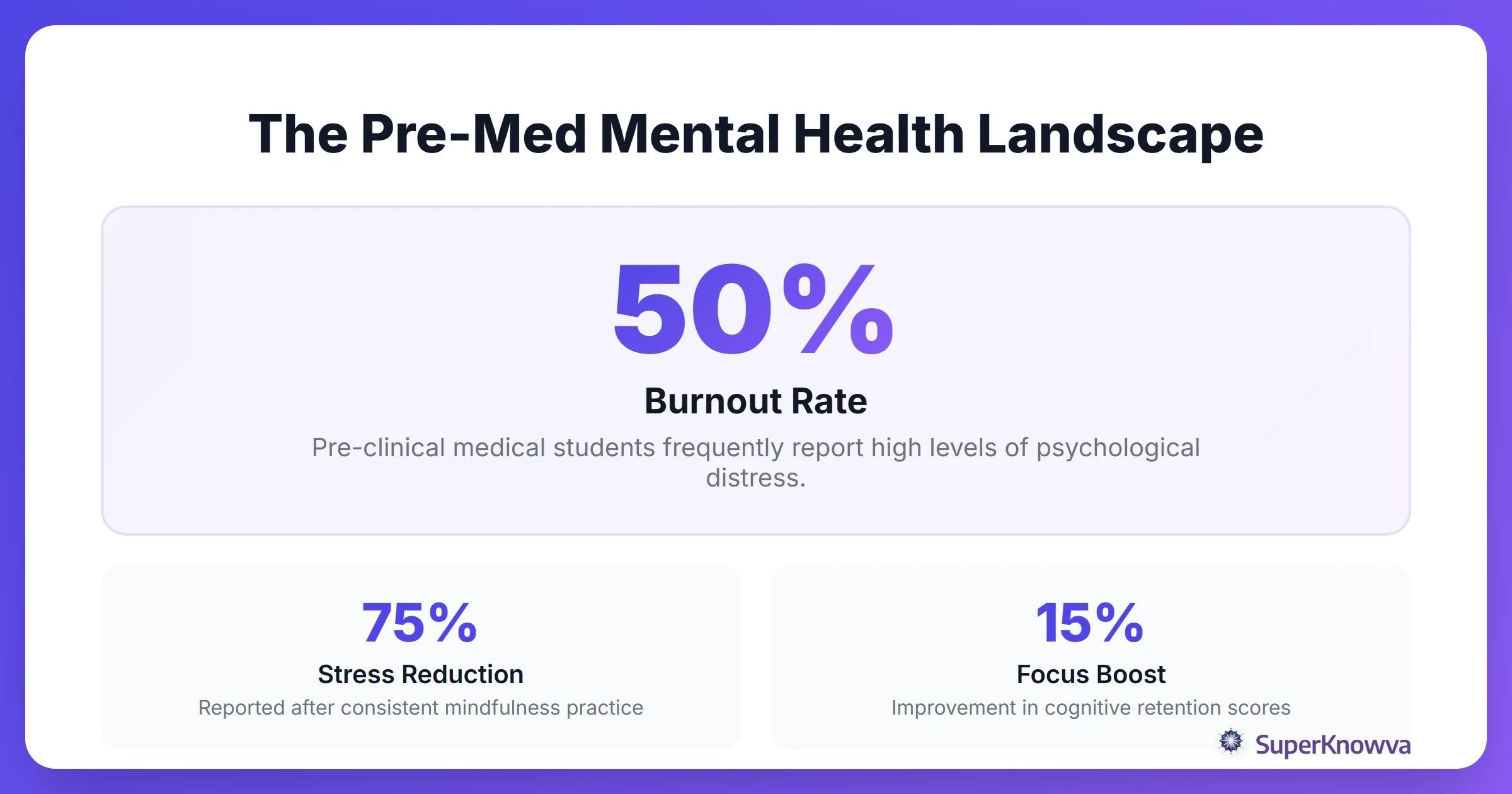
Meditation actually changes your brain's physical structure. Regular practice can increase gray matter in the hippocampus (your memory center) and shrink the amygdala (your stress center). By training yourself to stay in the moment, you’re essentially "bulletproofing" your mind, ensuring you show up to test day sharp and resilient rather than fried.
Micro-Meditations: 5-Minute Fixes for Long Study Days
You don't need to sit on a cushion for an hour to see a difference. Using quick meditation techniques for focus can completely shift your productivity during those marathon library sessions.
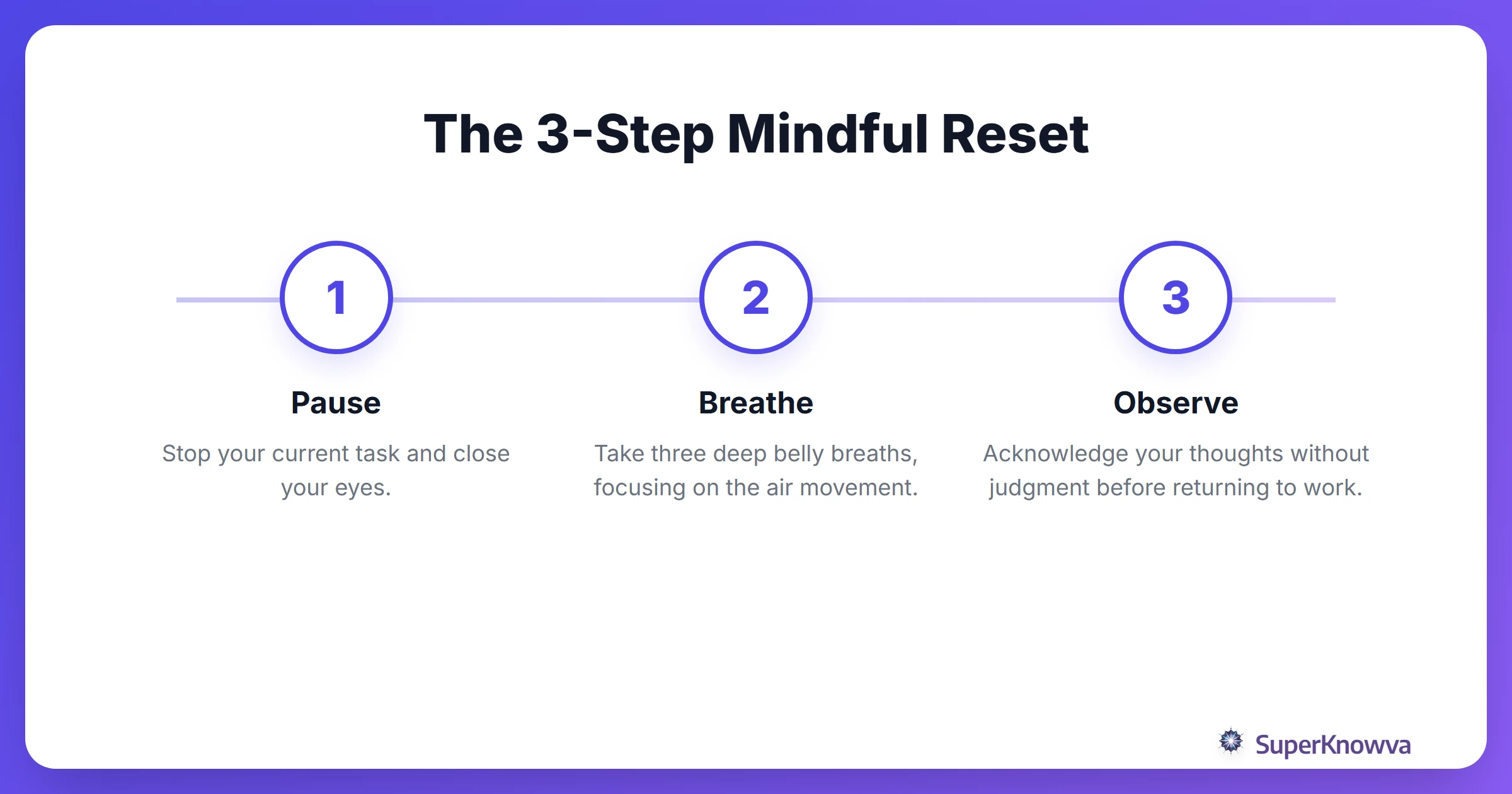
Try the "Stop, Breathe, Observe" method when you feel your focus slipping:
- Stop: Whatever you’re doing, just pause. Hands off the keyboard.
- Breathe: Take three slow, deep breaths. Feel your lungs actually expand.
- Observe: Check in with yourself. Are your shoulders up to your ears? Is your mind racing? Just notice it without trying to fix it immediately.
Sensory grounding, like naming five things you can see or four things you can touch, can also pull you out of an anxiety spiral when a practice passage goes sideways.
Breathwork for the MCAT: Staying Calm Under Pressure
The MCAT is a test of endurance. When you encounter a difficult CARS passage or a confusing Bio/Biochem prompt and your mind goes blank, breathwork can help you regain focus.
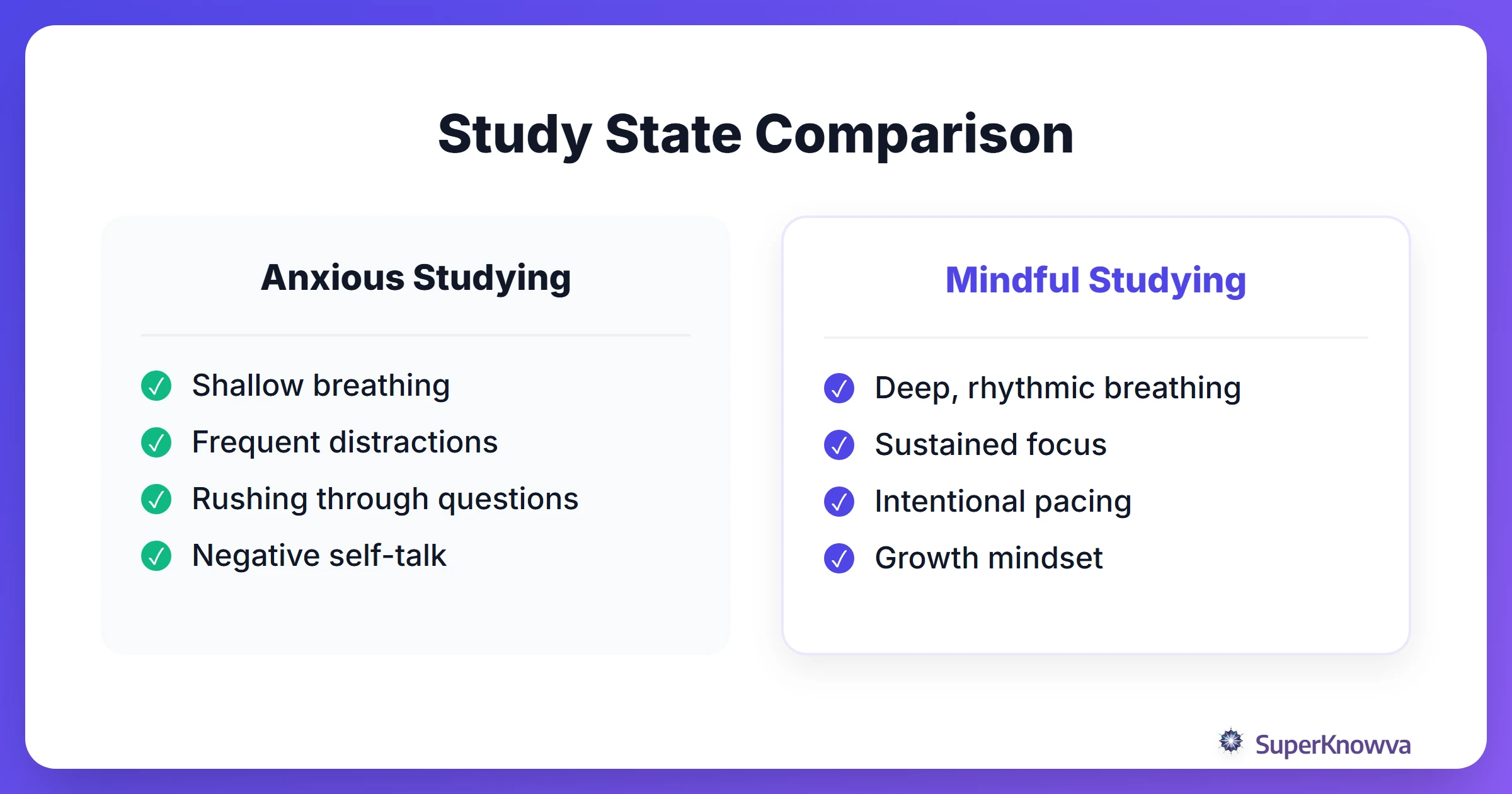
Box Breathing is used by Navy SEALs and elite athletes to stay cool under pressure. Inhale for four seconds, hold for four, exhale for four, and hold for four. According to Harvard Health, mindfulness meditation is a proven way to lower mental stress in high-stakes environments. If you practice this during your weekly full-length exams, it becomes muscle memory. When the real clock starts ticking, you’ll know exactly how to keep your heart rate down.
Fueling Focus: Mindful Eating and Movement
Your brain is a high-performance organ, and it needs high-performance fuel. Fueling your brain with the best diet for studying is a massive part of the puzzle. The classic "pre-med diet" of cold coffee and vending machine snacks is a recipe for a mid-afternoon crash and major jitters.
Don't forget to move, either. Even a 20-minute walk around the block can reset your mood and get blood flowing back to your brain. When you prioritize sleep, nutrition, and movement, you’re creating the biological conditions your brain needs to actually retain information.
Silencing the ‘Imposter’ Voice
The pre-med path is famously competitive, and it’s easy to feel like you don't belong. Many students face imposter syndrome in academia, especially when you’re scrolling through "perfect" study vlogs or hearing peers brag about their practice scores.
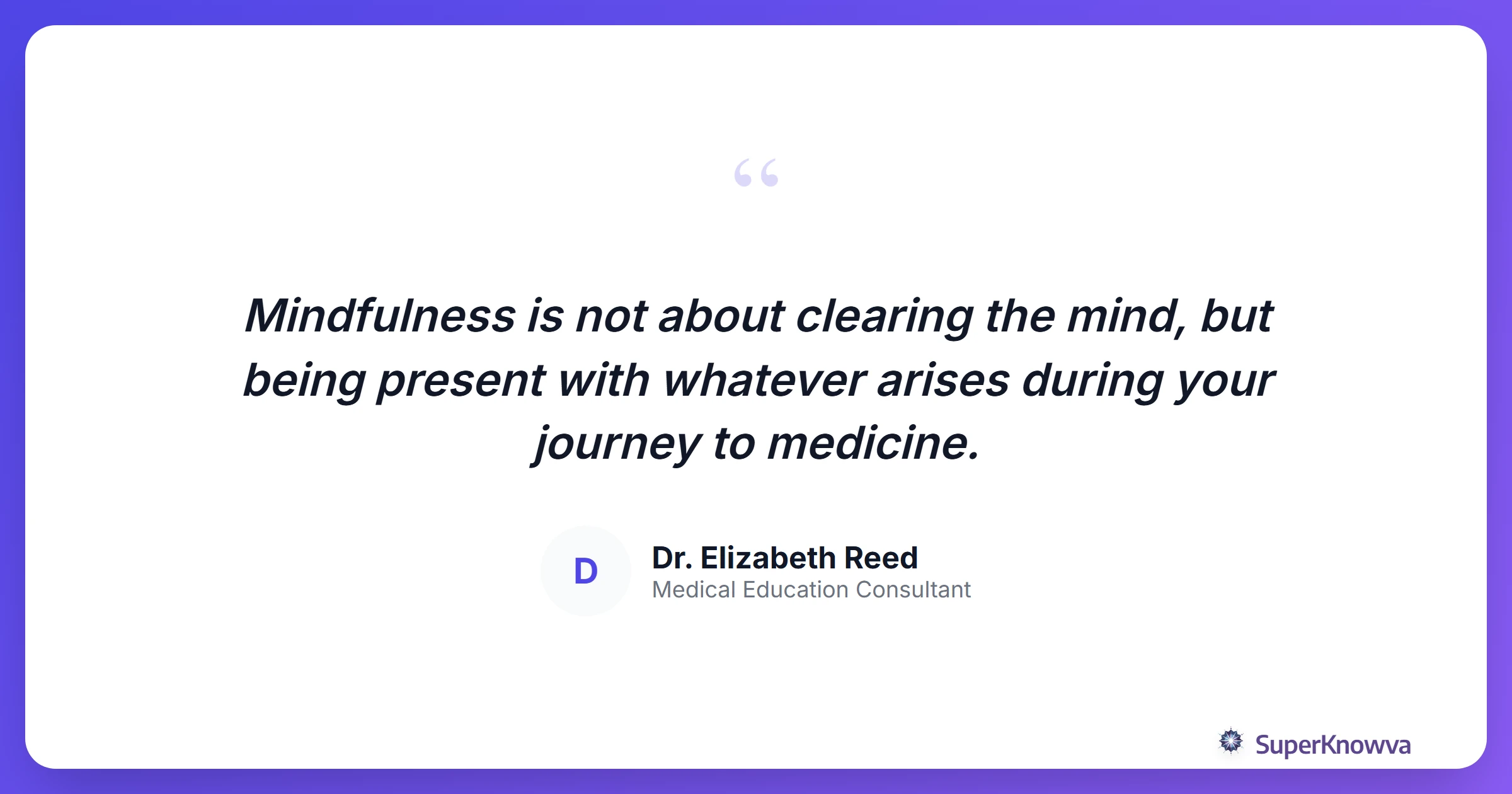
Mindfulness helps you observe that "imposter voice" without actually believing what it says. When you miss a question, don't let it turn into a narrative about why you won't get into med school. Treat it as a data point. Use a little self-compassion to reframe the mistake as a necessary step toward growth. Resilience is what separates the students who burn out from the ones who thrive.
Designing a Sustainable Summer Routine
Success on the MCAT is a marathon, not a sprint. If you try to sprint the whole way, you’ll collapse before the finish line. A sustainable 8-week plan means scheduling your "off" time with as much discipline as your study hours.
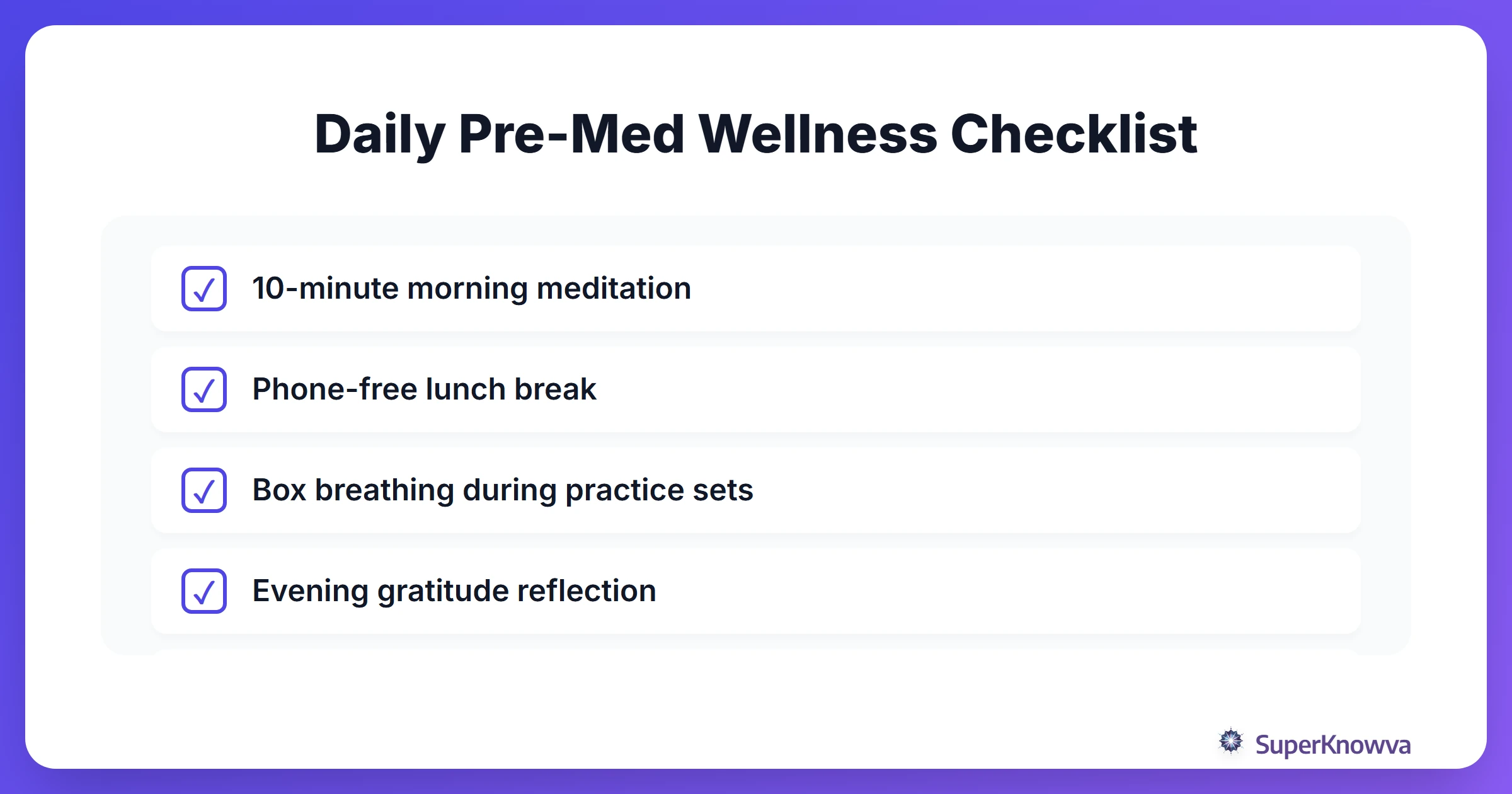
Set hard boundaries. If you decide to stop at 7:00 PM, actually stop. Close the laptop, put the books away, and do something that has nothing to do with medicine. This prevents the late-summer fatigue that ruins so many promising scores.
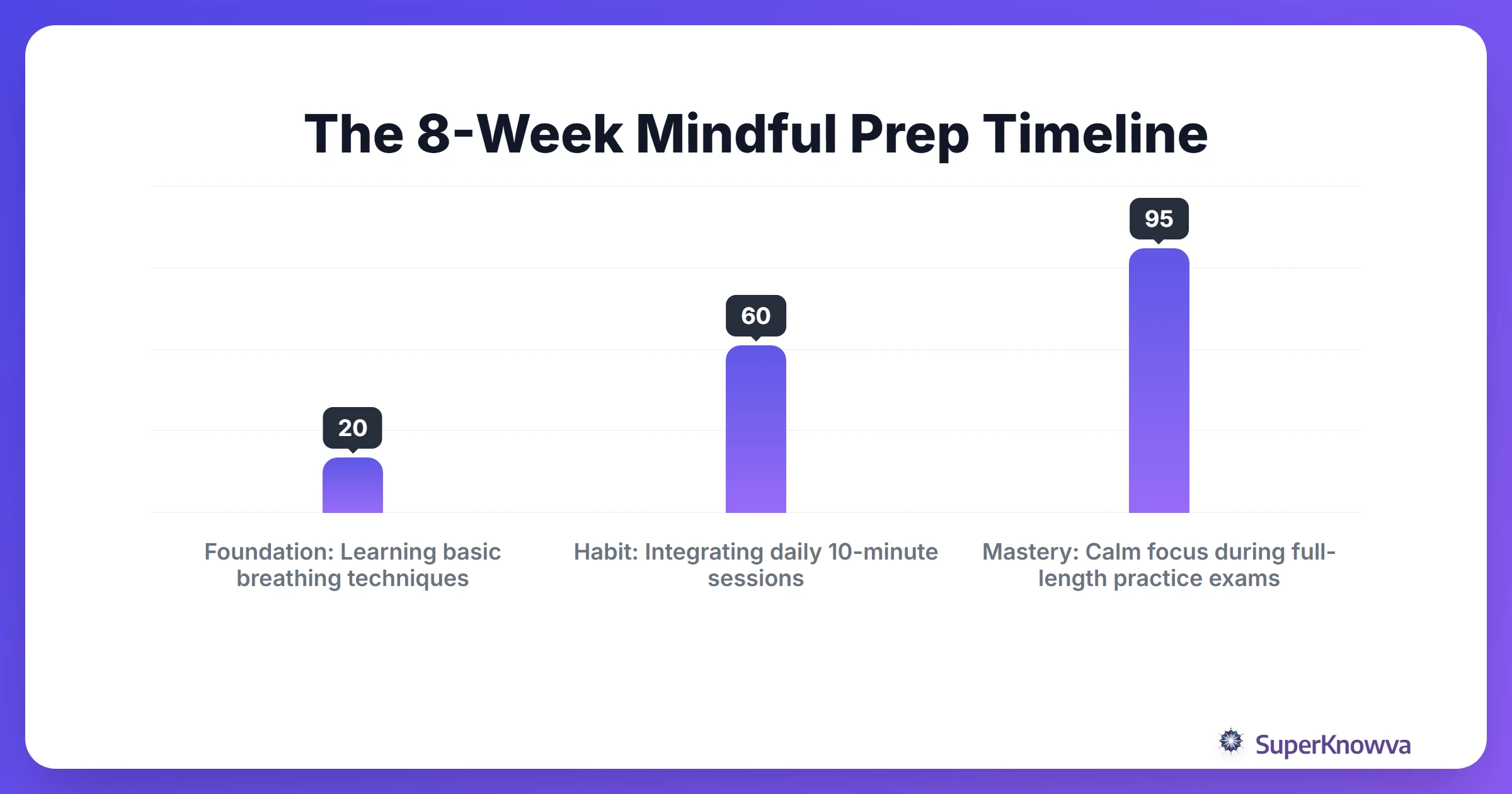
By integrating these practices, you aren’t just prepping for a test. You’re building the emotional intelligence and stress-management skills you’ll need as a physician. Stay present, keep breathing, and remember: you are much more than your score.