You’ve finally done it. The cap has been tossed, the diploma is framed, and those grueling nights in the library are officially a memory. But as you trade the classroom for the boardroom, you might notice something lingering: a heavy, invisible digital weight. After years of being tethered to Canvas, endless research tabs, and 3:00 AM group project pings, your brain is likely fried.
A digital detox after graduation is more than a trend. It is the essential "reset button" you need before your career begins. Reclaim your attention span, boost your post-graduation wellness, and start your professional life with a clear head rather than a cluttered inbox.
Why Graduation is the Perfect Moment for a Digital Reset
Let’s be honest: the modern student experience is an "always-on" marathon. Whether you were refreshing grades at midnight or fielding Discord notifications from classmates, the line between your life and your studies probably vanished long ago. This constant connectivity is a massive contributor to signs of student burnout, leaving many new grads feeling exhausted before they even attend their first orientation.
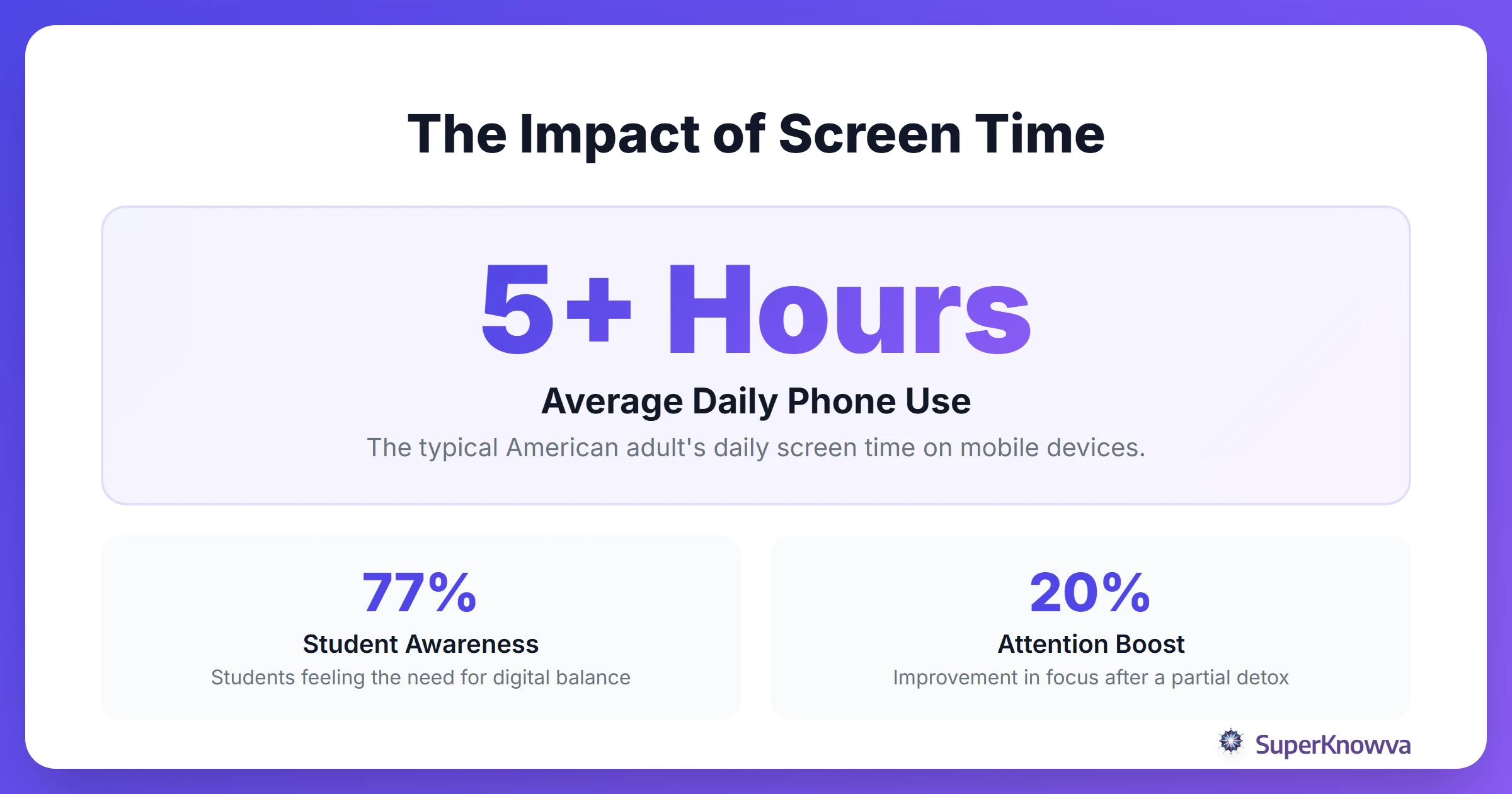
Graduation offers a rare "liminal space," a brief window where you are no longer a student but not yet a full-time professional. By choosing to reduce screen time after college, you give your nervous system a chance to recover from post-exam fatigue. This is the time to decide how technology fits into your life so your devices work for you instead of the other way around.
Assessing Your Digital Dependency: The Post-Grad Audit
Before you can fix the problem, you have to see it. Most of us reach for our phones reflexively, like a nervous habit. Have you ever felt a "phantom vibration" in your pocket, only to realize your phone was on the table across the room? That’s digital anxiety in action.
To run your own post-grad audit, try these three steps:
- Check the Numbers: Open your Screen Time (iOS) or Digital Wellbeing (Android) settings. Which apps are your biggest "time-sinks"? Are they making you happy, or just keeping you busy?
- Spot the Escapism: Be honest: are you using your phone for "productive" tasks like checking job offers, or are you scrolling TikTok to avoid thinking about the future?
- Understand the Science: Research from Georgetown University on the benefits of reduced screen time shows that cutting back doesn't just save time; it immediately improves your sleep and helps you focus on a single task again.
The 30-Day Post-Grad Digital Detox Roadmap
You can't undo four years of digital saturation in a single weekend. A real reset takes time. Following a structured 30-day digital detox challenge helps you break those deep-seated habits without feeling totally isolated. As Regis University suggests, a full month is the "sweet spot" for rewiring your brain.
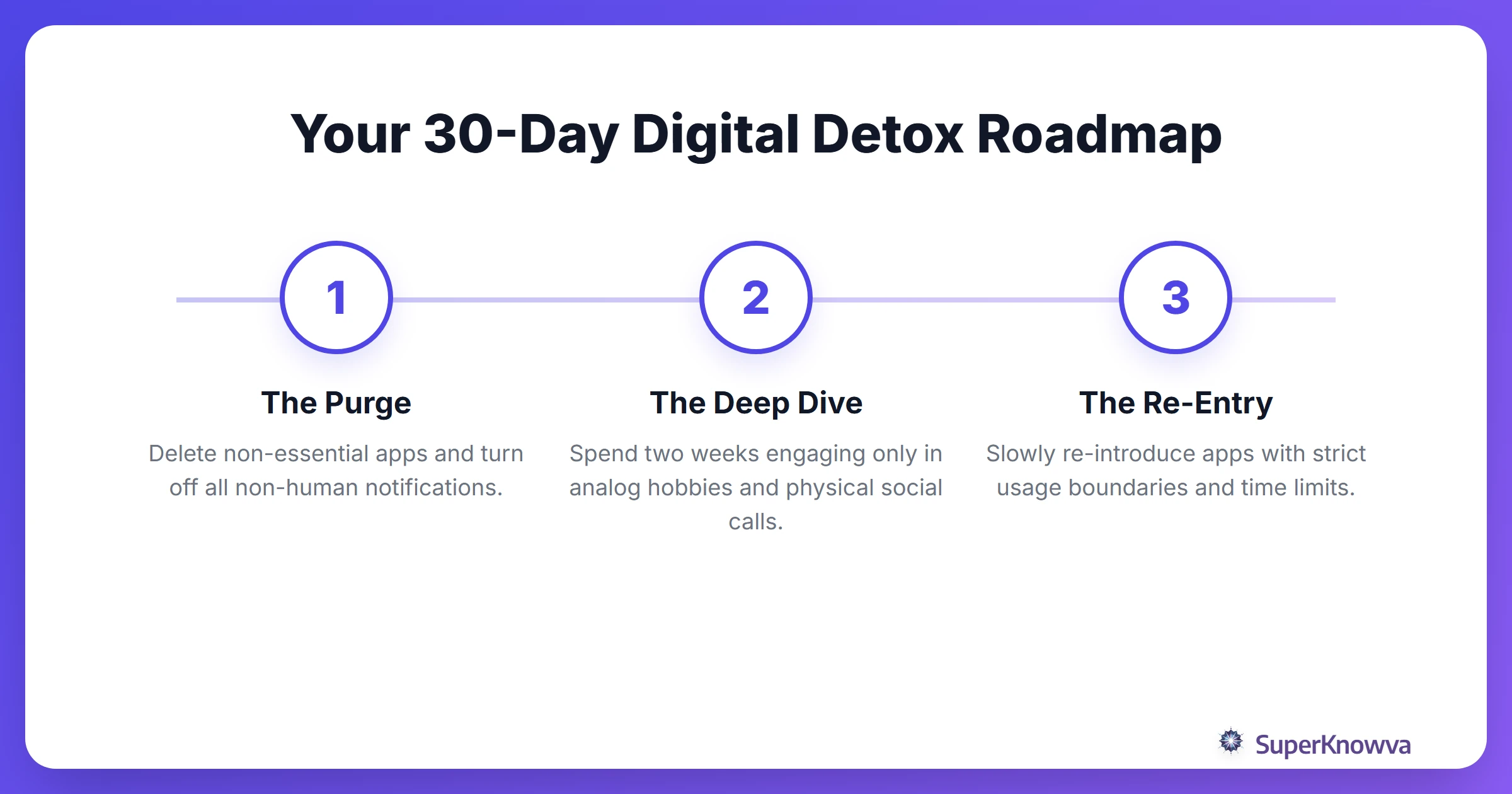
- Phase 1 (Days 1-7): The Notification Purge. Delete filler apps such as games you don't play, shopping apps that tempt you, and anything that sends non-essential pings. If it isn't a message from a person, you don't need a notification.
- Phase 2 (Days 8-21): Re-engaging with the Real World. Focus on analog life. Call a friend or meet for coffee instead of sending a DM.
- Phase 3 (Days 22-30): Intentional Re-introduction. Restore the tools you need for work, but set strict boundaries. Use app timers and keep your home screen minimalist.
Grab a "detox buddy," such as a fellow grad who is also feeling the burnout, to keep you honest during this month of focusing on mental health for graduates.
Practical Strategies to Reduce Screen Time Immediately
You don’t have to wait for a 30-day window to start feeling better. You can grab some "quick wins" right now to lower those constant dopamine hits.
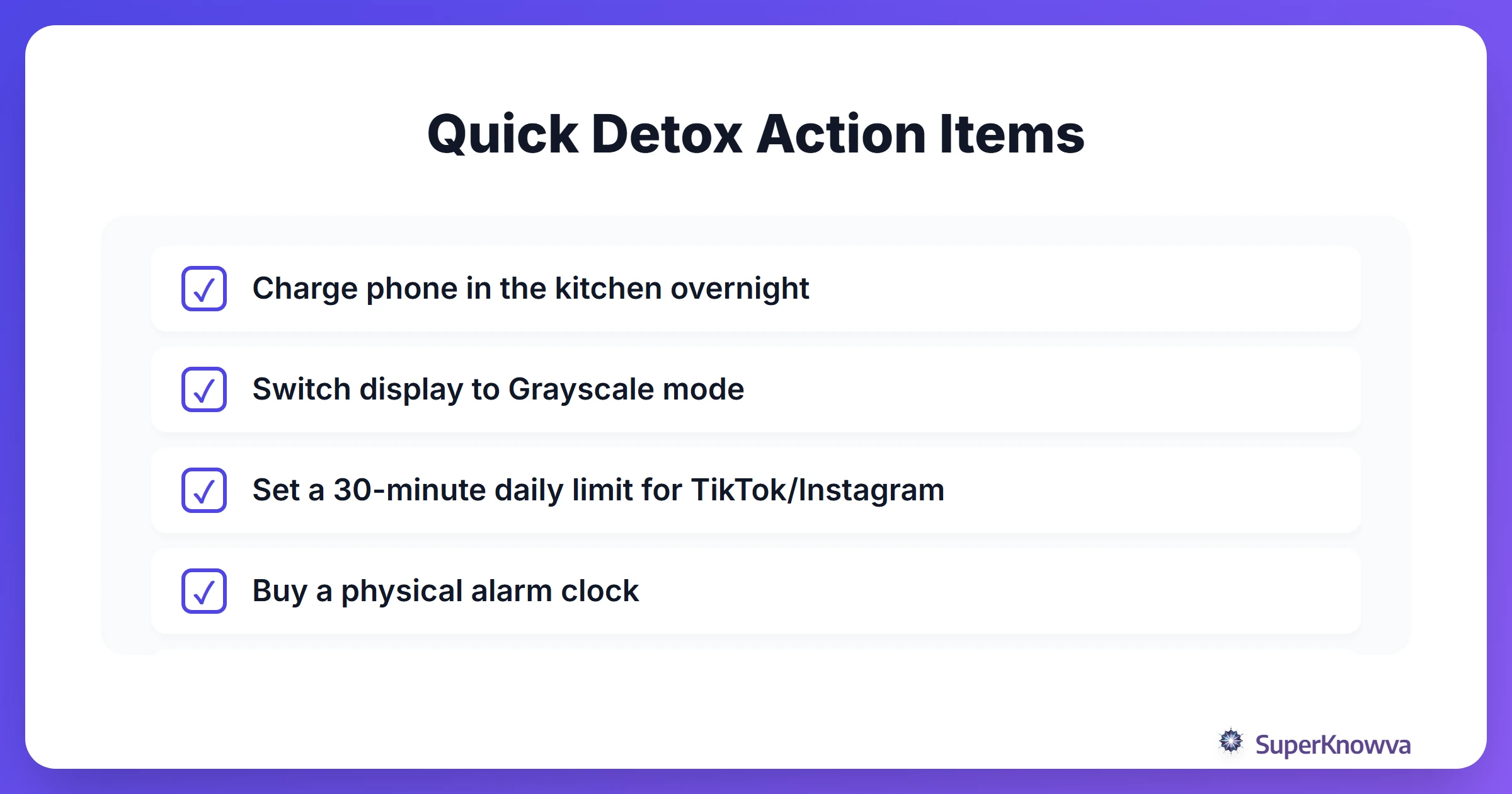
- Banish the Phone from the Bedroom: Charge your phone in the kitchen. This prevents the "revenge bedtime scrolling" that ruins your sleep and ensures your first thought in the morning isn't an email notification.
- Go Grayscale: It sounds simple, but removing the bright, enticing colors from your screen makes your phone feel like a tool rather than a toy. It’s much harder to get sucked into a feed when it’s all in black and white.
- The Tactile Switch: Swap your digital calendar for a paper planner and your Kindle for a physical book. The weight and feel of paper help ground you in the present moment.
Reclaiming Your Focus: What to Do With Your New Free Time
Once you clear the digital clutter, you’ll suddenly realize how much time you actually have. Use that extra space for cognitive recovery. Pairing your detox with mindfulness and meditation can drastically speed up your mental clarity.
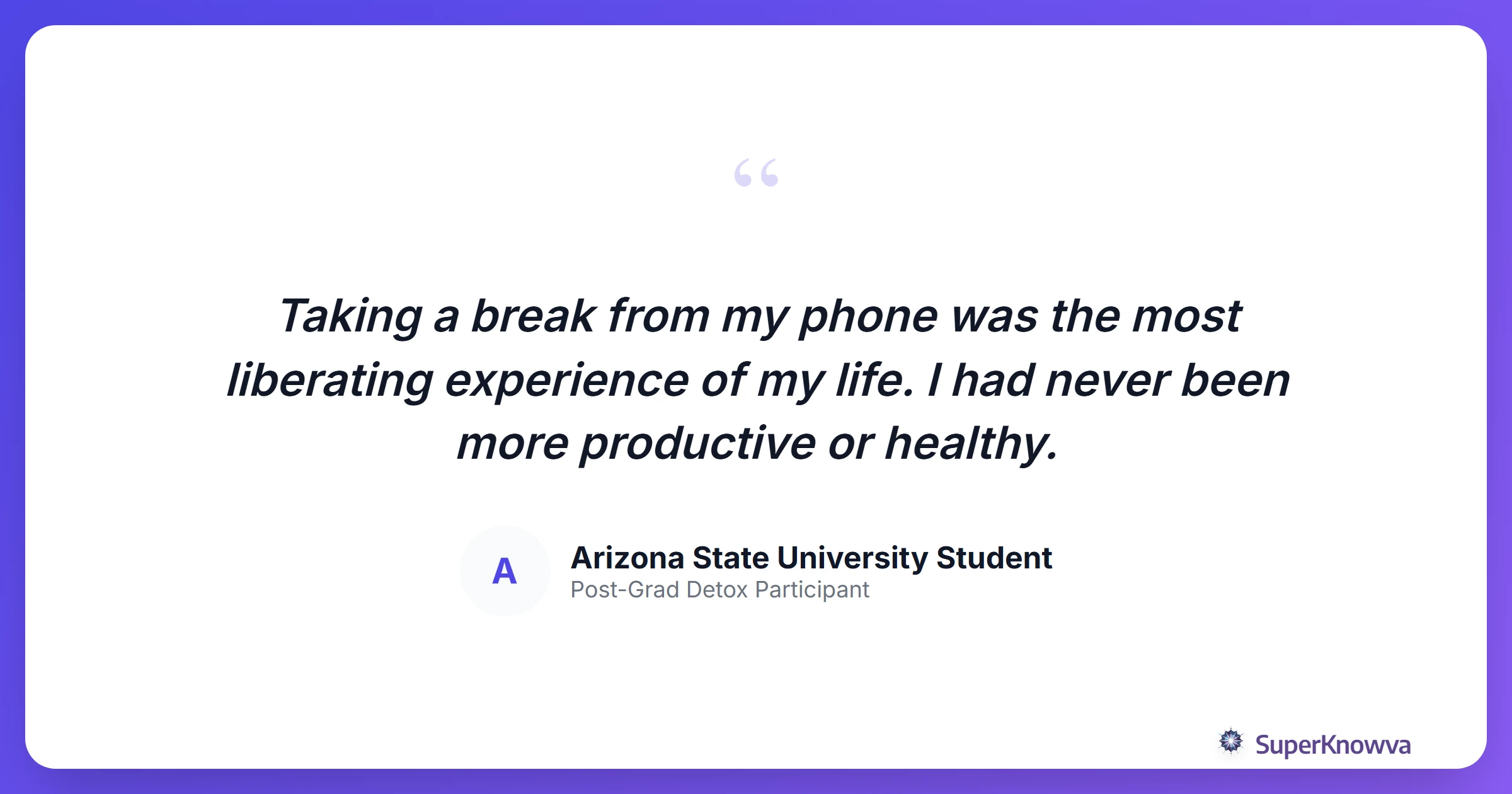
Replacing screen time with physical activity is a proven way to improve focus before you start the workday. Whether it’s hiking, hitting the gym, or walking through the park without headphones, movement helps process the stress of the last four years. Rediscover hobbies that don't involve a screen, such as painting, cooking, or playing an instrument, and prioritize face-to-face hangouts to build your real-world network.
Building Sustainable Tech Habits for Your New Career
The goal of a social media detox for students isn't to live in the woods and never use a computer again. It’s about entering the workforce with better boundaries. In entry-level roles, "availability creep," the feeling that you have to answer Slack messages at 9:00 PM, can lead to burnout faster than you think.
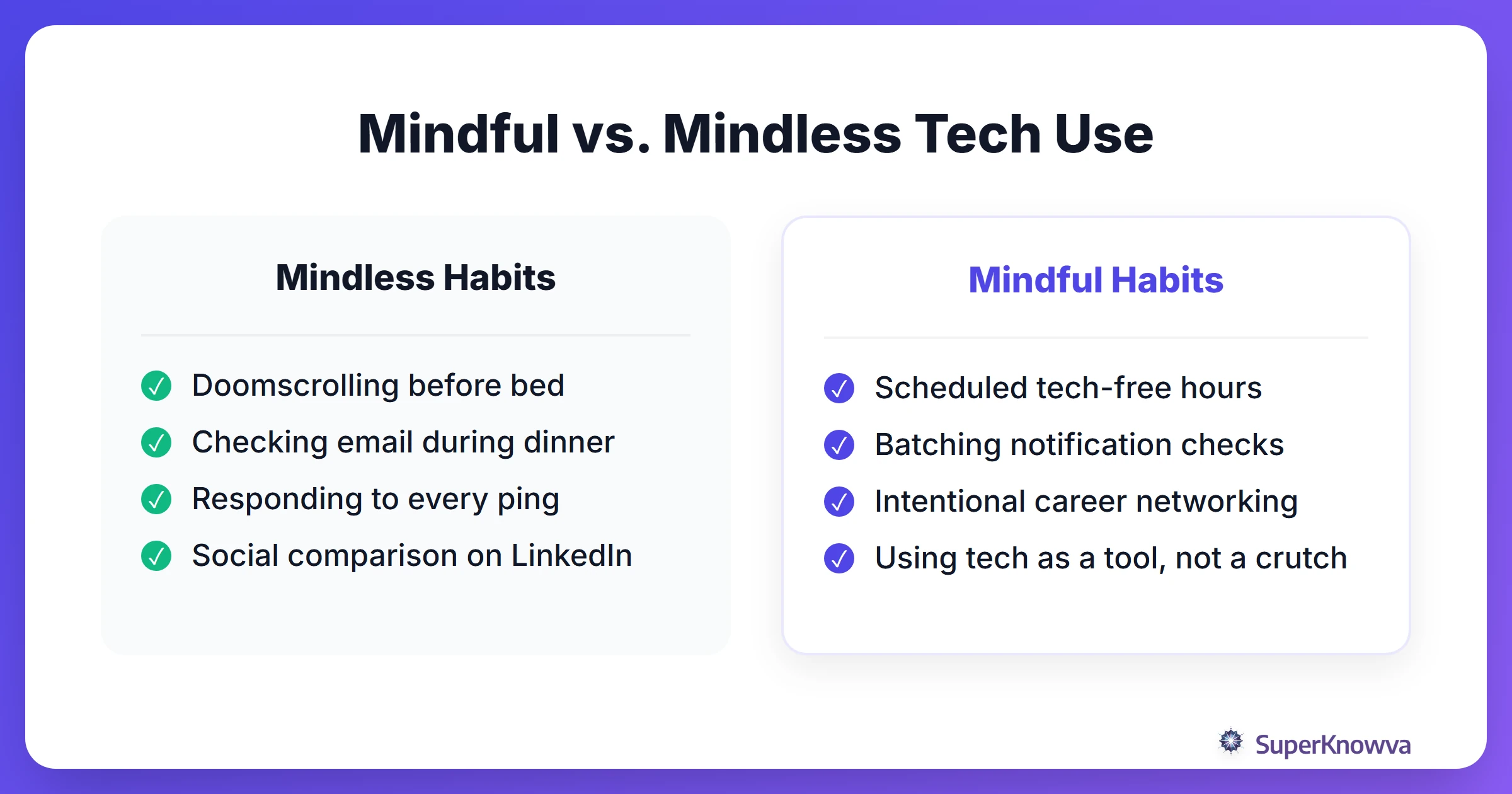
To stay healthy long-term:
- Set "Digital Office Hours": Decide when you’re "off the clock" for the night and stick to it.
- Mindful Networking: Use LinkedIn to grow your career, but set a 15-minute timer so you don't fall into the "comparison trap" of everyone else’s highlight reels.
- The Digital Sabbath: Just like you’d focus on preventing burnout during a break, try taking one full day off from screens every week.
By taking the time to disconnect now, you ensure that when you finally "plug in" to your new career, you do so with the energy and focus needed to succeed. Congratulations on the degree. Now, put the phone down and go enjoy the view!