Is it just me, or is the refrigerator ten times more interesting when there’s an exam looming? One minute you’re highlighting a textbook, and the next, you’re auditing the condiment shelf for the third time today.
Struggling to stay focused while studying at home is an environmental issue rather than a personal failing. Household distractions can make productivity difficult, but academic success depends on more than just the hours you put in. It is about where you work. With these strategic home study environment tips, you can transform a cluttered corner into an effective workspace.
In this guide, we’ll break down how to optimize your physical and digital space to cut through the brain fog.
The Psychology of a Dedicated Study Zone
Your brain is a creature of habit. When you sit in the same spot every day to work, your mind starts to recognize those environmental cues. It’s like a mental "on" switch. This is exactly why a dedicated space is one of the most effective home study environment tips for mastering deep work.
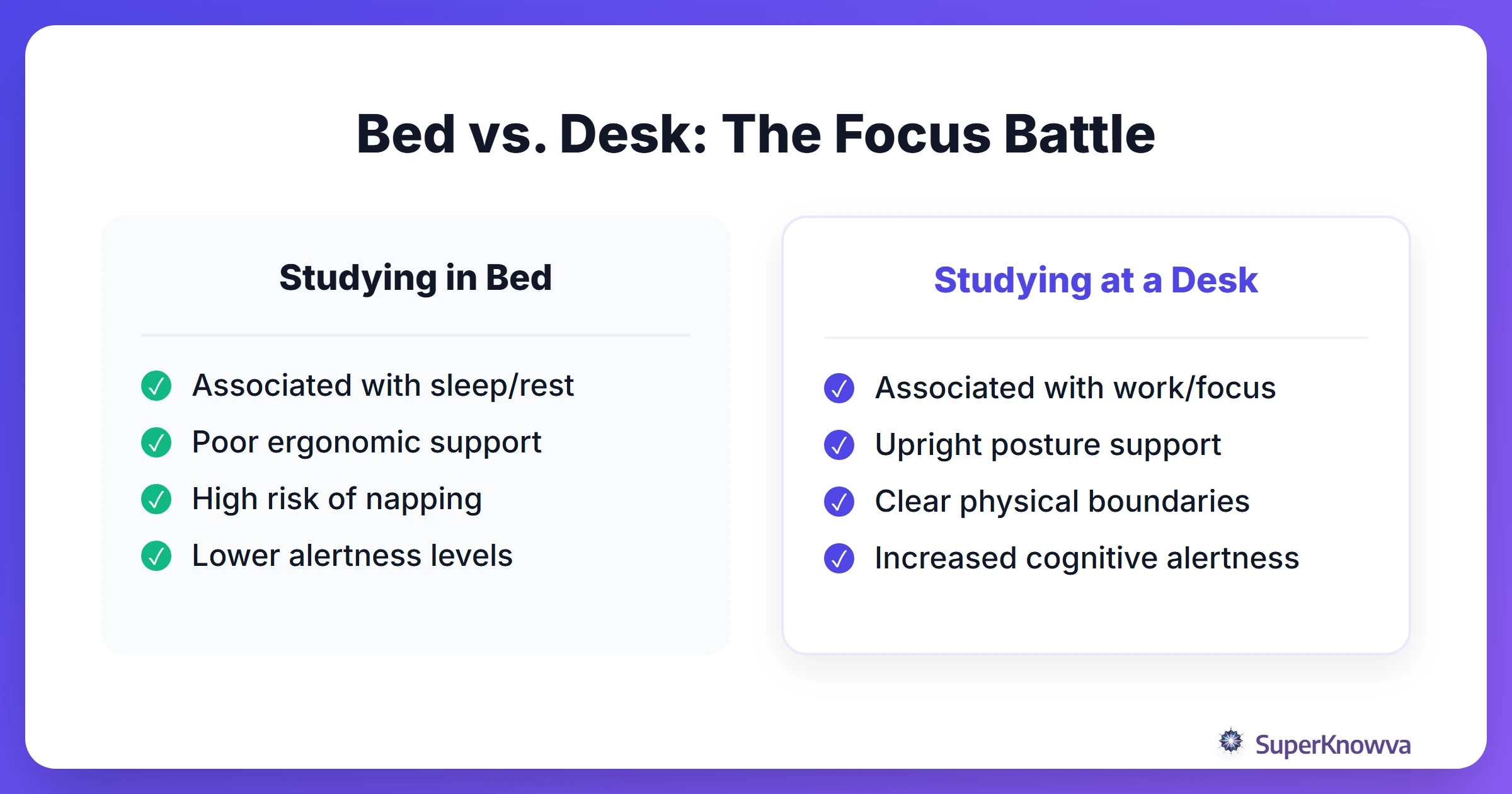
We’ve all been tempted by the "bed-to-desk" pipeline. It starts with reading a few pages under the covers and ends with a nap you didn't plan. This creates "sleep-work" confusion; your brain doesn't know whether to focus or rest. By creating a physical boundary, even if it’s just a specific chair or one end of the dining table, you find your focus the moment you sit down.
Ergonomics: Don't Let Your Chair Sabotage Your Grades
A productive home office for students shouldn't just look good on Instagram; it needs to support your body. If you’re uncomfortable, your brain is going to spend more energy processing back pain than it does processing your lecture notes.
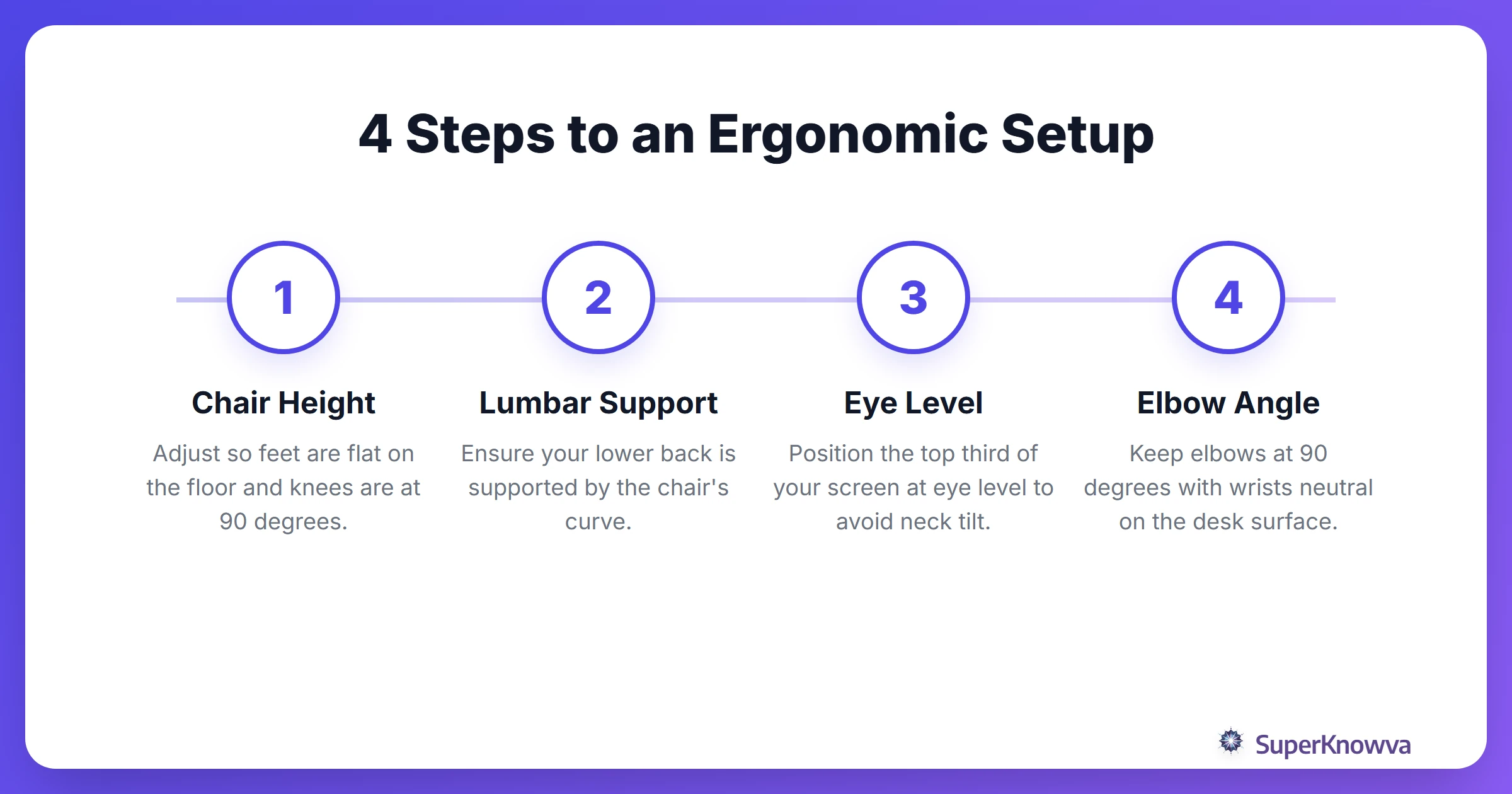
To build an ergonomic study setup that actually works, keep these three rules in mind:
- The 90-90-90 Rule: Adjust your chair so your feet are flat, and your hips and knees are both bent at 90-degree angles. Your spine will thank you.
- Monitor Height: Stop the "tech neck" slouch. Position your screen so the top third is at eye level. If you're on a laptop, prop it up on a stack of books.
- External Peripherals: If you can, grab a cheap external keyboard and mouse. It allows you to elevate your screen while keeping your wrists in a neutral, relaxed position.
Mastering Your Sensory Environment: Light and Sound
Your environment influences your senses. Lighting, for instance, dictates your energy levels. Natural light is ideal. Positioning your desk near a window keeps you alert and prevents a 3:00 PM slump.
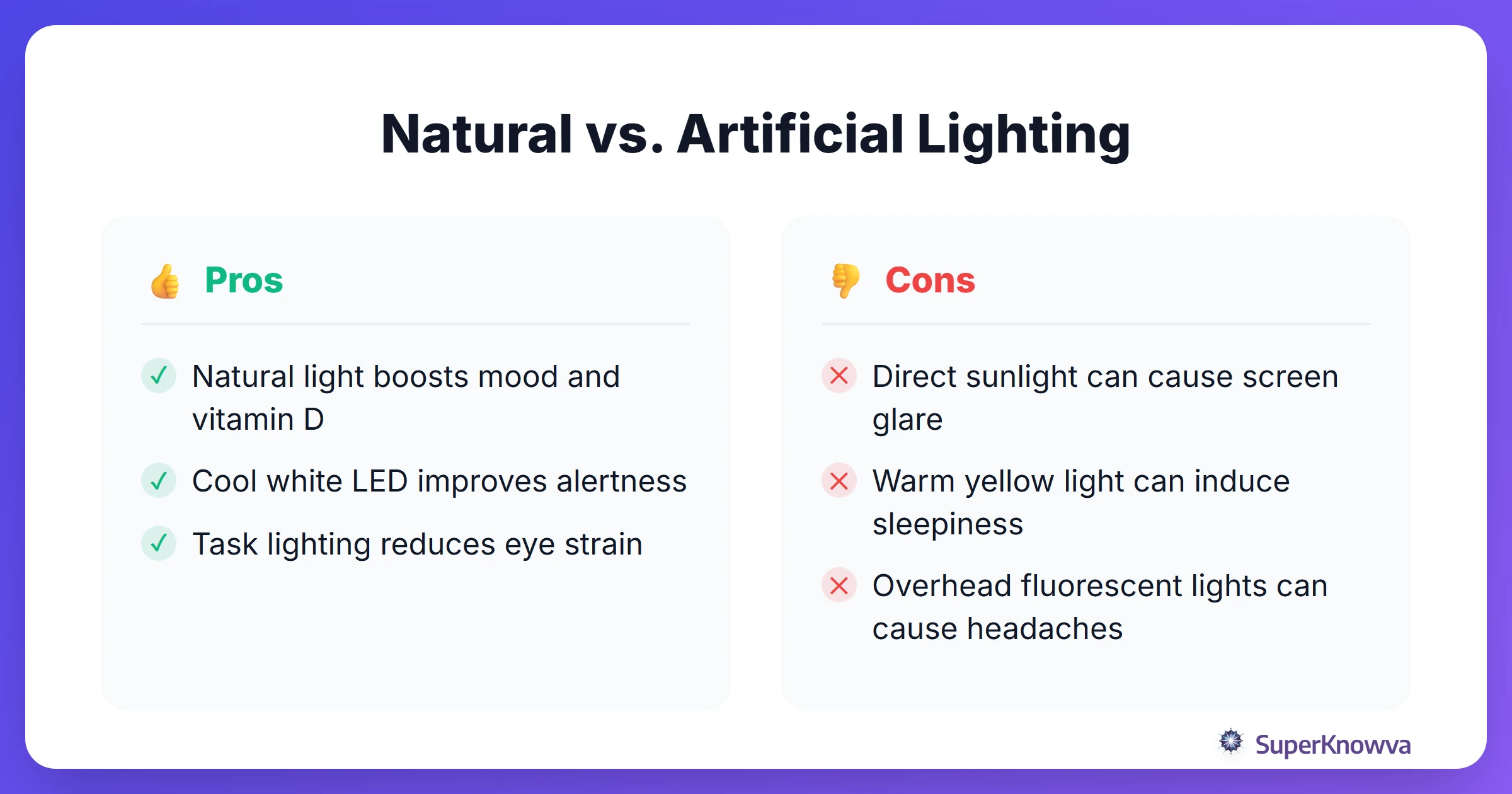
Once the sun sets, watch your color temperature. Cool white (blue-toned) light is great for staying sharp during intense analytical work. Warm yellow light? That’s for winding down. If you use it for studying, don't be surprised if you start nodding off. To block out the sound of your roommates' Netflix binge, try white noise or "lo-fi beats." These steady sounds create a "sonic cocoon," making sure sudden noises don't shatter your concentration.
Digital Minimalism in the Physical Workspace
AI-powered learning is useful, but our best tools are often our biggest distractions. To build a distraction-free study zone, be intentional with your technology.
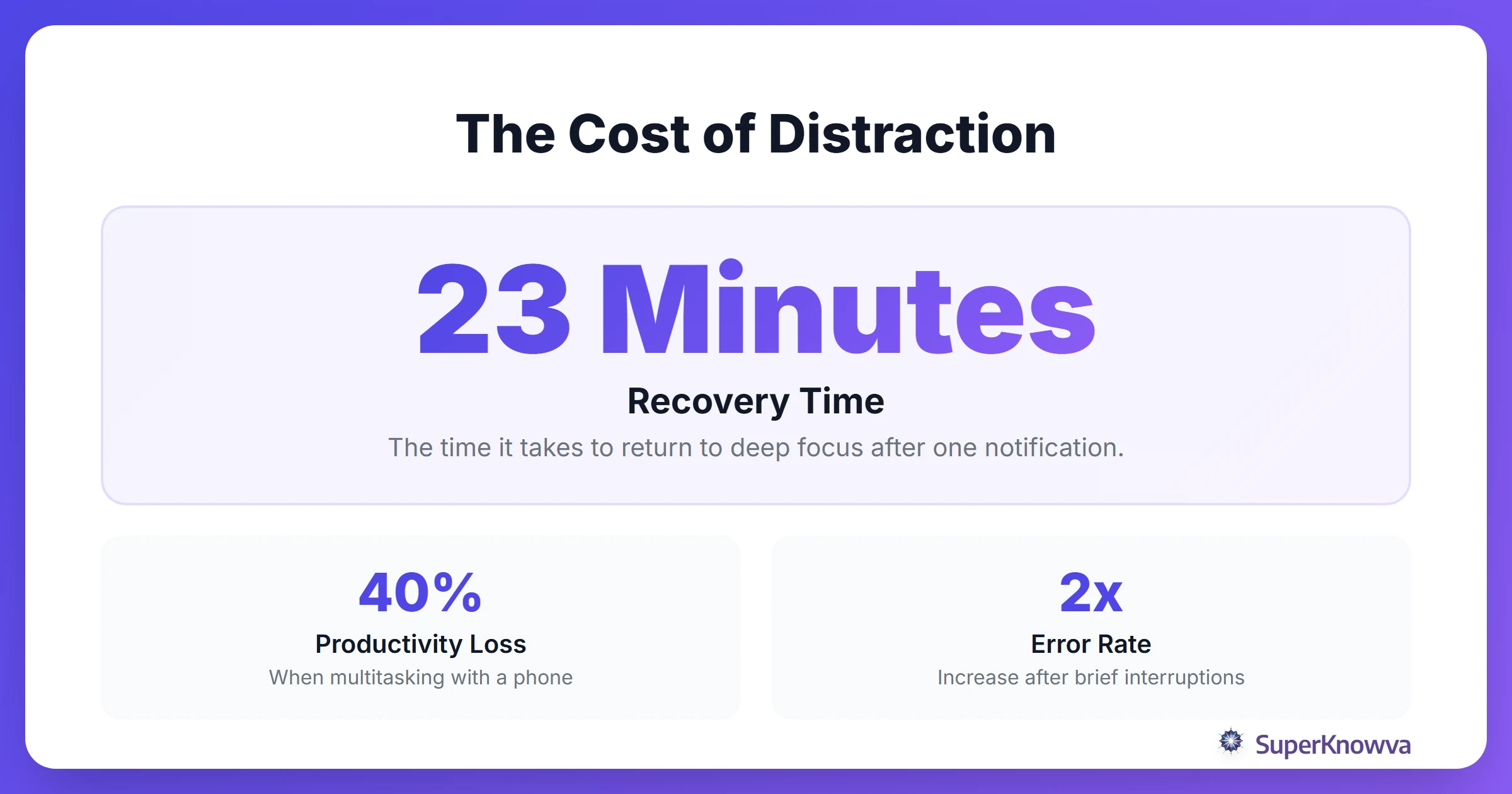
Try the "Phone in Another Room" rule. It sounds extreme, but research shows that having a phone on your desk, even face down, siphons off your cognitive capacity. Your brain works hard not to check it.
Beyond the phone, clear the cable clutter. A messy desk leads to a messy mind. Practicing digital minimalism also means knowing when to quit. End your day with a "shutdown ritual": close your tabs, back up your files, and turn off the screen. It signals to your brain that the workday is officially over.
Organization Systems: Stop the "Highlighter Hunt"
There’s nothing that kills momentum faster than the "where is my pen?" panic. Effective student workspace organization is about removing friction. If you’re working in a cramped room, think vertically. Pegboards and wall shelves keep your desk clear for the things that actually matter: your laptop and your notebook.
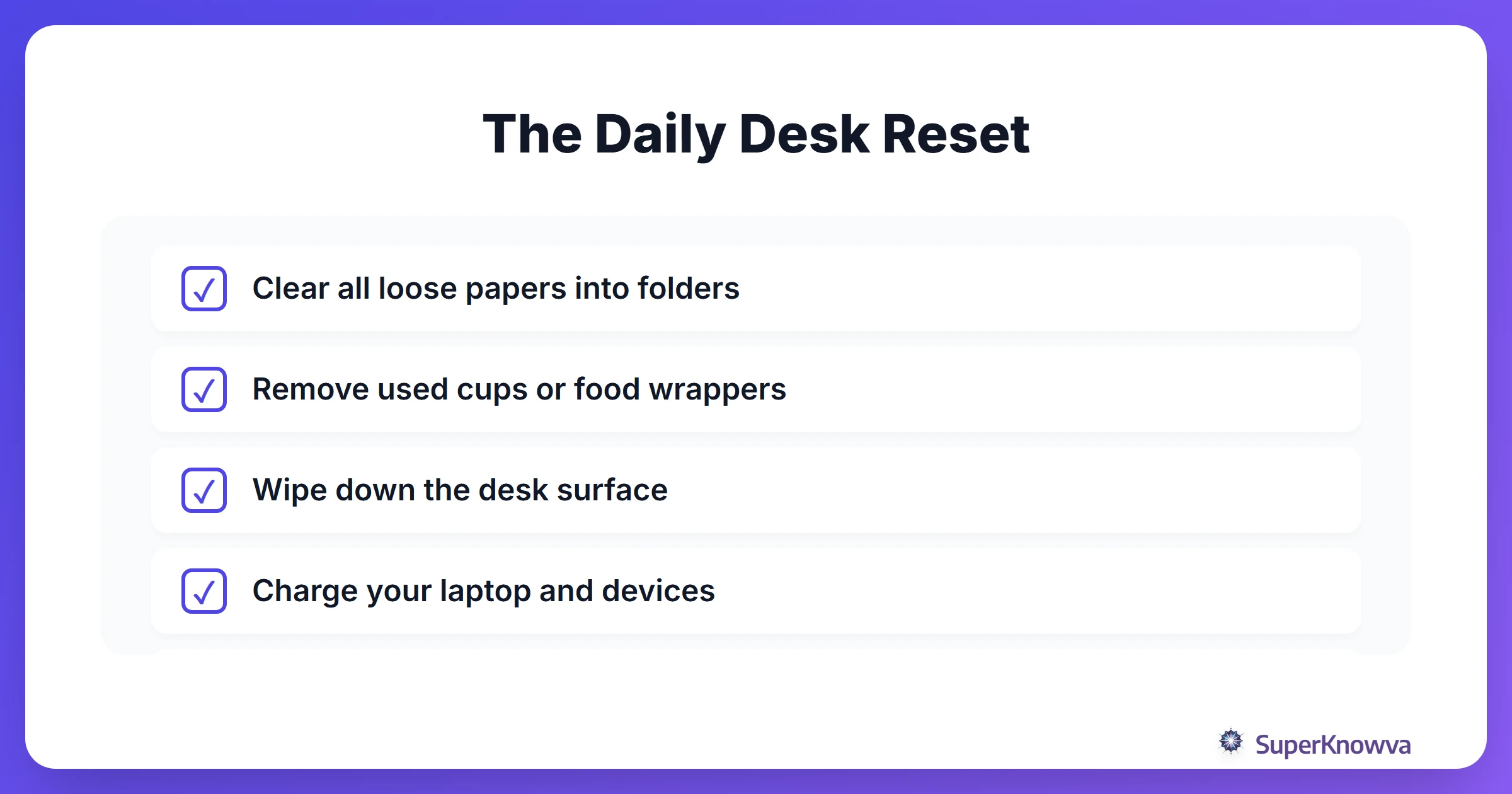
Try these habits to stay organized:
- The Daily Desk Reset: Spend five minutes every night clearing your surface. Starting the next morning with a blank slate is a great mental boost.
- Color-Coding: Keep your physical and digital worlds in sync. If your History folder is blue on your laptop, use a blue physical binder. It’s a small trick that makes organizing your digital study life feel much more intuitive.
Setting Social Boundaries (Because Roommates Exist)
Studying at home usually means navigating the lives of the people you live with. Communication is your best defense. Let your family or roommates know your schedule so they don't walk in mid-focus.
Visual cues help set boundaries. A "Do Not Disturb" sign or a pair of large over-ear headphones acts as a non-verbal "I’m busy" signal. Avoid isolation by scheduling social breaks. Stepping out for a 15-minute chat can prevent the burnout that comes with solitude. You might even try Pomodoro vs. Flowtime to find a rhythm that balances deep work with human interaction.
Conclusion
Optimizing your home study environment is about more than being organized; it is a way to support your focus and long-term success. By adjusting your ergonomics, managing sensory input, and setting firm boundaries, you build a space that encourages concentration. For more ideas, see these 10 Best Study Space Tips and this guide on Creating a Productive Study Environment.
Ready to take your focus to the next level? Pair your new environment with SuperKnowva’s AI tools to turn your study sessions into high-speed learning experiences.