
April hits differently when you’re an AP student. One minute you’re enjoying the spring weather, and the next, you’re staring at a 500-page prep book wondering how you’re supposed to memorize the entire history of the modern world by May. The pressure is real. Between the college-level concepts and the mountain of regular homework, it’s easy to feel like you're drowning.
Most students try to fight this by pulling "marathon" study sessions: six-hour stretches of caffeine-fueled grinding. Your brain usually checks out after hour two. You are staring at the pages, but nothing is sticking.
If you want to actually remember the difference between Mitosis and Meiosis without losing your mind, you need to work with your biology, not against it. That’s where the Pomodoro technique for AP exams comes in. It’s a simple shift that turns a daunting study "death march" into a series of winnable sprints.
The Core Mechanics: What is the Pomodoro Technique?
In the late 80s, a university student named Francesco Cirillo was struggling to focus. He grabbed a kitchen timer shaped like a tomato (pomodoro in Italian), set it for 10 minutes, and realized he could get more done in those 10 minutes of pure focus than in an hour of distracted reading.
The system has evolved since then, but the goal remains the same: productivity for high schoolers who have way too much on their plates.
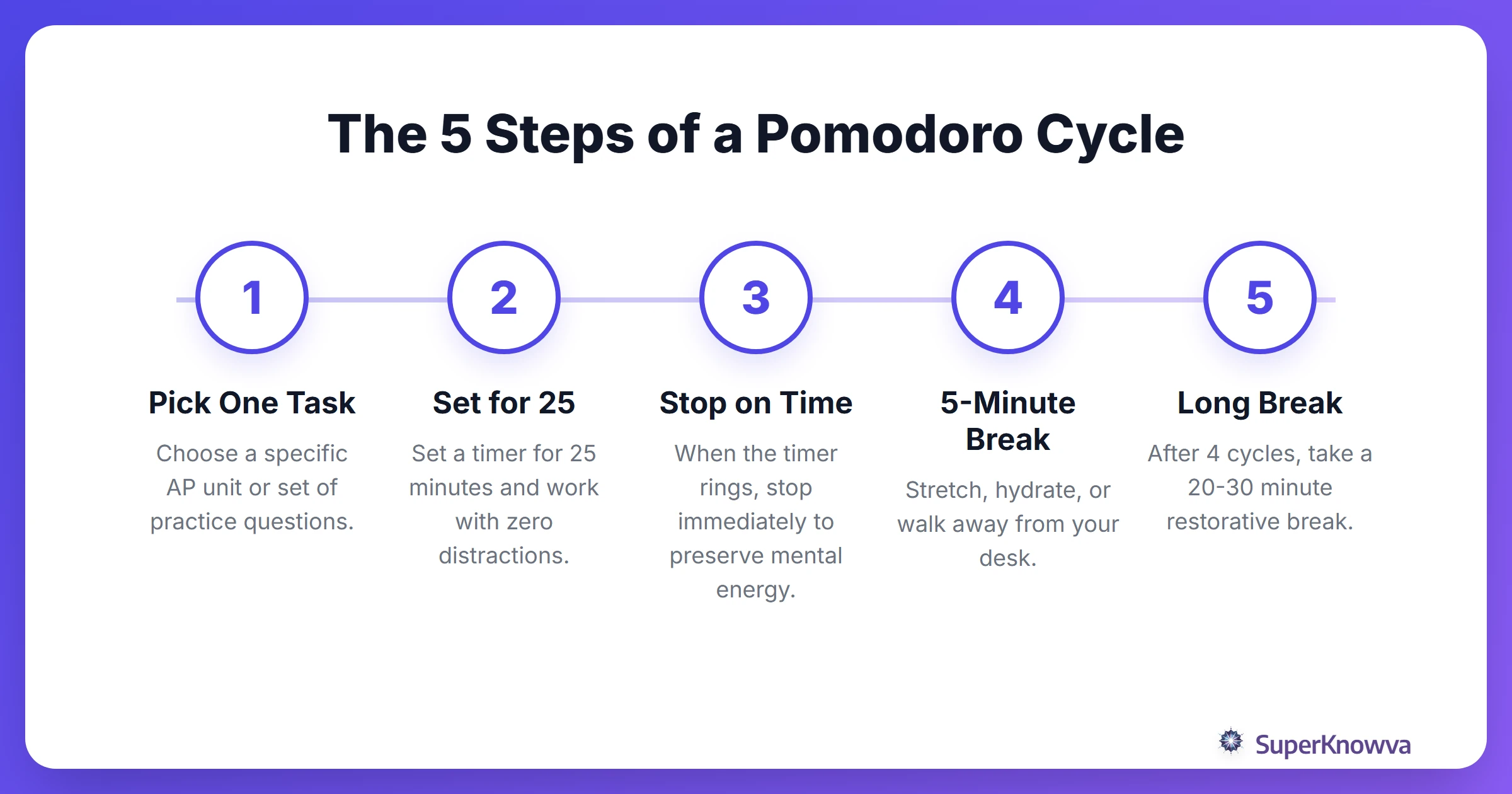
The rhythm is simple:
- Pick one specific task. (Not "Study Bio," but "Review Unit 3 flashcards.")
- Set a timer for 25 minutes.
- Work until it rings. No phone. No snacks. Just the task.
- Take a 5-minute break. Stand up, stretch, breathe.
- Repeat. After four "Pomodoros," take a longer 20–30 minute break.
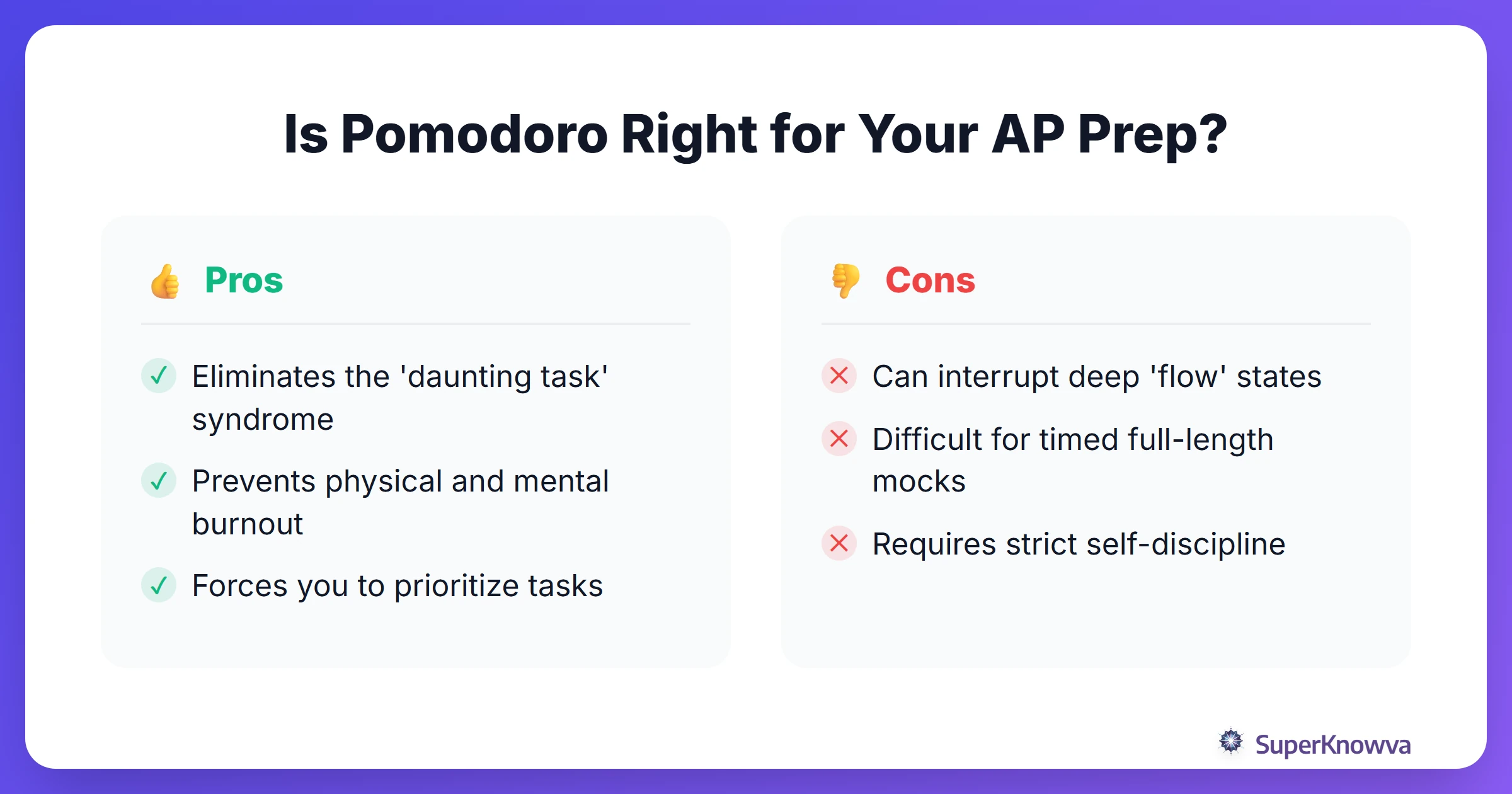
For AP prep, this creates a much-needed sense of urgency. When the clock is ticking, you’re less likely to fall down a Wikipedia rabbit hole or check your group chat. You know a break is coming, so you can push through.
Why Pomodoro is Essential for AP Success
AP courses are dense. Whether you’re untangling the Krebs cycle or debating the nuances of the Reconstruction era, the "cognitive load," the amount of mental energy you use, is massive. This is where the science of overcoming procrastination meets effective learning.
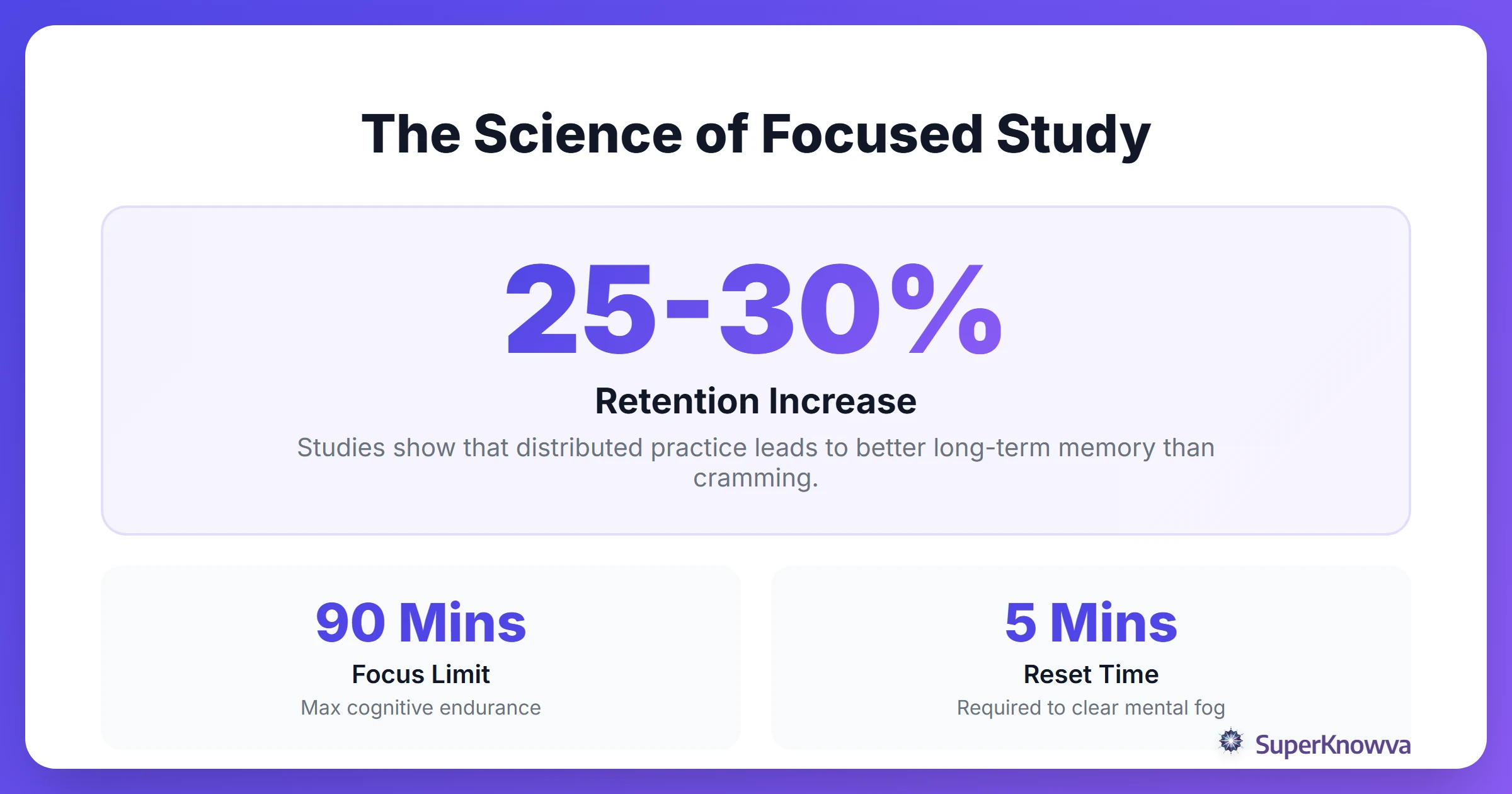
Give Your Brain Time to Save Ever played a video game and forgotten to hit "save" before the power went out? That’s what happens during marathon study sessions. Your brain needs short breaks for "synaptic consolidation." Stepping away for five minutes gives your brain the chance to actually "write" that new info into your long-term memory.
Kill the Anxiety Loop We procrastinate because we’re overwhelmed. Looking at a 3-hour study block for AP Physics is terrifying. But 25 minutes? You can do 25 minutes of anything. By breaking your how to study for AP exams strategy into bite-sized chunks, you lower the barrier to entry.
Build Your Testing Stamina An AP exam is a three-hour endurance test. Using Pomodoro cycles builds your "mental muscle." You’re training your brain to stay sharp and focused for set intervals, which is exactly what you’ll need to do when you hit the Multiple Choice section in May.
Customizing the Timer: STEM vs. Humanities
The "standard" 25-minute block is a great starting point, but time management for students isn't one-size-fits-all. Different subjects require different types of focus.
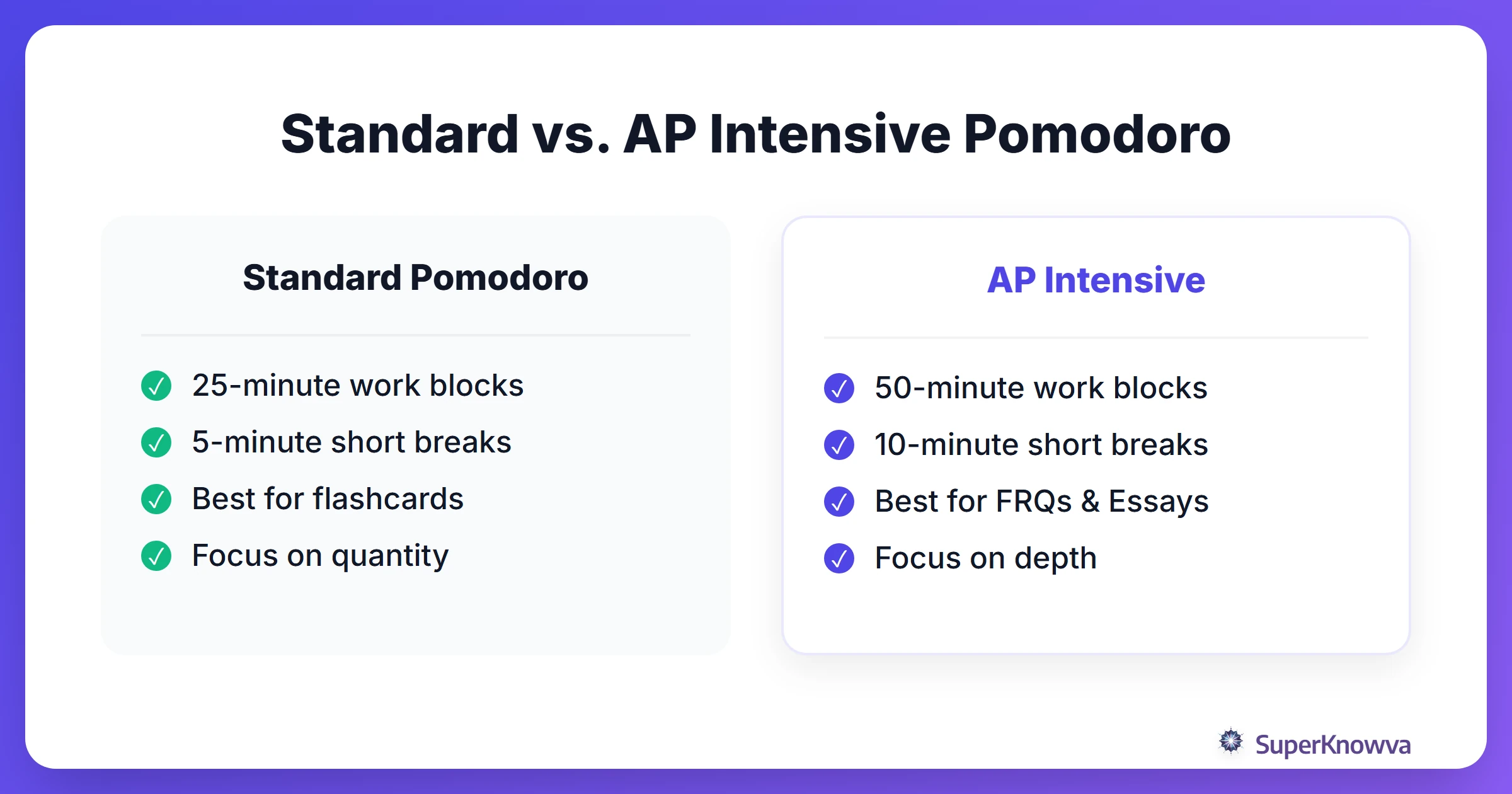
- STEM Subjects (AP Calc, Physics, Chem): You cannot finish a complex Free Response Question (FRQ) in 25 minutes. If you are in the middle of a difficult derivation, the timer can be distracting. Try the "Double Pomodoro": 50 minutes of deep work followed by a 10-minute break.
- Humanities (APUSH, AP Gov, AP Psych): These subjects are often heavy on vocab and rapid-fire facts. The standard 25-minute block is perfect for high-speed review, outlining a practice LEQ (Long Essay Question), or hitting your flashcards.
Your AP Prep Pomodoro Roadmap
Want to try it today? Follow this structure to keep your sessions on track:
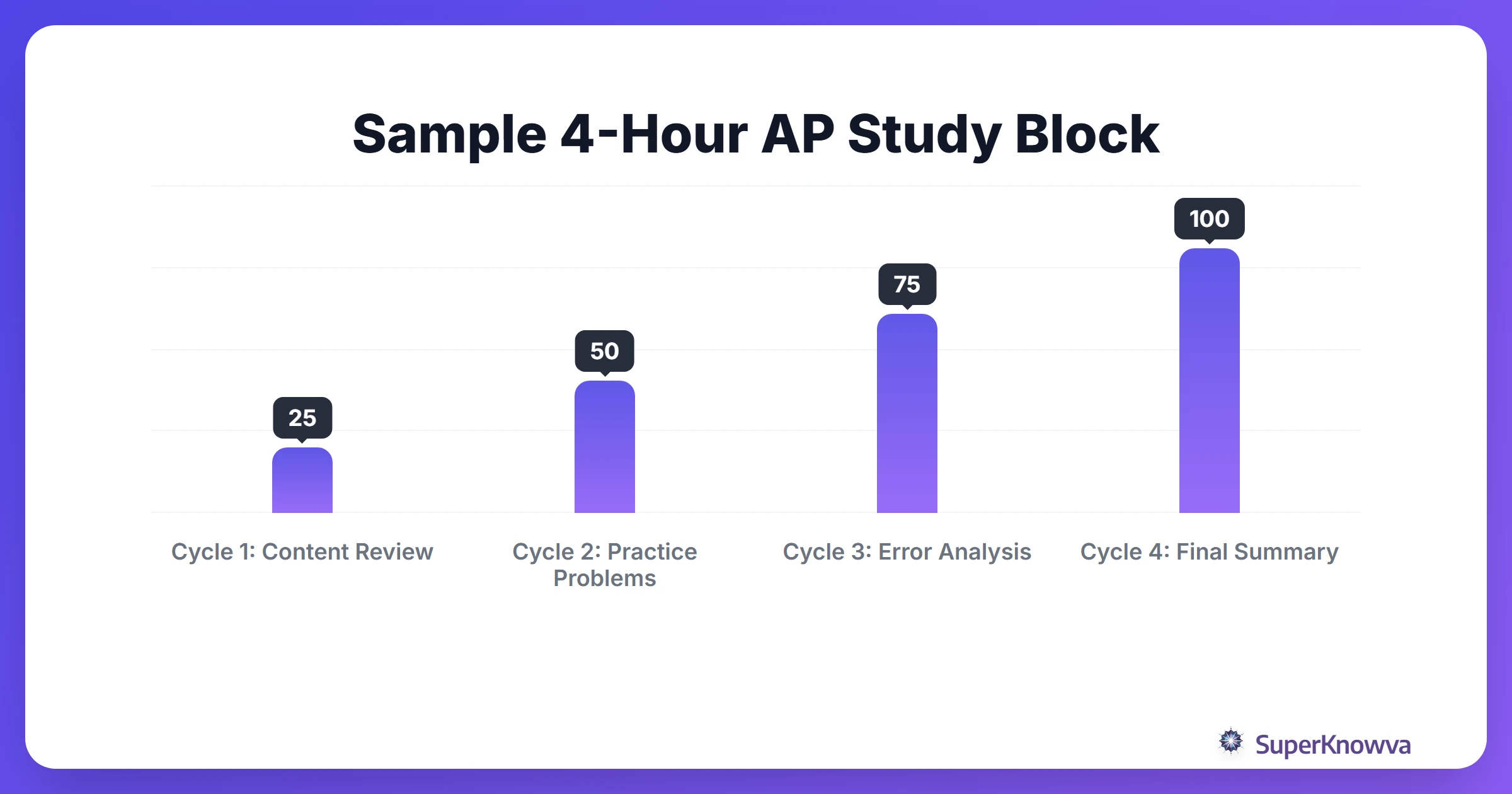
- Phase 1: Get Specific. "Study AP Chem" is a wish, not a plan. "Complete 15 practice MCQ for Unit 4" is a task. Tools like SuperKnowva are great here. They can help you generate specific practice questions from your notes so you aren't wasting time wondering what to do.
- Phase 2: The Lockdown. Put your phone in another room. Close the 42 open tabs in your browser. If you struggle with this, look into deep work strategies for students.
- Phase 3: The Sprint. Set the timer and go. If a random thought pops up (like "I forgot to text Mom back"), write it on a sticky note and get back to work. Don't let it break your flow.
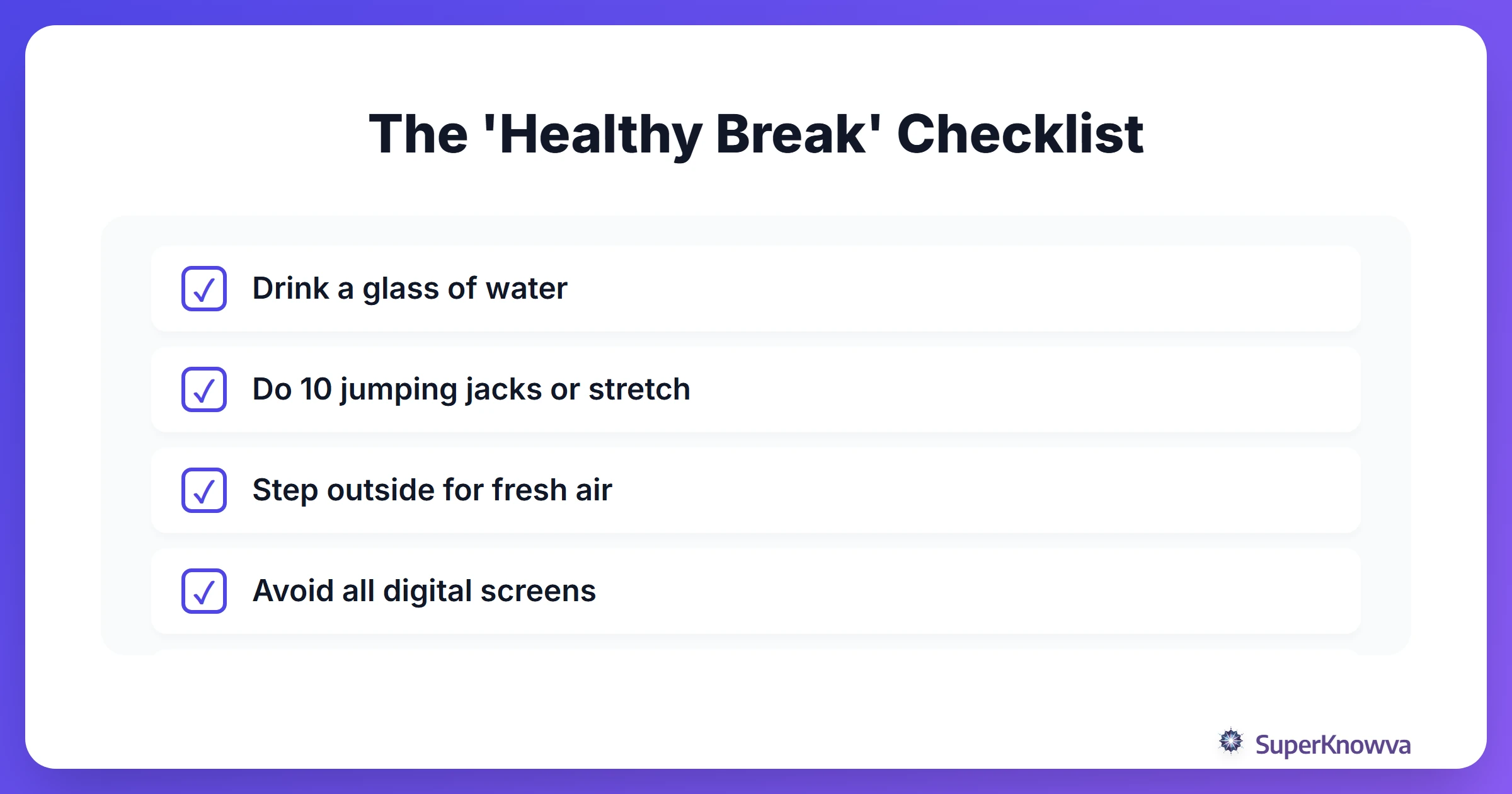
- Phase 4: The 'Real' Break. This is the most important part. No screens. Your brain doesn't rest when you're looking at TikTok. Go get water, pet your dog, or just stare out the window.
- Phase 5: The Reset. After four rounds, take 30 minutes. Go for a walk or eat a real meal. You’ve earned it.
Common Pitfalls and Pro-Tips
Even a great system can fail if you don't watch out for these traps:
- The "One More Minute" Trap: When the timer dings, stop. Even if you’re mid-sentence. It sounds counterintuitive, but stopping while you have momentum makes it much easier to start the next session.
- The Scroll Trap: If you spend your 5-minute break on social media, you aren't resting your brain; you’re just feeding it more noise. It ruins the "reset" effect.
- The Phone-as-a-Timer Trap: Using your phone as a timer is dangerous. One notification can derail your whole hour. Use a physical kitchen timer or a dedicated desktop app.
Not sure if the 25-minute rigid structure fits your personality? You might want to compare Pomodoro vs. Flowtime: Which is best for you? to find your natural rhythm.
Advanced Strategy: Level Up Your Retention
If you want to be truly efficient, combine Pomodoro with active learning.
The 5-Minute "Blurt" Spend the first 5 minutes of your work block doing a "brain dump." Take a blank sheet of paper and write down everything you remember about the topic before you even look at your notes. It "wakes up" your memory and shows you exactly what you don't know.
Interleaving Your Subjects If you have three exams in one week, don't spend all day on one. Use your Pomodoros to "interleave." Do two rounds of AP Bio, then switch to two rounds of AP World. It keeps your brain from getting bored and actually helps you retain info better long-term. Check out why interleaving subjects improves retention for more on the science behind this.
Track Your Data Keep a simple log: "Unit 4 AP Psych took 6 Pomodoros." This data is gold when you’re planning your final "cram week." For more expert advice on planning your final weeks, check out Albert.io: How to Study for AP Exams and this guide on Timeboxing vs. Pomodoro for AP Success.
AP preparation is a significant task, but you do not have to tackle it all at once. By using the Pomodoro technique, you take it one 25-minute step at a time. You will stay fresher, remember more, and, most importantly, avoid study burnout before the exam.