August is often called the "Sunday of summer." It’s that bittersweet time when the sun is still out, but you can feel the looming shadow of deadlines just around the corner. Does the thought of September give you a slight sense of dread? It doesn't have to.
By shifting your mindset from summer relaxation to proactive organization right now, you can turn that upcoming term from a chaotic scramble into a structured success. In this guide, we’re going to look at how to use the "August Advantage" to build study systems that actually work, master your digital tools, and set the stage for your most productive year yet.
The August Advantage: Why Early Prep is a Game Changer
The jump from a lazy summer schedule to a heavy academic load is usually jarring. Most students hit a wall of "syllabus shock" during the first week of September: that overwhelming moment when four different professors hand over 10-page documents filled with overlapping deadlines.
Starting your back to school organization in August gives you a psychological safety net. When you familiarize yourself with the workload early, you kill off the anxiety of the unknown. Think of it as a "buffer zone." If a personal emergency or a brutal assignment pops up in late September, you won’t spiral because your systems are already running like clockwork.
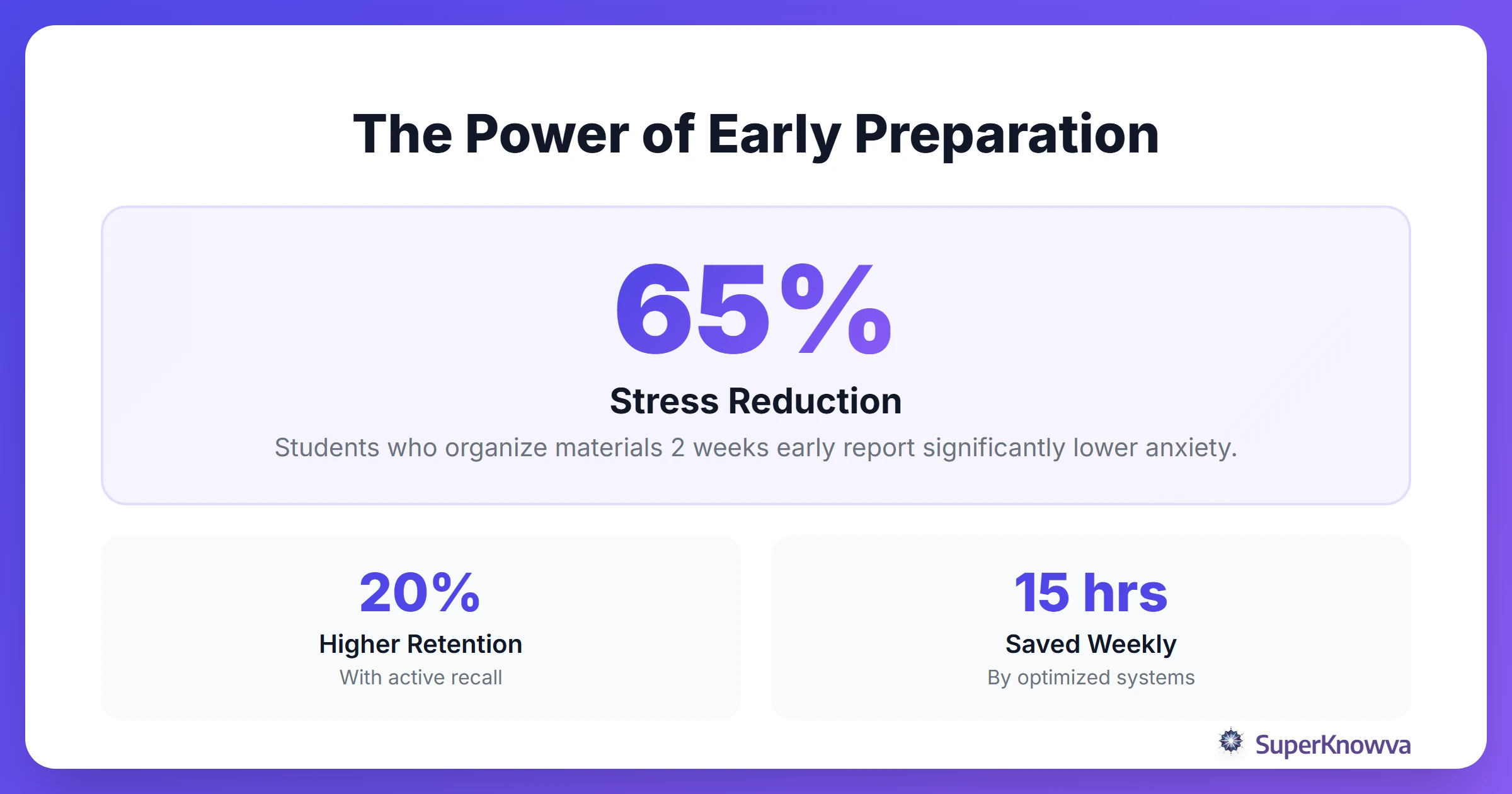
The secret is distinguishing between passive and active preparation. Passive prep is just buying a cool new notebook. Active prep is actually mapping out your schedule, brushing up on prerequisite concepts, and stress-testing your software.
Mastering Your Digital Learning Environment
In 2026, your "classroom" lives on your laptop as much as it does on campus. Before your first lecture, you need to make sure your digital learning tools are actually helping you, not slowing you down.
Start by logging into your Learning Management Systems (LMS) like Canvas or Blackboard. Most universities provide checklists for digital readiness, like the University of Montana Canvas Prep Guide. Verify your course enrollments and download available materials as soon as they are posted.
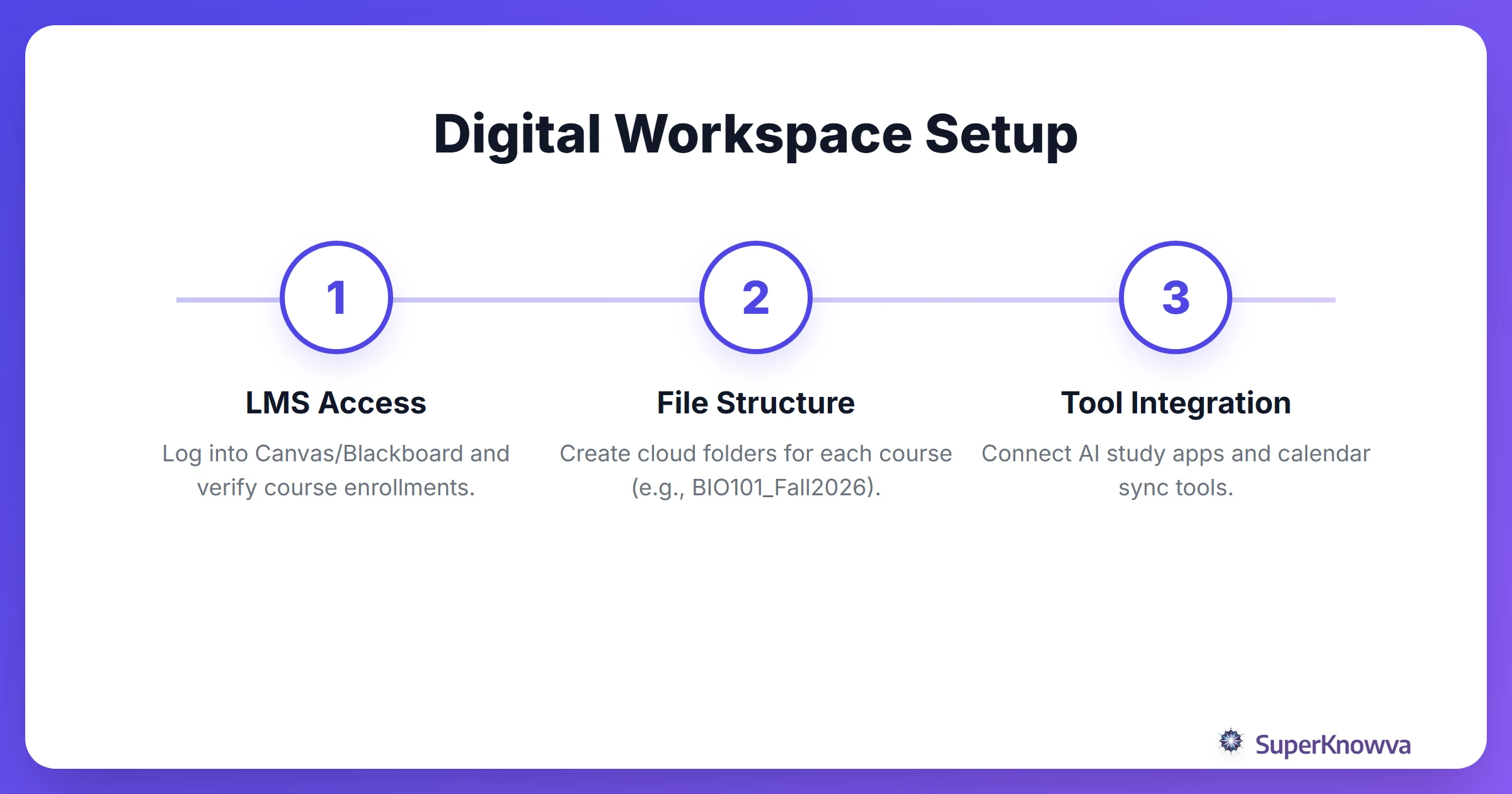
Next, get your cloud storage (Google Drive, OneDrive, or Notion) in order. Create a master folder for the semester with subfolders for each course code (e.g., BIO101, ECON202). This prevents that 2 AM "missing file" panic during finals week. Finally, do a quick hardware audit: Is your battery still holding a charge? Does your webcam actually work for remote seminars? Make sure your toolkit is updated with the best study apps for 2026 before day one.
Designing Your AI-Powered Study System
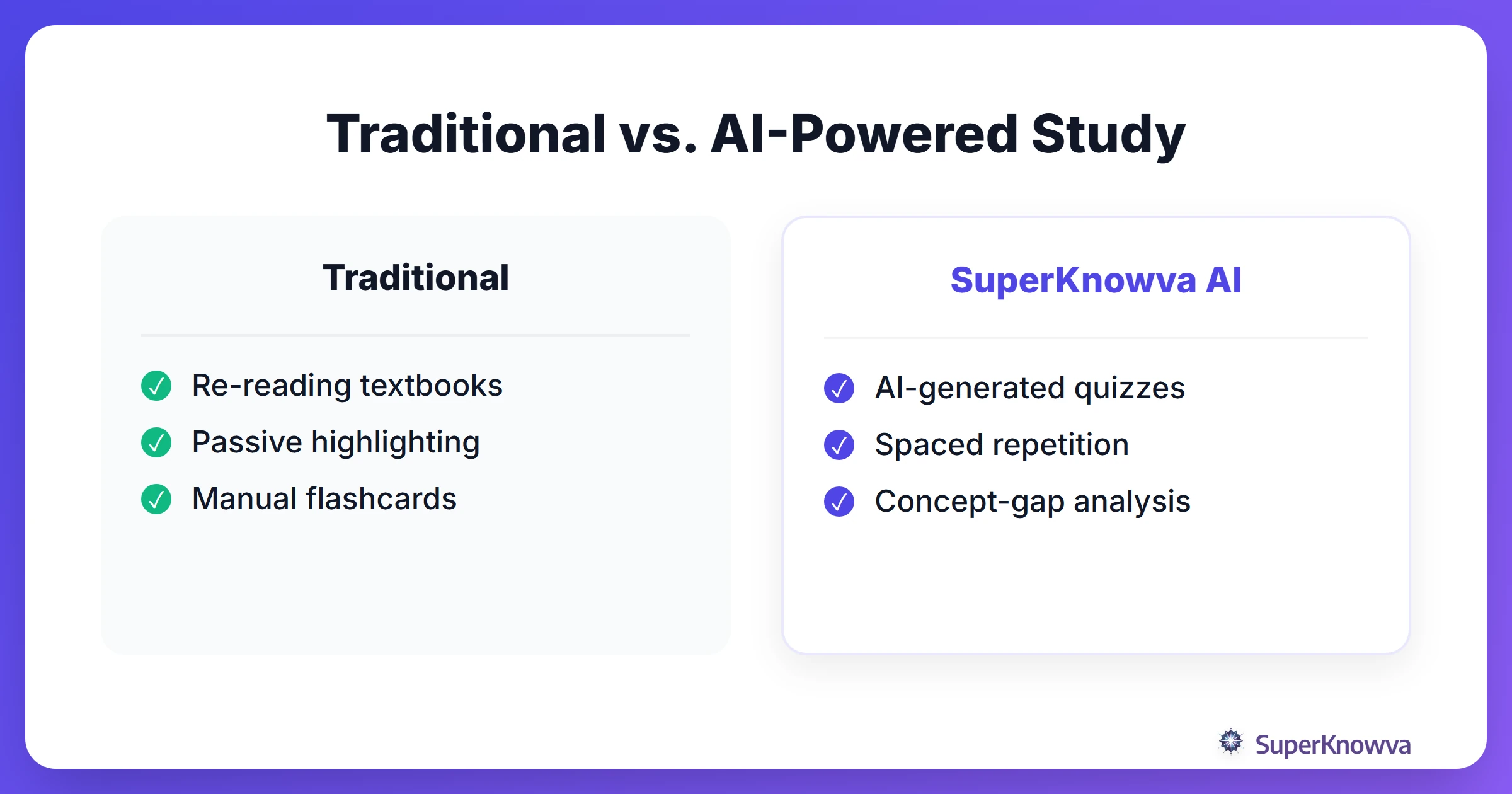
The most successful students aren't necessarily the ones working the longest hours; they’re the ones using the best study systems for students. Let’s be honest: re-reading and highlighting are a waste of time. They feel like work, but they don't help you retain information.
This is where SuperKnowva changes things. Instead of passively scrolling through notes, you can use AI tools to generate practice quizzes and analyze where your "concept gaps" are. By moving from linear note-taking to concept-based learning, you focus on understanding the material rather than just recording it.
If you’re struggling to even get started with your organization, try the 5-minute rule for students. Tell yourself you’ll only organize one digital folder or read one syllabus for five minutes. Usually, the hardest part is just breaking the seal.
The Syllabus Deep-Dive: Mapping Your Semester
Once those syllabi are released, dive in. Don’t just look at the grade breakdown. Look for the "crunch weeks." If three of your four classes have midterms in the same week of October, you need to know that now, not seven days before they happen.
Create a master calendar that merges your academic deadlines with your social life. This bird's-eye view lets you see the storms before they hit. Also, use this window to finish your college prep checklist by ordering your textbooks. Waiting until the first week of class is a recipe for bookstore shortages and shipping delays.
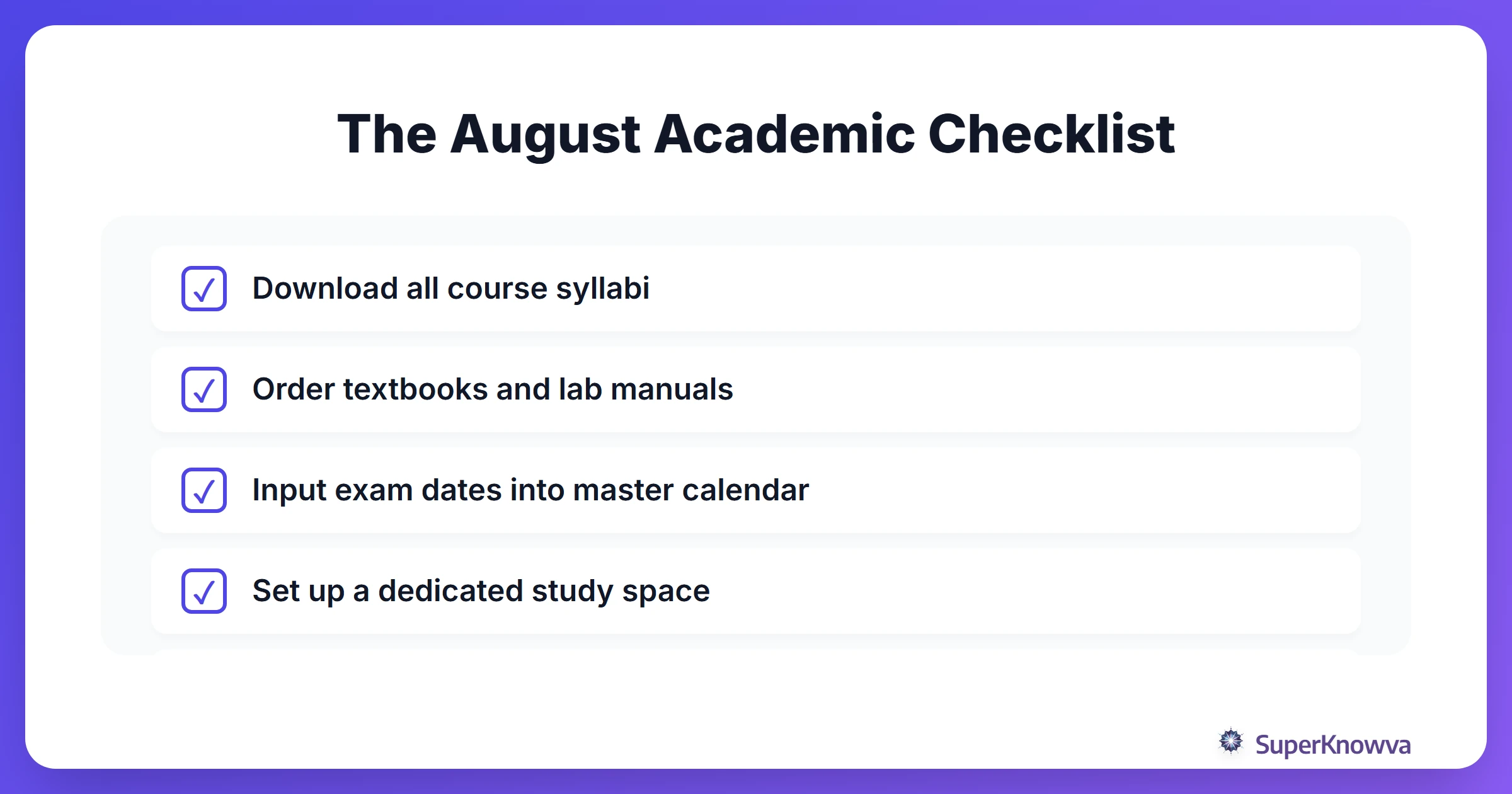
Once your books arrive, refine your strategy for note-taking from textbooks. The goal is to synthesize information so it’s ready for your AI-powered study sessions later on.
Logistics and Life: The Non-Academic Prep
Your grades aren't just about what happens at your desk; they’re about the logistics supporting your brain. For a broader look at campus life, the UMN Libraries offer 7 essential ways to prepare for the fall term.
Think about your daily movement. Plan your commutes, whether you’re biking, walking, or taking the bus, and do a "dry run" during peak hours. Just as importantly, fix your sleep schedule. If you’ve spent all summer staying up until 2 AM, start shifting your internal clock back by 15 minutes each day throughout August.
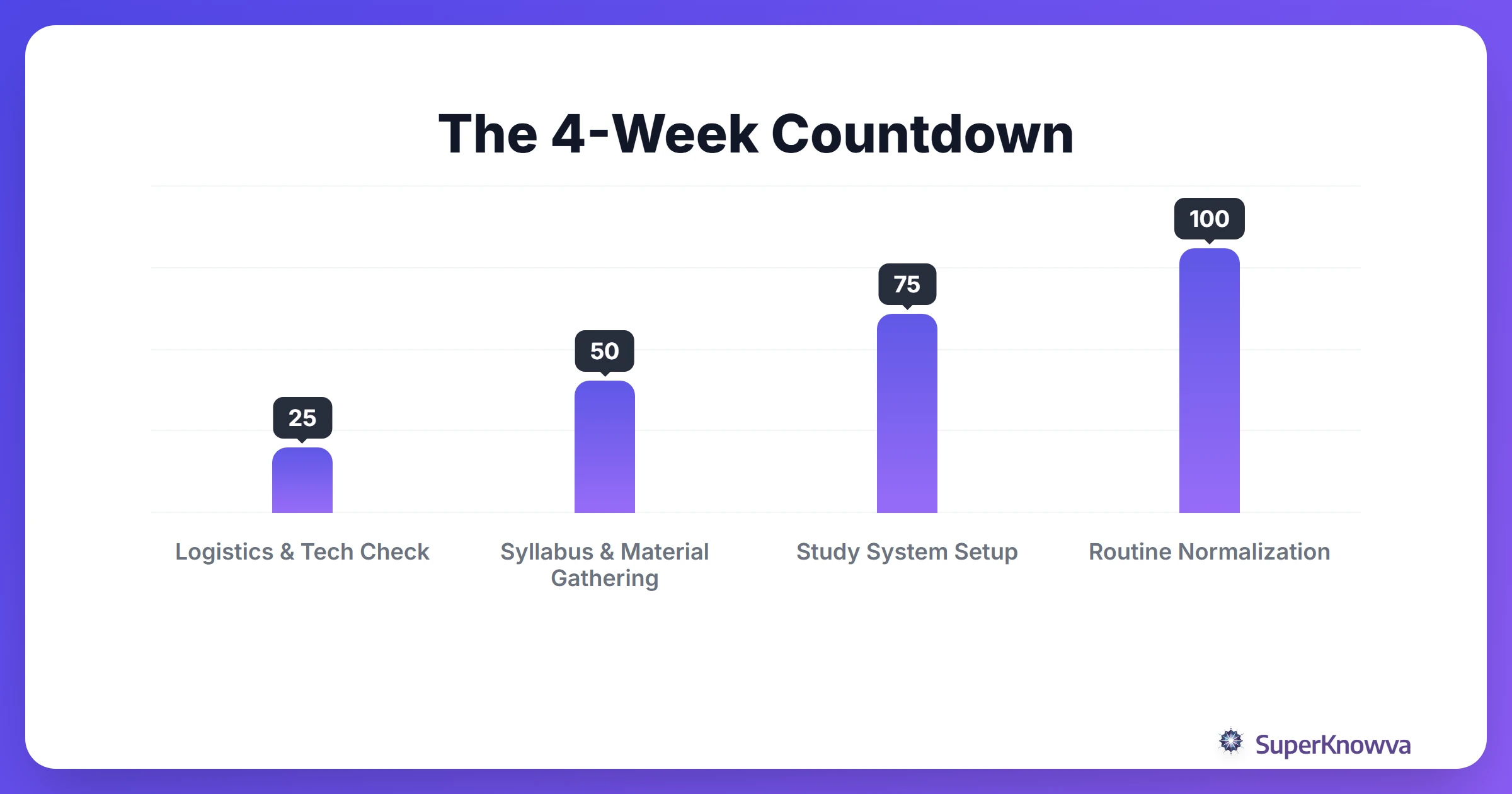
Preparation is also about balancing a high GPA with a social life. Set your boundaries now. It’s much easier to say "no" to a late-night outing when you’ve already committed to a schedule that works for you.
Mental Reset: Building Resilience
Finally, take a second for a mental reset. Look back at your previous academic success strategies. What actually worked last year? What caused you the most stress? Use those lessons to set some realistic, measurable goals for the coming months.
Moving from summer to a full course load requires mindfulness. Practice grounding techniques to build resilience for the semester. August prep is not about starting homework early. It is about building a foundation so you can handle the workload with confidence.
By taking these steps now, you aren't just preparing for fall semester; you’re making sure you actually get to enjoy your college experience without the constant weight of "playing catch-up." Use the August Advantage and make this your best semester yet.