Congratulations, Class of 2026! You’re about to graduate into a job market that looks nothing like the one your older siblings entered. Between the rise of remote-first cultures and the total integration of AI, the rules have changed. As you swap your graduation cap for a professional headshot, you need a strategy that works for the world as it is now, not as it was five years ago.
Resume building for 2026 grads isn't about listing every club you joined. It’s about showing how you work alongside technology to get things done.
In this guide, we’ll walk you through how to tackle the 2026 graduate job market by proving your value and mastering the tools that now define the modern office.
The 2026 Resume Standard: Why AI Literacy is Your New Best Friend
ChatGPT is a standard tool. For the Class of 2026, the question is not whether you use AI, but whether you are proficient with it. Employers no longer look for "computer literate" graduates; they want people who use AI to complete a three-hour task in thirty minutes.
Your AI literacy on resume sections shouldn't be a footnote. Don't just say "familiar with AI." Be specific. Did you use ChatGPT for content brainstorming? Did you use DALL-E to storyboard a campaign? Maybe you used GitHub Copilot to debug your senior project?
In 2026, "AI Literacy" means you understand the ethics, you know how to fact-check the machine, and you know which tool fits the job. You’re not just a user; you’re an orchestrator.
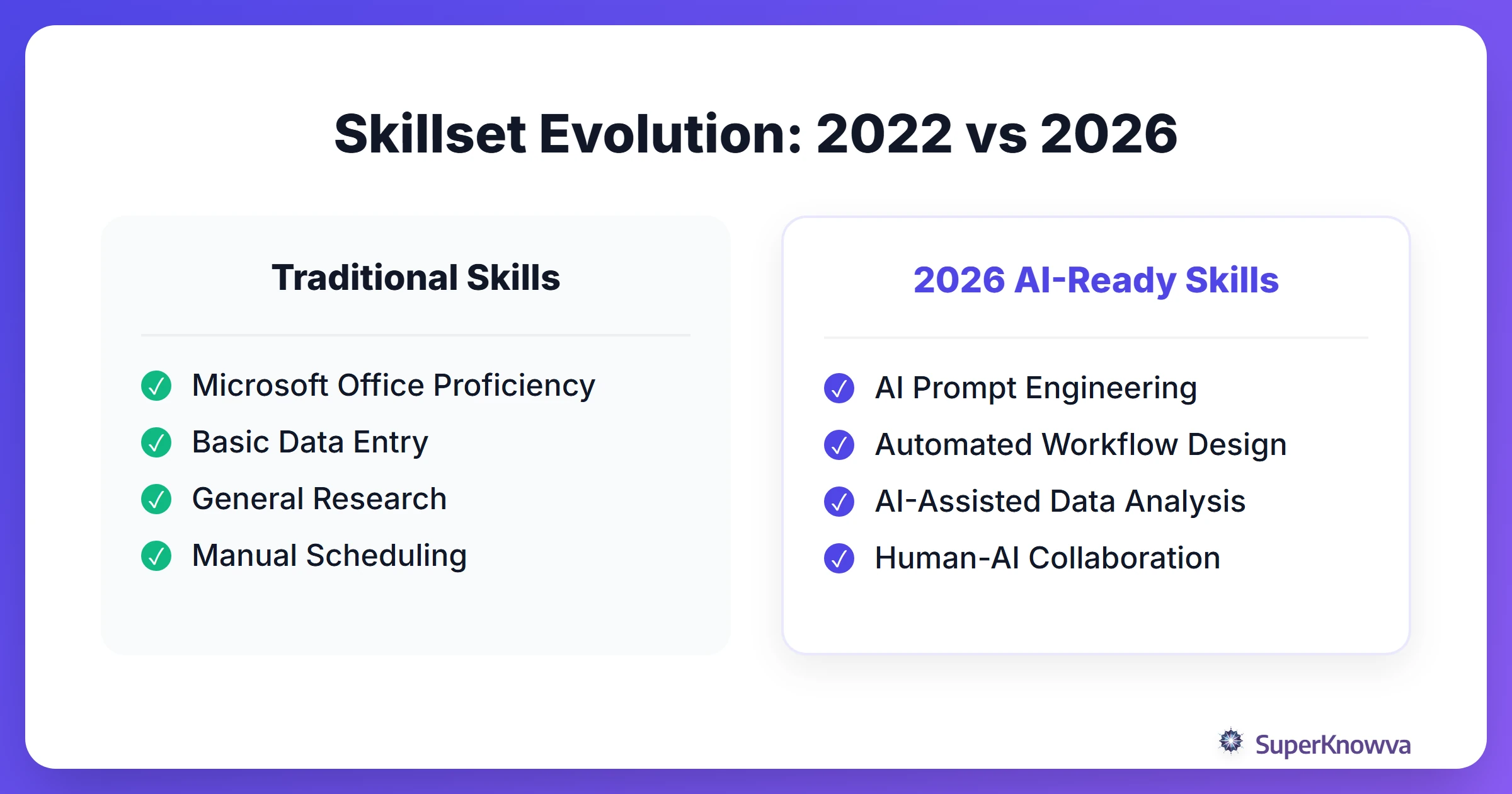
This tech-forward mindset should be visible everywhere. When you’re building an online presence before graduation, make sure your digital footprint shows you’re ready for a high-tech workplace.
Beating the 2026 AI Filters (ATS)
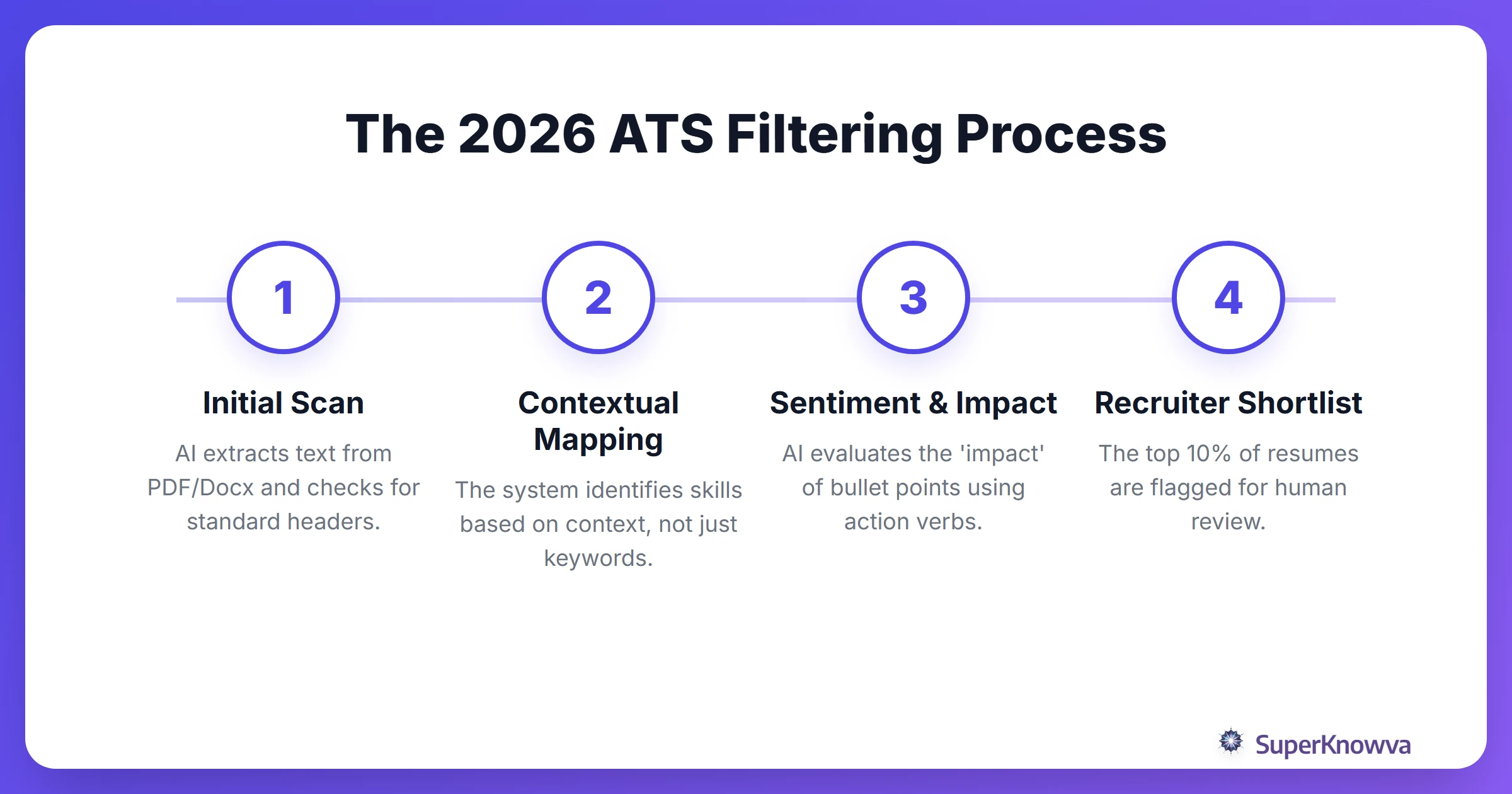
Here is a reality check: a human probably won't be the first one to read your resume. An AI-powered Applicant Tracking System (ATS) will. By 2026, these systems have become incredibly smart. They don't just hunt for keywords; they look for context. They want to see how your skills actually led to results.
To master ATS optimization 2026, keep these three rules in mind:
- Focus on Context: Don't just write "Python" as a skill. Write: "Used Python to automate data cleaning, which cut our project time by 20%."
- Keep it Simple: Multi-column layouts and fancy graphics might look cool to you, but they still give AI parsers a headache. Stick to a clean, single-column PDF.
- Speak the Language: Use the specific terms from the job description, but don't overdo it. Modern systems can spot "keyword stuffing" from a mile away and will toss your application for being spammy.
If you’re worried about your resume disappearing into a digital "black hole," check out our deep dive on how to optimize your CV for Applicant Tracking Systems.
Experience is More Than Just a Job Title
Worried because you didn't have a "traditional" internship at a Fortune 500 company? Don't be. In 2026, the market cares more about what you can do than who you worked for. Your senior capstone, your side hustle, and even that complex class project are all fair game.
Turn your academic work into a professional "Experience" entry using the STAR method (Situation, Task, Action, Result).
Instead of saying "Built an app," try: "Led a team of four to build a budget-tracking app (Situation/Task); integrated OpenAI’s API for automated expense categorization (Action); hit a 95% accuracy rate during user testing (Result)."
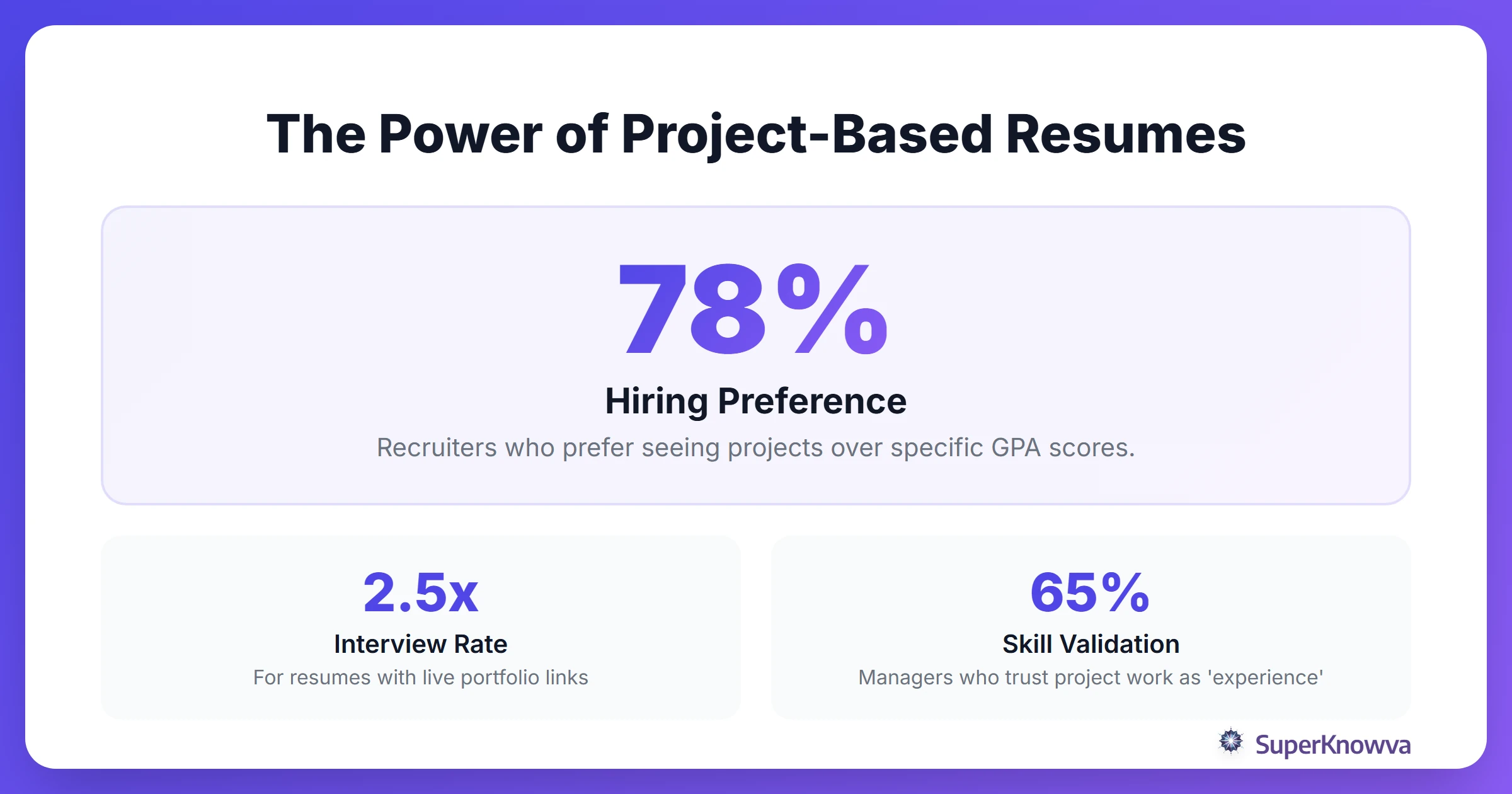
If you're in a creative or technical field, your links are your "receipts." Link to your GitHub, your Behance, or your live demos. Still need to beef up your resume? Here are some strategies for landing highly competitive internships to help you get started.
The Human Edge: Why Your Personality is Your Best Asset
As AI takes over the boring, repetitive tasks, your "human" skills become more valuable than ever. Employers are hungry for graduates with high emotional intelligence (EQ), critical thinking, and the ability to adapt when things go sideways.
When we talk about entry-level resume tips, we always talk about "Human-in-the-loop" collaboration. This is your ability to manage the AI while providing the ethical judgment and creative spark that a machine simply doesn't have.
Highlight your leadership. Did you manage a conflict in your dorm? Did you pivot your club’s strategy when a fundraiser fell through? These are the soft skills that employers are really looking for because they’re the only things an algorithm can't replicate.
One Page vs. The Digital World
Should your resume still be one page? In 2026, the answer is: the document should be short, but your "brand" should be deep.
Think of your resume as a movie trailer. Its only job is to get you the interview. Your digital portfolios for students are the full-length feature film. Put a clean link or a subtle QR code at the top of your resume that leads to your personal website or a polished LinkedIn profile.
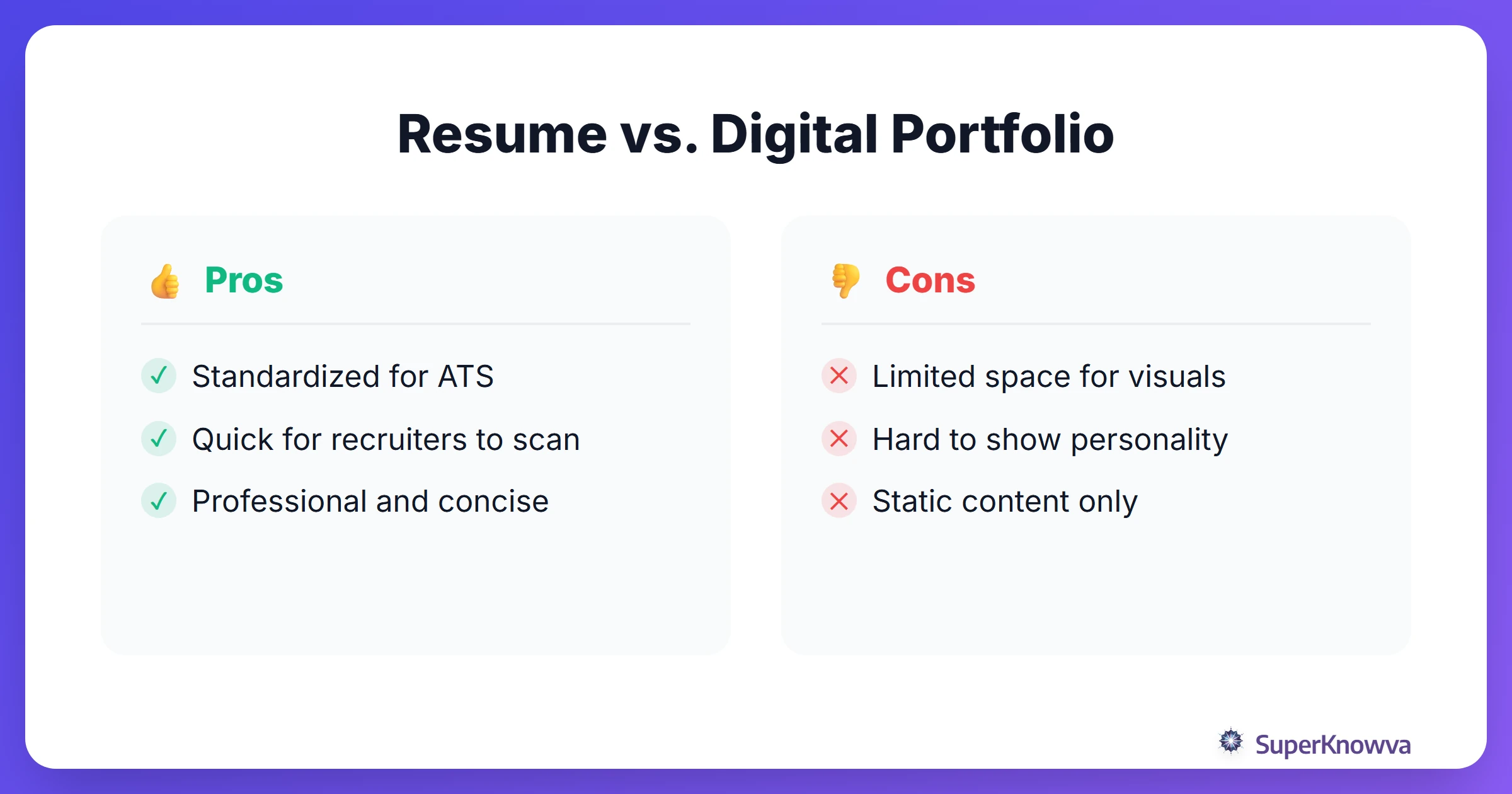
Treat LinkedIn as the "living" version of your resume. While a PDF is static, your LinkedIn can show off video intros, recommendations from professors, and your thoughts on industry trends.
Final Resume Audit: The 2026 Checklist
Before you hit "submit," take a breath. Even in the age of AI, a single typo can kill your chances. It signals a lack of care. Use AI to check your grammar, but don't let it bake the "soul" out of your writing. You want to sound like a professional human, not a corporate bot.
The Five-Second Test: Give your resume to a friend. Have them look at it for five seconds and then take it away. If they can’t tell you what job you want and what your top two skills are, your layout is too cluttered.
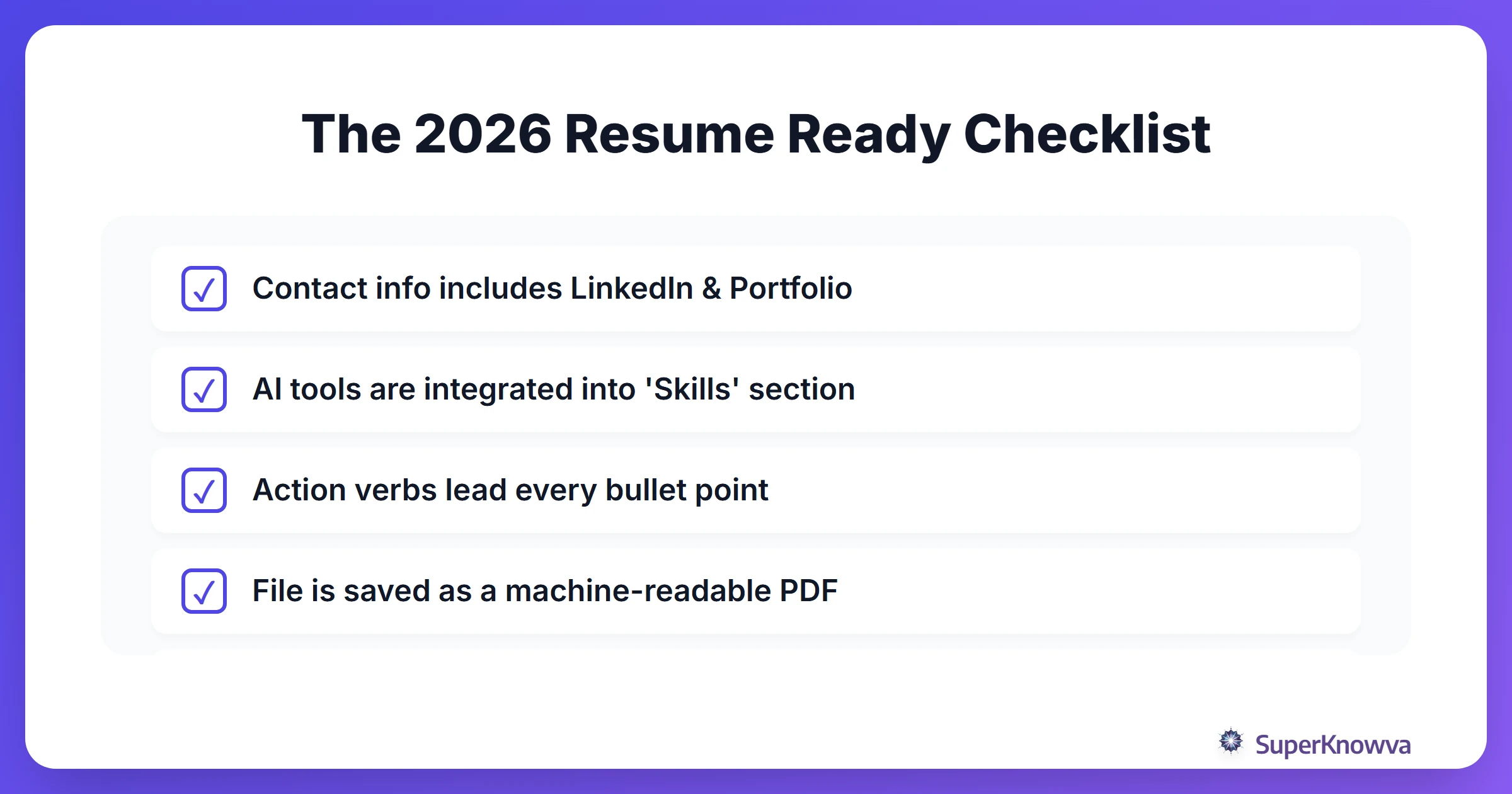
Need an extra set of eyes? It’s always smart to check out University Career Services Workshops or look into the Best Resume Writing Services for 2026 to make sure you’re hitting the mark.
Conclusion
Class of 2026, you are the first generation to enter the workforce with AI as a standard tool rather than a new invention. By combining academic knowledge with technical proficiency and a strong portfolio, you are not just looking for a job; you are building a career.