Most students spend July thinking about the beach, their summer jobs, or catching up on sleep. But if you want to reduce your tuition bill, this month offers a unique advantage. This is the "dead zone" of the academic year, an ideal time to hunt for money while others are distracted.
Summer scholarship hunting is one of the smartest ways to spend your downtime. Why? Because the applicant pool shrinks just as much as the temperature rises.
In this guide, we’ll break down how to find those hidden scholarship funds and niche scholarships that usually fly under the radar.
The Summer Advantage: Why July is the Best Time to Hunt
Think of July as the "off-season" for financial aid. Most of the big, flashy national deadlines hit in the spring. By mid-summer, most students assume the well has run dry. They’re wrong. This is exactly when you should be digging.
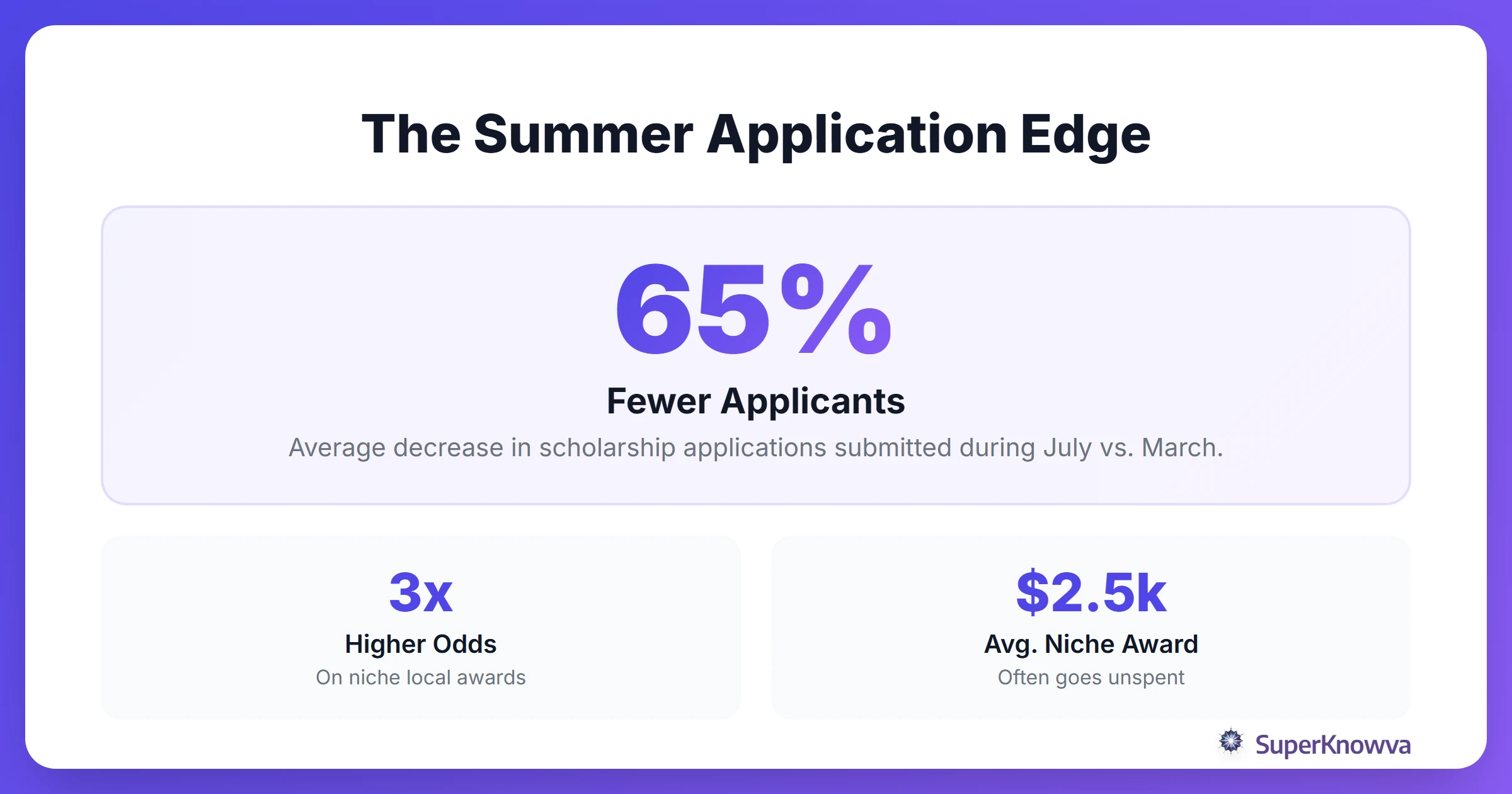
When you commit to the summer hunt, you’re playing a different game:
- Ghost Town Competition: With fewer people applying, your application doesn't just sit in a pile; it actually gets noticed.
- Zero Academic Noise: No midterms. No finals. You actually have the mental space to read the fine print and write something meaningful.
- Low-Stress Vibes: Writing an essay while sitting in a coffee shop or by the pool feels a lot less like "work" than grinding it out in the library at 2:00 AM.
Finding the 'Hidden' Money
If you want to win, stop fighting for the same $10,000 scholarships that 50,000 other people found on a massive database. That’s a lottery, not a strategy. Instead, you want to go small and go local.
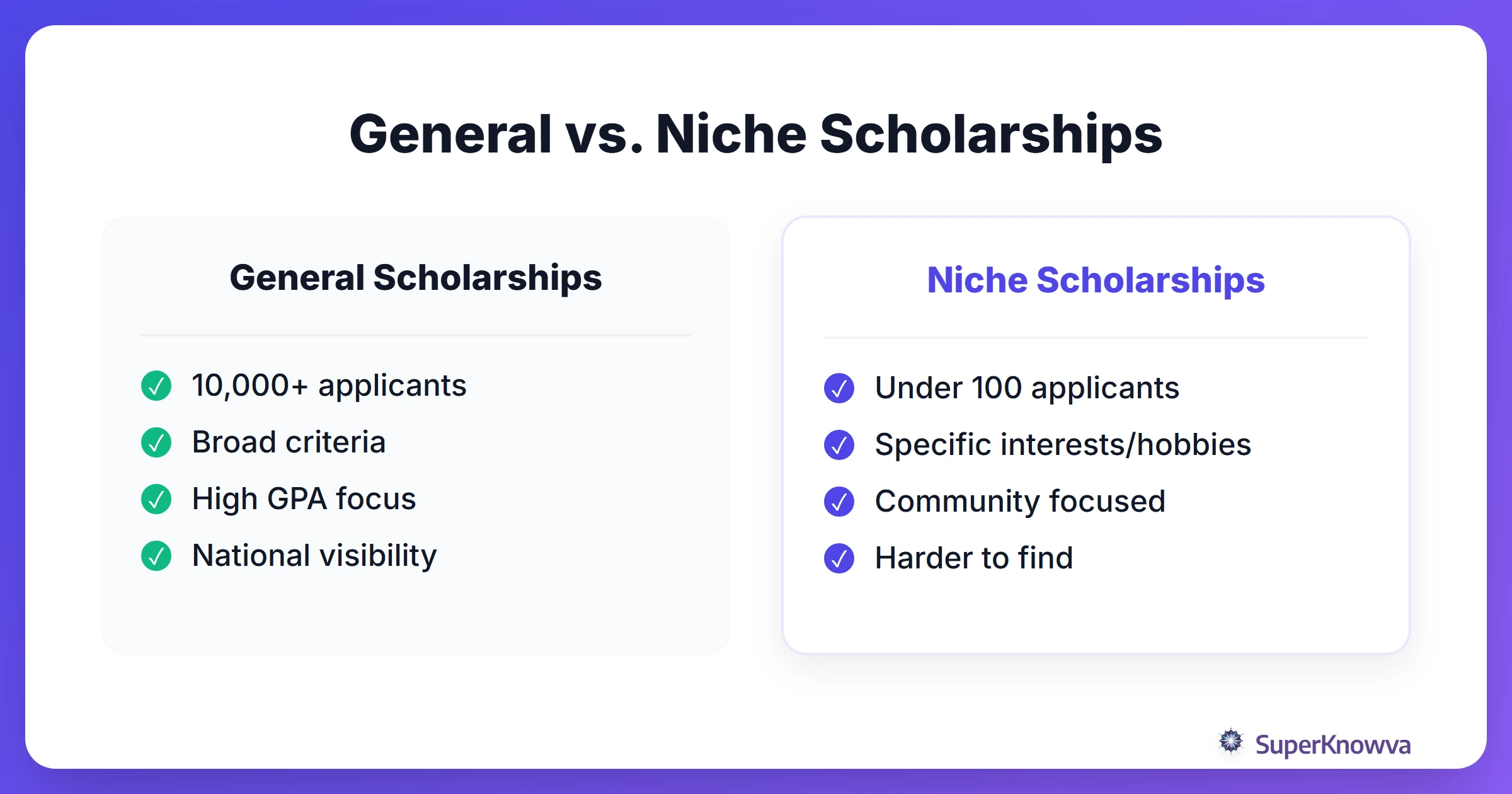
Start in your own backyard. Small businesses, local rotary clubs, and community foundations often have hidden scholarship funds they struggle to give away because they don’t have a marketing budget.
Also, look for awards that match your specific (and maybe weird) interests. For example, The Hunt Scholarship in Field Botany is perfect for students into plants, a niche most general applicants wouldn’t even think to search for.
Organizing Your Workflow (Without Losing Your Mind)
Winning money is 50% writing and 50% just being organized. If you treat this like a casual hobby, you’re going to miss a deadline or forget a transcript, and that’s just leaving money on the table.
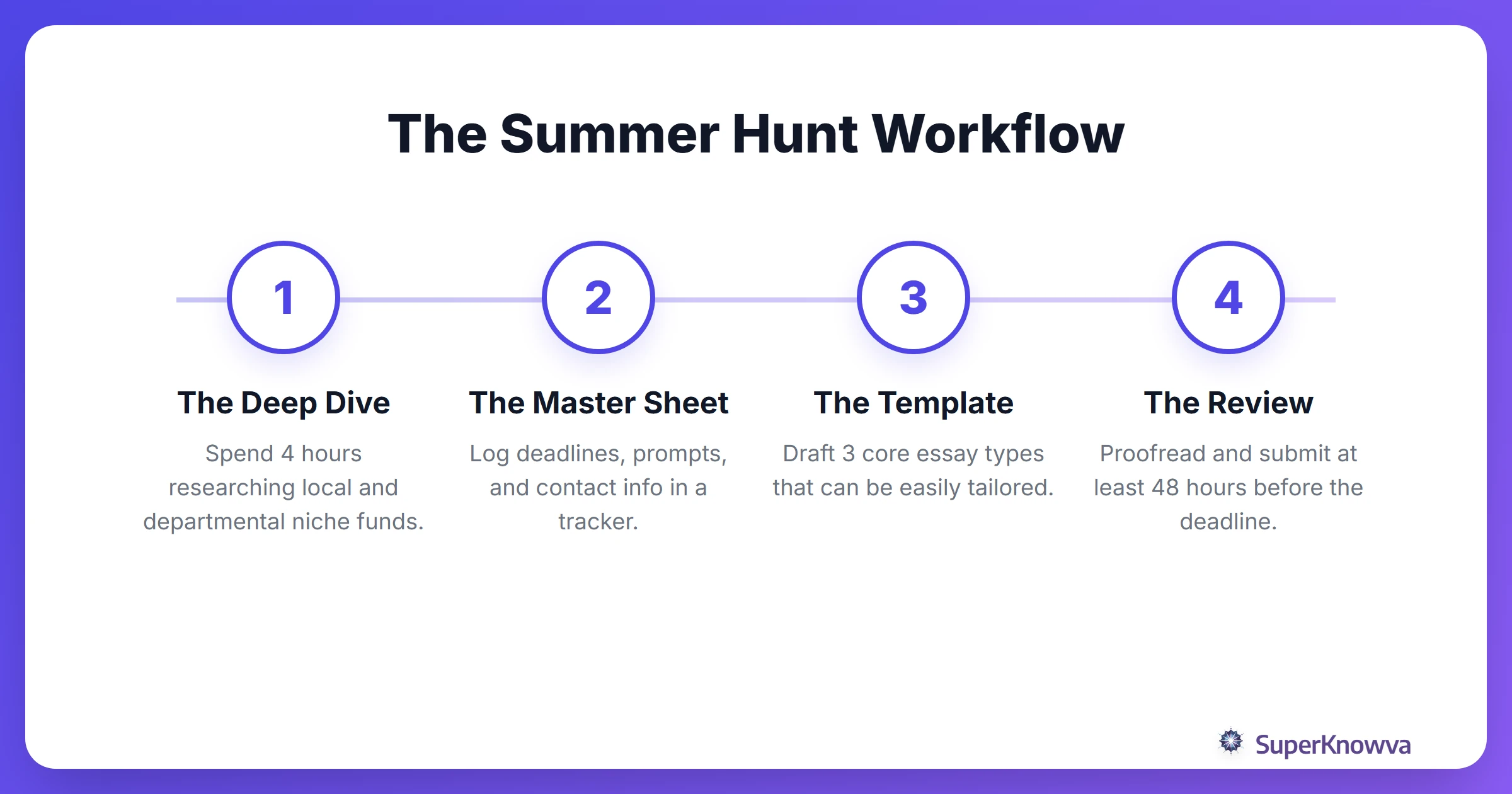
Keep it simple: set up a spreadsheet. Track the deadlines, the prompts, and what documents you need. If the fine print feels like a maze, using solid note-taking strategies can help you pull out the actual requirements so you don’t get disqualified on a technicality.
Struggling to get started? Use the 5-Minute Rule for Students. Tell yourself you’ll work on one application for just five minutes. Usually, once you start, the hardest part is over.
The Art of the Niche Application: Stop Being Generic
The biggest mistake? Sending a “copy-paste” essay to every single donor. Niche donors can smell a generic essay from a mile away. They want to know you actually care about their specific mission.
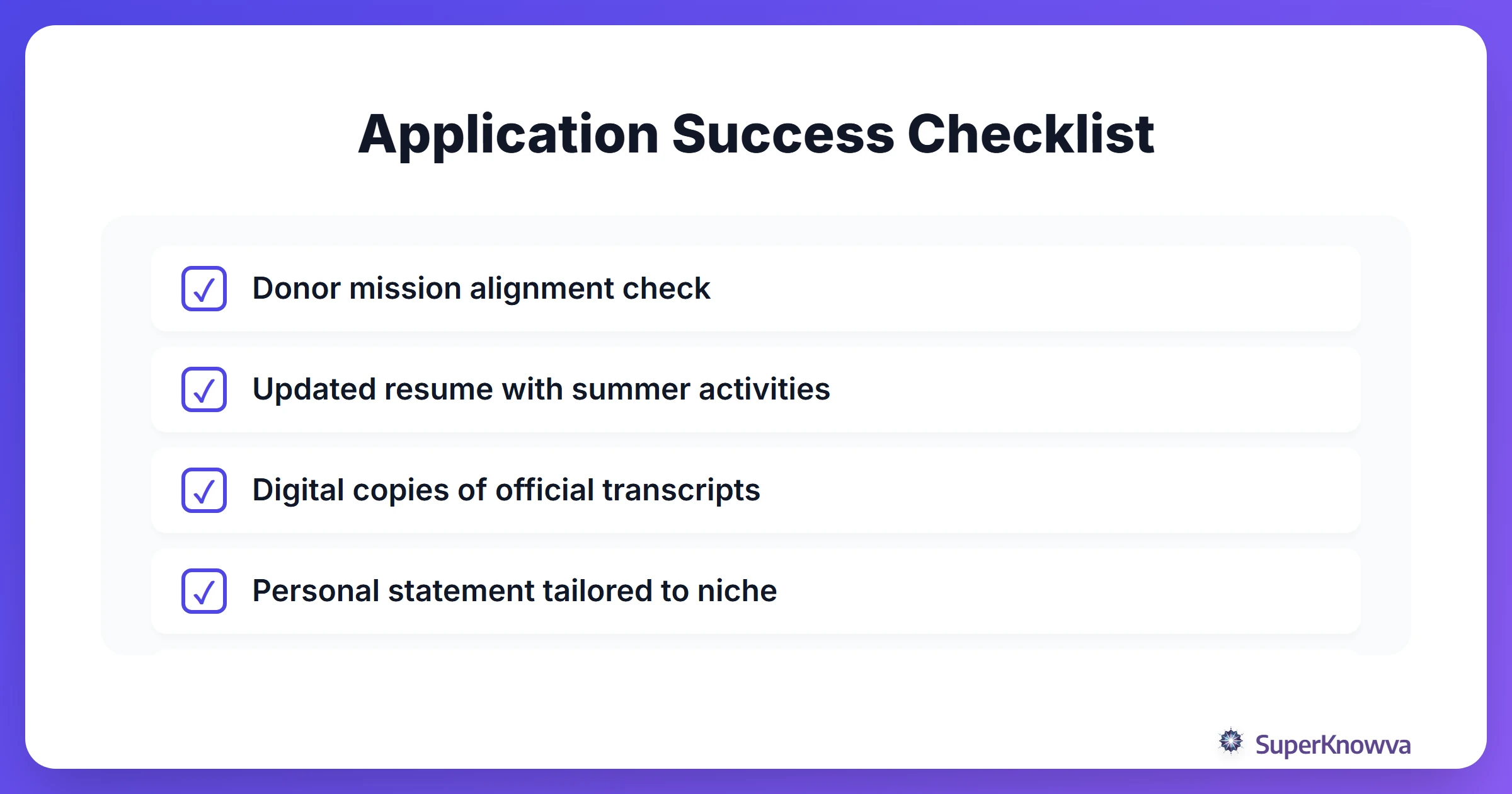
Before you type a word, do five minutes of homework on the organization. If a local gardening club is funding the grant, don’t just talk about “success”: talk about your passion for local nature or community gardens.
A quick tip for July: Professors go off the grid in the summer. If you need a letter of recommendation, send that email now. Be polite, acknowledge they’re on break, and attach a “brag sheet” of your accomplishments to make it easy for them to say yes.
Check Your Own Backyard: Departmental and Study Abroad Funds
Don’t overlook your own school. Many departments have “leftover” money at the end of the fiscal year, or specific pots of cash for summer study abroad grants.
For instance, Notre Dame Global Summer Funding is a great example of how universities provide specific help for summer travel. Even if you aren’t going overseas, talk to your department head. Sometimes there are small $500 or $1,000 awards for lab fees or summer credits that nobody bothered to apply for. These add up fast.
Avoid These Summer Traps
Don't let the relaxed summer schedule fool you. There are a few ways to trip up:
- The August Wall: A lot of "Early Bird" scholarships for the fall semester actually close in the first week of August. If you wait until move-in day to look, you’re already too late.
- The Scam Check: If a scholarship asks for your Social Security number right away or charges an "application fee," close the tab. It’s a scam.
- The Registrar Lag: University offices run on "summer hours" (read: they are slow). If you need an official transcript, request it three weeks before you actually need it.
Making it a Habit
The goal isn't just to win one check this summer. It's to build a system. Use this July "sprint" to get your materials ready for the rest of the year.
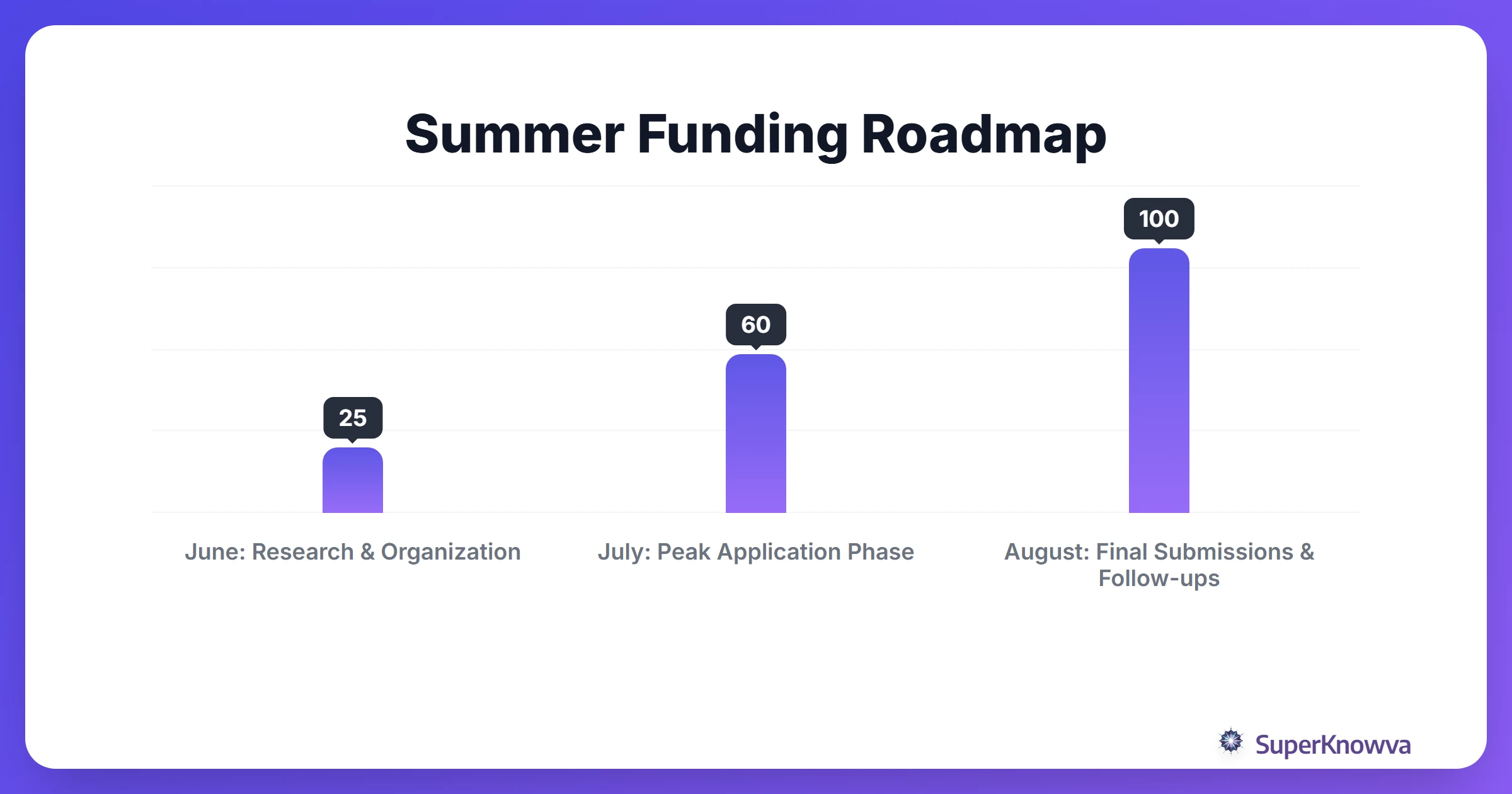
Getting your funding sorted now means you can actually balance a high GPA with a social life once the semester kicks off. Set a goal to find and apply for two scholarships every month. If you make it a habit, you’ll stop stressing about tuition and start focusing on your future.
Ready to crush your next semester while you wait for those scholarship checks to roll in? See how SuperKnowva’s AI tools can help you master your hardest subjects in half the time!