Finals are over. The textbooks are closed. You probably want to throw your laptop in a drawer and forget it exists until August. This is understandable. For the future Master’s or PhD student, May is not just for beach days. It is the most strategic time you will have all year.
If you’re planning to head back to school, scholarship searching for grad school needs to be at the top of your spring to-do list. Unlike undergraduate funding, which often feels like a streamlined "package" handed to you by a financial aid office, graduate funding is a different beast. It’s decentralized. It’s competitive. And if you don’t have a strategy, you might end up staring down a mountain of high-interest loans come fall.
Why May is the "Golden Month" for Your Search
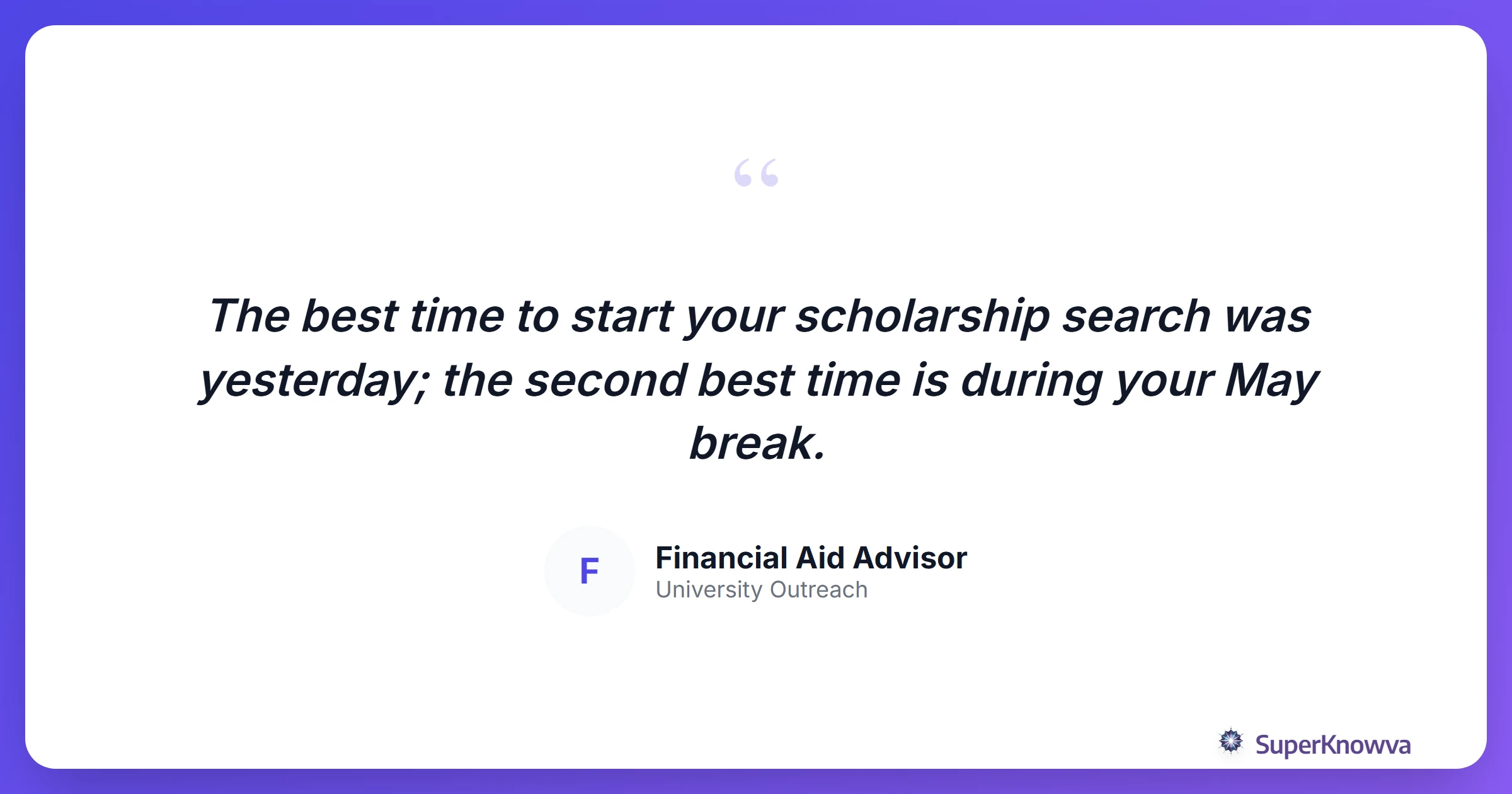
Most students treat the "May gap," the quiet lull between spring finals and summer jobs, as a total mental vacation. This is the right time to take action.
Without the constant pressure of balancing a high GPA with a social life, you actually have the headspace to do the deep work. In grad school, the burden of discovery is 100% on you. By starting now, you’re positioning yourself months ahead of the frantic fall application cycle. It’s the best way to avoid that last-minute scramble for private loans that causes so much long-term financial stress.
Understanding Graduate Scholarship Options
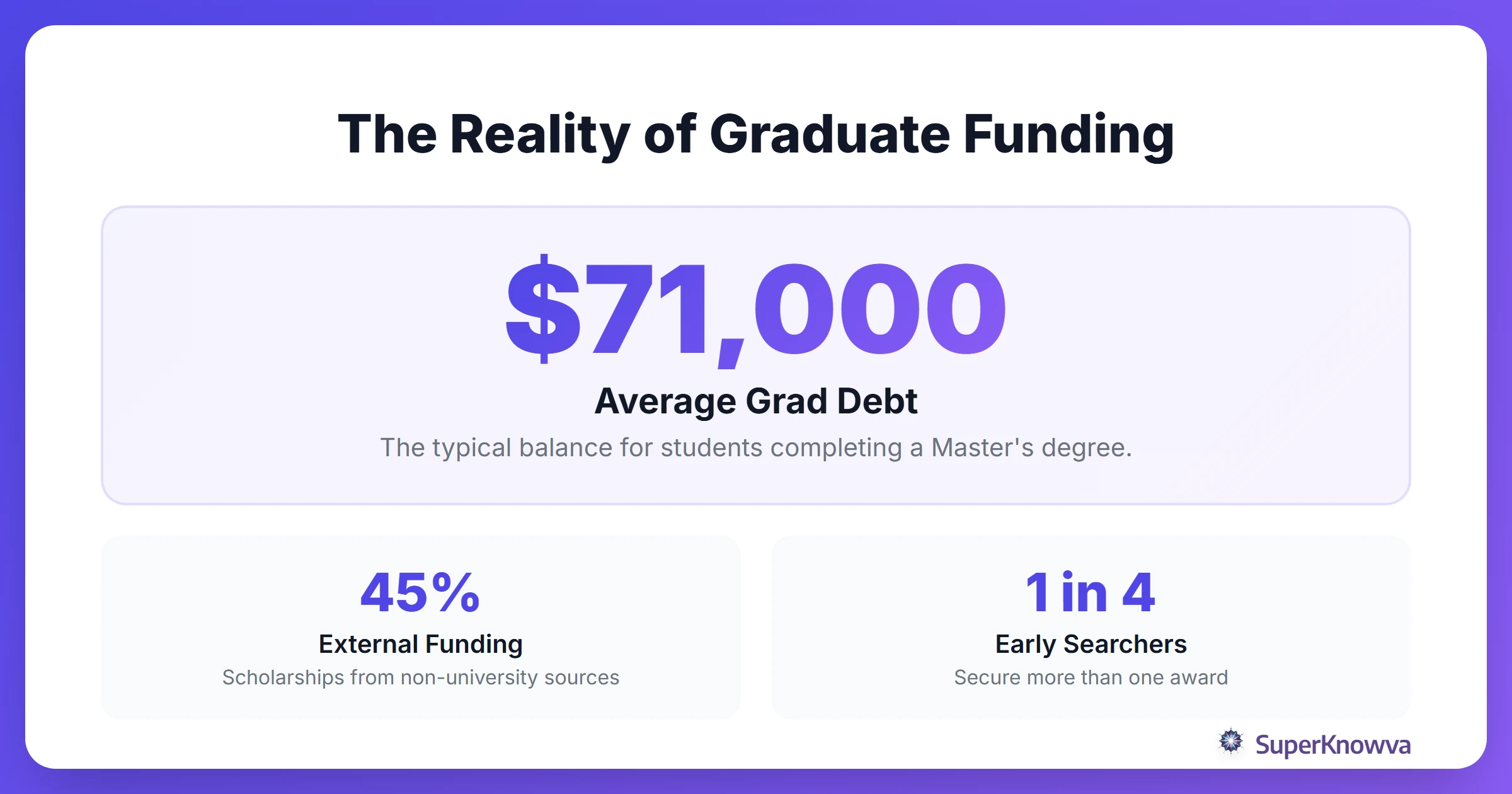
If you’ve spent any time on Reddit or student forums lately, you’ve seen the doom-posting: "Where did all the money go?" It often feels like the fountain of "free money" dries up the second you walk across the stage at commencement.
The truth? The money is still there. It’s just hiding.
To win, you need to understand the three main buckets of grad school financial aid:
- University-Specific Grants: Usually tied to your specific department or a research assistantship.
- Fellowships: High-prestige, merit-based awards that often include a stipend for living expenses.
- External Scholarships: Money from private foundations, corporations, or community groups.
Finding funding for masters degree programs or phd scholarship opportunities requires looking for niche sources. Professional organizations like the American Psychological Association or the Society of Women Engineers often have massive funds that go unclaimed because students rarely look past their own university’s website. For a deeper look at these strategies, check out College Essay Guy's Guide to Grad Funding.
Using AI to Work Smarter, Not Harder
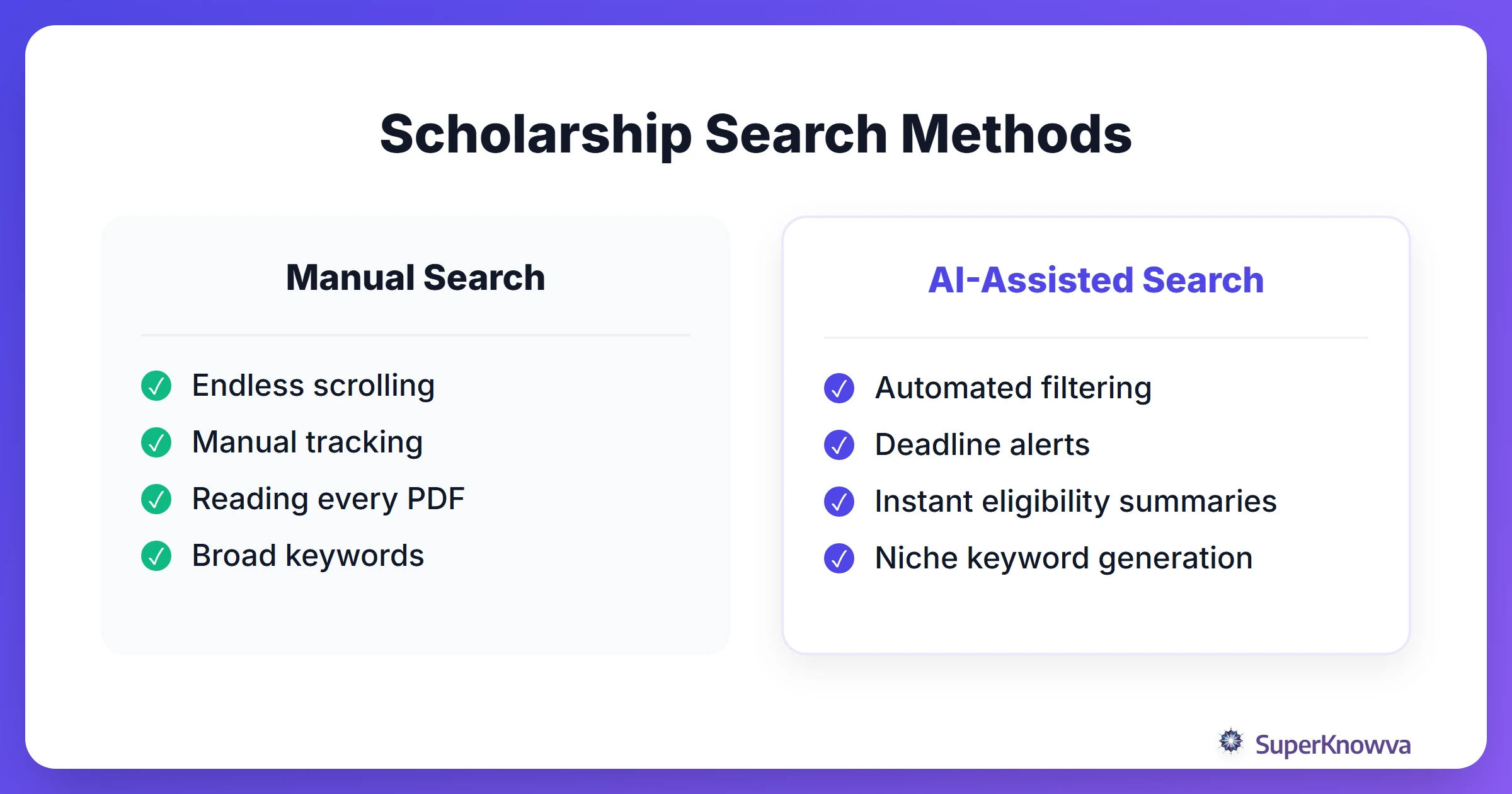
In 2026, searching for scholarships manually is like using a paper map to find a hidden speakeasy. You can do it, but why would you? An AI scholarship search strategy can turn a 20-hour slog into a two-hour afternoon task.
First, use AI to cut through the legal jargon. Instead of squinting at ten pages of "Terms and Conditions" for a fellowship, paste the text into a tool like SuperKnowva and ask: "Am I eligible for this if I’m a part-time student in California pursuing an MBA?"
Second, use AI to find the "hidden" keywords. If you’re studying Marine Biology, don't just search for "science scholarships." Ask an AI to generate 20 niche keywords for someone specializing in "coral reef restoration and climate policy." This will lead you to corners of the internet your competitors haven't found. Combine this with the best study apps for 2026 to keep your research organized.
The Strategic Search: Beyond the First Page of Google
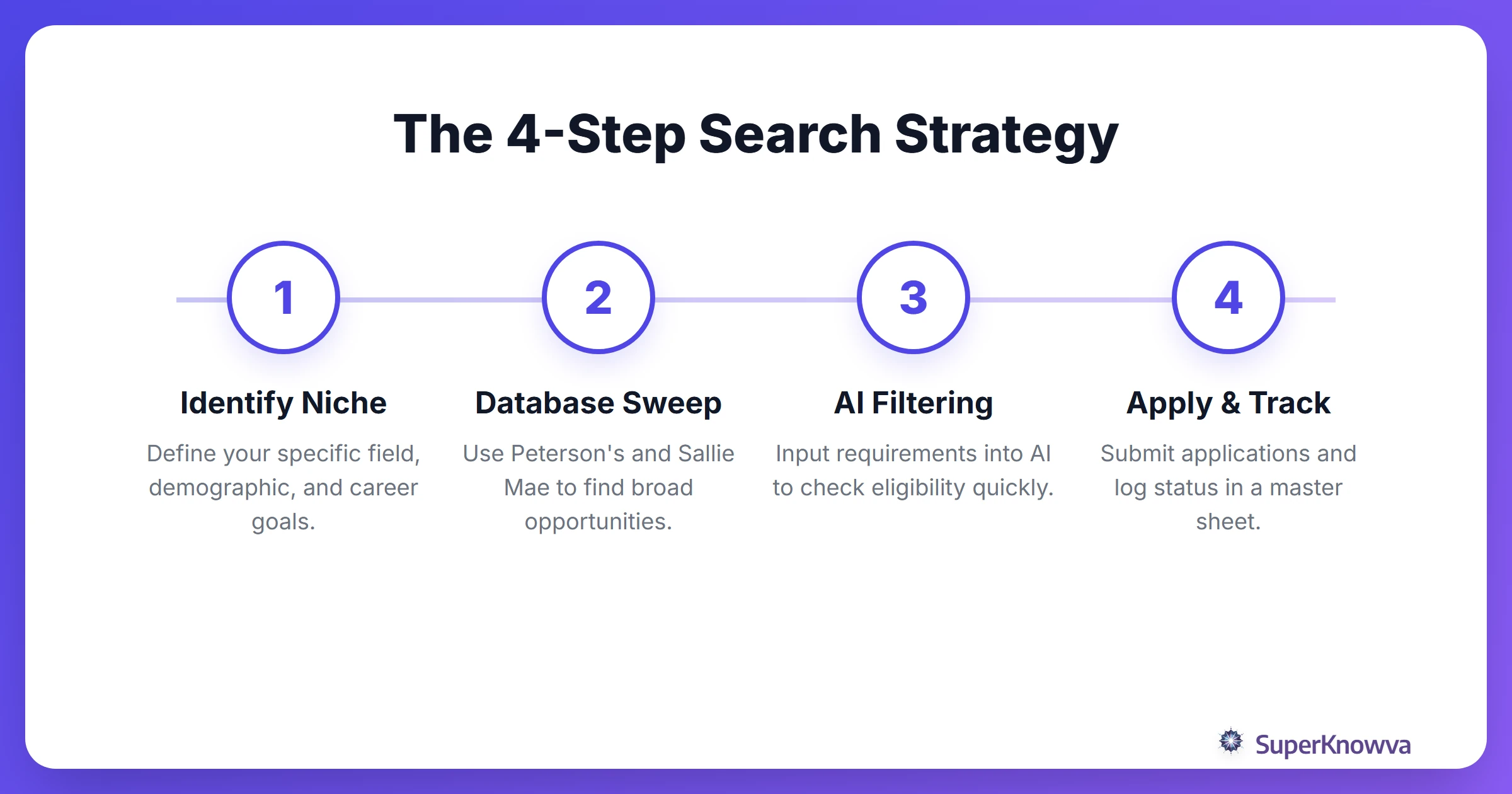
To find the high-value awards, you have to dig. Start with established databases like Sallie Mae Graduate Scholarships and Peterson’s. Use their filters to strip away the undergraduate noise.
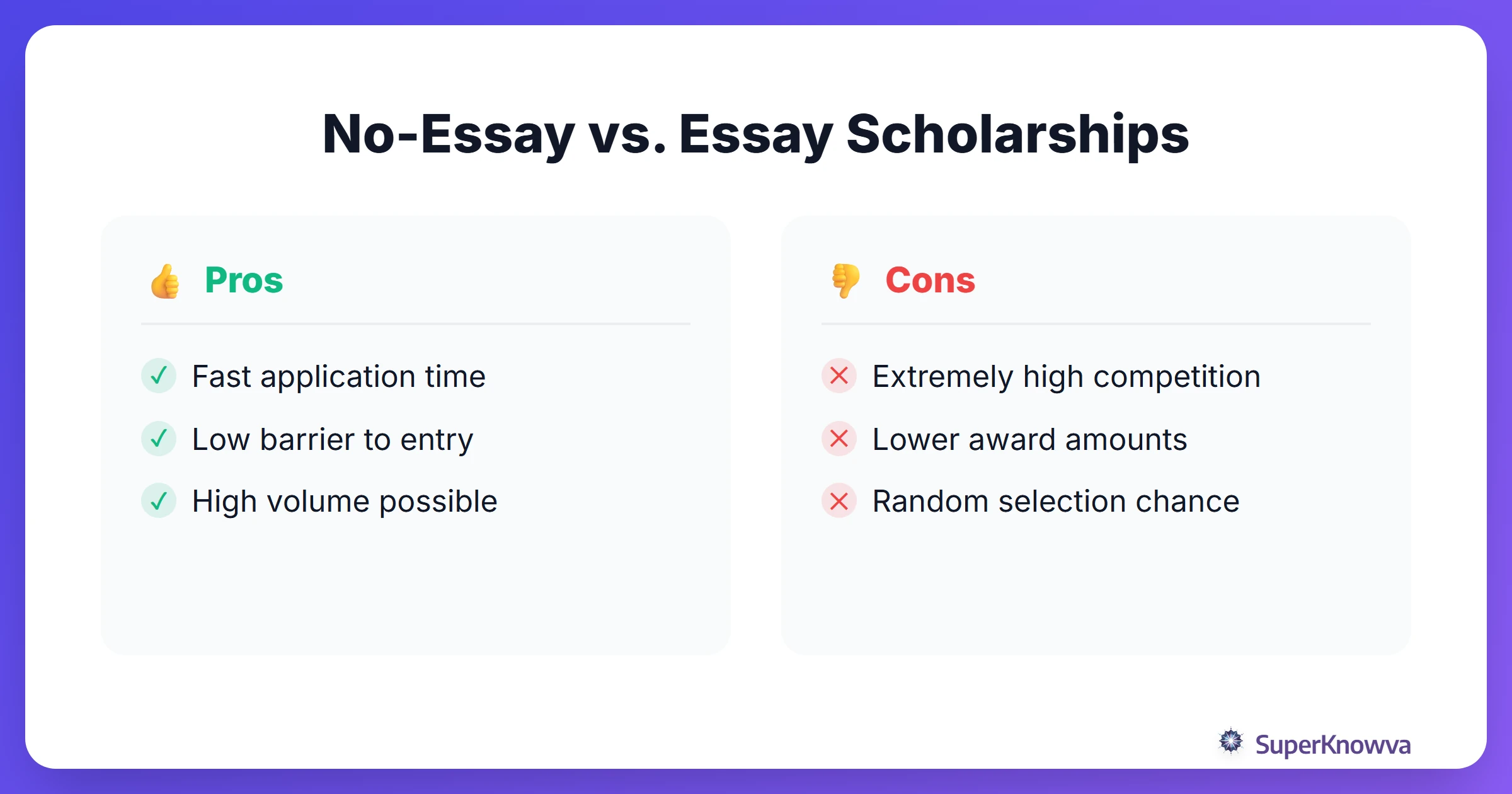
You’ll see two main types of opportunities: "No Essay" scholarships and high-effort fellowships.
"No Essay" options are lotteries. They take thirty seconds to enter, but the odds of winning are slim. Your time is better spent on regional grants or professional fellowships that require a personal statement. These have a higher barrier to entry. This is an advantage because it means fewer applicants and a higher statistical chance of you getting paid.
Organizing Your "Scholarship Command Center"
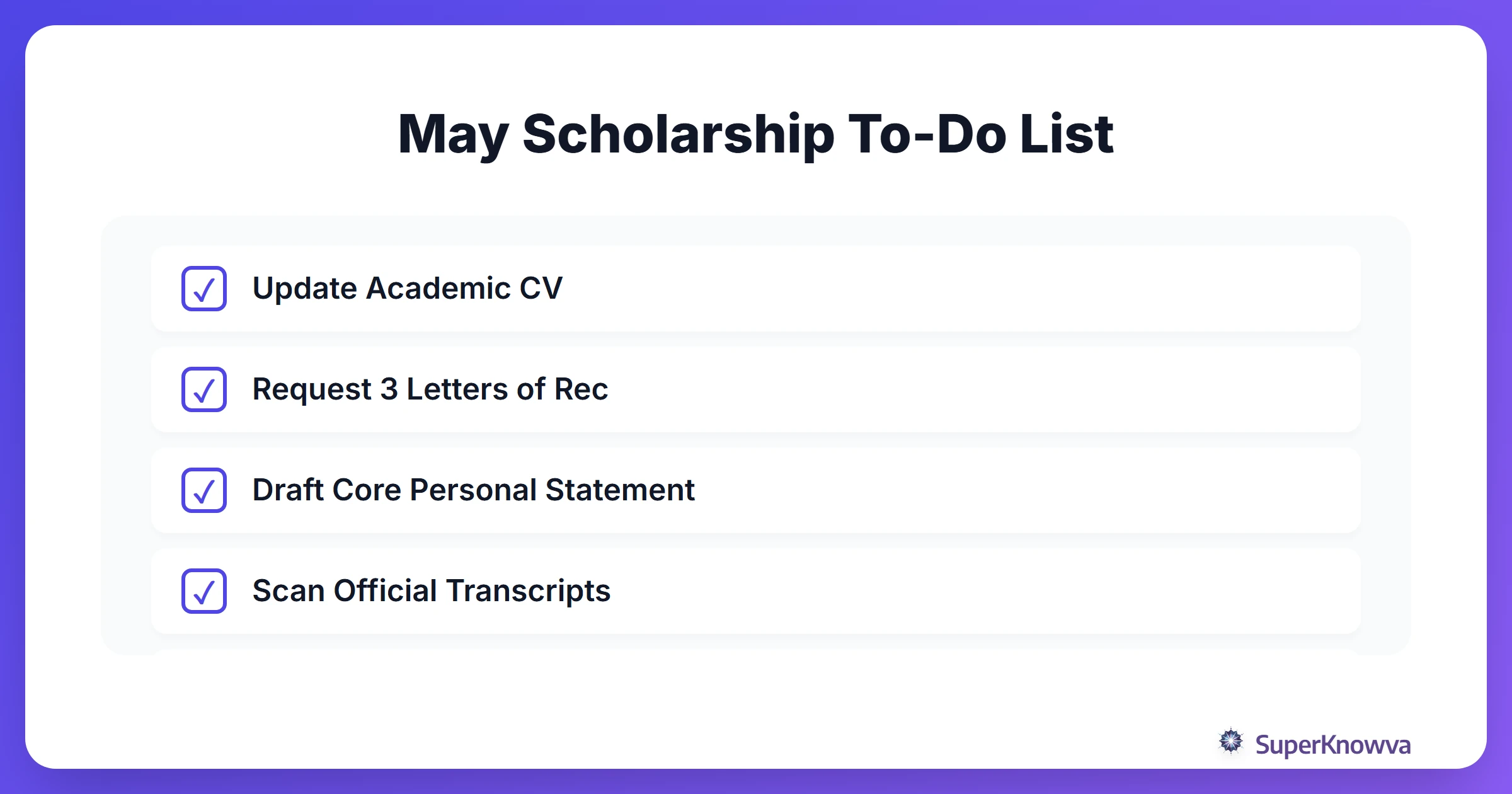
The biggest hurdle isn't the writing; it is the logistics. In May, build a system to stay organized. Create a master spreadsheet to track:
- Scholarship Name & URL
- Deadline Date (Sort by this!)
- Required Documents (Transcripts, CV, Letters of Rec)
- Status (Not Started, In Progress, Submitted)
Feeling overwhelmed? Use the 5-minute rule for students. Tell yourself you’ll only work on one application for five minutes. Usually, the hardest part is just opening the document. Once you start, you’ll likely keep going. Try setting a "Scholarship Power Hour" every Tuesday morning in May to keep the momentum alive.
Personal Statements: How to Use AI Without Losing Your Soul
Your personal statement is where you prove you’re an investment, not just another name on a list. AI is a great co-pilot here for outlining and matching your narrative to a provider’s mission.
But a word of warning: Stay human.
Scholarship committees can spot a generic AI essay from a mile away. Use AI to brainstorm and structure your thoughts, but the final draft needs to sound like you. Talk about your specific research, your unique background, and exactly how this funding will change your career trajectory. Be precise. Be bold.
By the time June rolls around, most students will just be starting to worry about their fall budget. By following this guide, you’ll already have a spreadsheet full of leads and a head start on the competition. Don’t let debt define your grad school experience. Start your search today.