It’s 3:00 AM. You’re on your fourth cup of lukewarm coffee, the library’s fluorescent lights are humming, and your notes are starting to look like hieroglyphics. During finals, sleep feels like a luxury you can’t afford: a block of time that could have been spent on one more practice quiz or another chapter of Bio-Chem.
But here’s the cold, hard truth: pulling that all-nighter is actually sabotaging your GPA. Sleep hygiene for exam week isn't just about "feeling rested." It’s a strategic part of your study plan.
At SuperKnowva, we’re all about studying smarter. While our AI tools are designed to help you master complex material in record time, your brain still needs a "save button." That button is sleep. If you want to actually remember what you’re studying, you have to stop treating sleep like an afterthought and start treating it like your most effective study tool.
The Science of Sleep: Your Brain’s "Save" Button
Why does sleep matter so much? Because your brain doesn't just shut down when you hit the pillow. It actually goes into high gear. This is called memory consolidation. Think of it as your brain moving files from a messy "temporary" folder on your desktop into a secure, long-term hard drive.
Research into the memory consolidation study field highlights two essential stages:
- NREM (Non-Rapid Eye Movement): This is where your brain processes facts, dates, and formulas.
- REM (Rapid Eye Movement): This stage is for the "big picture," connecting complex concepts and creative problem-solving.
Sleep also handles "synaptic pruning." It’s essentially a deep clean where your brain clears out metabolic waste and gets rid of unimportant neural clutter. Trying to learn while sleep-deprived is like trying to write on a hard drive that’s already 99% full. There’s just no room for the new data to stick. It’s no surprise that the Sleep Foundation found that better sleep quality is one of the strongest predictors of a high GPA.
The All-Nighter: A Badge of Honor or a Huge Mistake?
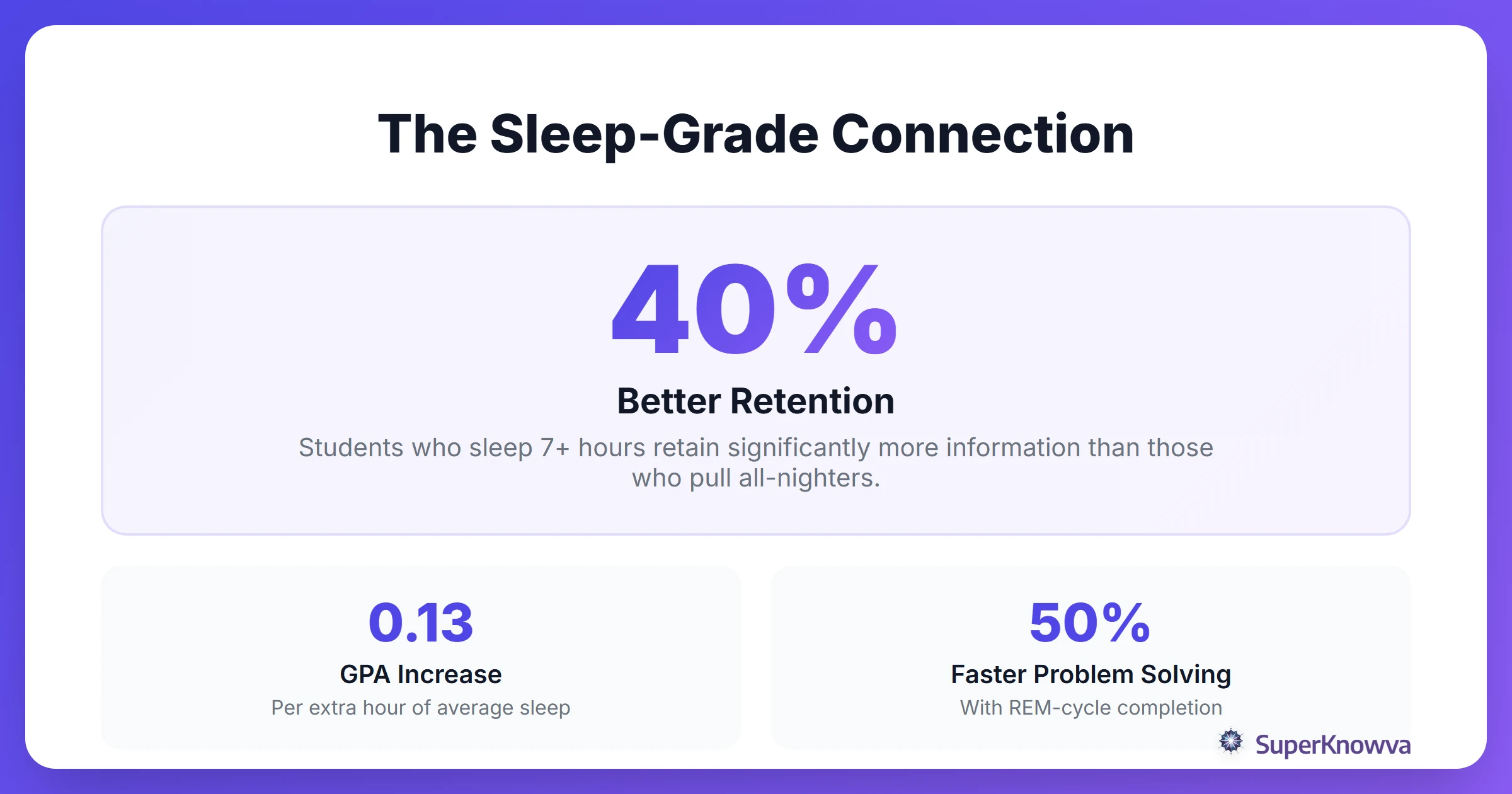
In college culture, the all-nighter is often worn as a badge of honor. But when you look at the all-nighter vs sleep data, the winner is clear every single time.
When you skip a night of sleep, your cognitive impairment is roughly the same as being legally drunk. You experience "brain fog," sluggish reaction times, and a significant drop in accuracy. The most frustrating sleep deprivation effects on grades aren't the things you didn't know. It's the "easy points" you lose because you were too tired to think straight.
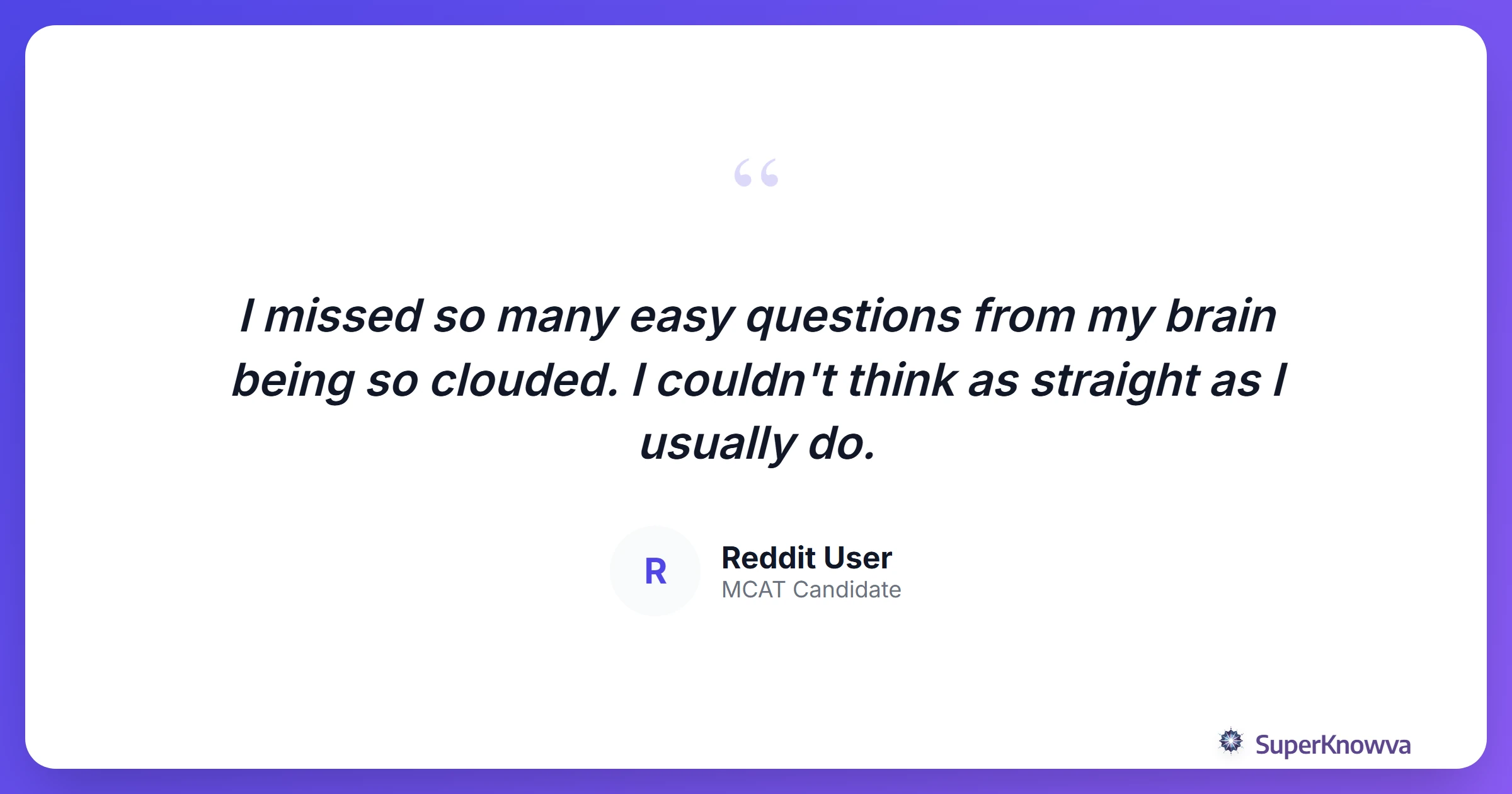
As one MCAT candidate shared on Reddit: "I missed so many easy questions because my brain was so clouded. I knew the material, but I couldn't connect the dots like I usually do."
There is a literal law of diminishing returns at play. After a certain hour, you aren't actually absorbing information; you’re just staring at a page.
Don't Fight Your Body Clock
Your body runs on a 24-hour internal clock called the circadian rhythm. During finals, consistency is your secret weapon. If you stay up until 4:00 AM on Monday and then try to crash at 9:00 PM on Tuesday, you trigger "social jetlag." You’ll wake up feeling groggy and disoriented, regardless of how many hours you actually slept.
To keep your circadian rhythm for students on track:
- Get 10 Minutes of Sun: Step outside shortly after waking up. It signals to your brain that the day has officially started. Understanding your circadian rhythm is the first step to staying sharp when the pressure is on.
- Match Your Peak Hours to the Exam: If your exam is at 8:00 AM, don't become a night owl the week before. You want your brain to be at its peak performance during the actual test time.
While sleep is the foundation, pairing your rest with the best diet for studying can give you that extra edge in cognitive clarity.
The 3-2-1 Wind-Down Routine
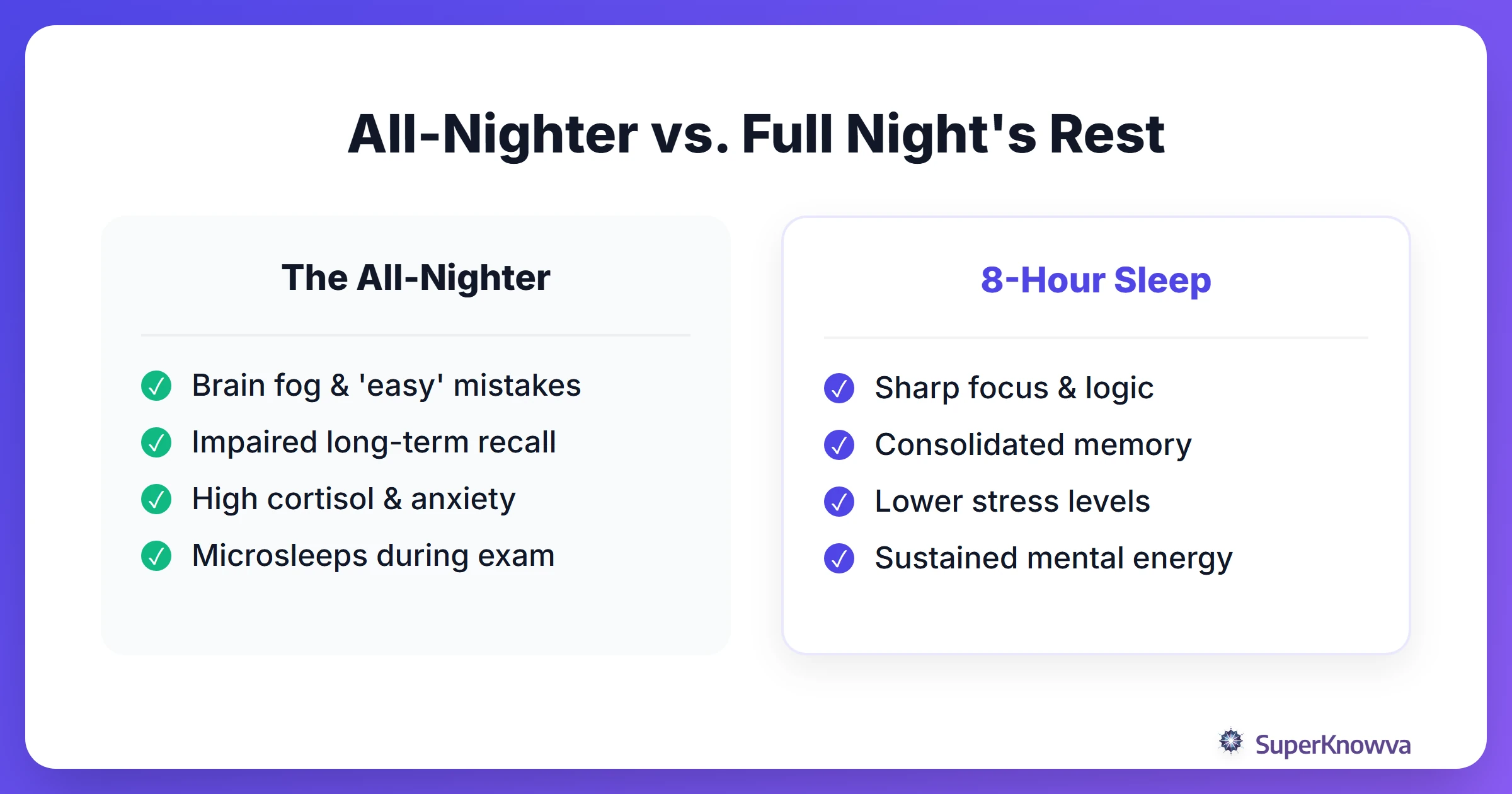
You can’t expect your brain to flip a switch from "Intense Physics Review" to "Deep Sleep" instantly. You need a buffer. Try the 3-2-1 rule to decompress:
- 3 Hours Before Bed: No more heavy meals or caffeine. Give your digestion and nervous system a break.
- 2 Hours Before Bed: Stop the work. Close the laptop. No more active recall or practice tests.
- 1 Hour Before Bed: No screens.
The blue light from your phone or laptop is a melatonin killer. It tricks your brain into thinking it’s still daytime. Use this hour for low-stimulation tasks: pack your bag, pick out your outfit, or read something that isn't a textbook. Setting a "hard stop" time for your studies is a non-negotiable way to avoid the signs of student burnout that can ruin your entire semester.
Set the Stage for High-Quality Rest
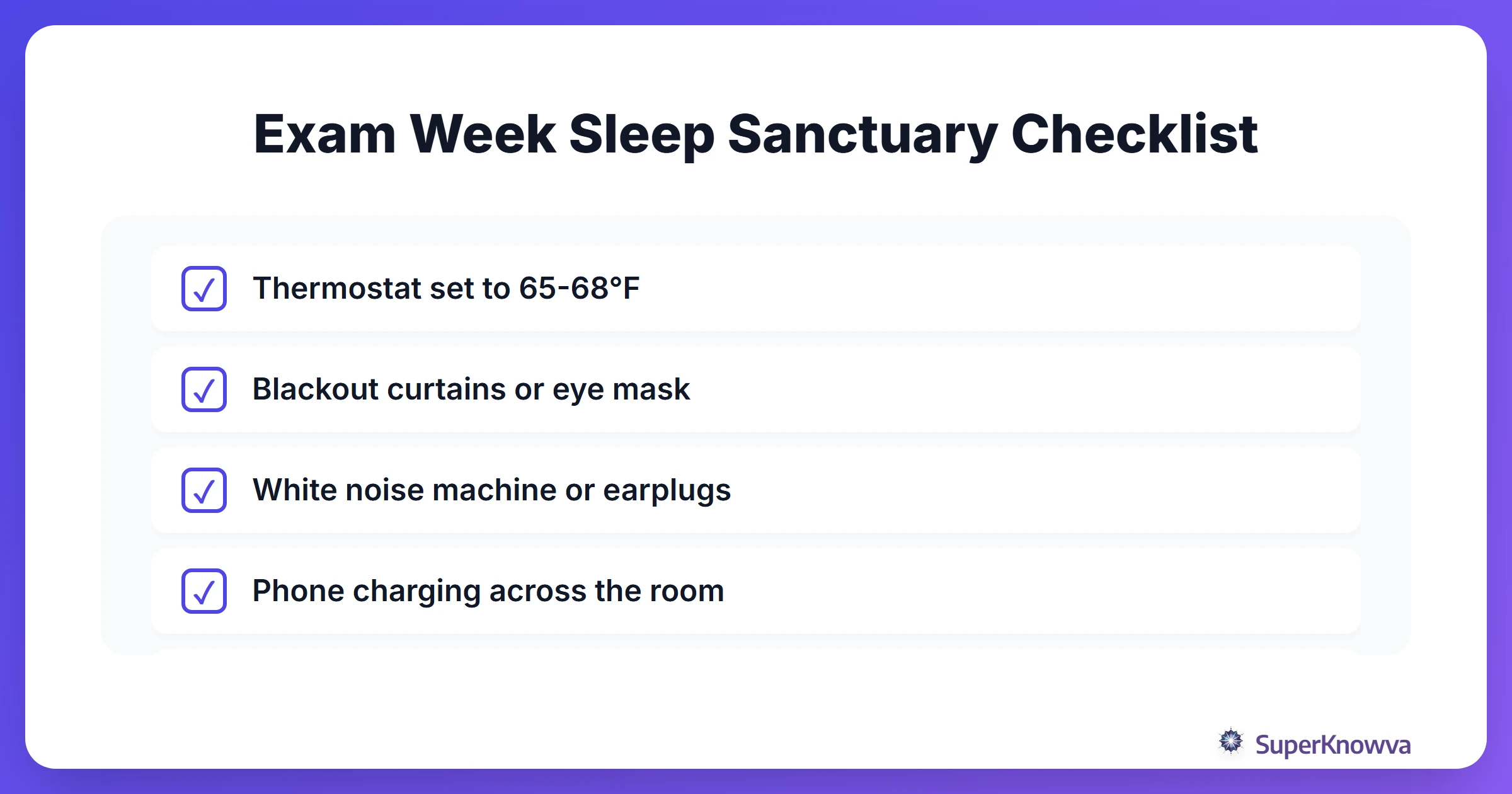
If you only have six or seven hours to sleep, you need to make them count. Your environment is the difference between a restless nap and deep, restorative sleep.
- Keep it Cool: The sweet spot for sleep is around 65°F (18°C). A drop in core body temperature is one of the primary signals that it’s time to sleep.
- Silence the Chaos: Dorms are loud. Use a white noise machine or high-quality earplugs to drown out the 2:00 AM hallway conversations.
- Total Blackout: Use blackout curtains or a simple eye mask. Darkness is the "on" switch for your sleep hormones.
- The Bed is a "No-Study Zone": Never study in bed. If your brain associates your mattress with the stress of practice exams, you’ll never be able to relax.
Taming "Exam-Somnia" and Anxiety
What happens when you try to sleep, but your brain is stuck in a loop of formulas and "what-if" scenarios? This is "exam-somnia," and it’s a physical reaction to high cortisol levels.
When the pre-exam panic hits:
- Try 4-7-8 Breathing: Inhale for 4 seconds, hold for 7, and exhale for 8. It’s a biological "hack" that forces your heart rate to slow down.
- Practice Mindfulness: If your thoughts are racing, mindfulness for students can help you ground yourself in the moment rather than spiraling about the future.
- The Caffeine Cutoff: Caffeine has a long half-life. If you want to sleep by midnight, your last cup of coffee should be no later than 2:00 PM.
The Bottom Line
Don’t let the stress of finals week talk you into sabotaging your own hard work. That extra hour of study at 3:00 AM isn't going to save your grade, but an extra hour of sleep might. By prioritizing sleep hygiene for exam week, you aren't being "lazy." You’re giving your brain the time it needs to process information and stay focused.
Rest well, study smart, and go crush those finals!