It’s 2 AM. You’re three tabs deep into a Wikipedia hole, your third cold brew is sweating on your desk, and the library lights are starting to feel aggressive. You might think the secret to acing exams is outlasting the sun. At SuperKnowva, the data shows a more relaxing truth: your most effective study tool isn't a caffeine IV drip; it’s your pillow.
Mastering sleep hygiene for finals week is the ultimate "study hack." It’s the difference between actually retaining that 12-chapter textbook and just staring at the pages until your eyes blur.
In this guide, we’re going to look at why sleep is your GPA’s best friend and how you can optimize your rest without losing your competitive edge.
The Science of Sleep: How Rest Powers Your Brain
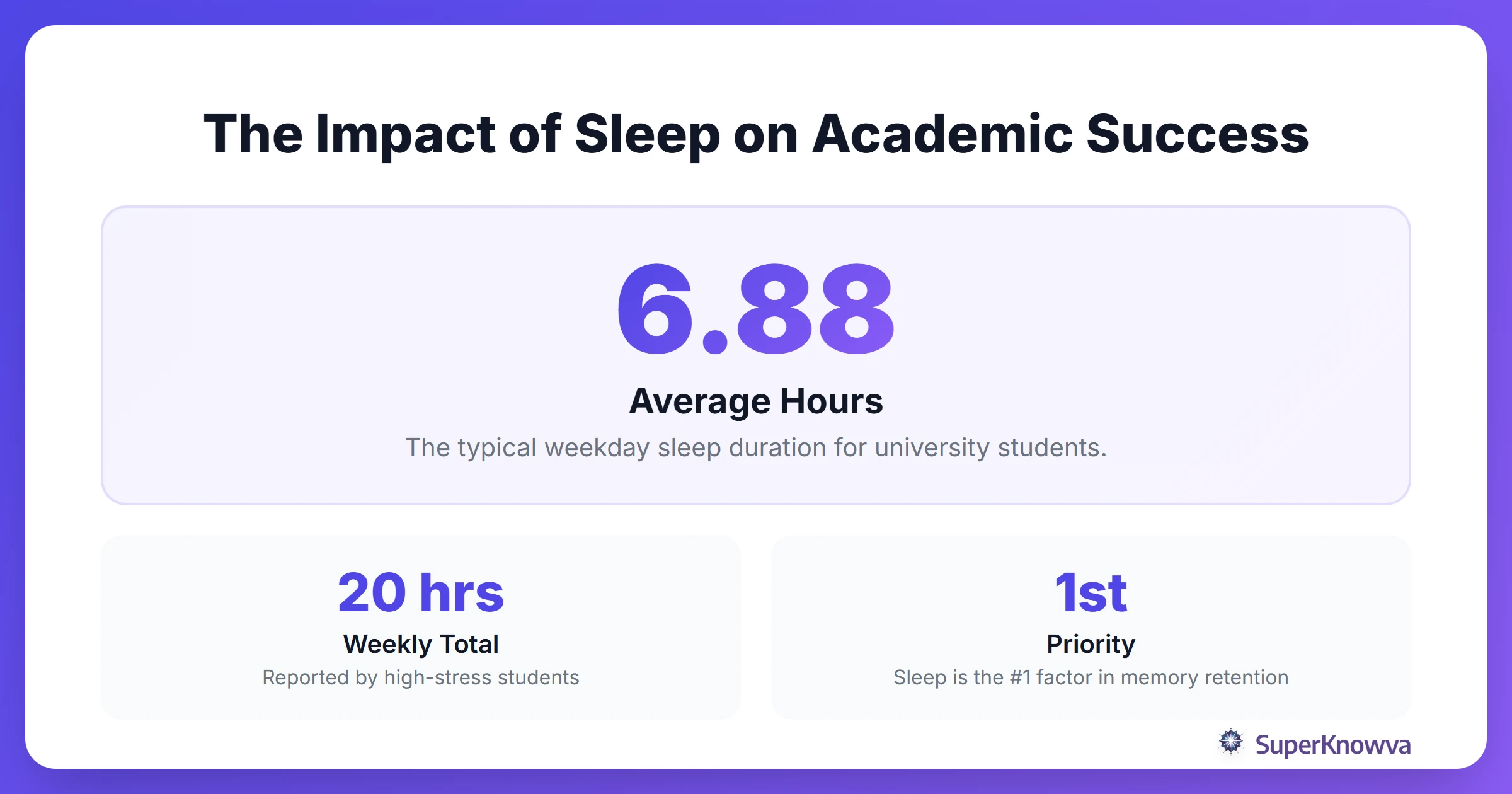
Do you view sleep as "lost time"? It’s a common mistake. Biologically, sleep is actually the most active time for your memory. While you’re out, your brain is moving through REM and deep sleep cycles, performing what scientists call memory consolidation sleep.
Think of your brain like a computer. If you don't hit "save" before the battery dies, all that work is gone. Sleep is that "save" button. It takes the facts, formulas, and theories you grinded through during the day and "uploads" them into your long-term storage.
Without it, you’re just spinning your wheels. Sleep deprivation doesn't just make you grumpy; it actively sabotages your logic, focus, and ability to solve complex problems. Research consistently shows a direct link between consistent rest and higher grades. According to the Sleep Foundation's Guide to Finals, students who actually sleep perform significantly better than those who sacrifice rest for more hours in the library.
The All-Nighter Trap: Why Cramming Fails
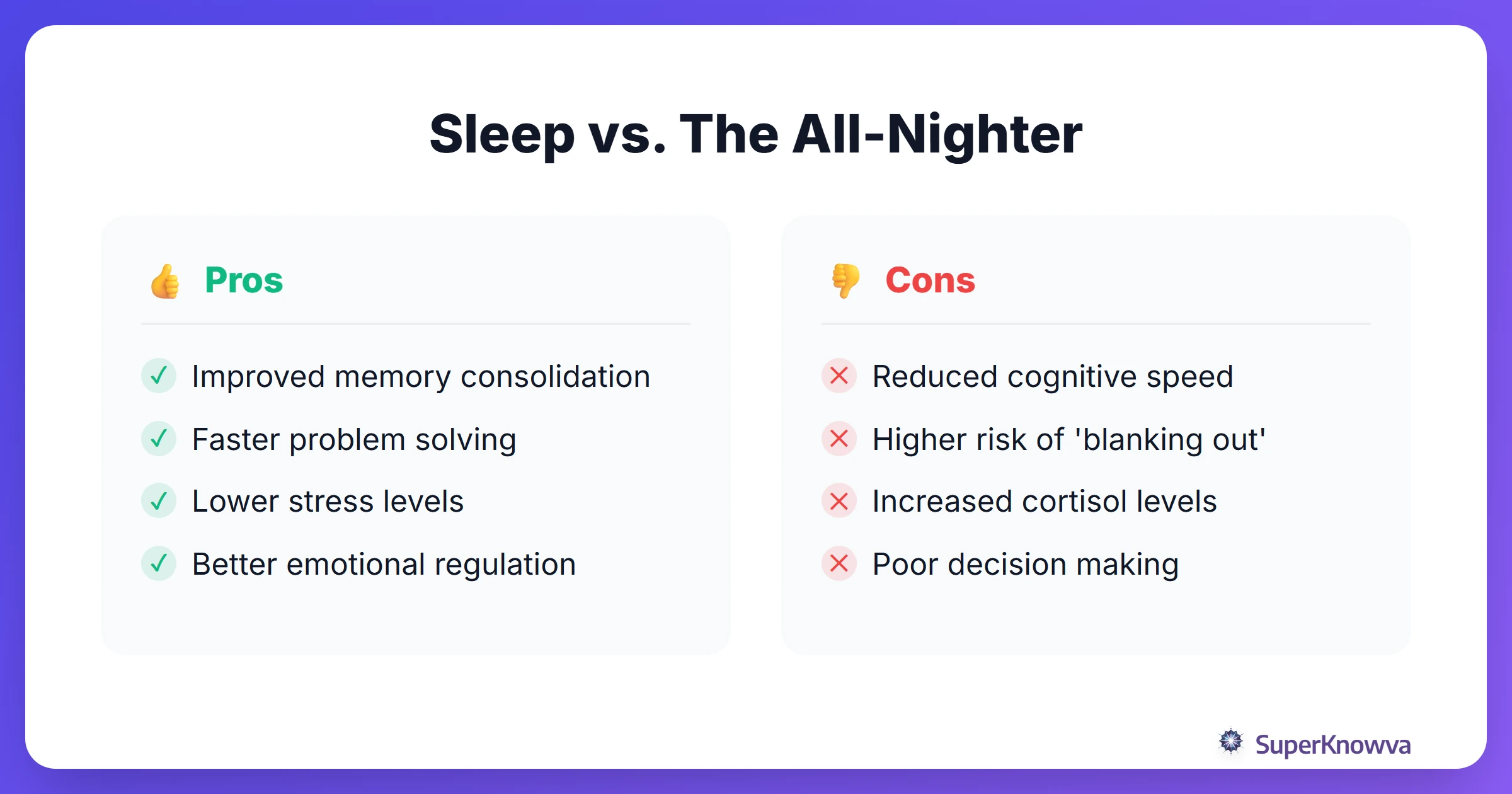
We’ve all heard the legend of the student who stayed up 24 hours and somehow pulled an A. They are the exception, not the rule. When you look at the all-nighter vs sleep debate, the "law of diminishing returns" hits fast and hard.
After about 18 hours without sleep, your brain stops absorbing new info. You start making "silly" mistakes, the kind you would never make if you were rested. Staying awake for more than 20 hours straight induces a level of cognitive impairment similar to being legally intoxicated. You would not show up to a final drunk, so why show up sleep-deprived?
This leads to the classic signs of student burnout: irritability, physical exhaustion, and that terrifying "blanking out" the moment you see the first exam question.
Designing Your Sleep Sanctuary
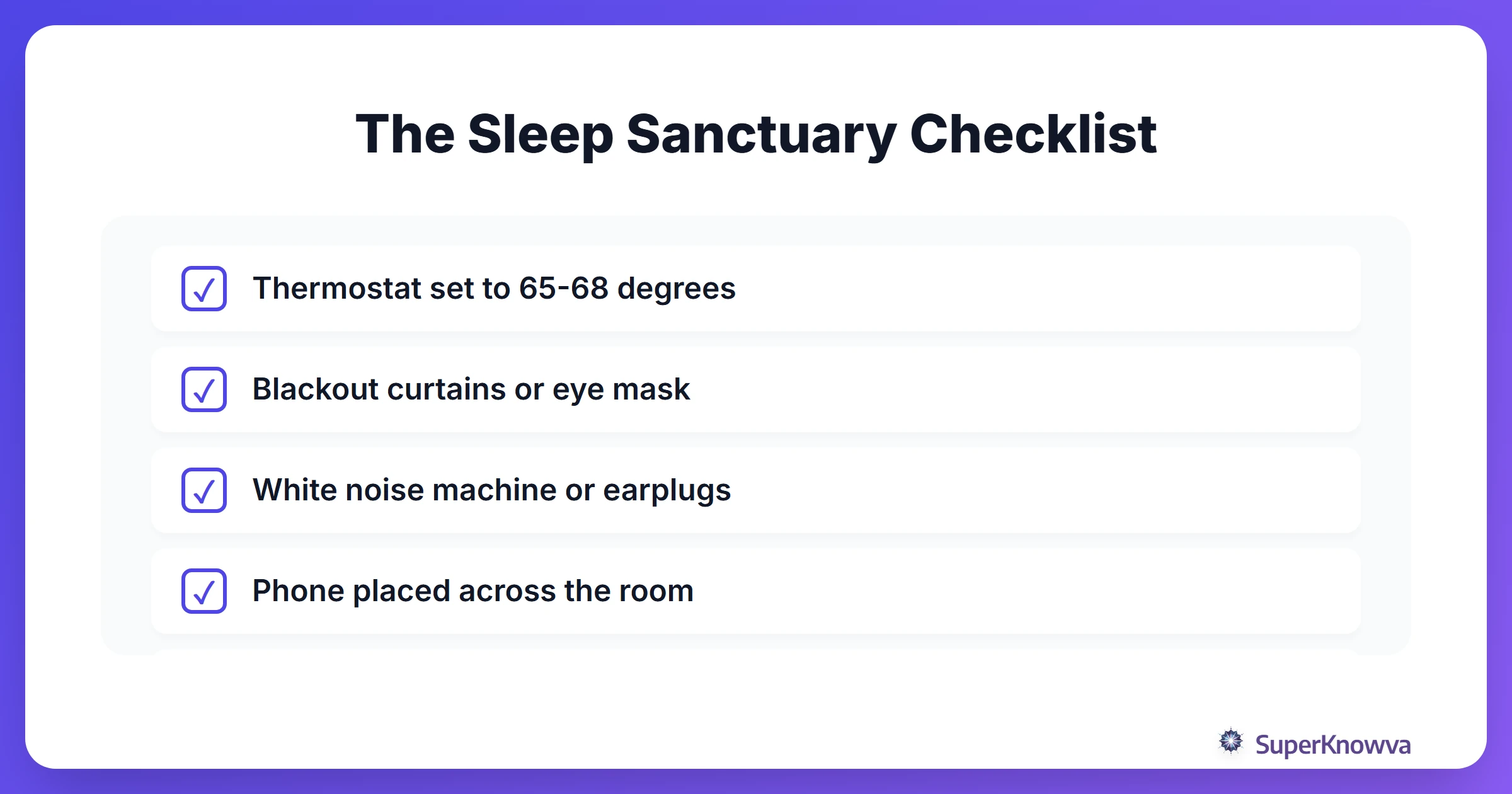
If you only have six hours to sleep, you need to make them count. Your environment shouldn't just be a place where you crash; it should be optimized for deep recovery. This is a cornerstone of healthy college student sleep habits.
- Kill the Heat: Your body temperature needs to drop to trigger sleep. Keep your room around 65°F (18°C) if you can.
- Total Blackout: Any light tells your brain to stop producing melatonin. Use blackout curtains or a cheap eye mask to signal that the workday is officially over.
- The "Sleep-Only" Zone: This is the big one. If you study in bed, your brain starts to associate your mattress with stress, laptops, and frantic highlighting. Keep the textbooks at your desk. Your bed should be for sleep, and sleep only.
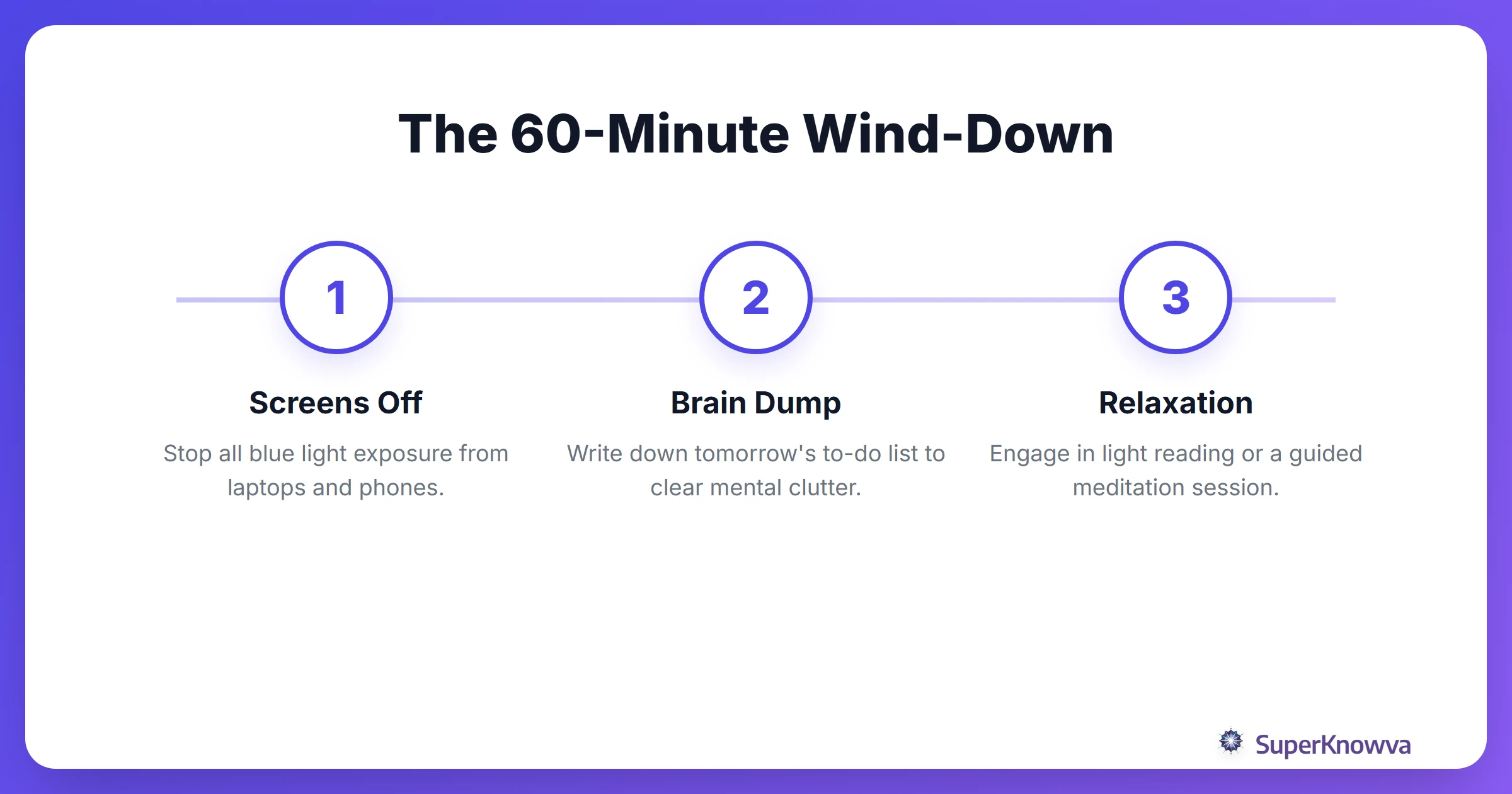
The 60-Minute Wind-Down Routine
You can’t expect your brain to go from "high-intensity organic chemistry" to "deep sleep" in five minutes. It doesn't have an off-switch; it has a dimmer. A solid finals week wellness plan requires a transition period.
- Digital Habits: Blue light from your phone disrupts sleep by tricking your brain into thinking it is daytime. Put the phone away at least an hour before bed.
- Quiet the Noise: High-stakes exams create anxiety that keeps your mind active. Using meditation techniques for focus can help settle your thoughts.
- Establish a Routine: Do the same three things every night, such as a warm shower, a cup of herbal tea, and five minutes of journaling. It signals to your nervous system that it is safe to rest.
Caffeine and Diet: Fueling for Rest
What you eat and drink at 2 PM determines how you feel at 2 AM. Caffeine is the lifeblood of the exam week sleep schedule, but it has a long half-life.
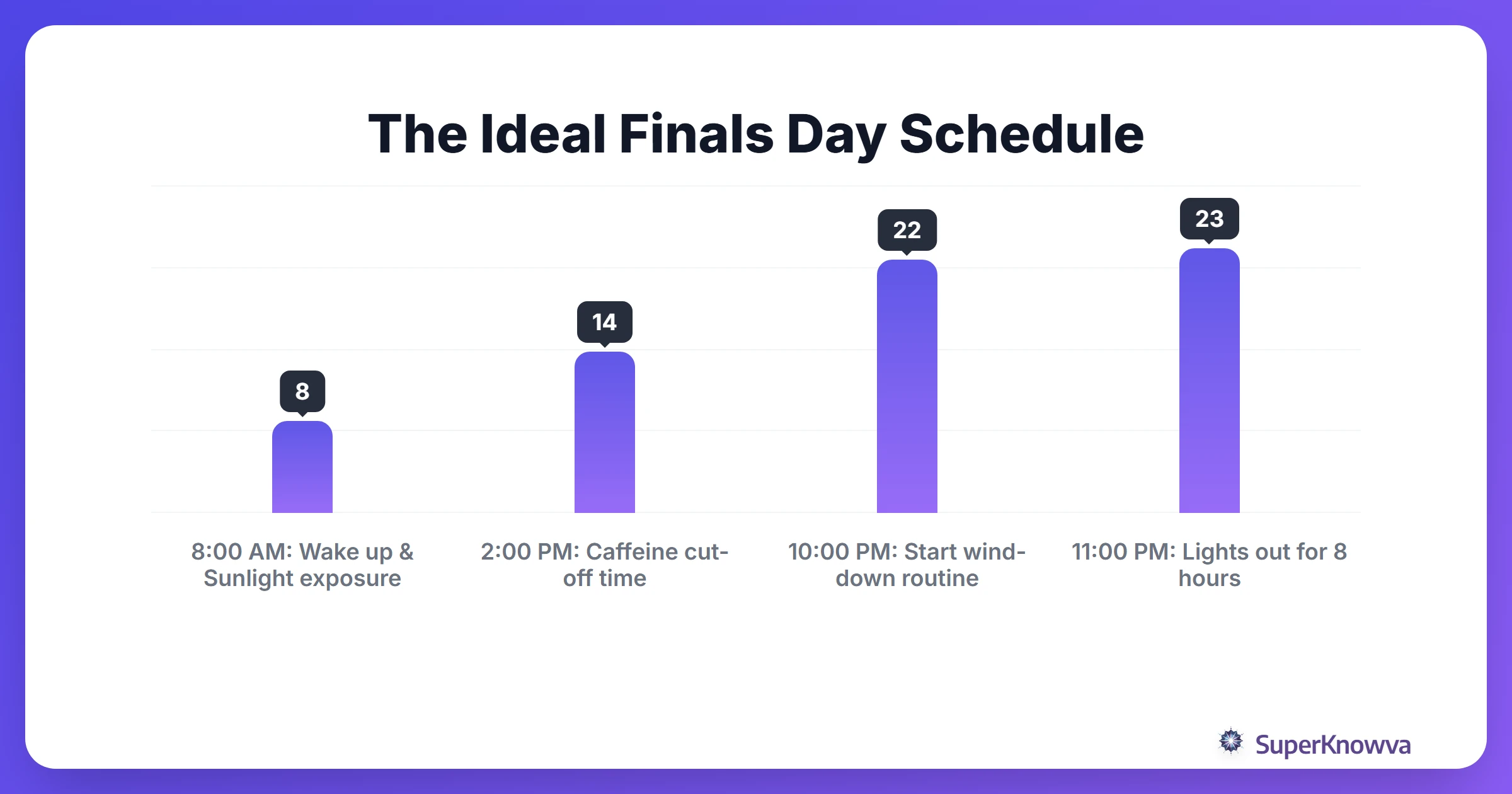
Follow the "Caffeine Cut-off" rule: stop the coffee or energy drinks by 2 PM. Even if you can fall asleep with caffeine in your system, the quality of that sleep will be shallow. You’ll wake up feeling like you didn't sleep at all.
Also, skip the late-night sugar. Those glucose spikes lead to crashes that wake you up in the middle of the night. Instead, check out the best diet for studying, focusing on complex carbs and proteins that keep your energy stable.
Strategic Napping: The Power Nap Protocol
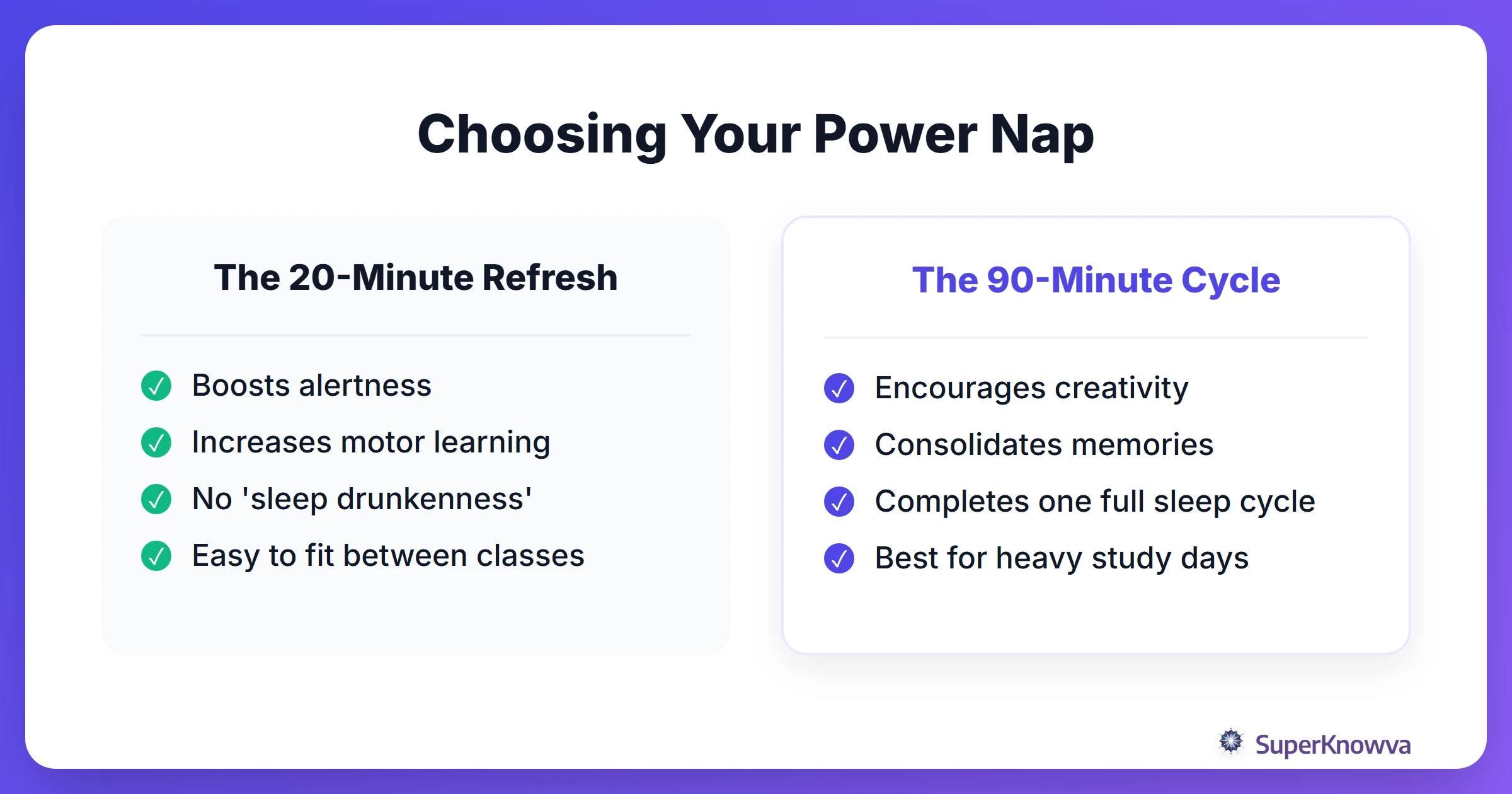
Had a rough night? A strategic nap can save your afternoon, but you have to be smart about it.
- The 20-Minute Power Nap: This is the sweet spot. It gives you a quick alertness boost without that "sleep drunkenness" (sleep inertia) that makes you feel groggier than before.
- The 90-Minute Full Cycle: If you’re genuinely exhausted, go for the full 90. This allows your brain to complete one entire sleep cycle so you wake up refreshed.
Just remember: naps are a supplement, not a replacement. For more on staying healthy during the crunch, look at the Northwestern Wellness Resources.
Building Your Finals Week Sleep Schedule
Consistency wins every time. Even when things get chaotic, try to wake up and go to bed at the same time. This keeps your circadian rhythm in check, making it easier to drift off even when your stress levels are through the roof.
Try to balance heavy study blocks with a little movement. Knowing how physical activity boosts cognition makes it easier to justify a 20-minute walk. That walk isn't "wasted time." It builds up your "sleep drive" for later that night.
Pro tip: Schedule your hardest subjects for your peak alertness hours (usually morning or early afternoon) rather than trying to tackle them at midnight when your brain is already checked out.
Conclusion
Finals week requires steady effort. By prioritizing sleep hygiene for finals week, you are not just taking a break; you are preparing your brain to perform. Use SuperKnowva to study efficiently during the day so you can rest at night. Your grades and your health will benefit.