You’re three hours into a deep-work session. You’ve got SuperKnowva open to organize your notes, your phone is in the other room, and you’ve cleared your entire afternoon. But there’s a problem: you’ve been reading the same paragraph for ten minutes. Your brain has officially checked out.
When you feel unfocused, you might reach for coffee or a bag of chips. The problem isn't your focus. It's your fuel.
Optimizing your nutrition for cognitive function isn't just for biohackers; it’s the most underrated tool in your academic kit. Think of it this way: an elite athlete wouldn't fill their tank with fast food before a gold-medal race. Why should you expect peak mental clarity if you’re running on empty (or worse, on sugar)? Let’s look at how to actually eat for better grades.
The Science of "Neuro-Nutrition"
Your brain is a bit of an energy hog. Even though it only makes up about 2% of your total body weight, it consumes a staggering 20% of your daily calories. It’s a high-performance engine that requires high-grade fuel to keep the gears turning.
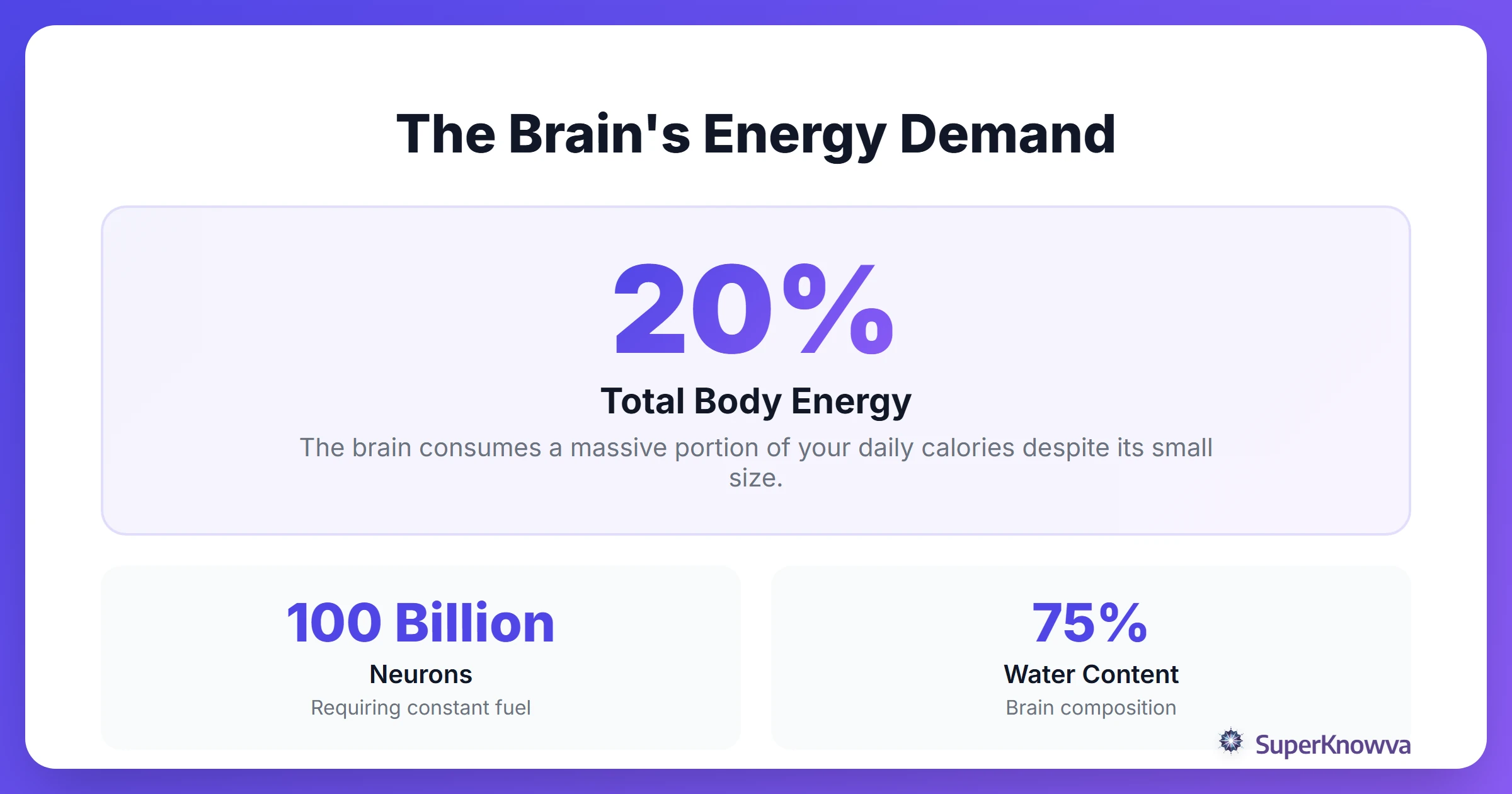
The brain’s primary fuel is glucose, but how you deliver that glucose changes everything. A candy bar gives you a massive spike followed by a productivity-killing crash. Complex nutrients, on the other hand, provide the steady stream of energy your neurons crave.
It goes deeper than just energy, though. What you eat literally builds your brain. Research published in Nature shows that diet composition has a long-term impact on how your brain processes information. Antioxidants found in whole foods act like a shield, protecting your brain cells from the "wear and tear" of intense cognitive stress.
The Brain-Boosting Heavy Hitters
If you’re trying to build the best diet for studying, you don't need a 20-step recipe. You just need to get more of these "superfoods" onto your plate.
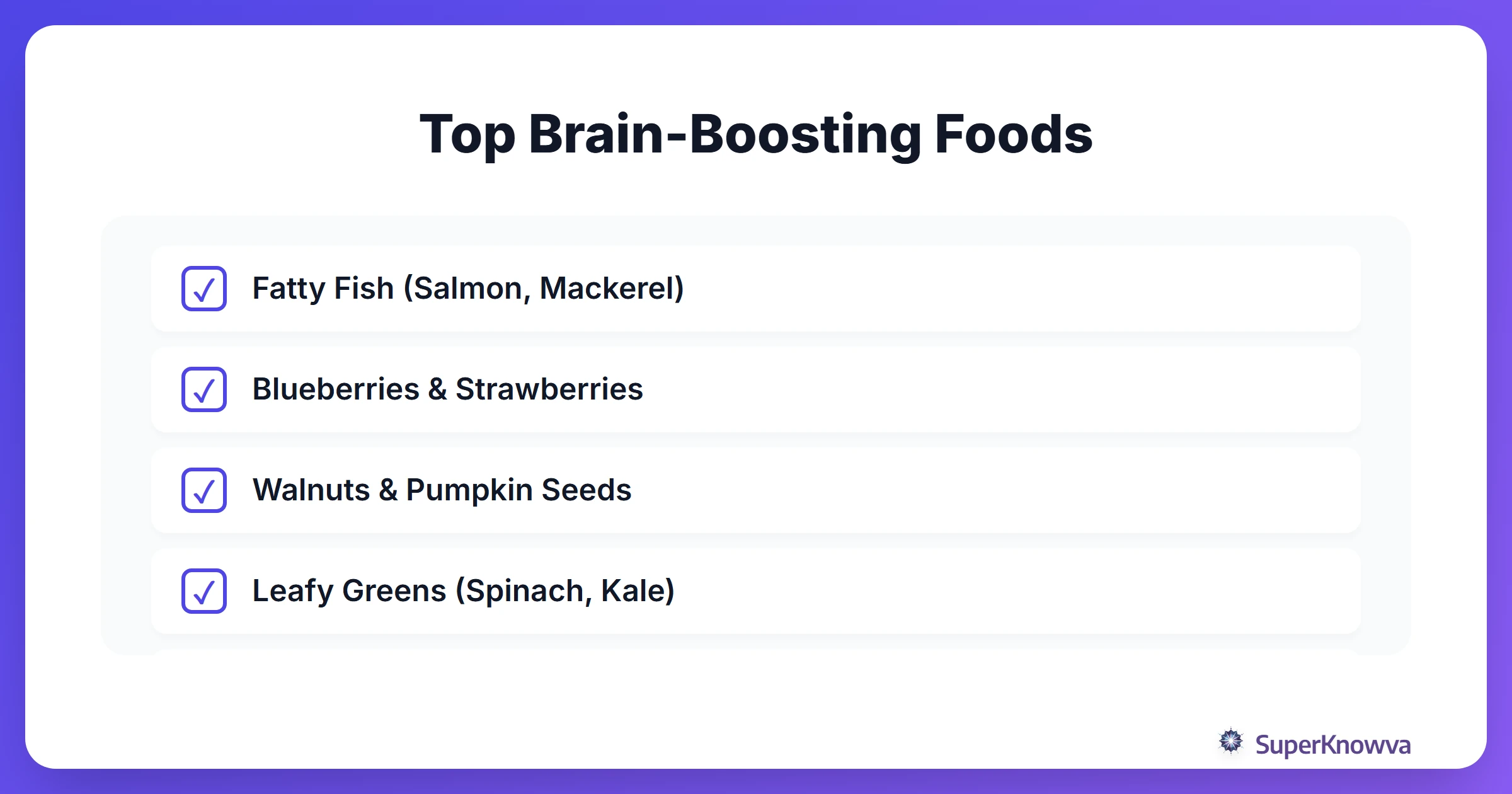
- Fatty Fish: Salmon, trout, and sardines are packed with Omega-3s. These are the literal building blocks of brain cells. More Omega-3s usually mean better learning and sharper memory.
- Berries: Blueberries aren't just snacks; they're "brain gold." They contain flavonoids that improve communication between neurons, making it easier for you to retain that massive stack of flashcards.
- Leafy Greens: Spinach and kale are loaded with Vitamin K and folate. These nutrients help slow down cognitive aging, keeping your mind agile during those grueling 12-week semesters.
- Dark Chocolate (Yes, Really): High-quality dark chocolate (70% cocoa or higher) contains stimulants and flavonoids that can give you a quick mood and concentration boost without the jittery side effects of energy drinks.
Hydration: The Easiest Way to Get Smarter
Feeling sluggish? Before you buy another latte, try a glass of water. Even mild dehydration, just 1% or 2%, can tank your concentration and short-term memory.
There is a direct link between how much water you drink and your brain volume. When you’re dehydrated, your brain actually has to work harder to do the same amount of work. It’s like trying to run through mud. If you want to stay sharp during a marathon library session, keep a refillable bottle on your desk. It’s just as vital as physical activity and cognitive function for maintaining a healthy mental environment.
Cracking the Code on the "2:00 PM Slump"
We’ve all been there. You finish lunch, sit down to work, and suddenly you can barely keep your eyes open. This is the classic blood sugar crash.
The secret to avoiding the slump is understanding the Glycemic Index (GI). Simple carbs like white bread and sugary snacks cause your blood sugar to skyrocket and then plummet. Complex carbs like oats, quinoa, and brown rice release energy slowly.
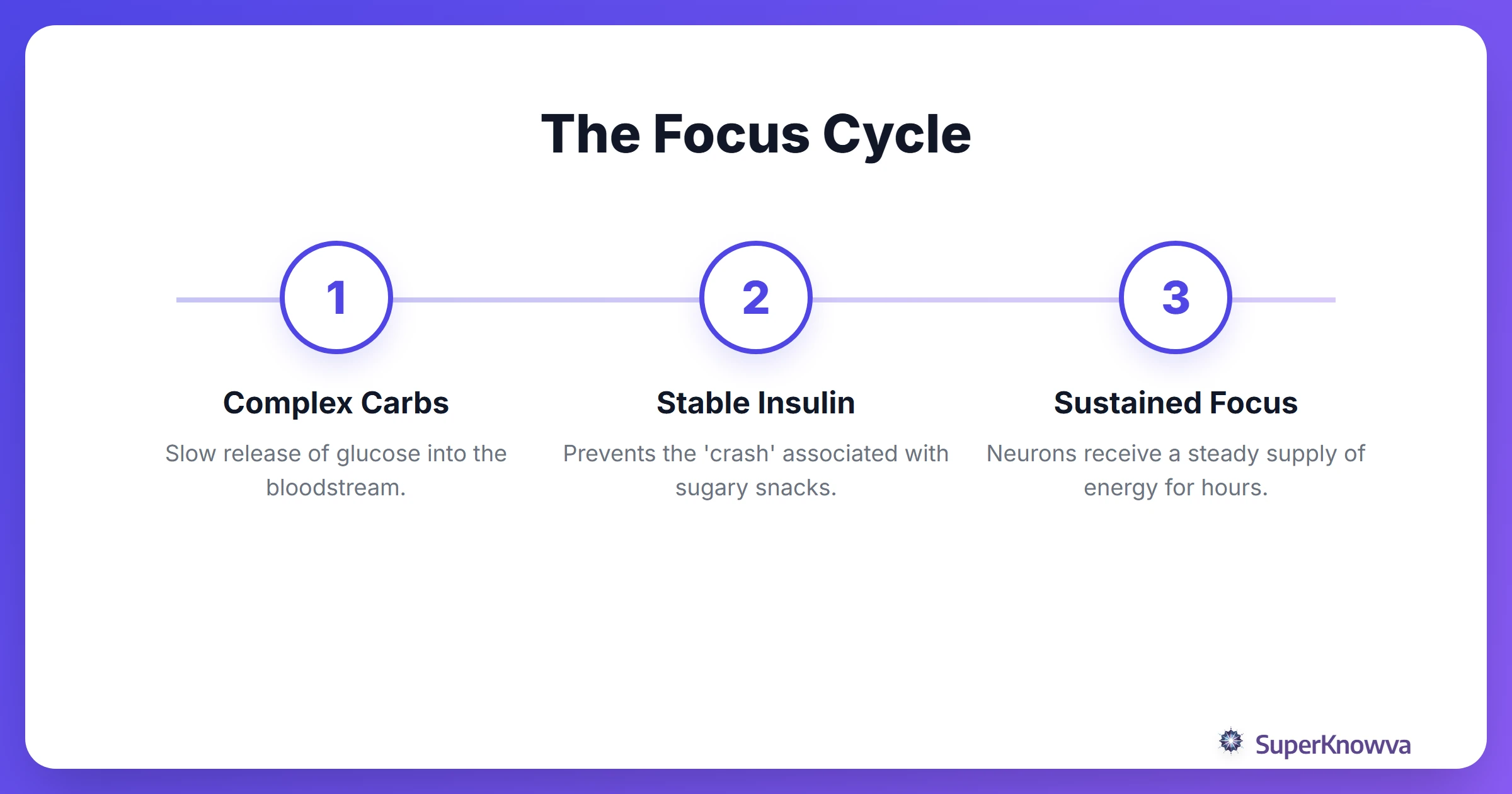
Pro-tip: Never eat carbs alone. If you’re having an apple, pair it with peanut butter. If you’re having crackers, add some cheese or hummus. The fats and proteins slow down sugar absorption, giving you hours of steady focus instead of a 20-minute burst.
Supplements vs. Real Food: A Reality Check
It’s tempting to look for a "limitless pill." Many students spend a fortune on nootropics, B12 shots, and Ginkgo Biloba. While these can help if you have a specific deficiency, they aren't a shortcut for a bad diet.
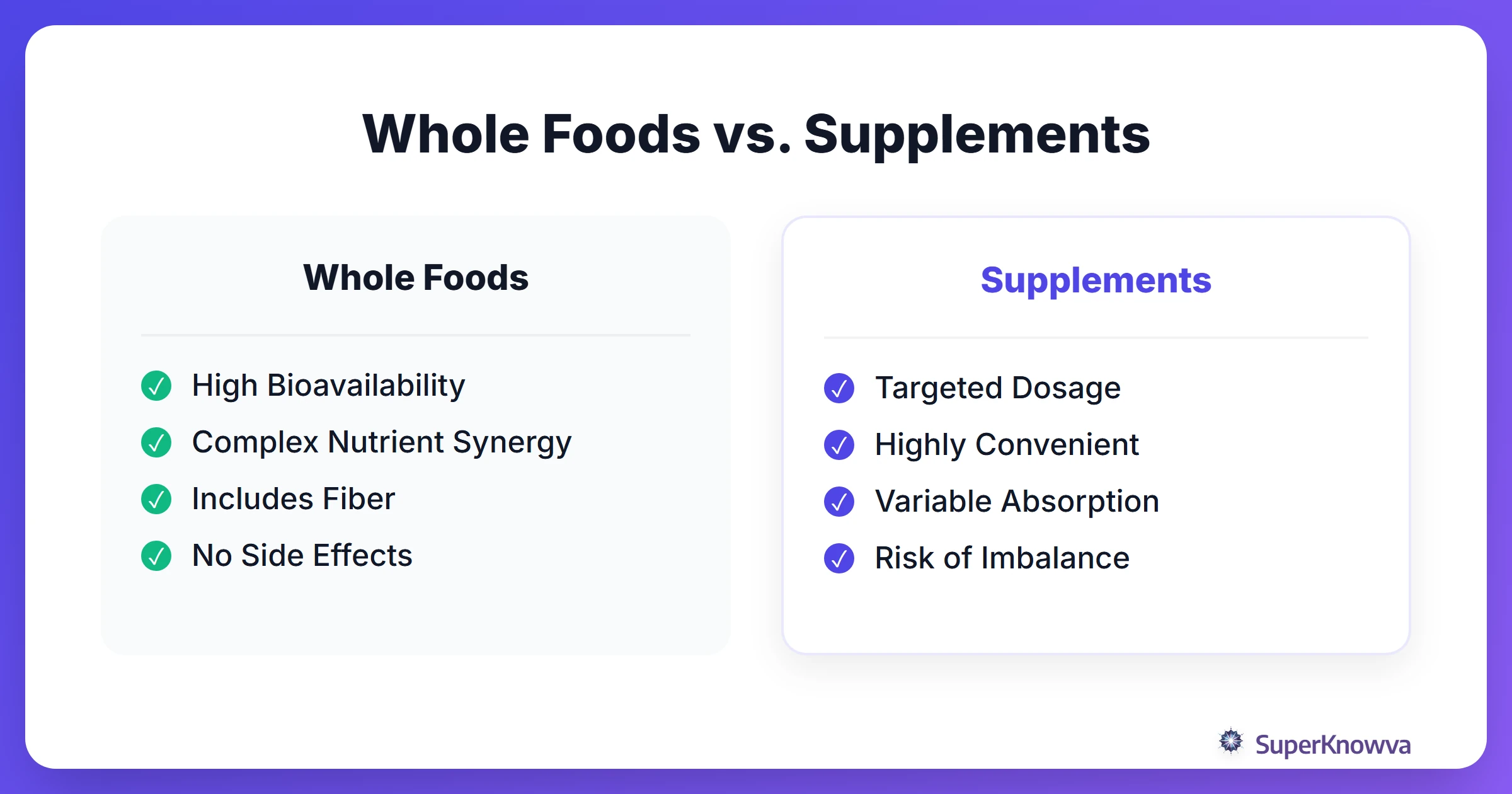
Vitamins and minerals work best when they come from whole foods. This is called nutrient interaction. Your body knows how to process an orange better than a 1000mg Vitamin C pill. Before you drop $50 on a bottle of supplements, try incorporating meditation for focus and a few balanced meals. You might find you don't need the pills after all.
The Ultimate Exam-Week Survival Plan
During finals, you don't have time to be a gourmet chef. The goal is efficiency. Batch-cooking on a Sunday can save you from a week of greasy takeout and brain fog.
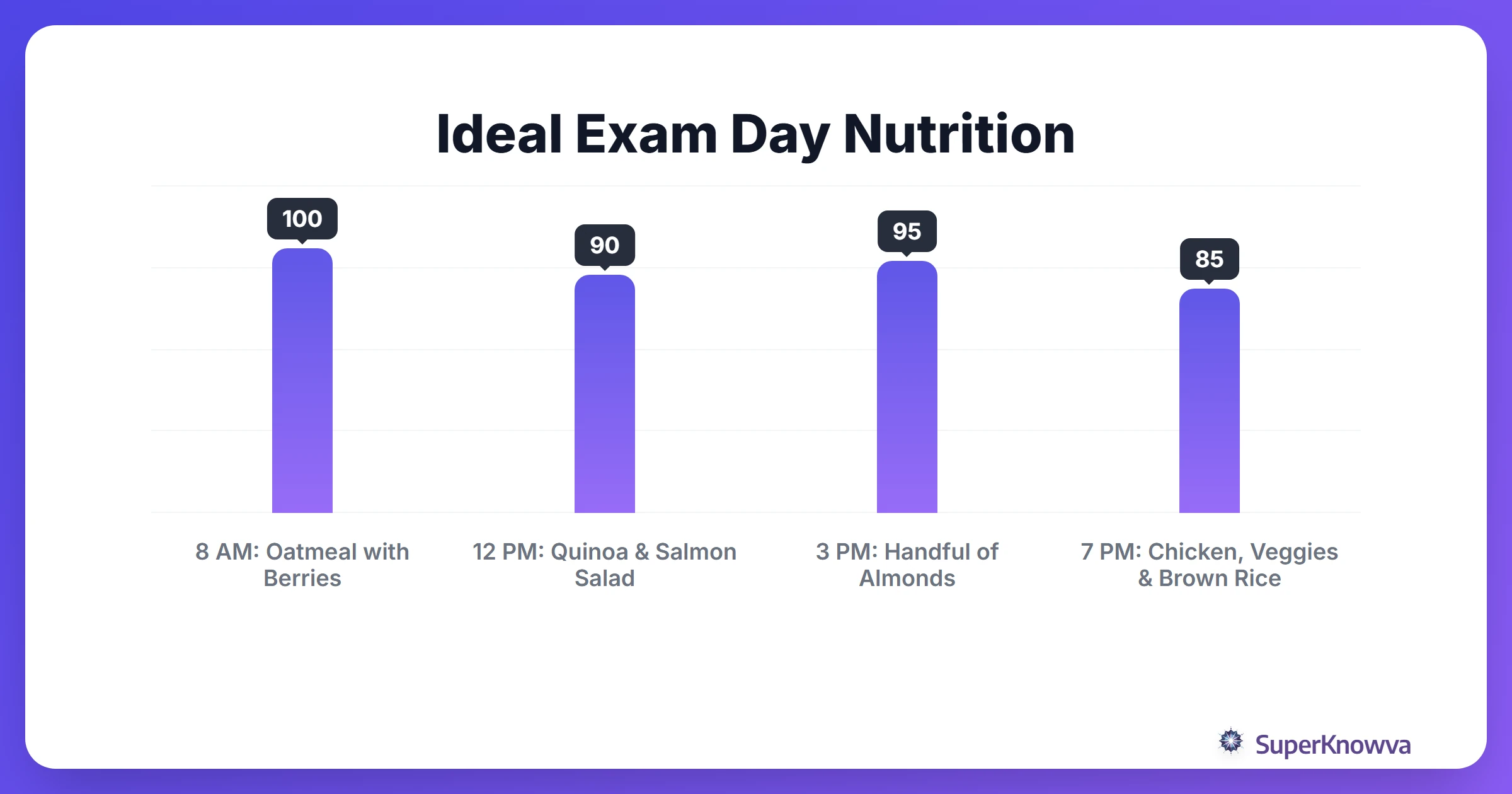
- The Power Breakfast: Oatmeal with walnuts and blueberries. It’s high-fiber (keeps you full) and high-antioxidant (keeps you sharp).
- The Library Snack: A handful of almonds or a square of dark chocolate. Easy to carry, no mess, and stable energy.
- The Recovery Dinner: Baked salmon (or tofu) with roasted broccoli. It’s light enough that you won't feel "food coma" symptoms, but nutrient-dense enough to help your brain consolidate what you learned that day.
- The Wind-Down: If you’re feeling the early signs of recovering from student burnout, grab a banana or some pumpkin seeds. They’re rich in magnesium, which helps your nervous system chill out before bed.
Your brain is your most valuable asset. If you treat it like a high-performance machine, it will perform like one. Start small: swap your afternoon soda for water and a handful of nuts today. Your GPA will thank you.