It’s Earth Day 2026. Take a quick look around your desk. Is it buried under a mountain of highlighter-streaked papers, tangled chargers, and a few too many half-empty plastic water bottles?
As digital and physical environments intersect, your study habits have a lasting impact. Adopting sustainable study habits earth day and throughout the year goes beyond conservation. It builds a cleaner, more focused routine that helps you perform better.
Let’s look at how you can turn your next cram session into a win for both your GPA and the planet.
The Digital Shift: Ditching the Paper Weight
Let’s be real: physical textbooks are literally a pain in the neck. In 2026, the shift from heavy notebooks to digital annotation isn't just a trend for techies; it’s the new standard for the eco-conscious student.
Switching to e-textbooks does more than just lighten your backpack. It cuts out the massive carbon footprint of paper production, chemical inks, and the logistics of shipping heavy books across the globe. Plus, your organization becomes bulletproof. Transitioning to a paperless routine is a lot smoother when you use the best study apps for 2026 to keep your notes synced and searchable.
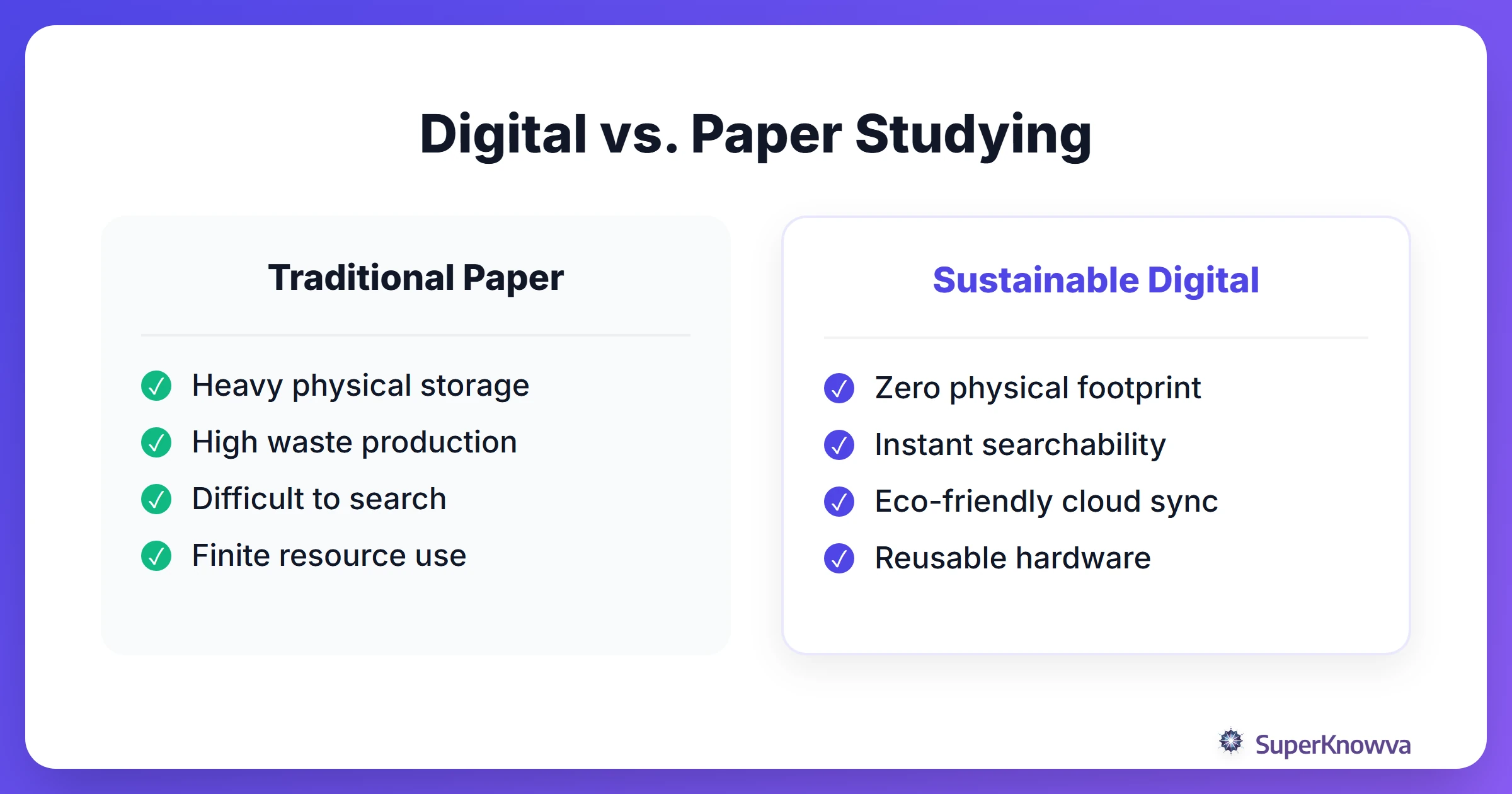
But here’s a pro tip: even digital habits have a footprint. While cloud storage is great for access, those massive data centers gulp down electricity. For the files you’re using every single day, keep a local copy on your device. Use the cloud for your long-term backups instead. When you master textbook note-taking strategies, you can maximize your digital highlighting and organization without ever needing to hit "Print."
Optimizing Your Energy-Efficient Study Space
Where you study changes how much energy you consume. Want to create a truly green study space? Start with the sun. Positioning your desk near a window is the ultimate "life hack." Natural light doesn't just save on the electric bill; it keeps your mood up and your Vitamin D levels steady during those long winter semesters.
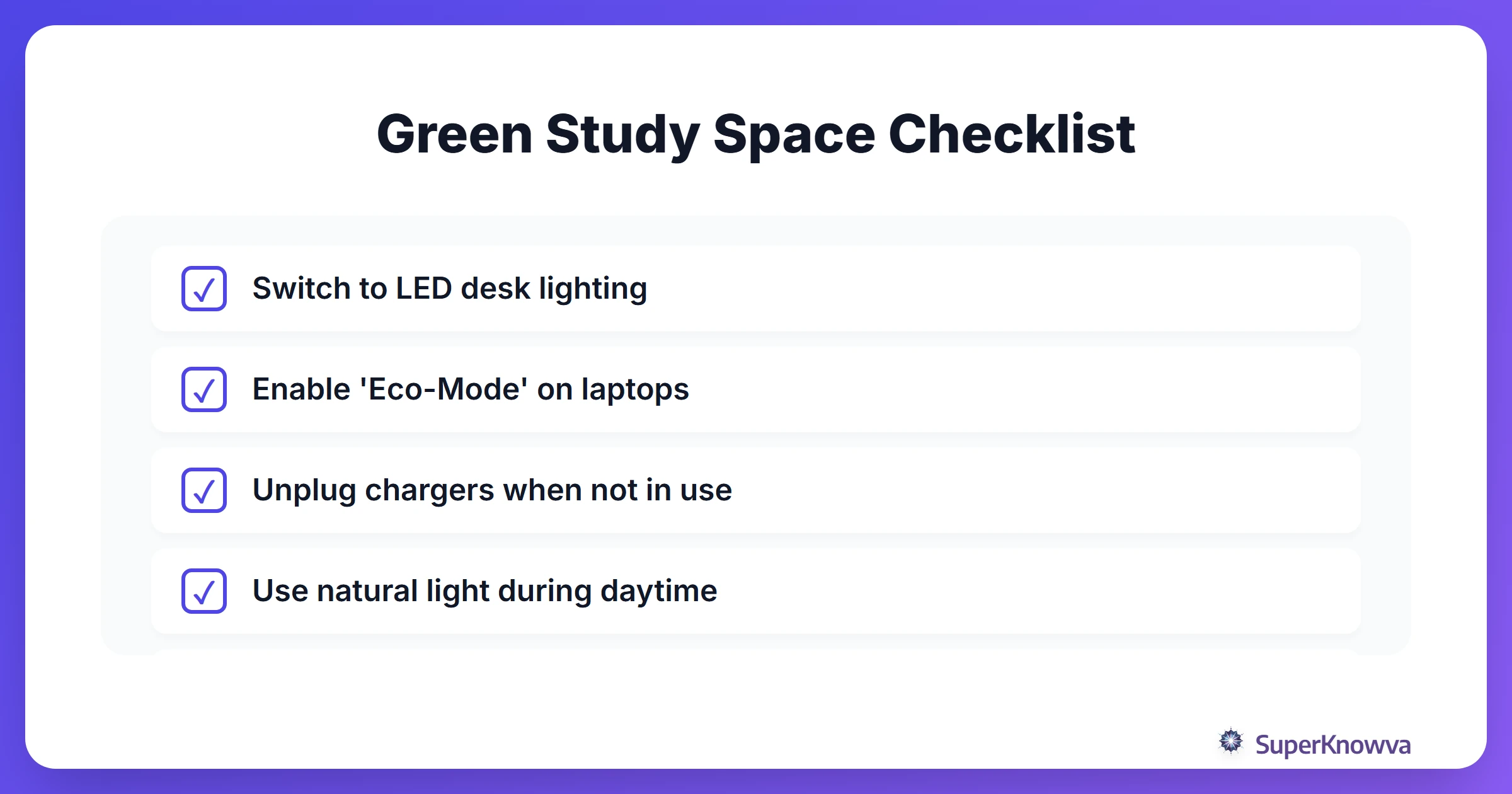
When the sun sets, reach for a high-efficiency LED desk lamp. They use about 75% less energy than old-school bulbs that get hot enough to cook an egg. Also, watch out for "vampire energy," the power chargers suck up even when they aren't plugged into a device. Use a smart power strip to kill the power to your monitors and peripherals when you’re done for the night.
If you’re rocking a laptop or tablet with an OLED screen, switch to Dark Mode. It’s easier on your eyes during late-night sessions and saves battery life because those screens don't have to power up pixels to show true black. While you're at it, why not optimize your mental energy too? Check out the science of the best study music to stay in the zone without wasting a second of focus.
Sustainable Stationery and the Circular Economy
Sometimes you just need to hold a pen. Before you buy a 20-pack of cheap plastic ballpoints, think about the "circular economy." Avoid "fast stationery" designed to be tossed in a month. Instead, try a refillable fountain pen or a high-quality pen made from recycled ocean plastics. They feel better in your hand and stay out of the landfill.
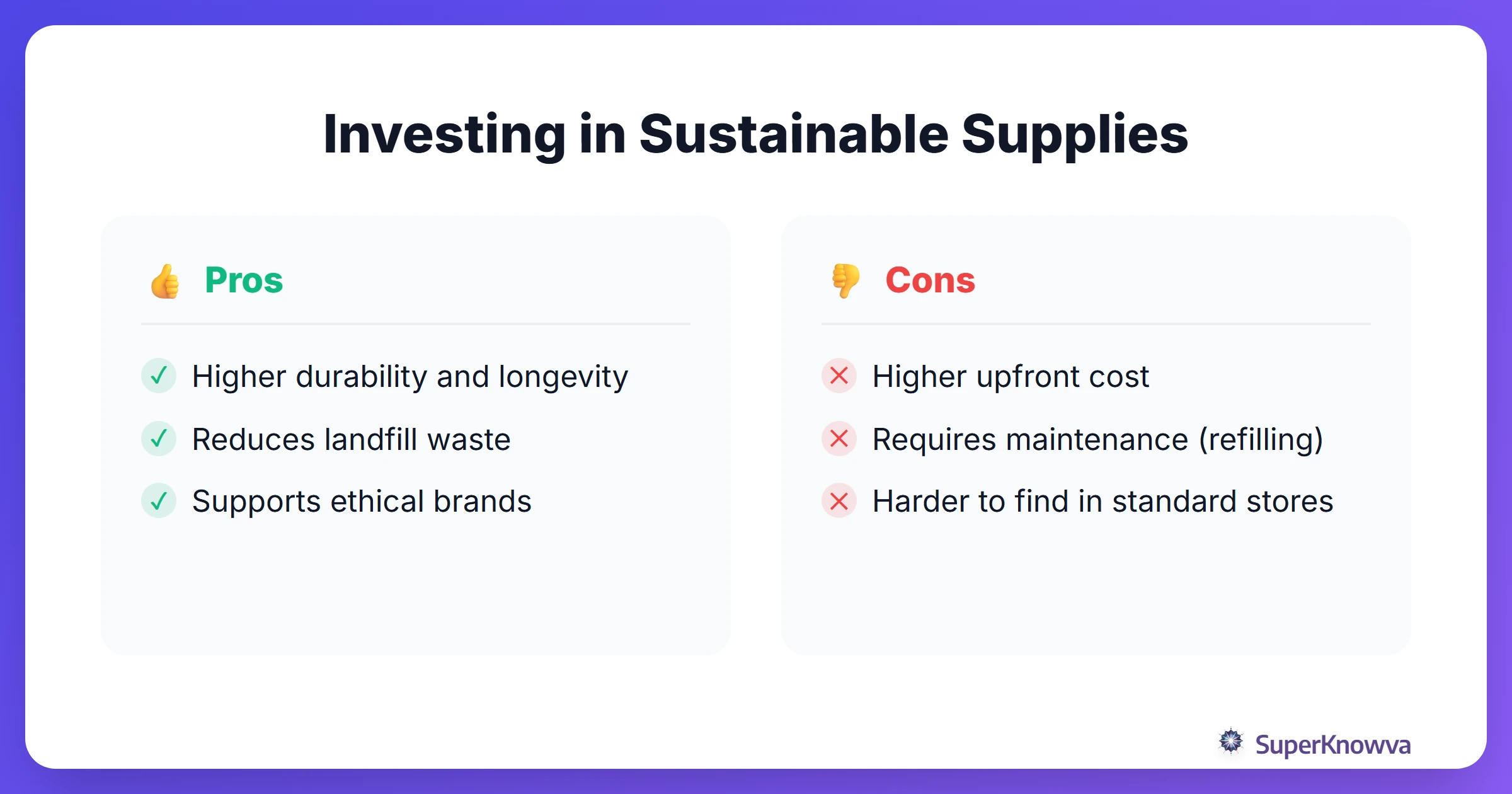
This "buy better, buy less" mindset applies to everything in your dorm. If you’re looking for furniture or even clothes, check out this sustainable shopping toolkit for better eco-friendly alternatives.
The same goes for your tech. You don't need the newest model every twelve months. Take care of your current device’s battery health to make it last through your entire degree. And when it finally gives up the ghost? Don't just toss it. Find a certified e-waste facility that can properly recycle the precious metals inside.
Eco-Friendly Hydration and Low-Waste Snacking
The library shouldn't be a graveyard for single-use plastics. One of the easiest eco-friendly student tips is to invest in a solid, insulated reusable water bottle and a travel mug. Most campus cafes will even give you a discount for bringing your own cup. It’s a win-win: your coffee stays hot, and you save a few cents every morning.
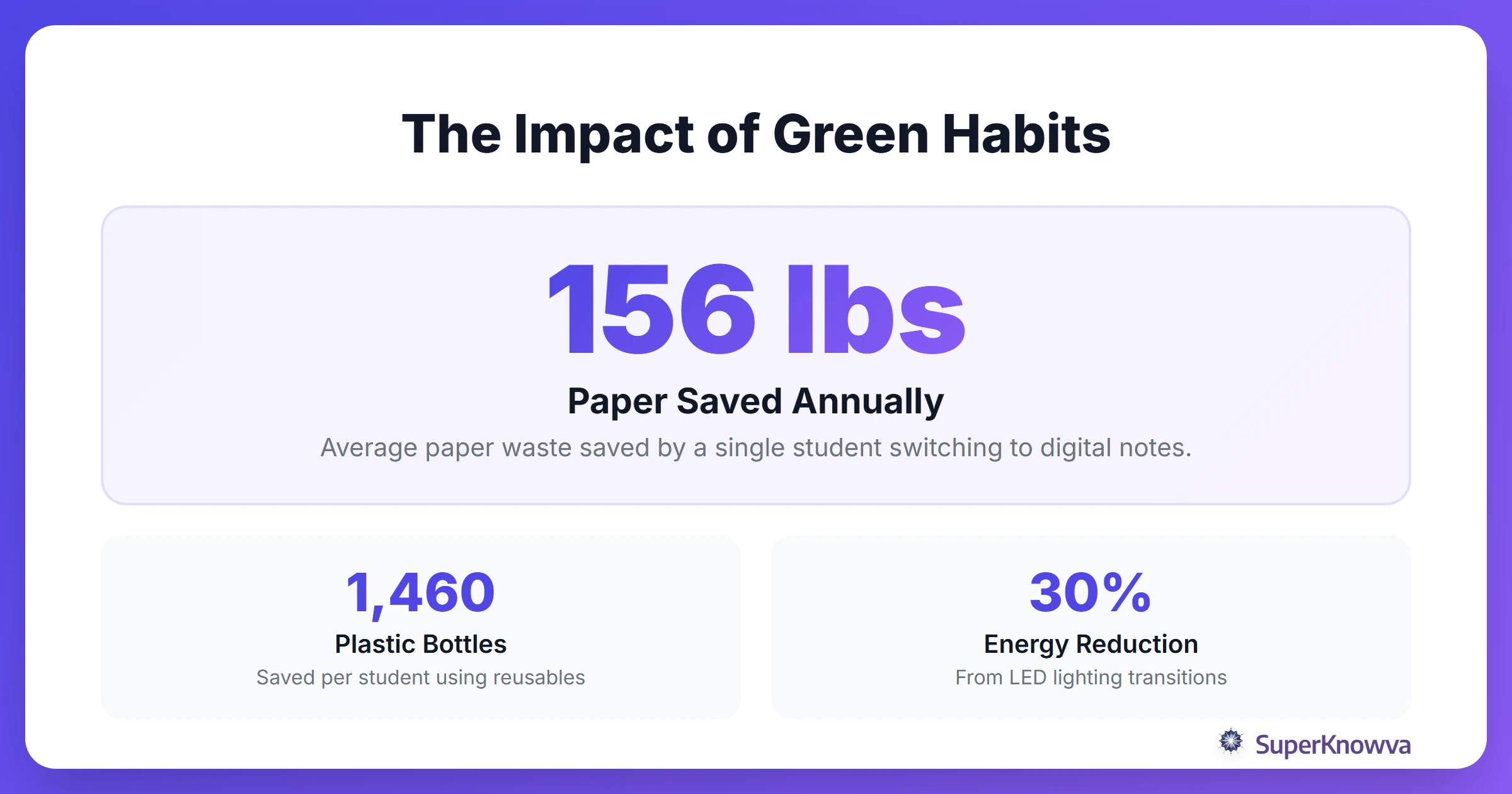
Snacking is non-negotiable for long sessions, but those individual plastic wrappers add up fast. Try buying your trail mix or crackers in bulk and portioning them into reusable glass or silicone containers. If you’re living in a dorm, look into small-scale composting for things like banana peels or coffee grounds. These small tweaks might feel minor, but they keep hundreds of pounds of waste out of landfills over a four-year degree.
Green Commuting and Collaborative Learning
How do you get to your favorite study spot? Walking or biking is obviously the gold standard, and public transit is a close second. But honestly? The greenest commute is the one you don't take at all. Virtual study groups via video chat allow you to collaborate with classmates without anyone having to start a car.
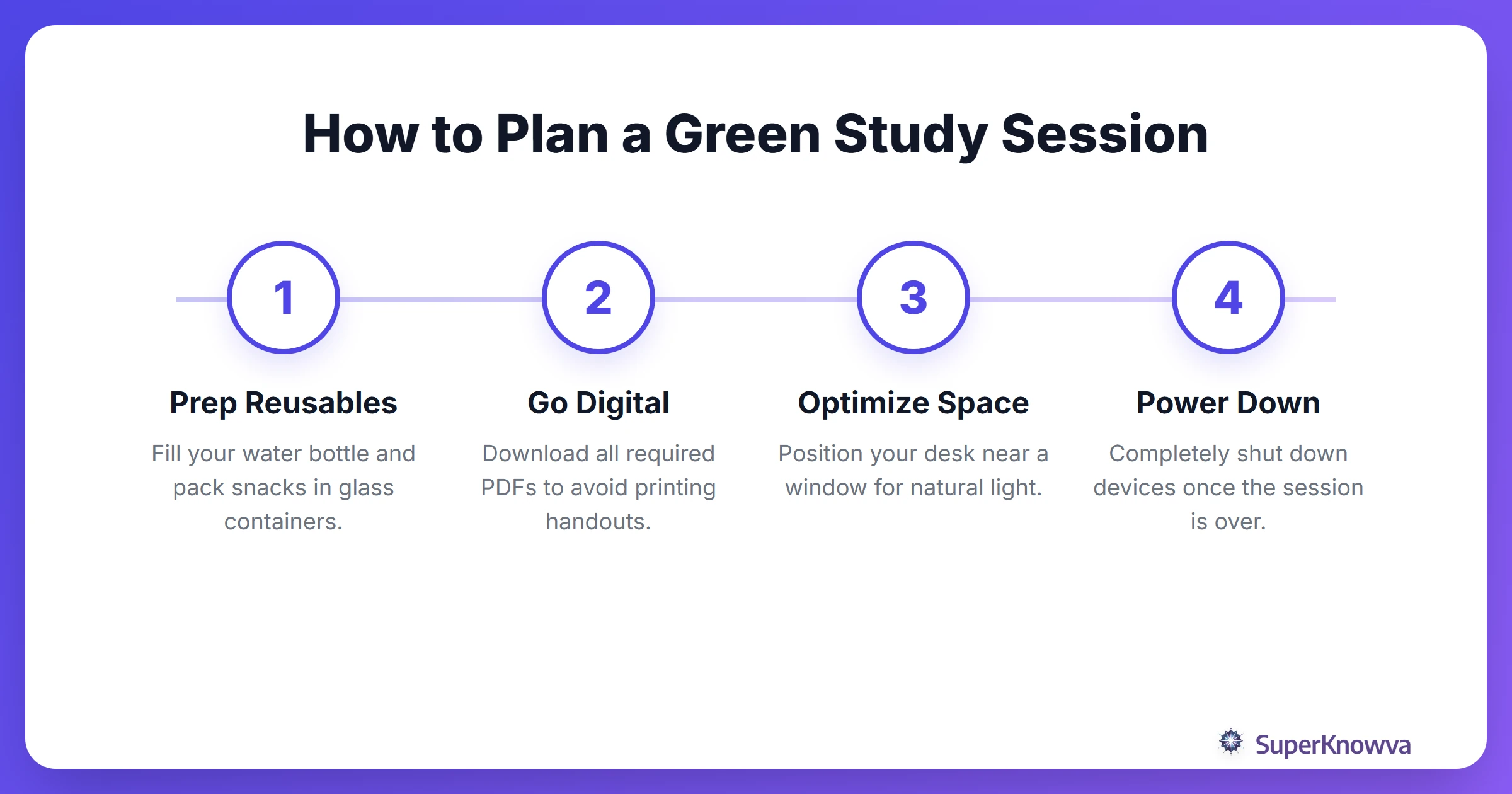
Using shared digital documents means you can edit group projects in real-time, eliminating the need for "rough draft" printouts. Interestingly, studying in a busy campus library is often more efficient than heating or cooling a whole apartment just for yourself. Sustainability is about managing your own energy, too. Learn how to study for long hours without burnout by using these shared, efficient spaces to stay motivated.
Developing an 'Earth Day Every Day' Mindset
Sustainability is a vibe shift. It is a move away from a consumerist approach where you feel like you need every "aesthetic" desk accessory on TikTok toward a minimalist, intentional one. A clean, green workspace isn't just good for the planet; it’s scientifically proven to lower stress and sharpen your focus.
Adopting an Earth Day Every Day program mindset ensures these habits stick long after April ends. Don't be afraid to speak up, either. Ask your student union for more recycling bins or solar-powered charging stations. By setting long-term sustainability goals now, you aren't just working toward a degree; you’re making sure there’s a healthy world waiting for you when you graduate.
Ready to take your digital learning to the next level? Join SuperKnowva today and discover how AI-powered tools can help you master your coursework while maintaining a paperless, eco-friendly lifestyle.