While your friends are posting beach selfies and scrolling through vacation reels, you’re sitting there with a textbook. It feels unfair, doesn't it? But here’s the reality: you have a massive strategic advantage.
Mastering deep work in summer months isn’t about grinding until you’re miserable. It’s about working with your brain, not against it. If you can optimize your limited cognitive energy now, you can finish your coursework in record time, leaving those long, warm July evenings completely guilt-free.
At SuperKnowva, we treat high-performance studying like a science. By understanding how the heat and the sun affect your biology, you can get ahead of the curve without burning out before September even arrives.
The Biological Challenge: Why Your Brain Feels "Mushy" in July
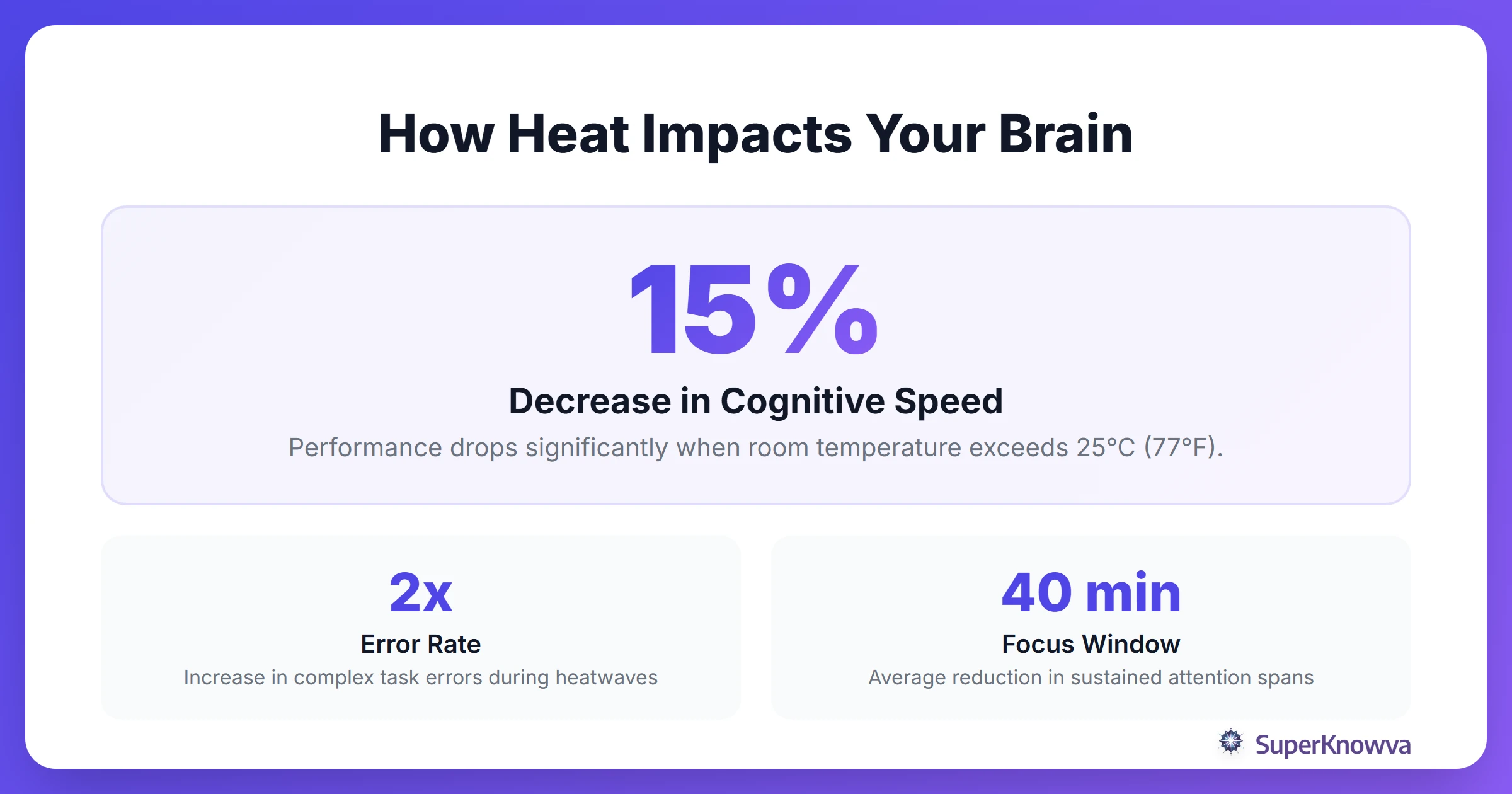
It’s not just in your head. Studying in July is objectively harder than studying in January. Science calls this "Summer Brain." When temperatures climb, your brain has to work overtime just to keep your body cool. This process, known as thermoregulation, drains your "cognitive budget," leading to faster decision fatigue and a shorter attention span.
Then there’s the sun. The summer solstice brings endless daylight, which is great for a BBQ but terrible for your internal clock. Extra light delays melatonin production, pushing your sleep back and messing with your peak focus windows.
The fix? You need to find your "Biological Prime Time." For most students, this is the ideal window in the early morning, before the sun hits its peak and before the heat saps your willpower.
Picking a Strategy: The Rhythmic Philosophy
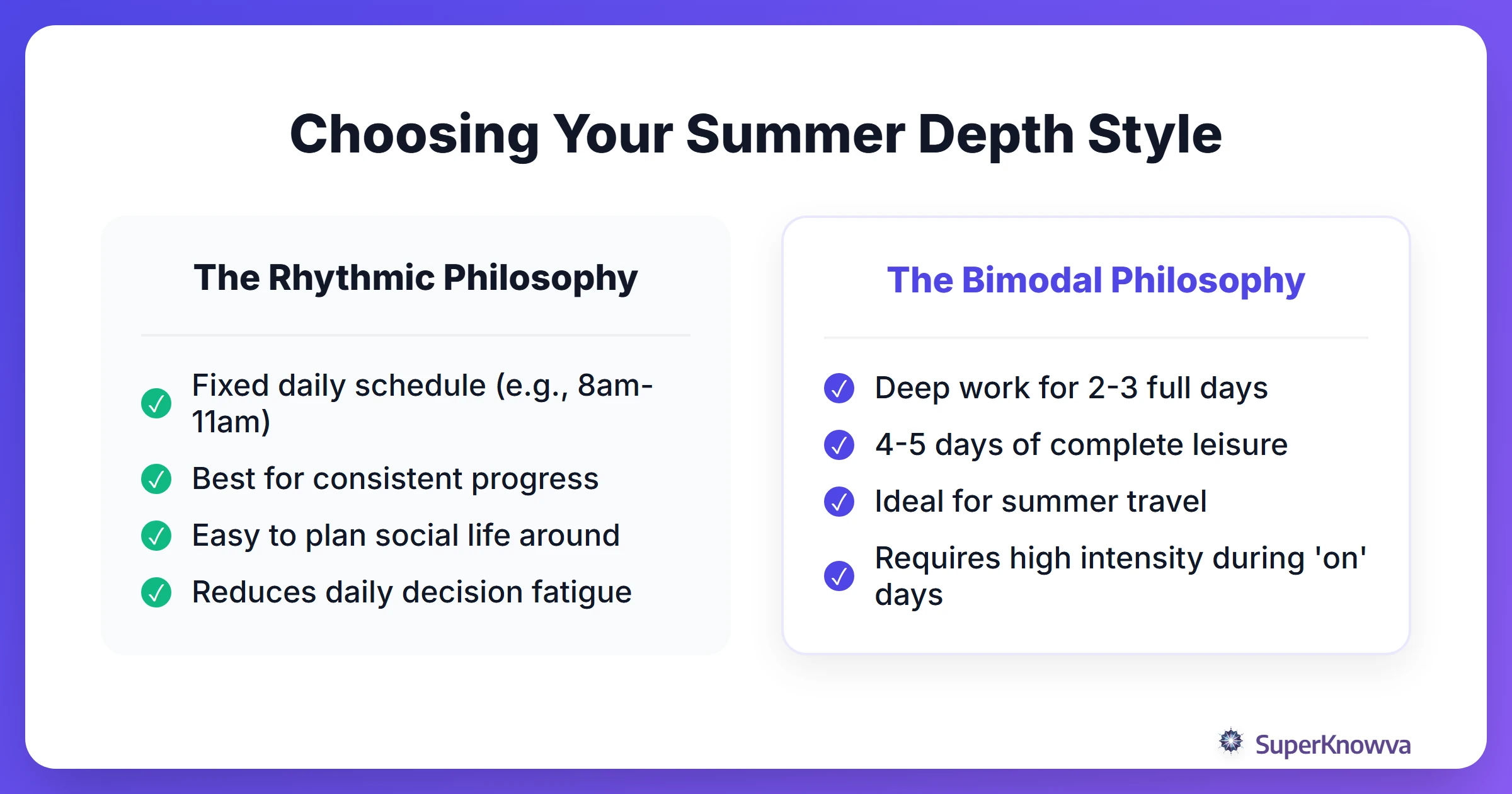
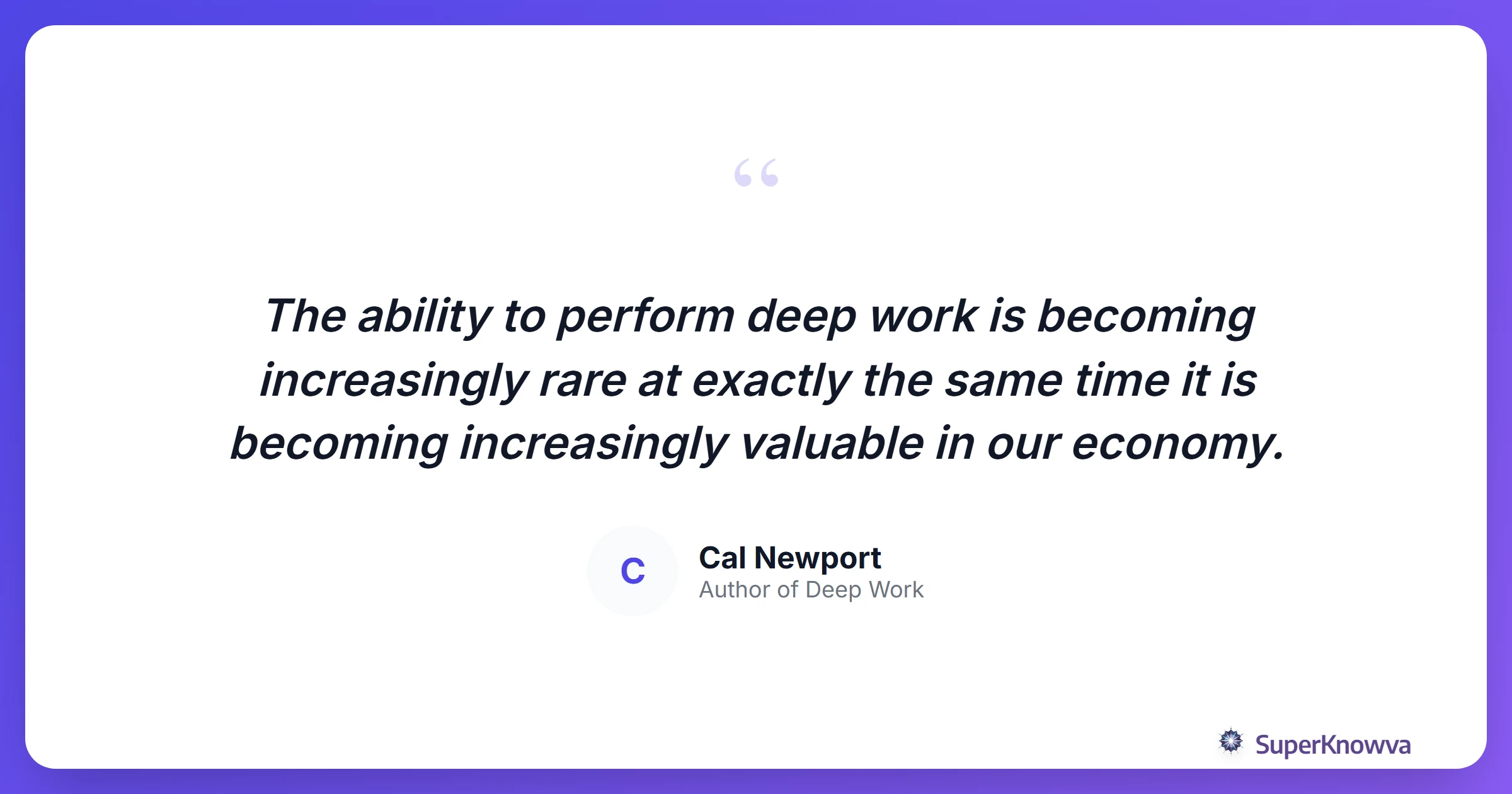
You can’t just "wing it" in the summer. The season is too unpredictable. In his book Deep Work, Cal Newport breaks down four ways to approach focus: Monastic, Bimodal, Rhythmic, and Journalistic. Choosing the right depth philosophy is the difference between a productive week and a wasted month.
For students, mastering deep work strategies usually means embracing the Rhythmic Philosophy.
Think of it as setting a "Summer Quota." By scheduling a rock-solid 2- to 3-hour block at the same time every morning (say, 8:00 AM to 11:00 AM), you turn focus into a habit. Once that block is done, you’re free. You’ve won the day before the afternoon heat and social FOMO even have a chance to distract you.
The Summer Shutdown Ritual: How to Actually Relax
The hardest part of summer studying isn't the work itself: it's the "attention residue." You are at the pool or out for dinner, but your brain is still looping on that unfinished essay.
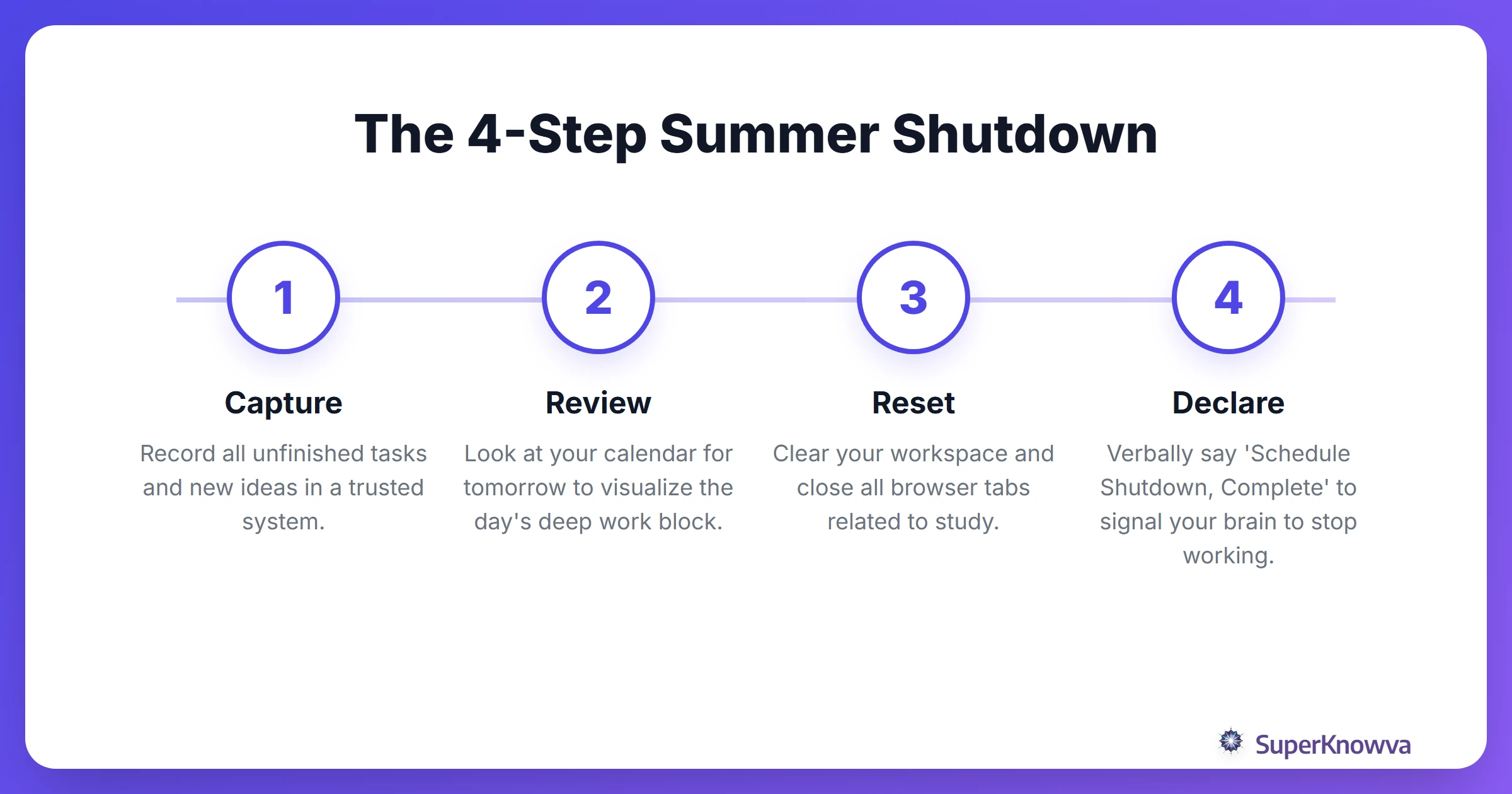
To stop this, you need a shutdown ritual. This addresses the Zeigarnik Effect, a psychological tendency where the brain stays focused on unfinished tasks. By performing a formal "close-out" of your workspace, reviewing your to-do list and setting a plan for tomorrow, you tell your brain it is okay to stop thinking about work.
Environment Design: Lawnmowers and FOMO
Your environment usually wins over your willpower. In the summer, the "Cognitive Cost" of distractions goes through the roof. Whether it’s a neighbor’s lawnmower or the distant sound of a pool party, your flow state is under constant siege.
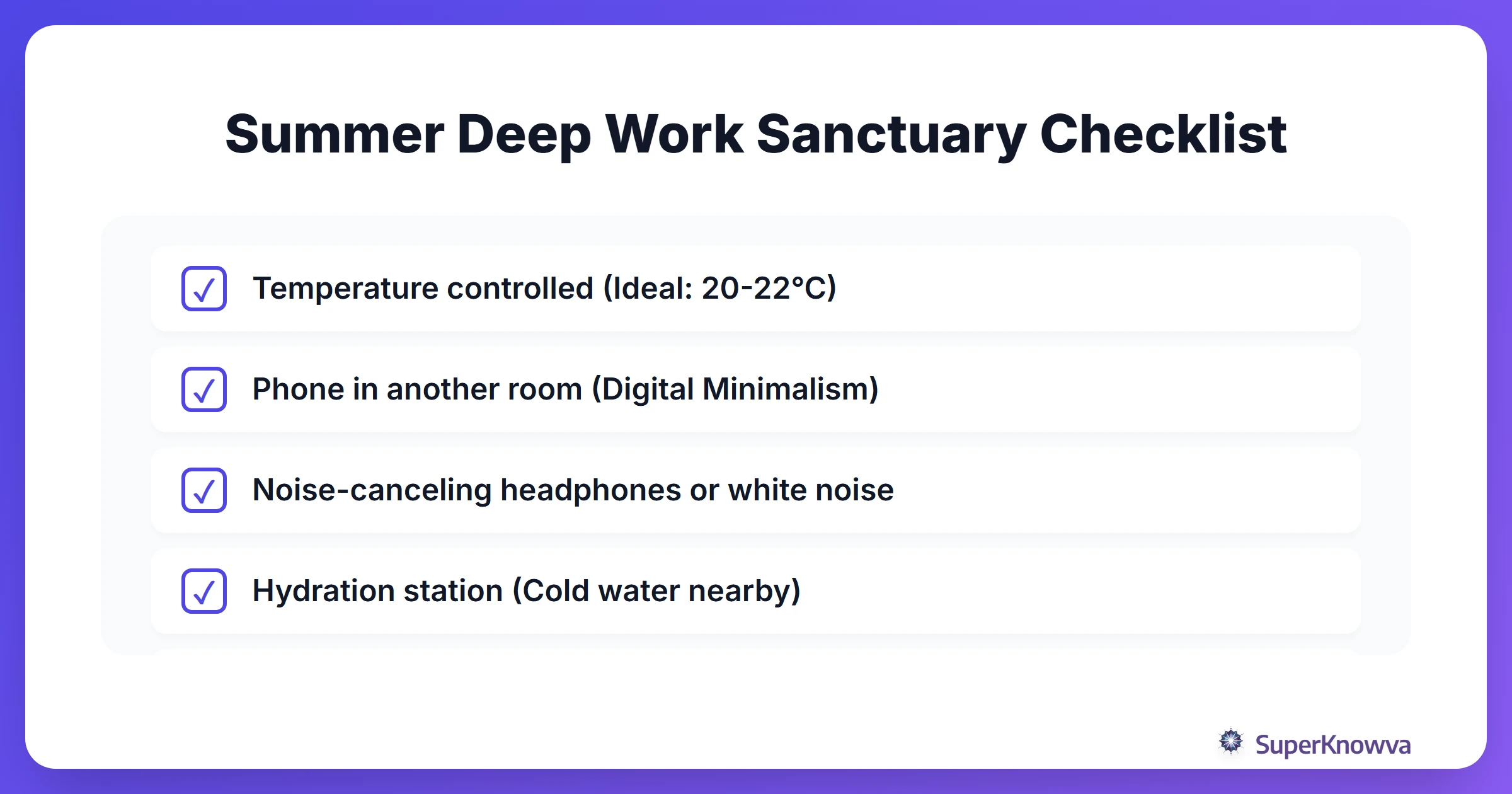
This is where you have to be ruthless. You need to embrace digital minimalism to protect your focus from the constant pull of social notifications. If you can’t get to a quiet library, create a "Deep Work Sanctuary" at home with noise-canceling headphones and a clear desk.
Depending on how heavy your workload is, you might want to experiment with Pomodoro vs. Flowtime. Use shorter bursts (Pomodoro) when the heat is making you sluggish, or longer stretches (Flowtime) when you finally find that rare, cool morning breeze.
Why Summer is Your Academic "Pre-Season"
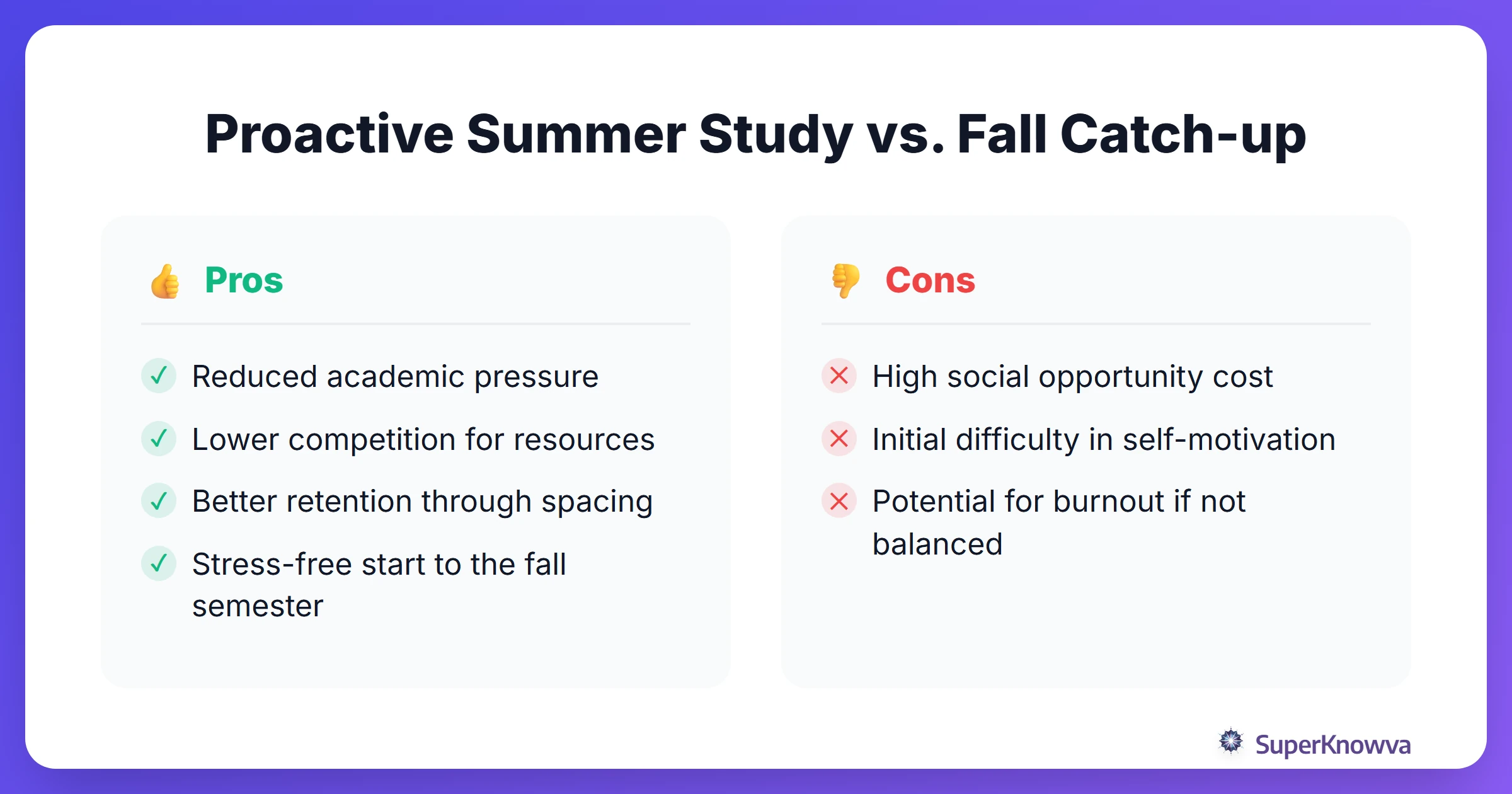
Use these months for preparation. Strategic seasonal planning prevents the "September Shock" when pressure hits. If you're struggling to get started, don't worry. Look into the science of overcoming procrastination.
Mastering a difficult concept now, when the stakes are lower, builds "cognitive endurance." It’s also the perfect time for Boredom Training. In a world of instant dopamine, the ability to sit with a hard problem without checking your phone is a literal superpower.
Save the "Golden Hours" for the Hard Stuff
Not all tasks deserve your best energy. Shallow work, like answering emails, organizing folders, or formatting a bibliography, should never happen in the morning.
Use the "Batching" technique. Save all those low-brainpower tasks for the mid-afternoon "slump" when the sun is hottest and you're feeling lazy. By protecting your morning "Golden Hours" for high-intensity deep work, you ensure you're making real progress when you're at your sharpest. Learn to say "No" to mid-day distractions; your future self will thank you when you’re closing your laptop at 3:00 PM while everyone else is just getting started.
Summary
Getting things done during the summer isn't about working more. It's about working with more intensity. By aligning your schedule with your biology, sticking to a rhythmic routine, and using a shutdown ritual to protect your fun, you can make this season highly effective.
Ready to make your study sessions count? Let SuperKnowva organize your materials so you can focus longer. Happy studying, and don't forget to get some sun!