Ever sat down at your desk, opened your laptop, and spent forty-five minutes just trying to decide between reviewing Organic Chemistry or starting that History essay? By the time you finally pick a task, you’re already fried. You haven’t even cracked a book yet, but your brain is running on fumes.
This isn't just you being "lazy." It’s biology. To actually get things done and hit your goals, you have to reduce decision fatigue in your daily routine. We’re going to look at how to stop wasting your best mental energy on logistics so you can spend it on what actually matters: mastering the material and acing your exams.
The Science of Decision Fatigue (And Why It’s Killing Your Productivity)
Decision fatigue is that specific type of mental burnout where the quality of your choices falls off a cliff after a long day of making decisions. According to the American Medical Association, it’s a state of mental overload that actively blocks your ability to keep making good choices.
Think of your willpower like an iPhone battery.
When you wake up, you’re at 100%. But every tiny choice, such as what to wear, what to grab for breakfast, which bus to take, and what to study first, drains a few percentage points.
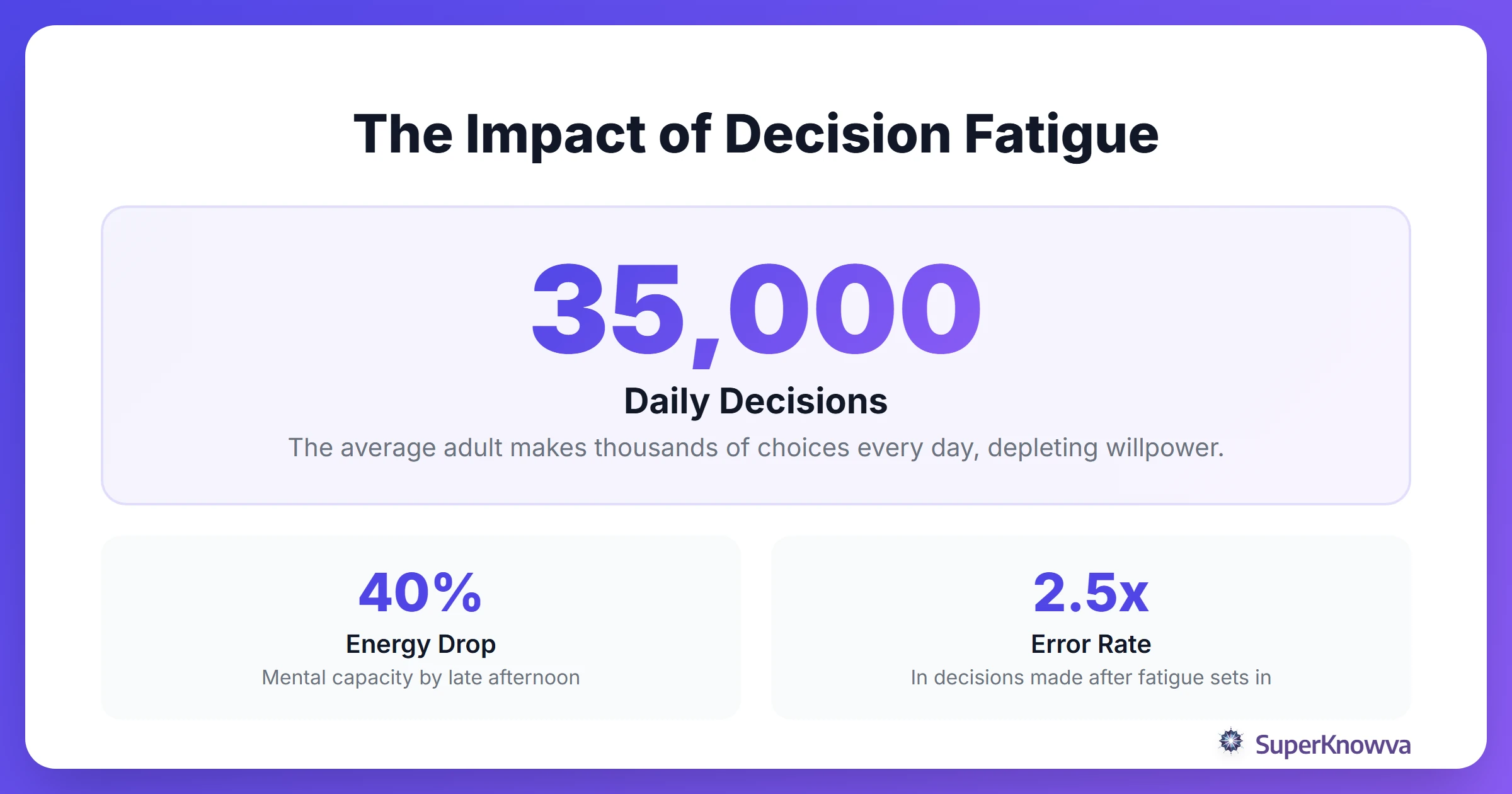
As that battery hits the red zone, your brain starts taking shortcuts. This is exactly why you can make great choices at 9:00 AM but find yourself mindlessly scrolling TikTok by 4:00 PM. When your mental energy is low, your ability to process complex information, which is essential for effective studying, is the first thing to go.
The Hidden Cost of Manual Study Planning
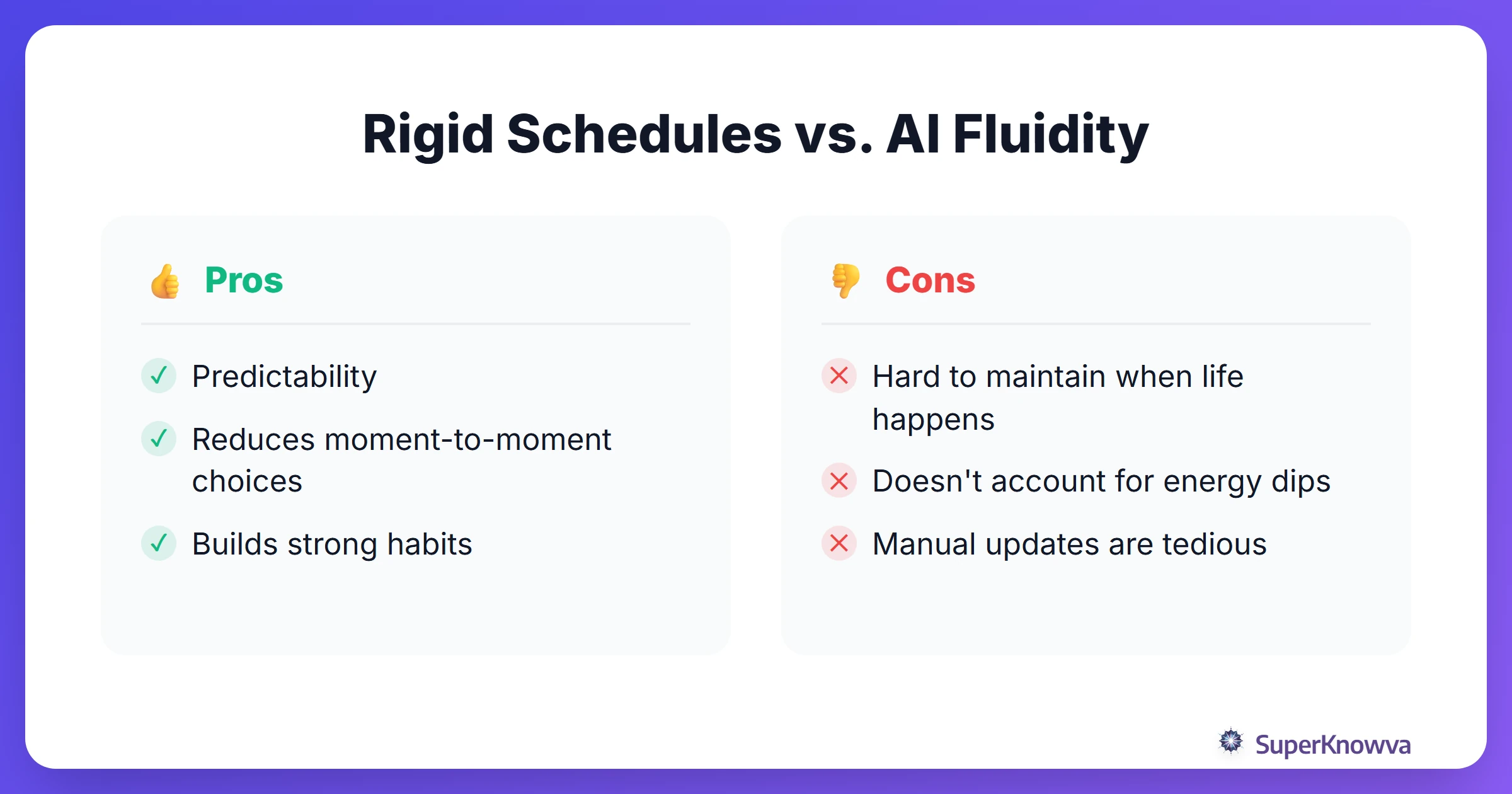
For most students, the question "What should I study right now?" is a massive hurdle. This manual planning process is often the biggest hidden leak in your productivity. Without a set plan, every single study session starts with a mini-crisis of choice.
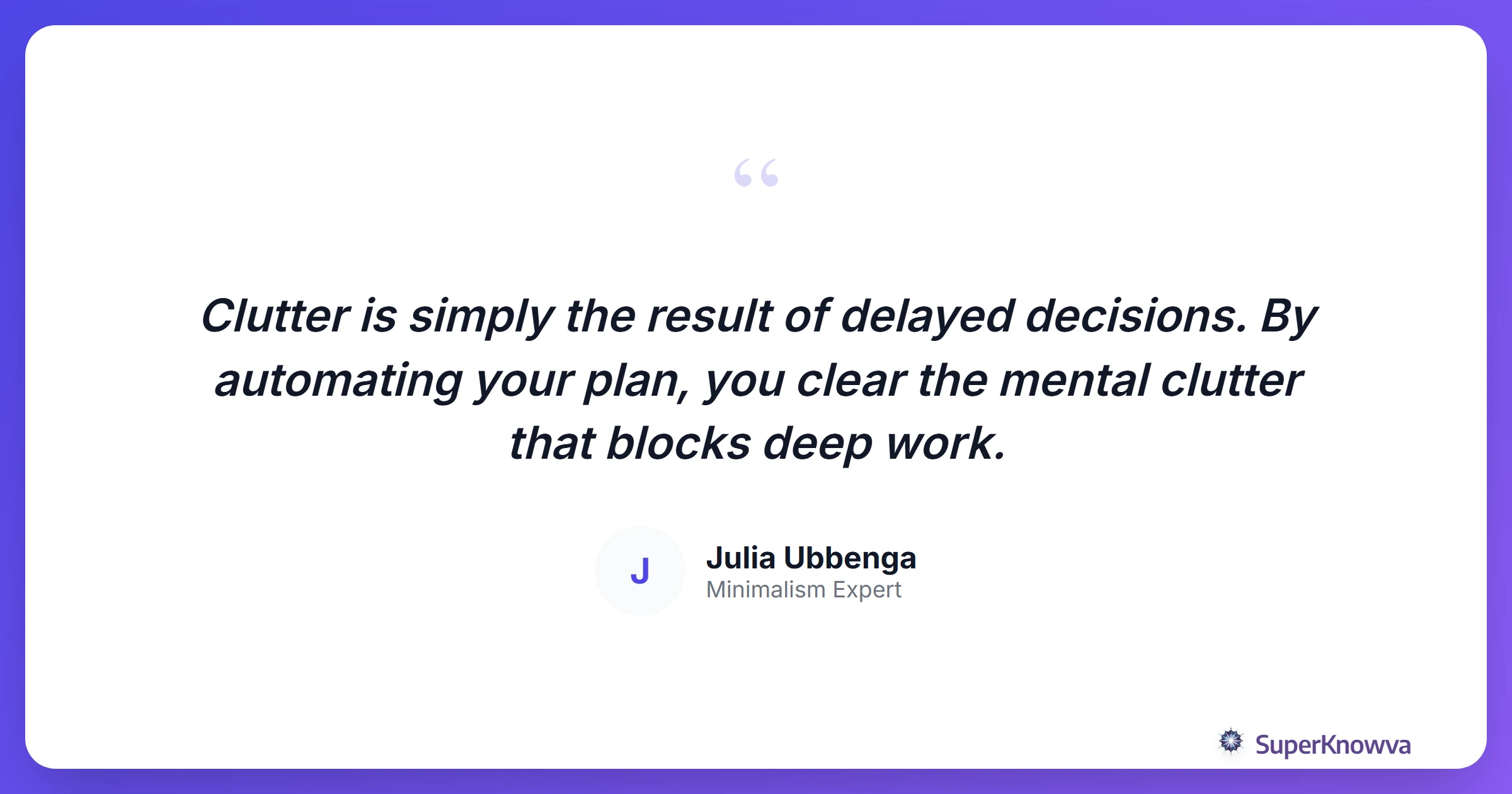
This leads to what experts call the "clutter" of delayed decisions. If your inbox is overflowing and your calendar is a blank slate, your brain has to keep all those "to-dos" active in your working memory just to make sure you don't forget them. Organizing your digital life is the first step toward building a second brain that handles the logistics for you.
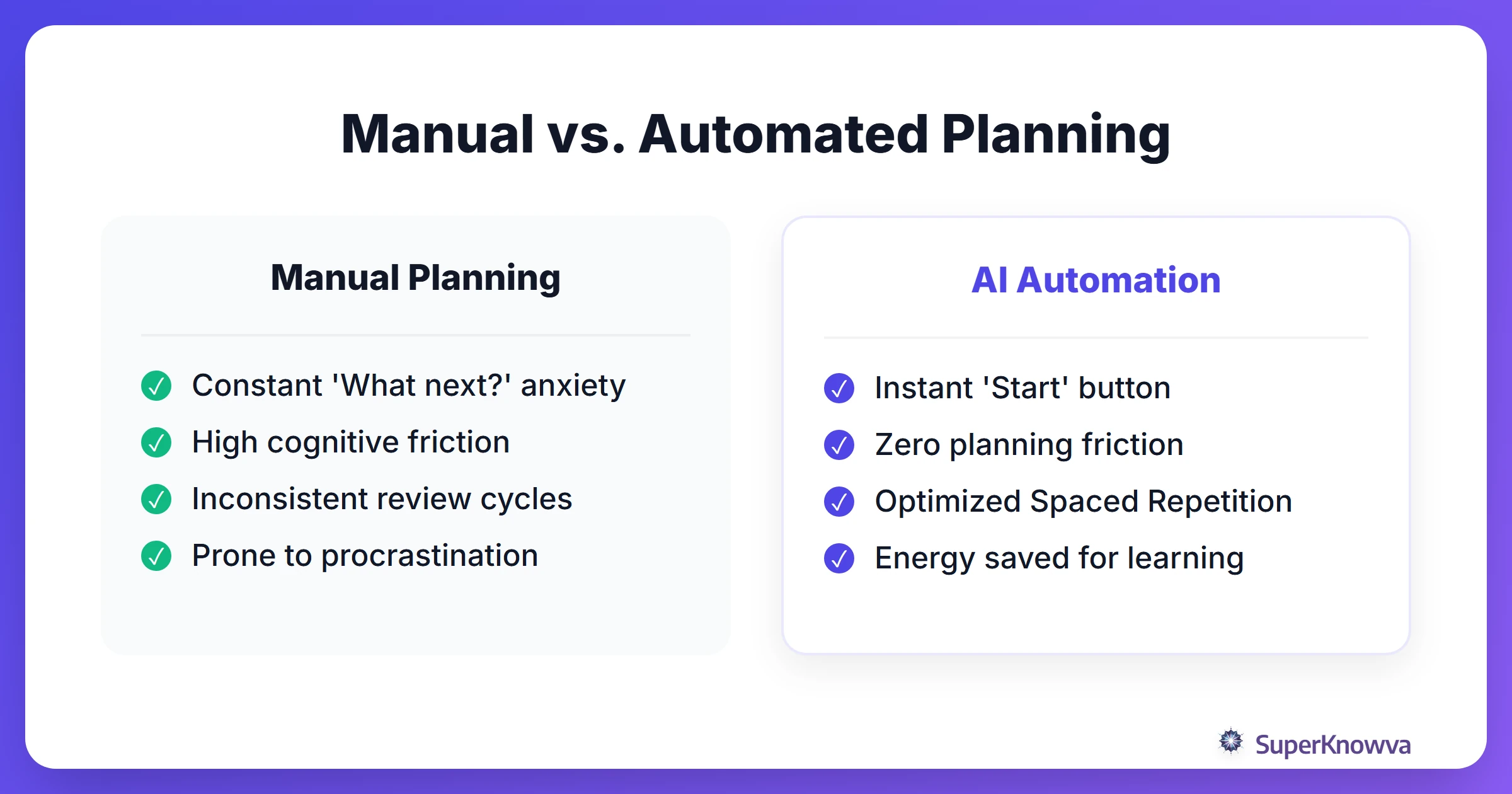
Choosing between subjects doesn't just take time; it burns the fuel you need for the subjects themselves. You’ve probably felt this before:
- Procrastination: You spend an hour "preparing" to study instead of actually doing the work.
- Brain Fog: You stare at a paragraph for ten minutes and realize you haven't absorbed a single word.
- The Path of Least Resistance: You choose the "easy" task (like color-coding your notes) over the "important" task (like doing those grueling practice problems).
How to Kill Decision Fatigue Immediately
You can't stop making decisions entirely, but you can automate routine choices to save mental energy for complex tasks. High performers overcome cognitive depletion by making their most important choices in the morning or the night before.
- Use "Default" Choices: Never start your day with a blank page. Set your schedule before you go to sleep so that when you sit down the next day, your only job is to execute.
- Eat the Frog: Put your hardest, most brain-melting subjects first when your battery is at 100%.
- Digital Minimalism: A clean digital workspace is a pillar of digital minimalism. It cuts down the number of icons and notifications competing for your attention.
- Strategic Breaks: Use your breaks to actually recharge. A walk without your phone is a recharge; scrolling through a newsfeed is just more decision-making.
Automating the 'What' and 'When' with AI
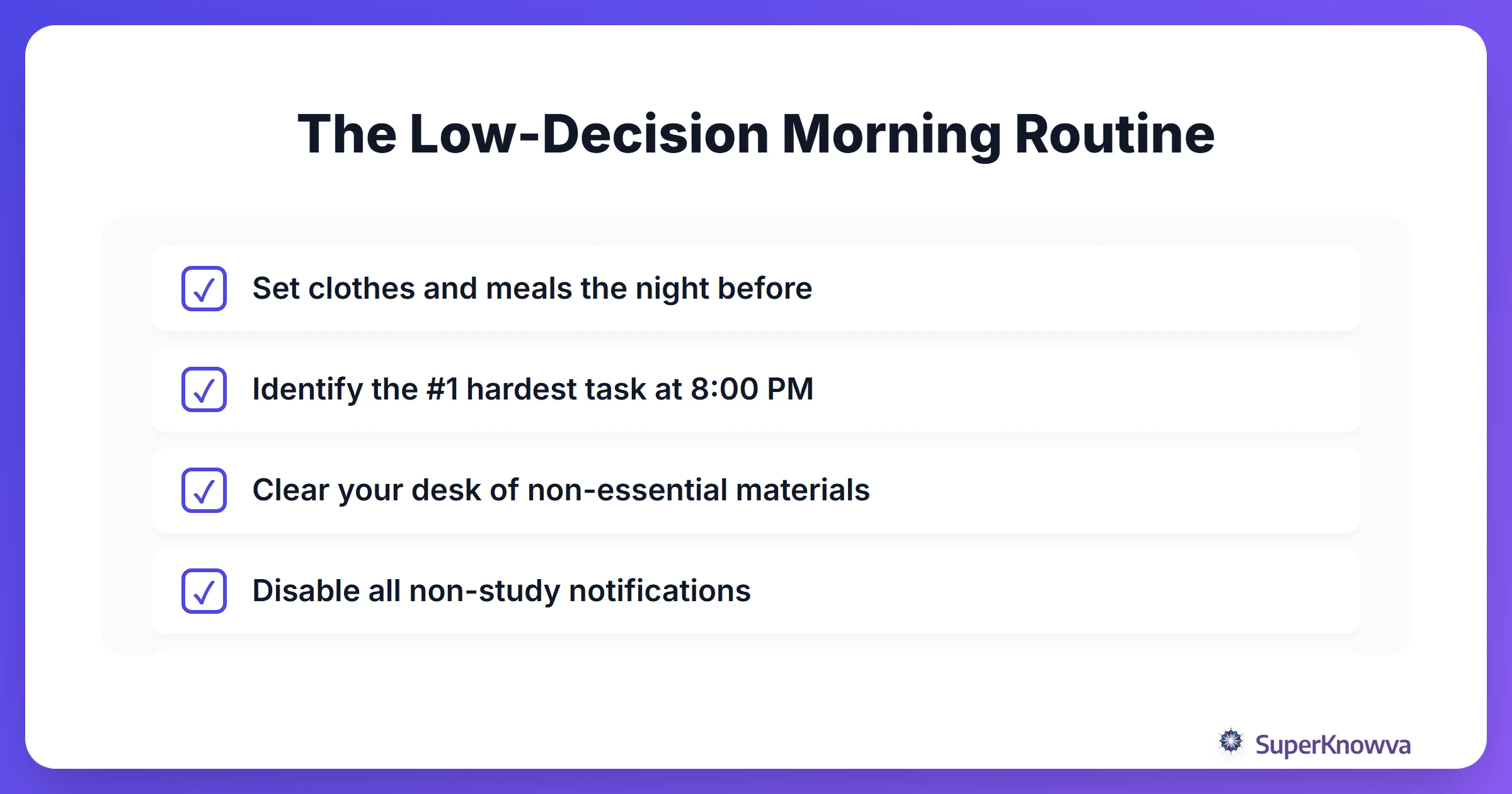
The most effective way to reduce decision fatigue is to delete the "planning phase" from your life. This is where AI-powered study platforms like SuperKnowva change everything. Instead of you trying to remember which topics you're weak in or when you last looked at "Cellular Mitosis," AI handles the complexity of spaced repetition and interleaving for you.
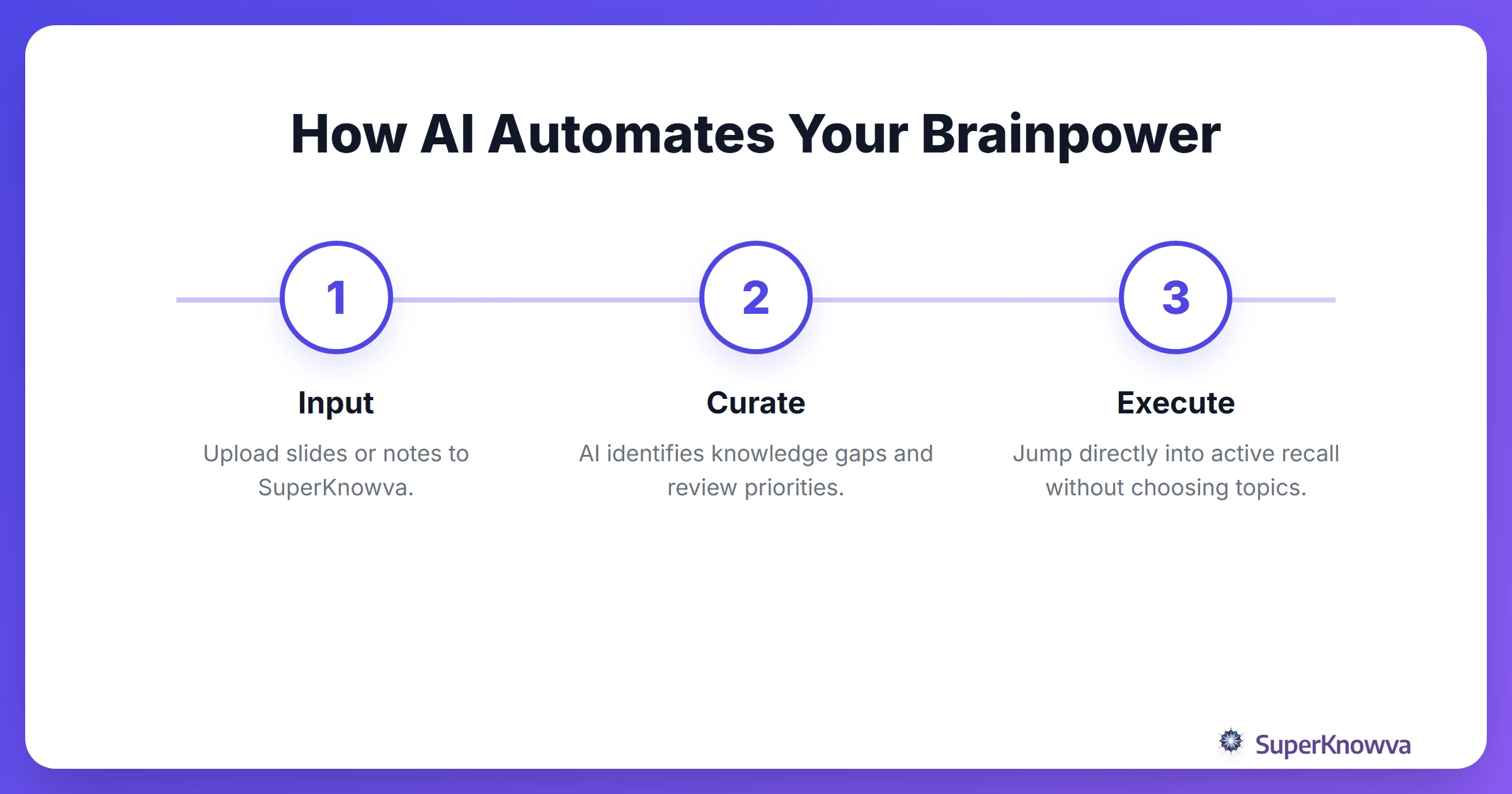
With SuperKnowva, you can just upload your PDF slides or lecture notes, and the AI analyzes them to find your focus areas automatically. It spots your knowledge gaps and tells you exactly what to review next. When you don't have to think about what to study, it’s much easier to slide into deep work strategies for students.
The change is significant: you stop being the "manager" of your studies, constantly stressed about schedules, and you finally get to be the "learner."
Building a Routine That Actually Lasts
To keep your performance high all semester, you need a system that works even when you're tired. This means setting up Deep Work blocks and batching your admin tasks.
Don't check your email every twenty minutes. Batch it into one 15-minute block in the afternoon. This stops "context switching," which is another massive drain on your mental battery. Once your plan is automated, you can use methods like Pomodoro vs. Flowtime to get the work done.
Finally, don't forget that your brain is part of your body. Sleep and nutrition aren't just "wellness" buzzwords; they are the literal fuel for your decision-making capacity.
Summary
Stop letting "planning" be the reason you don't study. By automating your schedule and letting AI guide your focus, you clear the mental clutter and free up your brain to do what it does best: learn, create, and succeed. Embrace the future of study automation with SuperKnowva and save your energy for the finish line.