The move from high school to college is often described as a "leap," but for a lot of students, it feels more like a freefall. One day you’re in a world of eight-hour bell schedules and guided worksheets; the next, you’re staring at a massive lecture hall and a syllabus with three-month gaps between exams.
That freedom is exciting. The shift in academic expectations can be a reality check. At SuperKnowva, we believe the secret to a successful freshman year is more than just working harder. It is about using the right tools to bridge that gap. Here is how you can use AI to manage the demands of university life.
The Academic Shock: Why High School Habits Fail in College
In high school, your day is built for you. Teachers give you study guides that practically mirror the test, and "learning" usually means memorizing facts for a Friday quiz. College is a different beast. It demands autonomy.
Many students fall into the "top of the class" trap. Because they sailed through high school with minimal effort, they never actually learned how to study. When they hit a 20-page syllabus and a professor who doesn't care if they show up, they default to passive learning by reading and re-reading chapters while the information just slides right off their brain.
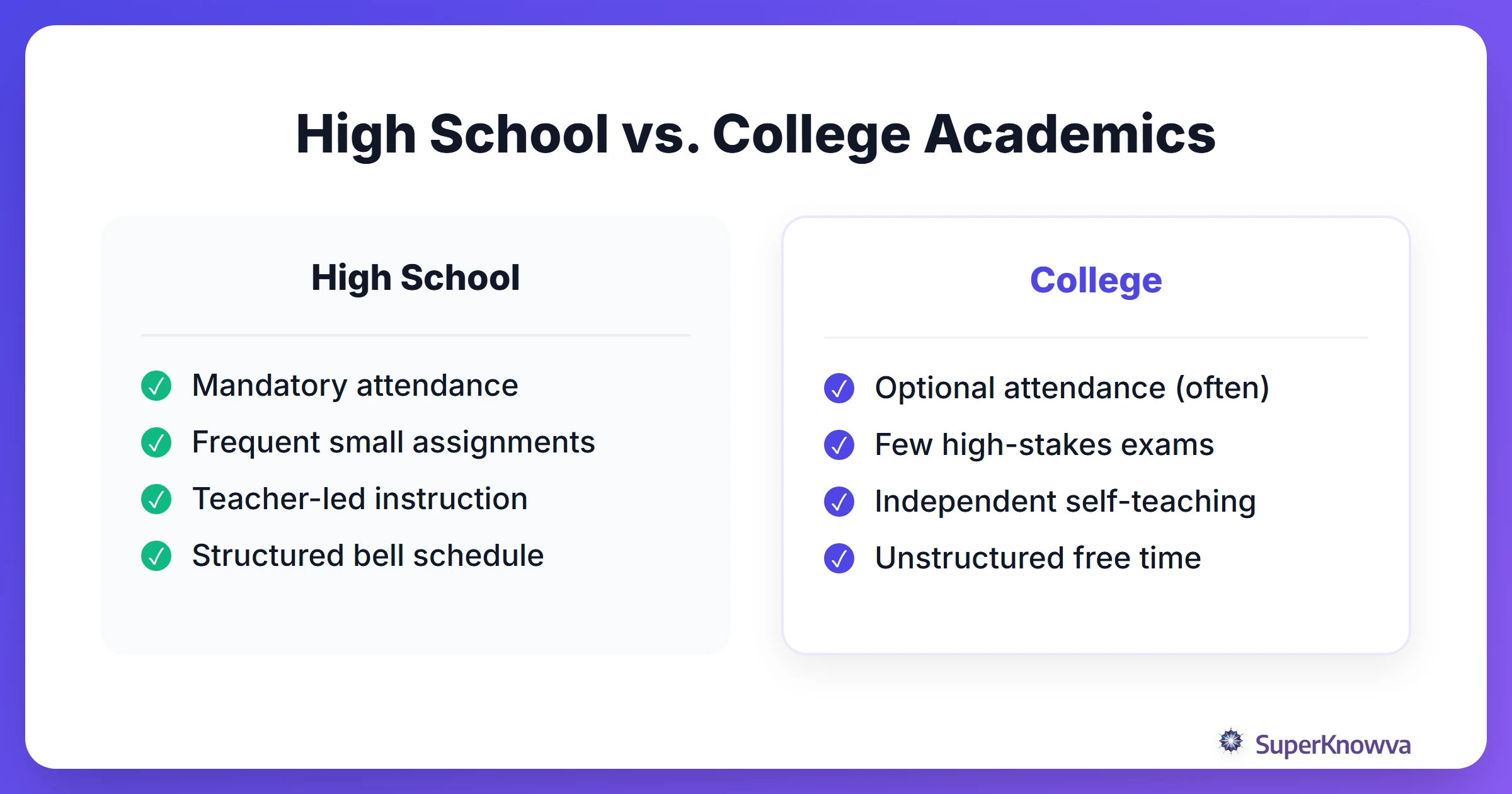
The biggest hurdle? Moving from passive to active engagement. In college, you aren't just a student; you're a researcher. This is especially true in online or hybrid classes where "self-teaching" is the baseline. Without a bell ringing every 50 minutes, it’s easy to lose the momentum needed to stay on top of a dense course load.
Building Your College-Level Study System with AI
To survive the jump, your toolkit needs an upgrade. AI for students has moved way beyond simple chatbots. It’s now a personalized tutor that can sniff out the knowledge gaps your high school GPA might have hidden.
Instead of just staring at a chapter, use AI to build a system around Active Recall vs. Re-reading. By uploading your syllabus or lecture notes to a platform like SuperKnowva, you can generate custom quizzes that force you to pull information from your memory. It’s harder than reading, but it’s the only way to make the info stick.
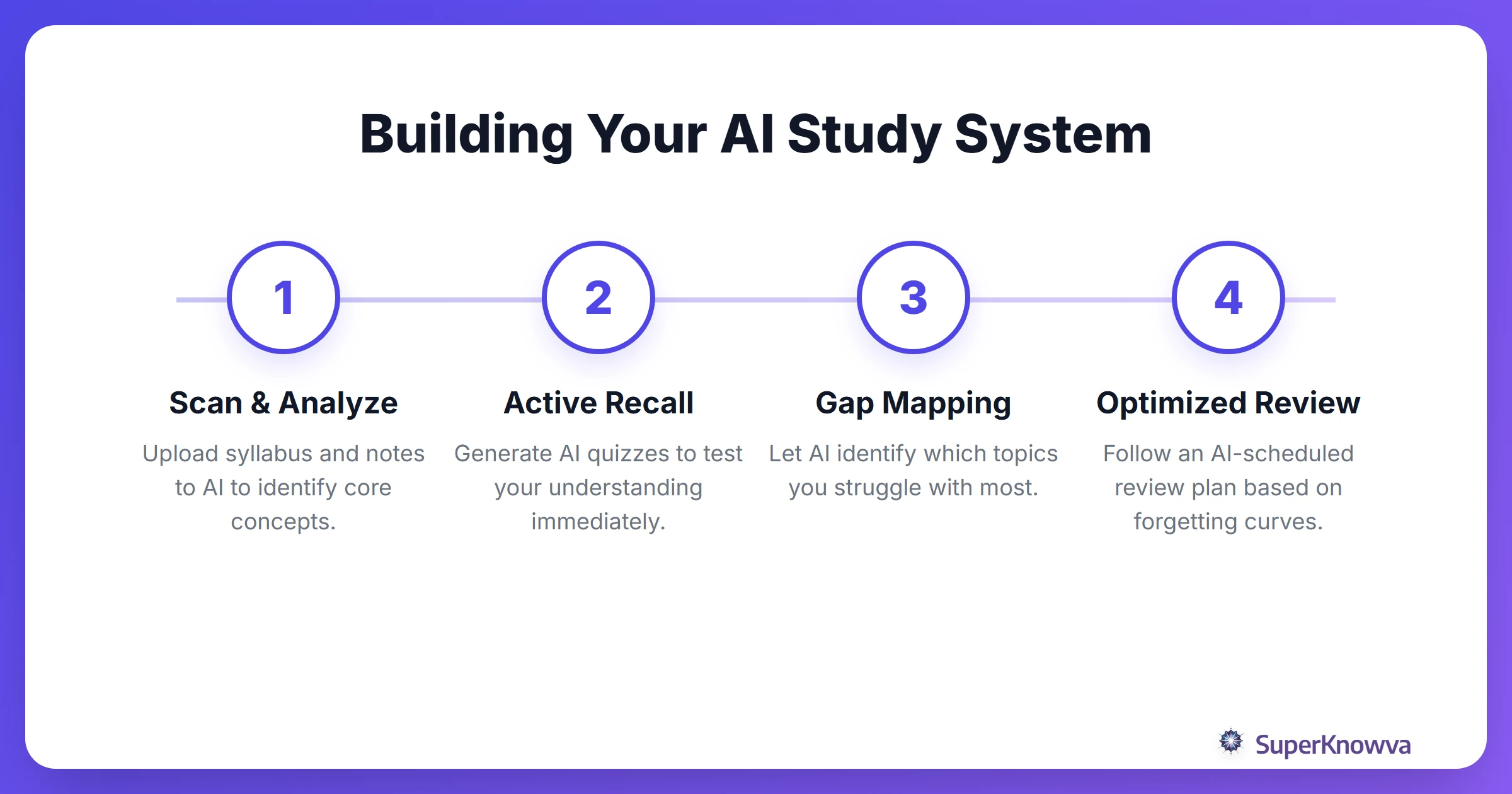
The goal is to move from memorization to conceptual understanding. AI can help you map out how different topics connect, ensuring you aren't just memorizing definitions but actually understanding the "why" behind the theory. Combine this with spaced repetition, and that stuff you learned in September will actually still be in your head for finals in December.
Mastering Time Management: From Bell Schedules to Autonomy
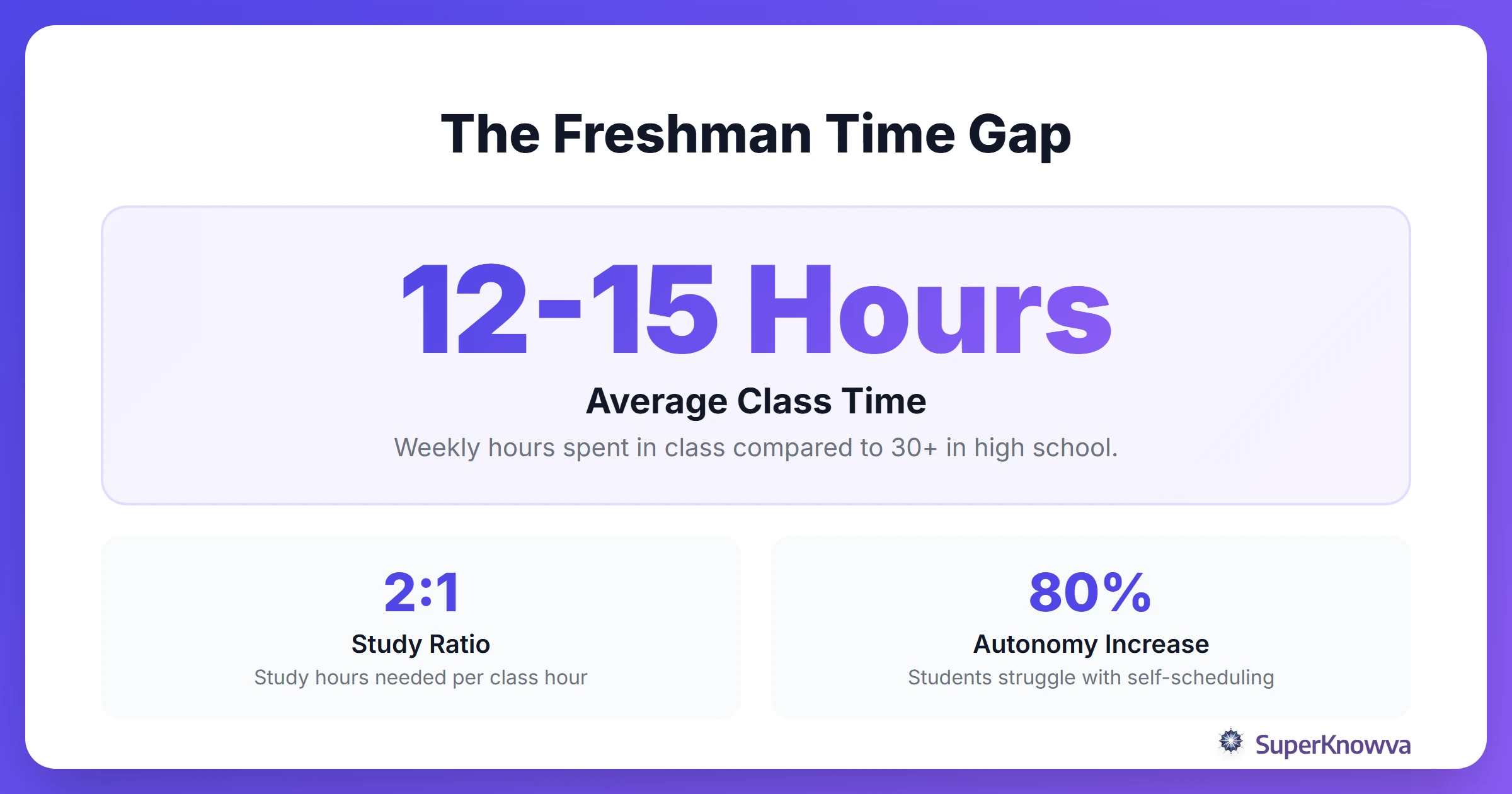
The most dangerous thing a college freshman has is "free time." In high school, you’re in class for 30+ hours a week. In college, that drops to 12 or 15. This is the "Freshman Time Gap," the place where many GPAs go to die because students treat those extra hours as leisure time instead of a window for deep work.
How do you fight back? Use AI-powered calendar tools to build a routine that actually works. These tools help you visualize your week and block out time for the heavy lifting. If a 10-page research paper feels paralyzing, try The 5-Minute Rule. Tell yourself you’ll only work for five minutes. Once an AI helps you outline the first few points, the momentum usually does the rest.
Just remember: a real routine includes sleep and health. An AI-managed schedule can show you if you’re overcommitting, helping you stay on top of your grades without burning out by mid-October.
Note-Taking 2.0: Moving Beyond Copy-Pasting
In high school, notes are often "fill-in-the-blank." In college, a professor might talk for 75 minutes straight without writing a single word on the board. You can't transcribe the whole thing, so you have to learn to synthesize.
Smart college study habits involve using AI to transcribe and summarize lectures. This lets you stay present in the room, focusing on the professor's nuances rather than frantically typing. Once the lecture is over, use AI to identify the core themes and connect them to your reading.
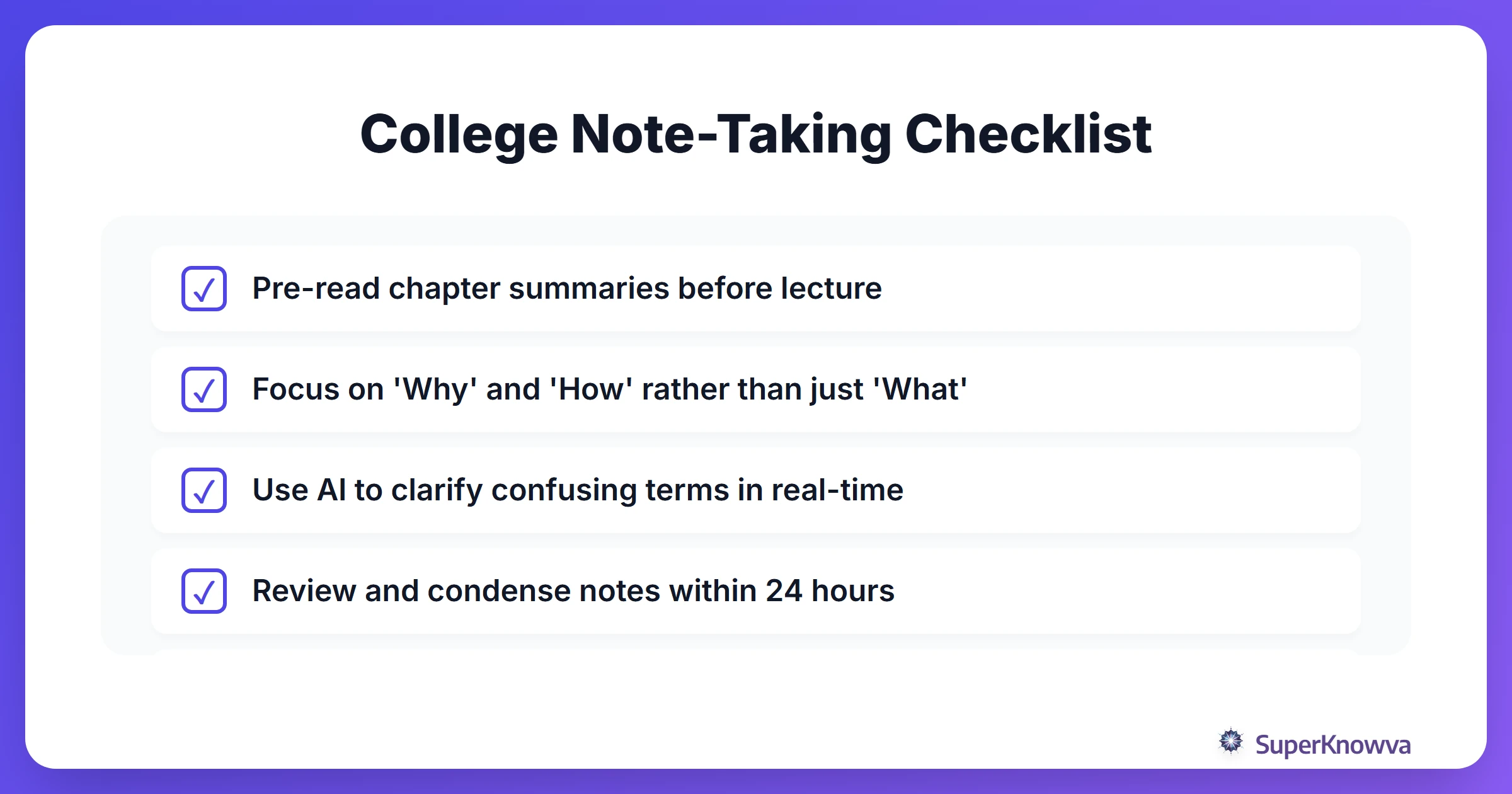
When it comes to Taking notes from a textbook, stop highlighting every line. Instead, let AI generate summaries of dense chapters, then write your own reflections on how that info fits into the course. Organizing these digital notes properly ensures you’re building a knowledge base that lasts for years, not just until the next exam.
The Social Transition: Balancing GPA and Connection
The transition isn't just about grades; it’s deeply personal. Many students feel isolated during that first semester, whether they’re commuting or living 500 miles from home.
One of the best university transition tips is to turn your academic life into a social one. Study groups are a total "hack" for making friends and reinforcing what you know. When you explain a concept to a friend, you’re performing the highest form of active recall.
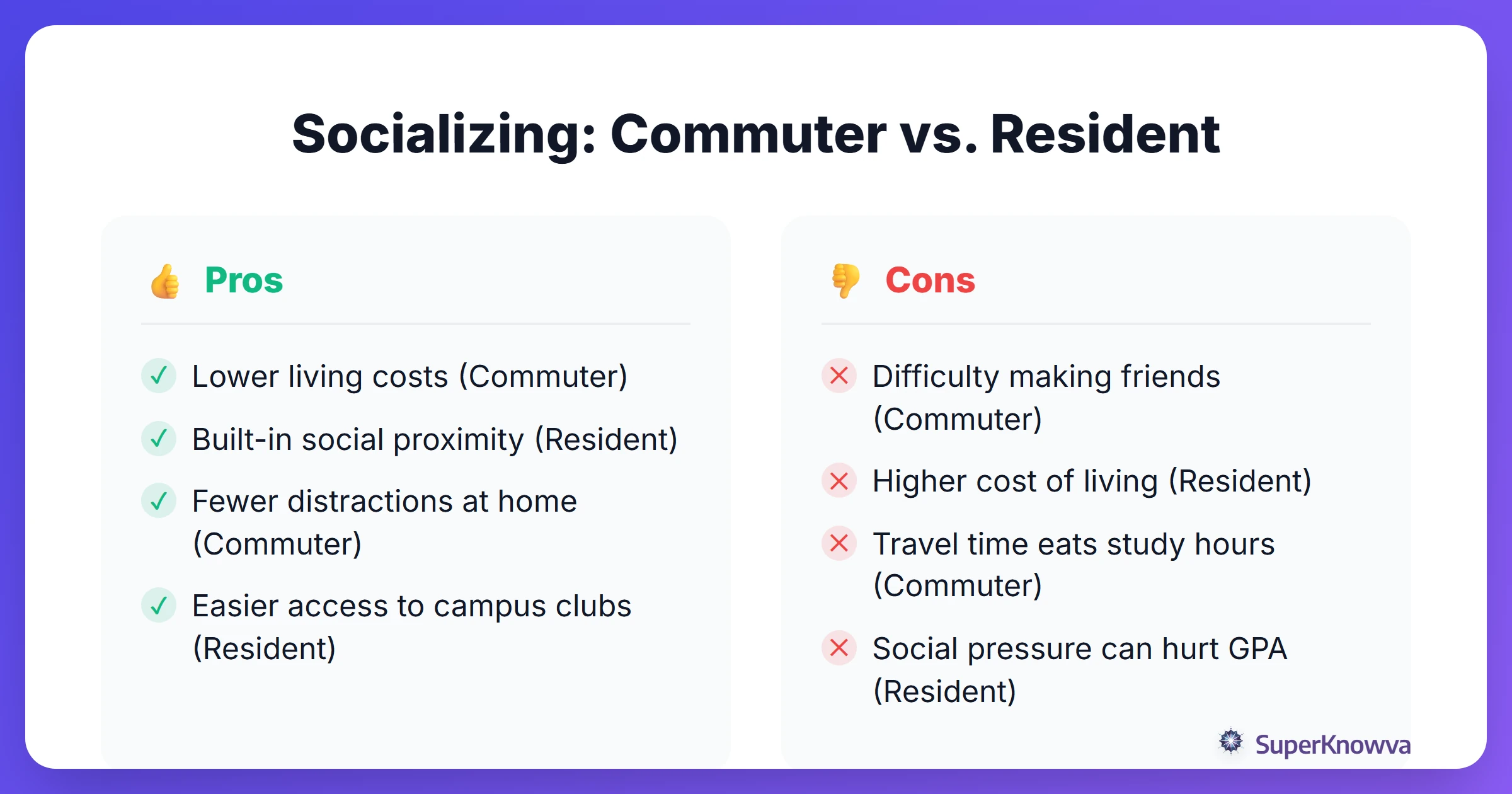
It is possible to Balance a High GPA with a Social Life. By using efficient AI study tools, you can cut down the hours spent on busy work, leaving more time for clubs, sports, and a social life. Don't let the emotional weight of moving away affect your academics. Reach out for support. You can even find Student discussions on high school to college transition online to see how everyone else is handling the same stress.
Overcoming the 'Lazy Professor' Myth: Self-Teaching with AI
New students often complain that their professors "don't actually teach." But here’s the reality: in college, the professor is a guide and a researcher, not a tutor. They provide the map; you do the driving.
When a professor’s explanation doesn’t click, use AI to rephrase it. Ask it to "explain this like I'm a freshman engineering student" or "give me a real-world analogy for this economic theory." This turns a confusing, static slide into an interactive lesson.
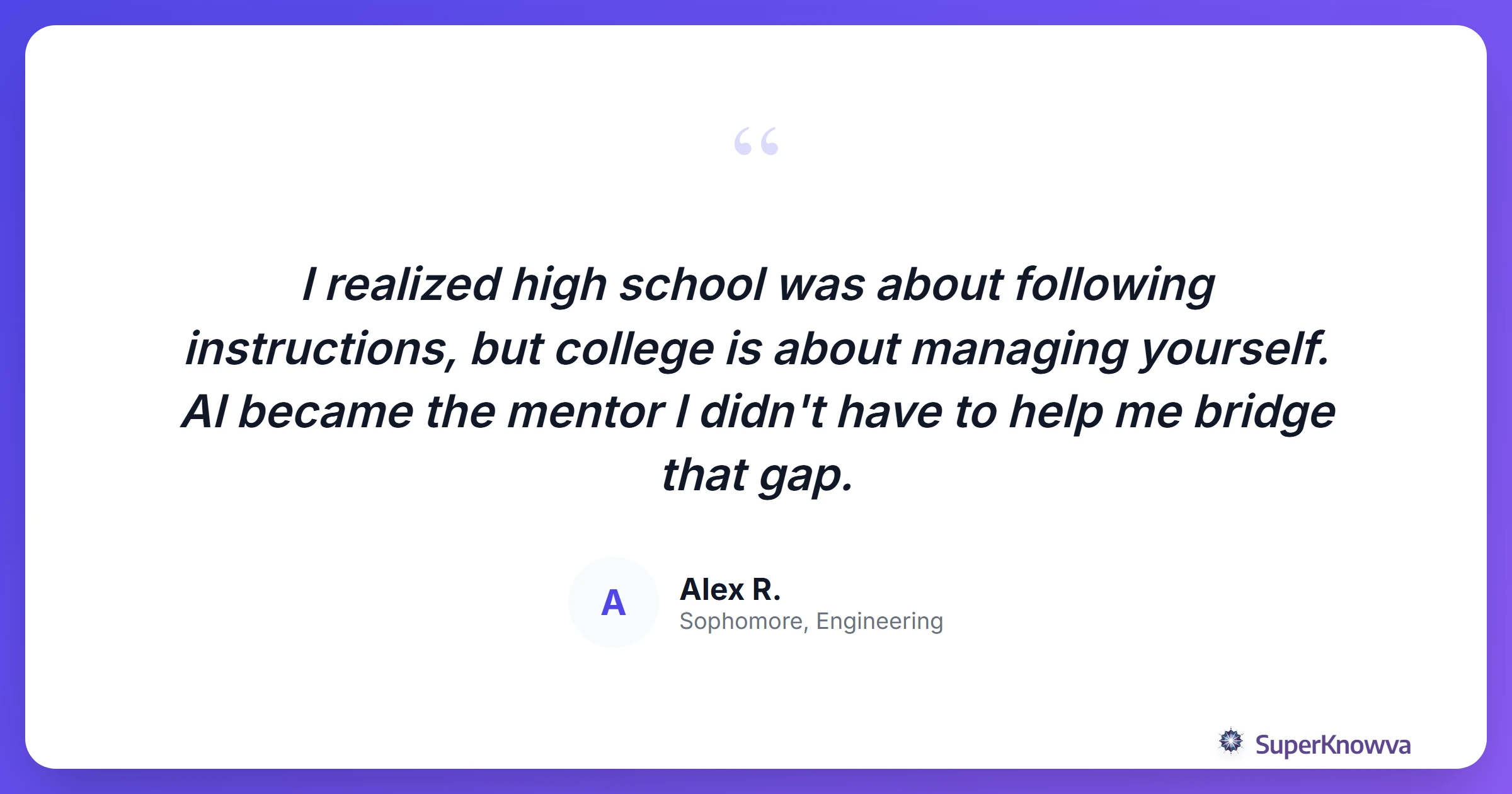
You can even use AI to prep for office hours. Instead of showing up and saying "I don't get it," use AI to generate specific, high-level questions based on your notes. It shows the professor you’ve done the work, and it helps you get the most out of your time. By using the Best Study Apps for Students, you can turn every lecture into a personalized masterclass.
Conclusion
The transition to university is one of the biggest shifts you’ll ever make. The workload is heavier and the autonomy is higher, but you don't have to handle it alone. By using freshman success strategies and making AI part of your daily routine, you can move past just getting by and start to excel.
Ready to take control? Start building your personalized study system today and see how much easier that "leap" can be.