Becoming a doctor involves many milestones, but USMLE Step 1 remains one of the most significant. Even in the pass/fail era, the pressure remains high as the focus shifts. Students now work to build a strong clinical foundation for Step 2 and their first clinical rotations rather than just chasing a three-digit score. To manage the extensive material, more students use a usmle step one ai review to focus their study time and master the content.
In this guide, we’re moving past the "grind until you burn out" mentality. Instead, we’ll show you how to use Artificial Intelligence to turn your prep into a streamlined, high-yield machine.
The Shift to AI-Powered Step 1 Preparation
For years, the advice was a broken record: read First Aid three times, finish UWorld, and pray. But the exam has changed. It’s no longer about who can memorize the most facts; it’s about conceptual understanding. If you can't explain the why behind a mechanism, you're in trouble.
This is where usmle step 1 ai study tools change the game. Instead of staring blankly at a static page of text, you can actually talk to the material. Think of AI as a 24/7 tutor that never gets tired. Need someone to explain the nuance of nephritic vs. nephrotic syndromes at 2 AM? It’s ready. Want to walk through the mechanics of cardiac pressure-volume loops until they finally click? AI doesn't mind. By moving from passive reading to active interrogation, you stop "recognizing" facts and start understanding pathophysiology.
Supercharging First Aid with Generative AI
First Aid for the USMLE Step 1 is the "bible" of med school, but let’s be honest: it’s a book of bullet points. It’s dense, it’s dry, and it assumes you already know everything.
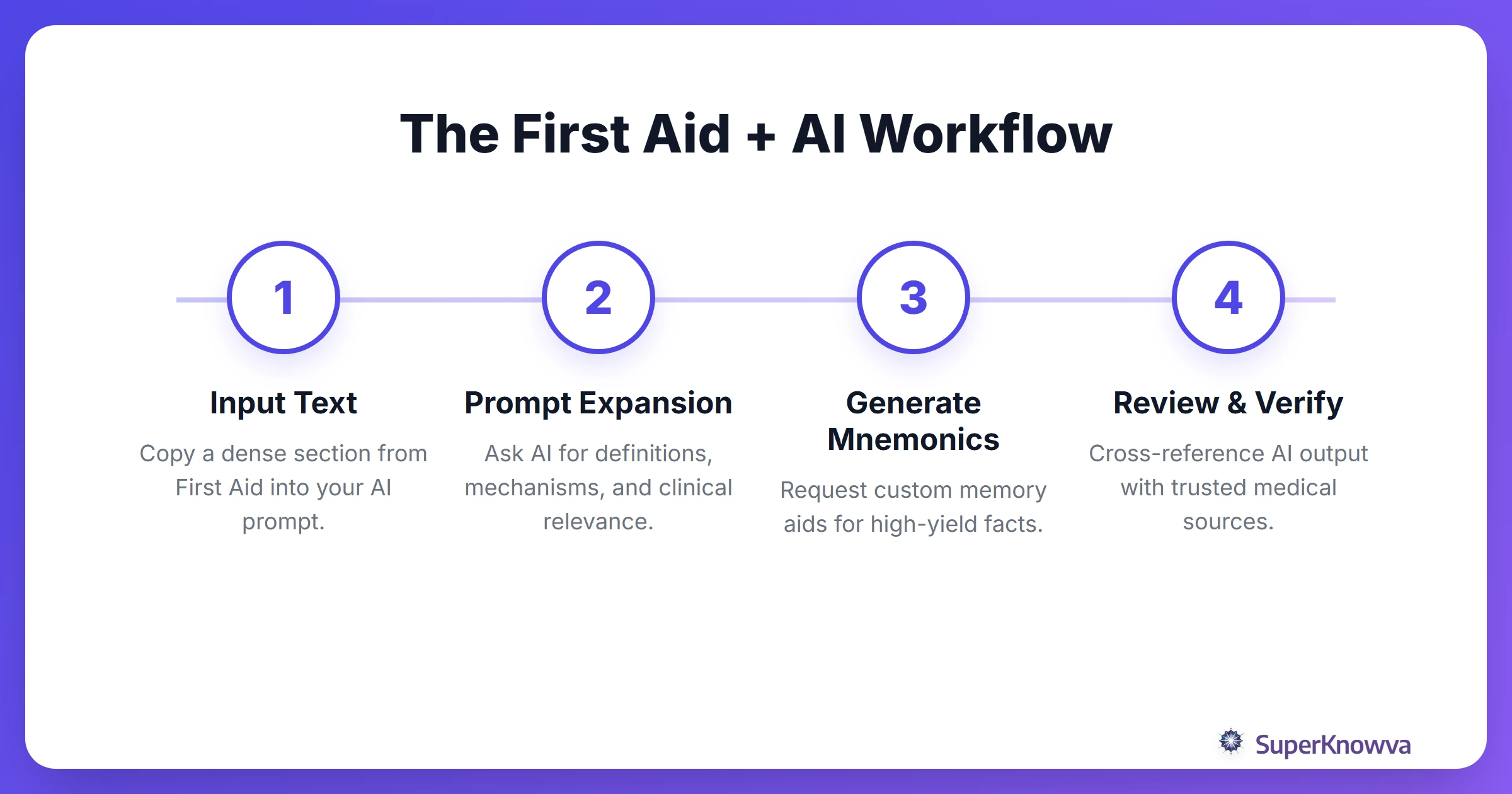
With first aid ai integration, you can breathe some life into those cold facts. Here’s how to make it work for you:
- The "Why" Expansion: Copy a dense section, such as the Coagulation Cascade, into an AI tool. Ask it to explain the logic behind each step for a second-year student.
- Personalized Mnemonics: If standard mnemonics aren't sticking, stop forcing them. Ask the AI to generate a story or acronym based on your interests, such as 90s sitcoms or rock climbing.
- Instant Organization: Use AI to convert a text-heavy description of vasculitides into a clean, comparative table. Tell it to highlight the clinical pearls most likely to show up on test day.
Mastering High-Yield Concepts and Mechanisms
Step 1 is obsessed with patterns. Knowing a patient has "currant jelly sputum" is a start, but the exam wants you to know the biochemical pathways of the organism and how the host's immune system reacts.
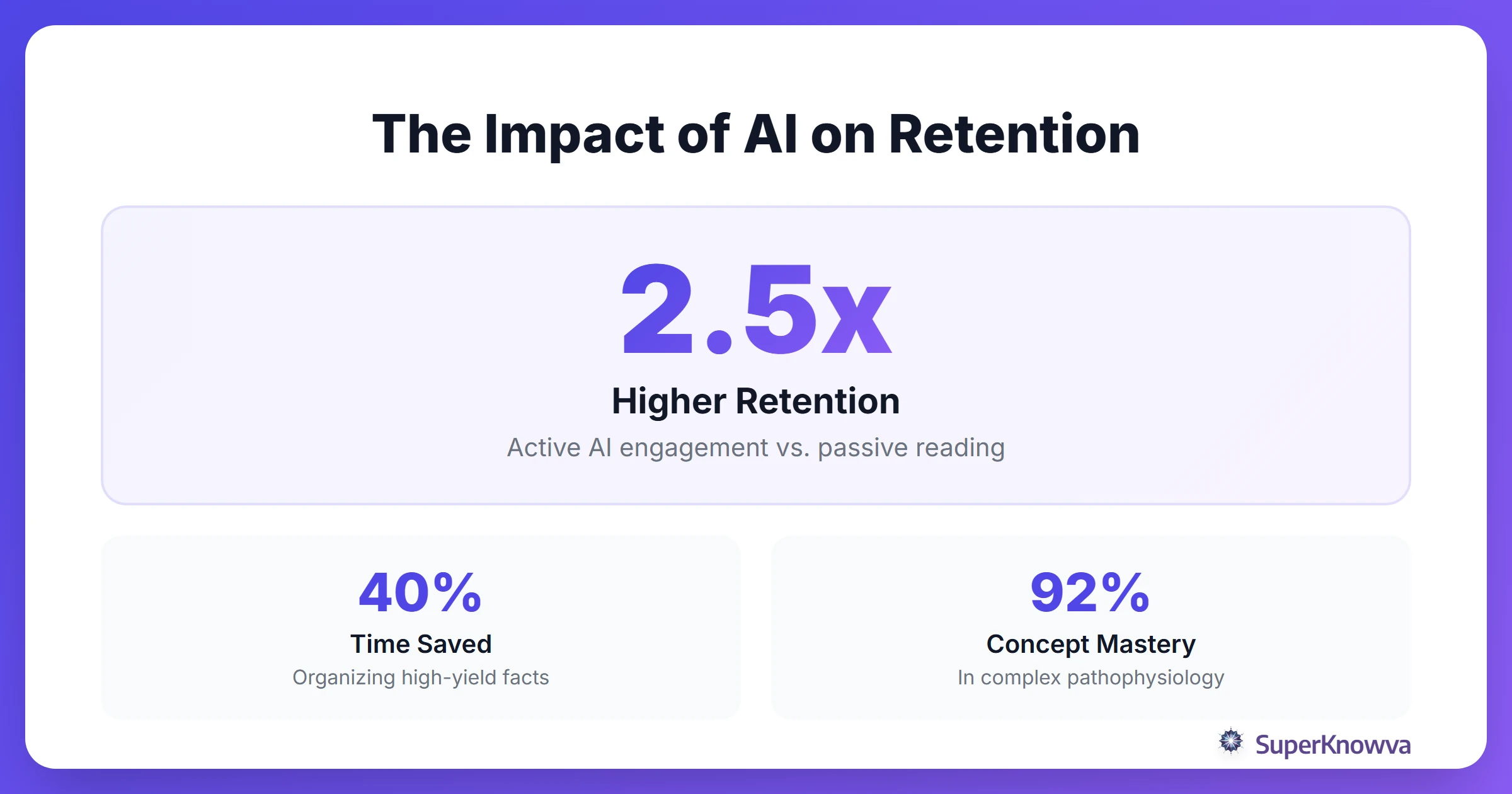
A high-yield medical review ai helps you bridge the gap between basic science and a real patient. Try prompting an AI to "create a clinical scenario for a patient with G6PD deficiency who just started taking nitrofurantoin." This forces you to apply your knowledge in a format that actually looks like the exam. For a deeper dive into this strategy, check out our Ultimate Guide to AI-Powered Prep.
AI Question Bank Analysis: Learning from Incorrects
Your "incorrects" are where the real learning happens. But most students just read the explanation, feel a momentary flash of regret, and hit "next." That’s a wasted opportunity.
An ai question bank analysis helps you find the root cause of the error.
- Logic Check: Feed the AI the question and your specific reasoning. Ask it: "Where did my logic fail?"
- Immediate Remediation: Once you find the gap, ask the AI to generate three similar practice questions. If you can’t get those right, you haven’t mastered the concept yet.
This level of Personalized Feedback for USMLE Success ensures you aren't just making the same mistakes on a loop.
Active Learning vs. Passive Review: The AI Advantage
The "forgetting curve" is the enemy. While flashcards help, they often turn into a mindless "spacebar-mashing" chore.
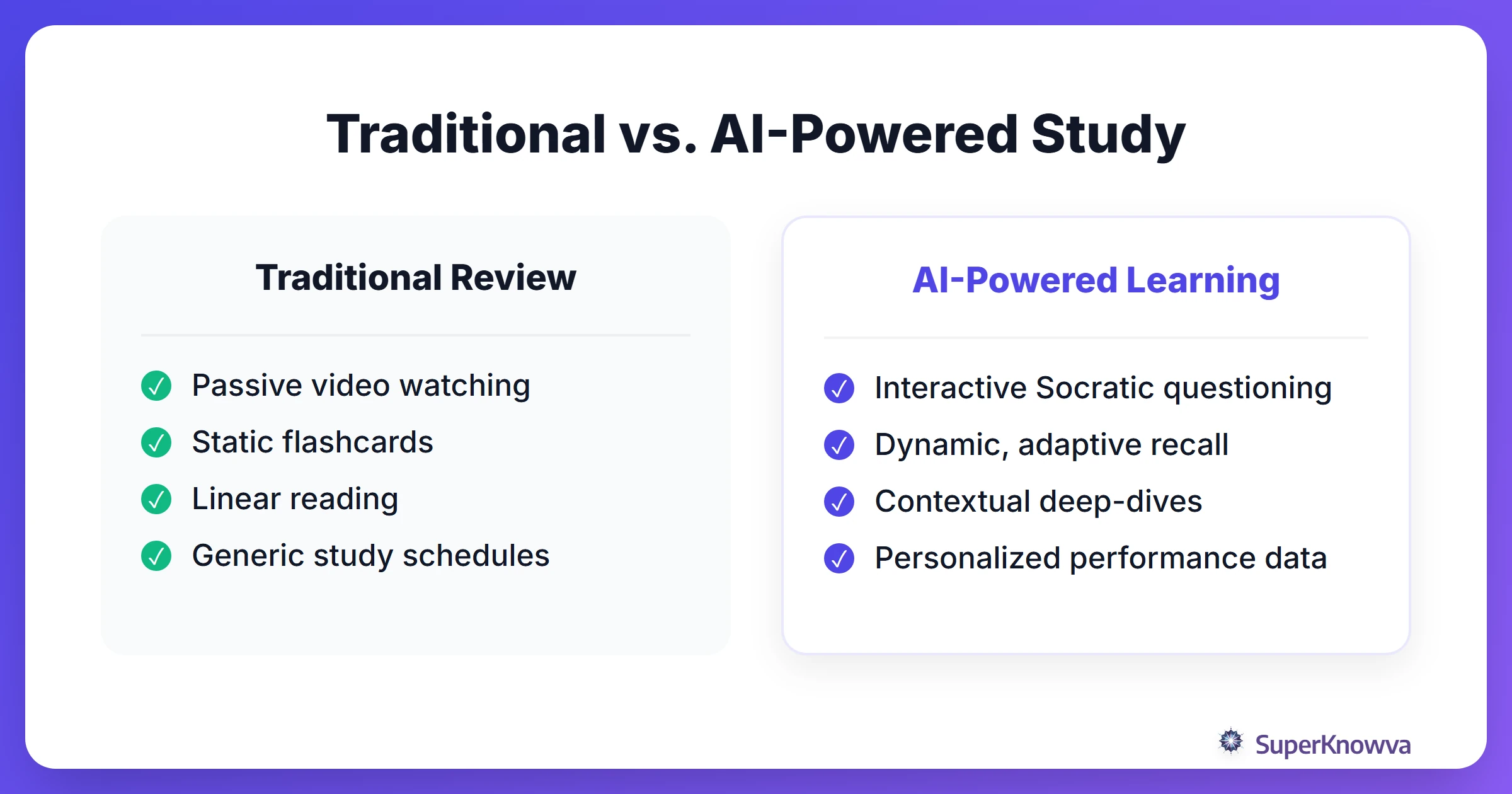
Usmle active learning ai offers a way out. Instead of a static card, the AI can engage you in Socratic questioning. It leads you to the answer through hints and logic rather than just handing it to you. This builds the neural pathways you’ll need when you're under the fluorescent lights of the Prometric center. It’s faster, it’s more engaging, and it actually sticks.
Managing Step 1 Stress and Performance Anxiety with AI
"Dedicated" is as much a mental game as an academic one. Burnout isn't just a possibility; it’s the default setting for most students.
AI can act as a performance coach. If you fall behind on your renal module, use AI to recalibrate your schedule so you still hit your high-yield targets without pulling an all-nighter. Beyond scheduling, AI-driven mindfulness tools can help you tackle the "defeatist attitude" that creeps in during those final weeks, offering evidence-based ways to manage test-day jitters.
Building Your AI-Integrated Step 1 Study Plan
Ready to get started? To really nail the usmle step one ai review process, you need a workflow that balances AI with gold-standard resources like Med School Bootcamp Step 1 Resources and UWorld.
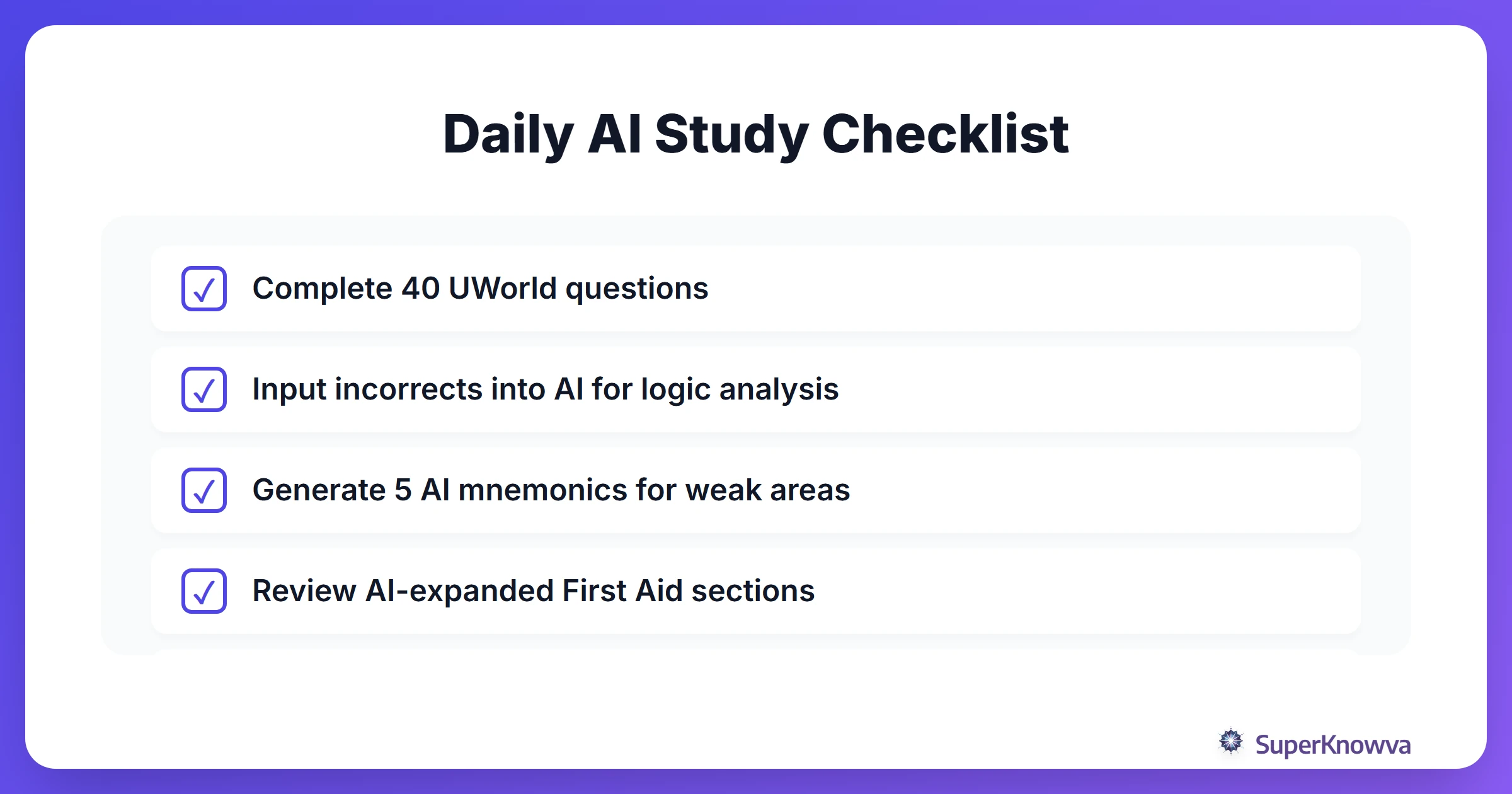
Your Daily AI Workflow:
- Morning: Knock out a block of 40 questions.
- Mid-Day: Use AI to analyze your incorrects and run "Rapid-Fire" fact checks.
- Afternoon: Review First Aid, using AI to expand on any "weak" organ systems.
- Evening: Use an AI tutor to simulate a clinical encounter based on what you learned that day.
For more advice from the trenches, you can always see how other students are using these tools on the Reddit r/step1 Community Discussions.
Conclusion
Step 1 is a beast, but you don't have to fight it with outdated tools. By leveraging a usmle step one ai review, you can turn a mountain of disconnected facts into a clear, integrated web of knowledge.
Check out the Best AI-Powered Question Banks for USMLE and prepare for a "PASS" today.