Ever feel like you’re trying to pour a gallon of water into a pint glass?
For most adult learners, the dream of a career-boosting degree eventually hits a wall of reality: the calendar. Juggling a 40-hour work week, family commitments, and a relentless syllabus feels less like "learning" and more like a high-wire act where one slip-up leads to total burnout. But here’s the truth: maintaining a work-life balance for adult learners isn't a luxury. It’s the only way you’re going to make it to graduation.
As we hit May, that pressure usually cranks up. End-of-semester deadlines are crashing head-first into spring social calendars and work projects. How do you survive the crunch without losing your mind? Let’s look at how to handle these demands while protecting both your GPA and your mental health.
The Unique Challenges of the Adult Learner
You have an "advantage" that younger students don't: perspective. You’ve dealt with office politics, paid bills, and handled crises. You’re resilient. But let’s be honest: that resilience is tested when you’re managing what we call the "triple threat": a full-time career, family obligations, and a demanding course load.
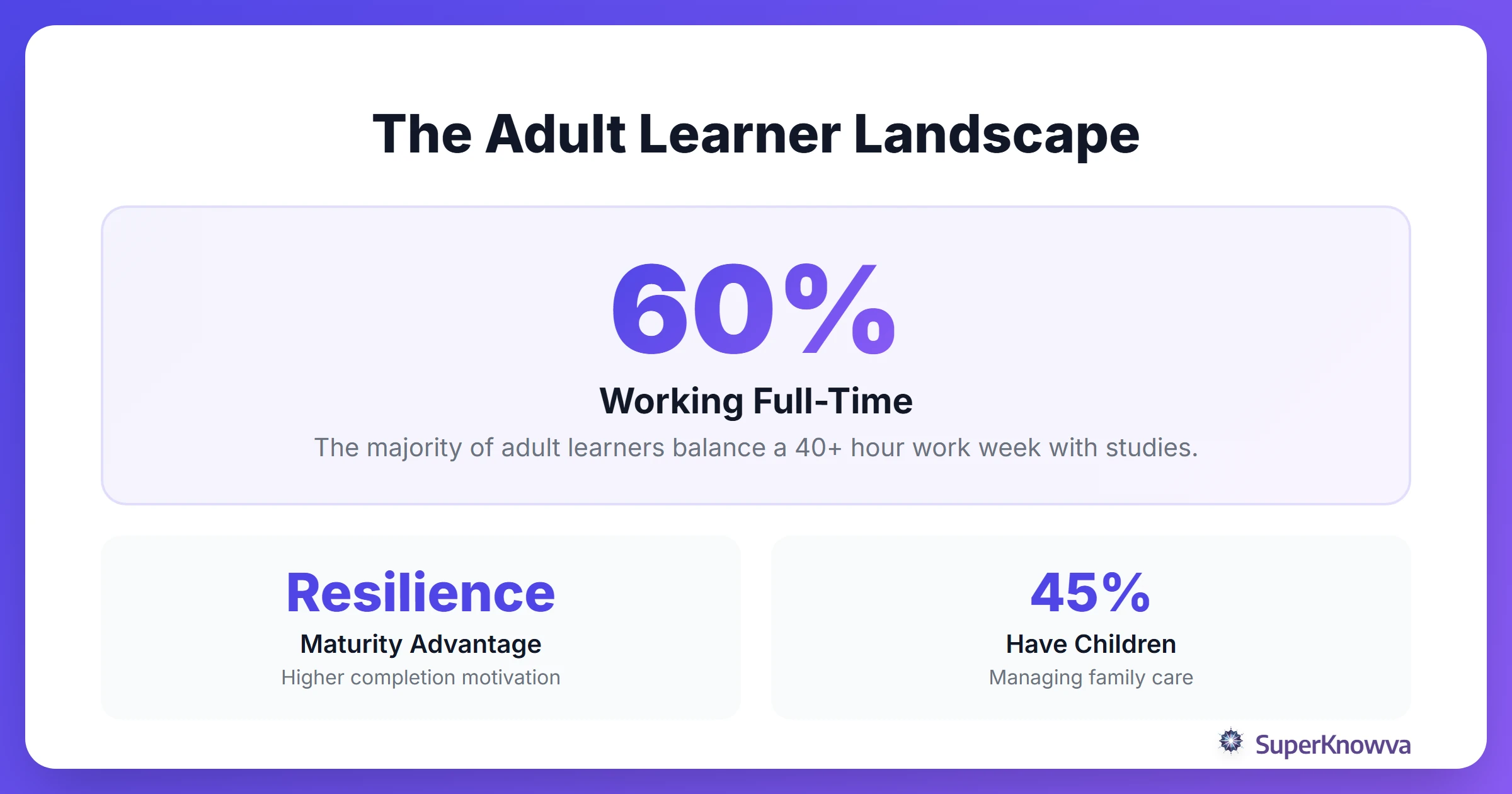
May is particularly brutal. While traditional students are just worrying about finals, you might be managing part-time work and full-time study while also dealing with your kids' end-of-school events, house maintenance, and Q2 deadlines at the office. Acknowledging that your plate is uniquely full isn't admitting defeat. It is the first step toward a better strategy.
Setting Realistic Goals (and Lowering the Bar)
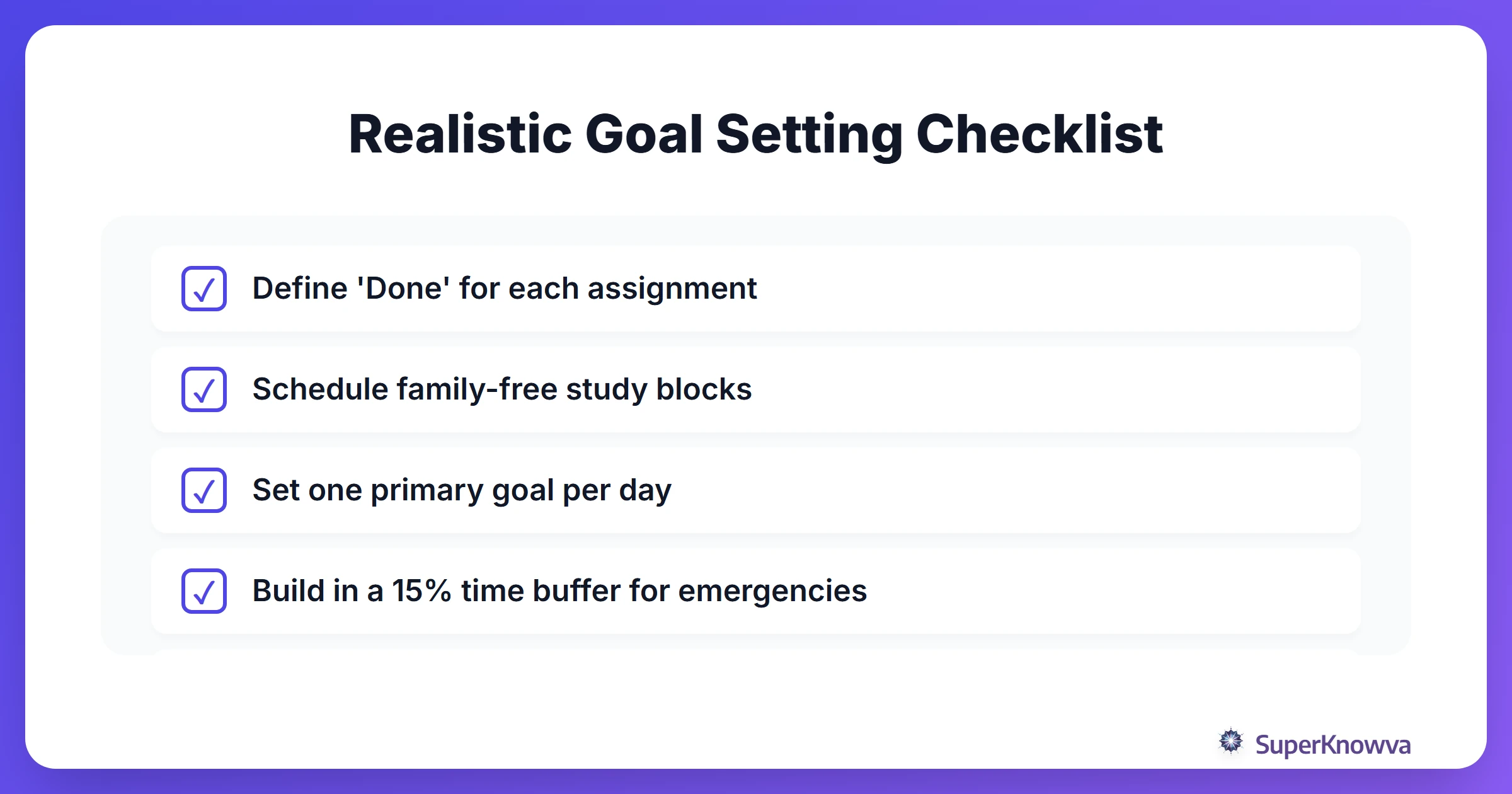
One of the biggest hurdles to balance is the perfectionism trap. When you’re paying for your own education, it’s natural to want an 'A' on every single assignment. But during a high-stress month, that drive can lead to total paralysis. To survive the May crunch, you need to pivot from "perfect" to "done."
- Define "Done": Before you open your laptop, decide what an acceptable version of a project looks like. Does it meet the rubric? Great. Move on.
- Think in Micro-tasks: A 2,000-word paper is terrifying. Writing 200 words or finding three citations? That’s doable.
- The "Good Enough" Philosophy: Accept that during peak weeks, "good enough" is a strategic win. It keeps you moving forward without crashing.
Mastering Time Management for the Busy Season
Effective time management for working students requires more than just a to-do list. It requires a strategy for your specific life.
Try time blocking. Instead of promising to "study tonight," schedule 7:00 PM to 8:30 PM for your economics chapter. This reduces decision fatigue; when the clock hits 7:00, you simply start working. Look for "hidden time." A 15-minute wait at soccer practice or a train commute is a good time to review flashcards or listen to a recorded lecture.
Communicating with Your Support System
You aren't a superhero, so stop trying to fly solo. Your success depends heavily on how well you communicate your needs to the people around you.
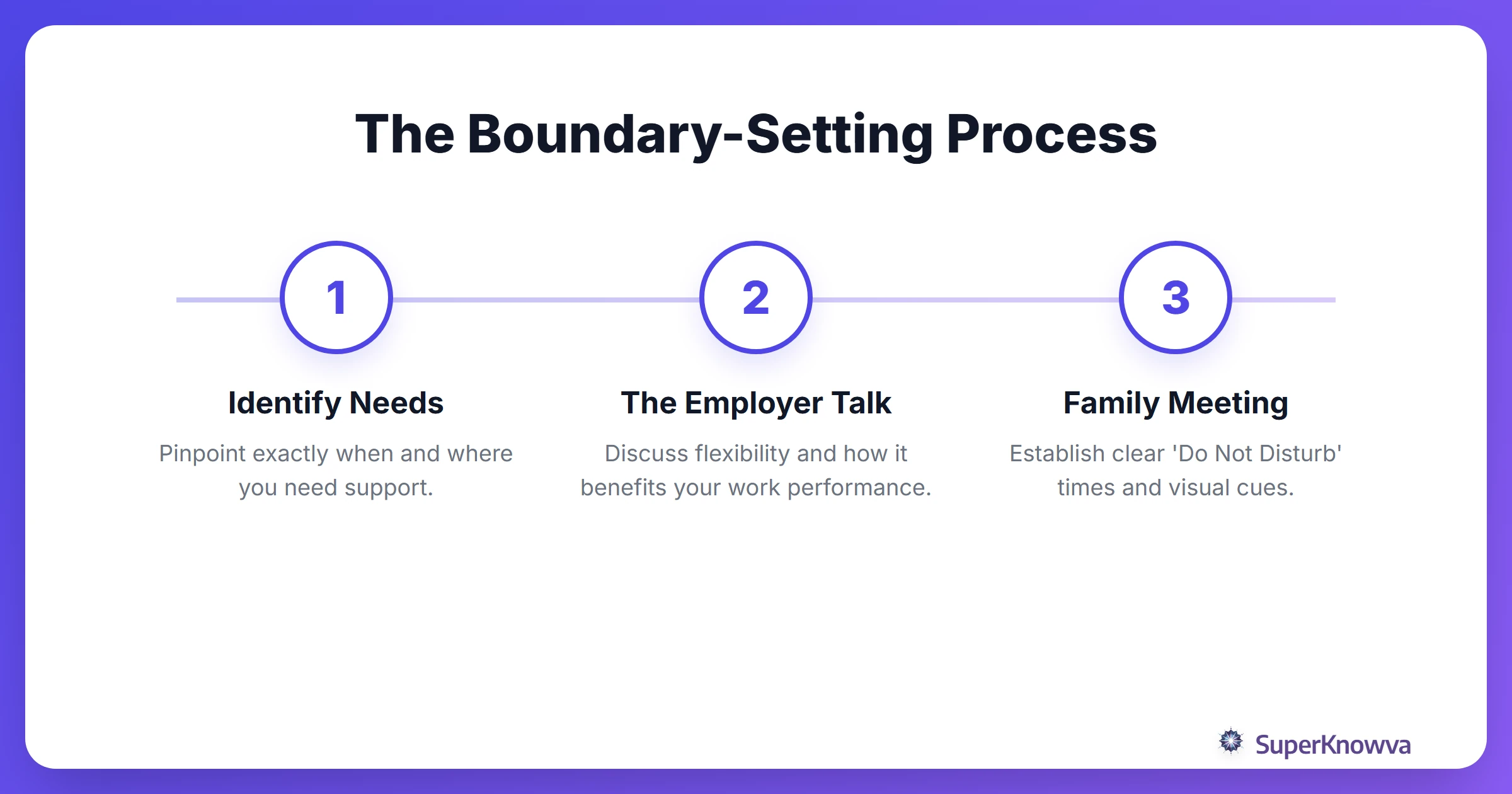
- Talk to your boss: Be transparent. If you have a massive final in late May, ask for a remote work day or flexible hours to cut down on commute time.
- Set boundaries at home: Create a "study zone." Use a visual cue, such as a closed door or a specific lamp, to let your family know that when it’s on, you’re in "student mode."
- Connect with other students: Find other adult learners. They understand the struggle in a way your friends who aren't in school simply won't.
Prioritizing Wellness to Fuel Productivity
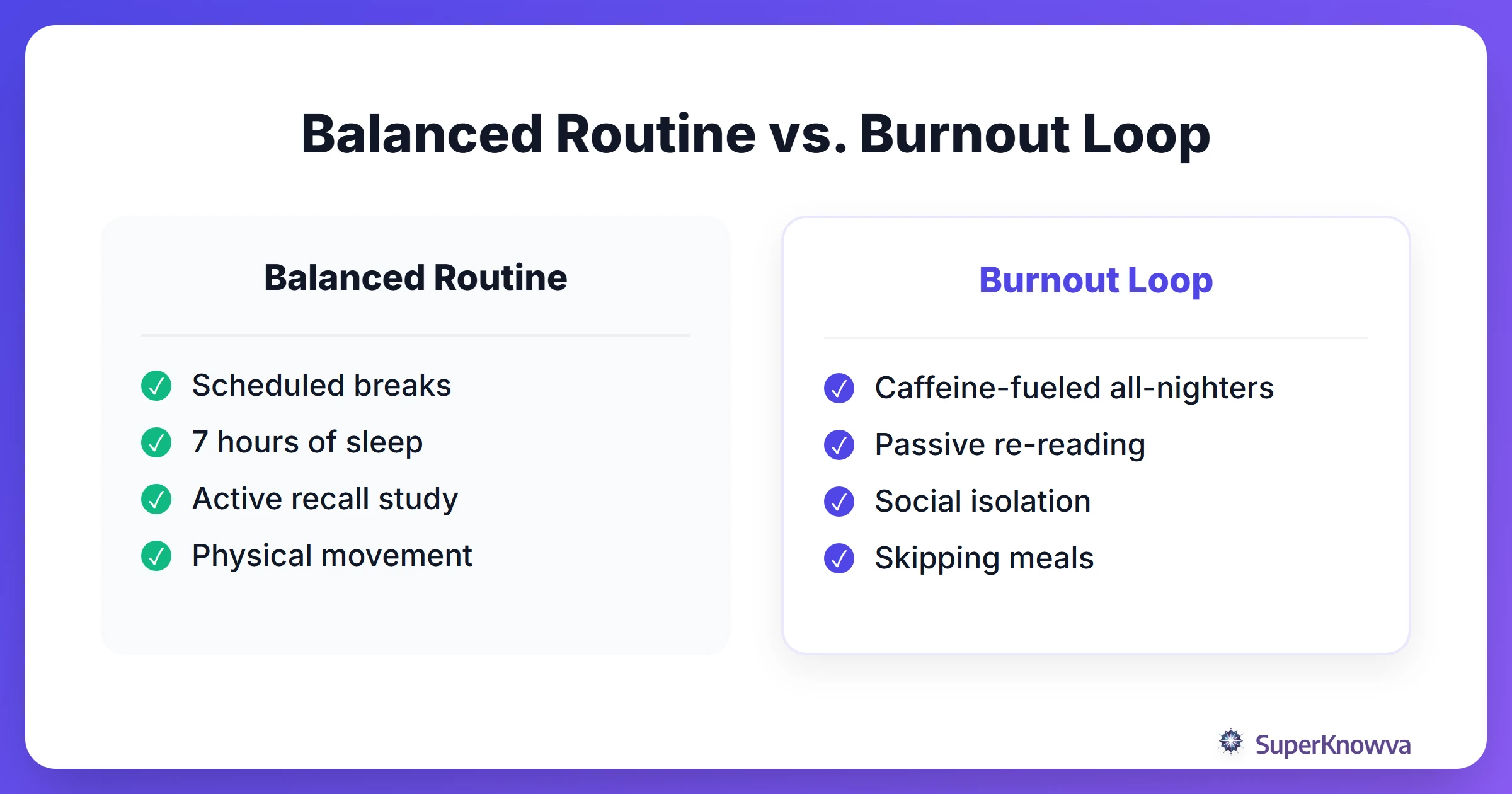
When time gets tight, sleep and exercise are usually the first things we cut. But here’s the irony: neglecting student wellness actually makes your brain slower, meaning your study sessions take twice as long.
It’s well-documented how physical activity boosts cognitive function by increasing blood flow to the brain. Even a 15-minute walk can clear the mental fog. Also, learn to spot the 7 signs of student burnout and how to recover, like constant irritability or feeling "numb" to your progress. If you catch these early, you can take a night off to reset before you hit a total wall.
Leveraging Technology to Study Smarter
In 2024, learning is more efficient with the right tools. Adult education tips often miss the impact of AI-driven efficiency. Tools like SuperKnowva let you upload course materials and instantly generate practice quizzes.
This moves you from "passive reading" (which is mostly a waste of time) to "active recall." By using mobile-friendly platforms, you can turn a 10-minute wait at the doctor's office into a high-impact study session. For more ideas on blending your professional and academic worlds, take a look at Georgia Tech’s 6 Tips for Work-Life Balance.
Overcoming Imposter Syndrome and the "Guilt Trip"
Do you ever feel guilty for not being 100% present at work? Or guilty for being away from your family to study? This often feeds into imposter syndrome, the feeling that you don't actually belong in a classroom.
Overcoming self-doubt in academia starts with remembering why you enrolled. Whether you are working toward a promotion, a career pivot, or a personal goal, that objective keeps you focused. Recognize your progress by finishing a module, hitting a word count, or attending class. As noted in ReUp Education's Guide for Adult Learners, acknowledging your achievements provides the motivation needed to complete your degree.
Final Thoughts
Balancing it all during the May crunch is a marathon, not a sprint. By setting boundaries, using the right tools, and being kind to yourself, you can handle the "triple threat" and come out on top. Your experience is your greatest strength. Keep going. You’ve got this!