Ever spent an entire night highlighting a textbook only to wake up feeling like your brain is a blank slate? It’s a gut-punch. You put in the hours, but the information just didn't stick. You aren’t alone, and it’s not your fault. Most traditional study methods fail because they focus on recognition (looking at something and thinking "I know that") instead of retrieval (actually pulling the answer from your memory).
But there’s a better way. By mastering active recall with AI tools, you can stop wasting time on "passive" habits and start building a memory that actually lasts.
In this guide, we’re going to break down the science of why your brain forgets and show you how platforms like SuperKnowva can automate the hard parts of studying for you.
The Science of Active Recall: Why Retrieval Beats Review
At its simplest, active recall is a mental workout. Instead of glancing at a page and telling yourself you’ve got it, you force your brain to produce the answer from scratch.
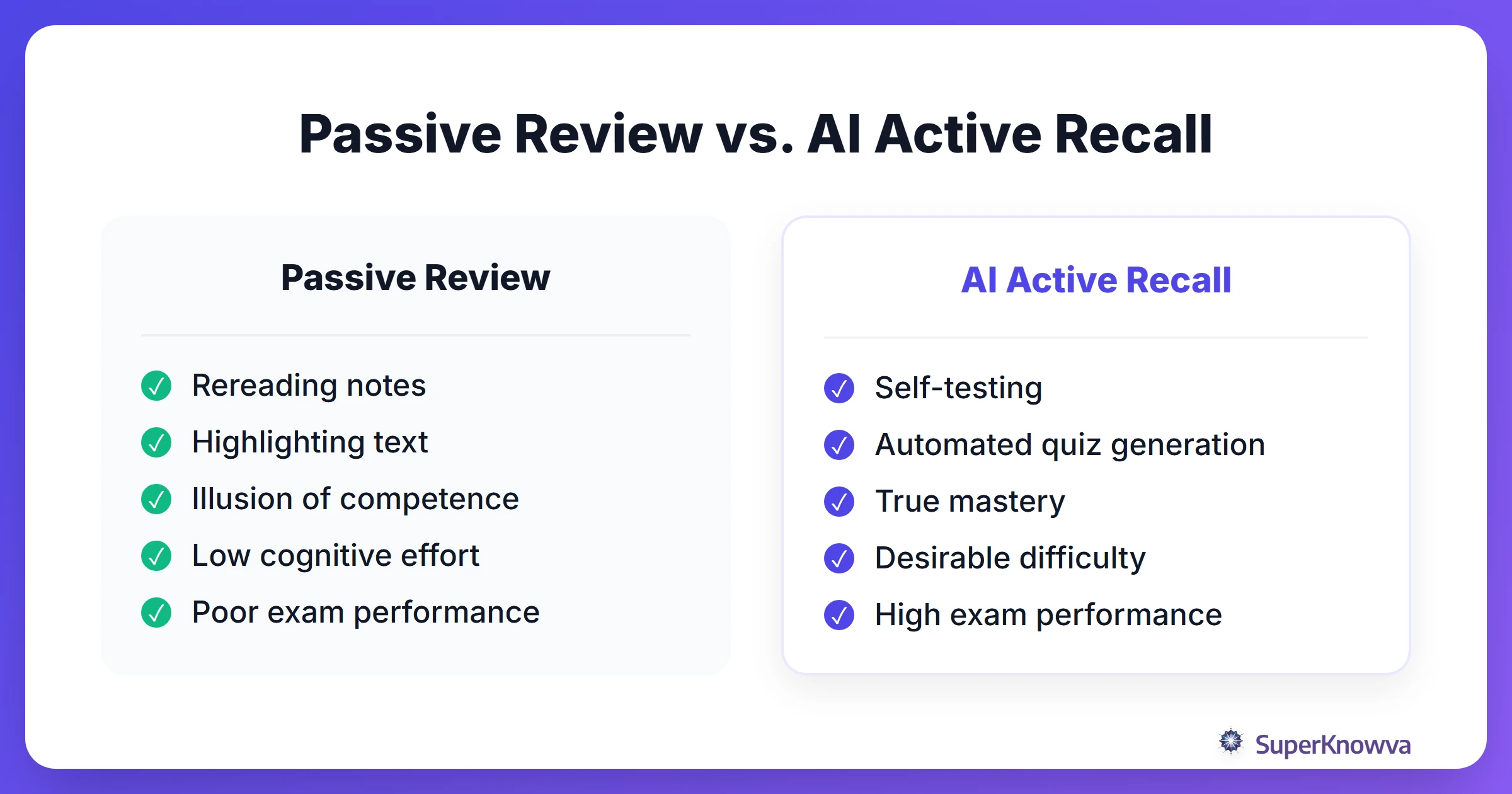
This is the opposite of passive methods like rereading or highlighting. While rereading feels productive, it often creates a false sense of security. Active recall, however, relies on something called "desirable difficulty." When you force your brain to work harder to retrieve a fact, you’re essentially "thickening" the neural pathways to that information.
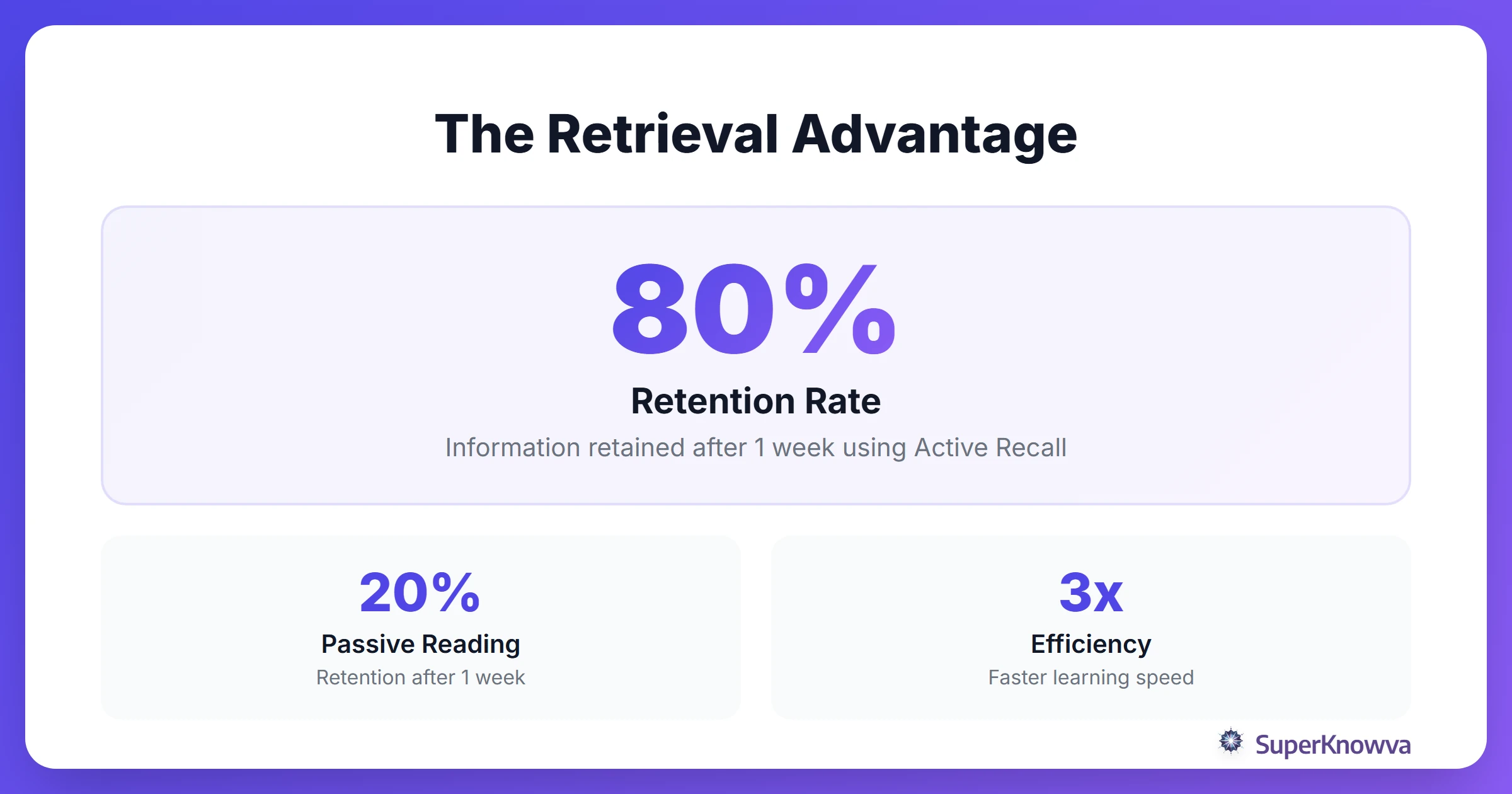
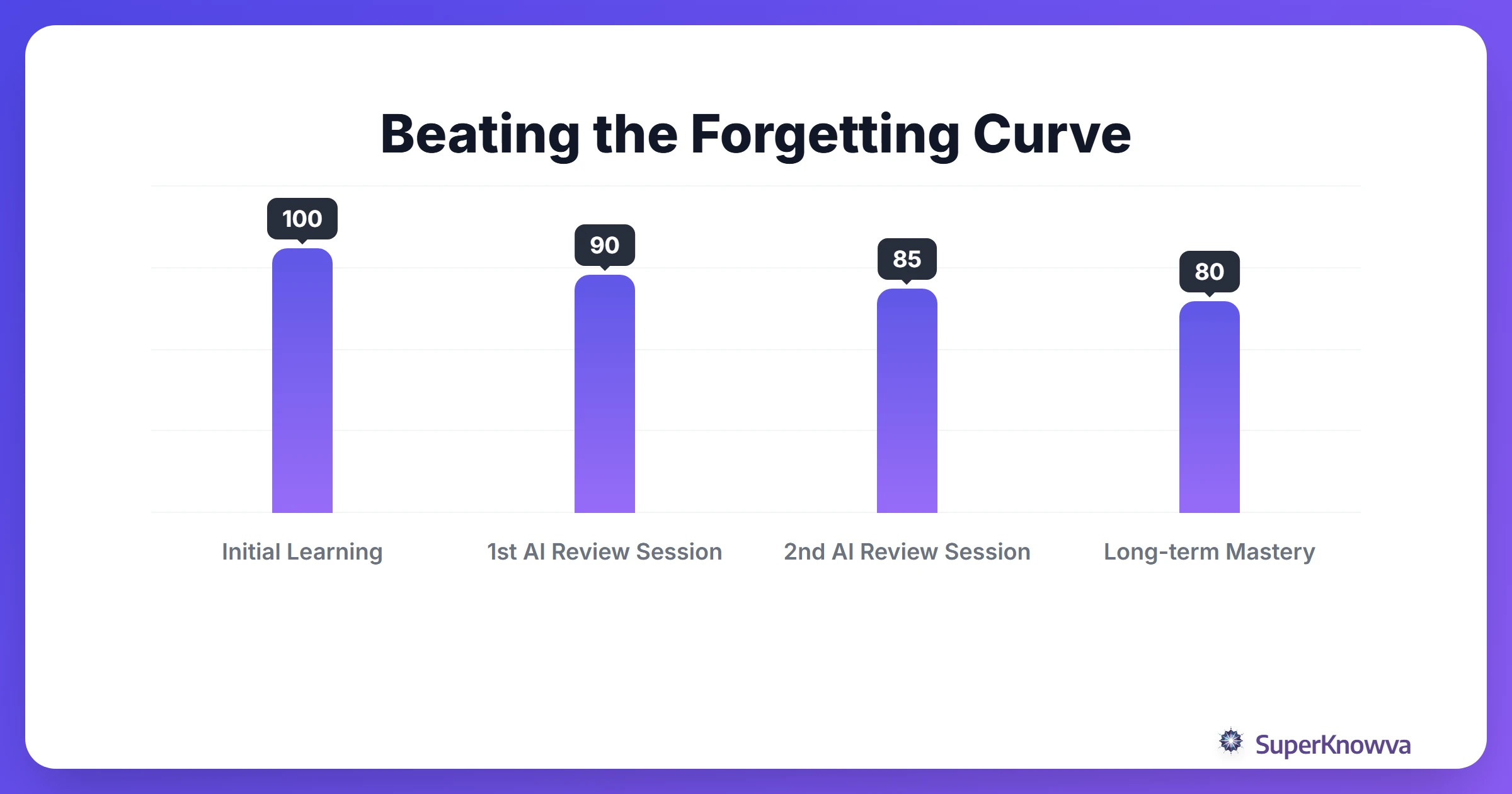
According to The Best Study Method Explained by Birmingham City University, this is the single most effective way to beat the "forgetting curve." This is that annoying natural decline where your brain dumps new info within 24 hours. Immediate, repeated testing locks that knowledge into your long-term memory.
The Friction of Manual Active Recall
If active recall is so great, why isn't everyone doing it? Because, honestly, it’s a lot of work.
Creating manual flashcards is a grind. Most students spend more time color-coding cards than actually using them. There’s also the problem of being your own judge. It’s far too easy to fall into the "illusion of competence," where you think you understand a topic just because the material looks familiar as you flip through your notes.
To make a study routine stick, you have to remove the "admin work." You need a system that does the heavy lifting so you can focus on the learning.
How AI Transforms Active Recall from a Chore into a Habit
This is where Artificial Intelligence steps in. AI has turned study prep from a manual slog into an automated habit. Using Natural Language Processing (NLP), AI study tools can now scan your lecture notes, PDFs, or textbooks and instantly pull out the core concepts.
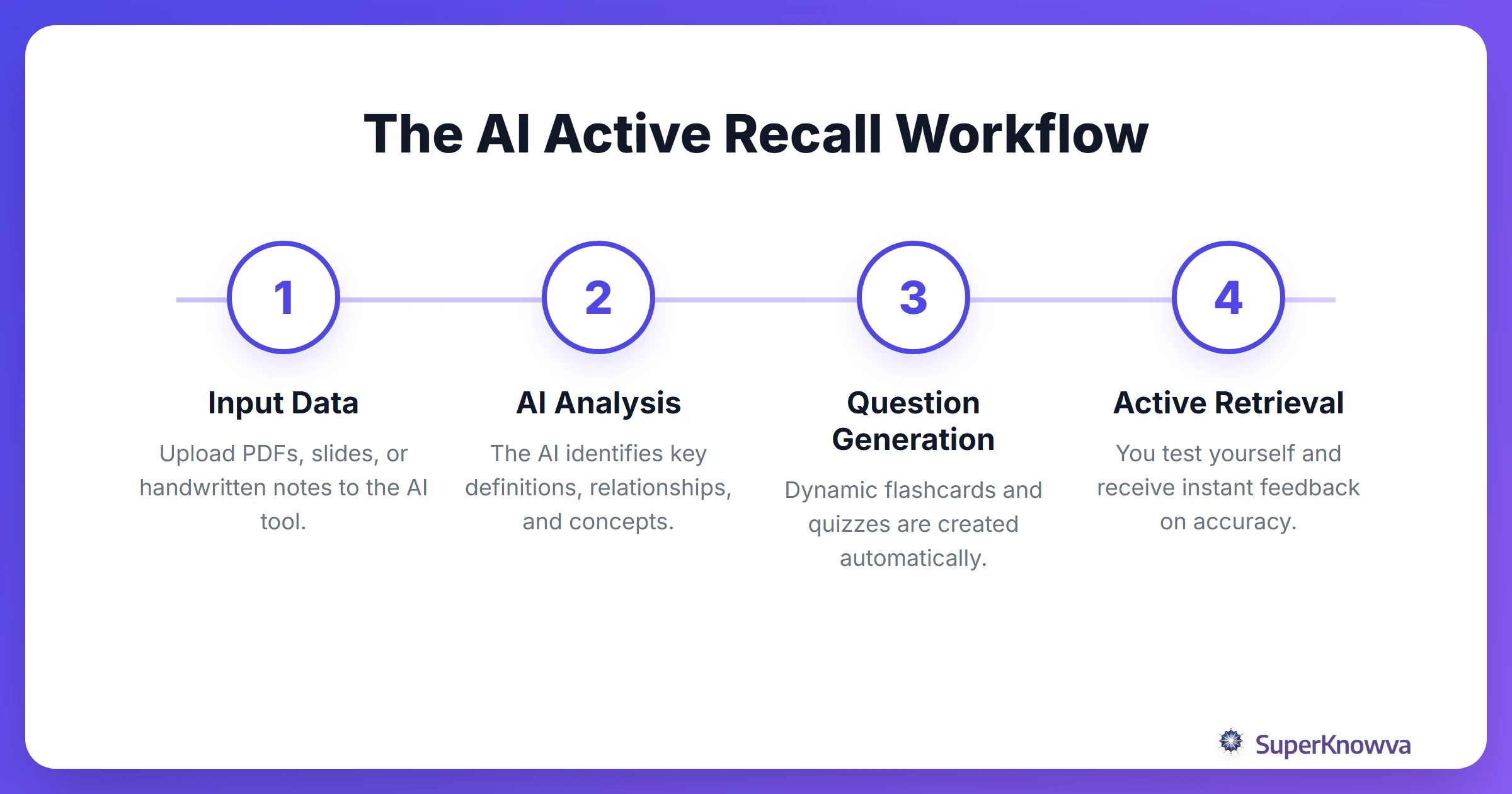
AI solves the "blank page" problem. Instead of staring at a chapter wondering what you should quiz yourself on, the AI builds the test for you. As noted in Improving Your Active Recall with AI, a personalized feedback loop is essential. AI tutors provide exactly that, explaining why you got an answer wrong in real-time so you don't repeat the same mistakes.
SuperKnowva: Automating the Testing Process
SuperKnowva was built to handle the logistics of high-performance learning. You provide the material; it provides the challenge. By ingesting your specific curriculum, SuperKnowva generates active recall exercises tailored to what you actually need to know for your exams.
Key SuperKnowva features include:
- Automated Flashcards: Turn a massive 50-page PDF into a focused deck of cards in seconds.
- Weak Area Identification: The AI tracks your hits and misses, showing you exactly where your knowledge gaps are hiding.
- Spaced Repetition AI: It doesn’t just test you once. SuperKnowva uses spaced repetition AI to resurface the hardest topics right at the moment you’re about to forget them.
It’s like having a personal examiner available 24/7, ensuring you never waste a second studying things you already know.
Active Recall vs. Passive Review: The Retention Gap
The gap between active and passive learning is massive, especially when it comes to long-term memory retention strategies. Passive review is easy, but it yields almost zero results under the pressure of an exam. Active recall is harder, but it pays off when it counts.
When you let AI handle the "how" of your study sessions, your cognitive load drops. You don’t have to worry about organizing your notes or scheduling your reviews. You can put all your mental energy into the retrieval process itself.
A Step-by-Step Guide to Using AI for Active Recall
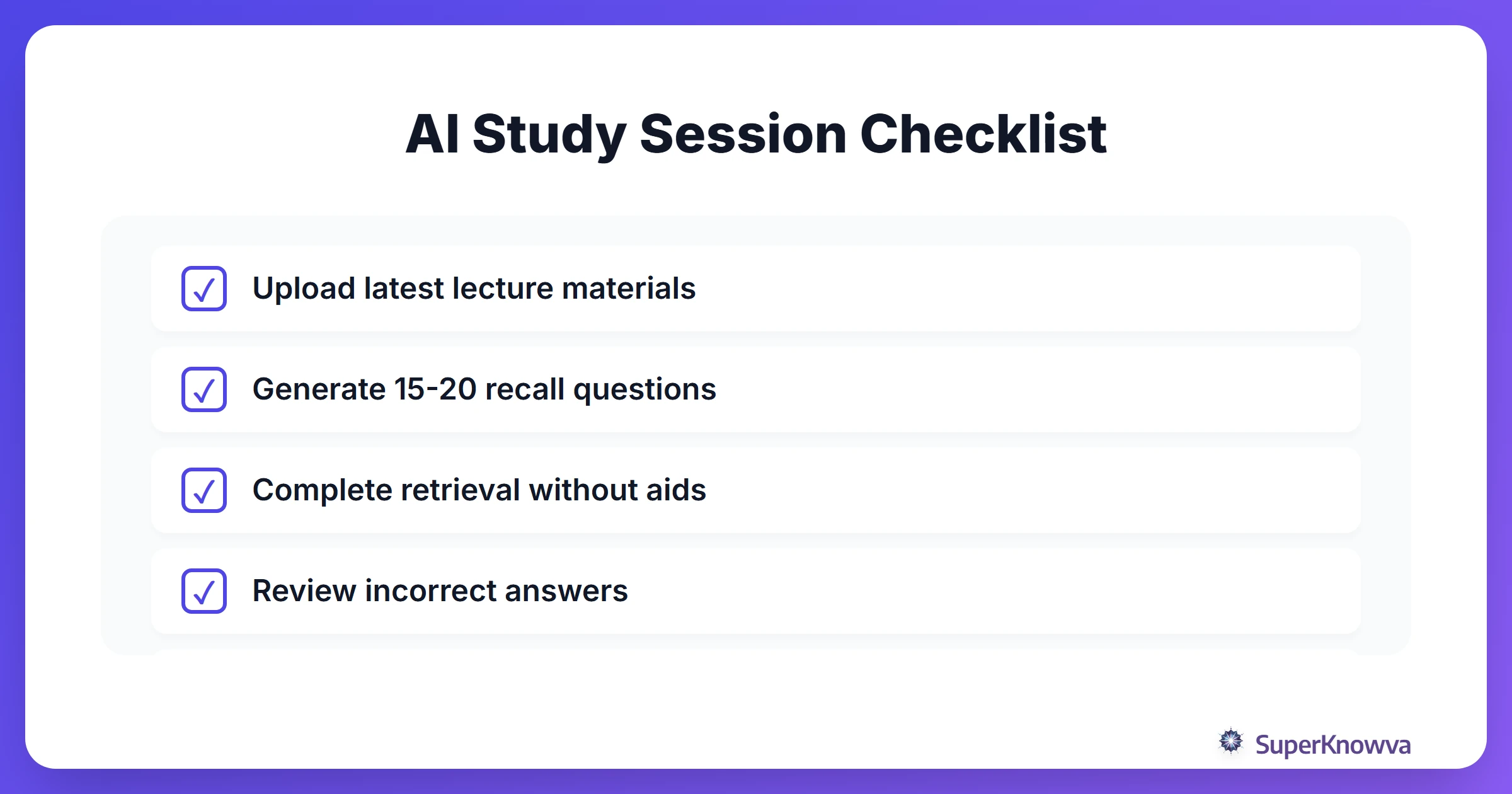
Ready to fix your study routine? Here is how to maximize active recall with AI tools:
- Upload your source materials: Drop your lecture slides, notes, or textbook chapters into SuperKnowva.
- Generate a mix of questions: Don't just stick to one format. Use the AI to create multiple-choice, short-answer, and fill-in-the-blank questions.
- Put your notes away: This is the vital part. Answer the questions using nothing but your memory.
- Read the explanations: If you get something wrong, don’t just skip it. Read the AI-generated explanation immediately to fix your mental model.
- Trust the schedule: Let the AI decide when you need to see that topic again based on how well you performed.
Synergizing Active Recall with Other High-Performance Strategies
AI handles the bulk of the work, but you can still level up with manual techniques. Try using The Blurting Method as a quick brain warm-up before you start your AI session. To ensure you truly understand the logic behind the facts, pair your recall with the Feynman Technique. This involves explaining complex ideas as if you were talking to a five-year-old child.
To keep your brain sharp, try interleaving practice by mixing different subjects into one study block. This stops your brain from going on "autopilot" and forces you to stay engaged.
Don't forget the basics. Active recall is powerful, but sleep and memory consolidation are what lock information into long-term storage. Combine the automation of SuperKnowva with these habits to find that mastering a subject is about efficiency rather than effort alone.