Have you sat in a lecture hall where the professor seemed to speak a different language while the rest of the class nodded along? Perhaps you were on the other side, bored because the material covered ground you mastered years ago.
The traditional classroom has always struggled with this "middle-of-the-road" problem. But that’s changing. We’re moving away from static presentations and toward a personalized environment where every student follows a path tailored to their own pace. This is the era of AI curriculum design, and it’s turning higher education from a rigid, one-way street into a responsive experience.
At SuperKnowva, we see this every day. Technology shouldn't just be a digital version of a textbook; it should be the bridge between simply hearing a lecture and actually understanding the concepts. By embracing adaptive learning paths, universities are finally making sure no student is left behind by a syllabus that refuses to budge.
The Evolution: From Static Syllabi to Dynamic Learning Paths
For decades, the college syllabus was fixed. Once the PDF was uploaded or the paper was handed out, the path was locked. It didn’t matter if half the class was failing or if everyone already knew the material; the schedule remained the same. AI curriculum design is finally changing that rigid approach.
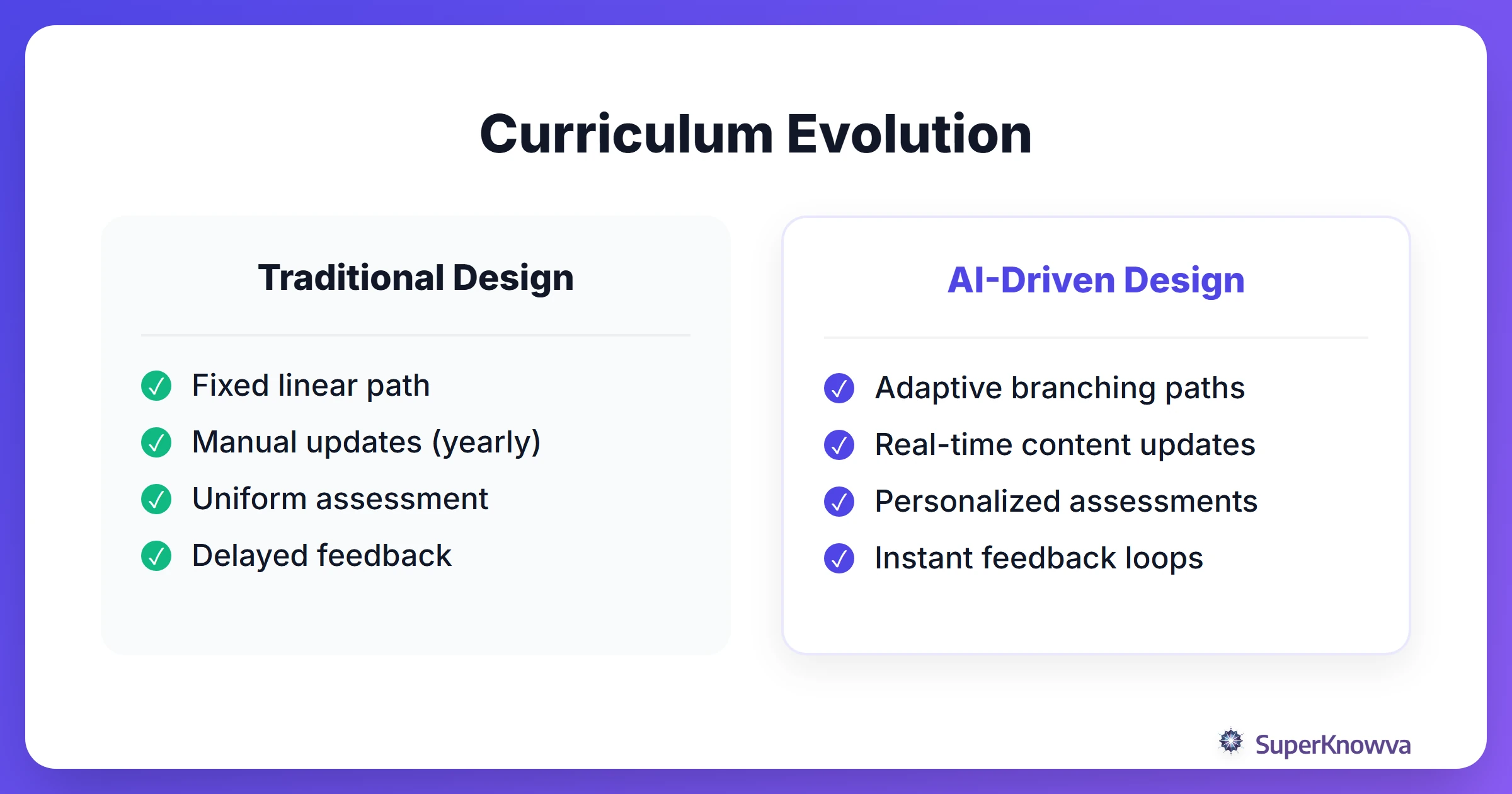
Now, educators can use real-time data to pivot on a dime. Imagine a calculus professor who gets an automated alert because 60% of the class struggled with last night’s homework on derivatives. Instead of forging ahead, the instructor can pause and provide supplementary tools for visual learners to clear up the confusion.
Relevance matters as much as speed. Generative AI pulls the latest industry shifts and case studies into a course. You do not have to wait five years for a textbook update to learn about the latest tech. AI integrates it now, as highlighted in a recent USF study on AI in curriculum design.
AI Tools for Modern Instructional Designers
Instructional designers build modern learning environments, and the right technology helps them work more efficiently. Instructional design AI tools handle tasks like formatting modules, mapping learning objectives, and organizing files. This allows designers to focus on creating effective educational strategies.
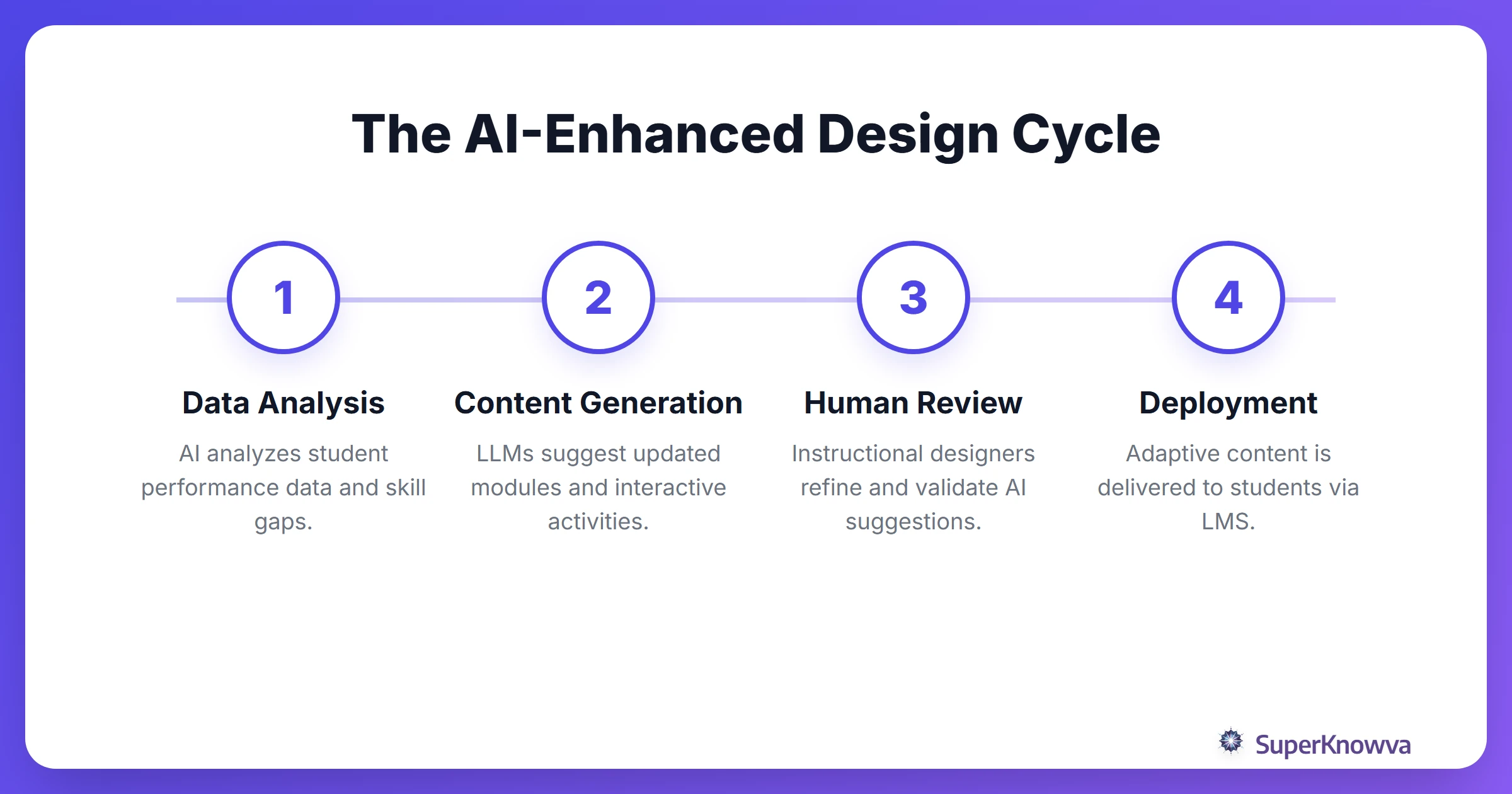
These tools are changing the game by allowing for:
- Rapid Prototyping: Designers can whip up lesson plans and interactive modules to test what actually clicks with students before the semester even starts.
- Diverse Assessment Types: Why stick to multiple-choice? Large Language Models (LLMs) help create everything from instant quizzes to complex, branching simulations.
- Engagement Strategies: It’s much easier to build gamification and AI engagement into a course when AI can suggest reward structures based on how students are actually behaving in the portal.
Personalization at Scale: The Adaptive Learning Revolution
The real breakthrough here is the ability to provide personalized learning outcomes for thousands of students at once. In a massive lecture of 500 people, a professor can’t possibly know every student's specific "stumbling block." AI can.
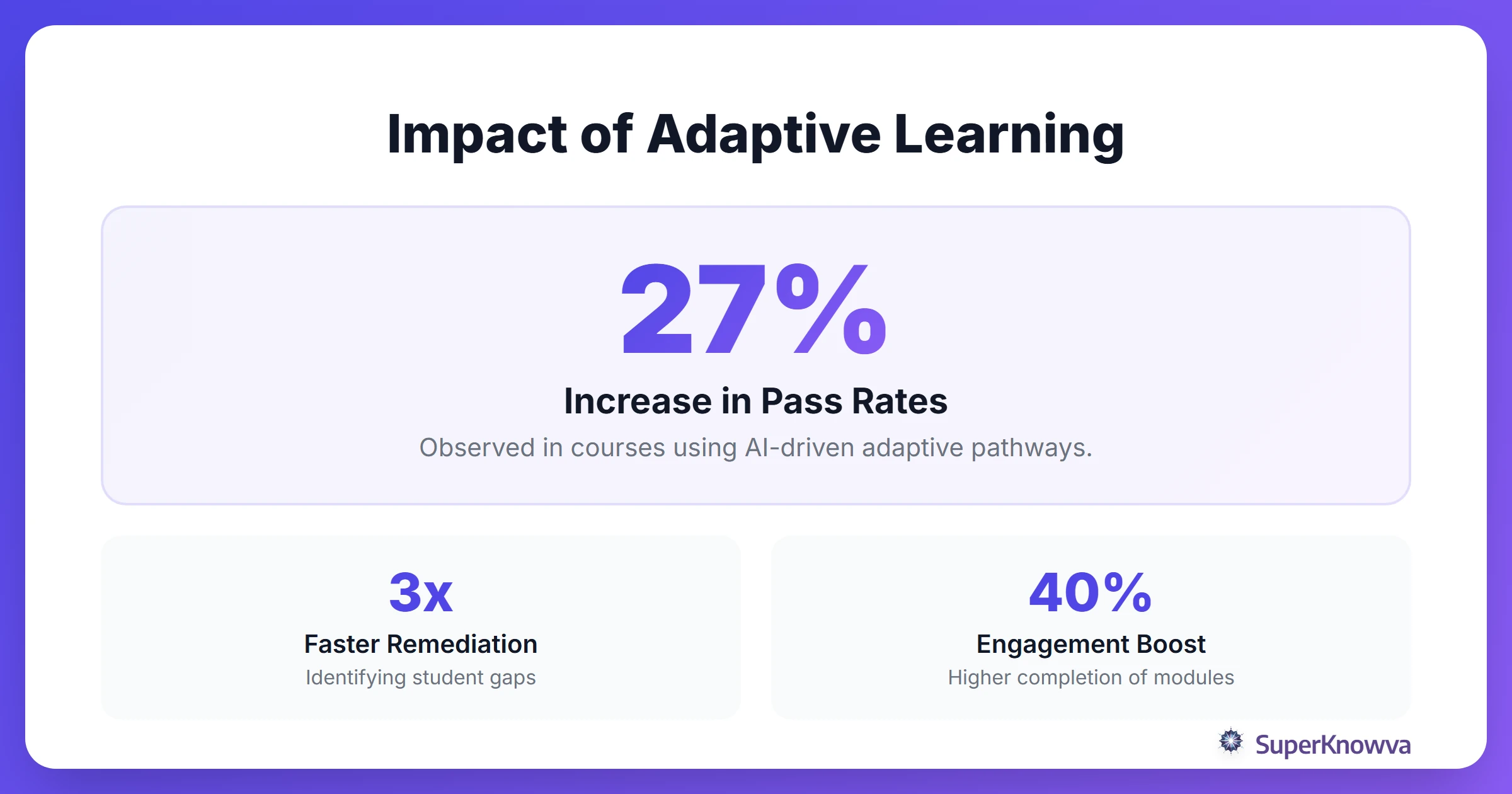
These systems identify individual gaps and suggest remedial content the second a student falters, improving retention. When material is paced for the individual, students are less likely to disengage. Institutions like Western Governors University (WGU) have been leaders here, proving that technology can personalize education at scale. According to WGU insights on AI and future educators, these adaptive pathways ensure students do more than just pass; they actually master the subject.
AI Literacy: A New Core Competency in Curriculum Design
We can’t just hand students AI tools and hope for the best. AI literacy in education has shifted from a "nice-to-have" elective to a mandatory survival skill. It’s not just about knowing how to use the tech; it’s about knowing when to trust it.
Modern curriculum design is now weaving these skills into every major. Whether you’re studying history or engineering, you need to know how to:
- Spot bias or inaccuracies in AI-generated data.
- Treat AI as a "co-pilot" in the creative process rather than a ghostwriter.
- Prepare for a professional world where AI-augmented workflows are the baseline.
This also means leaning into inclusive learning strategies to ensure these tools help everyone, regardless of their background or learning style.
Ethical Frameworks for Responsible AI Integration
Let's be real: AI isn't perfect. If the data fed into an algorithm is biased, the curriculum it spits out will be too. That’s why a responsible AI curriculum is non-negotiable.
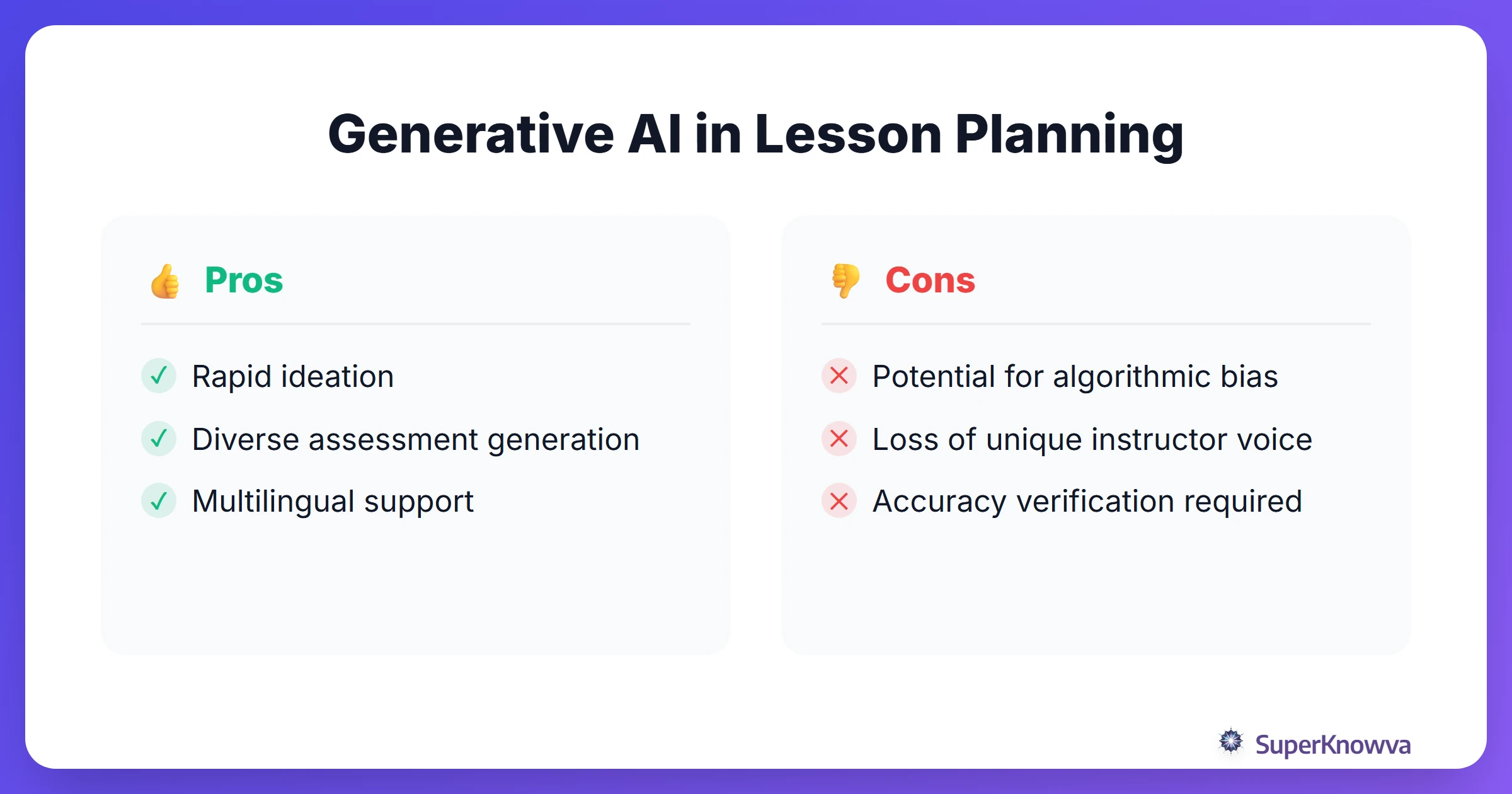
To keep things ethical, most universities are sticking to a "Human-in-the-Loop" model. AI might write the "rough draft" of a lesson plan or a quiz, but a human educator provides the final check, the nuance, and the "soul." Groups like the National Humanities Center are setting the standard for this balance, reminding us that emotional intelligence in AI education is just as important as technical accuracy.
The Future Outlook: Predictive Analytics and Real-Time Curriculum
What’s next? Think "living textbooks." We are moving toward curricula that evolve every single week, powered by predictive modeling that can tell which skills will be in demand by the time you actually graduate.
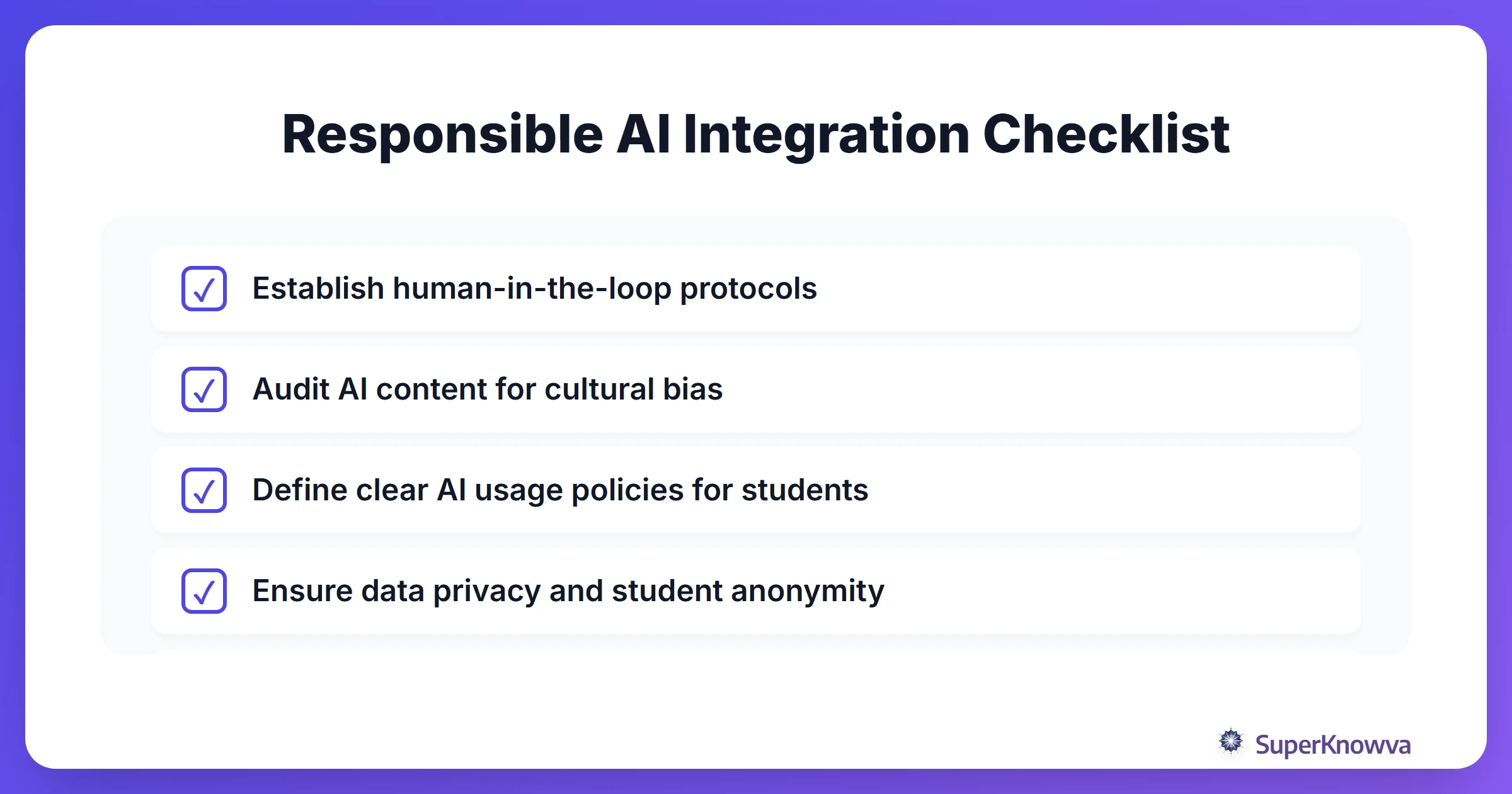
The future of AI curriculum design isn't about replacing your favorite professor with a robot. It’s about using technology to handle the data so teachers can get back to what they do best: mentoring, inspiring, and connecting. By balancing high-tech efficiency with the human touch, higher education can finally deliver on the promise of a truly personalized, future-proof education for everyone.
Adapting to these changes today prepares you for the workforce and positions you as a leader in an AI-driven environment.