Sitting in a massive lecture hall and scribbling notes while a professor recites dates and definitions was long considered the standard of learning: absorb, store, and repeat. This model is now failing. As we head into 2025, the future of AI in education goes beyond adding a new tool; it is changing how we approach teaching.
At SuperKnowva, we’re convinced that learning shouldn't be a contest of who can memorize the most facts. It should be about what you can do with them. We are watching a massive shift in classroom pedagogy. The focus is finally moving away from rote memorization and toward the things humans do best: high-level problem solving, critical thinking, and creative synthesis.
Beyond Rote Memorization: The AI Shift in Higher Education
The "lecture and recall" model is outdated. When the sum of all human knowledge is accessible in seconds via generative AI, the value of simply "knowing" a fact drops significantly. This is why AI in higher education is so transformative. It handles the foundational work of info-retrieval.
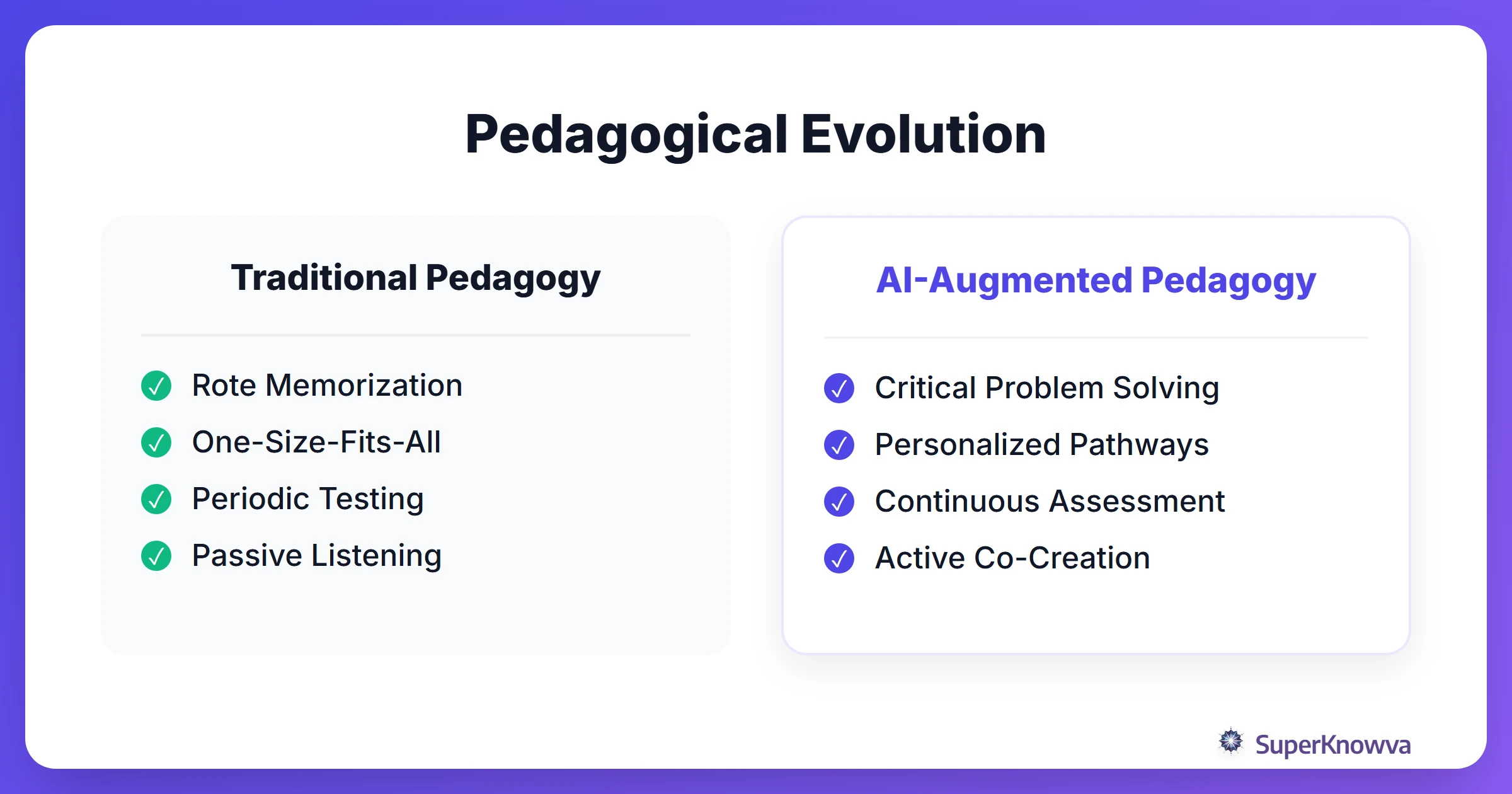
When students use AI to handle basic queries and data organization, they free up mental capacity. The classroom shifts from memorizing the periodic table to using those elements to solve a climate crisis. This moves learning to the top of Bloom’s Taxonomy: analysis, evaluation, and creation. You are an architect instead of a sponge.
The Death of One-Size-Fits-All: Personalized Learning Paths
We have taught to a ghost for over a century. Classrooms were traditionally designed for the "average" student, a figure who does not exist. Current educational technology trends allow us to treat students as individuals, applying Howard Gardner’s theory of multiple intelligences. AI creates personalized learning paths that adapt to individual needs.
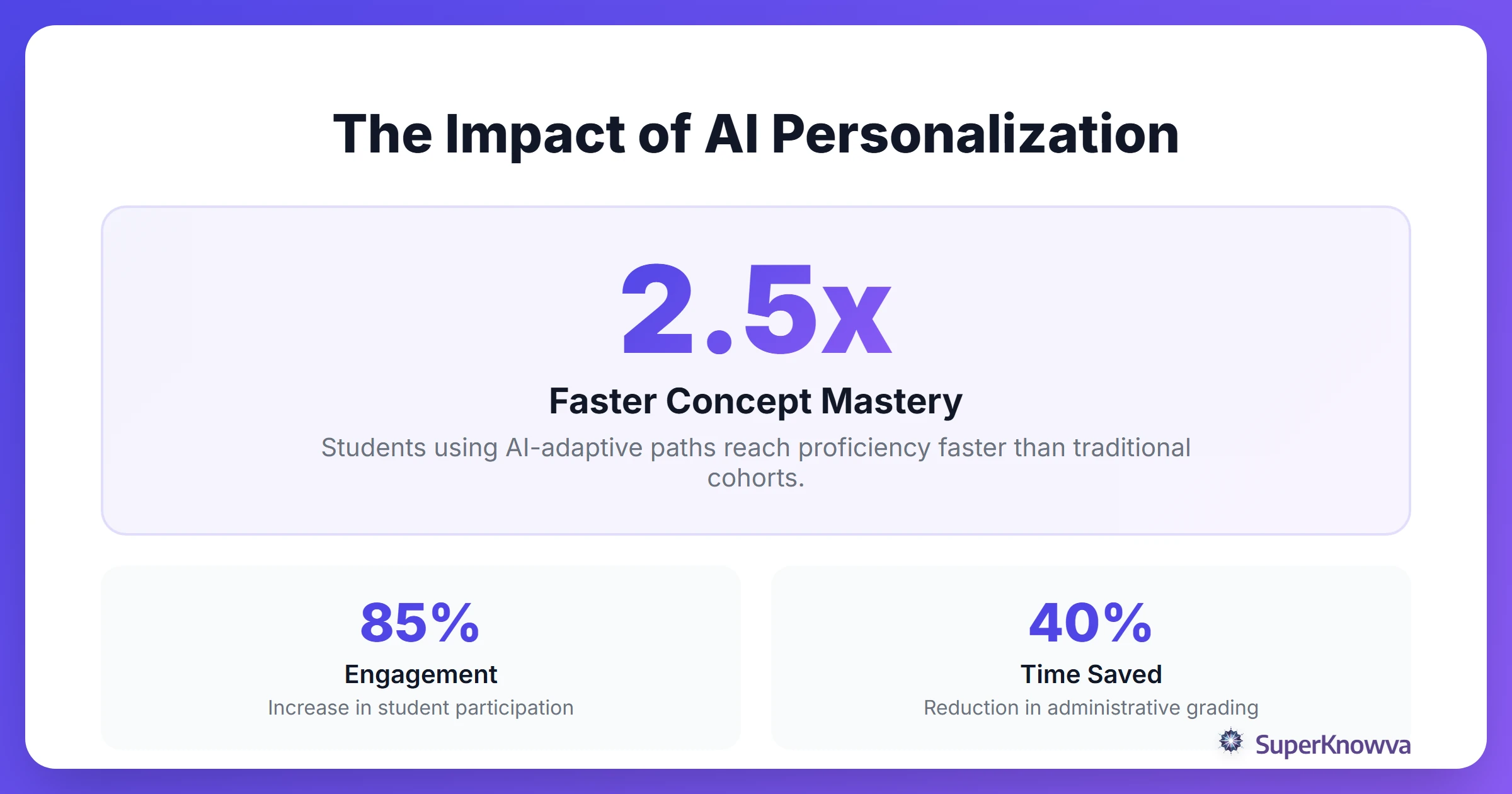
Adaptive platforms identify exactly where you struggle and where you are bored because the material is too easy. This moves us away from "synchronized instruction," where the whole class moves at the same speed regardless of who is lost, to asynchronous mastery. You do not move on to a new concept until you have mastered the current one. Students progress at their own pace.
AI as a Collaborative Partner: Human-Centered Pedagogy
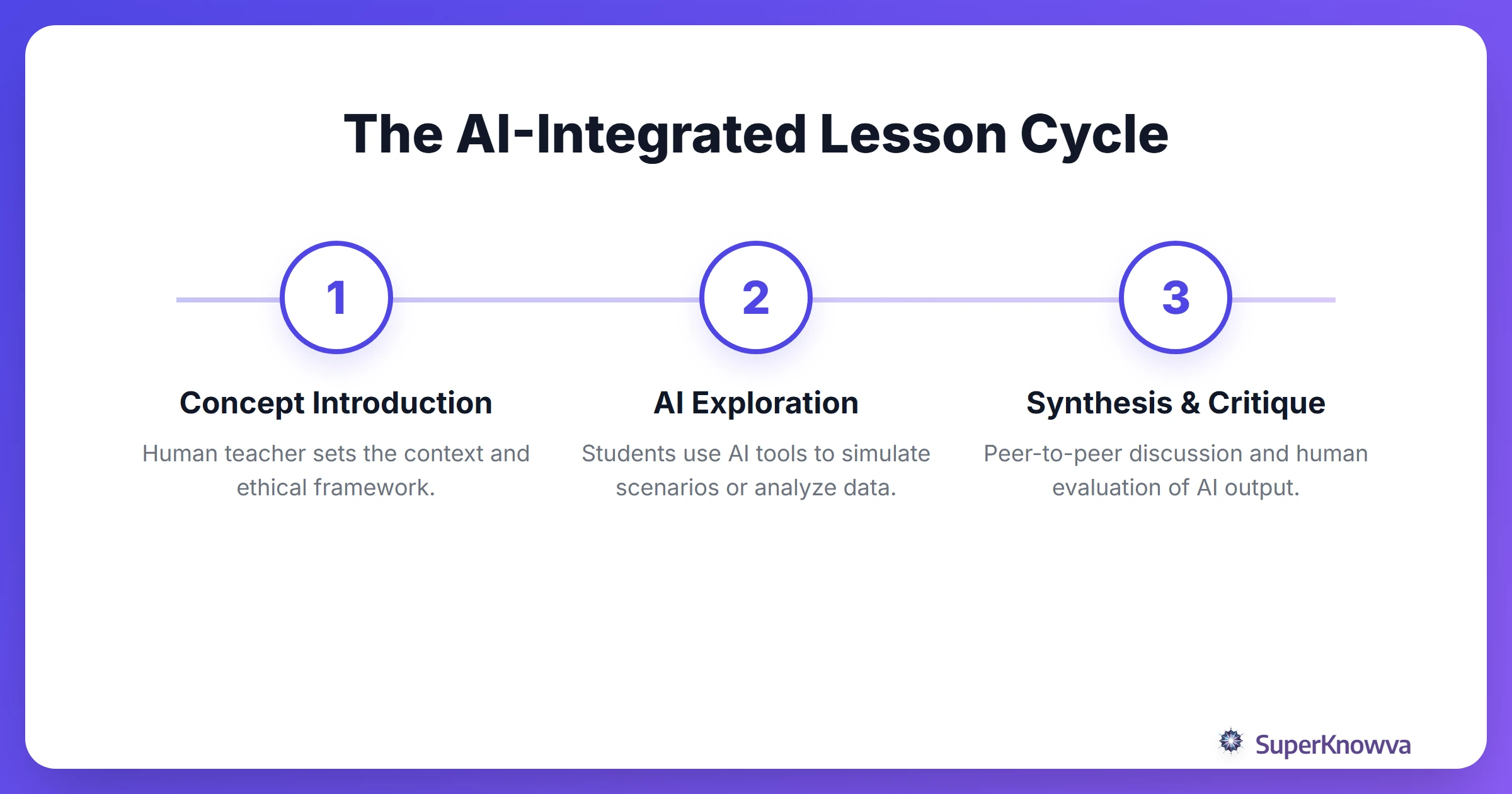
Does more tech mean fewer humans? Not even close. The Stanford AI+Education Summit 2025 emphasizes a model of human-centered AI. The goal is to improve the learning environment, not replace the people in it.
The educator’s role is shifting from the "sage on the stage" to the "guide on the side." Teachers are becoming facilitators of AI for creative problem solving. They help you manage the messy, ethical, and practical parts of co-creating with a machine. Whether you’re debugging code or refining a thesis, the relationship is a partnership.
Redefining Assessment: Moving Past the Standardized Test
Here’s a question that’s keeping university deans up at night: if an AI can pass a standardized test, what is that test actually measuring? This reality is forcing schools to rethink how they evaluate "intelligence." Traditional exams are becoming obsolete because they fail to capture how people actually work in an AI-augmented world.
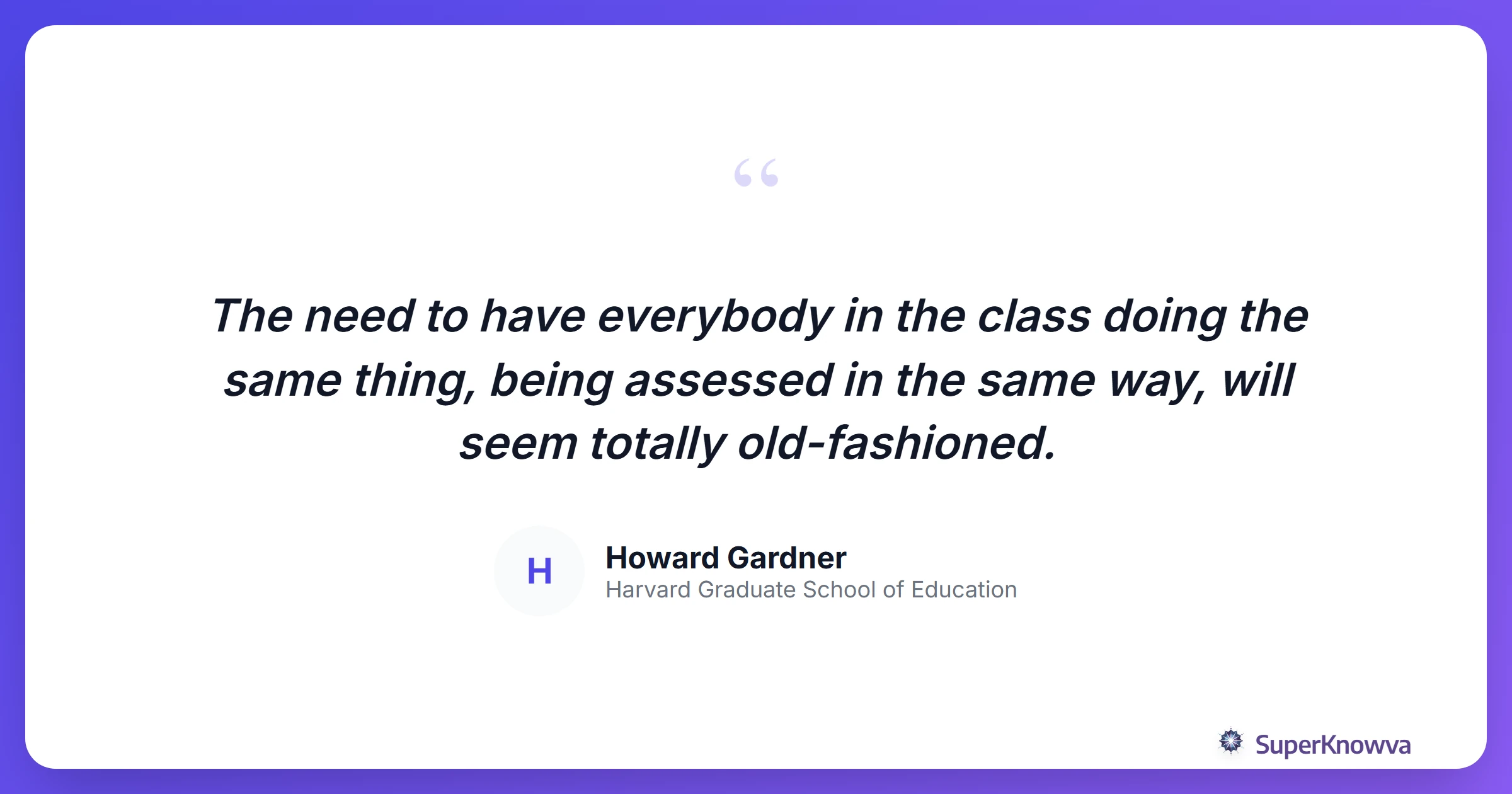
We’re seeing a shift toward continuous assessment. Instead of one high-stakes final exam, educators can track your progress in real-time using data analytics. This allows for a deeper look at the process of how you learned, rather than just the final product. When we look at AI tutors vs. human tutors, it’s clear that AI is best at providing the data, while human mentors provide the nuance and feedback.
STEM and Robotics: Hands-on Learning in an AI World
In STEM, the impact is even more literal. Researchers at UC San Diego have noted that robotics and AI are changing how we touch and feel science. Instead of just reading about physics in a dusty textbook, you can use AI to run interactive science simulations that would be too dangerous or expensive to do in a real school lab.
AI literacy isn't an elective anymore; it's a core competency. Modern training requires you to know how to prompt, audit, and direct AI systems. This hands-on approach ensures that when you graduate, you’re ready for a workforce where AI is a standard tool in every lab and engineering firm.
Ethical Pedagogy: Navigating the Digital Divide
As we sprint toward this future, we have to talk about the "scary" stuff. UNESCO: AI and the Future of Education highlights the need for equity. The "digital divide" is a massive risk; if only a few students have access to high-level AI, the achievement gap will turn into a canyon.
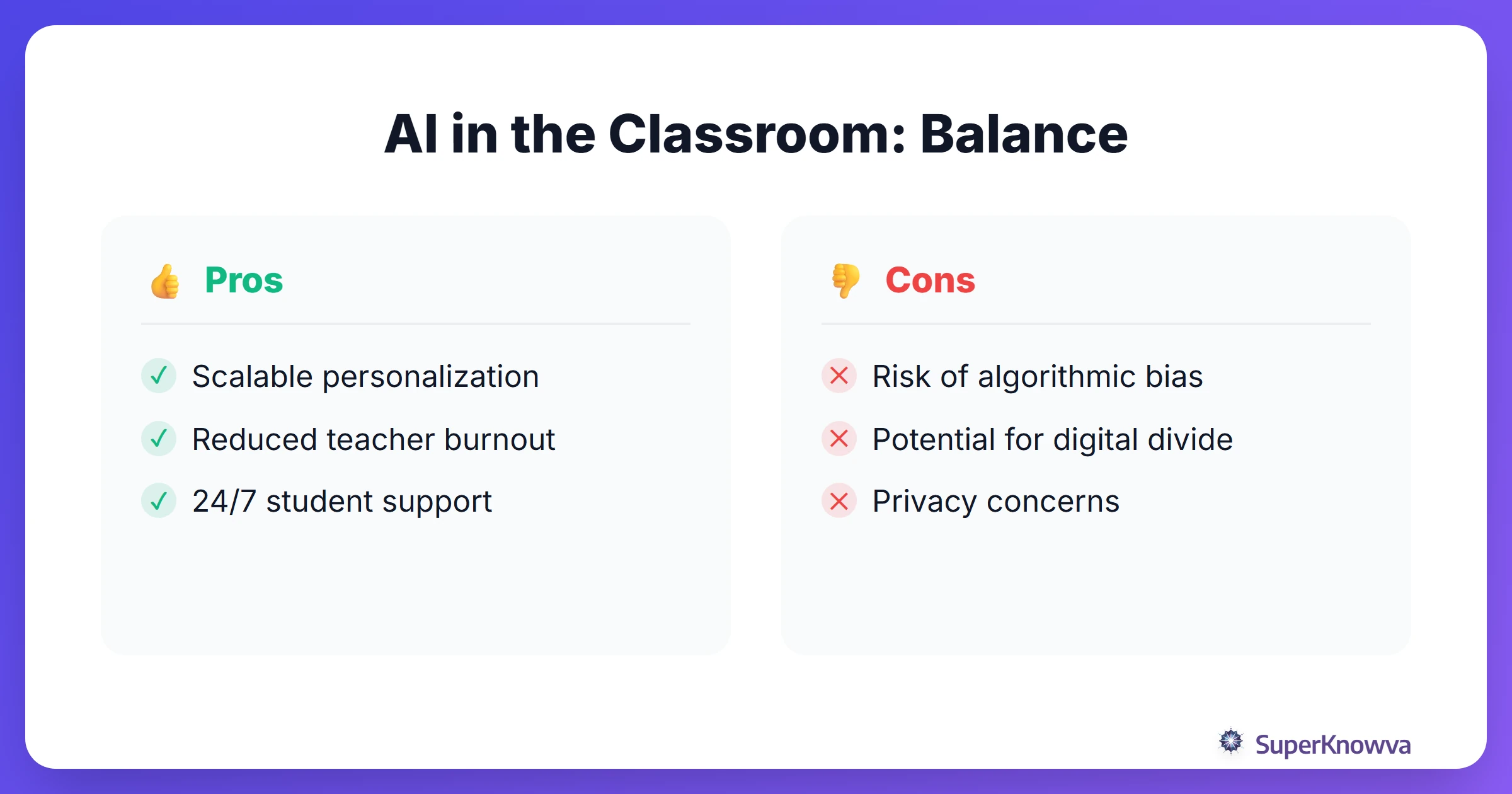
Beyond access, students need to develop serious emotional intelligence in learning. You have to know how to spot algorithmic bias and misinformation. Ethical pedagogy in 2025 isn't just about teaching you how to use AI. It’s about teaching you when to question it.
The future of AI in education isn't about replacing the classroom; it’s about finally upgrading it for the 21st century. By moving away from "memorize and repeat" and toward a collaborative, ethical framework, we’re preparing you for a world where your value lies in your creativity and your ability to solve the world's most complex problems.