You’ve been there: it’s late, you’re staring at a textbook, and a complex biological pathway or a dense physics circuit is staring right back. It’s overwhelming. For years, digital "learning" meant reading a wall of text and hoping you could mentally bridge the gap between a flat, static image and actual understanding. It was a lonely process.
Multimodal AI for education turns static diagrams into interactive experiences. We aren't just looking at pictures anymore; we're talking to them.
Why We Need More Than Just Text
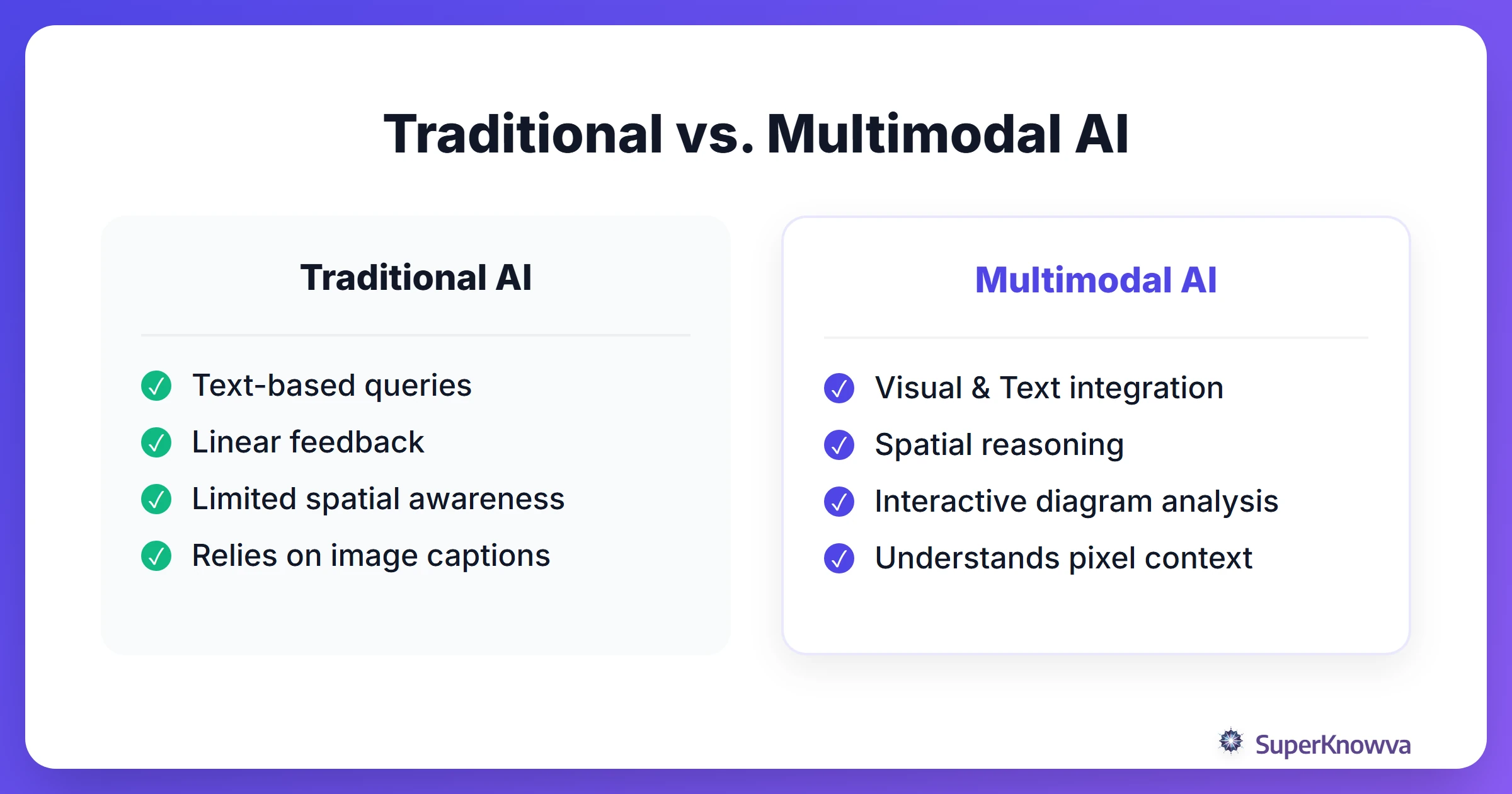
Let’s be honest: traditional AI tutoring was basically a glorified chatbot. Text in, text out. If you had a question about a messy sketch in your notebook or a nuanced chart in a research paper, the AI was essentially blind. It couldn't "see" what was causing you trouble.
This was a massive problem. Why? Because humans don't learn in a vacuum. We observe, we touch, and we visualize. Education is inherently multimodal, and our tools are finally catching up.
Multimodal AI marks the end of the text-only era. By using Large Multimodal Models (LMMs), AI can now process images, text, and spatial data all at once. It bridges the gap between seeing and understanding, acting less like a search engine and more like a human tutor sitting right next to you.
How Does an AI Actually "See" a Diagram?
It’s not just magic. When an AI looks at a diagram, it’s doing a lot more than just scanning for words (what techies call OCR). It’s actually translating pixels into conceptual relationships.
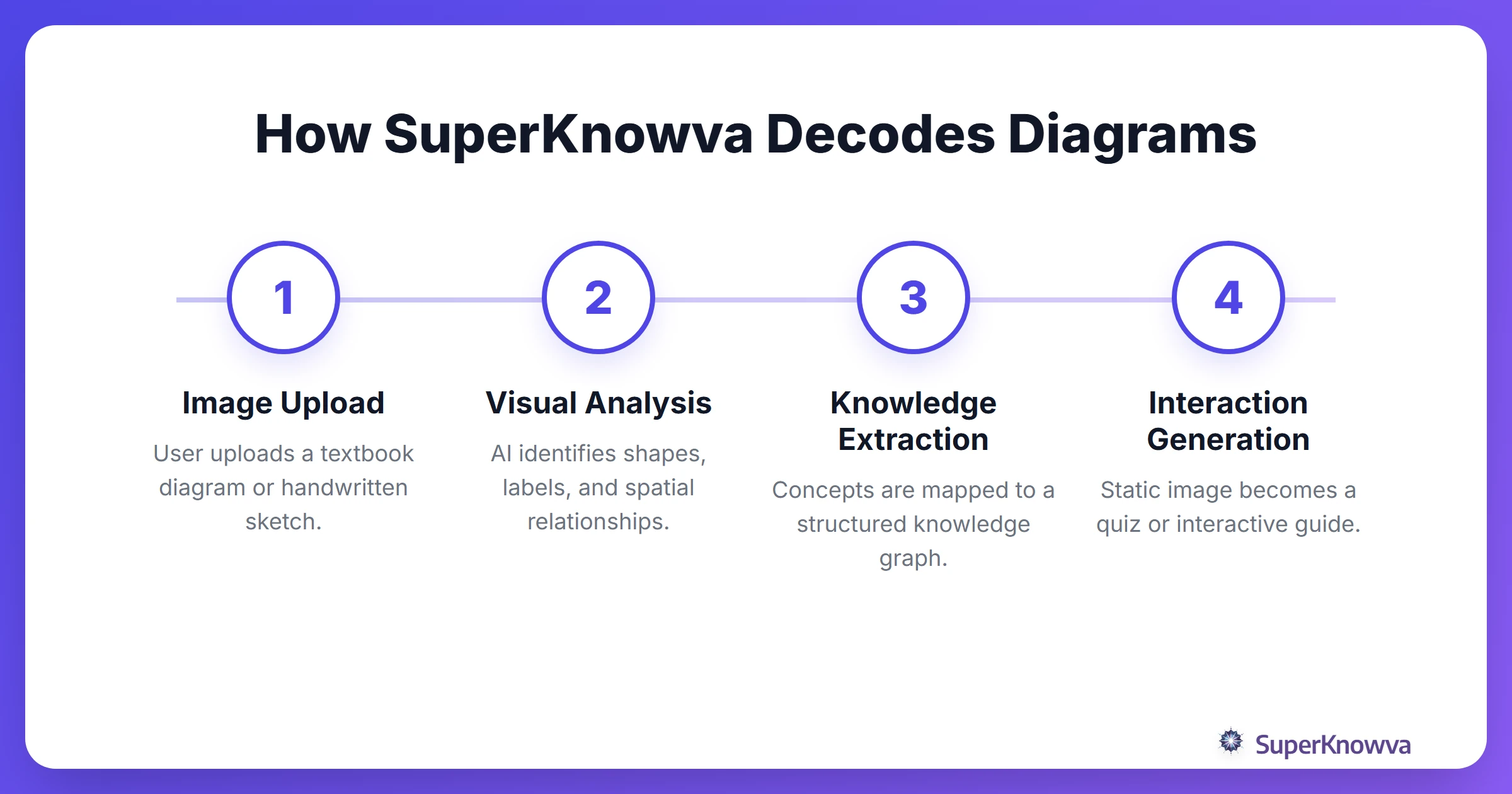
Through diagram analysis AI, the system performs a "diagram-to-code" conversion. It builds a structured knowledge graph of the visual data. It identifies that an arrow pointing from "Mitochondria" to "ATP" represents a production process rather than a random line.
Context is the secret sauce here. A circle could be a cell, a planet, or the number zero. SuperKnowva’s approach focuses on extracting structured knowledge from unstructured images. It looks at the spatial relationships and labels within a chart to make sure the help it gives you is actually relevant to the subject you're studying.
Turning Static Images into Active Knowledge
The real shift happens when a diagram stops being a picture and starts being a tool. With SuperKnowva, you don't just "look" at a textbook image. You explore it.
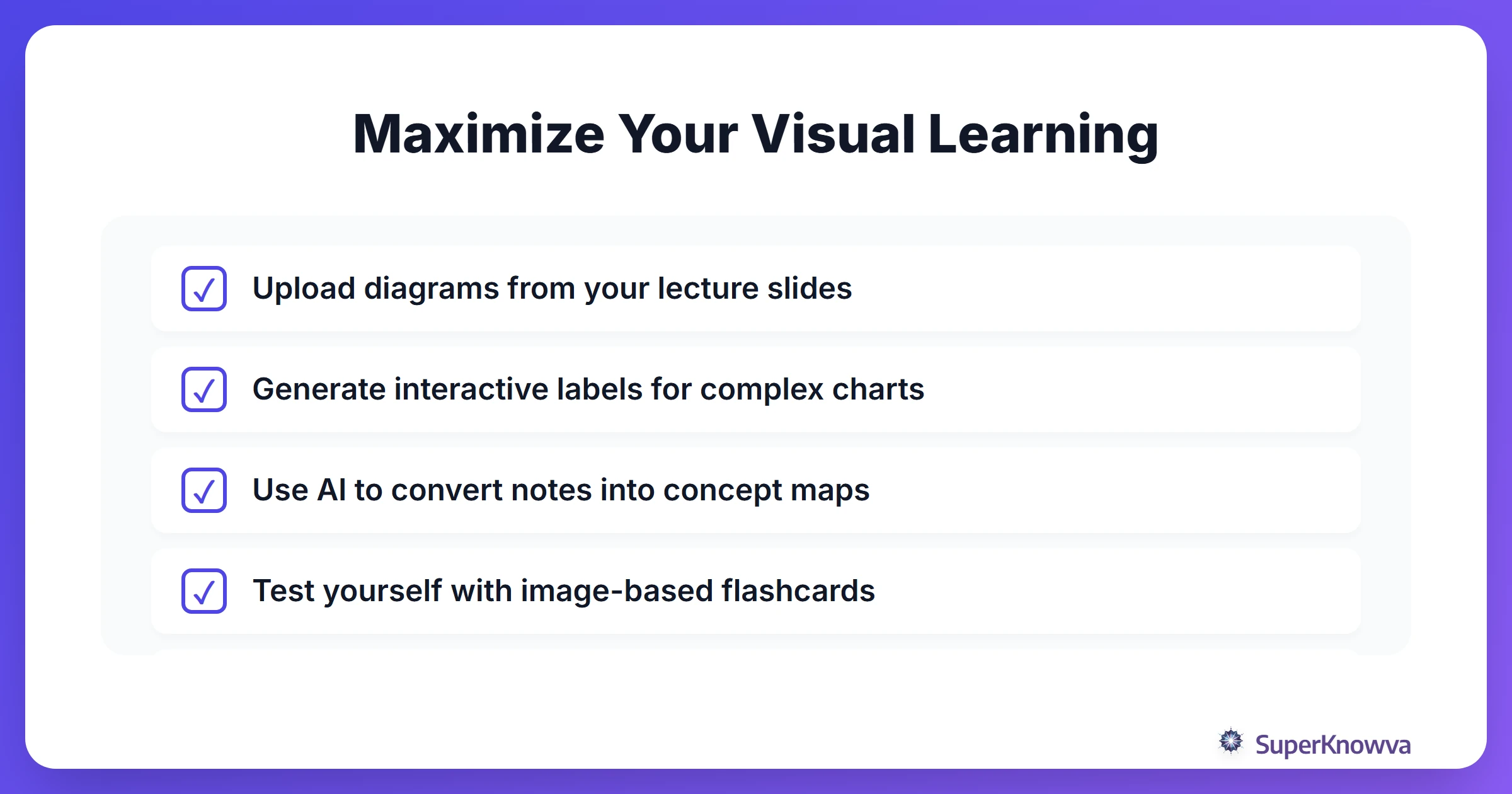
- Interactive Labeling: Hover over a specific part of a diagram to get a deep-dive explanation. No more flipping back and forth to the glossary.
- Visual Quizzing: The AI can look at your diagram and build a quiz on the fly. It might ask you to "click on the Golgi apparatus" or "sketch the next step in this reaction."
- Real-Time Feedback: If you’re sketching a diagram in your own notes, the AI can check your work as you go, pointing out a missing connection before you commit it to memory the wrong way.
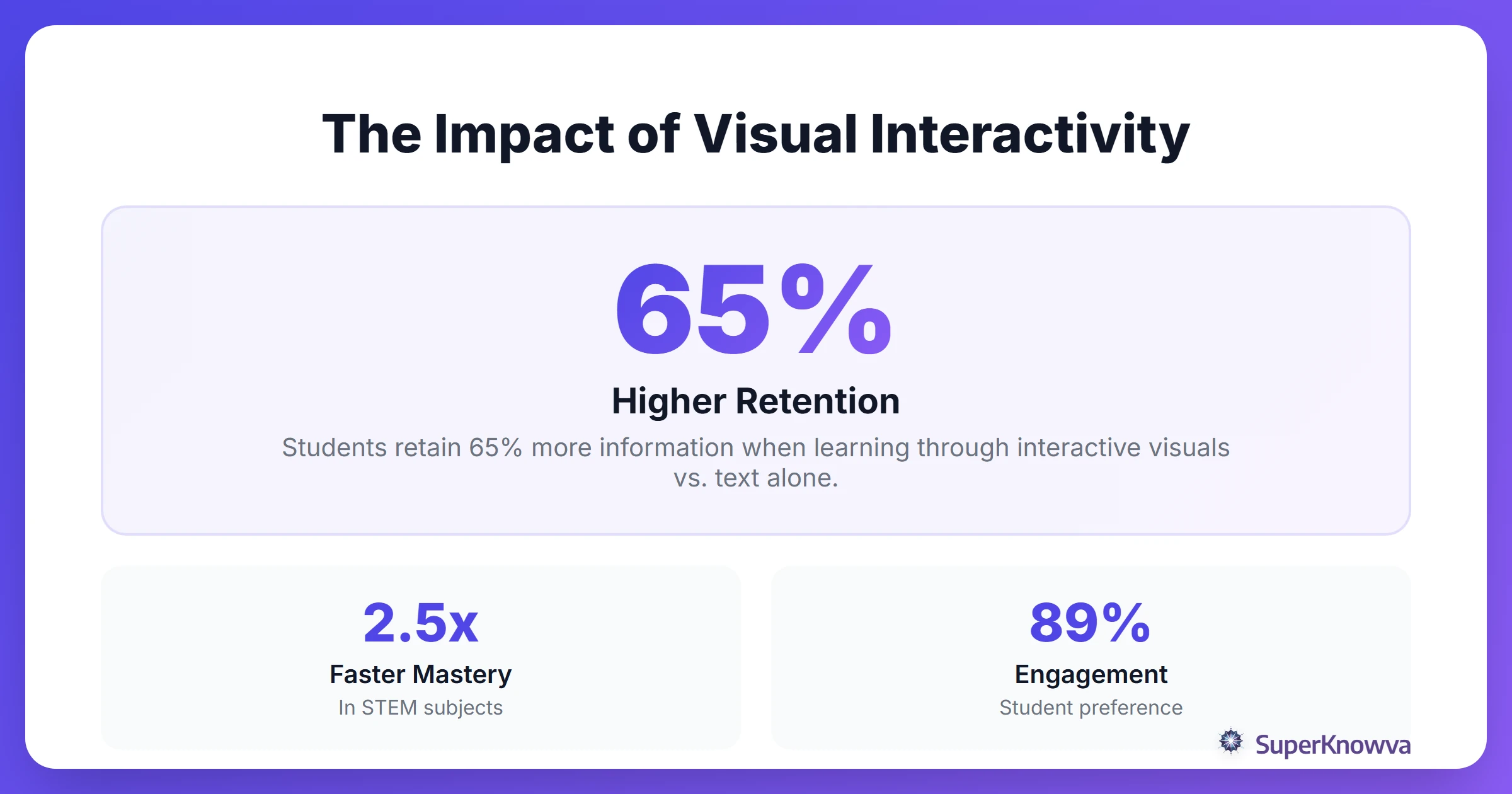
Think about the Krebs cycle. Instead of memorizing a confusing web of arrows, AI for visual learners turns that cycle into a step-by-step guide. You progress through each stage by explaining the transition. This kind of active participation is why students are seeing much higher retention rates.
Mastering Spatial Reasoning
In STEM, success depends on spatial reasoning AI. You must understand the "where" and the "how": how a gear turns a shaft or how different regions of the brain communicate. Multimodal AI helps you build mental maps by generating concept maps that link ideas across different chapters.
We are moving closer to a version of "Artificial General Intelligence" (AGI) that actually works for students. Research into comprehensive multimodal AI approaches is showing that LMMs in education can eventually reason through visual problems as effectively as a human expert.
Study Paths That Actually Fit You
One size doesn't fit all, and it definitely doesn't fit every brain. SuperKnowva uses multimodal AI to figure out how you learn best. If you’re crushing your image-based flashcards but struggling with text-heavy quizzes, the AI notices. It will pivot your study schedule to prioritize the visual content that helps you thrive.
The platform can even take a dense, 20-page paper and turn it into a series of flowcharts or infographics. This isn't just a "nice-to-have" feature; it is essential for accessibility. AI supports students with disabilities by providing descriptive audio for visual data or simplifying complex charts for those with processing disorders.
The SuperKnowva Advantage: Visual Learning Reimagined
SuperKnowva isn't just a place to store your notes. It is a comprehensive environment that synthesizes everything you’re studying.
Here’s how we’re changing the workflow:
- Direct Integration: Your visual diagrams connect directly with your AI-powered note taking tools.
- Science Simulations: Don't just look at a diagram; experience the concept through AI for science simulations.
- Reduced Cognitive Load: We stop the "translation struggle" by presenting info in the format you understand best.
What’s next? We’re already working on 3D models and augmented reality (AR). Soon, you’ll be able to walk through a virtual cell or manipulate a 3D engine model right from your desk.
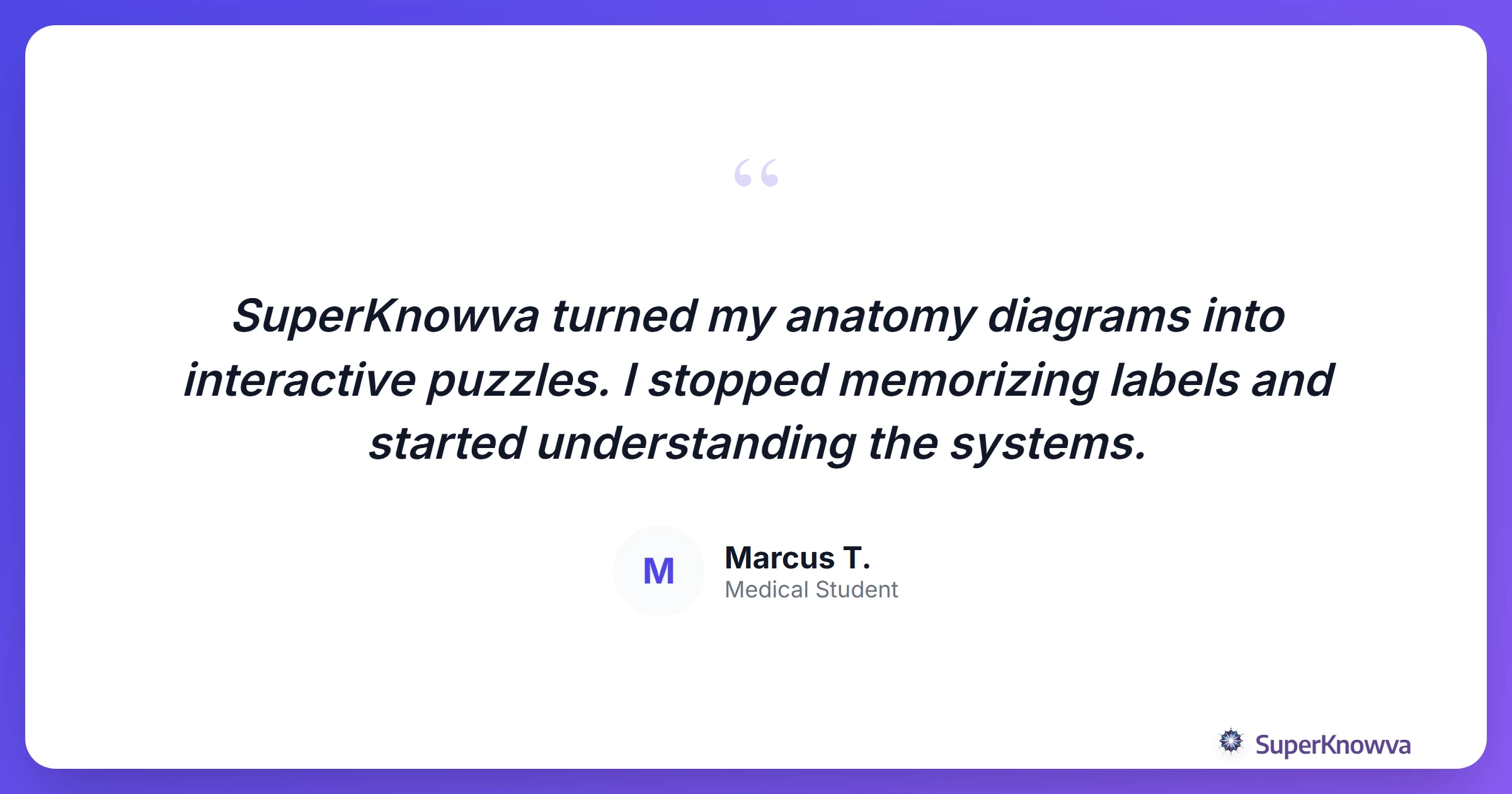
Ready to see your study materials in a whole new light? Stop struggling with static pages. Embrace the power of multimodal AI and turn your diagrams into a roadmap for mastery.