Feeling the pressure of the 2026 internship hunt? You aren’t alone. The recruitment cycle is officially in full swing, but the rules of the game have changed. If you’re aiming for a competitive spot this summer, a high GPA just doesn't carry the weight it used to. Today, recruiters are looking for one thing above all else: a specific, practical set of ai skills for students.
Whether you are seeking a role in finance, creative marketing, or software engineering, your ability to work with artificial intelligence, not just alongside it, often determines if you receive the offer.
In this guide, we’ll cut through the noise to look at the artificial intelligence job skills you actually need and, more importantly, how to prove you have them on your resume.
The New Internship Standard: Why AI Literacy is the New Minimum
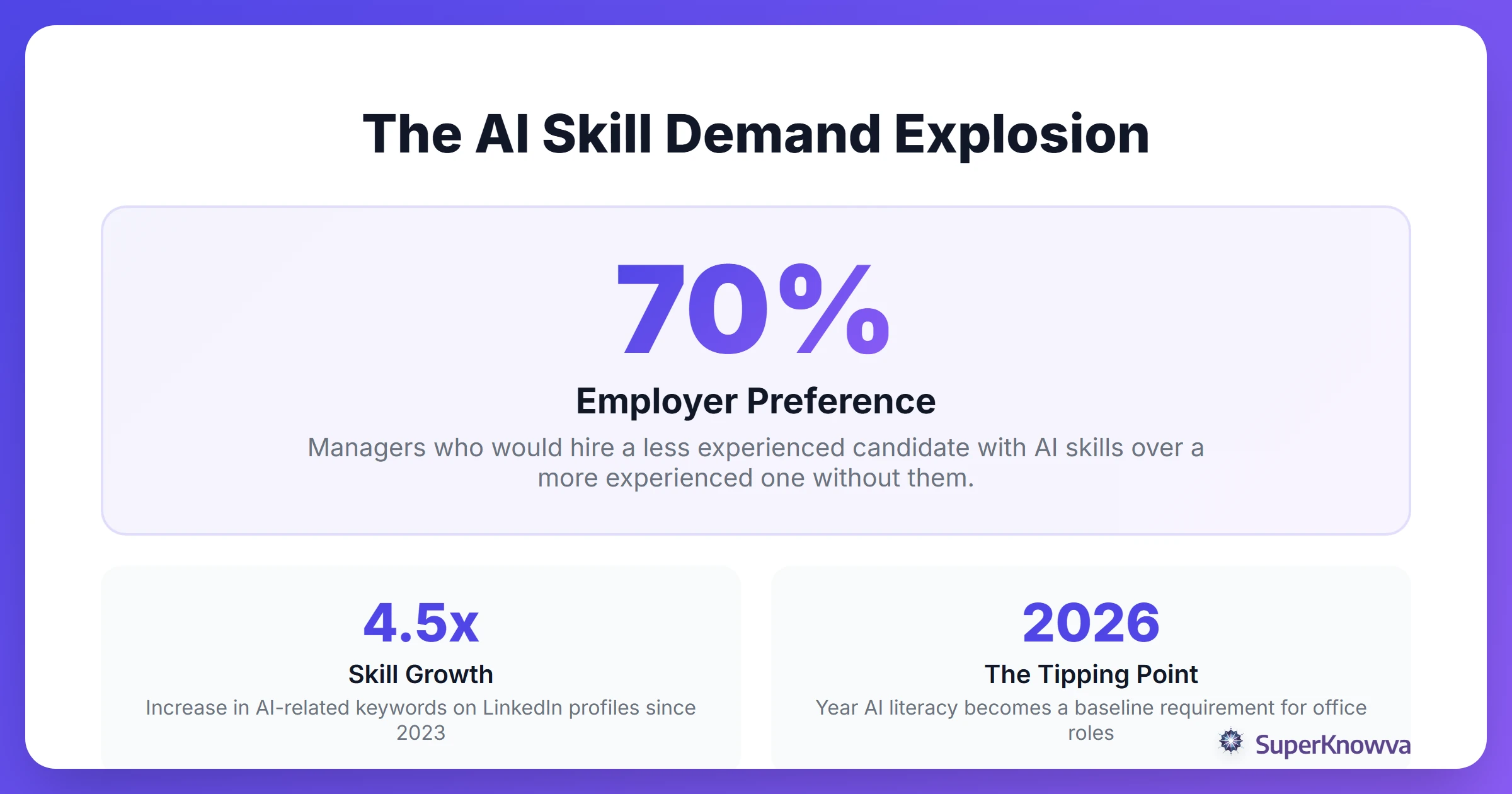
By 2026, we’ve moved past the phase where AI was a cool experiment. It’s now the baseline. Look at any modern job description and you’ll see ai literacy for graduates listed right next to "strong communication" and "team player."
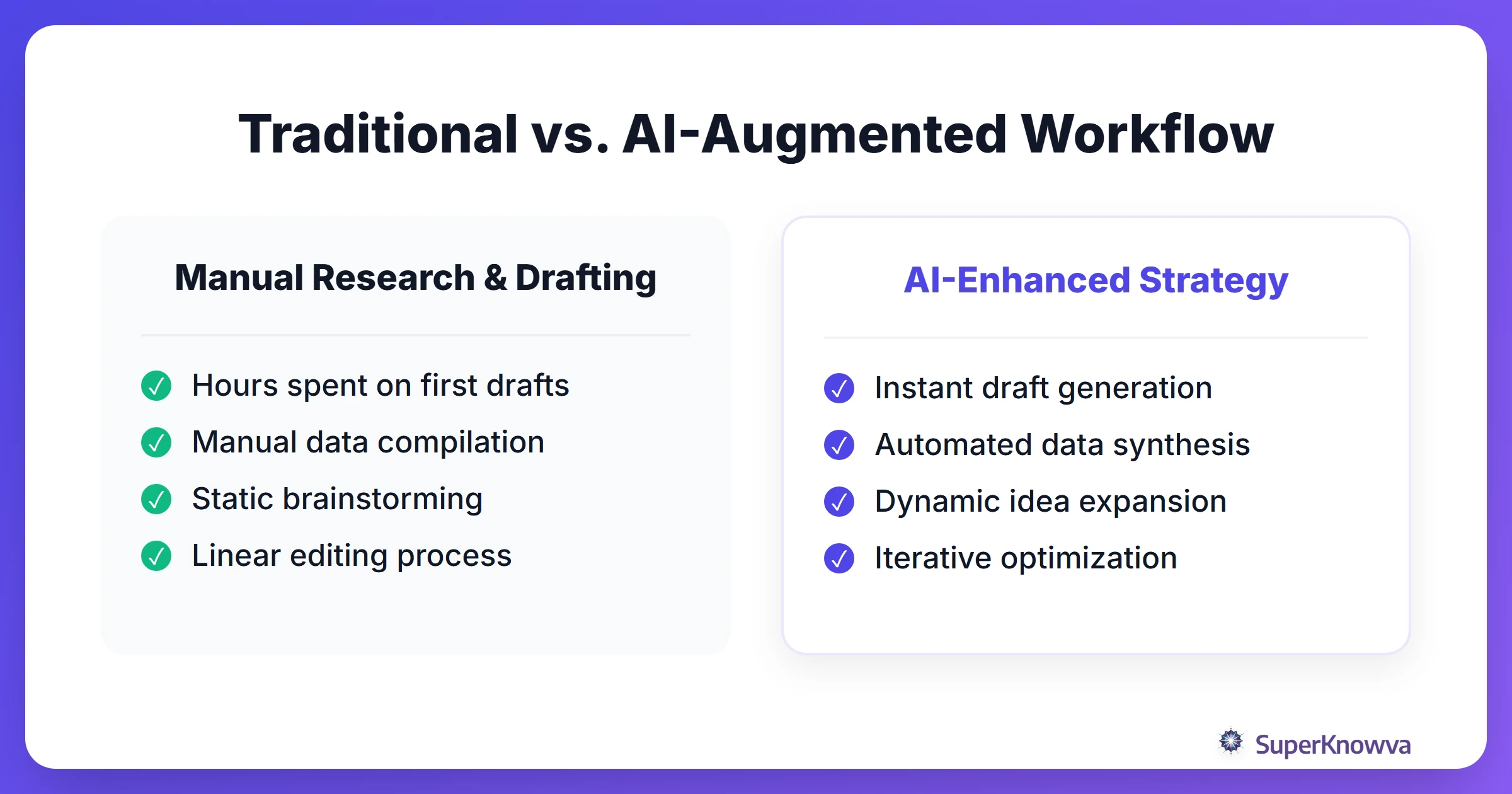
The reality is simple: AI is taking over the "grunt work." Companies no longer need interns to spend forty hours a week on manual data entry or basic proofreading. They want interns who can use AI to finish those tasks in four hours, leaving the rest of the week for strategy, creativity, and solving real problems. To stay ahead, you need to master strategies for landing a dream internship that lean heavily into tech fluency.
Mastering Prompt Engineering: It’s Not Just "Chatting"
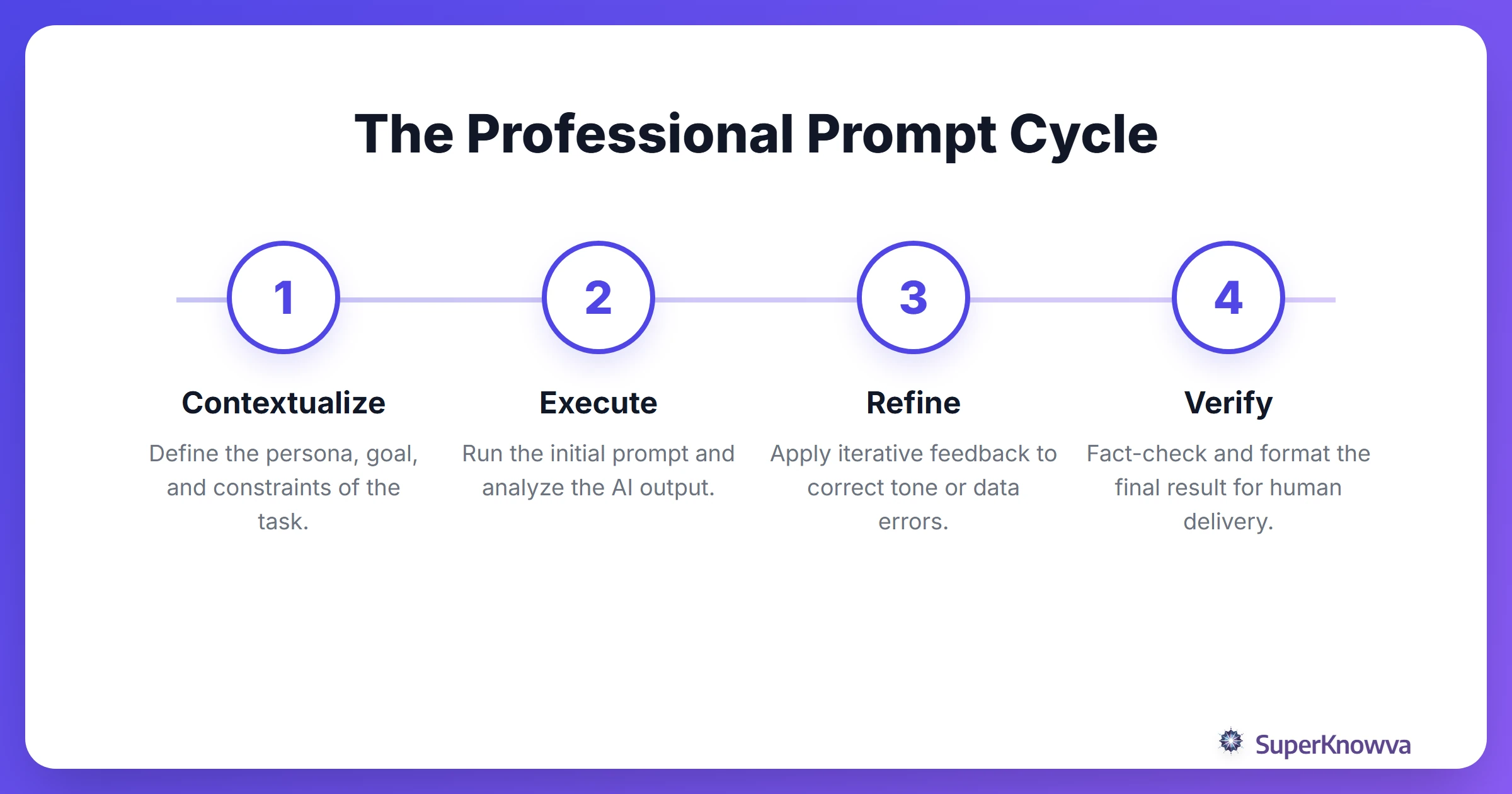
If you think prompt engineering is just asking a chatbot a question, you're missing the bigger picture. In the 2026 market, prompt engineering for interns is a technical discipline. It’s about understanding the logic behind Large Language Models (LLMs) to get results that are actually usable.
To really impress a recruiter, move past the basic "write me an email" prompts and master these techniques:
- Few-Shot Prompting: Giving the AI specific examples of the output you want so it can mirror the logic and tone.
- Chain-of-Thought: Structuring your prompts to force the AI to "think" through a problem step-by-step. This is the best way to stop the AI from making things up (hallucinations).
- Persona Adoption: Telling the AI exactly who it should be (e.g., "Act as a Senior Tax Consultant") to get more professional, nuanced depth.
When you put this on your resume, don't just list it as a skill. Prove it. Use a bullet point like: "Utilized chain-of-thought prompting to automate weekly department summaries, cutting report generation time by 40%."
AI-Powered Data Analysis (Without the Coding Headache)
Data is everywhere, and companies are drowning in it. Interns who can make sense of that data quickly are worth their weight in gold. Thanks to tools like ChatGPT’s Advanced Data Analysis and Microsoft Copilot, you don't necessarily need to be a Python pro to do heavy-duty data science.
As you start your 2026 internship prep, try taking a messy dataset and using AI to:
- Automate the Boring Stuff: Clean up broken CSV files or generate complex Excel formulas in seconds.
- Visualize the Story: Turn raw numbers into a professional dashboard or a heat map that a manager can actually understand.
- The "Human Check": This is the most important part. Employers love interns who don't trust the AI blindly. Always cross-check the AI’s math. Being the person who catches an AI error is a great way to show you're a responsible hire.
Generative Content and the "Human-in-the-Loop"
Generative AI has changed the way we write, design, and code. Because of this, generative ai resume skills are currently at the top of every recruiter's wishlist.
The skill is quality control, not generation. Anyone can hit "generate." A great intern provides the brand voice and the final fact-check. Managers look for a "Human-in-the-Loop" approach. They want to see you pair technical abilities with soft skills that complement AI technical ability, such as critical thinking and emotional intelligence.
AI Ethics: Don’t Be a Liability
You can be the best prompter in the world, but if you’re reckless with company data, you won't last a week. Being a "Responsible Intern" means you understand the risks:
- Data Privacy: Never, ever put private company info or trade secrets into a public AI.
- Bias Awareness: Understand that AI can be biased based on the data it was trained on. Your job is to spot those biases before they go public.
- Company Policy: Every company has different rules. Show that you’re the kind of hire who asks about AI security protocols before you start using a new tool.
Showing you care about AI ethics makes you a "safe" hire. It tells a company they can trust you with their most sensitive projects.
Industry-Specific Tools: Find Your Niche
General AI knowledge is a start, but specialized tools will give you a massive edge in your specific field:
- Marketing: Get comfortable with AI for SEO (like Jasper) or sentiment analysis tools.
- Software Engineering: Master GitHub Copilot. If you can explain how you used AI to debug a complex codebase during an interview, you're ahead of 90% of other applicants.
- Finance: Look into AI tools that handle market trend predictions or automated risk assessments.
If you're looking for a place to practice, the Microsoft AI Skills Navigator is a great resource to explore.
How to Actually List AI Skills on Your Resume
Don't just dump a bunch of buzzwords into a "Skills" section. You have to be strategic.
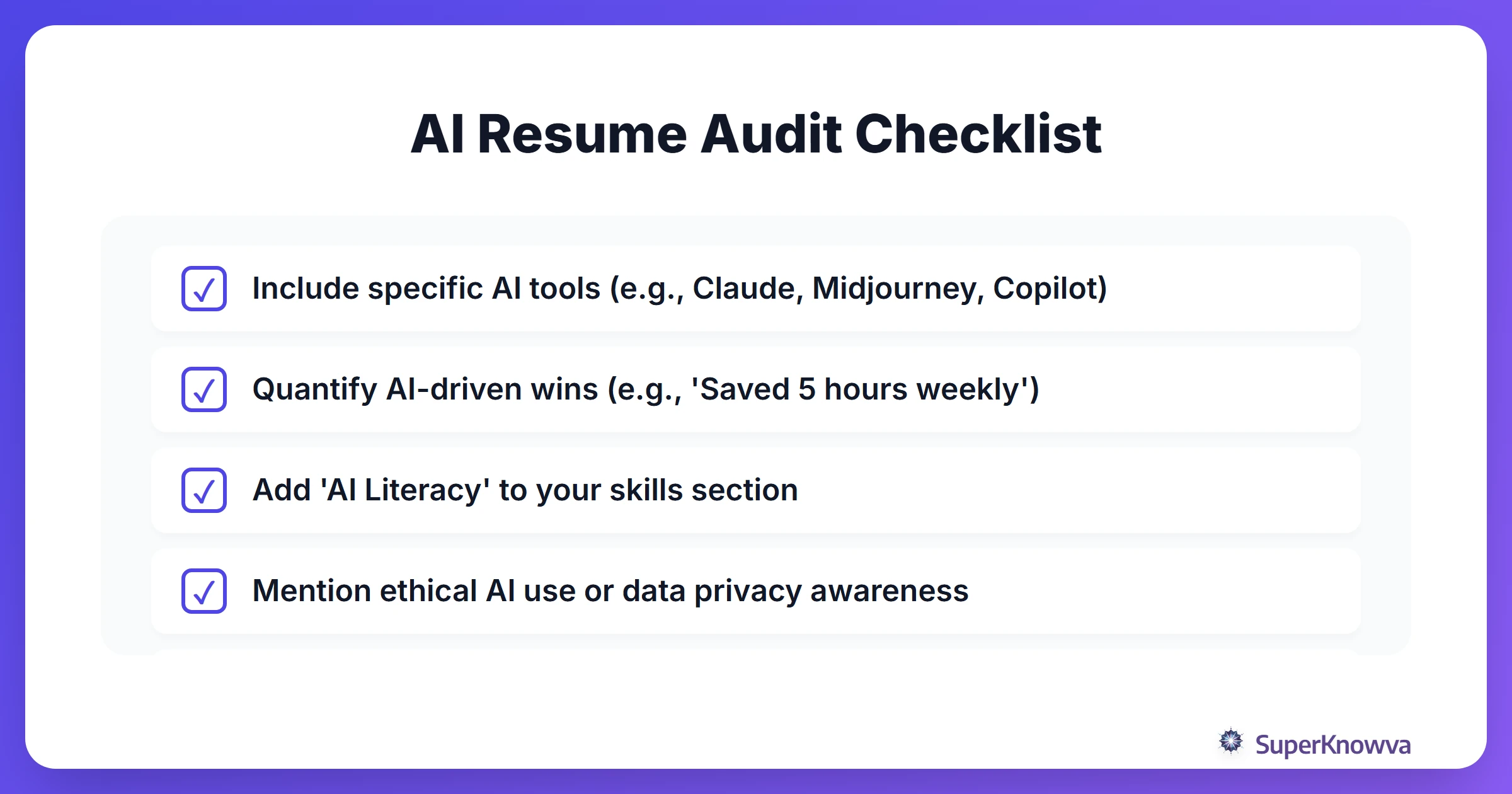
- Be Specific: Instead of writing "AI Experience," write "Advanced Prompt Engineering (Claude 3.5, DALL-E 3, GitHub Copilot)."
- Use the Formula: Use "Action Verb + Task + Result." For example: "Used generative AI to draft 15+ weekly social media posts, increasing engagement by 12% while saving 10 hours of manual work."
- Show Your Work: If you have a portfolio, link to a project where you used AI as a collaborator.
Before you submit anything, make sure you optimize your CV for Applicant Tracking Systems to ensure the bots reading your resume actually recognize your skills! For more formatting advice, check out our Resume Building Guide for 2026 Graduates.
Conclusion
Mastering ai skills for students isn't about becoming a robot. It’s about becoming a "super-powered" version of yourself. When you combine your unique human perspective with the speed of AI, you become exactly what recruiters are looking for in 2026.
Ready to level up? Start by exploring 10 Essential AI Skills for Students and try using a new tool for your next assignment. The future belongs to the students who adapt.