The AP English Literature exam is a rigorous challenge. You may find yourself staring at a poem that seems to be written in a foreign language, even though it is English. It is not enough to understand the plot; you must analyze the text and explain why it matters while working under a strict time limit.
If you’re searching for ap english literature essay help, you aren't just looking for a dictionary definition of a metaphor. You’re looking for a way to sharpen your analytical lens. You need to stop seeing just the words and start seeing the machinery behind them.
Let’s look at how AI-powered tools like SuperKnowva are changing the game, helping students move past basic summaries and toward the sophisticated analysis required to land a 5.
The Challenge of the AP English Literature FRQs
The Free-Response section is a marathon. You’ve got three distinct hurdles: Poetry Analysis (FRQ 1), Prose Fiction Analysis (FRQ 2), and the Literary Argument (FRQ 3). They each demand a different strategy, but they share one core goal: you must prove how an author uses specific literary elements to build a deeper meaning.
The biggest trap? The "plot summary" pitfall. It’s easy to describe that a character is grieving. It’s much harder to analyze how that grief is built through jagged syntax and cold imagery. With the College Board’s 6-point scoring rubric, there is zero room for fluff. Every sentence has to earn its keep.
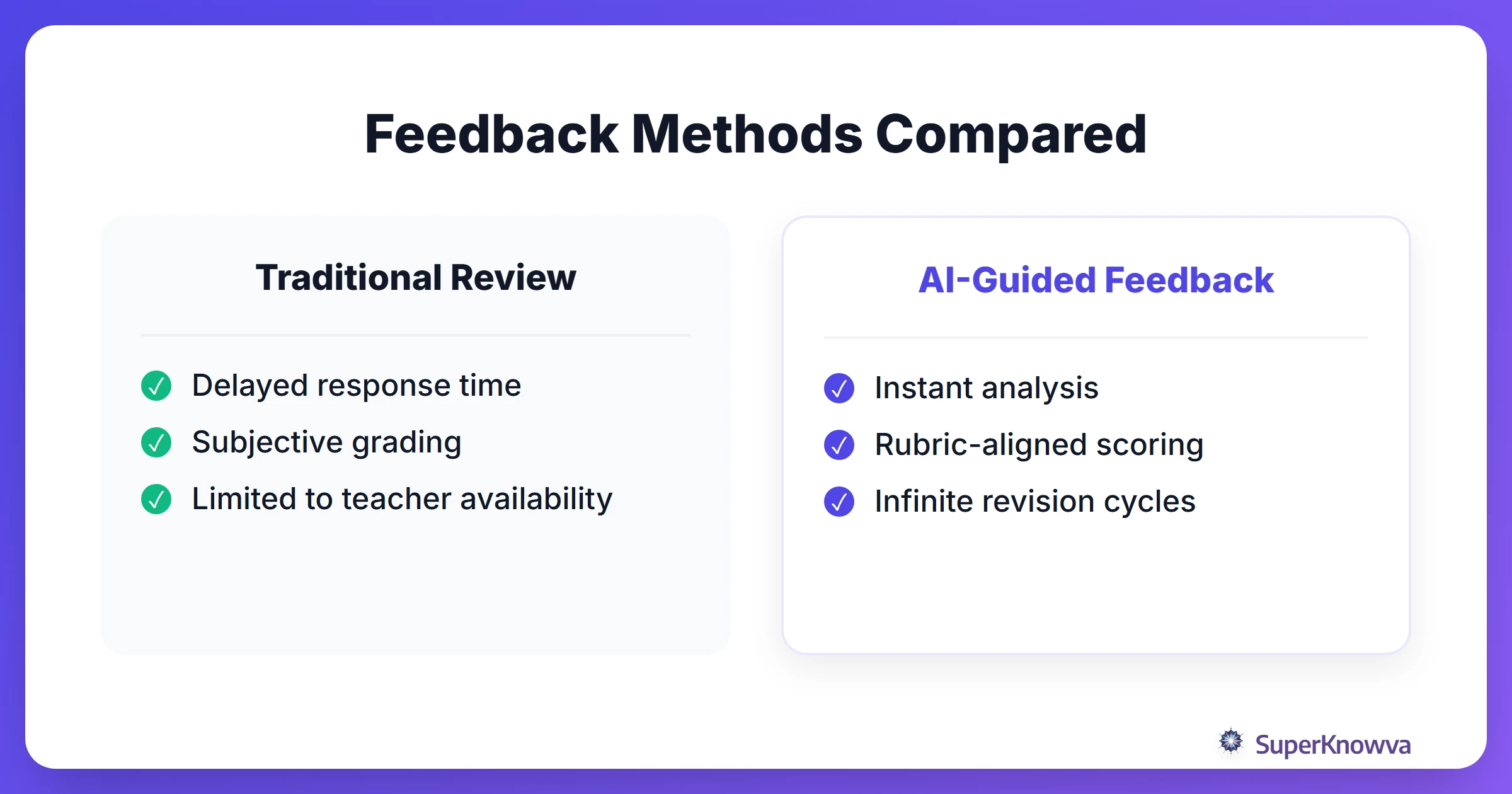
This is where AI essay feedback gives you a massive edge. By running your practice drafts through an AI, you get instant, brutal honesty. It can flag exactly where your analysis wears thin and where you’ve accidentally started retelling the story instead of arguing a point.
Decoding the Rubric: What AP Readers Actually Want
To succeed on the exam, you must think like the grader. The rubric is not a mystery; it is a guide:
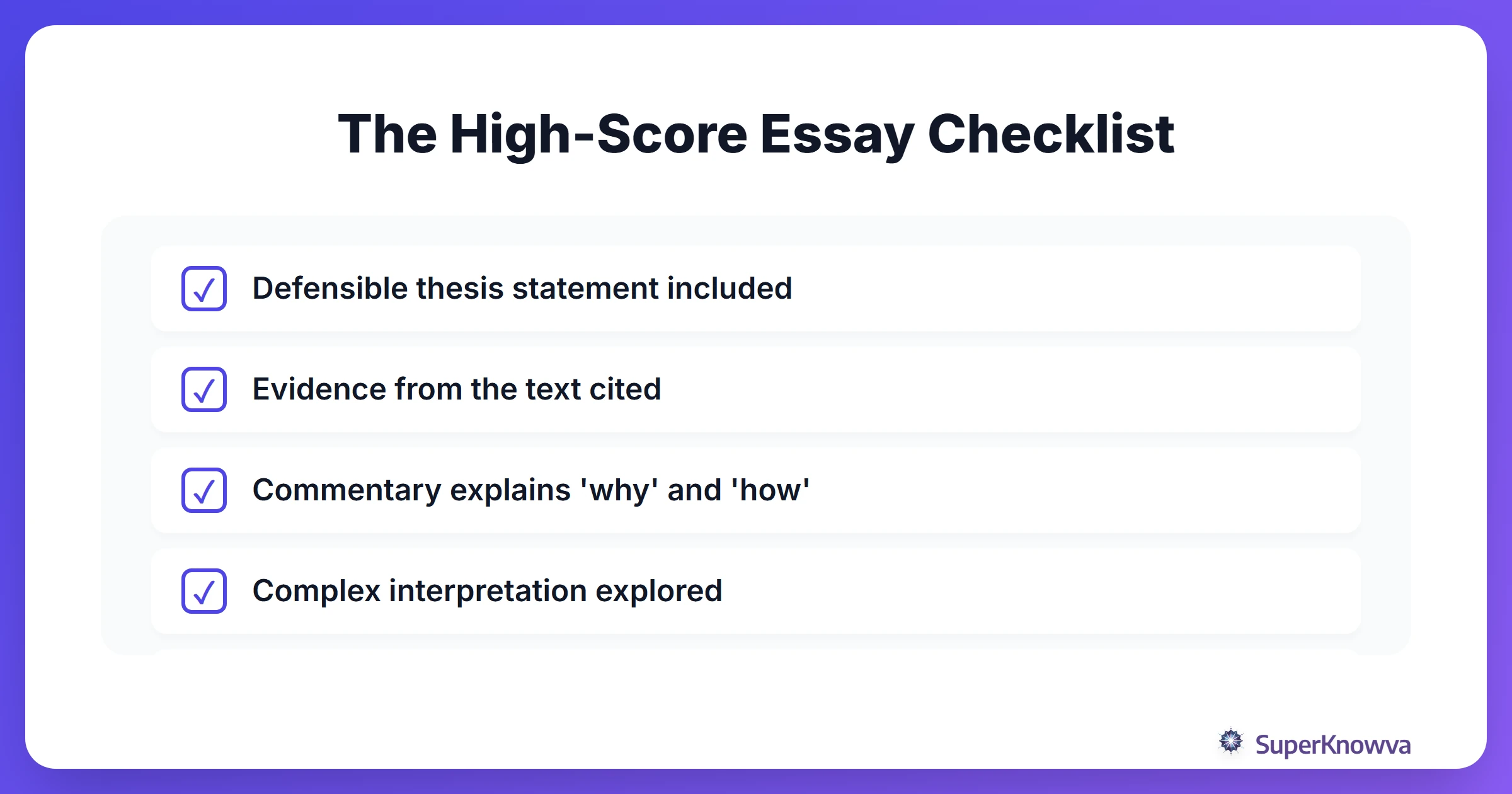
- Thesis (1 point): Do you have a defensible interpretation? (Not a fact, but an argument).
- Evidence and Commentary (4 points): Did you use specific details and explain them?
- Sophistication (1 point): Is your writing complex, or just "good enough"?
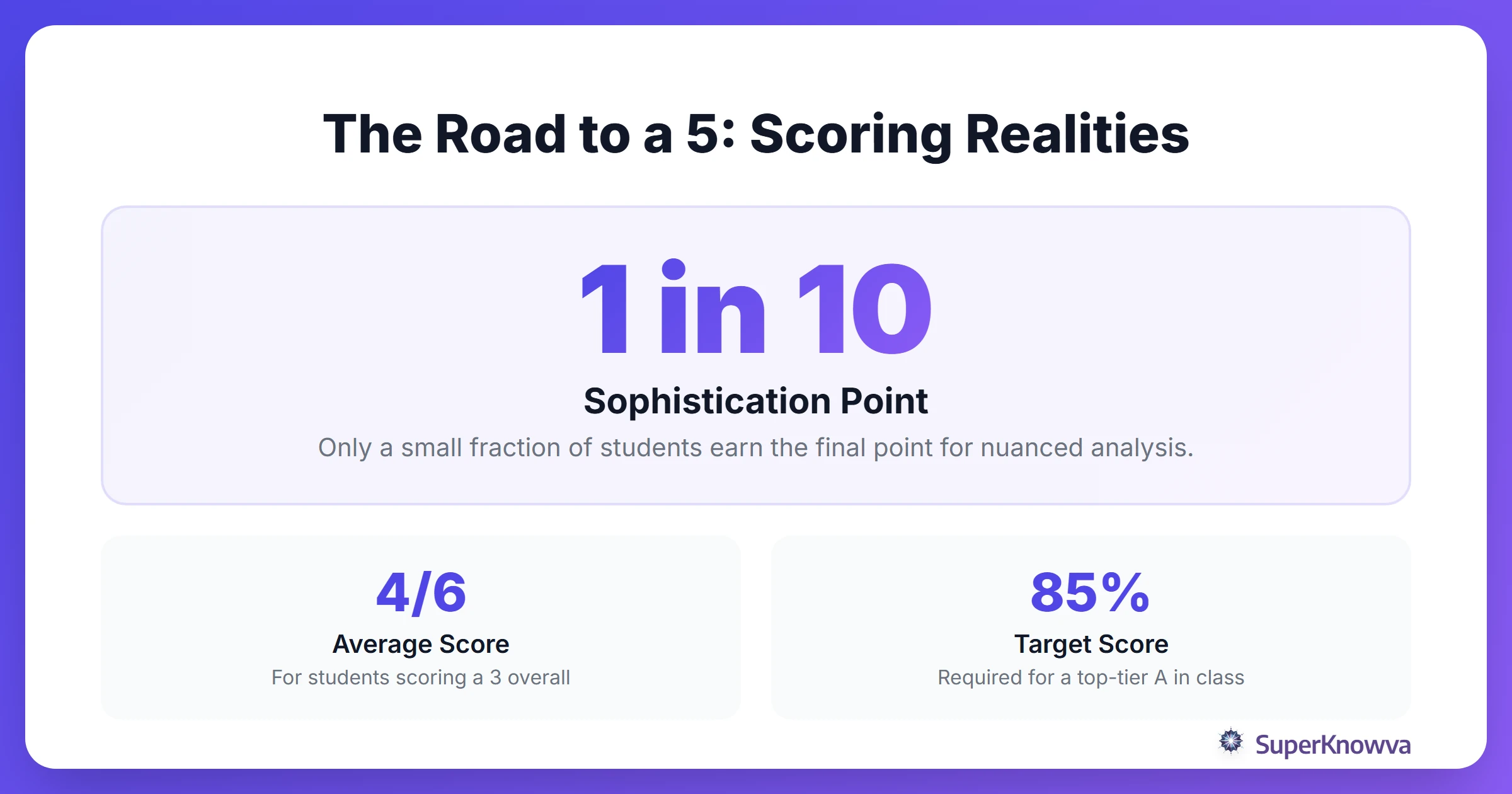
That Sophistication point is the "white whale" for most students. It requires you to see the contradictions. It’s about acknowledging that a character can be both a hero and a villain in the same breath. AI can help you find these missed opportunities by flagging one-dimensional arguments and suggesting the kind of "on the other hand" perspectives that make AP Readers sit up and take notice.
Crafting a Defensible Thesis with AI Assistance
Your thesis is the engine of your essay. If it’s weak, the whole thing stalls. A defensible thesis isn't a statement of fact (e.g., "The protagonist is lonely"); it’s a claim that requires evidence (e.g., "The author uses desolate imagery and fragmented syntax to illustrate the protagonist’s psychological isolation from a decaying society").
By using literary analysis AI, you can stress-test your ideas. Stuck on a passage? AI can help you bridge the gap between a character's specific struggle and the "meaning of the work as a whole."
Just as you can boost your reading comprehension with AI for the SAT or ACT, these same skills are what make an AP Lit thesis shine. To get started, grab the latest AP Central Past Exam Questions and use them as prompts for your AI-guided practice sessions.
Analyzing Prose and Poetry: Mastering the 'Complex'
If you remember one word for exam day, make it "complex." AP prompts almost always ask you to analyze a "complex relationship" or a "complex portrayal."
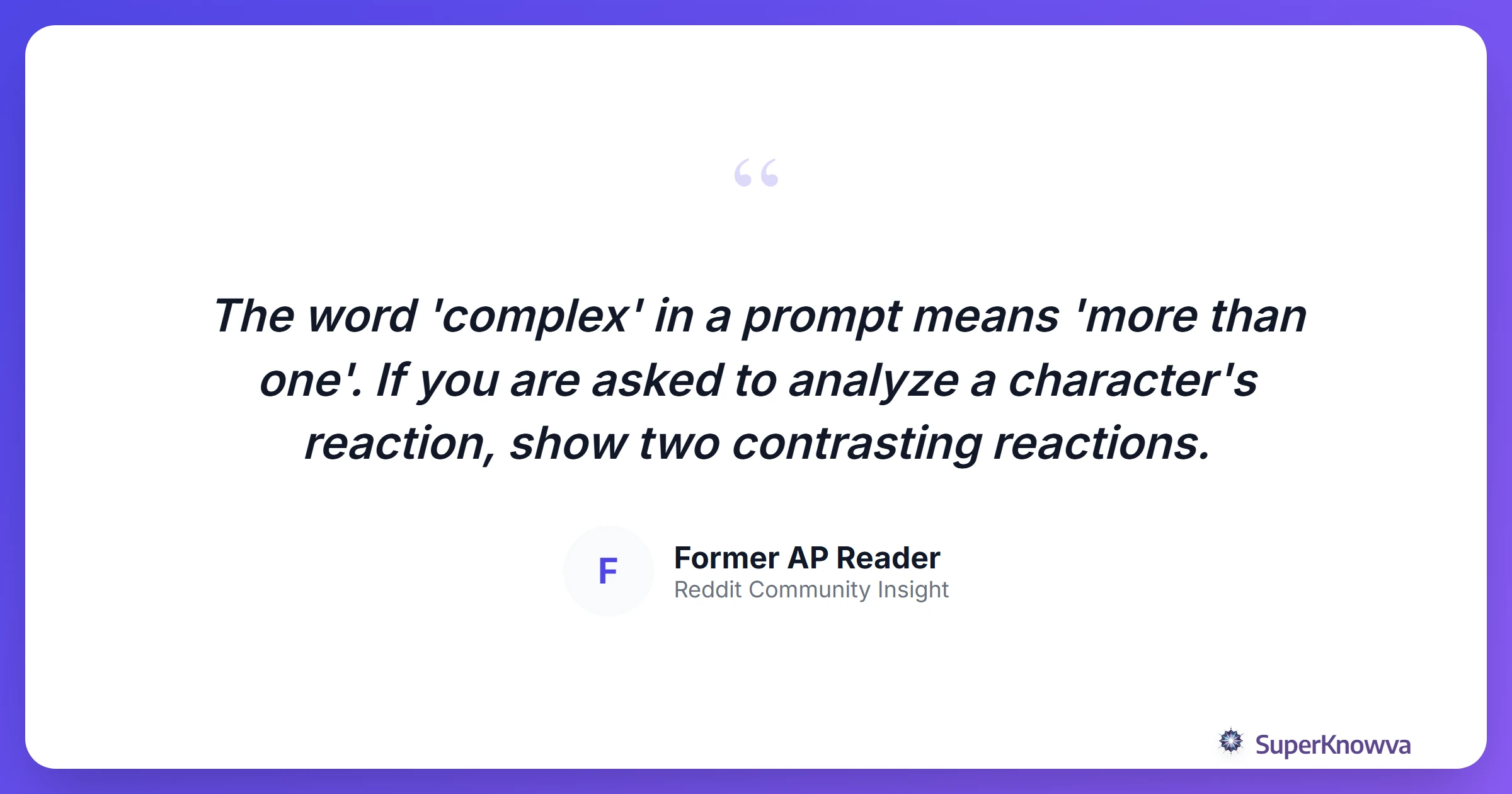
When you see "complex," think "more than one thing is true." If a character is happy, are they also terrified? If a setting is beautiful, is it also a cage?
AI tools are surprisingly good at spotting the technical "how" behind these vibes. You can use AI to scan a passage for devices like parallelism, antithesis, or anaphora. Once the AI finds the tool, your job is to explain the effect. For a deeper look at how this works in practice, this CollegeVine Prose Essay Guide has some great examples of high-scoring responses.
The Literary Argument: Conquering FRQ 3
FRQ 3 is the "Open Question." You have to select a book from memory and write a thematic argument. The secret? Don’t try to memorize fifty books. Instead, build a "mental toolbox" of 3-5 versatile titles like Hamlet, The Great Gatsby, or Beloved.
Applying advanced verbal reasoning strategies can help you move from simple observations to deep, universal interpretations. You can use AI to:
- Refresh yourself on the key themes and character arcs of your "toolbox" books.
- Practice connecting specific plot points to "the human condition."
- Generate "what if" prompts to see if your chosen books can handle different thematic angles.
AI-Driven Revision: Turning a 3 into a 5
The difference between a 3 and a 5 usually happens in the revision process. Most students write a draft, sigh with relief, and never look at it again. Top scorers do the opposite.
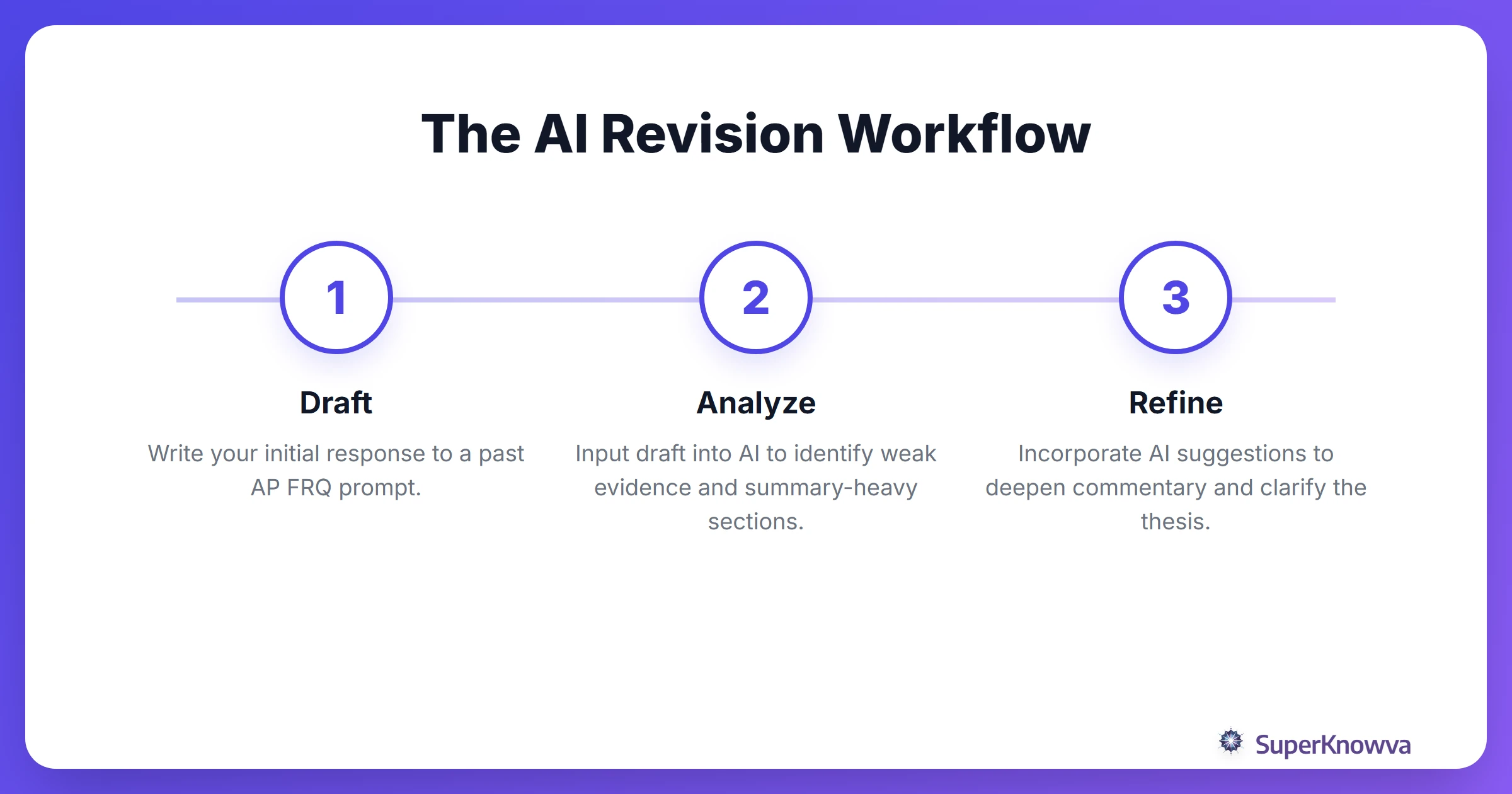
Much like improving reasoning with AI for the MCAT, you can use technology to find the holes in your logic. AI can tell you when your commentary is getting repetitive or when you've made a claim that your evidence doesn't actually support.
By refining your work, tightening transitions, and varying your sentence structure, you build the muscle memory needed to perform when the clock is running. With AI-driven feedback, you no longer have to guess if your essay is good. You walk into the testing center knowing exactly what a 5 looks like.