Five hundred years. Thousands of names. A million dates. Staring at the AP US History syllabus feels less like studying and more like trying to drink from a firehose. From the pre-Columbian societies of Period 1 to the messy complexities of the modern era in Period 9, the sheer volume of information is enough to make even the most dedicated student want to close the textbook and give up.
But what if you could take all that chaos and turn it into a clear, visual roadmap in seconds?
By using an apush ai timeline review tool, you can transform a mountain of dense textbook pages into an interactive experience. Suddenly, abstract concepts like "The Great Divergence" or the "Market Revolution" actually start to click. In this guide, we’re breaking down how AI-generated timelines are changing the game for APUSH students who are tired of drowning in dates.
The Challenge of APUSH: Why Timelines are Non-Negotiable
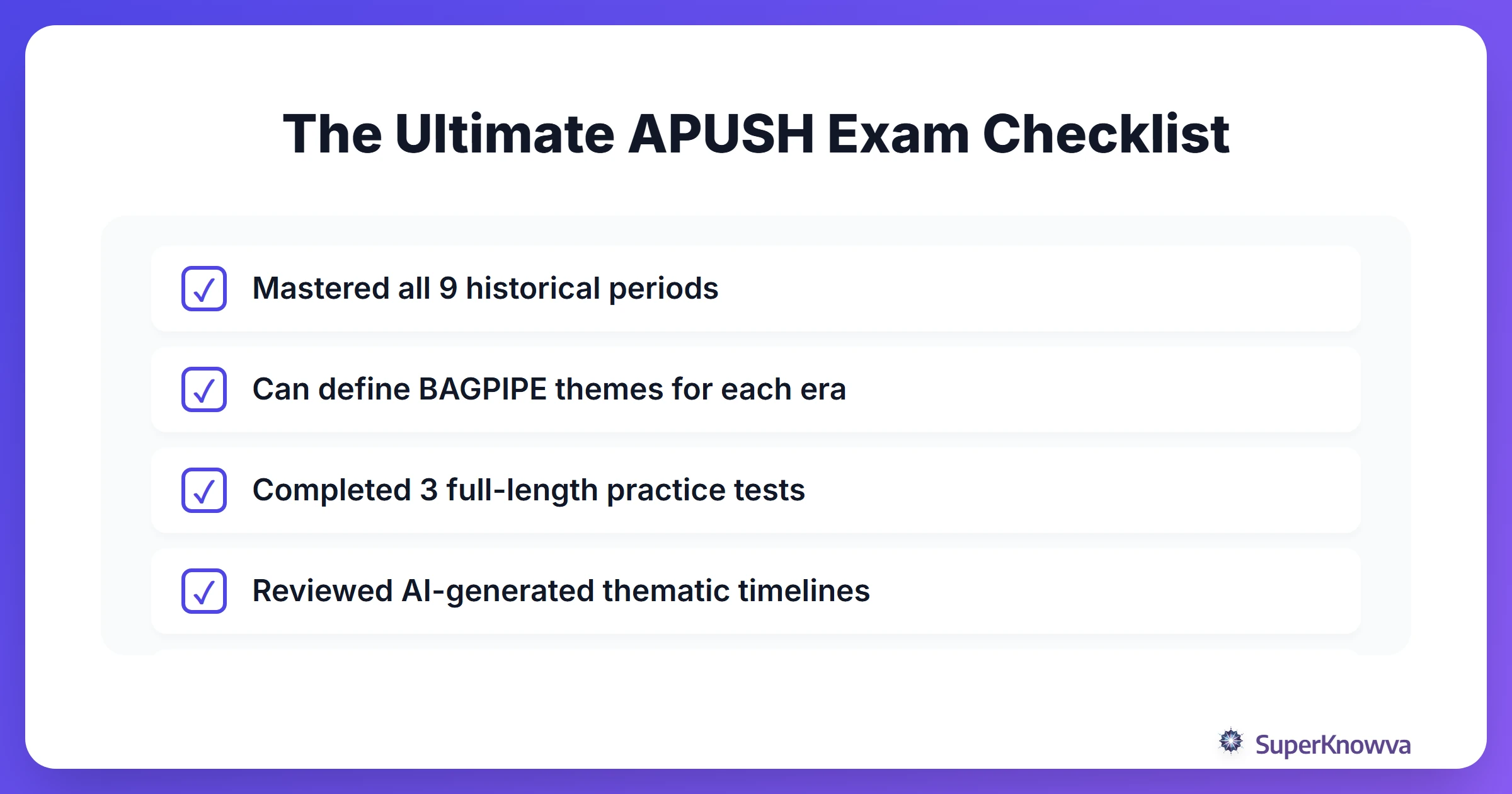
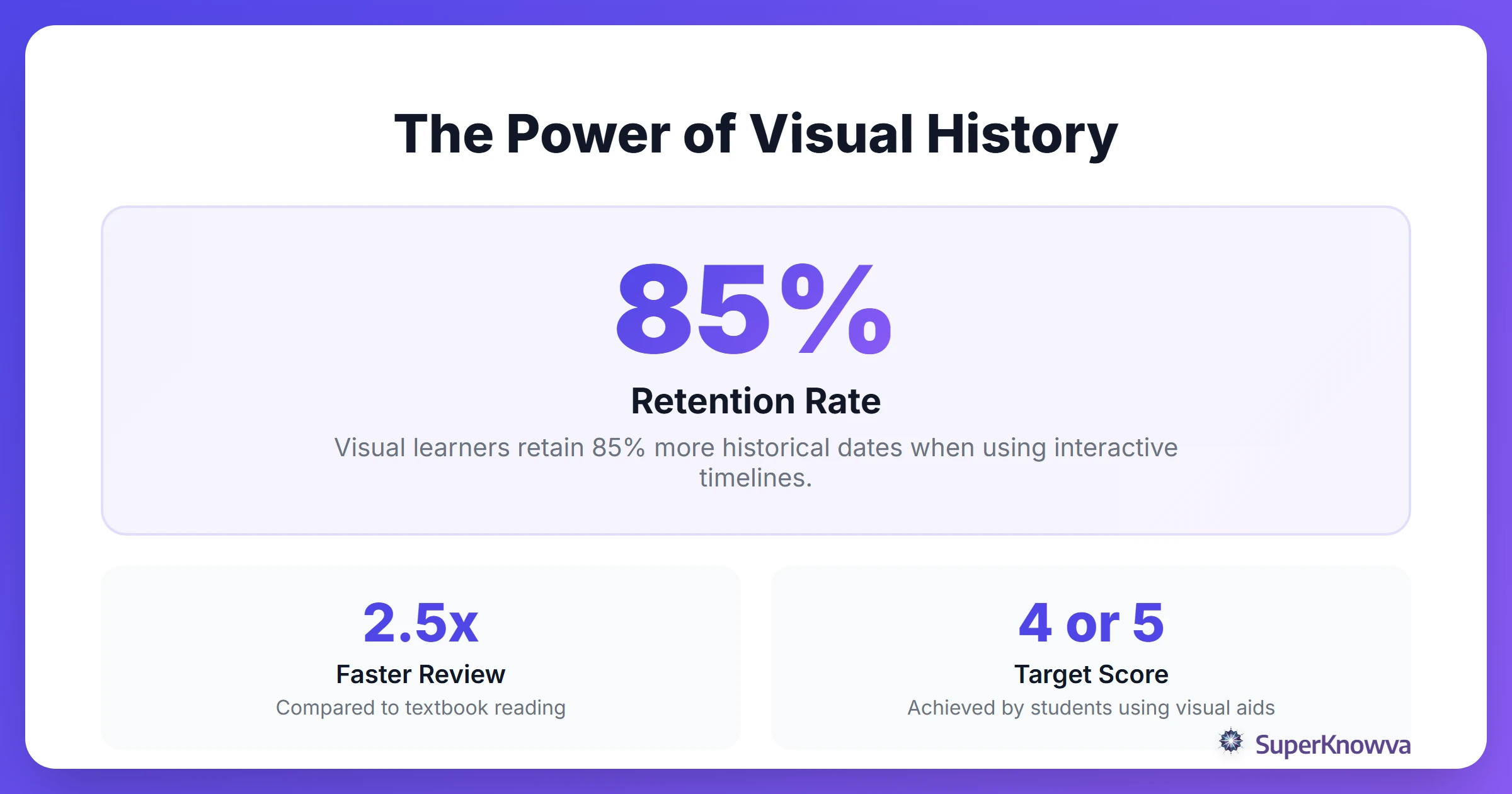
The AP US History curriculum is a beast, organized into nine distinct historical periods. To walk away with a 4 or a 5, you can't just be a human encyclopedia of dates. You have to master "Contextualization" and "Continuity and Change Over Time" (CCOT). These aren't just buzzwords; they’re the skills that require you to understand not just what happened, but why it happened in the context of what came before.
Chronological understanding prevents common exam-day mistakes. For instance, without a solid mental timeline, it is easy to blur the lines between the Gilded Age (Period 6) and the Progressive Era (Period 7). They overlap, but their focus and outcomes were distinct. A timeline helps you visualize the shift from unregulated industrial chaos to an era of government reform.
How an APUSH AI Timeline Review Tool Works
The technology behind AI history preparation is more advanced than a simple digital list. Modern AI uses Natural Language Processing to scan large datasets, including historical records, peer-reviewed journals, and textbooks, to find patterns you might miss.
When you give an apush ai timeline review tool a prompt like "The Civil Rights Movement," it doesn't just spit out 1954 and 1964. It builds a narrative. It connects the dots from the Reconstruction Era amendments, through the dark days of Jim Crow, and right into the grassroots fire of the 1950s.
One of the best ways to use this is by filtering timelines through BAGPIPE themes:
- Beliefs (Ideas, Culture, Religion)
- America in the World (Foreign Policy)
- Geography and the Environment
- Politics and Power
- Identity (Social and Cultural)
- Peopling (Migration and Settlement)
- Economics (Work, Exchange, Technology)
Filtering for "Economics" during the 19th century shows how the Panics of 1819, 1837, and 1873 aren't just random bad years; they're connected by a cycle of over-speculation and bank failures. This reveals the broader economic cycle.
Traditional Timelines vs. AI-Generated Visuals
We’ve all been there: hunched over a poster board with colored pencils, trying to draw a timeline by hand. While that helps some people, it’s a massive time-sink during "cram" season. Plus, textbook timelines are static. They tell you what the editor thinks is important, which might not be the specific area where you're struggling.
AI visuals are different. They're interactive. If you realize you're improving reasoning skills with AI but still can't remember the difference between the Embargo Act and the Non-Intercourse Act, you can just regenerate a timeline to focus on your weak spots.
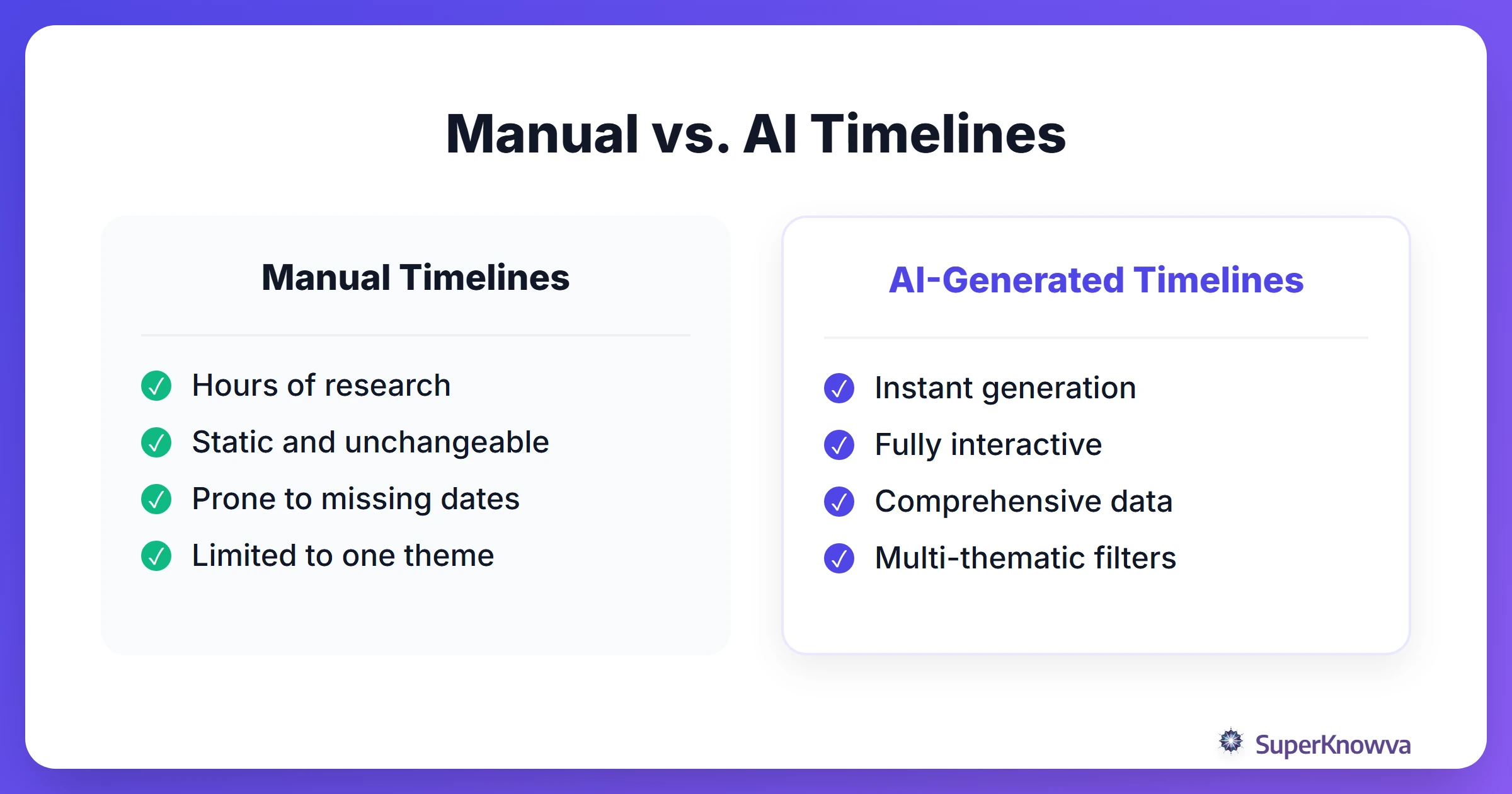
These tools save you hours by pulling data from reputable sources instantly. You aren't just getting a summary; you're getting the specific evidence needed to crush your Short Answer Questions (SAQs).
Connecting the Dots: Using AI for Contextualization
The Document-Based Question (DBQ) is the most demanding part of the APUSH exam. It requires you to place a set of documents into a broader historical context. AI timelines help you understand what was happening simultaneously across the country or the world.
Take the Women’s Suffrage movement. An AI timeline can show you that while the 19th Amendment was being debated, the US was also dealing with World War I and the First Red Scare. This lets you make a sophisticated argument about how global conflict influenced social change at home. That is the "complex understanding" point, the hardest point to earn on the rubric.
Using AI to pinpoint "turning points," like the Election of 1800, helps you see exactly where "Continuity" stopped and "Change" began. If you find yourself needing to boost your reading comprehension with AI to tackle those dense primary sources, integrating these tools into your daily routine is highly effective.
Step-by-Step: Building Your APUSH Review Strategy with AI
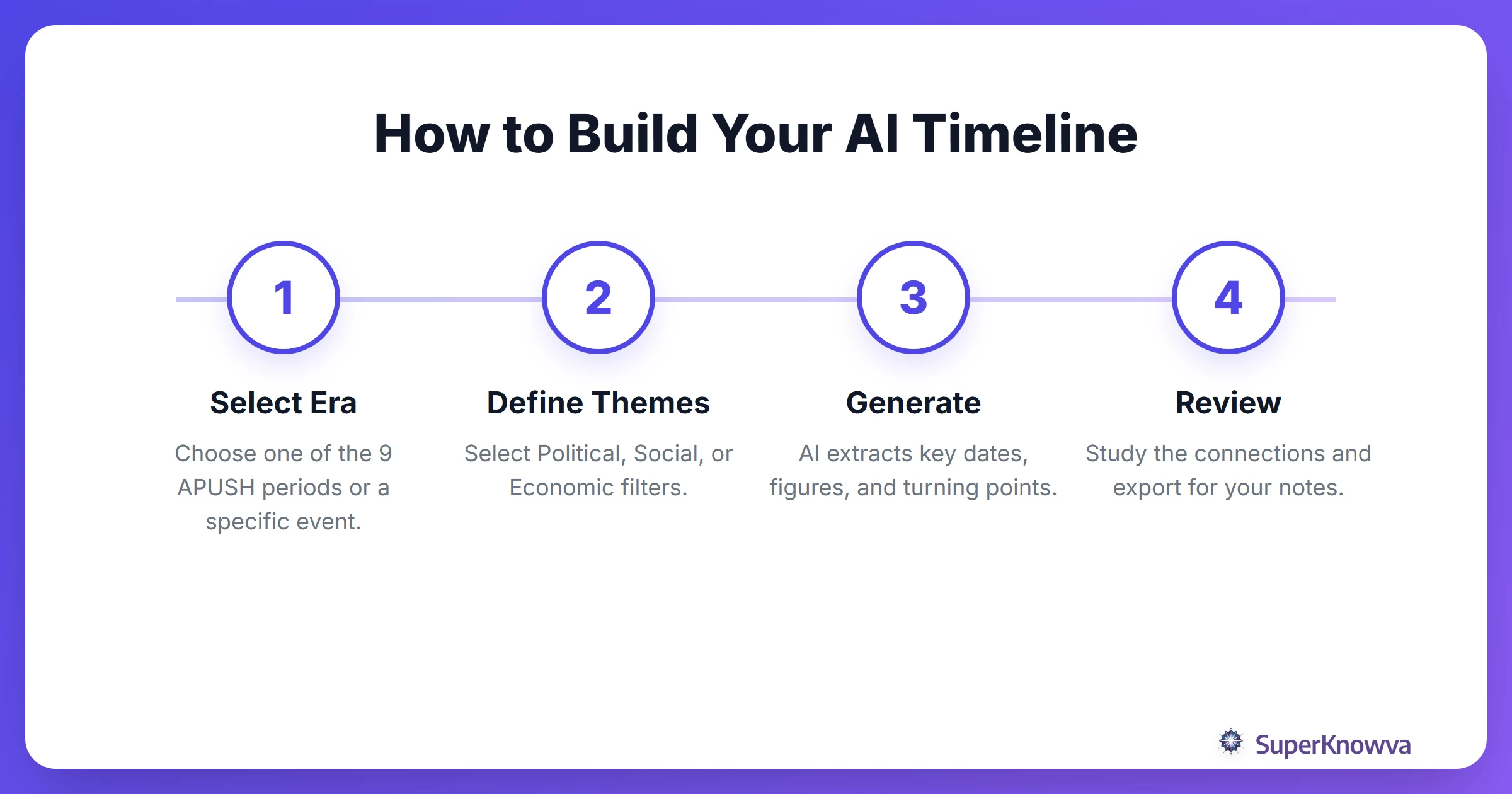
Ready to stop scrolling and start studying? Follow this plan to maximize your score:
- Find the Holes: Take a practice MCQ section. Do you keep missing questions on Period 4 (1800–1848)? Start there.
- Generate Your Timeline: Use your AI tool to build a thematic timeline for that specific period.
- Mix Your Media: Pair your AI timeline with Heimler's History Review Guides. Use the timeline as your "skeleton" and Heimler’s videos as the "muscle."
- The "Blind" Quiz: Look at a date on your timeline and try to explain why it matters out loud before you click for the details. If you can explain it to your dog, you know it.
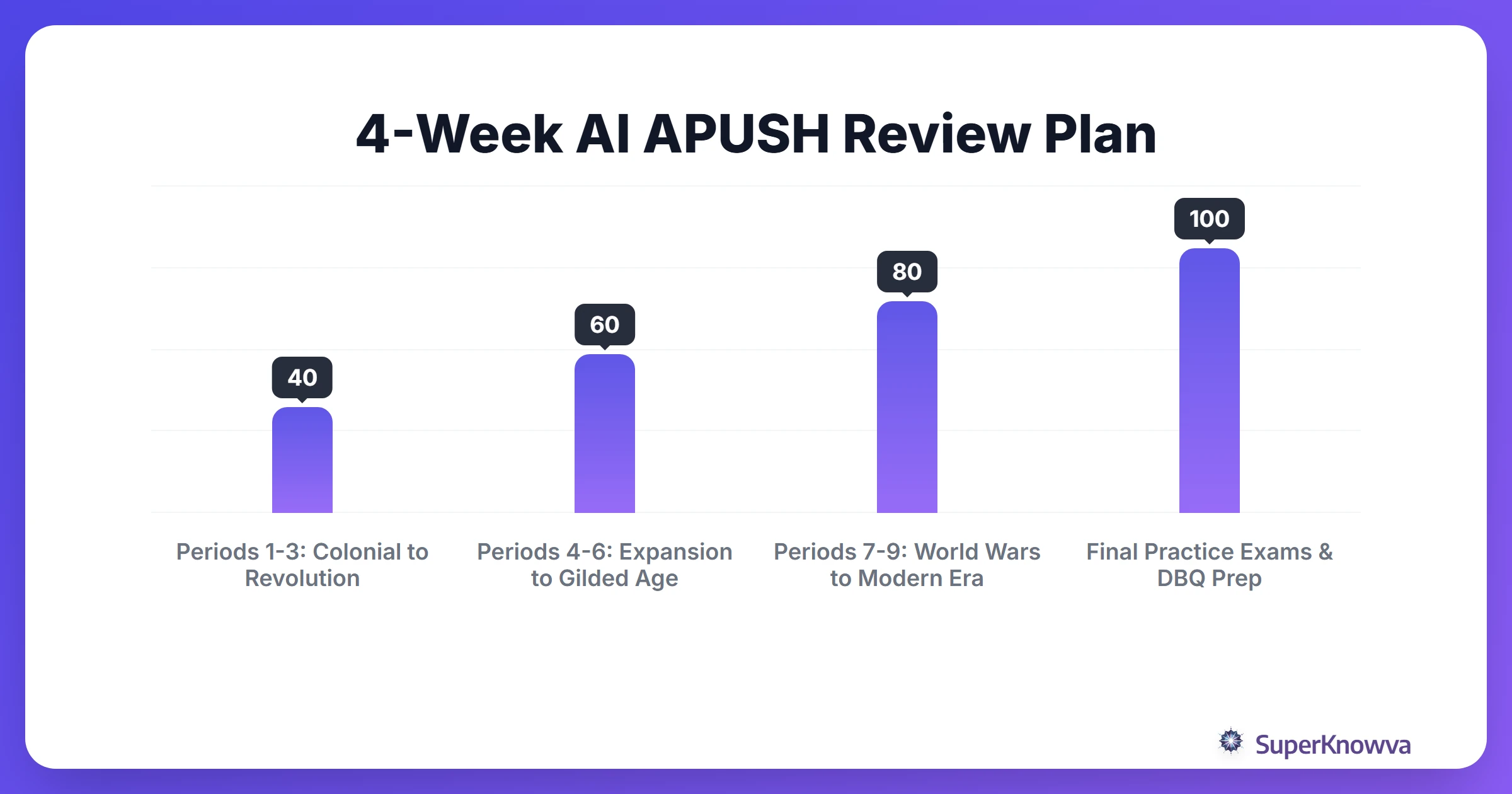
To keep your sanity, try this structured 4-week plan:
Beyond Timelines: The Future of AP History Prep
AI is doing a lot more than just drawing lines on a screen. Tools like APUSH AI Studio now let you turn boring lecture slides into study materials automatically. We’re also seeing AI MCQ generators that actually feel like College Board questions and bots that can grade your practice DBQs in seconds.
Whether you are looking for AI-driven strategies for verbal reasoning or just trying to survive the American Revolution, AI is making high-level test prep way more accessible. By breaking down massive amounts of data into manageable, visual chunks, it takes the "scary" out of the study process. You can finally stop worrying about the dates and start understanding the story.