It’s mid-July. The sun is blazing outside, but you’re likely parked in front of a laptop in your bedroom or a crowded coffee shop, grinding through a summer internship or a heavy course load. The flexibility is great, sure. But there’s a nagging feeling, isn’t there? The worry that because you aren't physically "there," you’re being left out of the loop.
Let’s be real: remote networking for students isn't just a bonus skill anymore. It’s the whole game. Whether you’re gunning for a full-time return offer or trying to land that first "big kid" job, learning to build a bridge through a screen is your most important move.
The Death of the Watercooler
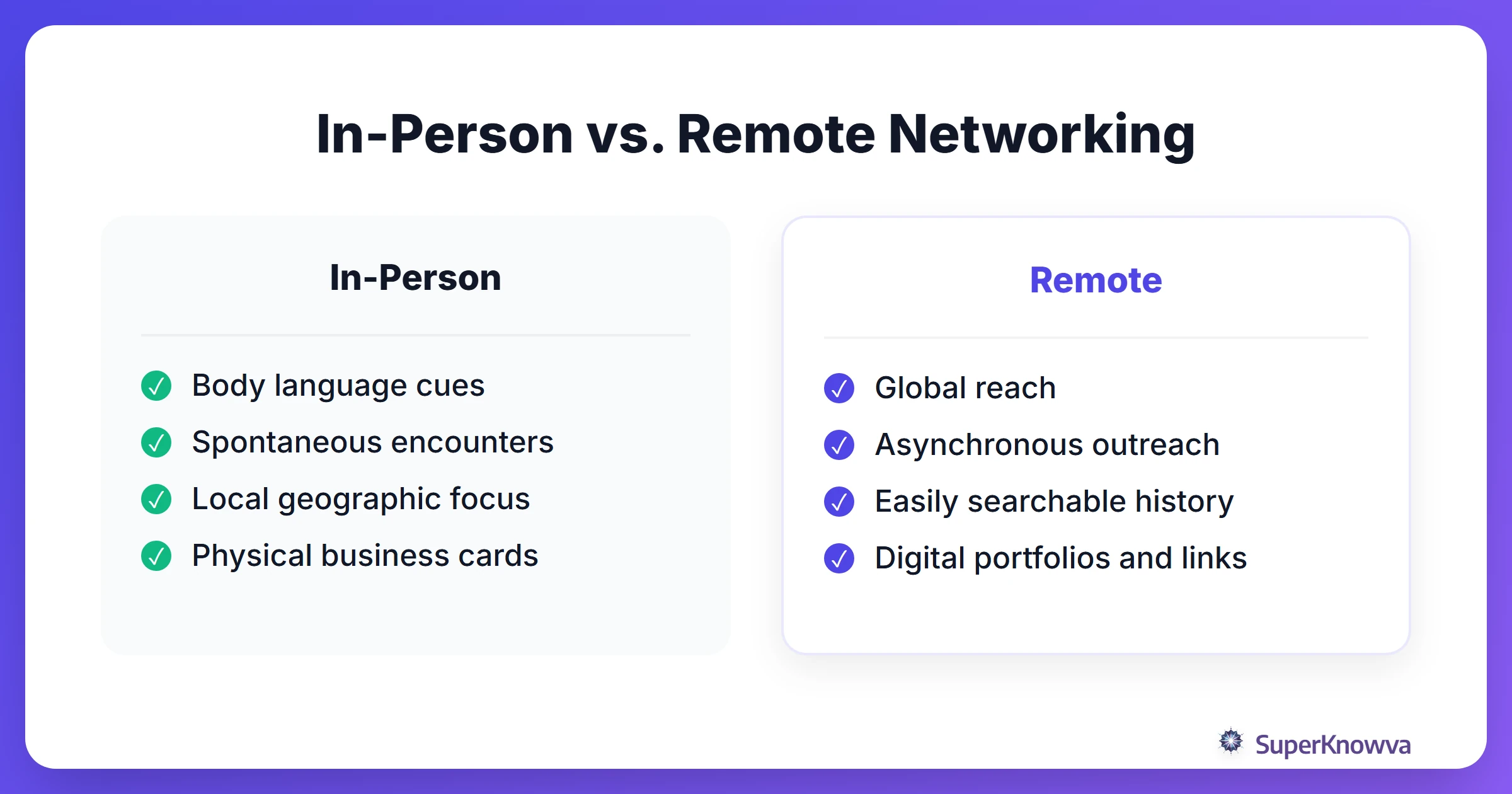
The old-school way of networking, such as bumping into a VP in the breakroom or grabbing a spontaneous lunch, is disappearing. As companies adopt hybrid and fully remote setups, the "office" has moved from a physical building to digital notifications.
For students, this creates a massive hurdle: the "out of sight, out of mind" trap. If you aren't making noise on digital channels, it’s like you don’t exist. But here’s the silver lining. You’re no longer limited by who you can physically meet in an elevator. You can reach out to a mentor in London, a peer in NYC, and a recruiter in Tokyo all before lunch.
Mastering the Digital Handshake
In the virtual world, your first impression doesn't start with a firm grip; it starts with a notification. This makes your personal branding for students your most powerful tool.
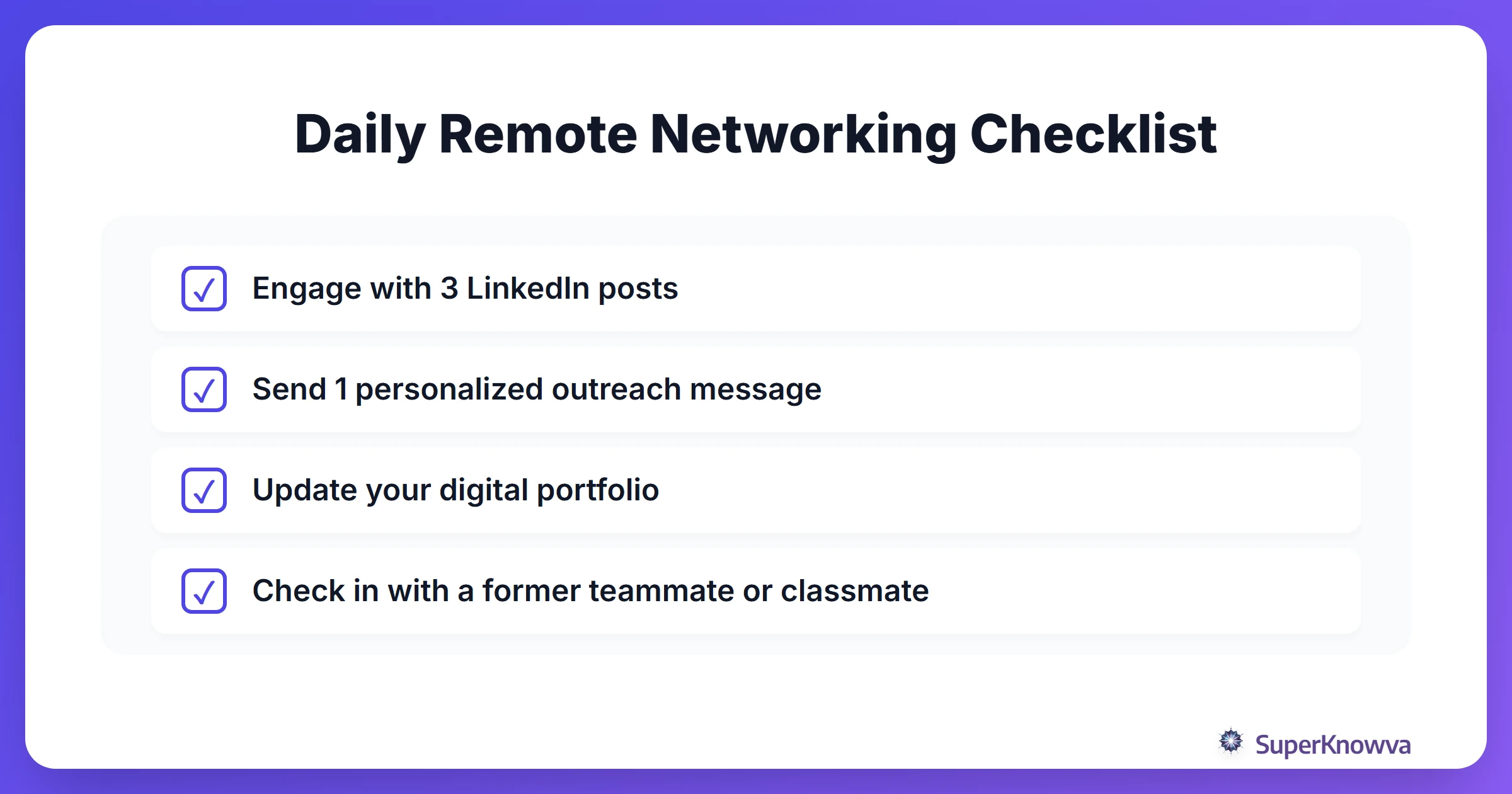
- Fix Your LinkedIn: Don't just list your classes. Make your profile easy to find. Use a clean headshot and a headline that says what you do (e.g., "Aspiring Data Scientist | Solving Marketing Problems with Python").
- The Art of the Cold Message: Keep it brief. When you reach out to someone new, mention a specific project of theirs you liked. Make your request small and low-pressure.
- Don't Ghost Warm Leads: If a professor or a friend introduces you to someone, move fast. Respond within 24 hours and, as many people forget, let the person who introduced you know how the meeting went.
The Tech Stack: Don't Let Glitches Break the Vibe
You can’t network if your Wi-Fi is trash or you can’t get into the system. Being a "good" remote worker is the foundation of being a good networker. First, you have to handle the technical challenges of remote access.
Most companies will expect you to understand secure remote network access through a VPN. Once the connection is solid, focus on the human side of the tools:
- Slack/Teams: Don't just lurk. Join the "social" or "pet-pics" channels. It sounds silly, but that’s where the real relationships start.
- Zoom/Google Meet: If the culture allows it, keep your camera on. It’s much harder to build trust with a gray square than a smiling human face.
- Shared Docs: Jump into that Notion page or Google Doc. By adding value to the work early, you give people a reason to actually want to talk to you.
The Virtual Coffee Chat: Don't Make It Weird
The "informational interview" is the gold standard for students. It’s just a 15-minute video call to hear about someone’s career path. But please, don't just wing it.
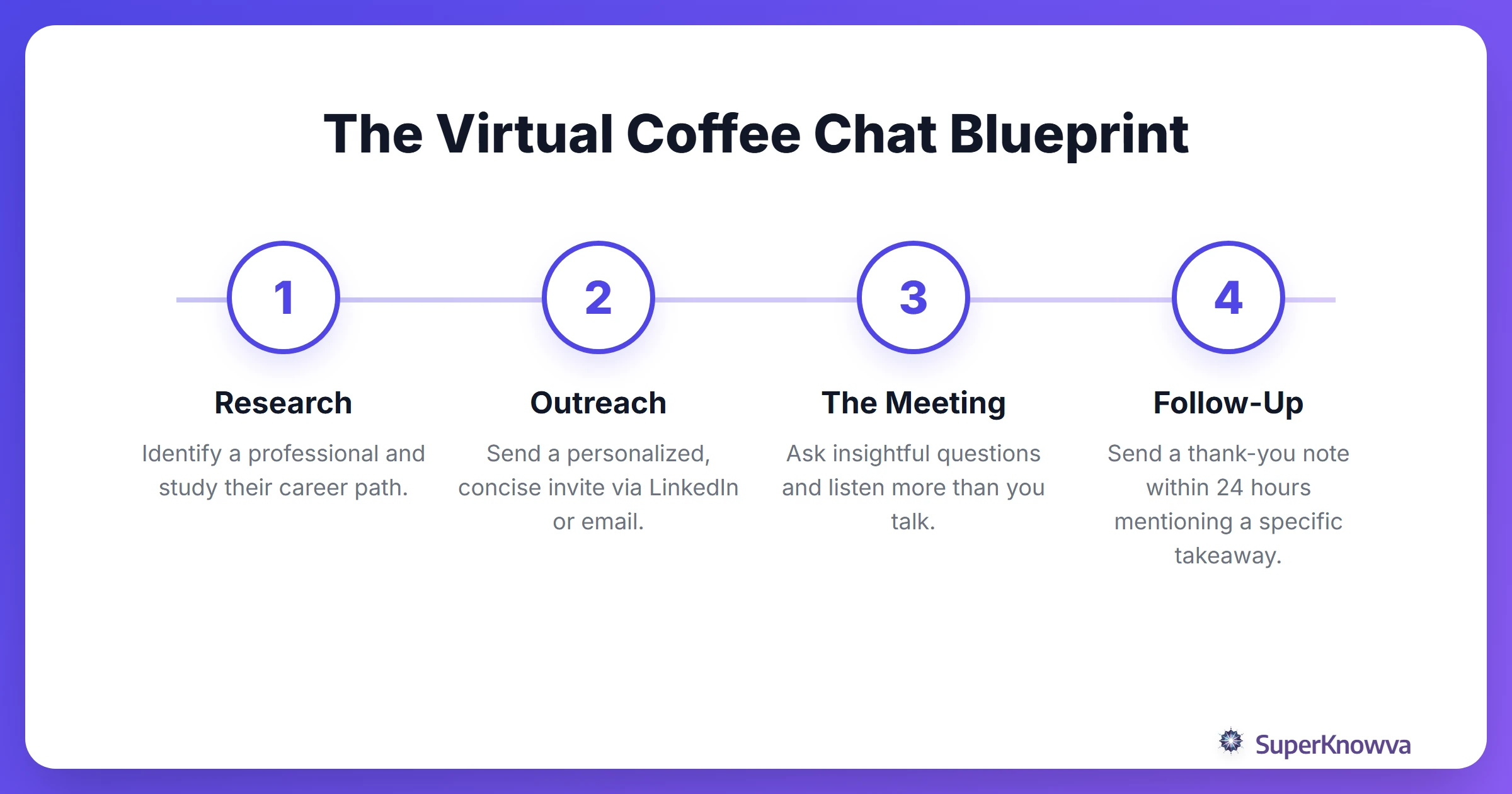
Come with an agenda. You’re the one who asked for the time, so you’re the moderator. Prepare three specific questions. Instead of the generic "What’s your job like?", try: "I noticed you moved from sales to product management. What was the hardest part of that pivot?" It shows you’ve done your homework.
And the "Thank You" note? It’s non-negotiable. Send a personalized email within 24 hours. Mention one specific thing they said that stuck with you. For more on the fundamentals, check out our networking guide for students.
Be Your Own PR Agent (Without Being Annoying)
When you work solo, nobody sees you working. You have to make your progress visible without sounding like a braggart.
- The "Lesson Learned" Post: Instead of just saying "I finished the project," try sharing it in Slack as: "Just wrapped up the Q3 report! Learned a ton about data visualization. Thanks @Sarah for the help on the charts."
- Find Your Community: Don't just wait for the internship to provide a network. Join Discord servers or LinkedIn groups in your niche.
- Stay Consistent: Your "vibe" should be the same whether someone looks at your GitHub, your LinkedIn, or your Slack messages.
Dealing with the "Cringe" Factor
It’s completely normal to feel like you’re bothering people. We’ve all been there. But remember: most professionals actually like helping students. It makes them feel like an expert and reminds them of their own start.
What if your Wi-Fi cuts out or your dog starts barking during a call? Don't sweat it. Use it as a human moment. Laugh, apologize quickly, and move on. Those tiny, unscripted moments often build more rapport than a perfectly rehearsed speech.
As you start the transition from campus to corporate, remember that networking is a marathon. Don't try to message 50 people in one day. Reach out to one person a week. Keep it sustainable.
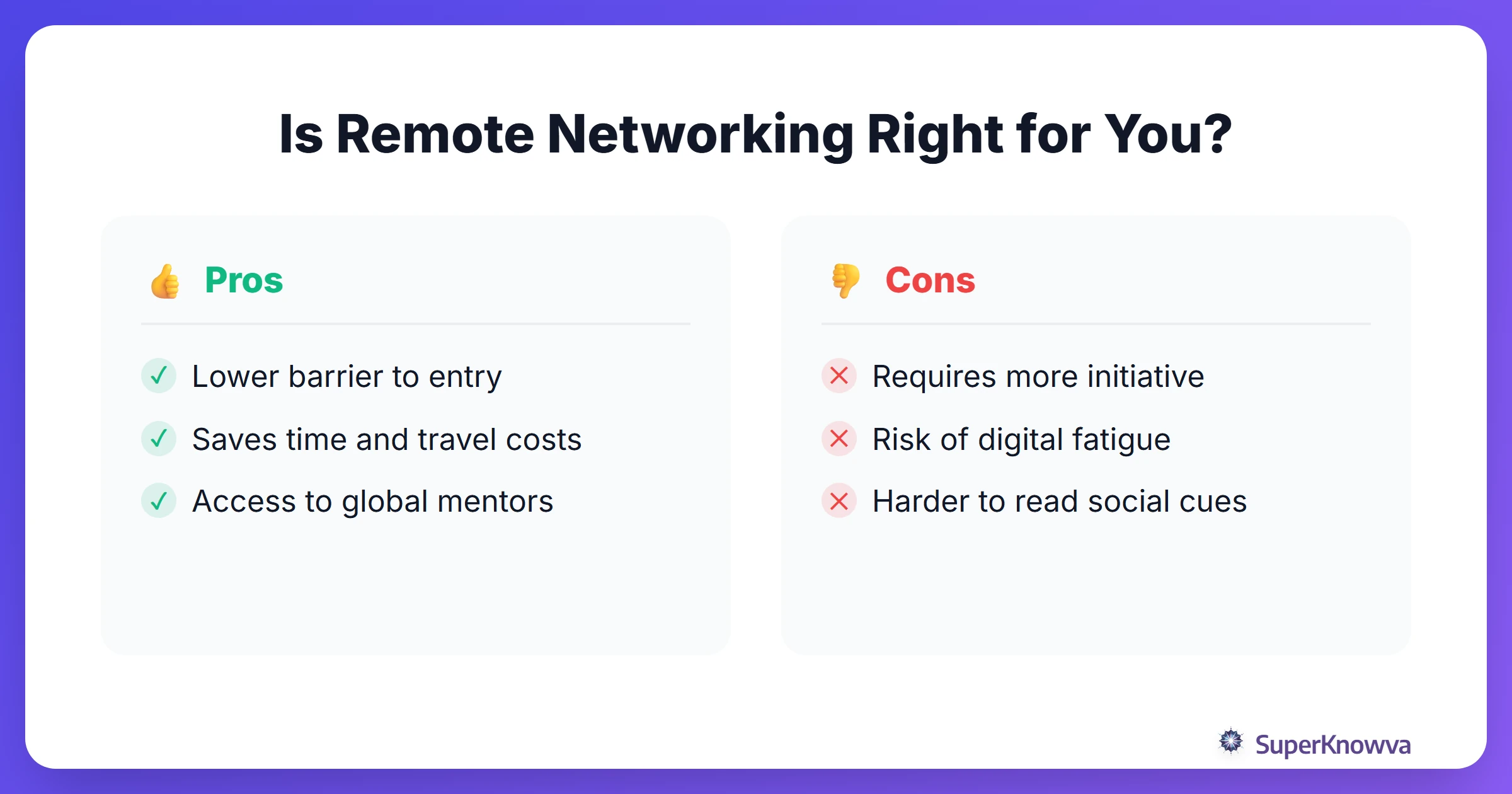
Remote networking can feel stiff compared to a career fair, but the goal is finding genuine connections. Use these strategies to build a professional circle that spans the country from your desk.