The sun is out, the semester is over, and you finally have a moment to breathe. It’s tempting to spend the next three months doing absolutely nothing, and honestly, you deserve a break. But summer is also that rare window where you can actually bridge the gap between being a student and becoming a professional.
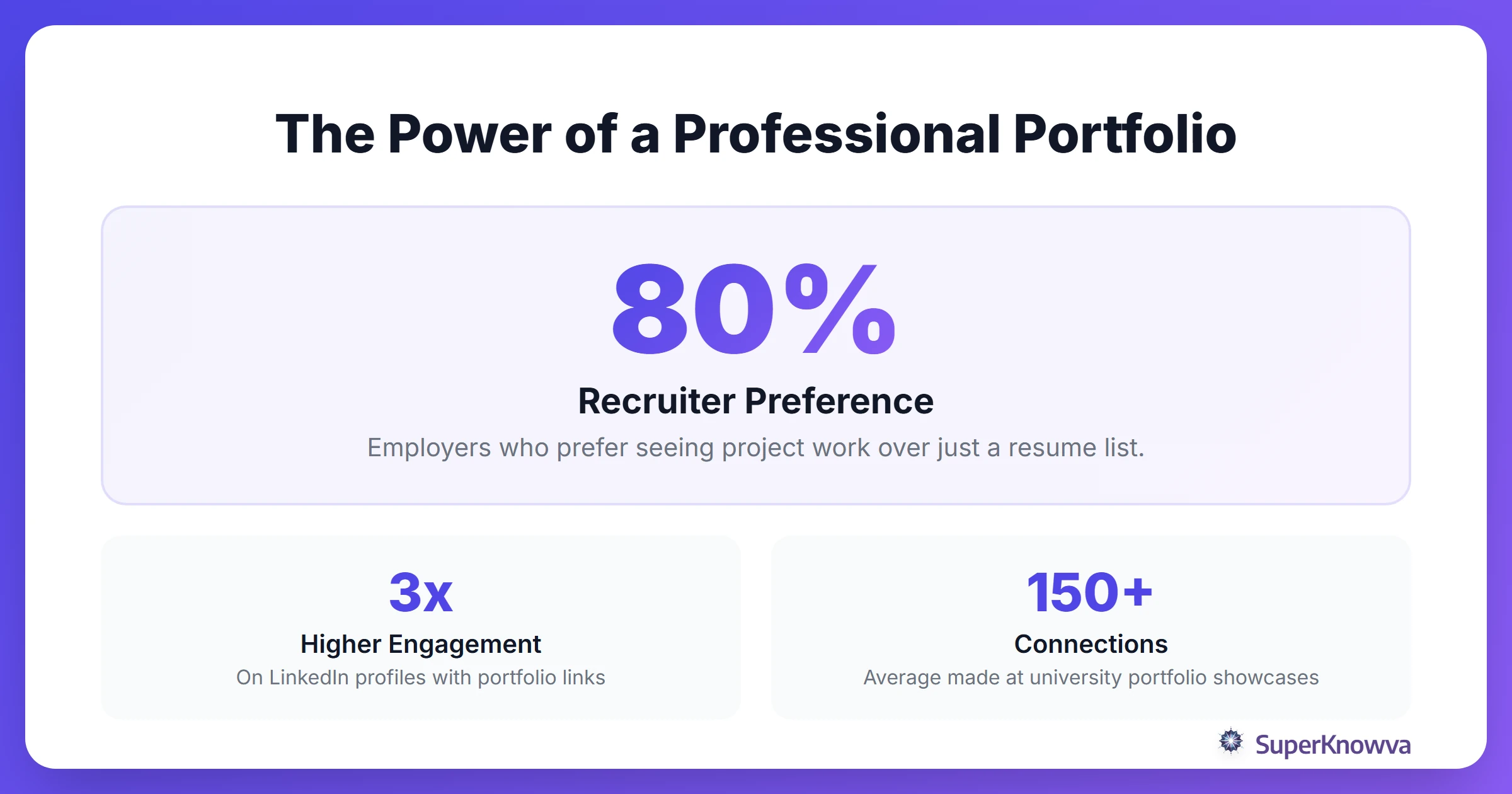
A one-page PDF resume is just a list of things you say you can do. To land the job, you need a student professional portfolio. Think of it as your digital proof of work, a space that shows you aren't just reading textbooks, but actually building things.
Whether you’re grinding through an internship, teaching yourself Python, or finally launching that side hustle, your summer work needs a permanent home. Here is how you can turn those projects into a career-launching asset.
Why Your Summer Projects Need a Digital Home
The way employers look at talent has changed. They aren't just scanning for keywords anymore; they’re looking for evidence. A student professional portfolio is becoming the new standard, acting as a "signature graduation requirement" similar to what you’d see in elite programs like the DePaul University Portfolio Showcase.
Summer projects are different because they prove initiative. When you do something without a professor breathing down your neck, it shows you’re a self-directed learner. Documenting this work is the fastest way to prove you have the strategies for landing your dream internship and, eventually, that first full-time role.
Selecting Your Best Summer Work: Quality Over Quantity
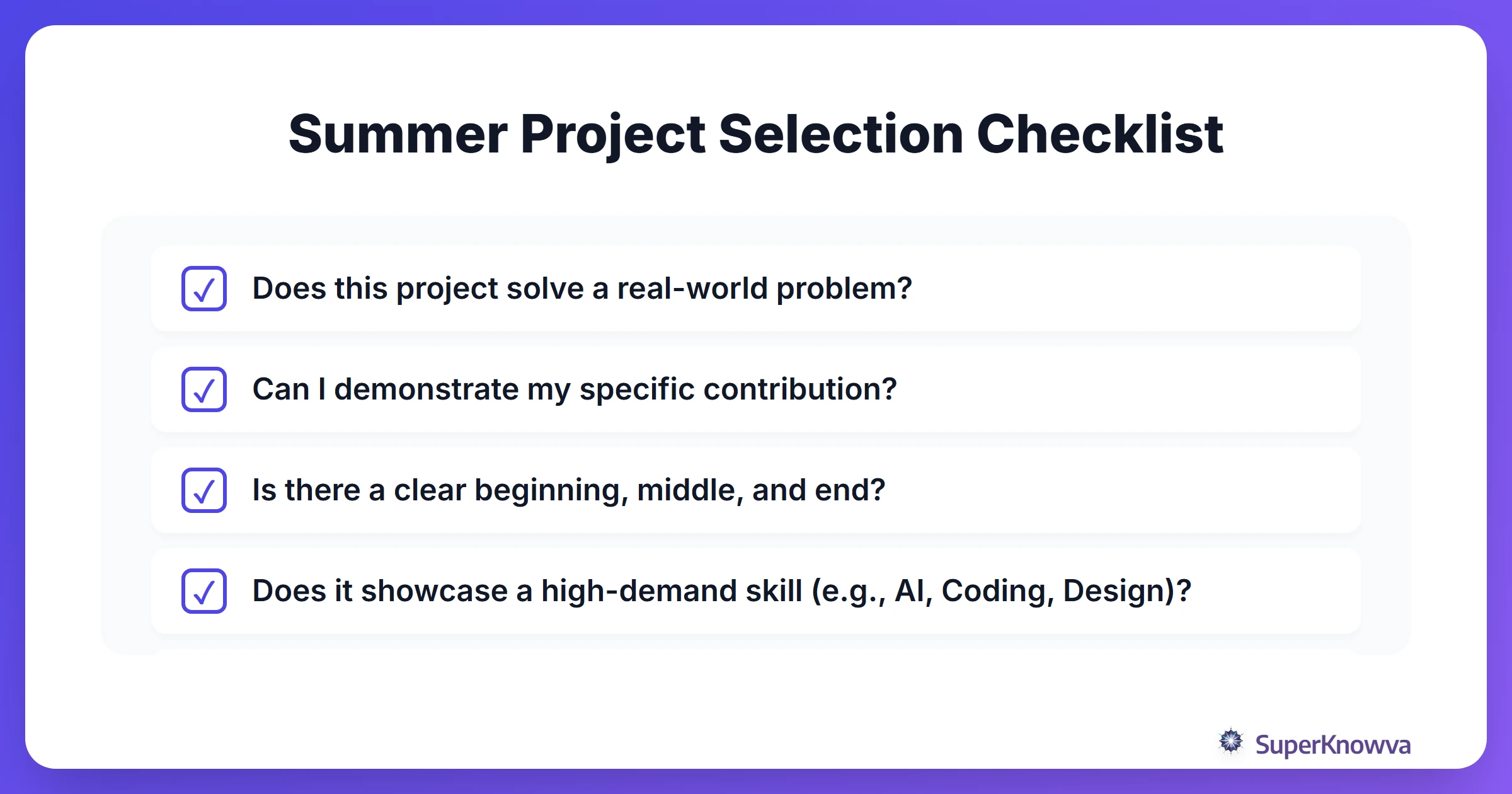
It’s tempting to dump every single thing you did over the break into a folder and call it a day. Don't. A professional portfolio is a curated highlight reel, not a junk drawer.
Take a look at your summer so far. Did you volunteer? Did you spend 40 hours mastering a new design tool? When picking summer projects for resume inclusion, ask yourself: Does this help me get the job I actually want?
If you’re aiming for a marketing career, your social media campaign for a local non-profit matters way more than your (admittedly impressive) lifeguarding skills. Aim for 3-5 high-impact case studies. By cutting the filler, you make sure a recruiter’s 30-second attention span is spent on your absolute best work.
The AI Edge: Highlighting Your Tech Proficiency
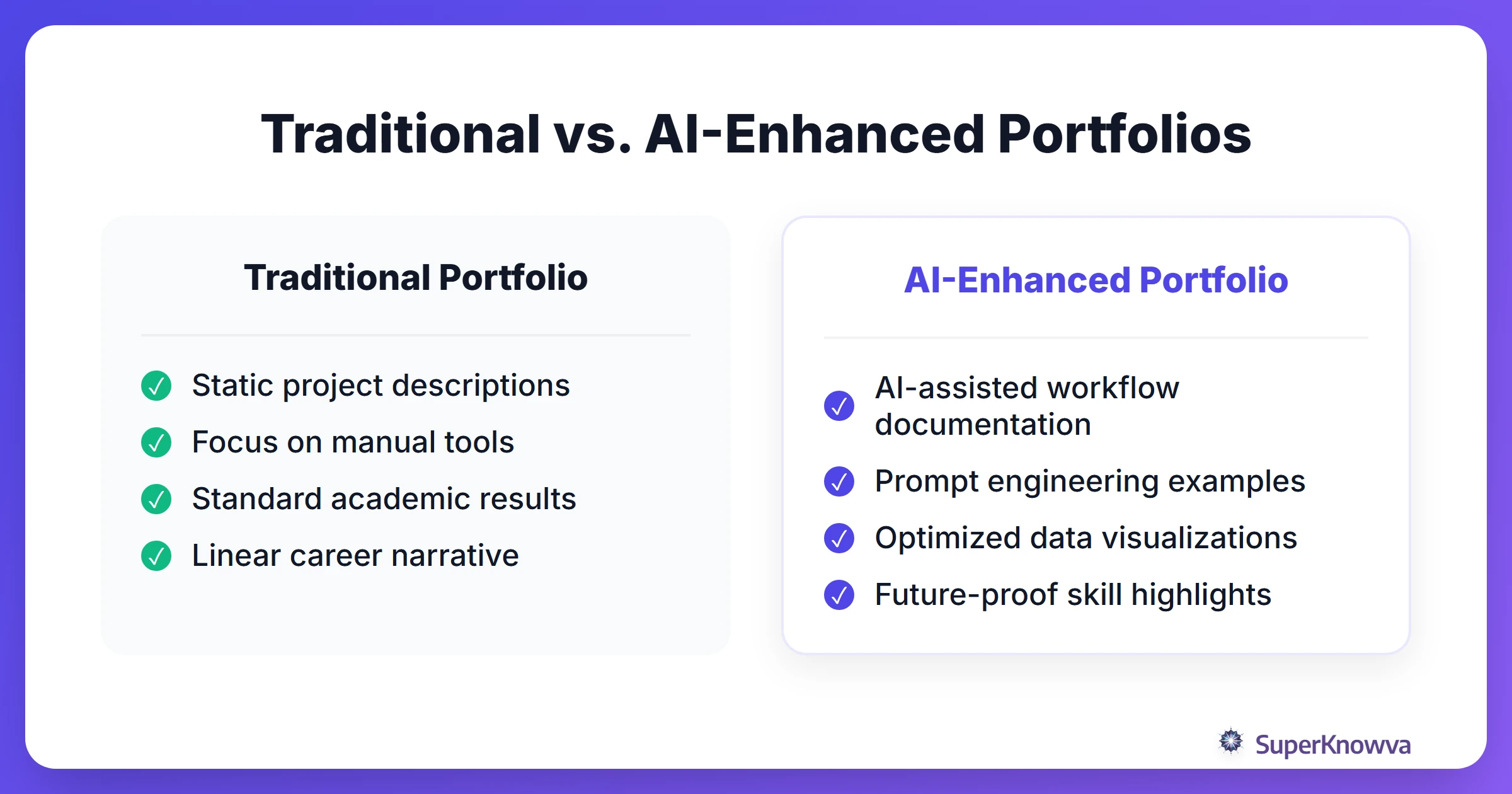
"AI literacy" is the new "Microsoft Office proficiency." It’s no longer a bonus skill; it’s an expectation. Employers are looking for candidates who know how to use AI tools responsibly and effectively. This is your chance to turn showcasing AI skills into your biggest competitive advantage.
But here’s the trick: don’t just show the final result. Show the process.
If you used tools like SuperKnowva to optimize your summer learning or generate study guides for a certification, explain your workflow. Show the outputs alongside your human-led strategy. By explaining your approach, you prove you have the soft skills employers want: specifically critical thinking and the ability to steer complex tools.
The Anatomy of a Perfect Project Case Study
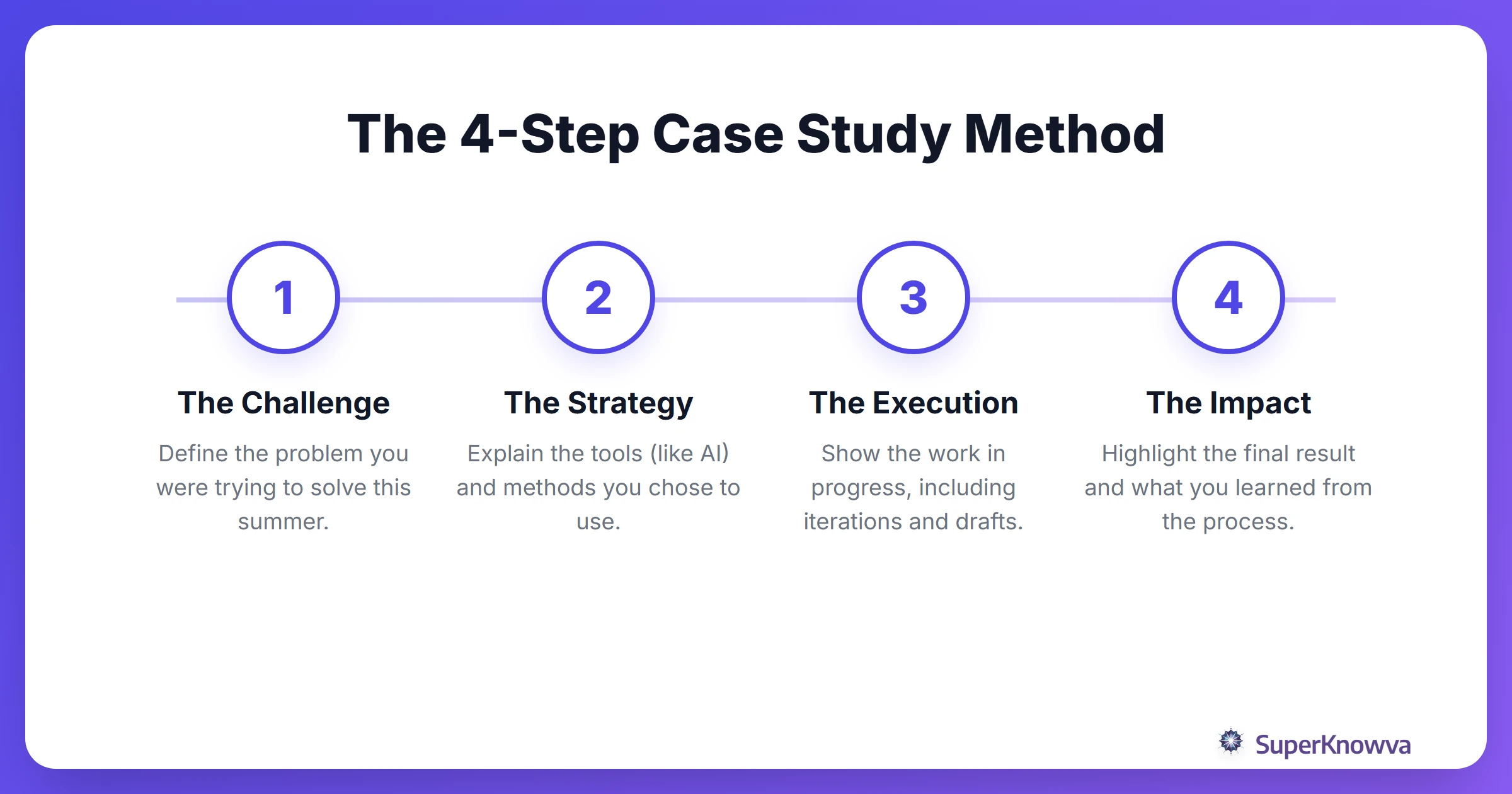
A great digital portfolio for students isn't just a gallery of pretty images. It’s a story. If you want to keep a recruiter engaged, use the STAR method for every entry:
- Situation: What was the problem?
- Task: What was your goal?
- Action: What did you actually do? This is the best place to include behind-the-scenes content including drafts, AI prompts, and early iterations.
- Result: What was the outcome? Use numbers or show the finished product.
Recruiters actually love the "messy middle." Showing your mistakes and how you fixed them proves that you actually did the work yourself.
Choosing the Right Platform for Your Portfolio
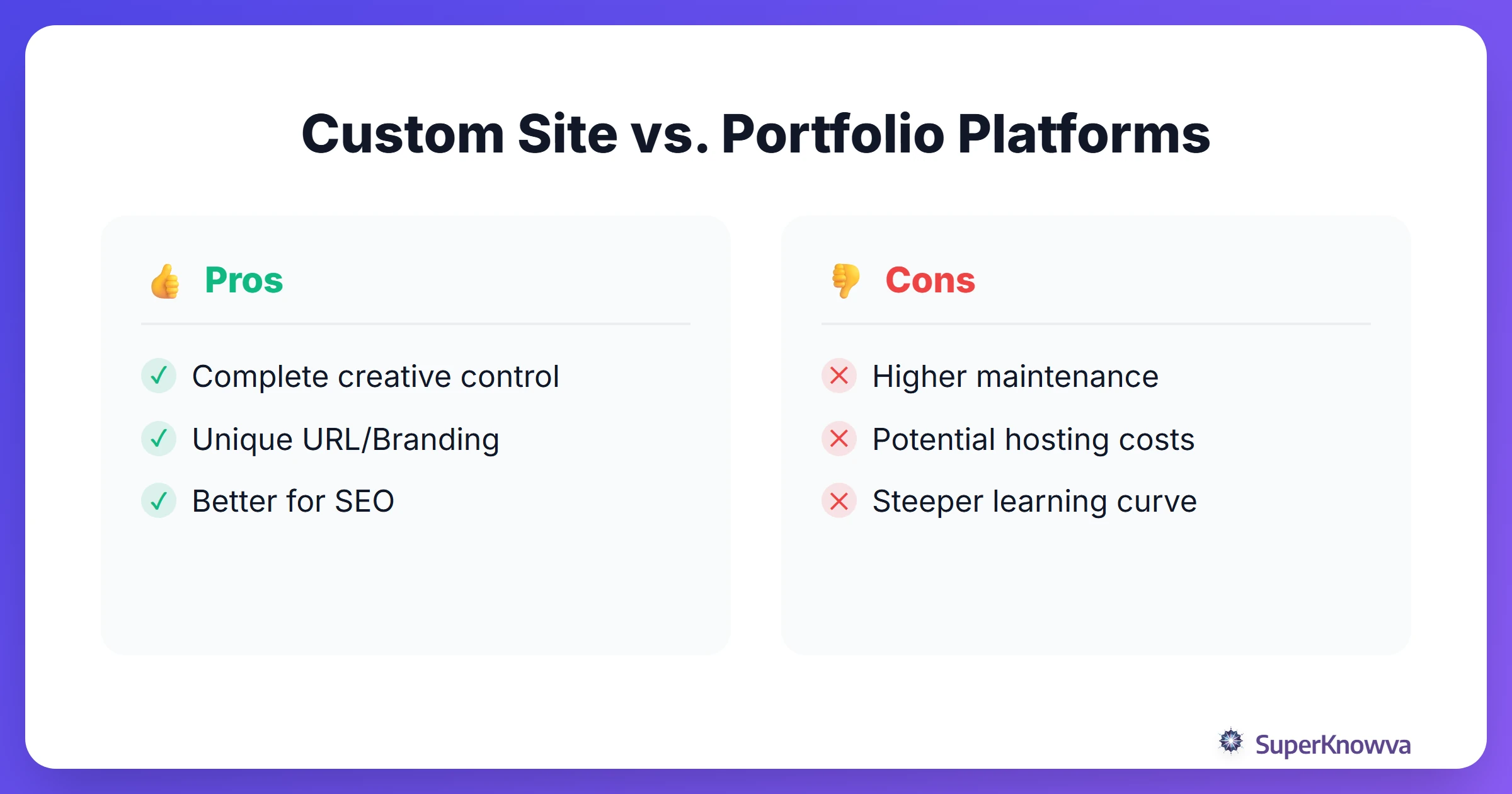
You don't need to be a coding wizard to build a stunning site. There are plenty of portfolio website builders that do the heavy lifting for you:
- Behance/Adobe Portfolio: The go-to for designers and photographers.
- GitHub: If you’re a developer or data scientist, this is your home.
- Wix/Squarespace/Carrd: Perfect for marketing, business, or comms roles where you want a clean, custom look.
As the Dallas Baptist University Professional Portfolio FAQ points out, the goal is professional reflection. Keep it simple, make sure it works on mobile, and don't let a flashy design distract from your actual projects.
Connecting the Dots: Branding and Networking
Your portfolio shouldn't be a secret. It’s the anchor of your personal branding for graduates. Stick the link in your LinkedIn bio, your email signature, and even your Instagram profile.
Don't forget a solid "About Me" section. Why do you do what you do? What problems do you actually care about solving? Once the site is live, use it as a tool for networking strategies for students. The next time you’re at a summer mixer or a coffee chat, you can say, "I actually just finished a project on that; you can see the full breakdown on my portfolio."
Check out our personal branding guide for students to keep your digital presence consistent. Your portfolio is a living document. Keep updating it as you head back to campus to stand out by graduation.