You’ve officially survived the first half of the summer. The orientation sessions are a distant memory, the office coffee machine finally makes sense, and you’ve stopped accidentally wandering into the wrong supply closet. But as the "new intern" novelty starts to wear off, a much bigger question starts to loom: How do you actually turn this internship to job offer?
July is the separator. It’s the month where the "intern" label starts to peel off, revealing either a future colleague or just another temporary face in the crowd. While most students start to coast as the summer heat kicks in, high-performers do the opposite. They pivot.
Here is how you beat the mid-summer slump and make sure you’re the one they can’t afford to let go of in August.
The Mid-Summer Pivot: Why July is Your Most Critical Month
In recruiting circles, July is often called the "Mid-Summer Slump." The excitement of June has faded, the weather is perfect for daydreaming, and many interns lose the momentum they started with.
But here’s the secret: This is exactly when managers start making lists.
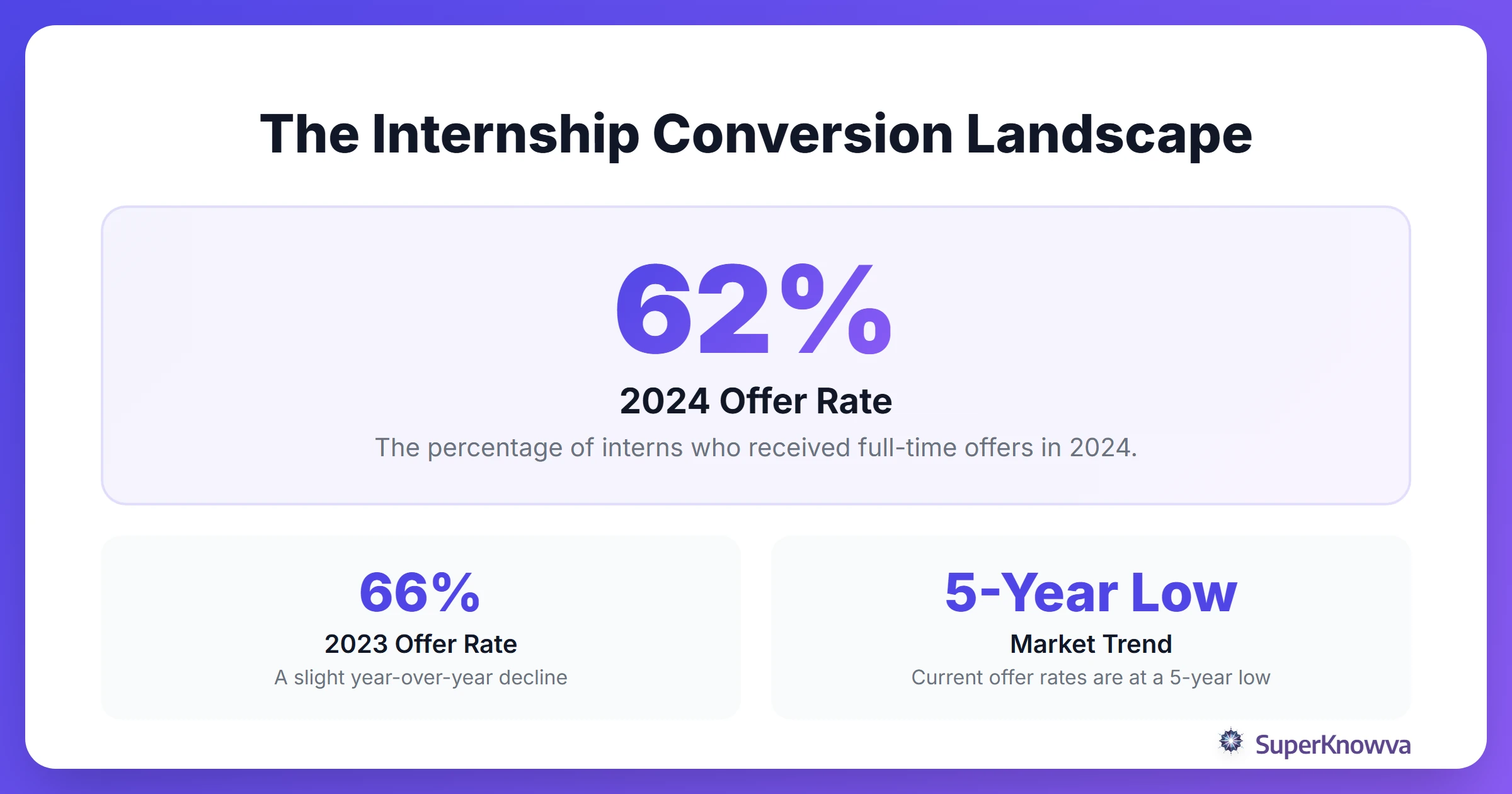
According to the NACE Internship Benchmarks 2025, internship conversion rates have tightened up recently. Competition for return offers is real.
By the six-week mark, your manager’s perspective shifts. They’ve seen you learn; now they want to see you deliver. If you can stay locked in while everyone else is checking out for a long weekend, you become the obvious choice for a full-time seat.
Quantifying Your Impact: Moving Beyond 'Good Work'
To secure a return offer, you have to prove you aren't just a "good intern" who shows up on time. You need to prove you are a return on investment. That means moving past a simple list of tasks and building a portfolio of value.
One of the most effective summer internship tips is to start a "Value Log" today. Don’t just write down what you did; write down what it meant.
Instead of: "Managed social media." Try: "Boosted LinkedIn engagement by 15% in six weeks by overhaulng the content calendar."
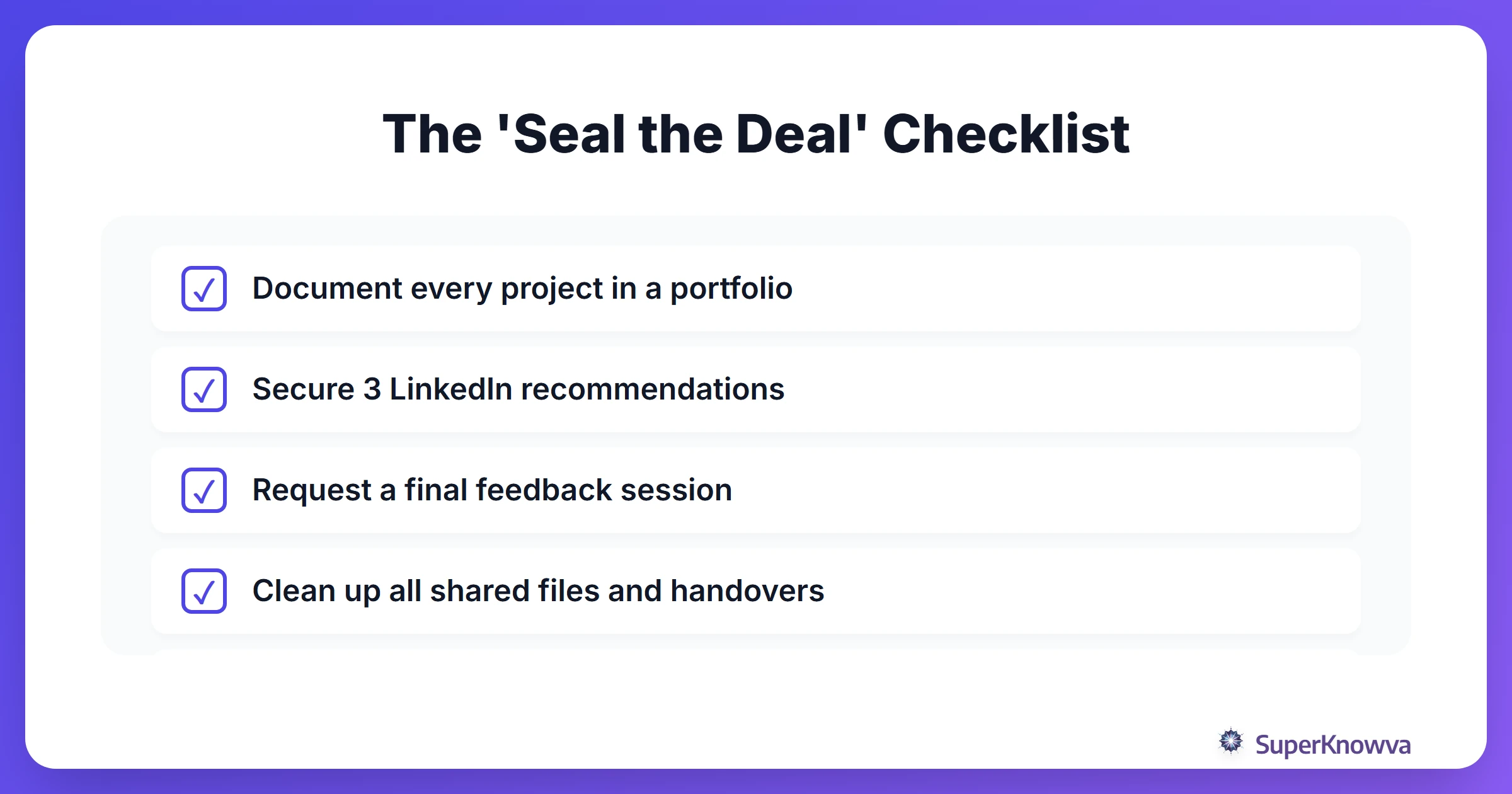
As the summer winds down, offer to give an "Impact Presentation." Even if it’s not required, showing your team the data behind your projects demonstrates a level of professional maturity that’s hard to ignore. When you can point to specific wins, asking for a full-time offer stops being an awkward request and starts being a logical next step.
The Manager's Perspective: What Actually Triggers an Offer?
What’s actually being discussed when the office doors close and the hiring managers talk? It’s rarely just about your technical skills. Most Manager Perspectives on Hiring Interns suggest that "coachability" and "cultural fit" carry just as much weight as the work itself.
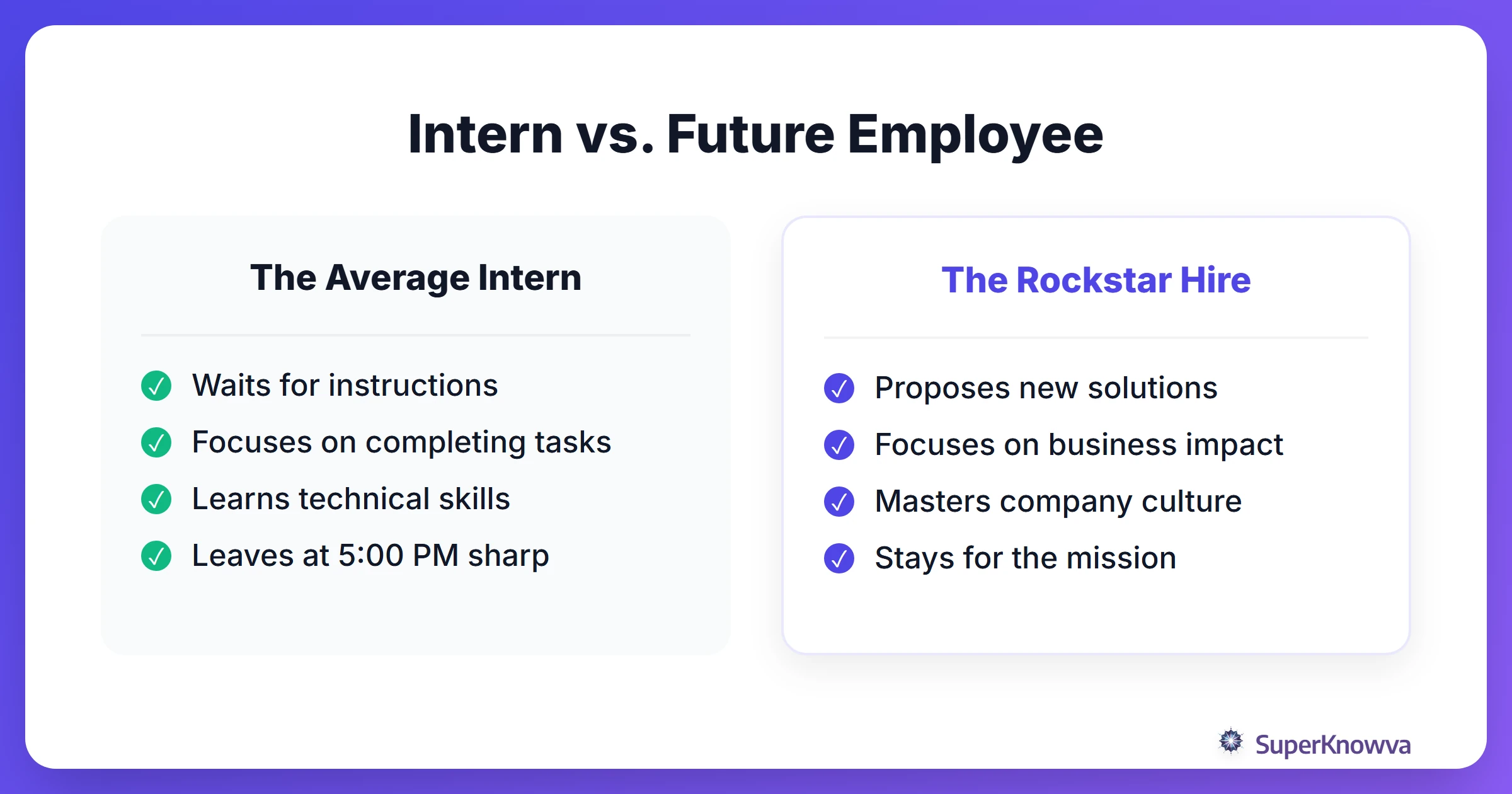
Managers want a specific combo: low maintenance and high output. They want the person who can take a vague idea and run with it, but who also knows exactly when to stop and ask for clarification.
Are you attending the optional lunches? Are you jumping into the Slack banter? Do you understand the "unwritten rules" of the office? Integration signals that you’re already part of the fabric of the company.
Strategic Networking: Building Internal Champions
Your manager might be your direct report, but they aren't the only person deciding your fate. Often, these decisions happen by committee. This is why Networking 101: A Student's Guide is just as important during the job as it was when you were applying.
Find the "influencers," the people who have been there for a decade or who lead cross-functional projects. Ask for a 15-minute coffee chat. Ask about their path. These aren't just social calls; you are building internal support. When the hiring meeting happens in August, you want three people in the room saying, "We have to keep them."
The Exit Interview: How to Ask for the Job
The internship exit interview is your closing argument. You should never walk out the door on your last day wondering where you stand. Ideally, you should start expressing your interest in returning full-time between weeks 8 and 10.
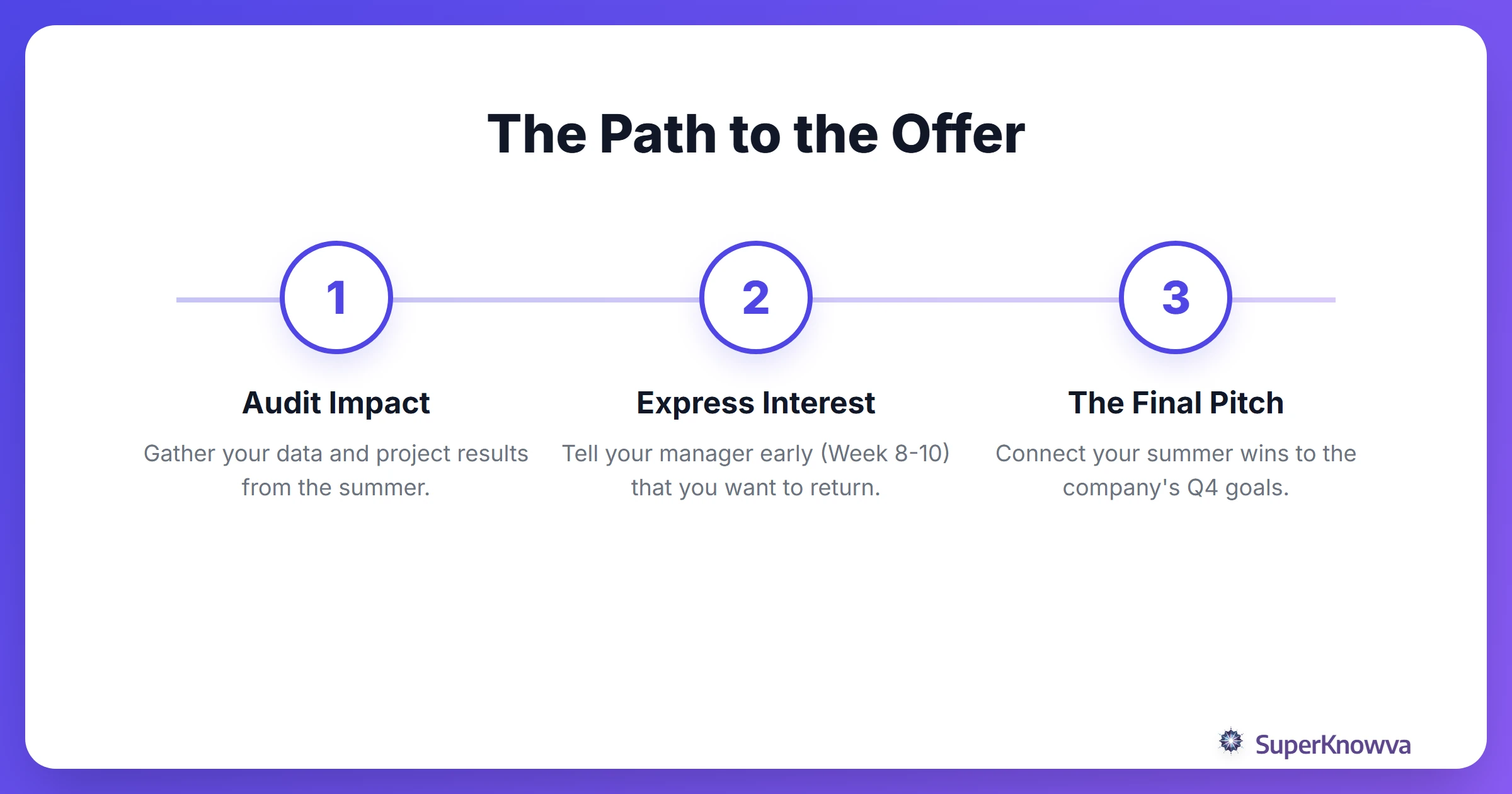
When the time comes, be direct. You don't need a complex script. Try something like this:
"I’ve loved working on [Project X] this summer and I really value the team culture here. I’d love to discuss the possibility of coming back full-time after graduation. What do the next steps look like for that?"
This is the perfect moment to showcase the soft skills employers are looking for, like emotional intelligence and clear communication. If they don’t give you an answer on the spot, don’t panic. Ask for feedback on how you can improve and keep that bridge intact.
Navigating the Offer: Acceptance and Negotiation
If you’ve played your cards right, you might have a return offer in your inbox before you even get back to campus. It’s an incredible feeling, but your career transition still requires a bit of strategy.
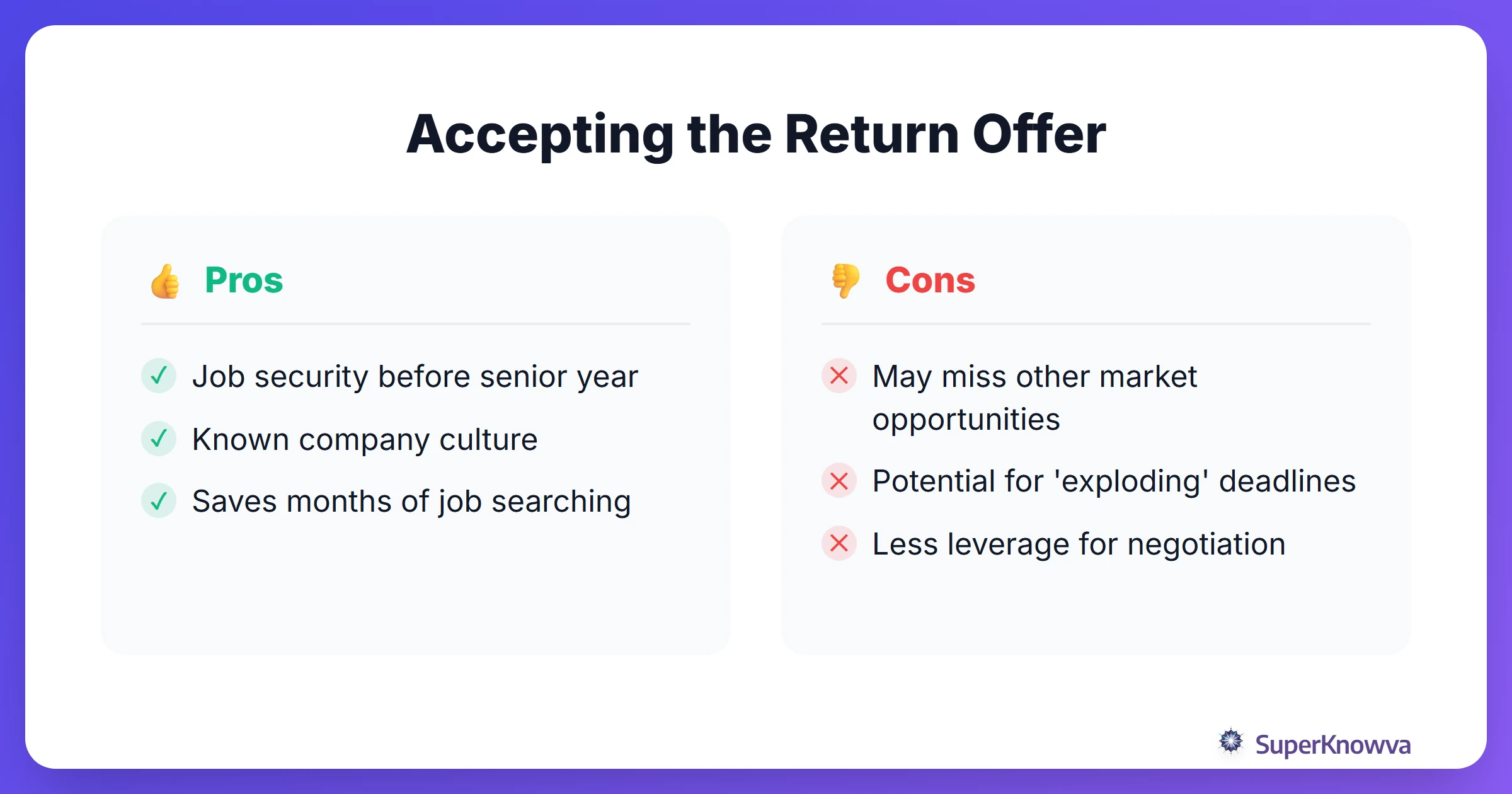
Watch out for the "Exploding Offer": jobs with a 48-hour expiration date. They are stressful but common. If you have other interviews lined up, you might need to ask for an extension or speed up your other conversations.
Whether you accept or move on, focus on navigating the transition to the workplace with grace. Send those personalized thank-you notes. The professional world is much smaller than it looks, and the impression you leave in July will follow you long after the summer ends.
Stay focused, track your wins, and build your network. You’ve got this. Now, go make it happen.