A brain with 50 tabs open and three frozen makes textbook words stop making sense. This isn't just "being tired"; it is mental exhaustion caused by hitting an absolute cognitive limit.
If you want to ace your exams without the 3:00 PM brain fog, you need to master your cognitive load. By understanding how your brain actually processes information, you can study for longer stretches, retain more of what you read, and finally put an end to the cycle of study burnout.
Understanding the Three Types of Cognitive Load
To protect your mental energy, you must identify what drains it. Cognitive Load Theory states that working memory is a finite resource. Like a phone battery, some tasks consume power faster than others.
There are three distinct types of "drain" to watch for:
- Intrinsic Load: This is the natural difficulty of the material itself. Learning basic addition? Low intrinsic load. Grasping quantum physics? High load. You can’t change the subject's difficulty, but you can change how you approach it.
- Extraneous Load: This is the "bad" load. It’s the mental effort wasted on poorly organized notes, a messy desk, or a distracting roommate. According to research on managing cognitive load balance, cutting this out is the fastest way to improve your learning speed.
- Germane Load: This is the "good" load. It’s the energy your brain uses to actually process information, build permanent memories, and create "schemas" (mental frameworks).
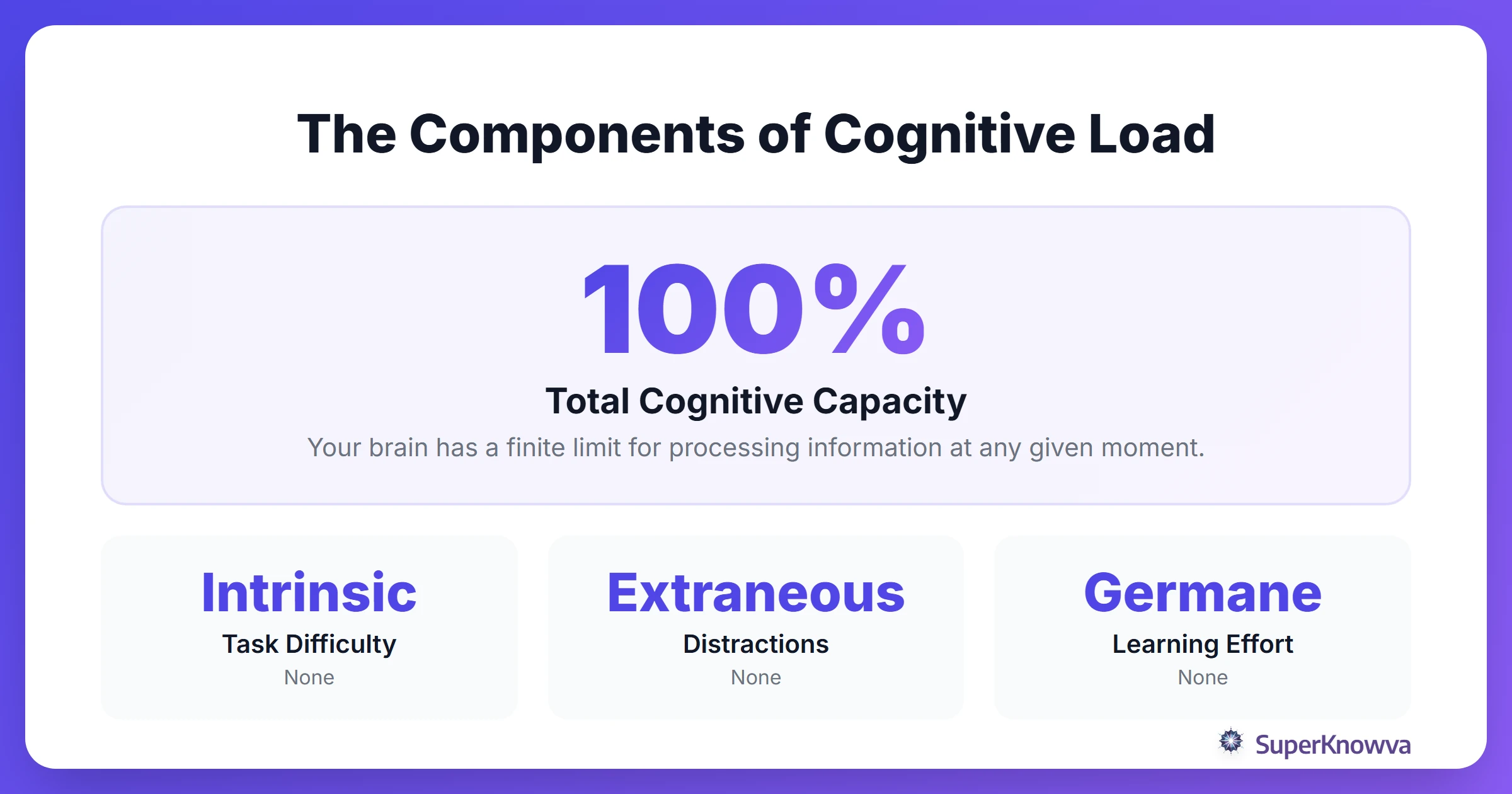
Minimize extraneous junk and simplify intrinsic difficulty so your brain has the maximum energy for the germane load, the material that matters.
Recognizing the Signs of Cognitive Overload
Before you can fix the problem, you have to recognize when you’ve hit the wall. Pushing through total exhaustion doesn't make you a better student; it actually makes you less efficient because your brain simply stops encoding new information.
Watch out for these mental exhaustion markers:
- Physical Symptoms: Tension headaches, eye strain, or a literal feeling of "heaviness" in your head.
- Psychological Markers: Getting irritable over small things, a sudden nosedive in motivation, and that hazy "brain fog."
- The "Redline" Effect: This is the ultimate warning sign. It’s when you realize you’ve read the same sentence four times and still have no clue what it says.
When you hit the "redline," your working memory capacity is full. Trying to keep studying at this point is like trying to pour water into a glass that’s already overflowing. You aren't learning; you're just getting wet.
Using AI to Simplify Intrinsic Load
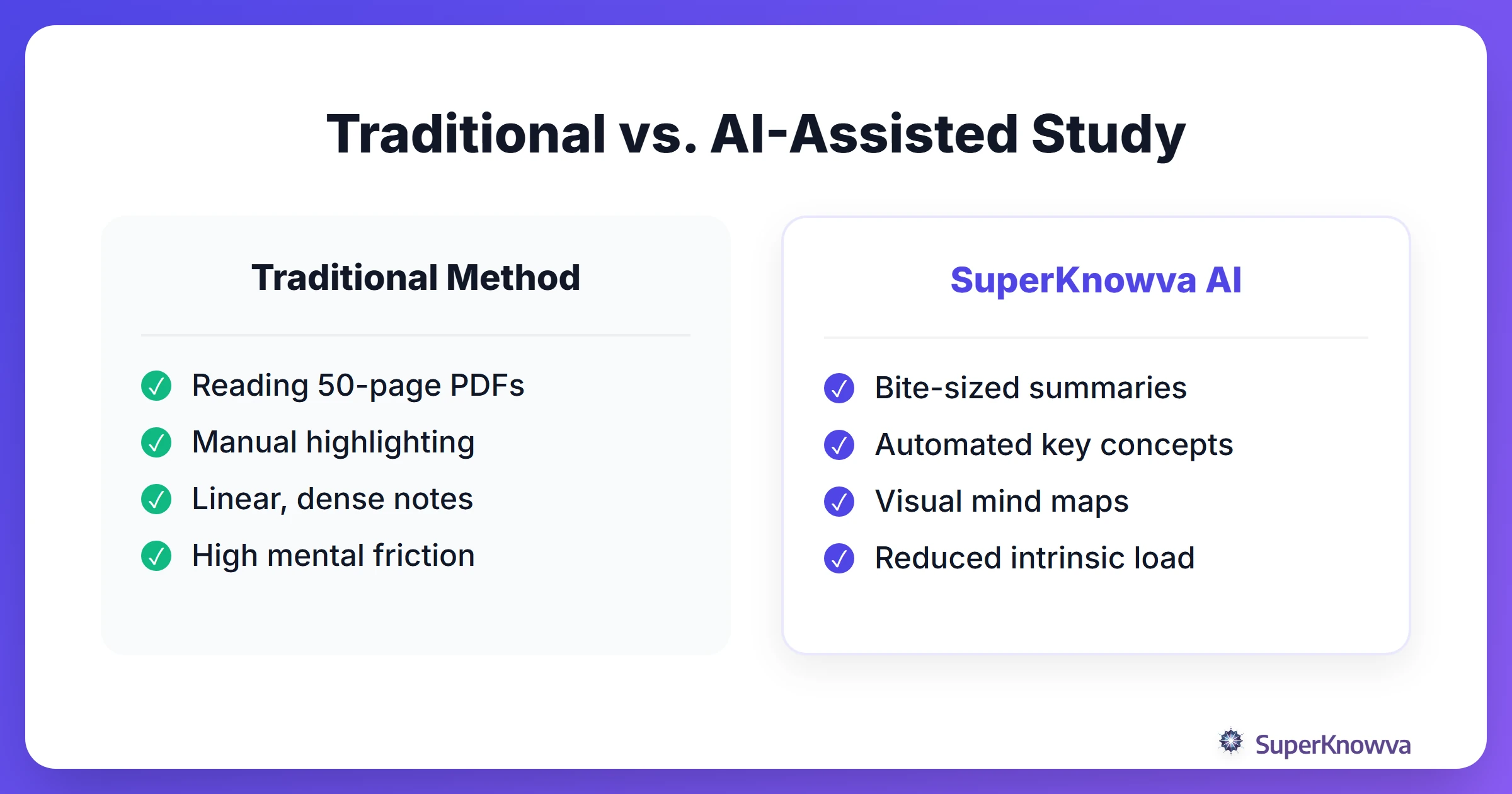
One of the best ways to tackle a high intrinsic cognitive load is to break the information down into manageable pieces. This is where AI-powered study tools like SuperKnowva are highly effective.
Instead of diving head-first into a dense, 50-page PDF and hoping for the best, you can use AI to:
- Chunk Information: AI can break complex topics into "bite-sized" lessons. You master one small concept before moving to the next.
- Automated Summarization: By getting a high-level summary first, you reduce the initial mental friction of a new topic.
- Generate Analogies: AI can bridge the gap between new info and what you already know by creating custom analogies tailored to your interests.
- Organize Schemas: SuperKnowva’s structured output helps organize information into logical hierarchies, making it easier for your brain to "file" the info away.
Eliminating Extraneous Load Through Environment Design
If intrinsic load is about the material, extraneous load is about your surroundings. Digital clutter is a silent killer of your working memory capacity. Every notification that pings on your phone steals a little bit of your cognitive "bandwidth."
To reclaim your focus:
- Practice Digital Minimalism: Reducing extraneous load starts with Digital Minimalism for Students. It’s about reclaiming your attention so you can actually earn the grades you want.
- Kill the Multitasking Myth: Multitasking is a lie. In reality, your brain is "context switching," which is like hitting the brakes and the gas at the same time. It’s exhausting and slows you down.
- Optimize Your Space: Set up a physical study space that minimizes sensory distractions. A clean desk usually leads to a clear mind.
Strategic Rest: Resetting Your Working Memory
You cannot maintain high-level focus indefinitely. To ensure study burnout prevention, allow your brain to enter "diffuse mode," a state where your mind wanders and subconsciously processes what you just learned.
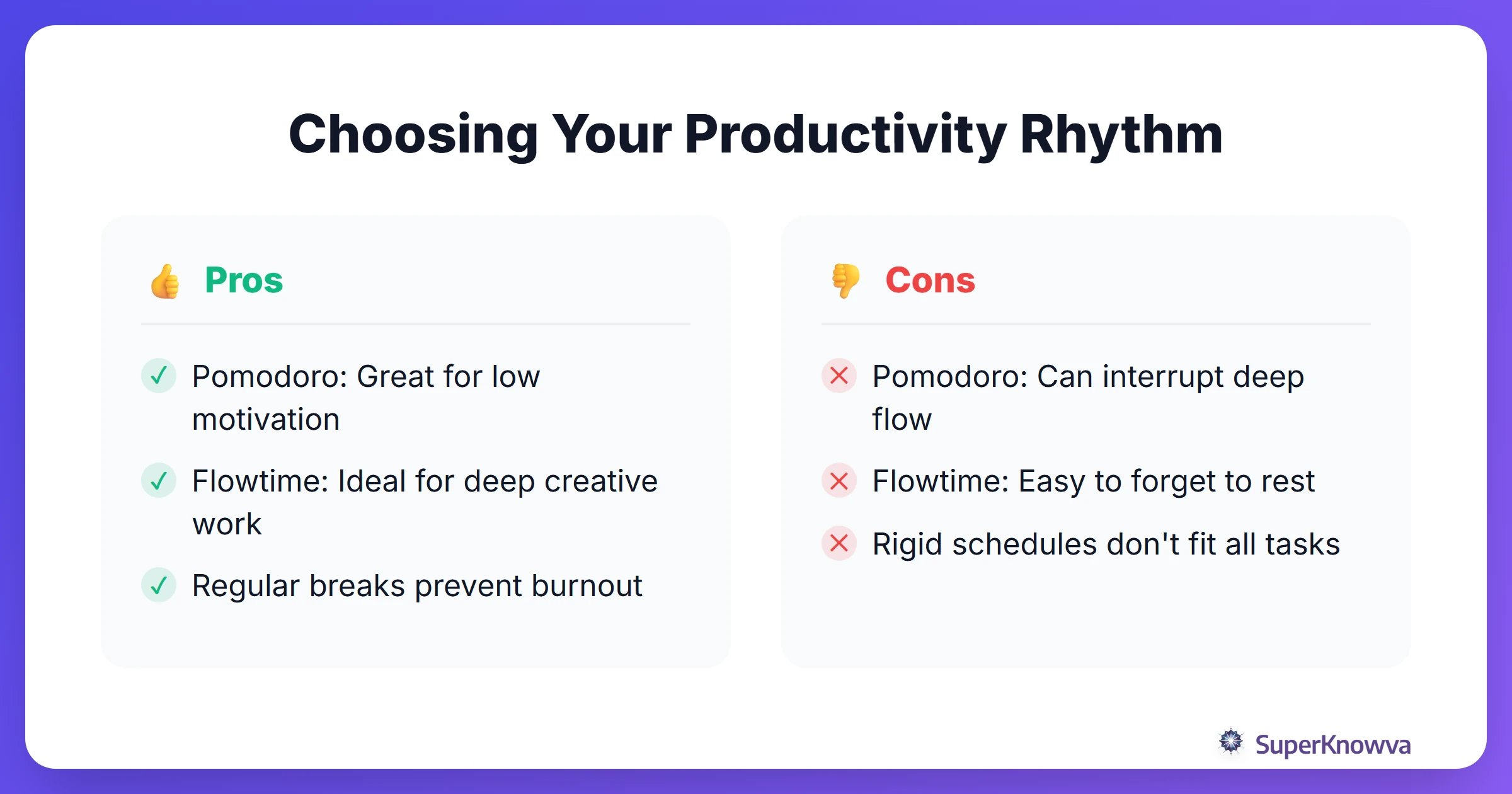
To manage your energy, you need to decide between Pomodoro vs. Flowtime to find which productivity method fits your specific brain type.
- Pomodoro: Best for tasks with high friction where you need frequent rewards to keep going.
- Flowtime: Best for deep, creative work where interruptions would break your momentum.
Keep this in mind: Active rest (like a 10-minute walk or a quick stretch) is far superior to passive rest (like scrolling TikTok). Scrolling requires rapid visual processing, which actually adds to your cognitive load rather than letting it reset. And never underestimate sleep; it is the only time your brain effectively clears out metabolic waste and solidifies long-term memories.
Externalizing Your Thoughts: Mind Mapping and Note-Taking
One of the most effective ways to lower the burden on your working memory is to "outsource" it. By externalizing your thoughts, you free up mental space for processing rather than just "holding" onto facts.
- Mind Mapping: Visualizing complex concepts through Mind Mapping 101 can significantly lower the mental effort required to understand new topics. It lets you see the "big picture" without needing to hold every detail in your head at once.
- Building a Second Brain: Use digital tools to store information externally. If you know exactly where a piece of information is saved, your brain doesn't have to work as hard to remember it.
- Visual Hierarchies: Convert text-heavy notes into visual diagrams. Your brain processes images significantly faster than text.
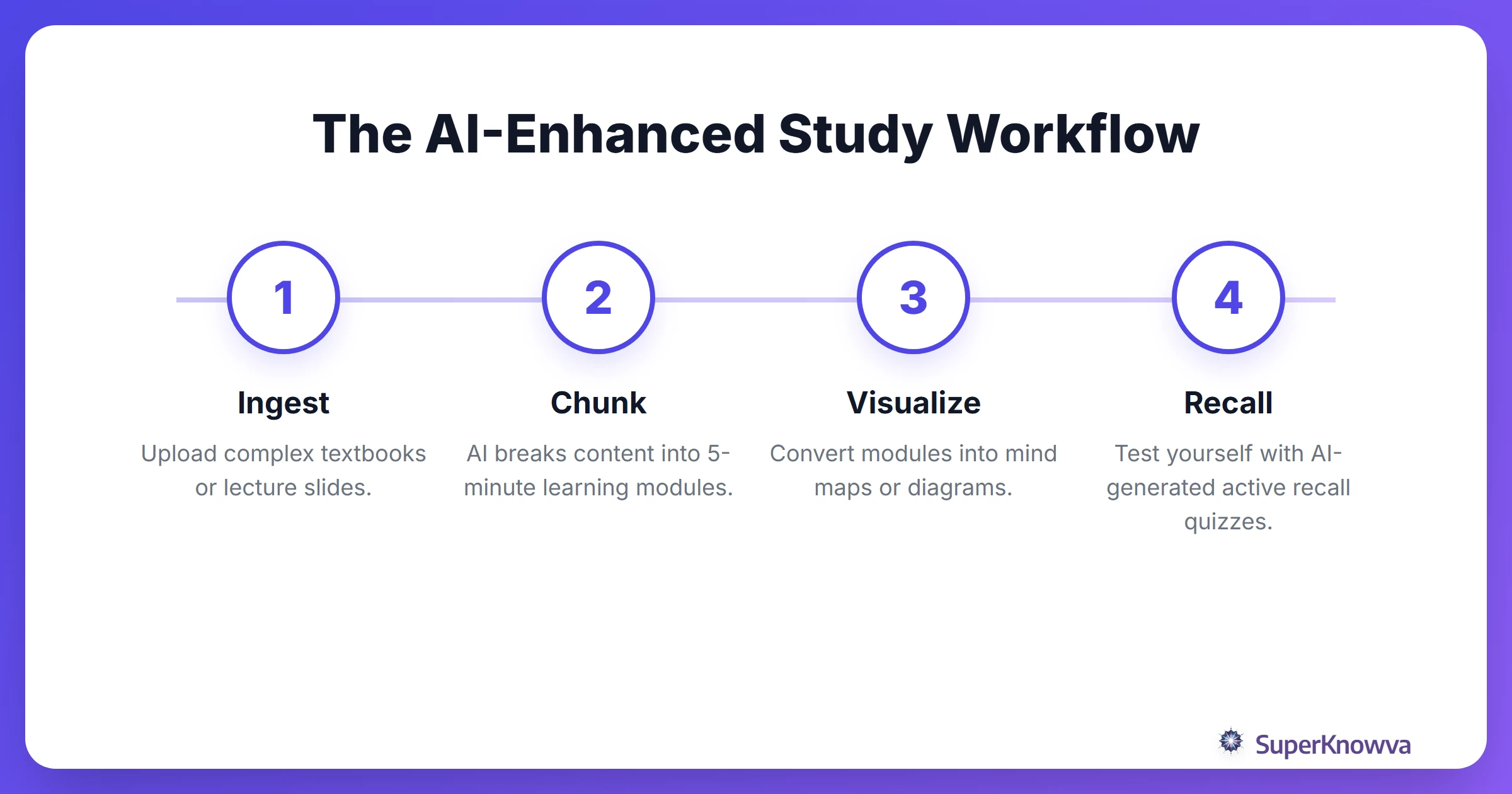
Mastering focus in a distracted world requires implementing Deep Work for Students. It’s about ensuring your cognitive load is spent on learning, not on fighting distractions. By combining AI tools with these science-backed strategies, you can transform your study sessions from exhausting marathons into efficient sprints.
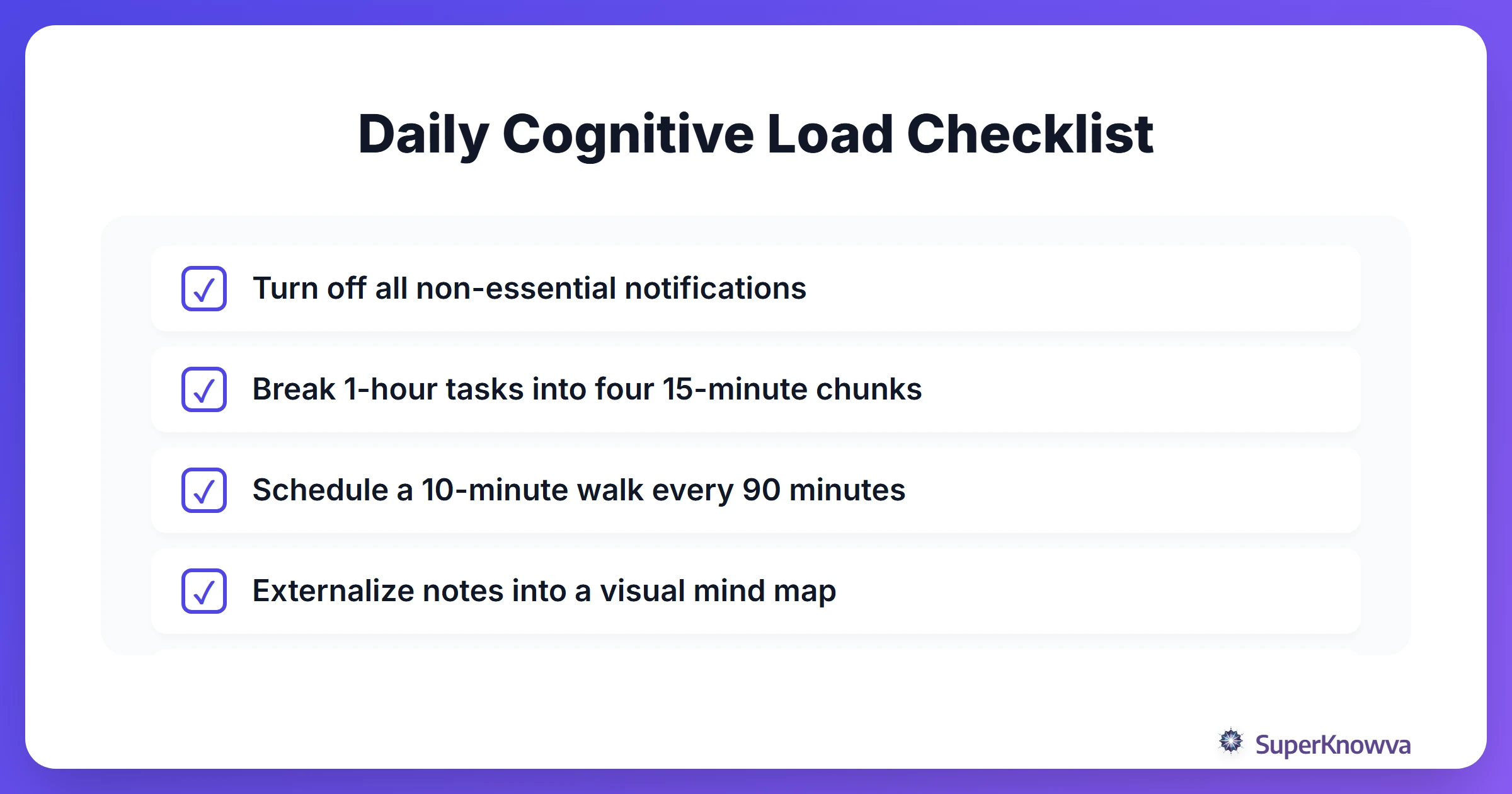
Ready to reduce your study stress? Start using SuperKnowva today to break down your toughest subjects into manageable, bite-sized wins.