You meet at the library with coffee and open textbooks. Forty-five minutes later, you are not talking about organic chemistry. Instead, you are debating the latest Netflix cliffhanger or your plans for the weekend.
Peer learning is one of the most effective ways to master a subject, but let’s be honest: the "group" part usually introduces more distraction than direction. It’s frustrating, it’s a waste of time, and yet we keep doing it because studying alone in a room can feel like a slow descent into madness.
There is a better way. Collaborative AI study groups are changing the vibe of the study hall, shifting the focus from passive hanging out to high-intensity, structured learning. By bringing AI into the group dynamic, you get the social energy of your friends combined with the laser-focused efficiency of a private tutor.
The Evolution of Group Study: From Chaos to Collaboration
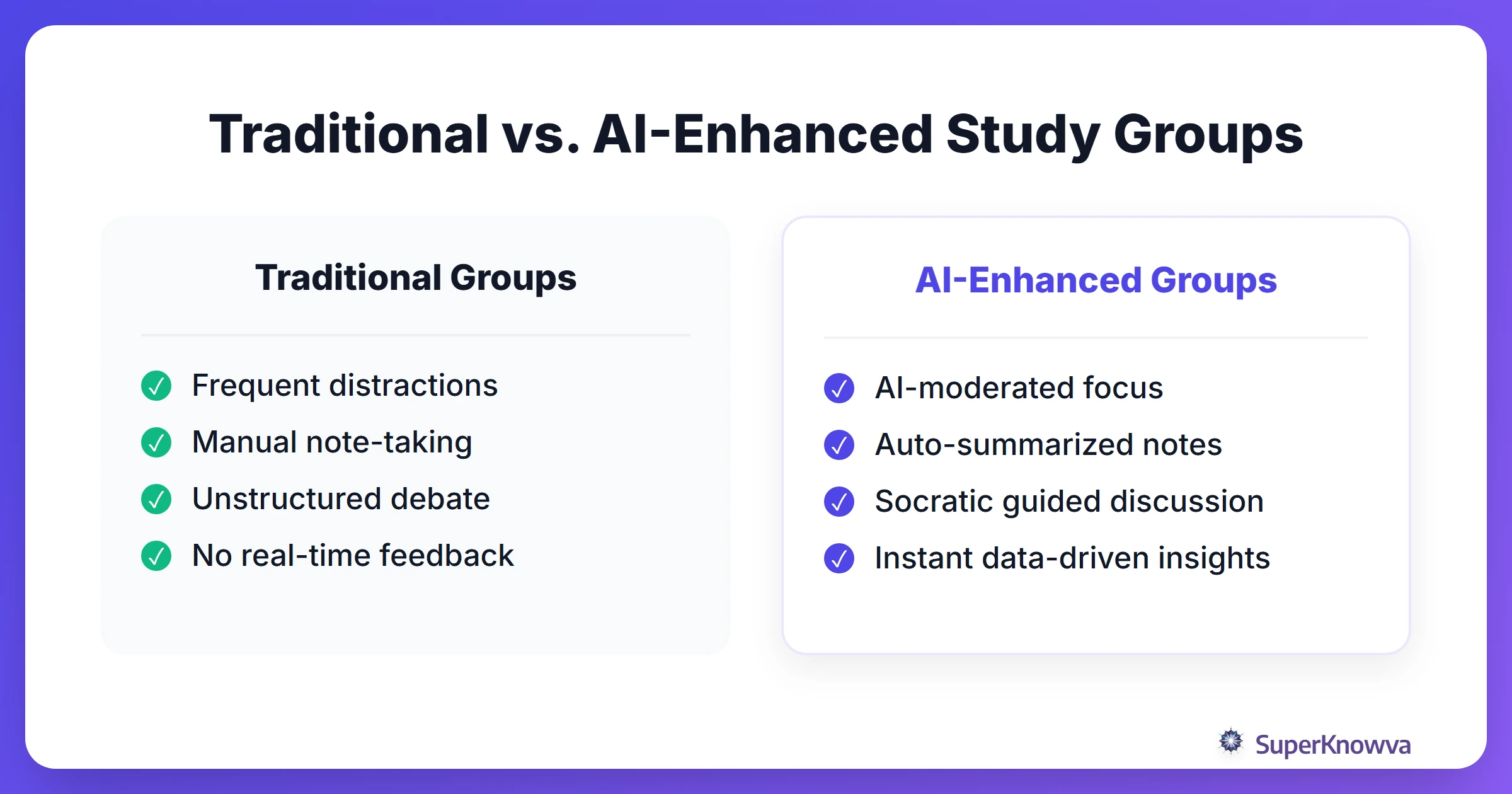
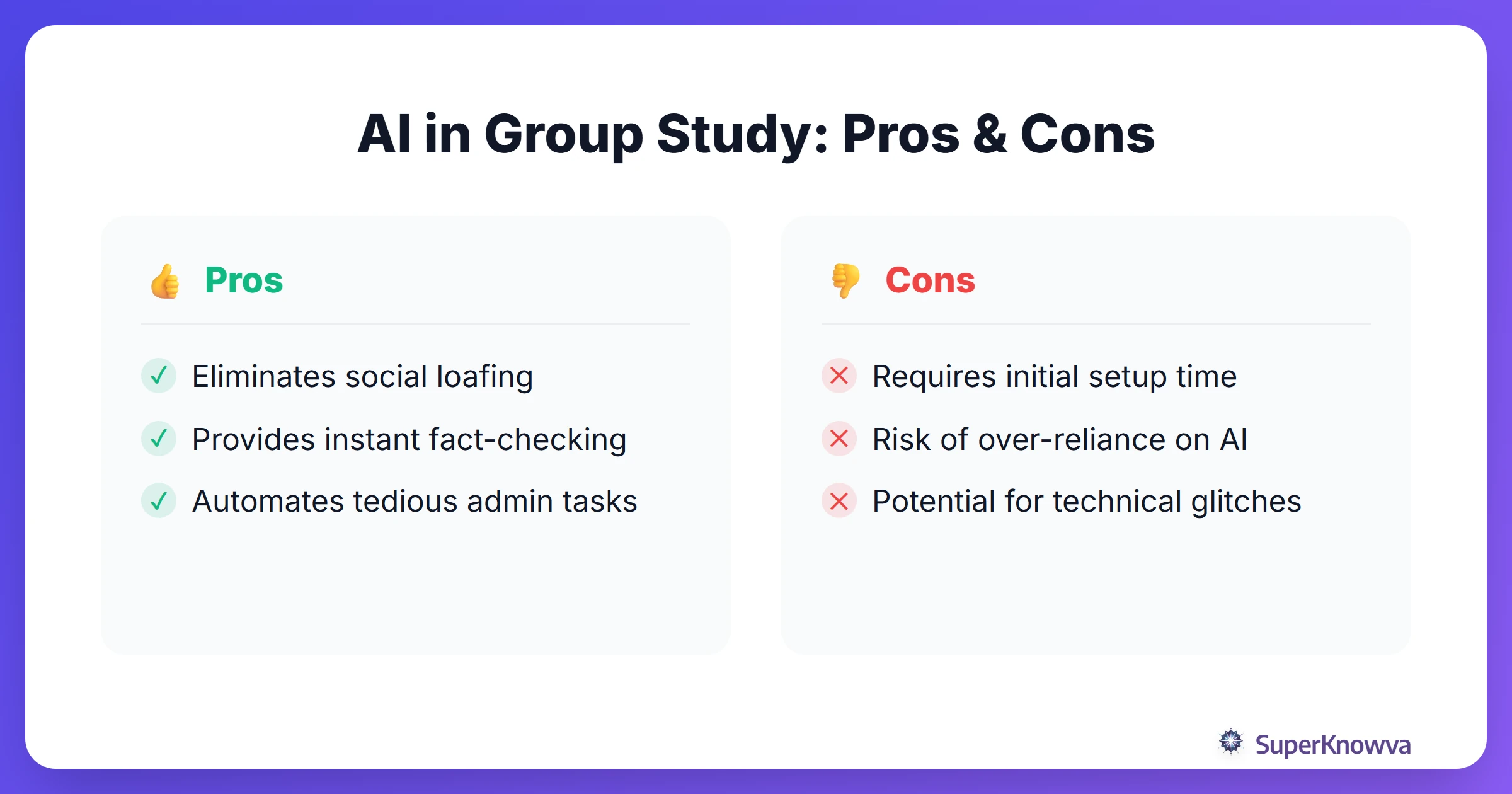
Traditional group study usually hits one of three walls: someone gets distracted, the session has no structure, or one person ends up doing all the talking while everyone else just nods along (the classic "social loafing" trap). Without a clear leader, the session just drifts.
The rise of collaborative learning technology is fixing this. Researchers are calling it "Collaborative Artificial Intelligence for Learning" (CAIL). In this setup, AI isn't just a search engine; it’s a digital participant. It manages the flow, keeps the energy up, and makes sure the group actually achieves what it set out to do.
By using AI group study tools, teams can stop "playing school" and start actually making progress toward a better grade.
AI as the Ultimate Peer Moderator
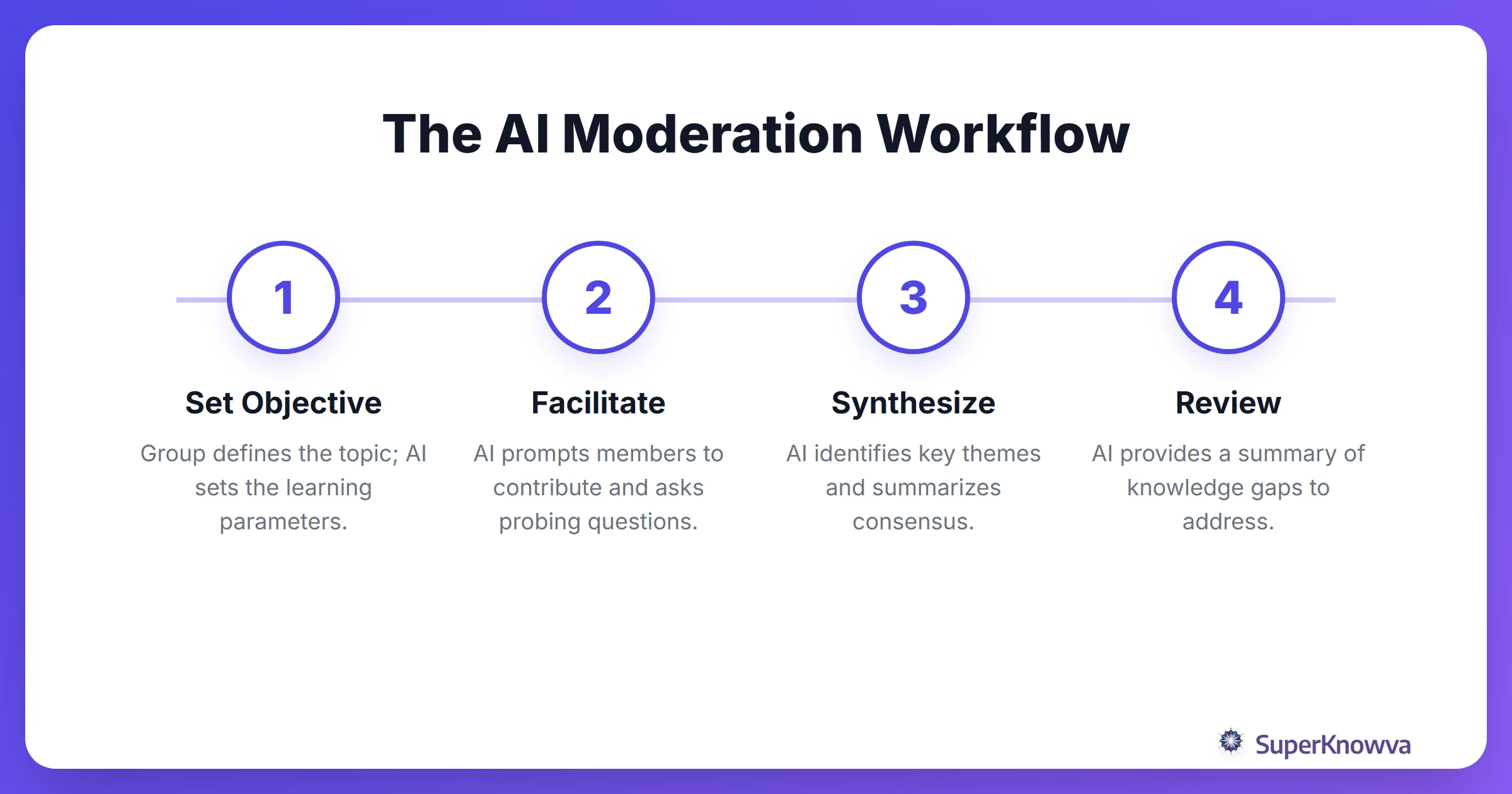
Think of AI as the "adult in the room" who isn't actually a person. One of the biggest perks of AI in a group setting is AI peer moderation. It doesn't just sit there waiting for a prompt; it actively facilitates.
When the conversation hits a dead end, the AI can jump in with Socratic questions to spark a new line of thinking. For example, if your group is stuck on macroeconomics, the AI might chime in: "You've nailed the impact of inflation on consumers, but how do you think this shift affects long-term interest rates?"
This keeps the conversation tethered to the syllabus. As the MIT Collaborative AI for Learning (CAIL) Project points out, these agents help bridge the gap between what you know individually and what you can achieve as a team.
Real-Time Summarization: No More "Wait, Who Took Notes?"
Have you ever walked out of a two-hour study session and realized no one actually wrote anything down? It’s a sinking feeling. AI fixes this with real-time synthesis. Using AI-powered note taking capabilities, the platform can listen to the discussion and turn it into a structured study guide instantly.
- From Brainstorming to Mind Maps: AI organizes ideas into a logical visual flow.
- Actionable Summaries: At the end of the night, you receive a recap of what was covered and what was missed.
- Identifying Gaps: By analyzing the group’s input, AI flags knowledge gaps and topics where everyone seemed unsure.
Personalized Learning in a Social Setting
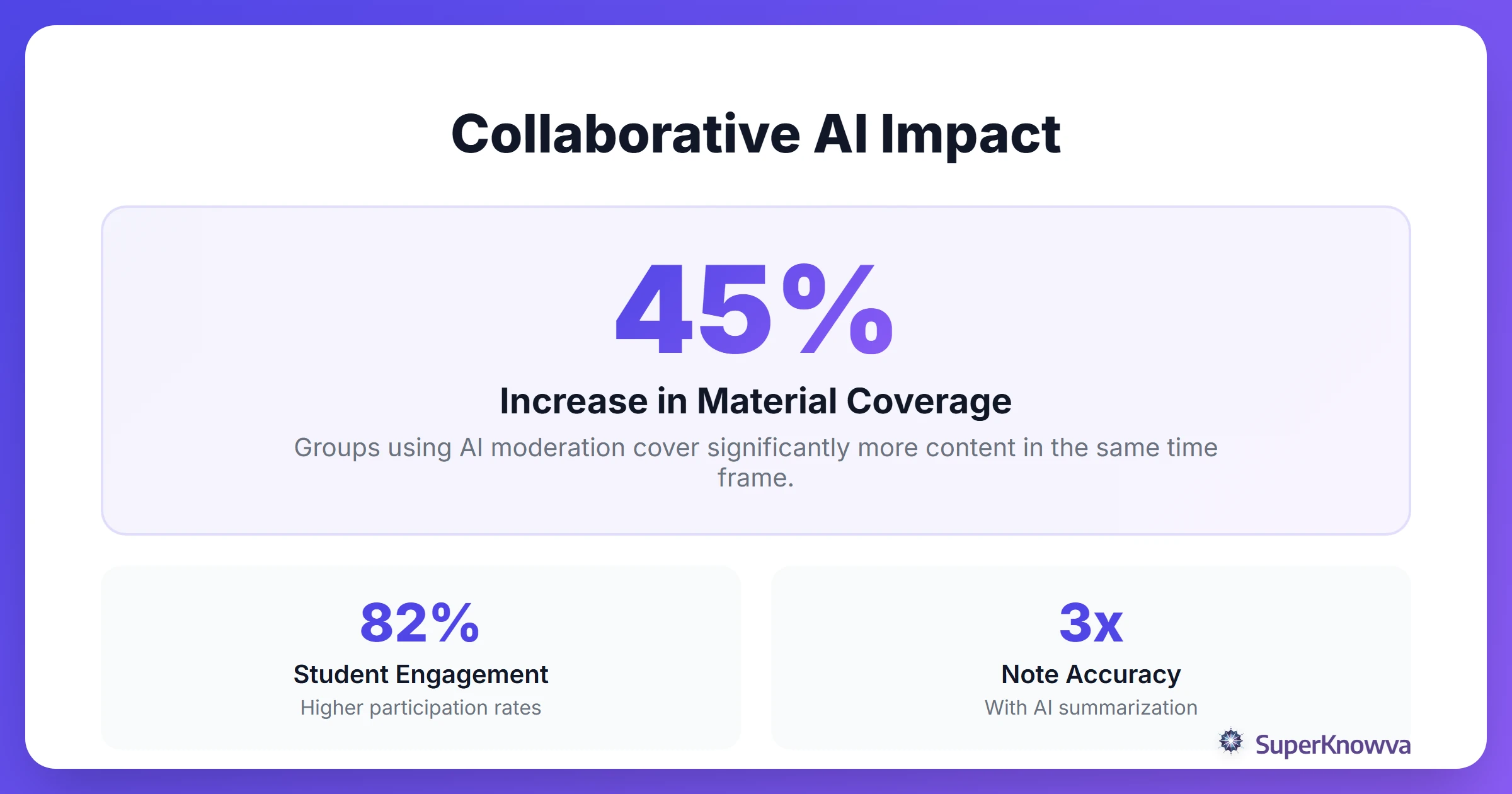
One of the hardest parts of studying with friends is the "pace problem." You might be a calculus pro, while your friend is still trying to figure out the basic formulas. AI for study groups solves this by balancing the group's progress with your individual needs.
While the group works together, the AI tracks how everyone is doing. If it notices you're struggling with a specific concept, it can send you a private tip or a supplementary resource without interrupting the group flow. It’s a hybrid approach where AI tutors vs. human tutors work together, giving you the best of both worlds: human support and AI’s infinite patience.
Data-Driven Feedback for Students and Teachers
Why wait for a quiz to realize you don't know the material? AI provides real-time analytics on your study session.
This data helps you look in the mirror: Am I actually contributing? Do I really get this? It also allows for AI for creative problem solving because students can experiment with wild ideas while the AI keeps the foundational facts in check. Educators can even see these progress reports to know which groups are thriving and which ones need a little extra help.
Crushing Finals with AI Strategies
When finals week hits, group study productivity is a survival tactic. AI helps your group move from basic review to focused preparation.
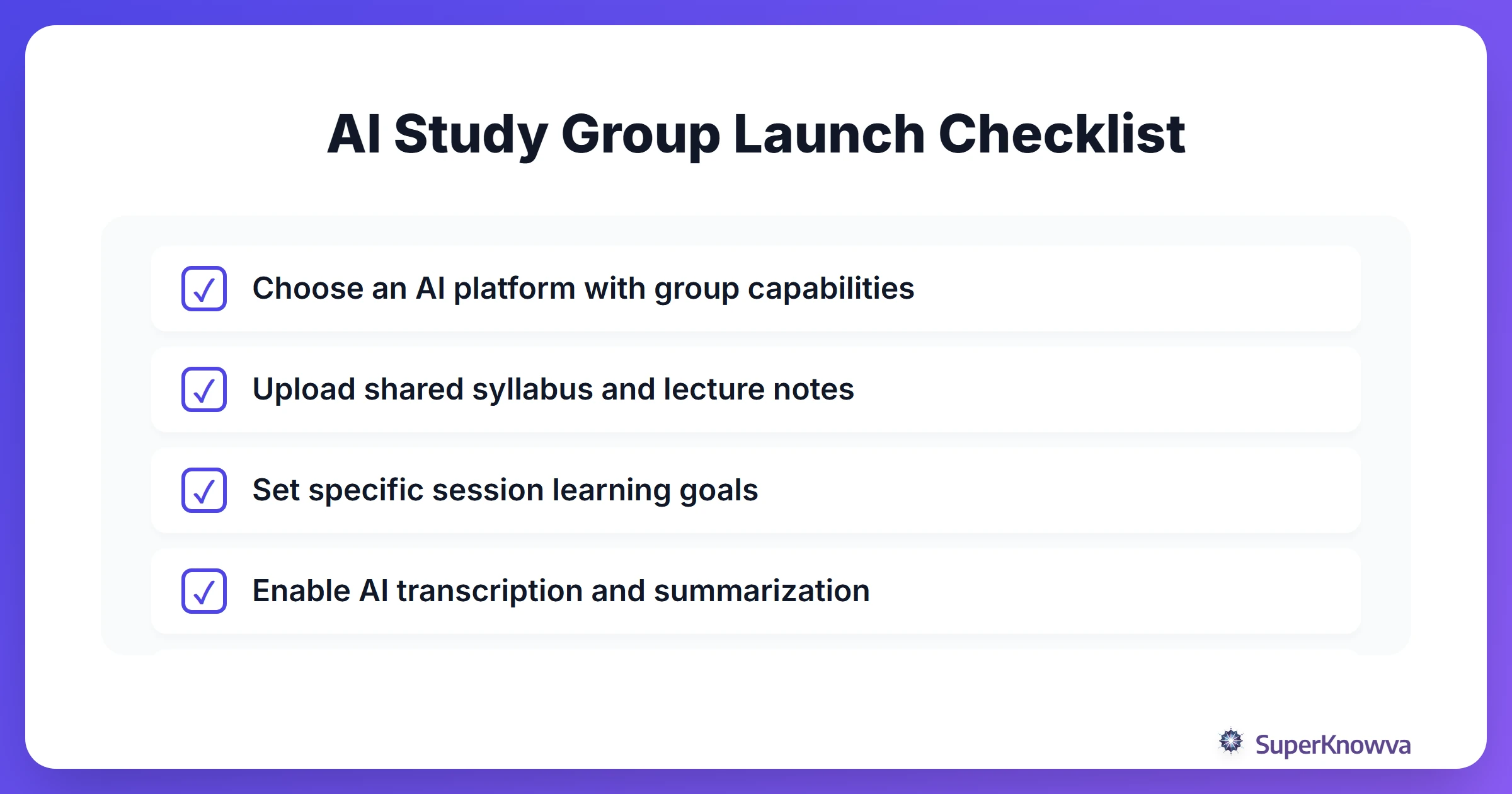
- AI-Powered Scheduling: The AI looks at everyone’s exam dates and creates a master plan for the group. No more "When are we meeting?" texts.
- Mock Exams: Based on your actual notes and uploads, the AI generates custom practice tests that the group can take together under a timer.
- Anxiety Reduction: Much of the stress of finals is the "unknown." By providing structure, AI for test anxiety reduction helps you feel like you’ve actually covered the ground you need to.
The Bottom Line
The days of wandering, unproductive study groups are over. By embracing collaborative AI study groups, you aren't just working harder; you're working smarter. You are Teaching Students to Work With AI Tools to ensure your whole team is ready to ace those finals.
Ready to change the way you study? Start building your AI-powered study group on SuperKnowva today and see how much faster you can master your toughest subjects.