We’ve all lived through that one group project nightmare. You know the one: one person carries the entire team, another is perpetually confused, and the third has vanished. Historically, group study has been unpredictable: brilliant when ideas are flowing, but usually a chaotic mess in execution.
But things are changing. The way we learn together is getting a major upgrade. The rise of collaborative ai study tools is turning disorganized group chats into high-efficiency learning hubs where everyone actually contributes.
At SuperKnowva, we’re watching this shift happen in real-time. AI is no longer just a private tutor tucked away in your pocket; it’s becoming the engine that drives collective intelligence.
From Solo Study to Social Intelligence
For the last few years, the talk around AI in education has focused on the individual and the "personal tutor" model. While the debate over AI tutors vs. human tutors continues, social learning is gaining momentum. Education is shifting from isolated screens to platforms where AI acts as a digital mediator for the whole team.
In a modern study group, AI isn't just a search engine. It’s a teammate. It sits right there in your workspace, ready to jump in when the conversation stalls or provide data-backed evidence when the group can't agree on a concept. This move "from tool to teammate" means the AI actually understands the context of your specific project. It’s an active participant, not just a passive reference.
Shared AI Agents: The New Study Partners
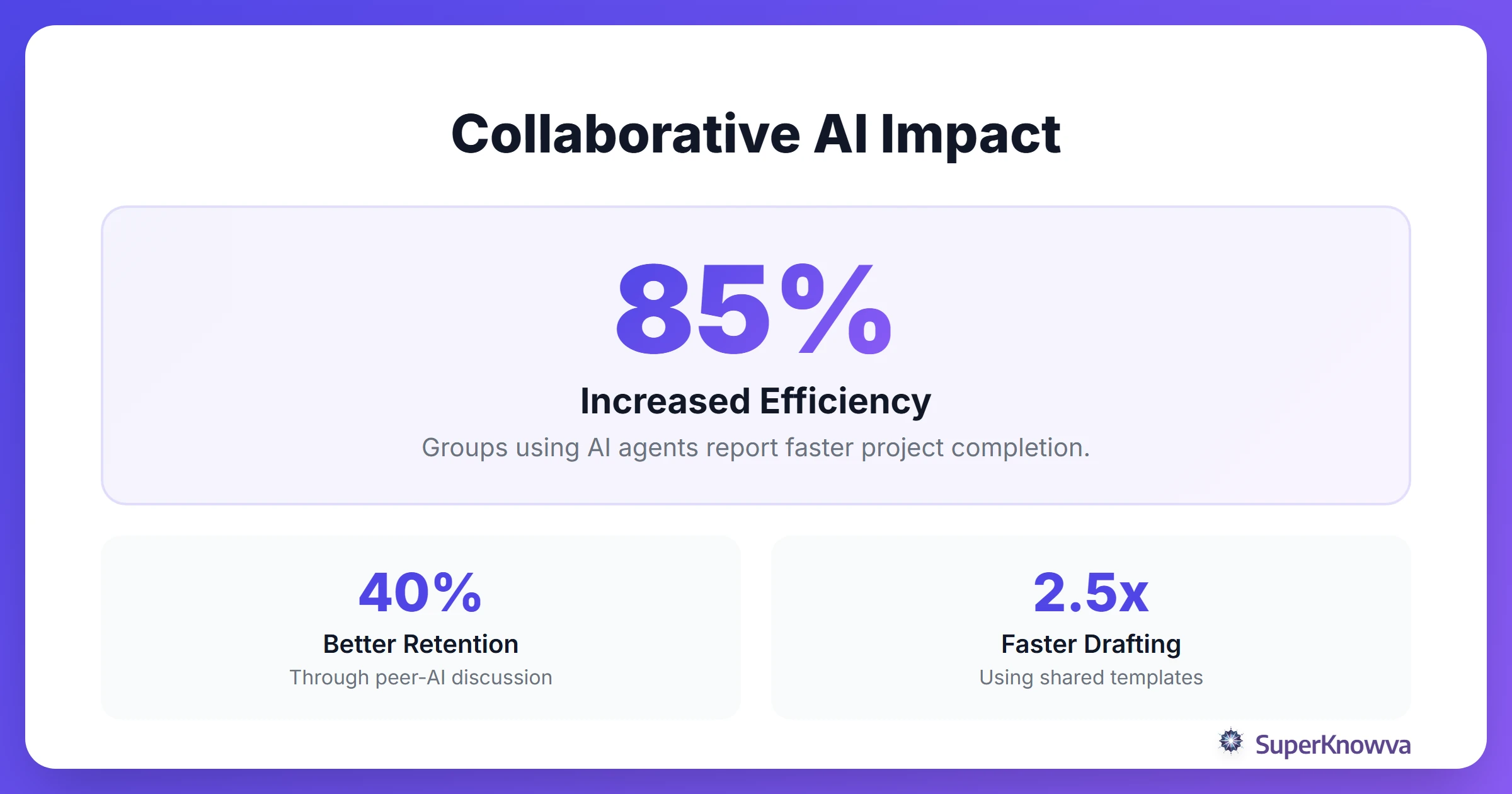
Imagine having a dedicated assistant whose only job is to make sure your specific study group succeeds. That’s the reality of shared AI agents. Instead of every student running their own separate (and often conflicting) prompts, teams can now use team-based AI tools to build custom bots tailored to their exact goals.
What can these agents actually do?
- Keep You on Track: They automatically track milestones and nudge the group when a deadline is creeping up.
- Sync Knowledge: If one person finds a breakthrough source, the AI instantly integrates it into the shared knowledge base for everyone.
- Divide and Conquer: AI can help break a massive syllabus into manageable tasks based on what each person is actually good at.
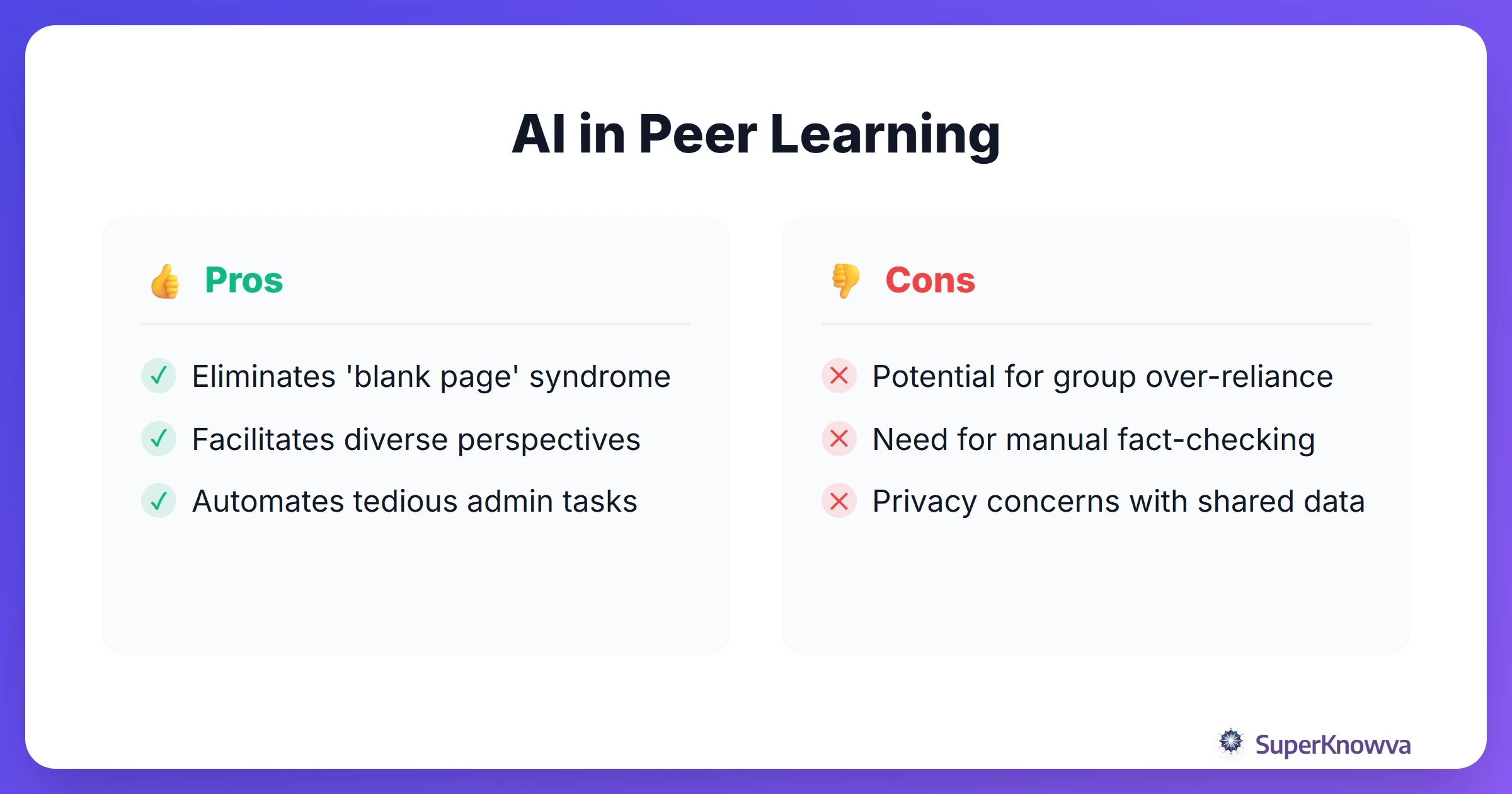
By using shared agents, you eliminate those "information silos" that usually lead to group friction. Everyone stays on the same page.
Killing the Busywork: Document Generation and Templates
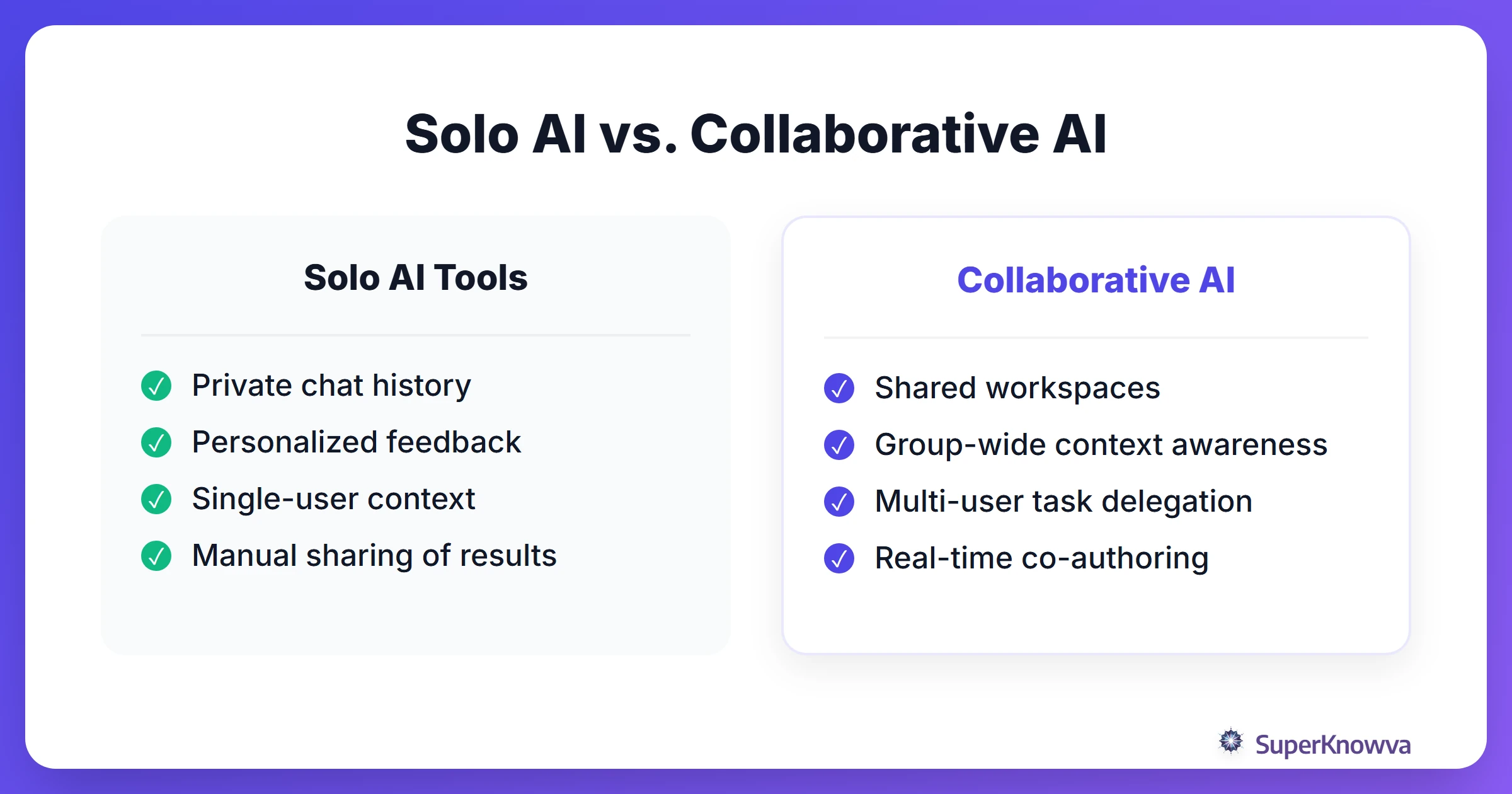
The most difficult part of group work is the administration, not the learning. Formatting reports, organizing meeting minutes, and structuring data takes significant time. Collaborative AI streamlines these tasks through AI document generation.
During a meeting, AI-powered note taking tools can listen in and generate instant summaries with clear action items. For science or business students, using AI for data analysis across shared datasets lets the team focus on the "why" of the research rather than getting bogged down in the "how" of the math.
Security and Privacy: Keeping Your Ideas Safe
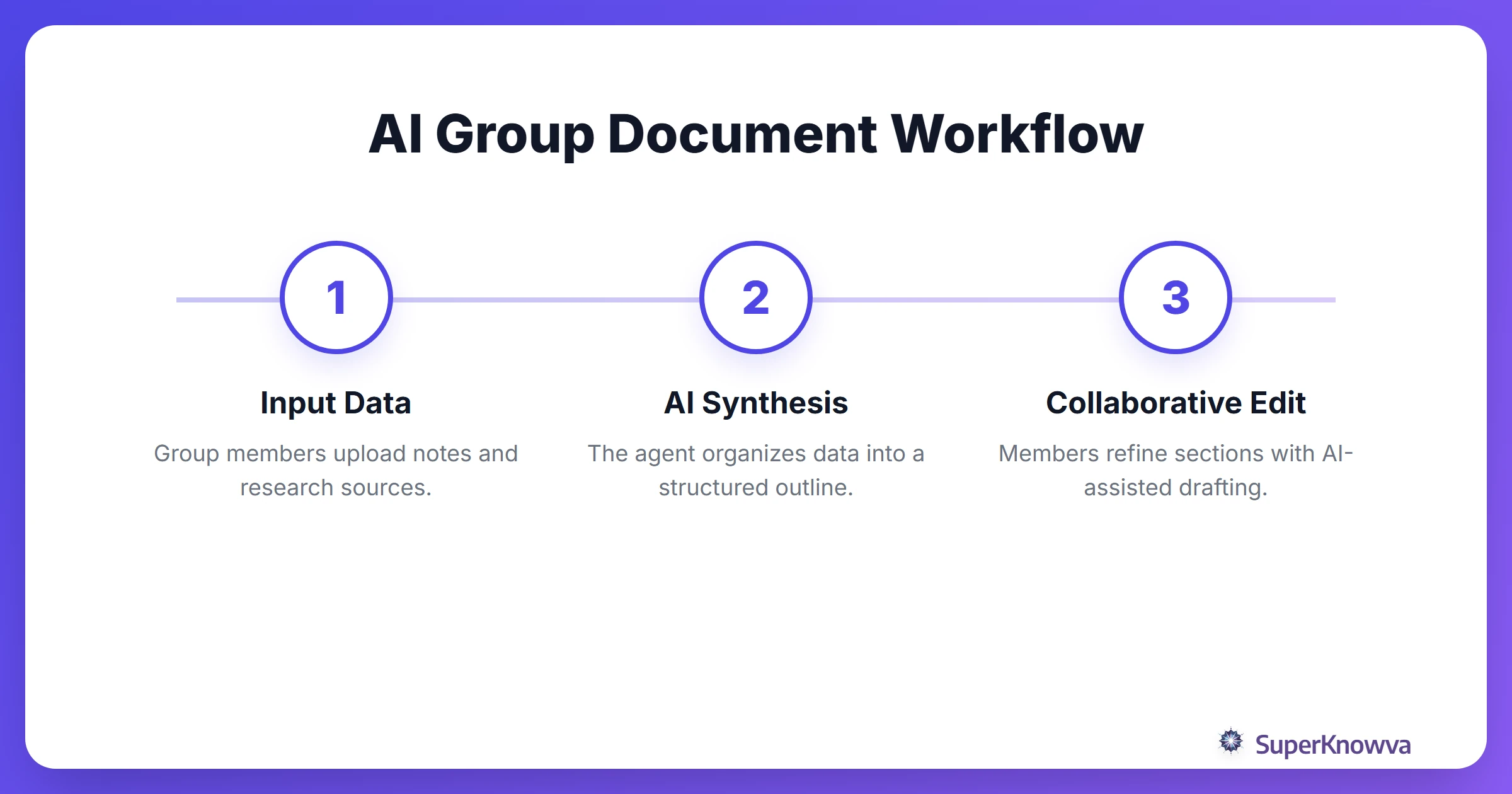
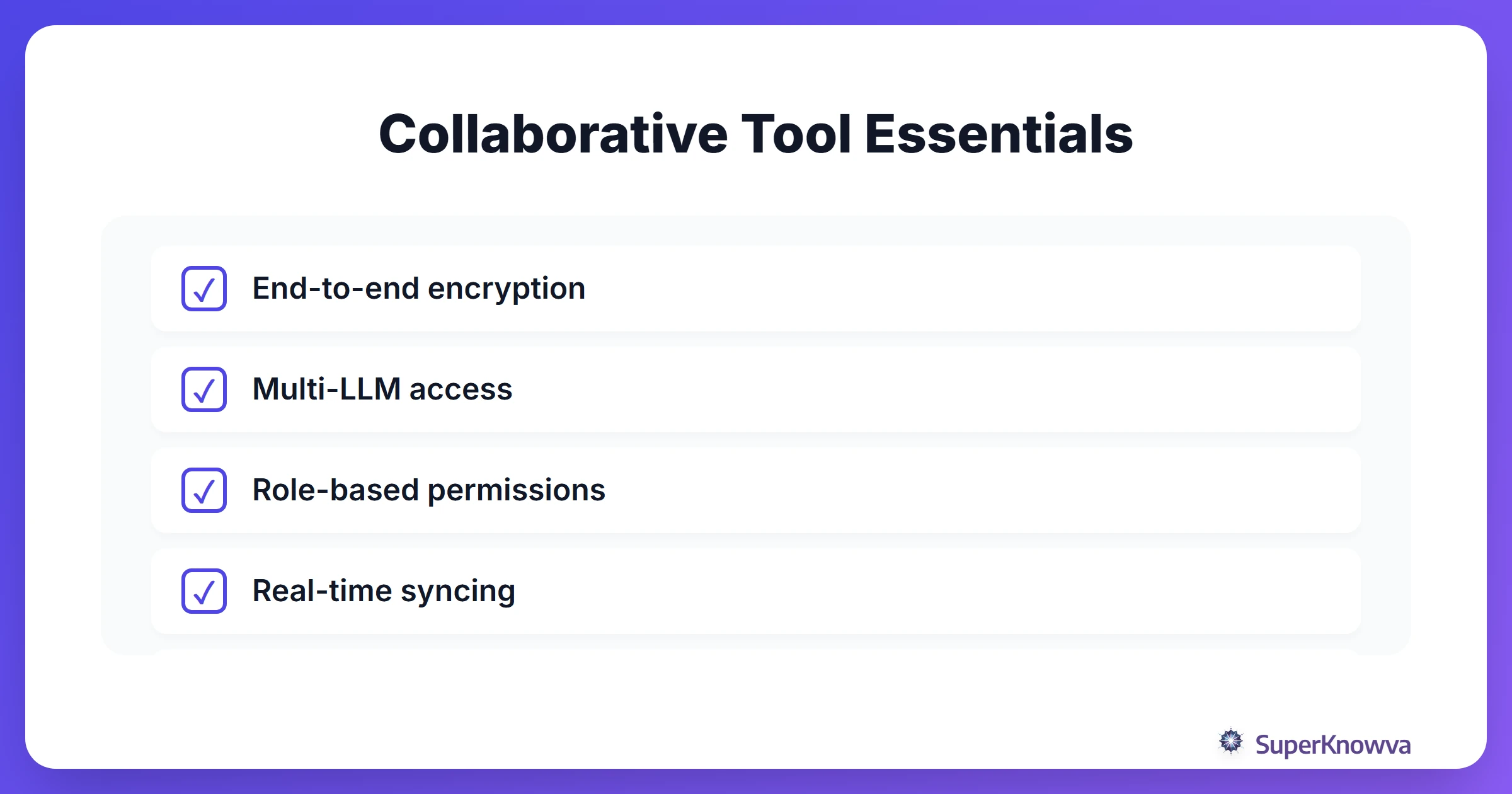
When you’re sharing research and data in a digital workspace, security is essential. When picking collaborative ai study tools, you need to know your group’s hard work is protected.
Look for platforms that offer enterprise-grade security. This ensures your shared documents and chat histories aren't being used to train public models without your permission. Managing permissions is just as important; a solid tool should let you control exactly who can edit, view, or prompt the AI within your shared space.
Picking the Right Brain for the Job
Not all AI models are built for the same tasks. Depending on what your group is trying to wrap its head around, you might need to switch gears.
- GPT-4 is the heavy lifter for general reasoning and complex instructions.
- Claude is often the favorite for nuanced, human-sounding writing and handling massive textbooks.
- Perplexity is your best bet for real-time citations and factual deep-dives.
The most effective groups use platforms that allow for "model switching." Having this kind of flexibility is essential for creative problem solving, allowing the team to use the best tool for the specific task, whether that’s debugging a line of code or drafting an essay.
Better Peer-to-Peer Sharing
Collaborative AI removes friction between people and bridges the gap between different learning styles. If you’re a visual learner but your partner prefers text, the AI can instantly "translate" group notes into a diagram for you and a detailed outline for them.
It encourages thorough reflection. Instead of providing answers, AI generates Socratic prompts: questions that lead a group to debate the topic rather than seeking a shortcut. This focus on emotional intelligence in AI learning ensures the technology supports human connection without replacing it.
As a recent Clinician-AI Collaborative Workflows Study pointed out, the best results happen when the AI and the human team work in a constant feedback loop. You augment the AI, and it augments you.
The Bottom Line
The days of struggling through group projects alone are over. By leaning into collaborative ai study tools, you can stop worrying about the administrative headaches and get back to what matters: learning from each other. Whether it’s through shared agents or multi-model workspaces, AI is proving that when we study together, we actually learn better.
Ready to level up your study group? See how SuperKnowva can help your team reach its full potential.