April is National Poetry Month. Usually, that means a month of sonnets, stanzas, and high school English flashbacks. But what if the same muscles you use to craft a poem are the exact ones you need to land your dream job?
Whether you’re grinding through a STEM degree or navigating business school, creative writing for career success isn't just a "nice-to-have" hobby. It’s one of the most powerful ways to stand out in a job market that’s louder and more crowded than ever.
Let’s look at how moving past dry, technical prose to embrace professional storytelling can build your brand and, quite literally, future-proof your career.
The Narrative Power: Telling Your Professional Story
There is an irony in the professional world: journalists and communications experts, people who tell stories for a living, often have the hardest time telling their own. When it is time to write a LinkedIn "About" section or a cover letter, we freeze. We default to a boring list of tasks rather than a story of impact.
To actually get noticed, you have to master "The Story of Your Work."
This isn't just a list of what you did; it’s a clear explanation of why it mattered. Think about the difference. You could say, "I managed a team of five." Yawn. Or, you could use a narrative approach: "I led a cross-functional team to slash project turnaround time by 20%, hitting our annual goals three months early."
When you connect your background and values to your current goals, you create a career narrative and focus on building a narrative-driven resume that people actually remember.
Beyond the Resume: Writing for Stakeholders and Clients
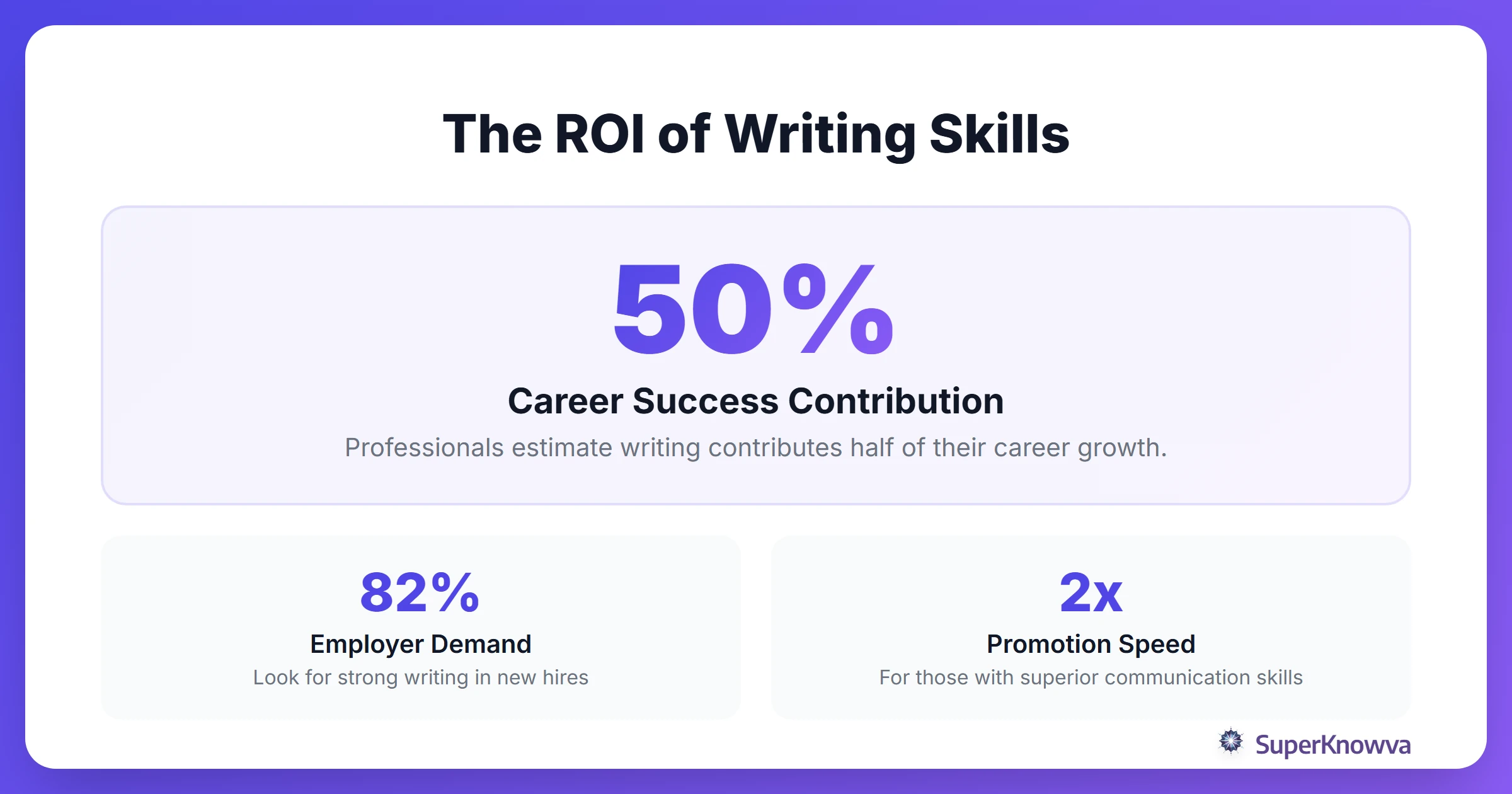
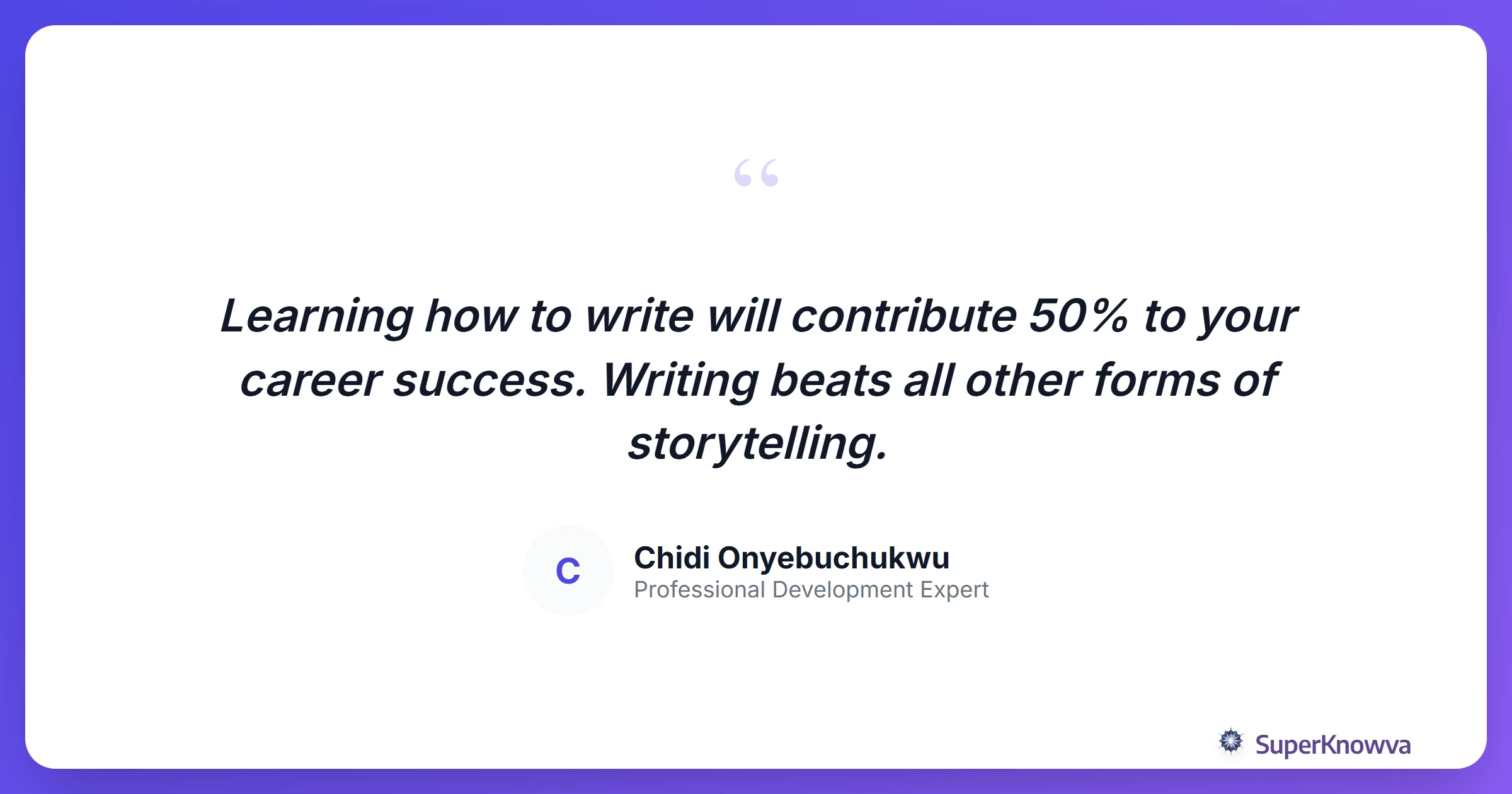
Why does "creative" writing matter in a corporate office? Many experts point to the "50% rule": your writing ability can account for up to half of your professional value. Think about it. If you have a brilliant idea but can’t explain it to your boss, that idea effectively doesn't exist.
Creative writing gives you the tools to:
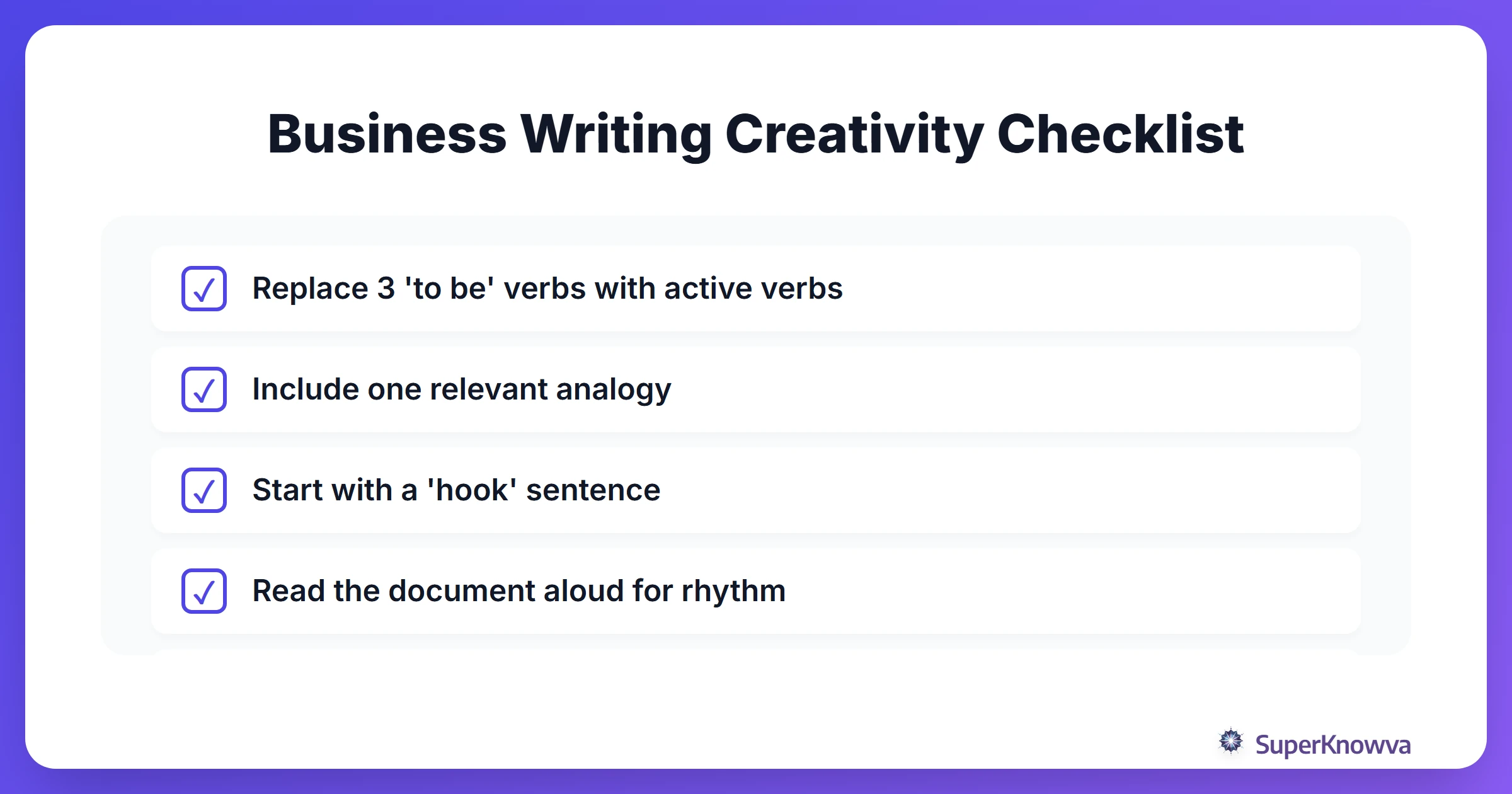
- Craft Hooks: Whether it’s a cold email to a recruiter or a PhD application, a creative opening line keeps your message out of the "Archive" folder.
- Write Reports People Actually Read: Executives are exhausted. They don't want a 50-page data dump; they want a narrative that explains what the data means for the company’s bottom line.
- Persuade through Story: Sales pitches work best when they have a "hero" (the client), a "villain" (the problem), and a "guide" (that’s you).
As the guide Mastering the Art of Writing for Career Success points out, being a strong writer is a force multiplier for every other skill you have.
Soft Skills in the Written Word: Empathy and Persuasion
At its heart, creative writing is an exercise in empathy. To tell a good story, you have to step into your reader's shoes. In the office, this translates to those essential soft skills for the AI era everyone is talking about.
When you use a metaphor to explain a complex technical concept, you aren't "dumbing it down." You’re building a bridge. Understanding the rhythm of language also helps you handle office politics. A well-timed, thoughtfully phrased email can de-escalate a heated project conflict in a way a blunt, factual one never could.
In an age where AI can churn out generic business templates in three seconds, the ability to add human nuance, rhythm, and a unique perspective is a skill machines can’t touch.
The 'Non-English Degree' Advantage
There’s a myth that you need an MFA or a literature degree to be a "writer." Honestly? Having a background in STEM, the trades, or business actually gives you an edge. You have a "database" of metaphors that traditional writers don't.
A biology student might use the idea of symbiosis to describe a new partnership. A coder might use "if-then" logic to build a persuasive argument. These "professional voices" are incredibly refreshing to employers who are tired of standard corporate-speak.
You don't need a degree to find your voice. With a little practice and some transitioning from campus to corporate communication strategies, you can develop a style that sounds authoritative but remains uniquely yours.
Practical Exercises: Infusing Creativity into Daily Work
How do you actually start? It’s about small, daily shifts.
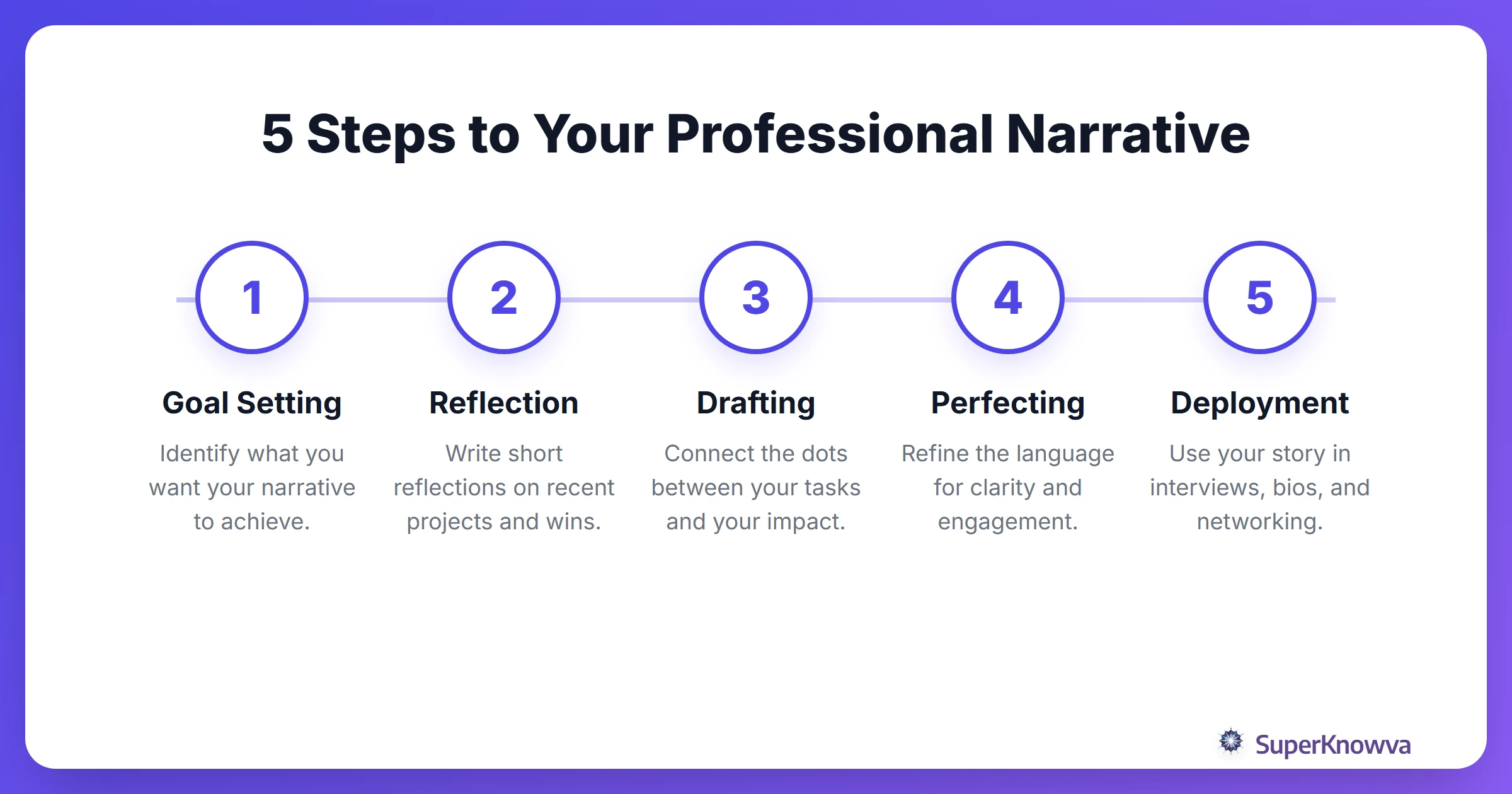
- The Five-Step Process: Try Michelle Faust Raghavan's five-step narrative process to look back at what you achieved this week.
- Daily Journaling: Spend just 10 minutes writing about your goals. It clears the mental fog.
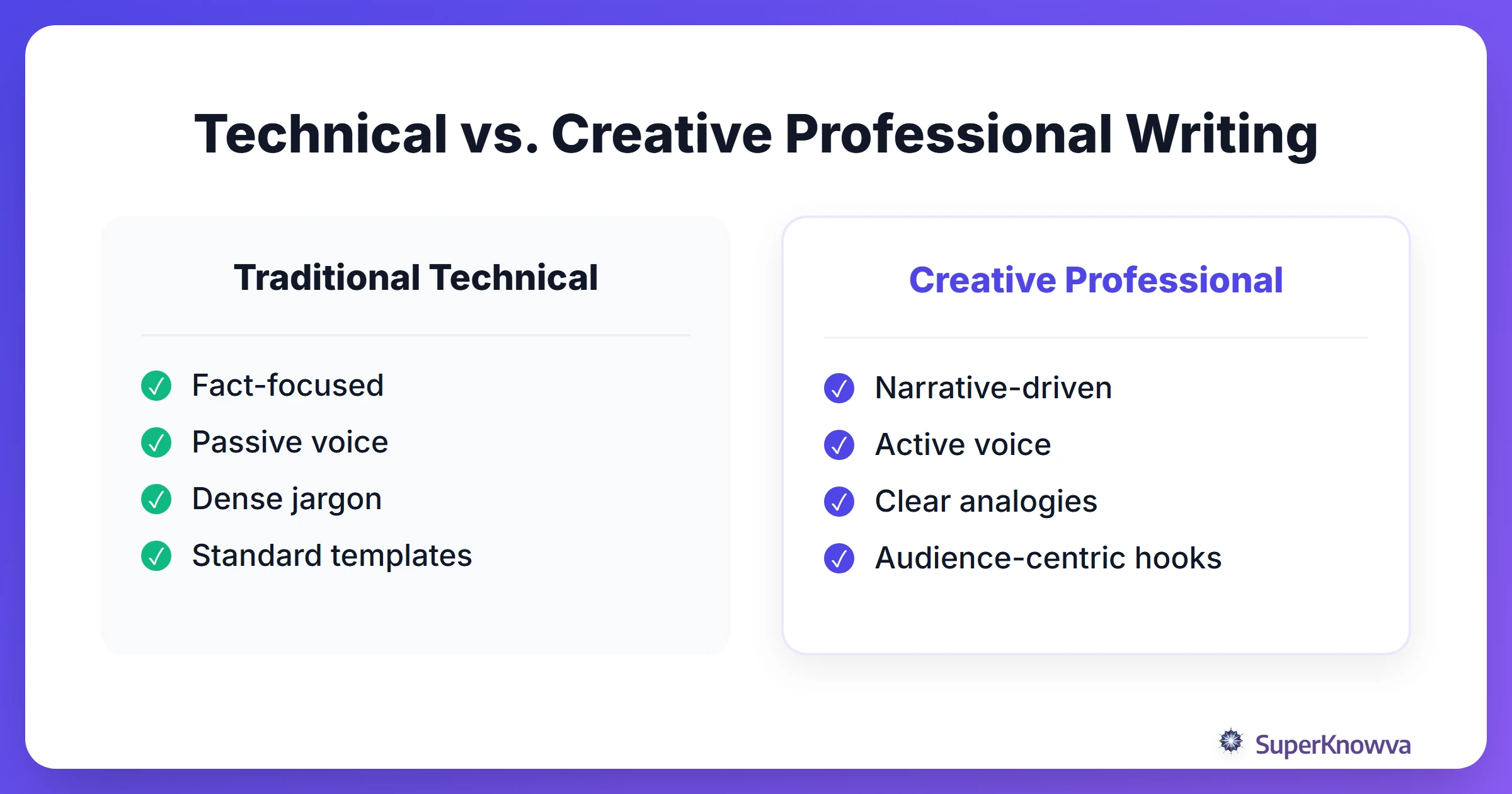
- The Email Rewrite: Take a boring email you’re about to send and kill the passive voice. Instead of "The report was finished," try "I finalized the report." It sounds more confident.
- Lateral Thinking: Join in on National Poetry Month! Try to fit a complex work problem into a Haiku. It forces you to cut the fluff and find the most impactful words.
Overcoming 'Blank Page' Anxiety in the Office
The fear of the blank page is the hardest part of writing. When the stakes are high, like a final project or a board presentation, the pressure to be perfect often stops progress.
To beat it, embrace the "Shitty First Draft." (That’s a real term coined by author Anne Lamott). Give yourself permission to write a version of your report that is absolutely terrible just to get the ideas out. You can’t edit a blank page, but you can always fix a messy one.
Try using prompts to see your work from a new angle. Ask yourself: "If I had to explain this to a five-year-old, what would I say?" or "How do I want the reader to feel when they finish this?" Using personal branding through storytelling will help you find your flow even when your calendar is packed.
Conclusion
Creative writing isn't just for novelists; it’s a survival tool for the modern professional. By mastering the art of the narrative, you stop being just a "task-doer" and start being a storyteller who can influence, persuade, and lead. This National Poetry Month, try looking at your emails and reports through a creative lens. Your career will thank you.