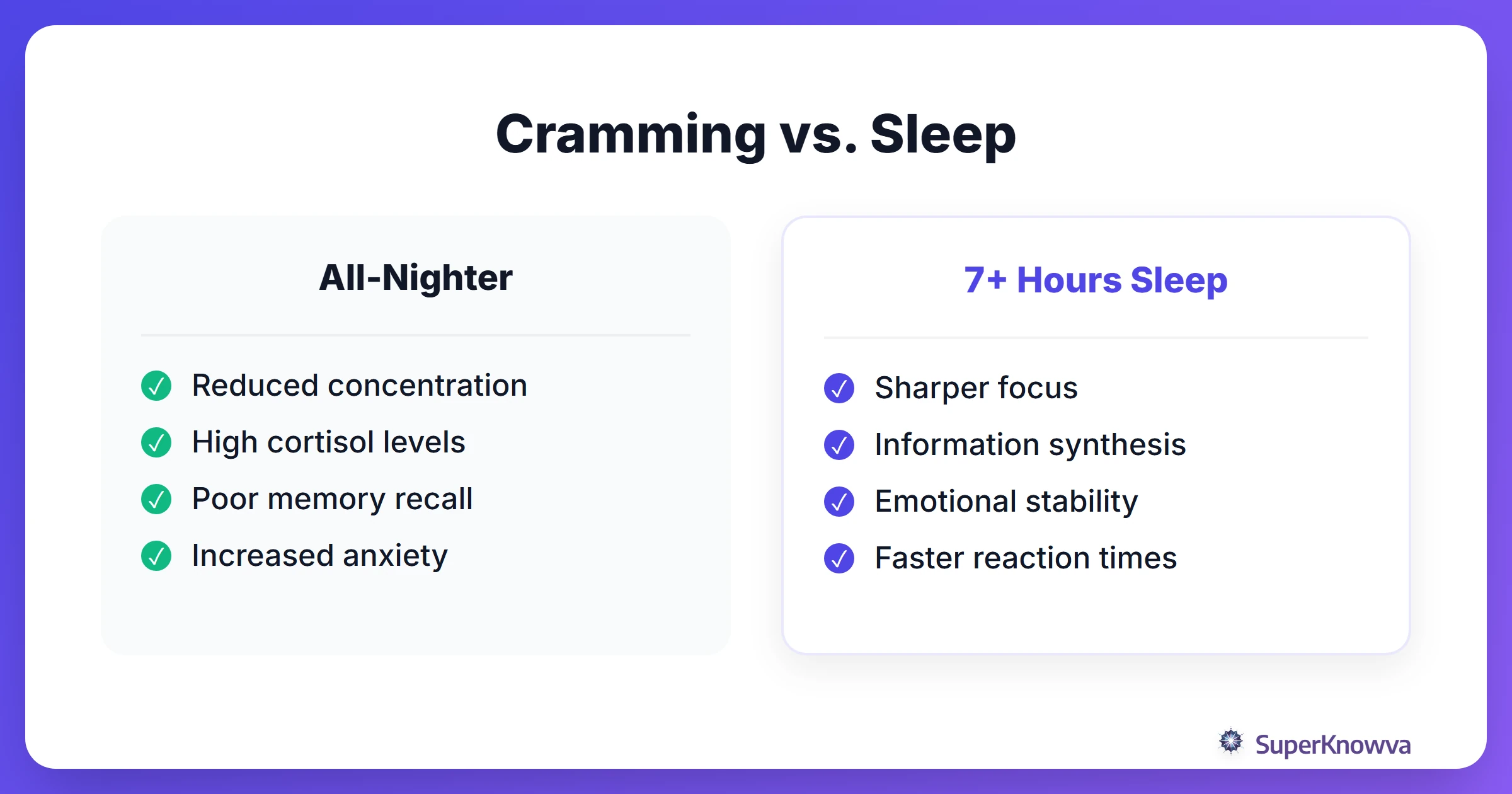
Staring at the same textbook paragraph for twenty minutes without processing a single word is common. When the pressure increases, particularly during the weeks leading up to the Bar Exam, the temptation to pull an all-nighter grows. We often believe that one more hour of study is more valuable than an hour of rest.
But here’s the reality: mastering sleep hygiene for students is often the single most effective way to ensure your brain actually keeps the information you’ve spent all day cramming into it.
While many high-achievers view rest as "lost time," it’s actually the period when your brain does its heaviest lifting. If you want to peak during exam week, you need to stop treating sleep like a luxury and start treating it like a prerequisite.
The Science of Sleep and Memory Consolidation
At 3:00 AM, the coffee is cold and you are convinced that one more set of flashcards will make the difference. Science says otherwise. Your brain is not a hard drive that fills up; it is a biological processor that needs downtime to "save" its progress.
This is known as memory consolidation. During sleep, your brain transfers information from short-term storage (the hippocampus) to long-term storage (the neocortex). Without this transfer, the facts you memorized at midnight are likely to evaporate before you even pick up your pen the next morning.
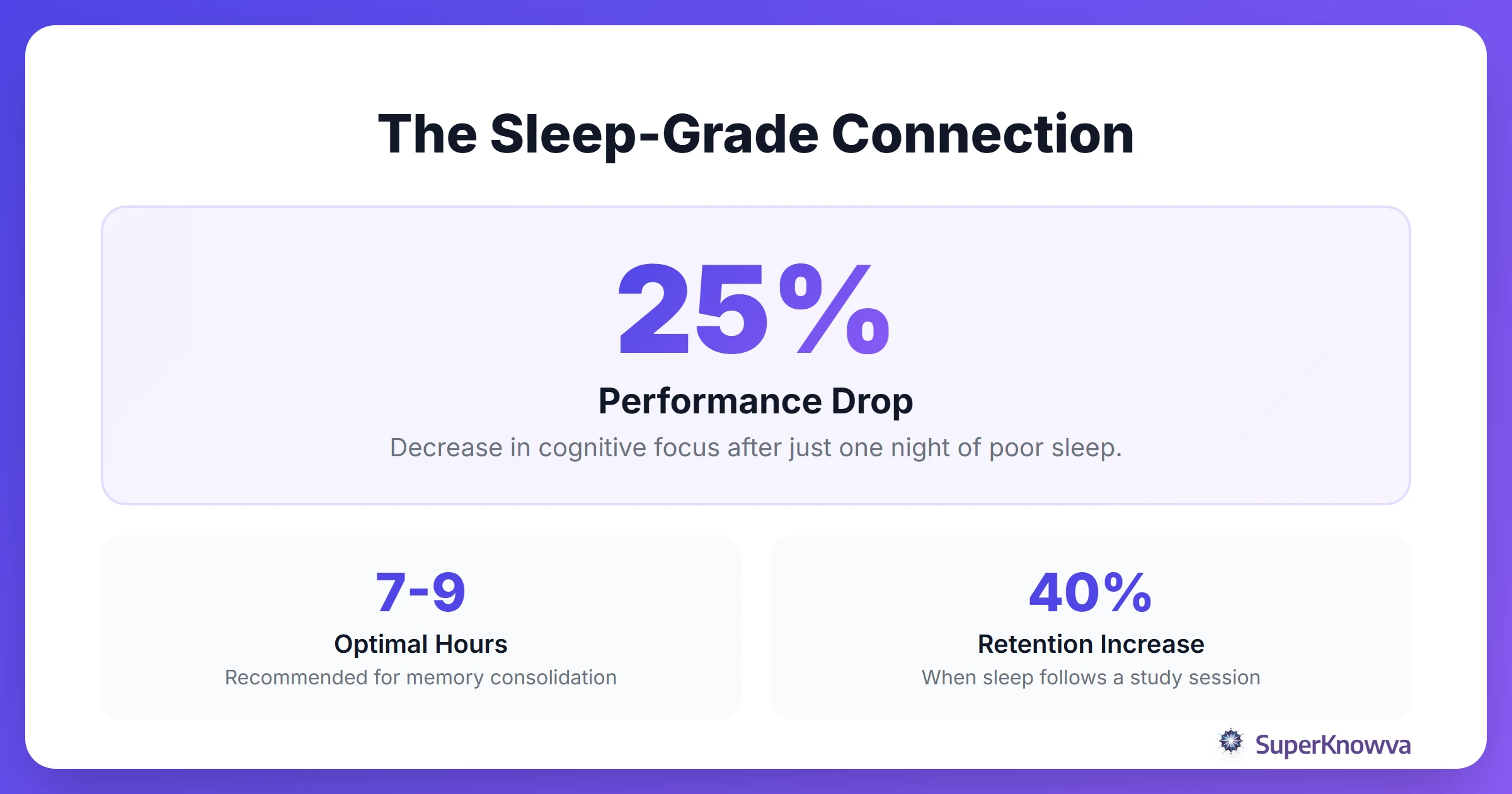
It’s not just about memory, either. Rapid Eye Movement (REM) sleep is critical for complex problem-solving and keeping your emotions in check. This is vital for high-stakes testing where staying calm under pressure is half the battle. While regular exercise can boost cognitive function, you have to time it right. A heavy workout too close to bed can keep you wired, defeating the purpose. The bottom line? Total sleep deprivation actively tanks your ability to recall information and perform basic logical reasoning.
Establishing a Consistent Pre-Exam Routine
Your brain needs a signal that the "workday" is officially over. If you close your laptop and immediately try to shut your eyes, your mind will keep racing at 100 mph. You need a buffer.
Establishing a predictable "wind-down" period helps lower your cortisol levels and preps your body for deep, restorative rest. Following a consistent bedtime routine, as recommended by the Nemours KidsHealth Sleep Hygiene Guide, is one of the best ways to ensure you aren't tossing and turning.
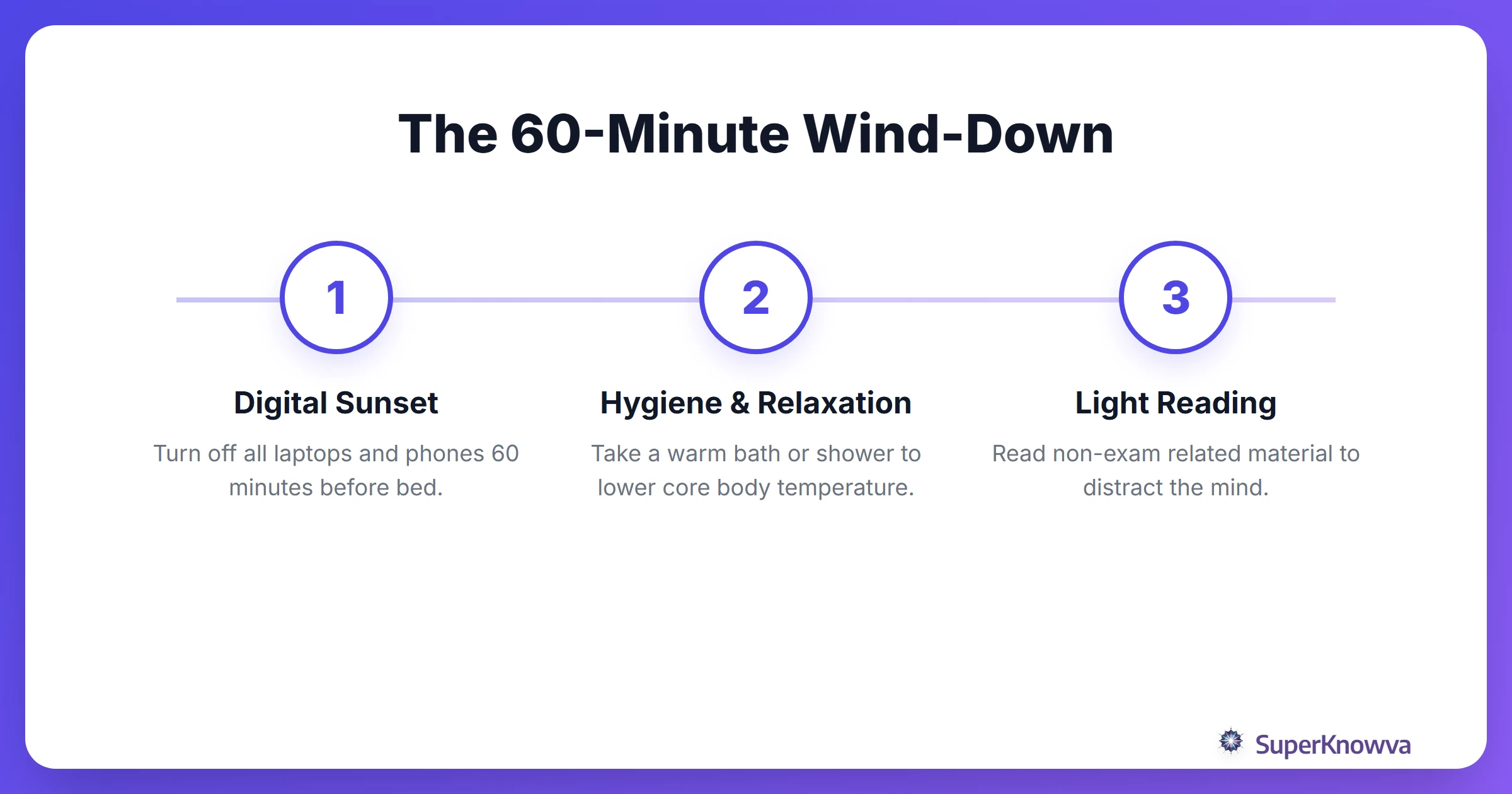
Try a warm bath or a few chapters of a "junk" novel: something completely unrelated to your studies. This transition helps protect your mental well-being. Proper sleep hygiene is a primary defense against the early signs of student burnout. Turn off your screens at least an hour before bed to let your brain produce the melatonin it needs for sleep.
Optimizing Your Study Environment for Rest
Are you guilty of studying in bed? It’s a common trap, but it’s a productivity killer. When you use your bed as a workspace, your brain starts to associate your pillows with the stress of Torts or Constitutional Law rather than relaxation.
To maintain high-quality sleep hygiene for students, keep your bedroom a dedicated sanctuary for rest. If you must study in your room, sit at a desk. Never bring the flashcards under the covers.
To guarantee you actually stay asleep once you drift off, tweak your environment:
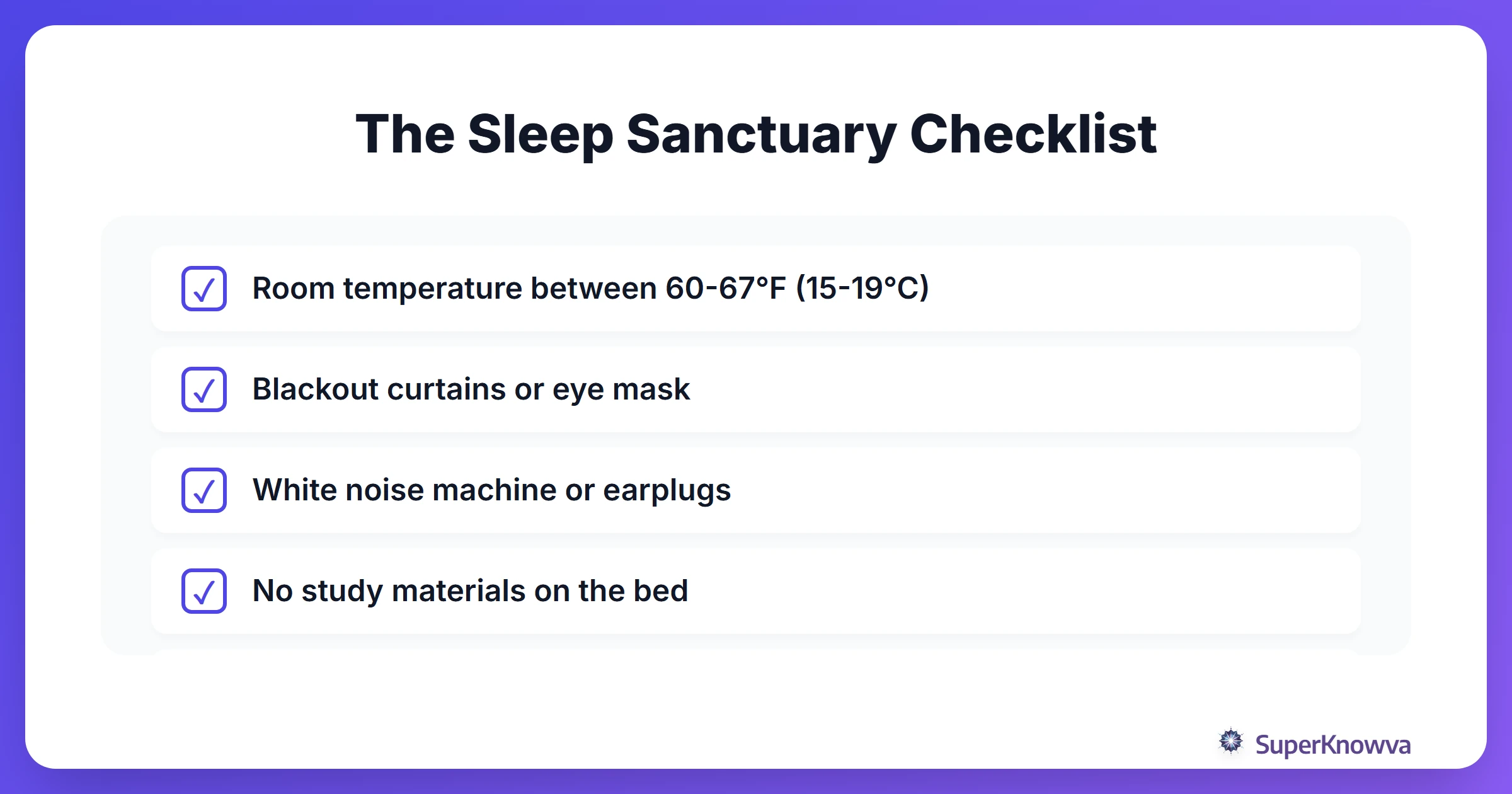
- Temperature: Keep it cool. Ideally between 60-67°F (15-19°C).
- Light: Invest in blackout curtains or a cheap eye mask. Total darkness is the goal.
- Sound: If your dorm or apartment is noisy, use a white noise machine or high-quality earplugs to drown out the world.
Managing Caffeine and Diet for Better Sleep
Caffeine is a staple for students, but a 4:00 PM latte has a long half-life, usually five to six hours. Half of that caffeine is still in your system at 10:00 PM, which interferes with deep sleep.
Your diet plays a role, too. Heavy, greasy, or overly spicy meals right before bed are a recipe for indigestion and disrupted sleep cycles. When you pair good sleep with the best diet for studying, you’re building a foundation for peak performance. One pro tip: stay hydrated throughout the day, but taper off your water intake an hour before bed. Nobody wants their REM cycle interrupted by a midnight trip to the bathroom.
Digital Detox: Screens and the Bar Exam
The blue light from your laptop or phone is a liar. It tells your brain it’s still daytime, suppressing melatonin and keeping your circadian rhythm in a state of confusion. For Bar Exam candidates, the "need to check one more thing" can lead to a two-hour rabbit hole of late-night scrolling.
Instead of reaching for the phone, try journaling or mindfulness for students. It helps quiet the internal monologue of "Did I study enough?" If you absolutely must work late, use "Night Mode" or blue-light-filtering software to take the edge off the glare.
Handling Exam-Night Anxiety
The night before an exam is often the most difficult. Your mind likely cycles through formulas, laws, and "what-if" scenarios. The Sleep Foundation notes that college students are among the most sleep-deprived people, which directly impacts their GPA.
To kill the anxiety, try the "Brain Dump" method. Spend five minutes writing down every single worry or "to-do" item on a physical piece of paper before you hit the sheets. This "externalizes" the stress, moving it out of your head and onto the page. And if you still find yourself awake? Don't panic. Even lying still with your eyes closed provides more cognitive recovery than staying up to cram. Often, accepting that "rest is enough" is the very thing that finally lets you fall asleep.
Conclusion
Mastering sleep hygiene for students is just as vital as mastering your course material. By prioritizing memory consolidation, setting a digital sunset, and respecting your sleep sanctuary, you’re giving your brain the tools it needs to win. Don't let the pressure of the exam rob you of the rest you’ve earned. Sleep well, and you'll study smarter.