It happened almost overnight. One day we were Googling sources, and the next, we were asking chatbots to draft entire essays. The release of accessible large language models didn’t just nudge higher education; it shoved it into a new era. We’ve transformed how we research, write, and study in record time. But here’s the million-dollar question: how do we use these tools to sharpen our minds instead of letting them go dull?
Navigating the ethics of generative AI education isn't just about avoiding a trip to the Dean’s office. It’s about figuring out how to be a responsible scholar in a world where the "easy way out" is only a prompt away.
The AI Revolution on Campus: Opportunity vs. Risk
Take a look around any campus library. You’ll see students using AI to build study schedules, summarize 50-page PDFs, or debug code. Generative AI (GenAI) is an incredible efficiency booster. But that efficiency comes with a side of tension.
The risk involves more than traditional cheating; it is the potential erosion of critical thinking. We must decide whether to use AI to enhance education or let it replace the reason we are in college: to learn how to think for ourselves. Building an ethical framework is about more than just following the handbook. It is about your integrity as a student.
Defining Academic Integrity in the Age of AI
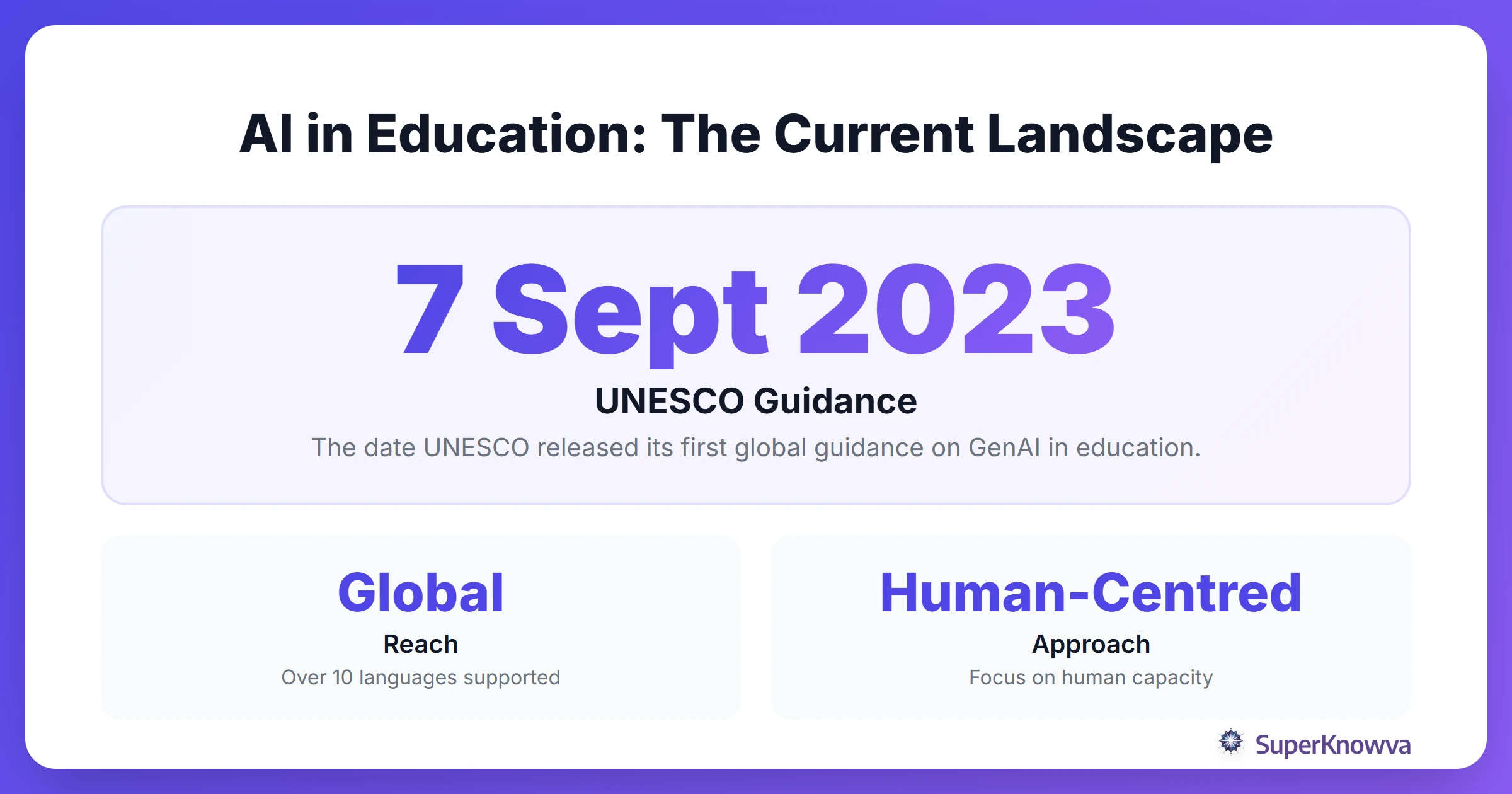
When does a study aid become a problem? It usually comes down to the difference between a "co-pilot" and a "replacement." Ethical use means you stay in the pilot’s seat. You direct the tool, you verify the facts, and you provide the final analysis.
Gray areas are where the process becomes complex. Is using AI to brainstorm a paper outline acceptable? Most professors would say yes; it acts as a digital whiteboard. However, having AI write an intro paragraph is unacceptable. Responsible AI use for college students often starts with tools that support the process, like AI-powered note taking which helps you retain information without replacing your own analysis.
Pro-tip: Don't guess. Read your specific syllabus. Every instructor has a different "AI comfort level," and when in doubt, just ask. It’s much better to get a "no" now than a "zero" later.
The Environmental and Social Cost of AI
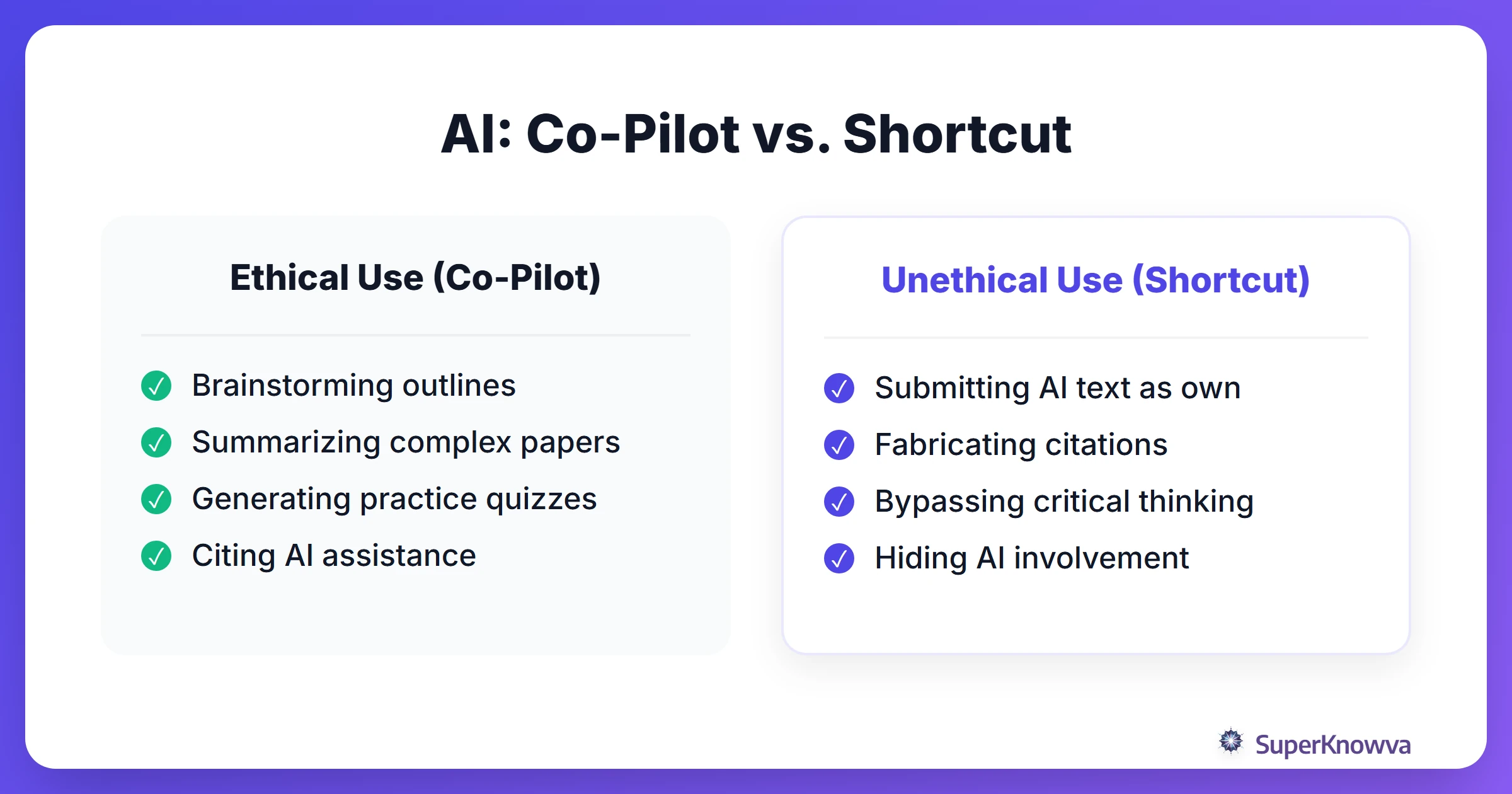
We usually talk about AI ethics in terms of the classroom, but the footprint of these models matters too. The AI environmental impact is something every digital citizen should weigh. These models are power-hungry. They require massive amounts of electricity to train and staggering amounts of water to cool the data centers that keep them running.
Then there’s the human cost. AI models don't just "know" things; they are trained on data labeled by human workers who often work in low-wage conditions. As The University of Alberta outlines critical ethical considerations, sustainability and social justice are part of the equation. Every time you run a prompt, you’re using resources. Use them wisely.
Data Privacy and Intellectual Property
What happens to that brilliant prompt you just wrote? Most GenAI platforms use your inputs to train their future models. If you’re feeding an AI sensitive research data, personal stories, or an unpublished thesis, you’re essentially making that data public.
Ownership is another mess. In many places, AI-generated content can’t be copyrighted because it lacks "human authorship." If you let an AI write too much of your work, you might find that you don't legally "own" what you’ve submitted. Treat every prompt like a public conversation. If you wouldn't want the world (or a tech giant) to see it, don't type it in.
AI as an Accessibility Tool: Promoting Equity
AI also offers significant benefits. It improves accessibility, as we highlight in our guide on how AI supports students with disabilities. For students with dyslexia, visual impairments, or those studying in their second or third language, AI can bridge gaps that the traditional education system often ignores.
The challenge is making sure we don't create a new "digital divide." If the best, most ethical tools are locked behind a $20/month paywall, equity suffers. We also have to stay sharp about AI bias. These models learn from the internet, which means they can spit out the same racial or gender stereotypes they were fed.
A Framework for Ethical AI Integration
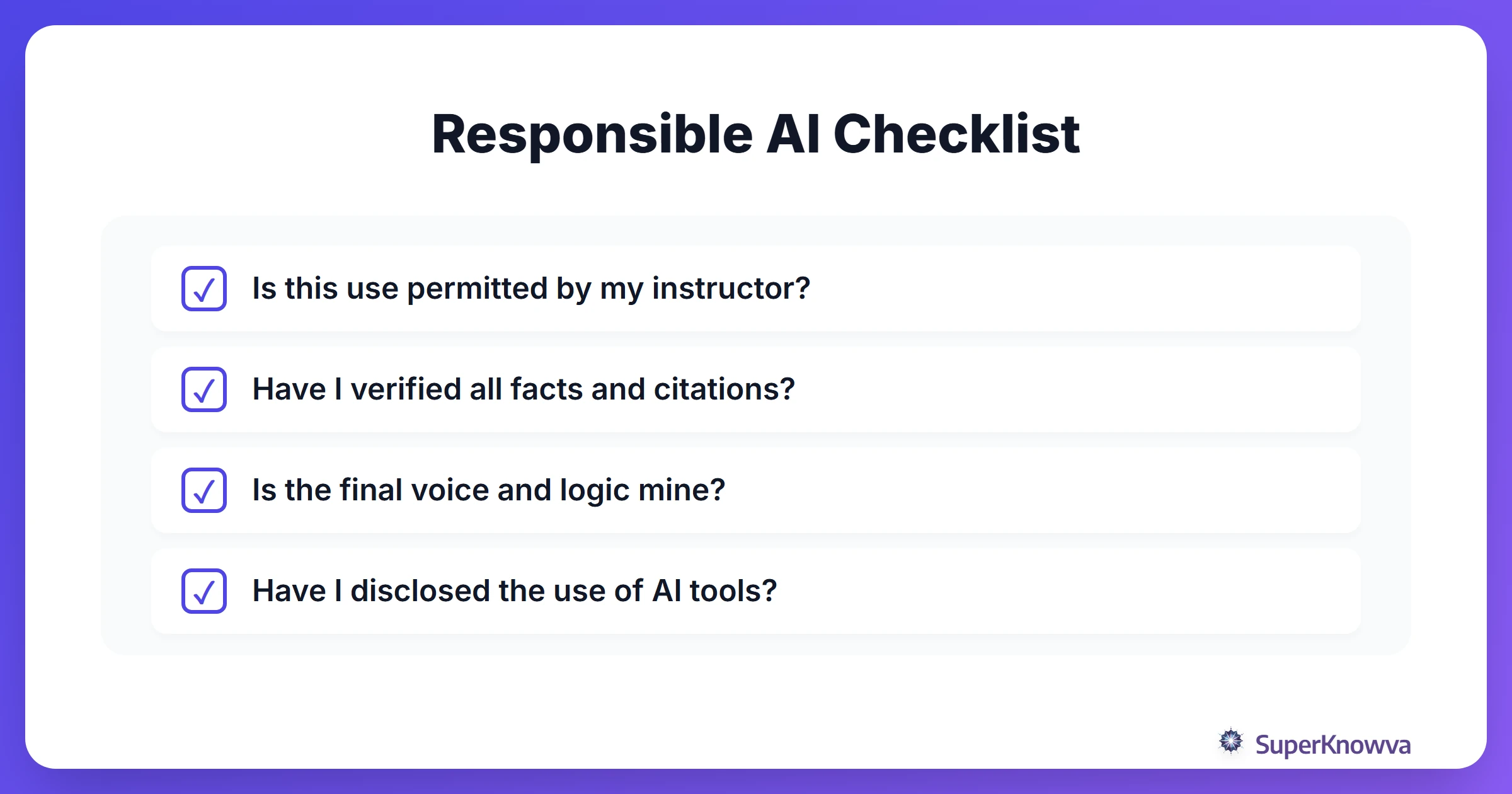
You need a system to stay on the right side of the line. We like the S.T.O.P. method:
- Syllabus: Have I checked my instructor’s specific rules for this assignment?
- Transparency: Am I being open about how I used these tools?
- Originality: Is the "voice" and the core logic of this work actually mine?
- Proofing: Have I fact-checked every single claim the AI made?
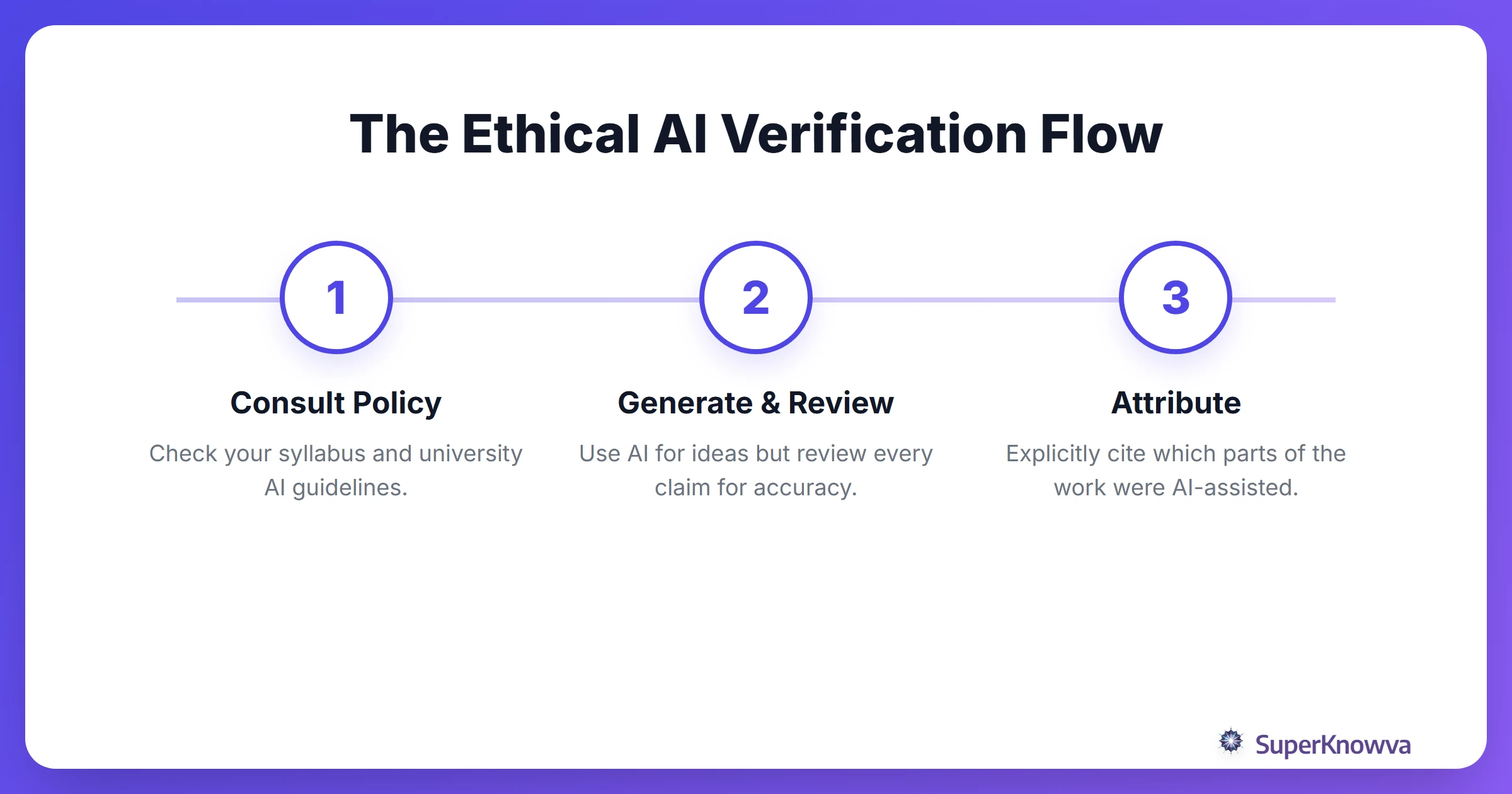
Transparency is essential. If AI helped you structure an essay or summarize a source, say so. Citing AI use is as important as citing a book. Always fact-check. AI can hallucinate. It will confidently invent a citation for a book that does not exist.
The Future: Toward Human-Centered Learning
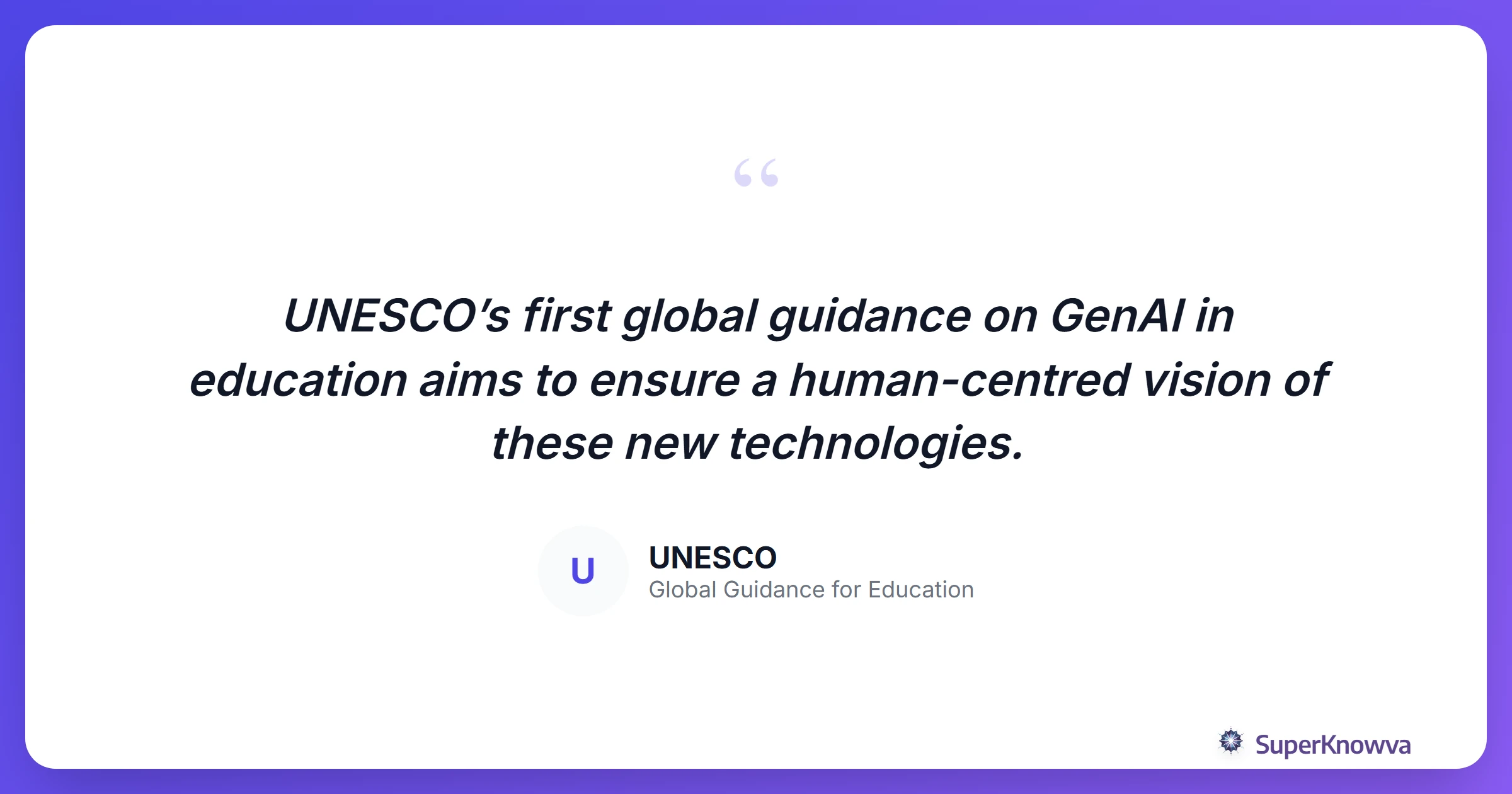
Ultimately, we want human-centered AI learning. As UNESCO provides the first global framework for GenAI in education, the message is clear: technology should enhance human capacity, not replace it.
AI can give you 24/7 support, but it can’t replace a mentor. The ongoing debate between AI tutors vs. human tutors reminds us that human connection matters. Learning isn't just about data transfer; it involves AI and emotional intelligence in learning.
Being an ethical student in the age of AI means using these tools to sharpen your mind, not to let it go idle. By staying transparent, skeptical, and responsible, you can use AI to reach new heights without losing your integrity along the way.