It’s 11 PM. You have a 2,000-word essay due tomorrow, and that blinking cursor on your screen feels like it’s mocking you. The temptation to let an AI "take a crack at it" is real. We’ve all been there.
Artificial intelligence is now the tab every student has open. These tools summarize dense chapters, generate practice questions, and explain complex subjects clearly. As they become part of the daily study routine, we must determine where helpful assistance ends and cheating begins. Understanding the ethical use of AI is more than a requirement. It is an essential skill for your career.
In this guide, we’re going to look at how to use AI to supercharge your learning without losing your academic integrity (or your mind) in the process.
The Evolution of AI in the Modern Classroom
The jump from simple spell-checkers to generative models that feel like 1-on-1 tutors happened almost overnight. We went from "Did I spell 'definitely' right?" to "Can you explain the socio-economic causes of the French Revolution?"
But what does ethical use of AI actually look like in practice?
It comes down to one goal: using technology to enhance your understanding, not to bypass the work. Think of AI as a supportive framework, a set of training wheels. It helps you get your balance while you visualize a difficult physics concept or organize a chaotic pile of lecture notes. Ultimately, you still have to pedal the bike. When we use AI to avoid thinking entirely, we’re not just cheating the system; we’re cheating ourselves out of the very education we’re paying for.
AI Assistance vs. Academic Dishonesty: Drawing the Line
Where is the boundary? It’s a question every student is currently wrestling with. Usually, the line is drawn at original thought.
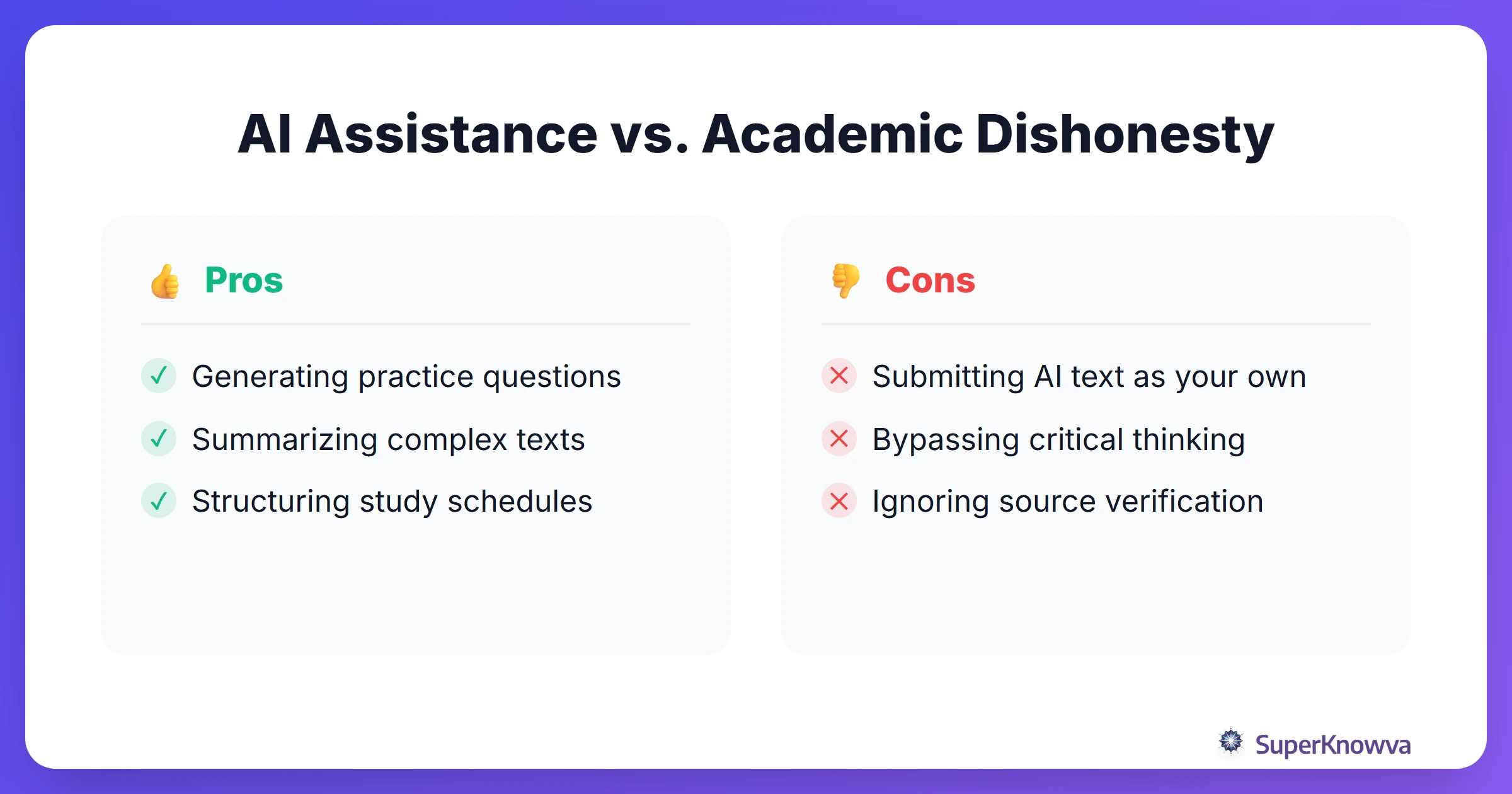
Using AI for brainstorming is effective. Asking for five different ways to structure an argument or a list of recurring themes in a novel is a valuable form of AI-assisted learning. However, the "final work" must be yours. AI excels at mimicry, but it lacks your perspective, your life experiences, or your own voice.
To stay on the right side of the line:
- Use AI to "unstick" yourself: Use it to break through writer's block, then take those ideas and run with them in your own words.
- Focus on structure, not content: Let AI suggest a logical flow for your thoughts, but ensure every sentence in your final draft is your own.
- Own your logic: If you can't explain why a specific sentence is in your essay, it shouldn't be there.
Transparency and Disclosure: Communicating with Educators
The best way to stay out of trouble? Radical transparency. Schools and universities are still figuring out the rules, and those rules can change from one classroom to the next.
Before you start a big project, check the syllabus. If the AI policy is a gray area, just ask. When you're deciding between AI Tutors vs. Human Tutors: Which is Best for Your Learning Style?, you need to know how your institution views each tool.
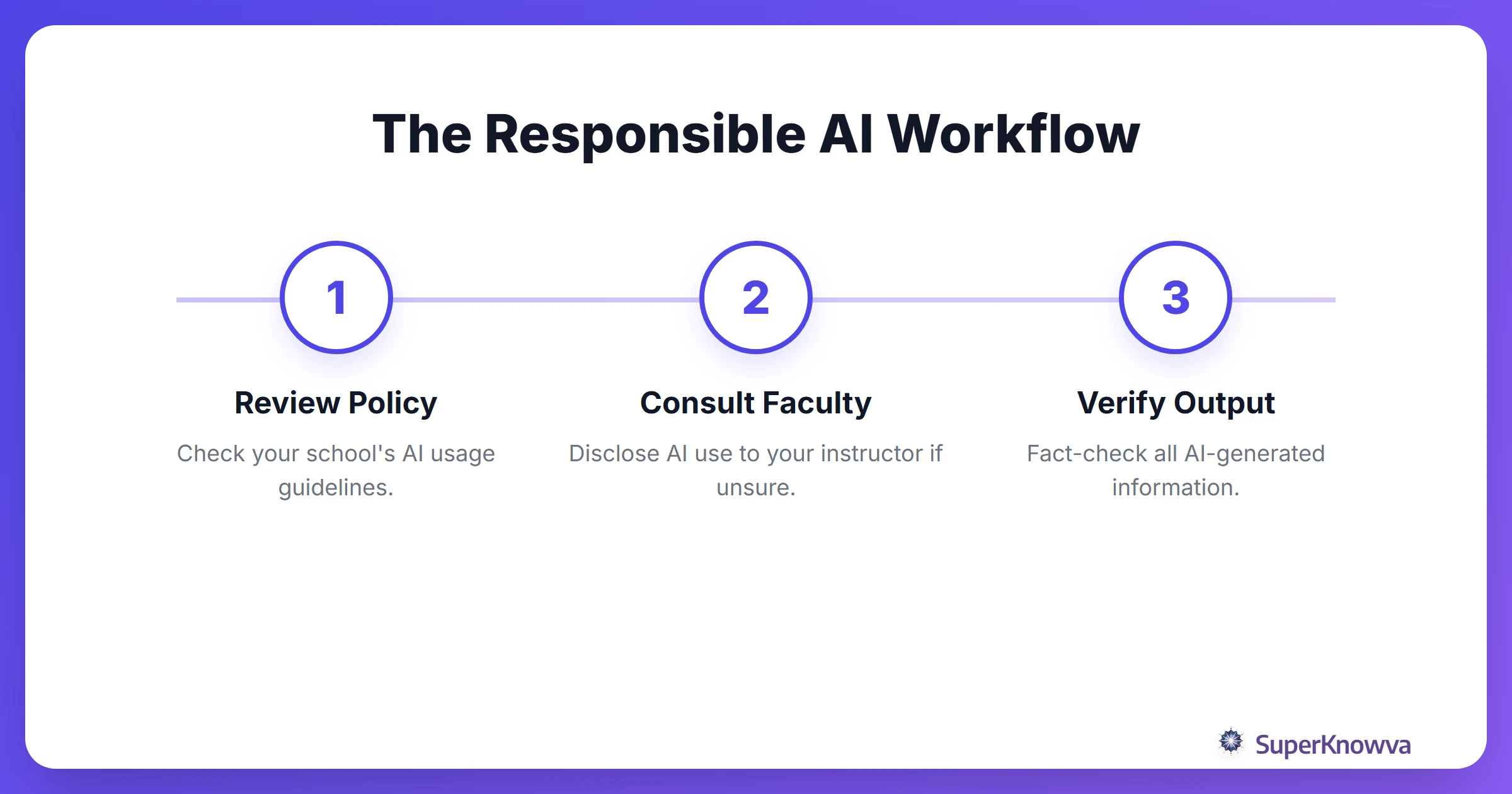
Building trust with your instructors means being open about your process. If you used an AI tool to help summarize research papers or organize a study schedule, say so. The UNESCO Recommendation on the Ethics of Artificial Intelligence highlights that transparency is the bedrock of educational ethics. It’s much better to have a conversation about your methods now than an awkward meeting with the dean later.
Understanding Bias and Data Integrity
Here’s a reality check: AI models aren't magic. They are statistical engines trained on massive amounts of human data. And humans? We’re biased. This means AI is prone to the same errors, prejudices, and "hallucinations" (confidently stated lies) found in its training data.
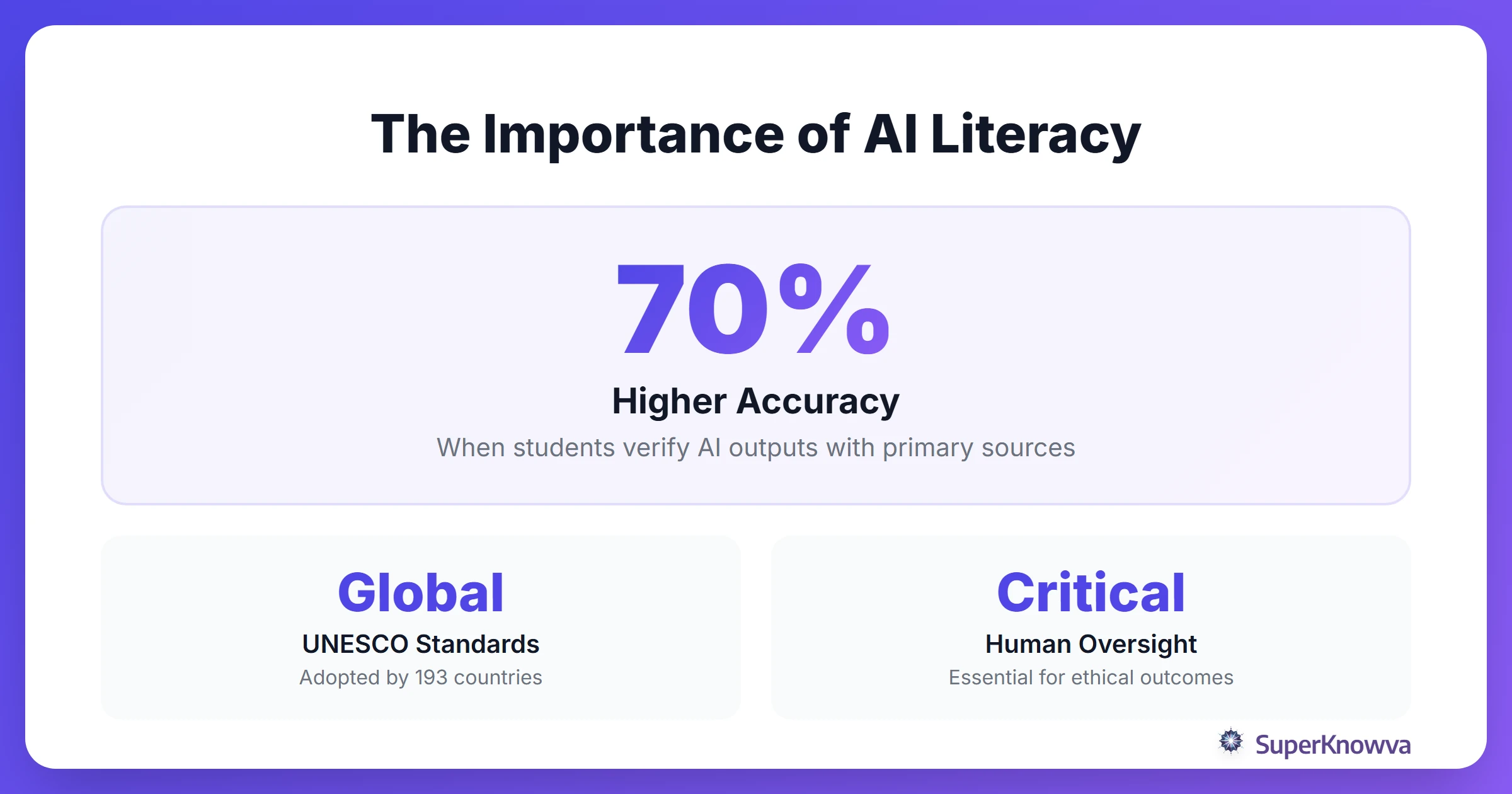
According to the Harvard Gazette: Ethical concerns mount as AI takes bigger decision-making role, these concerns are real and growing. As a student, you have an ethical responsibility to fact-check everything. Tools found in our guide to AI-Powered Note Taking: A Comprehensive Guide can make you more efficient, but you still have to be the "editor-in-chief."
Never take an AI-generated fact at face value. Cross-reference it with your course textbooks or peer-reviewed journals. If the AI hallucinates a fake source (and it will), it’s your name on the paper, not the AI’s.
Developing AI Literacy for Future Success
AI literacy is about more than just knowing how to write a good prompt. It’s about understanding the "why" and "how" behind the tech. This is becoming a core survival skill. Understanding AI and Emotional Intelligence in Learning helps you keep a human-centric approach, ensuring the tech serves you, not the other way around.
In the professional world, employers aren't just looking for people who can use ChatGPT. They want people who can use it ethically and creatively. Exploring AI for Creative Problem Solving: Boosting Innovation requires a solid ethical foundation. By practicing responsible usage now, you’re building the integrity that will define your career.
A Framework for Responsible AI Study
To keep yourself on track, try the "Human-in-the-Loop" approach. This means you are the one in the driver's seat at every stage, making the final calls and verifying every result.
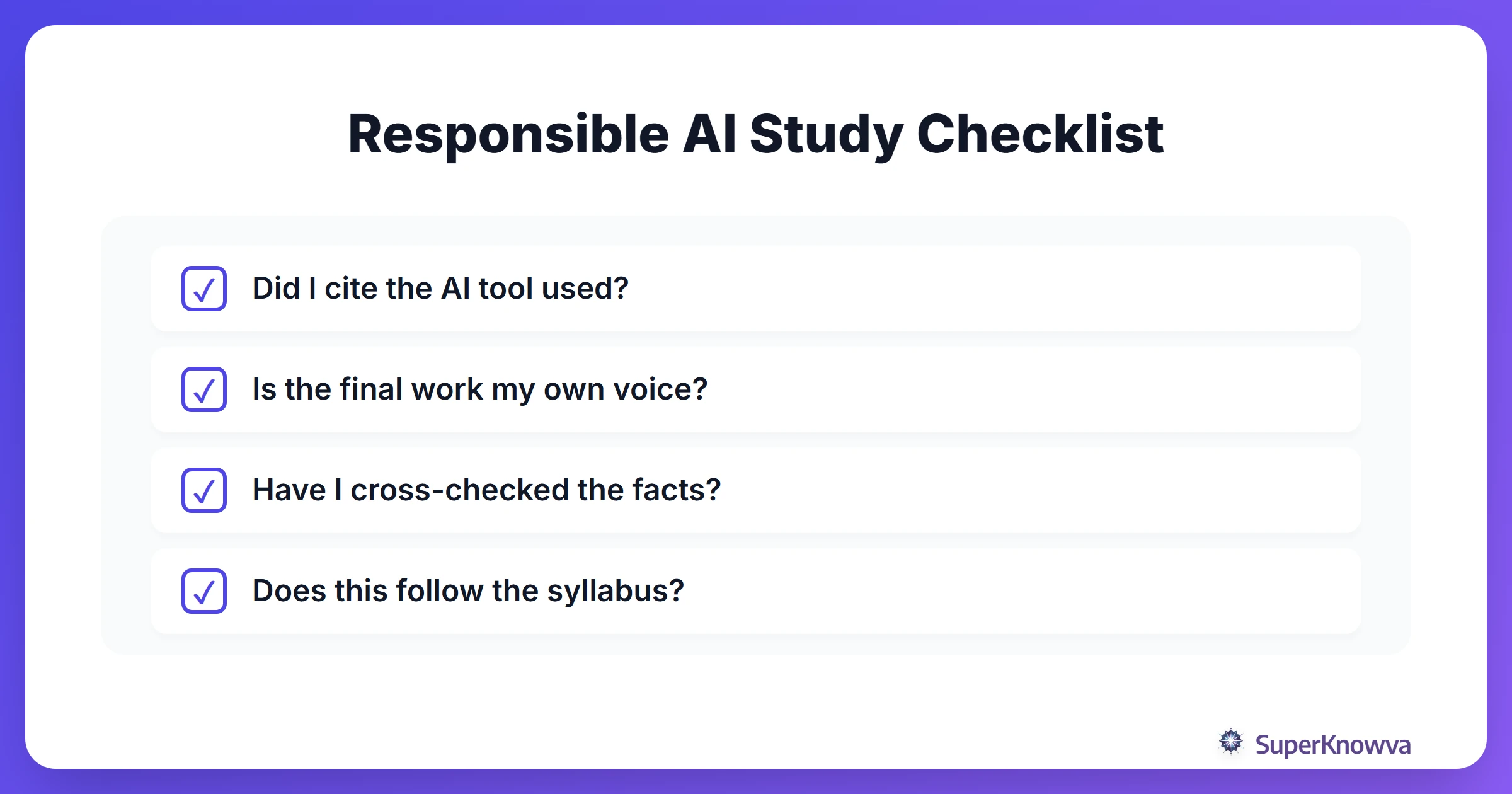
The Responsible Student's Checklist:
- Verify: Did I fact-check this against a primary source?
- Voice: Does this sound like me, or like a machine?
- Policy: Am I following my school's academic integrity rules?
- Citation: Have I been honest about how I used the tool?
AI is an incredible tool to boost your grades and your understanding, but it works best when it's paired with your own curiosity and critical thinking. Study smarter, stay honest, and keep your own voice at the center of your education.