We’ve all been there. It’s 2:00 AM, you’re on your fourth cup of coffee, and you’ve been staring at the same page of your textbook for twenty minutes. The end of the semester usually feels less like a finish line and more like a gauntlet. But here’s the secret: the students who ace their finals aren't necessarily the ones pulling the most all-nighters. They’re the ones who know how to manage their energy and their schedule.
This finals week survival guide university edition is here to help you stop the spiral. Let’s trade the panic for a plan so you can actually finish the semester with the grades you want.
The Master Schedule: Stop Guessing, Start Mapping
Before you highlight another sentence, you need a roadmap. Trying to wing finals week is a fast track to burnout and missed deadlines.
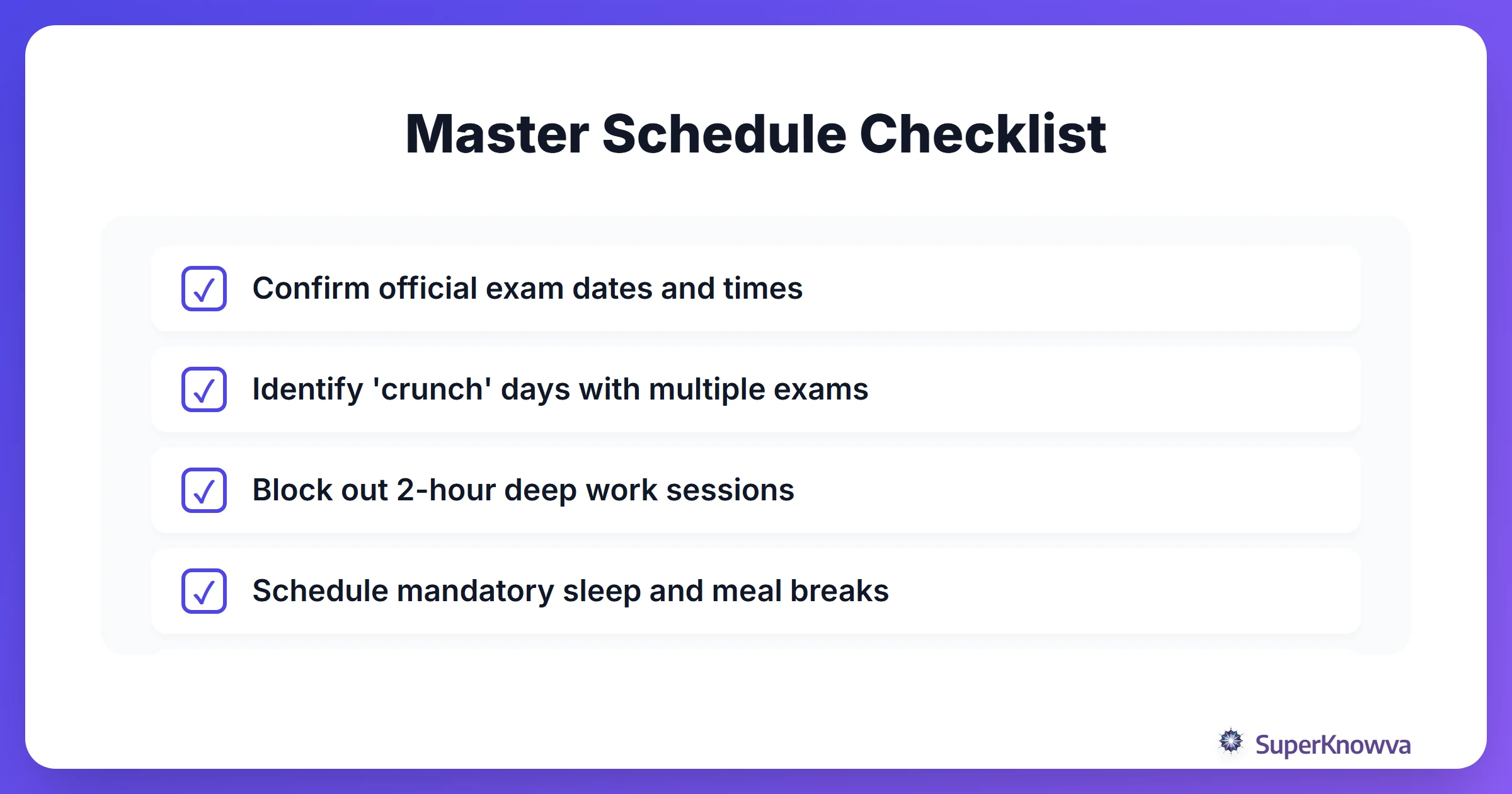
First things first: Go find your university’s official final exam schedule. Don't rely on what your roommate said or what you "think" the date is. Check your official university academic calendar to confirm the exact time and room. There is no worse feeling than showing up an hour late to a 200-point exam.
Once you have the dates, it's time to get tactical. Distinguish between exam times (the unmovable blocks) and study blocks (the time you have to actually work).
Try time blocking. Instead of saying "I'll study Chemistry today," tell yourself you’ll tackle Organic Chemistry from 9:00 AM to 11:00 AM, then switch to European History at 2:00 PM. This keeps your brain fresh and ensures one subject doesn't cannibalize your entire day.
Ideally, you should start this study schedule for finals at least two weeks out. This gives you enough runway to realize you don't understand Chapter 4 before the night of the test. Leveraging the best study apps for students can also help you keep your notes organized and your schedule automated.
High-Impact Study Techniques: Work Smarter, Not Harder
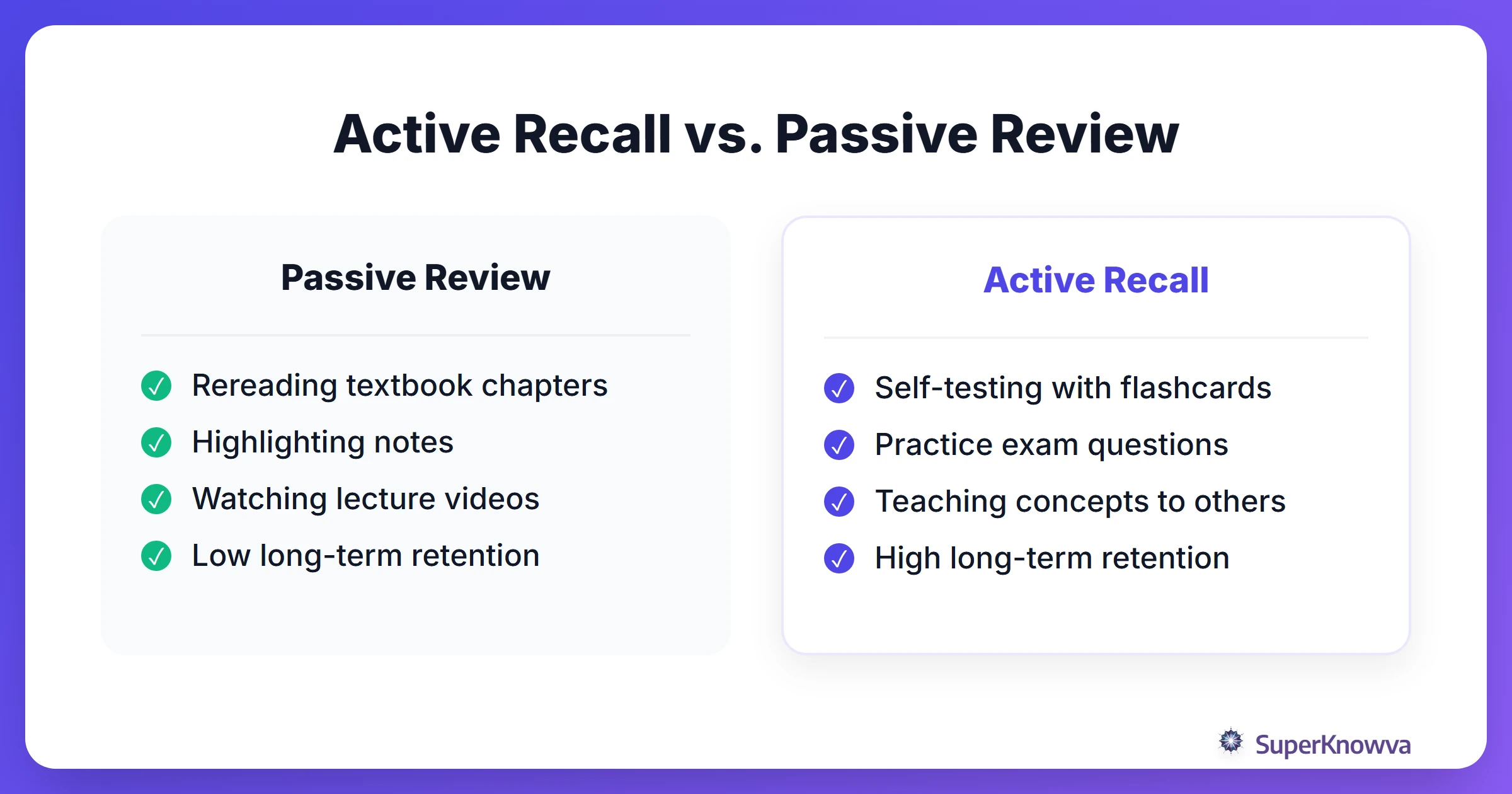
Are you actually learning, or are you just recognizing the words on the page? When it comes to Active Recall vs. Re-reading, one is a power tool and the other is a waste of time.
Passive review, such as re-reading your notes or highlighting your textbook, creates an "illusion of competence." It feels easy, so you think you know it. But come exam time, your brain blanks. Active recall forces your brain to actually retrieve the info, which is what builds real memory.
- Self-Quizzing: Don't just read. Quiz yourself. Use platforms like SuperKnowva to turn your notes into practice questions instantly.
- The Feynman Technique: Can you explain the concept to a five-year-old? Or even just a friend who isn't in your major? If you get stuck or start using "fluff" words, you’ve found a gap in your knowledge.
- Spaced Repetition: Don't cram one subject for eight hours straight. Spend one hour on it every day for a week. Your brain needs time to "bake" the information into your long-term memory.
The Physicality of Finals: All-Nighters are a Scam
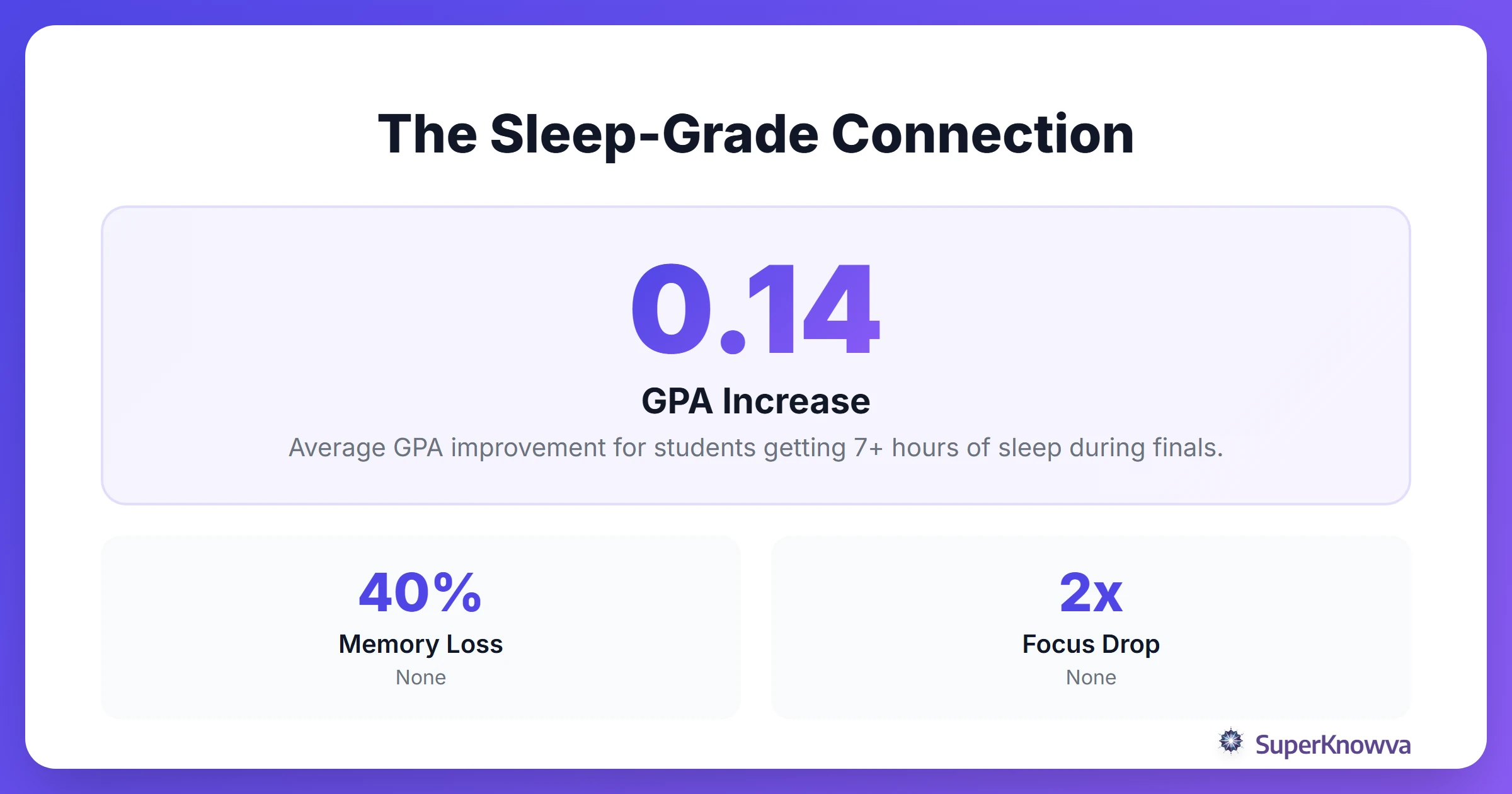
Let’s bust a common campus myth: all-nighters are not a badge of honor. They are academic sabotage. Sleep is non-negotiable for memory consolidation. If you don't sleep, your brain can't "save" what you just spent ten hours studying.
If you have a massive workload, learning how to study for 10 hours a day without burning out is vital, and that includes taking actual breaks. Feed your brain, too. Ditch the sugar-heavy energy drinks that lead to a mid-exam crash. Go for "brain foods" like walnuts, berries, and complex carbs for steady energy.
Also, get moving. A quick 15-minute walk isn't "wasted" study time; it’s a way to flush out cortisol (the stress hormone) and clear the mental fog. Stay hydrated, too. Even a little dehydration can tank your concentration.
Use What You’re Already Paying For
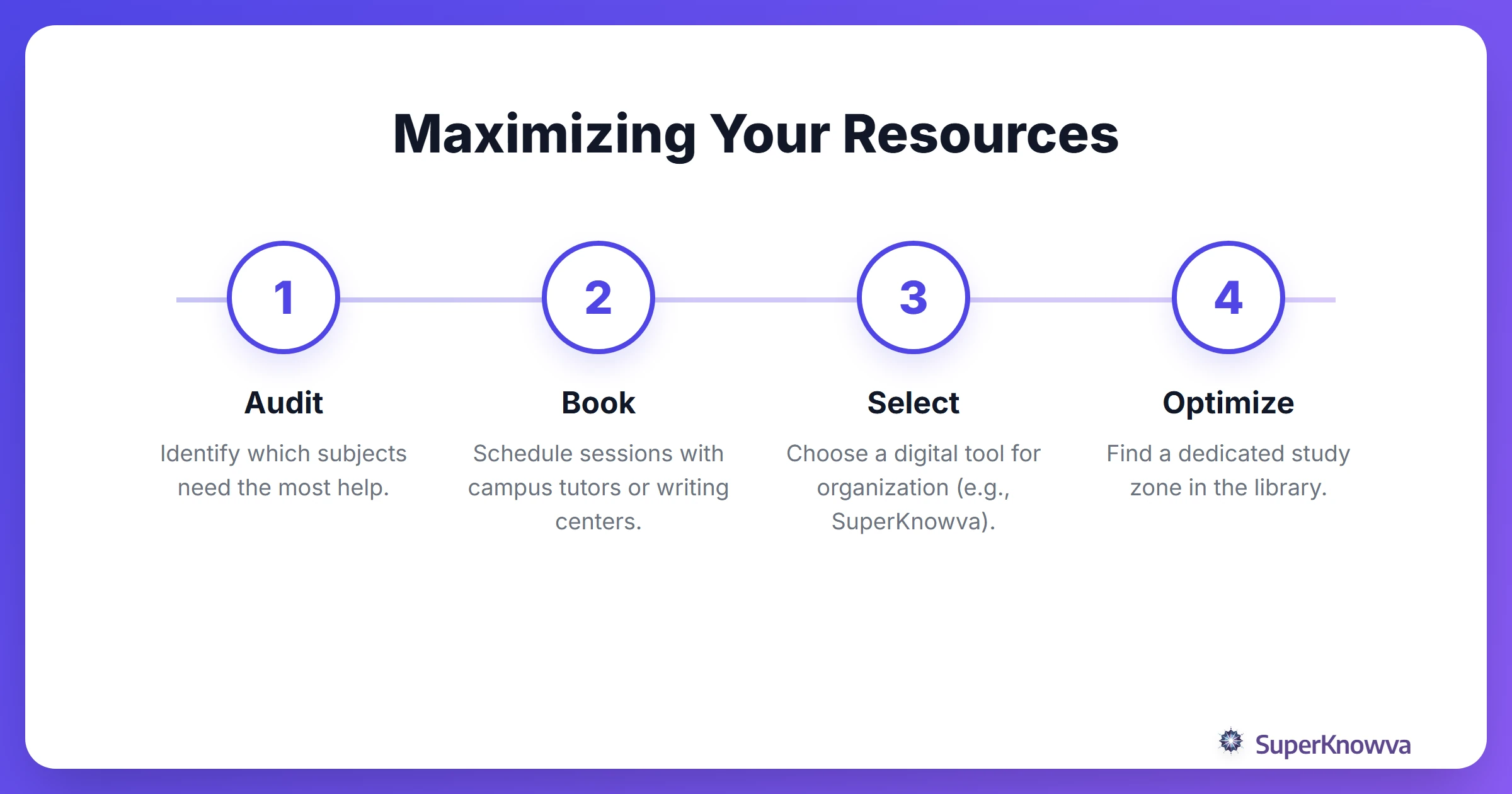
You don't have to do this alone. Your tuition pays for university study resources. Why not use them?
Hit up university tutoring services or the writing center during "dead week." These people are literally there to help you understand the stuff that’s been confusing you since September. Also, check for extended library hours. Many campuses go 24/7 during finals, providing a quiet, distraction-free zone that’s much better for focus than your dorm room.
Many campuses offer free tutoring and extended library hours during the home stretch, so keep an eye on your student email for those announcements.
Managing Stress and the "5-Minute Rule"
Ever felt "finals paralysis"? It’s that moment when you have so much to do that you just end up staring at a wall for an hour.
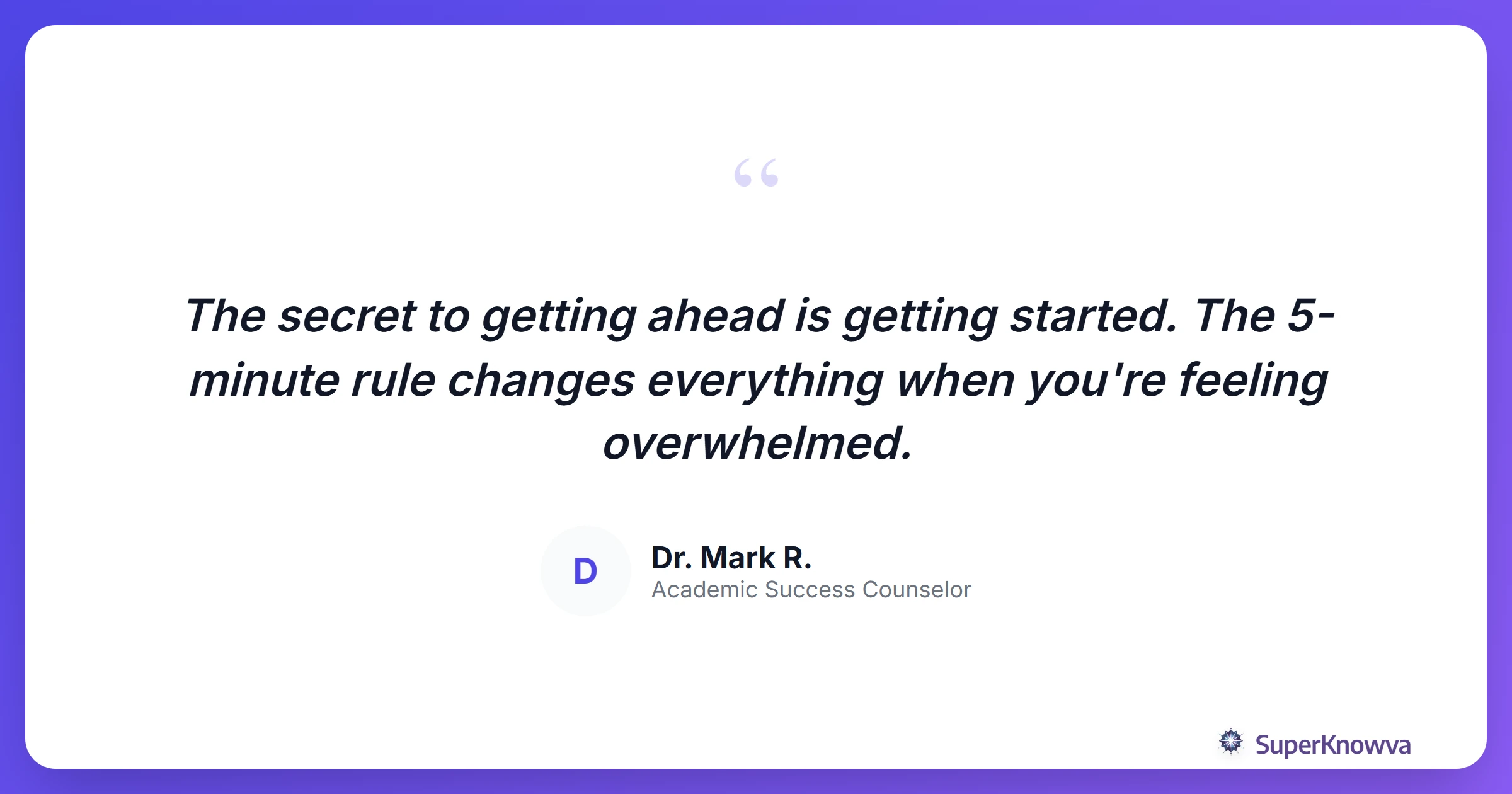
When you feel that overwhelm, use the 5-minute rule. Tell yourself you’re only going to study for five minutes. That’s it. Usually, the hardest part is just breaking the seal. Once you start, the momentum kicks in.
To keep your focus sharp, try the Pomodoro Technique: 25 minutes of deep work, followed by a 5-minute break. It makes a marathon study session feel like a series of short sprints. And if the anxiety starts to peak on exam day, take three deep breaths. It sounds simple, but it actually signals your nervous system to calm down.
The Final Countdown: Game Day Prep
As the exam gets closer, stop trying to learn new, complex theories. Shift your focus to maintenance.
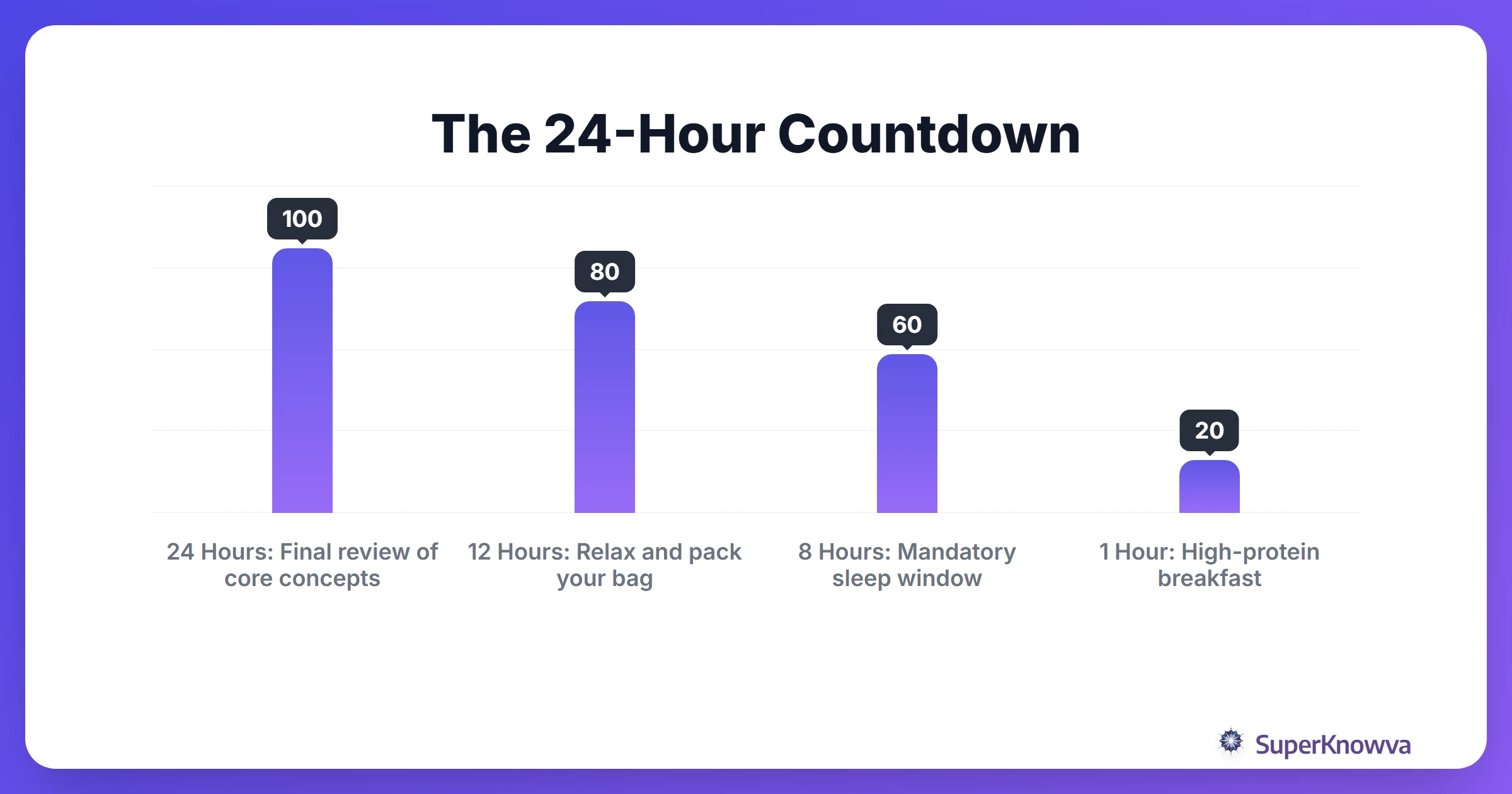
The night before, pack your bag. Make sure you have your pens, a calculator (with working batteries), your student ID, and a snack. You don't want to be hunting for a pencil ten minutes before your biggest exam of the year.
On the morning of, do a quick "warm-up." Review a high-level summary or your flashcards just to prime your brain. Eat a breakfast with some protein so your stomach isn't growling in a silent exam hall.
Once you get that paper, take five minutes to read every instruction. Scan the whole thing. This lets your subconscious process the hard questions while you complete the easy ones first. Once it’s over? Let it go. Don't discuss your answers with friends in the hallway. It’s done. Move on, recharge, and get ready for the next one, or better yet, go celebrate.