Remember the early days of remote testing? The awkward "room scans" felt less like a security check and more like a home invasion. Glancing away for a split second could get you flagged as a cheater. These sessions involved sweaty palms, technical glitches, and the constant feeling that the software was rooting for you to fail.
Fast forward to 2026, and that era of intrusive, high-stress monitoring is finally behind us. AI-proctored exams have grown up. They’ve evolved into sophisticated, nearly invisible systems that actually care about student well-being as much as they care about academic integrity.
In this post, we examine how remote testing has become a fair and supportive environment for learners everywhere.
From Digital Prisons to Invisible Security
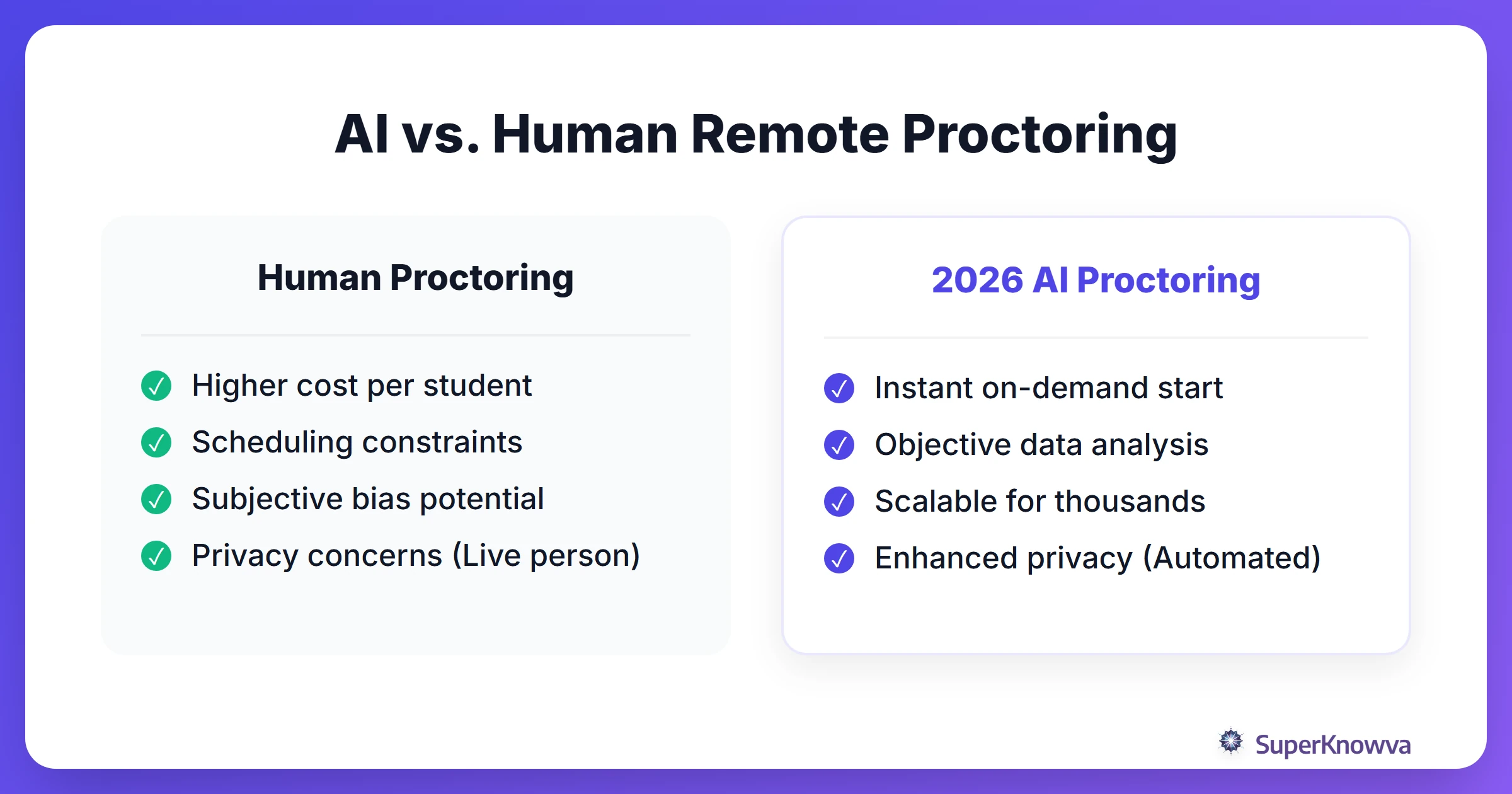
The first generation of remote proctoring was, frankly, a bit clumsy. It relied on basic screen recording and rigid "red flag" systems that panicked if a dog barked or a sibling walked into the frame. It was stressful for students and a headache for educators.
2026 has brought a major change: security has become "invisible." Instead of software that makes you feel like you’re in a digital prison, modern systems use advanced behavioral biometrics. They work quietly in the background to verify who you are without breaking your focus. This is vital for hybrid education. Students get the flexibility to test from their own couch, and institutions get to keep the prestige of their credentials intact.
How Does It Actually Work? (The Tech Behind the Test)
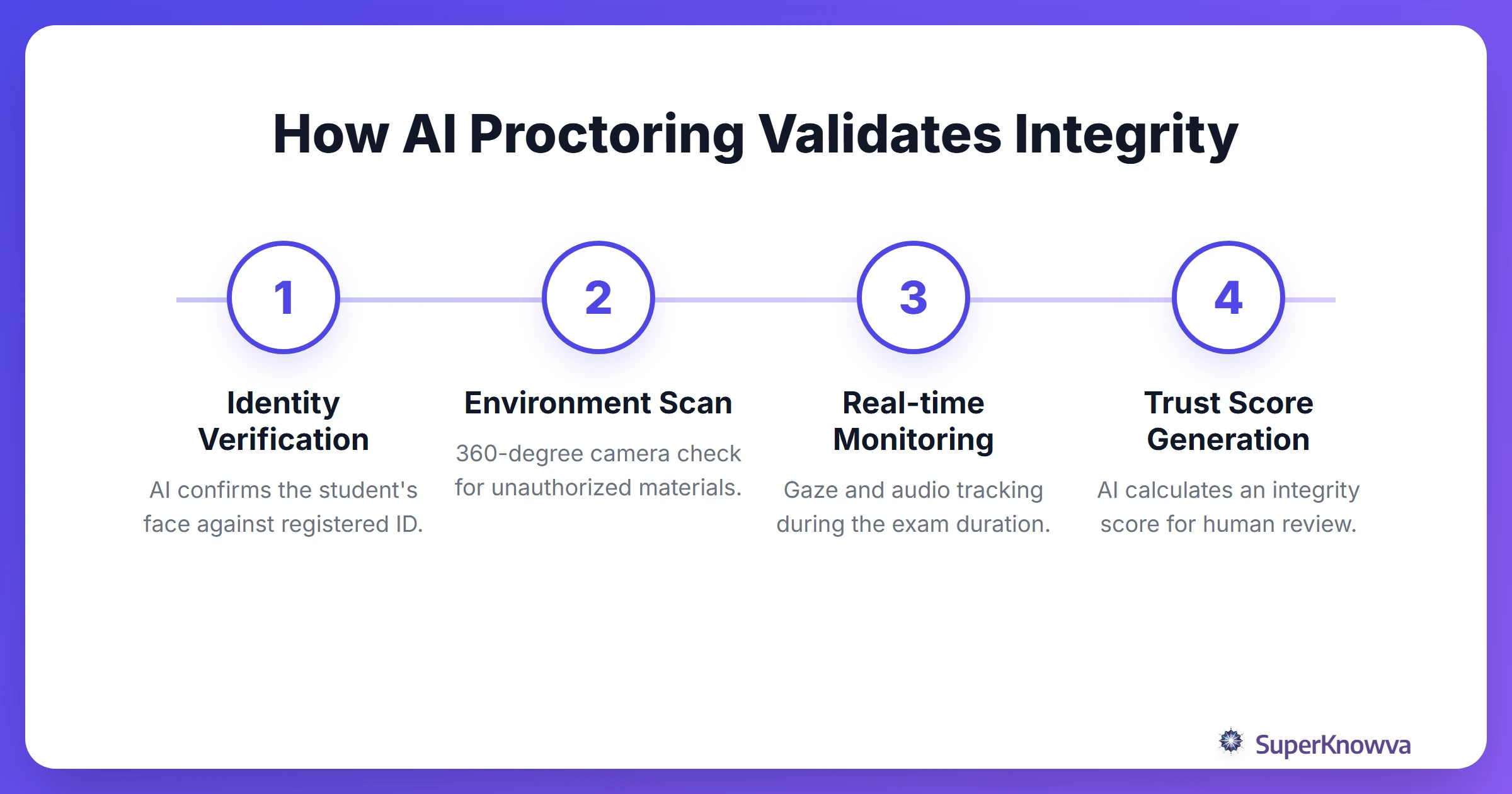
The technology powering your 2026 exams is light-years ahead of those laggy, browser-crashing plugins of the past. By using frameworks like TensorFlow.js, modern tools handle real-time face detection and gaze tracking right inside your browser.
The best part? It doesn’t need to stream your video to a giant central server constantly. It stays local, which saves your bandwidth and protects your privacy.
Here is what’s happening under the hood:
- Smart Audio Analysis: The AI can now tell the difference between "unauthorized collaboration" (whispering answers) and "benign noise" (a lawnmower outside or your AC kicking on).
- Zero-Friction Integration: You can say goodbye to bulky, proprietary browsers. AI proctoring now plugs directly into the tools you already use, like Google Forms and Microsoft Forms. It feels like a natural part of the learning process, not a separate hurdle to jump over.
The AI Arms Race: Outsmarting the Bots
As AI tools have become more common, some students have tried to use them to bypass security. We’ve seen everything from button-mounted cameras to hidden routers designed to feed questions to external LLMs. It’s a classic "cat and mouse" game, and as research shows, many proctored exams have fallen to generative AI in the past.
However, the 2026 breed of AI proctors is trained to spot "AI-assisted" behavior. This isn't just about looking for a hidden camera; it’s about recognizing non-human cognitive patterns. If a student’s response time and mouse movements look exactly like a bot’s output, the system knows something is up. We’re moving from catching tools to understanding the process of how a human actually thinks.
Less "Watchdog," More "Support System"
At SuperKnowva, we’ve always believed that technology should work for you, not just monitor you. A notable development lately is using AI for reducing test anxiety through AI support.
Modern proctors detect signs of a panic attack, such as erratic breathing or rapid clicking. Instead of flagging the user, the system can offer a pause or a quick grounding exercise.
AI is also a massive win for accessibility. It’s helping create inclusive learning for students with disabilities by automatically adjusting time limits or enabling screen readers based on verified needs. The goal is simple: move away from "high-stakes" stress and toward continuous assessment, where the AI tracks your progress over a semester rather than judging your entire future on a single two-hour window.
Trust, Privacy, and the "Black Box"
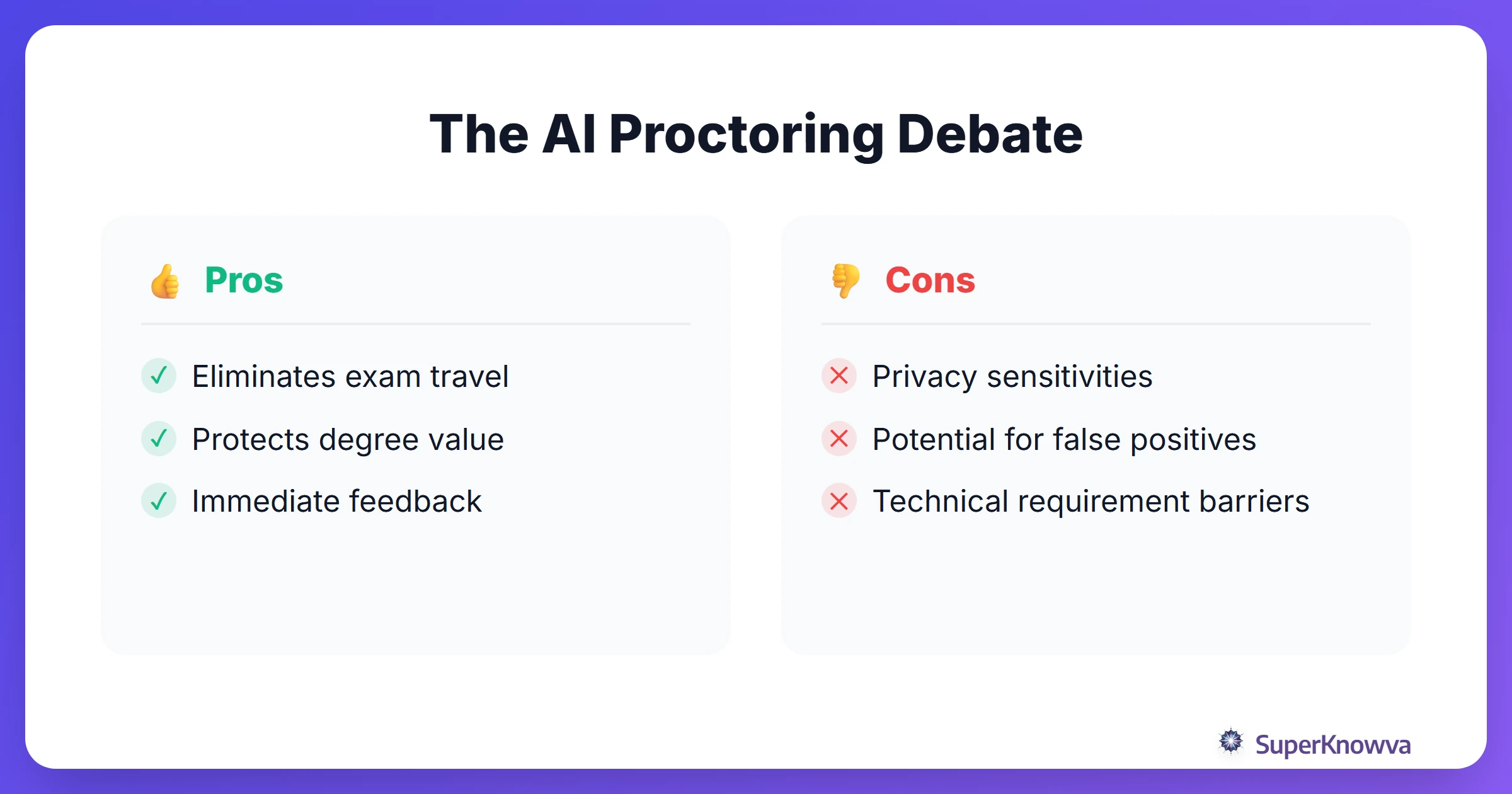
For AI to work, you have to trust it. Nobody likes the "Black Box" problem, where an AI makes a decision without explanation. Transparency is the fix. If a student gets flagged in 2026, they are shown exactly what triggered it and given a chance to explain.
We’re also seeing a huge move toward edge-processing. This means your biometric data (your face and voice) stays on your own device. It’s never uploaded to the cloud. Plus, developers are working harder than ever to fix algorithmic bias, ensuring the system is fair regardless of your background or your home environment. Truly AI and emotional intelligence in education go hand-in-hand to keep these systems human-centric.
What This Means for Schools and Universities
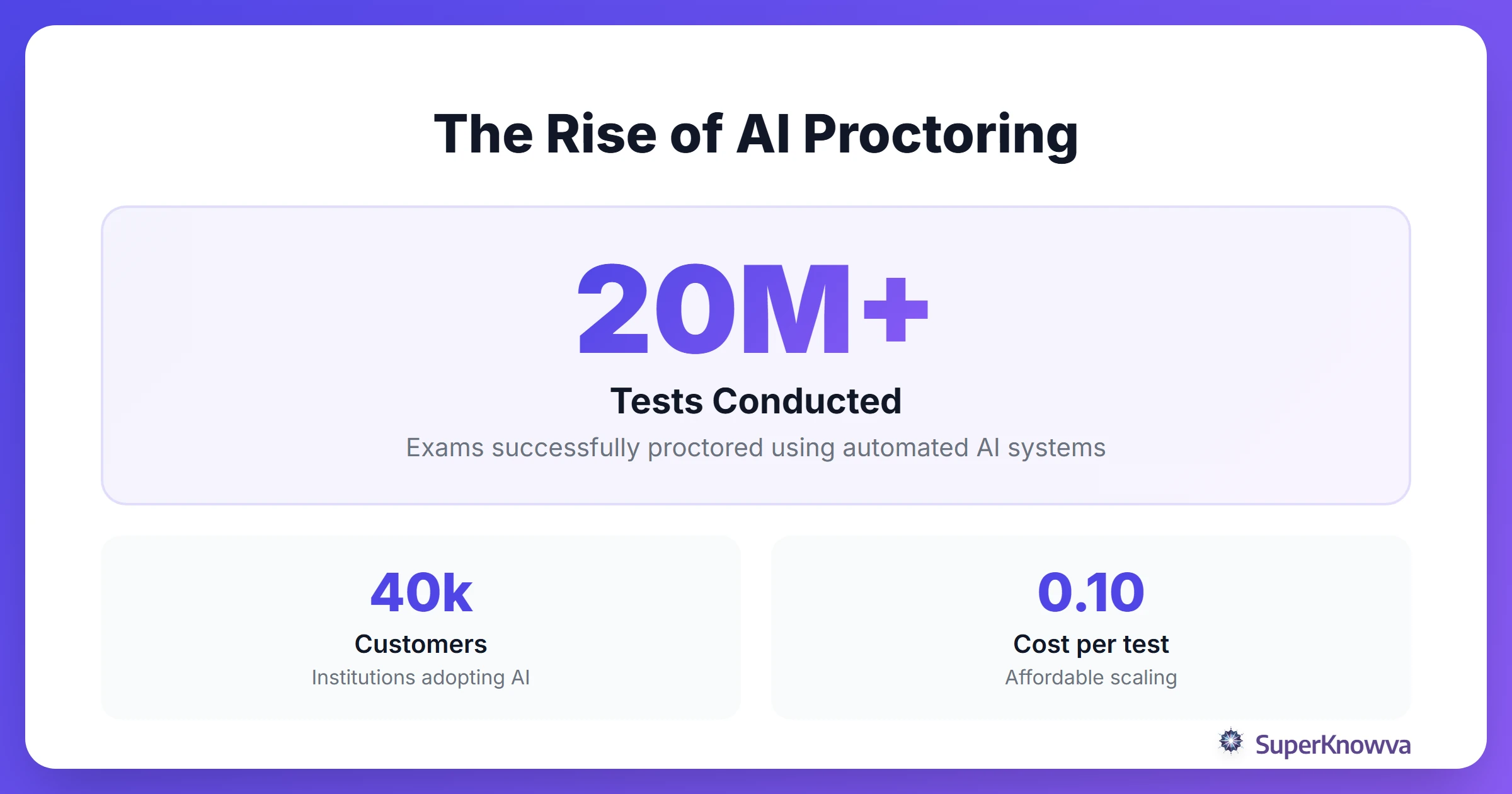
For schools, the shift isn't just about catching cheaters; it’s about scale. Automated systems like AutoProctor automated monitoring allow institutions to run thousands of exams at once for a fraction of what human proctors cost.
The most successful schools use a "proctor-plus" model. The AI does the heavy lifting of monitoring and flagging, while a human educator makes the final call. This keeps a "human in the loop" while removing all the technical friction that used to make remote testing such a nightmare.
The future of exams isn't about "gotcha" moments. It’s about creating a level playing field where you can show what you actually know without the tech getting in the way. By leaning into these AI advancements, we’re making testing faster, fairer, and a whole lot less scary.