If you are preparing a graduate school application for the fall, your gre quantitative reasoning prep must be more than consistent; it must be precise to reach a top-tier program.
While some students spend six months casually flipping through textbooks, the most successful test-takers often find that a high-intensity "sprint" is the best way to lock in math concepts and peak exactly when it matters.
In this guide, we’ll show you how to turn your July into a powerhouse month of learning. By leveraging AI to bridge your math gaps, you can master the GRE Quant section in just 30 days.
The July Advantage: Why a Summer Sprint Works
July is the "sweet spot" of the admissions cycle. It’s late enough that you likely have some summer downtime, but early enough to leave room for a retake before those looming fall deadlines.
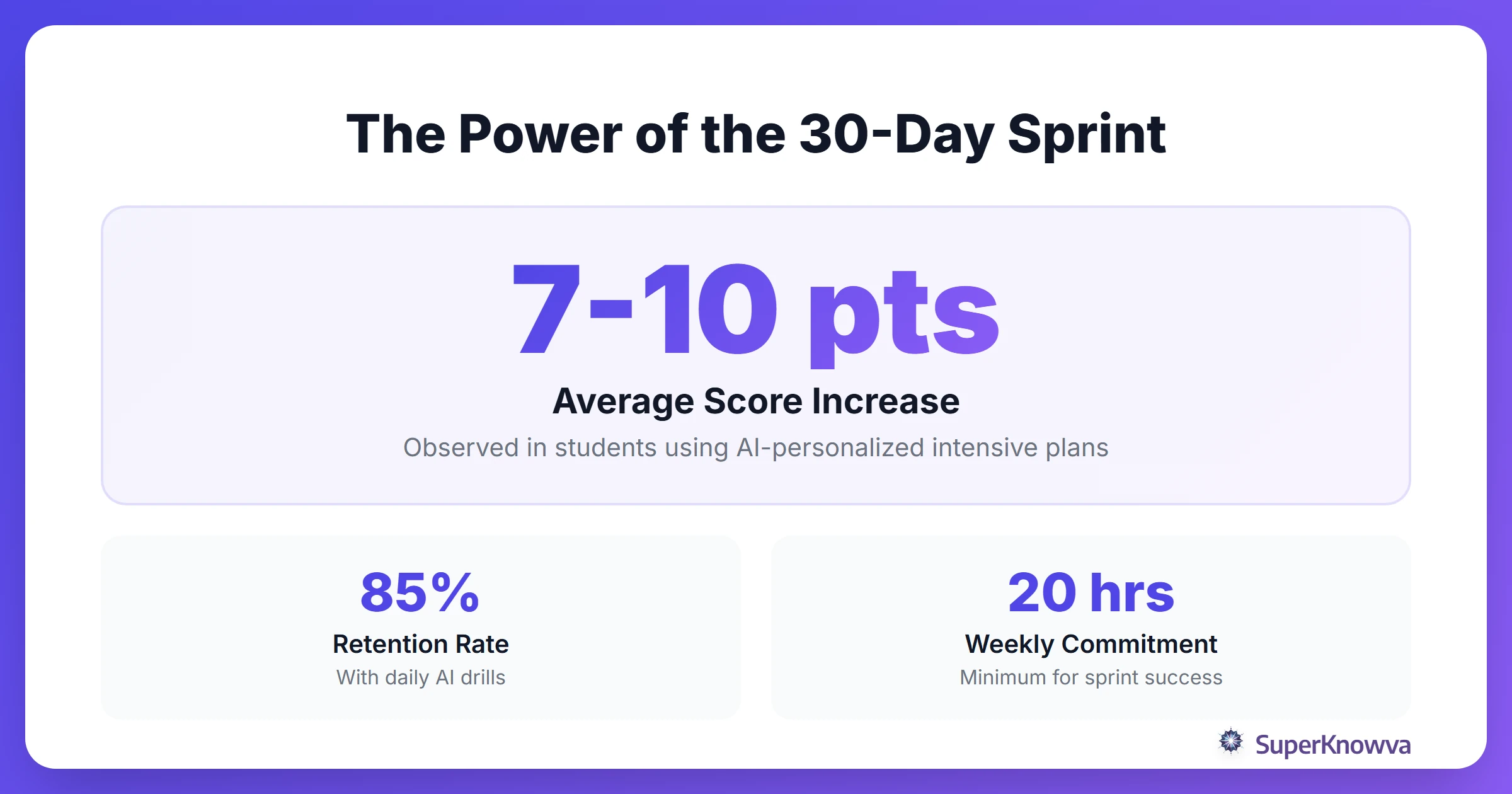
A "Sprint" mindset prioritizes intensity over duration. Forget distracted, two-hour reading sessions. A sprint is a focused, 20-hour weekly commitment built on active recall and targeted drills. By compressing your study window into 30 days, you keep formulas fresh and maintain the mental stamina required for the actual four-hour exam. Setting a goal, such as a 5-to-10-point increase, is realistic when you narrow your focus to high-yield topics.
Assessing Your Starting Point: Identifying Quant Gaps
You can’t fix what you haven't diagnosed. Every successful sprint starts with a practice test, but let's be honest: manual grading is a chore. It tells you what you got wrong, but it rarely explains why.
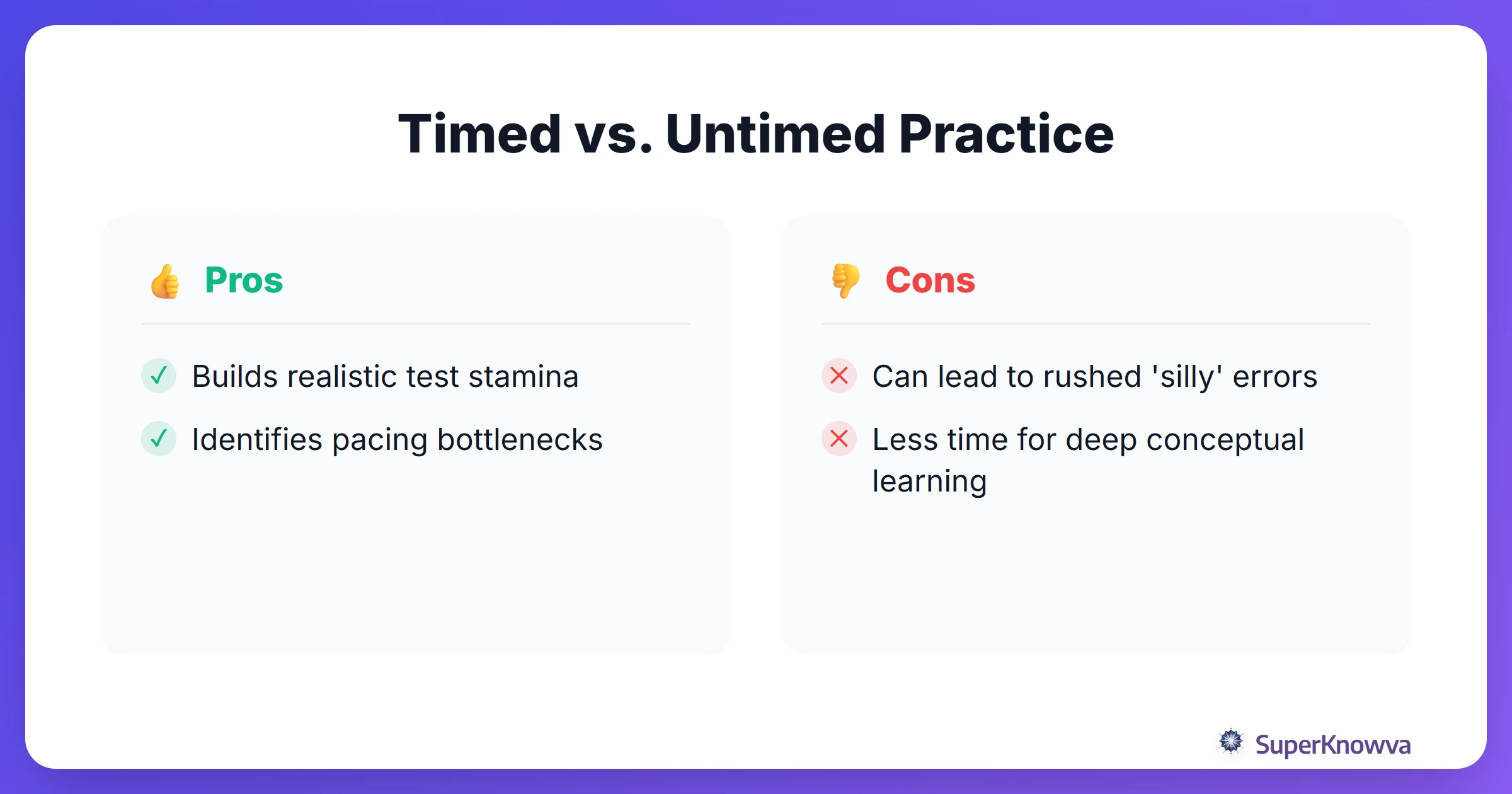
Modern gre quantitative reasoning prep has moved beyond red pens. AI-driven diagnostics now analyze your performance across the four major domains: Arithmetic, Algebra, Geometry, and Data Analysis. More importantly, AI can tell the difference between a conceptual gap (like forgetting the formula for a cylinder’s volume) and a procedural error (a "silly" calculation mistake under pressure). Knowing whether you need a content refresher or just better time management is the secret to not wasting a single hour of your 30-day window.
The Four Pillars of GRE Quant Content
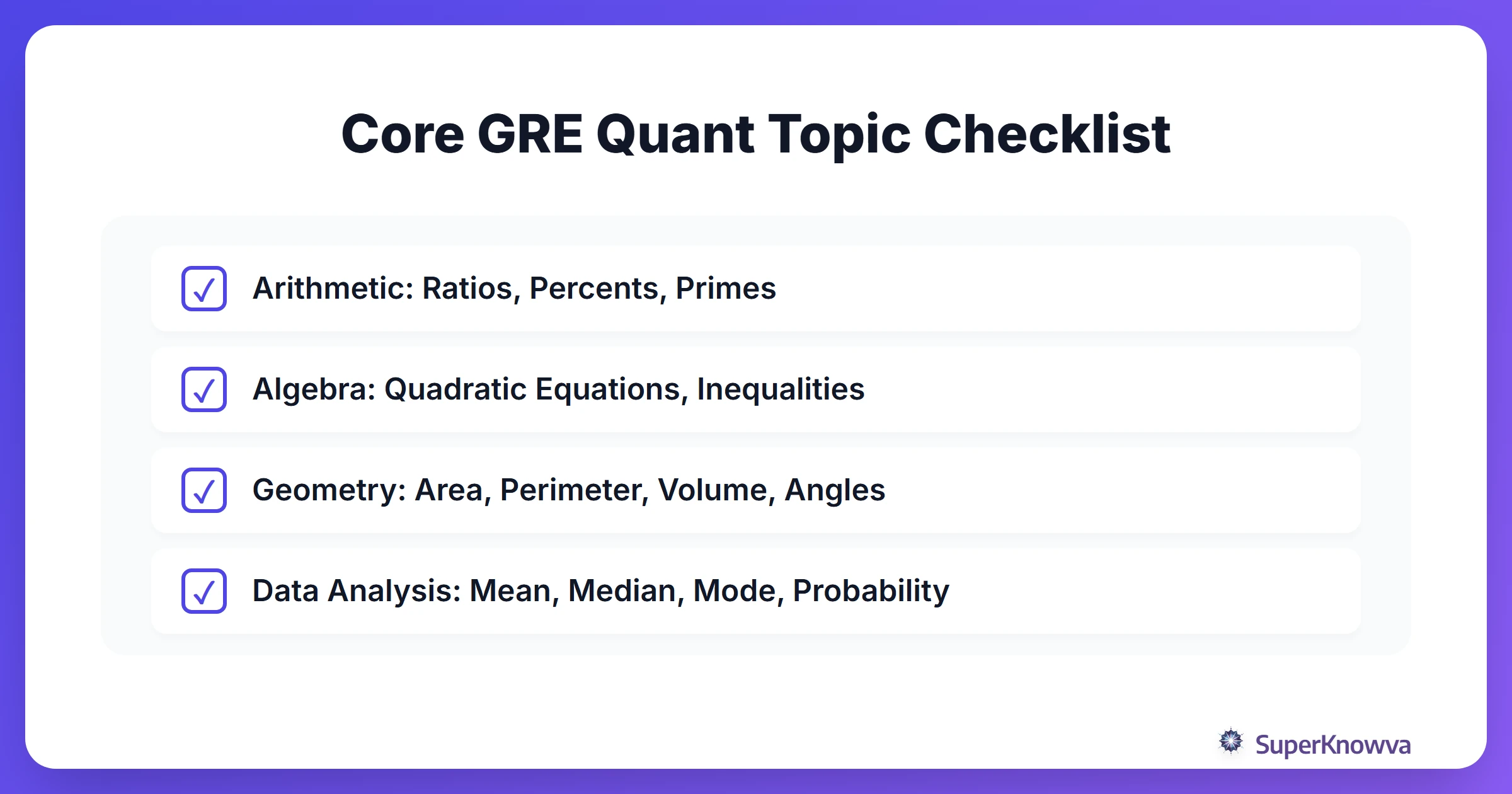
The GRE isn't a calculus test. It’s a logic test that uses high-school-level math as its language. To win, you need to master the four pillars as outlined in the Official ETS Quantitative Reasoning Overview.
- Arithmetic: You need to be fast with integer properties, ratios, percent changes, and prime factorization.
- Algebra: Focus on simplifying expressions and solving linear or quadratic equations. You’ll also need to understand functions and coordinate geometry.
- Geometry: Focus on triangles, quadrilaterals, and circles. No trigonometry is required; area, perimeter, and volume should be second nature.
- Data Analysis: You’ll be asked to interpret complex graphs, understand basic probability, and calculate standard deviation.
If your math feels a bit rusty, Khan Academy Instructional Videos for GRE are a fantastic (and free) way to rebuild that foundation.
The AI Advantage: Personalized Drills and Spaced Repetition
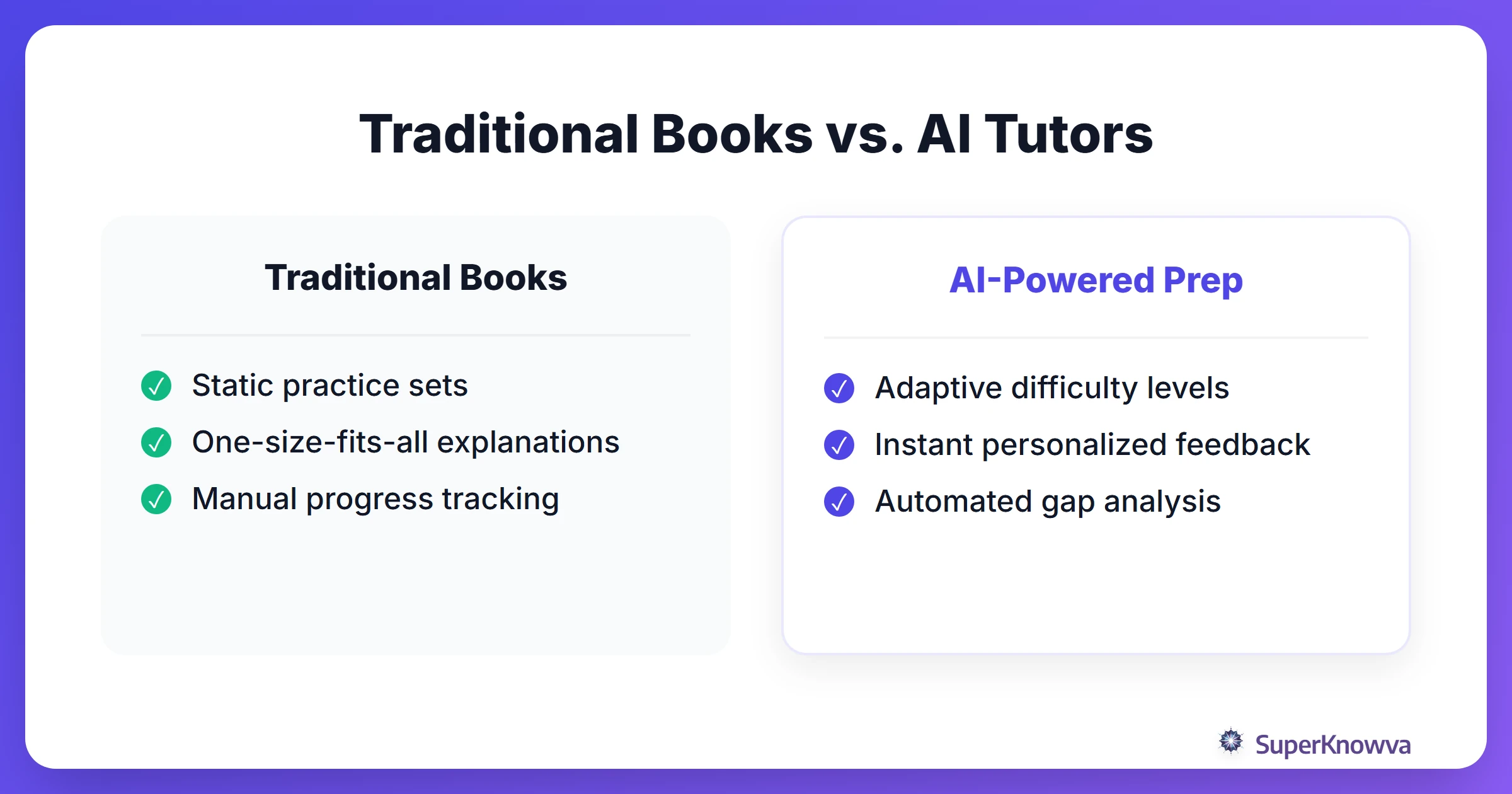
Traditional prep books have one major flaw: they’re static. Once you finish a chapter, the book has no idea if you actually learned it. This is where an AI-Powered Guide to GRE Quantitative Reasoning changes the math.
AI tutors use adaptive questioning. If you’re struggling with "Work/Rate" problems, the system notices and feeds you more of them, gradually increasing the difficulty until you’ve actually mastered the logic. Platforms like SuperKnowva also utilize spaced repetition. This ensures that a formula you learned on Day 3 pops back up on Day 10 and Day 25. By the time you sit for the actual computer-adaptive GRE, the format will feel like just another practice session.
Mastering Quantitative Comparison and Data Interpretation
Two specific question types tend to ruin a good score: Quantitative Comparison (QC) and Data Interpretation.
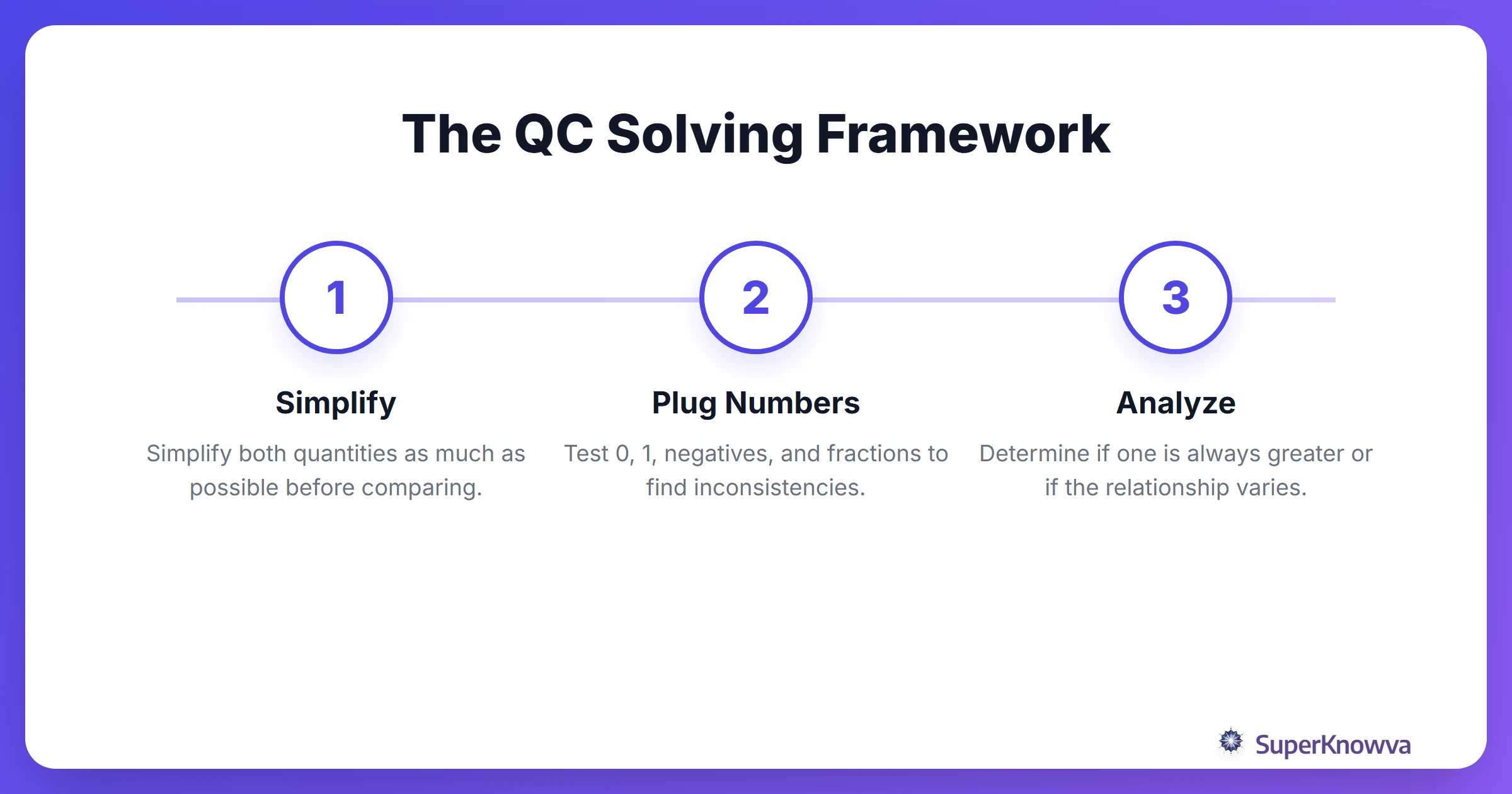
For Quantitative Comparison, don't get bogged down trying to find an exact number. The goal is simply to find the relationship between two quantities. A pro tip? "Test the numbers." Plug in 0, 1, -1, and fractions. If the relationship flips when you change the number, "D" (insufficient information) is your answer every time.
Data Interpretation is all about reading between the lines of ETS-style charts. The trap is usually in the wording. You have to translate "English to Algebra" perfectly. For example, "What percent more" is a completely different calculation than "What percent of."
Beating the Clock: Timed Practice and Stress Management
On the GRE, you have about 90 to 120 seconds per question. At that speed, your pacing is just as vital as your math skills. You have to learn the art of the "strategic skip." If a geometry problem is eating up three minutes of your life, guess, mark it for review, and move on. Every question carries the same weight. Don't let one hard algebra problem rob you of three easy arithmetic points.
Of course, math is only half the battle. To round out your score, check out how to Ace GRE Verbal with AI Strategies. And if your heart starts racing the moment the timer starts, Managing Test Anxiety with AI Tools offers some great techniques to keep your head in the game.
Your 4-Week Sprint Schedule
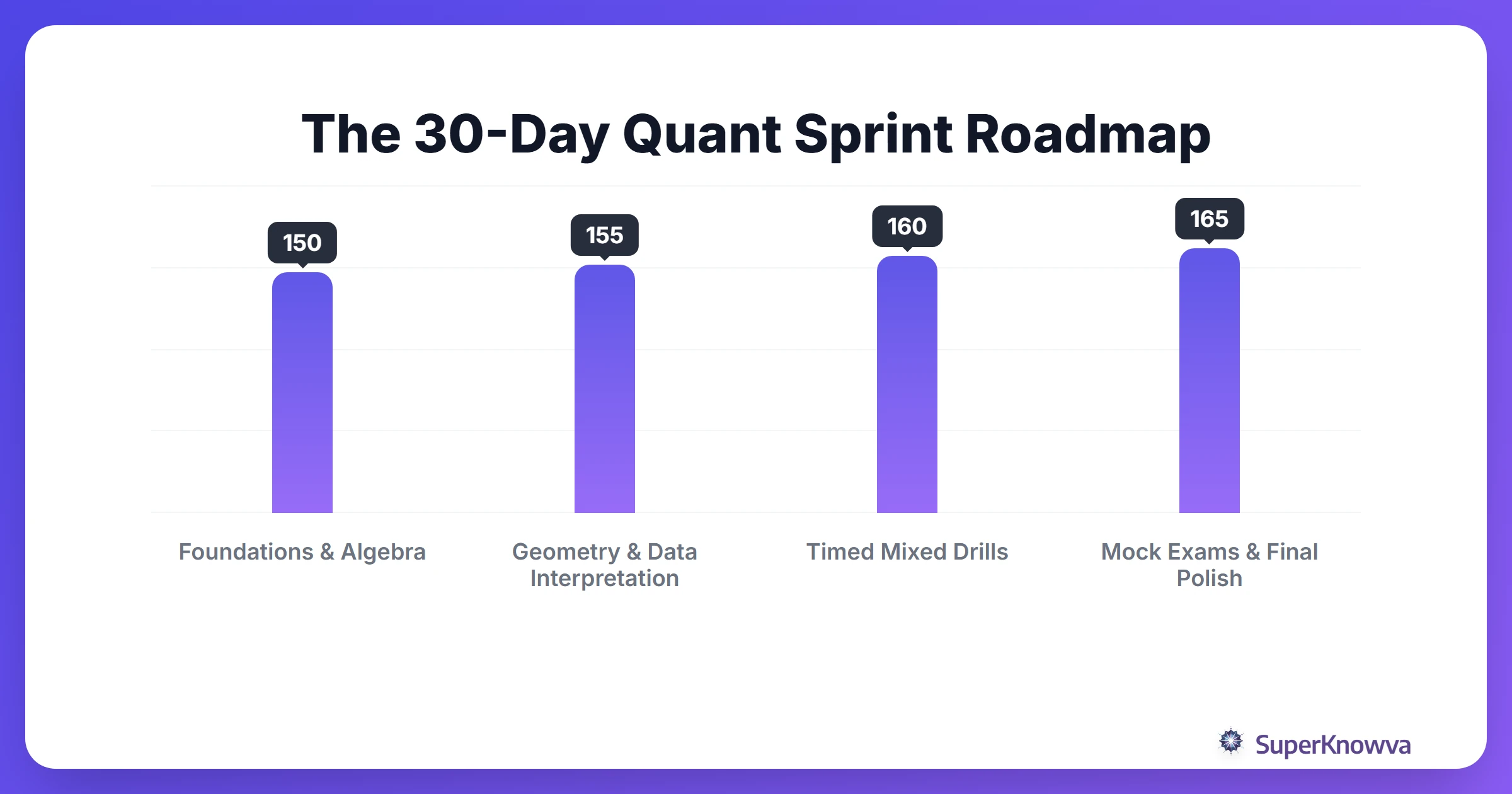
Ready to get to work? Here is your roadmap for the next 30 days:
- Week 1: Foundations & The Basics. Drill Arithmetic and Algebra until you can solve ratios and equations in your sleep.
- Week 2: Shapes & Data. Memorize your geometry formulas and practice interpreting those multi-layered graphs.
- Week 3: The Mixed Bag. Start combining topics. Use AI to generate "mixed" sets of questions to test how quickly you can switch gears between different math concepts.
- Week 4: The Home Stretch. Take at least two full-length mock exams under real-world conditions. Use your final days to patch any "silly error" trends your AI tutor has identified.
Conclusion
A 30-day sprint isn't easy, but it is incredibly effective. By pairing a high-intensity mindset with AI-powered personalization, you can turn the GRE Quant section from a source of stress into a highlight of your application. Don't let the summer slip away. Start your sprint today and master the math before the season changes.