Preparing for graduate school is demanding, and the GRE Psychology Subject Test is a significant challenge. Unlike the general GRE, which focuses on algebra and vocabulary, this exam is a detailed review of four years of undergraduate material. Many students feel overwhelmed by the scope of the test.
Effective gre psychology prep isn't about frantically skimming old textbooks the week before the test. It requires a strategic, modern approach. Today, that means moving beyond paper flashcards and leveraging the latest AI-powered tools to study smarter.
In this guide, we’ll break down how AI is changing the way students master complex theories and research methods, making sure you walk into that testing center actually feeling ready.
Understanding the GRE Psychology Blueprint
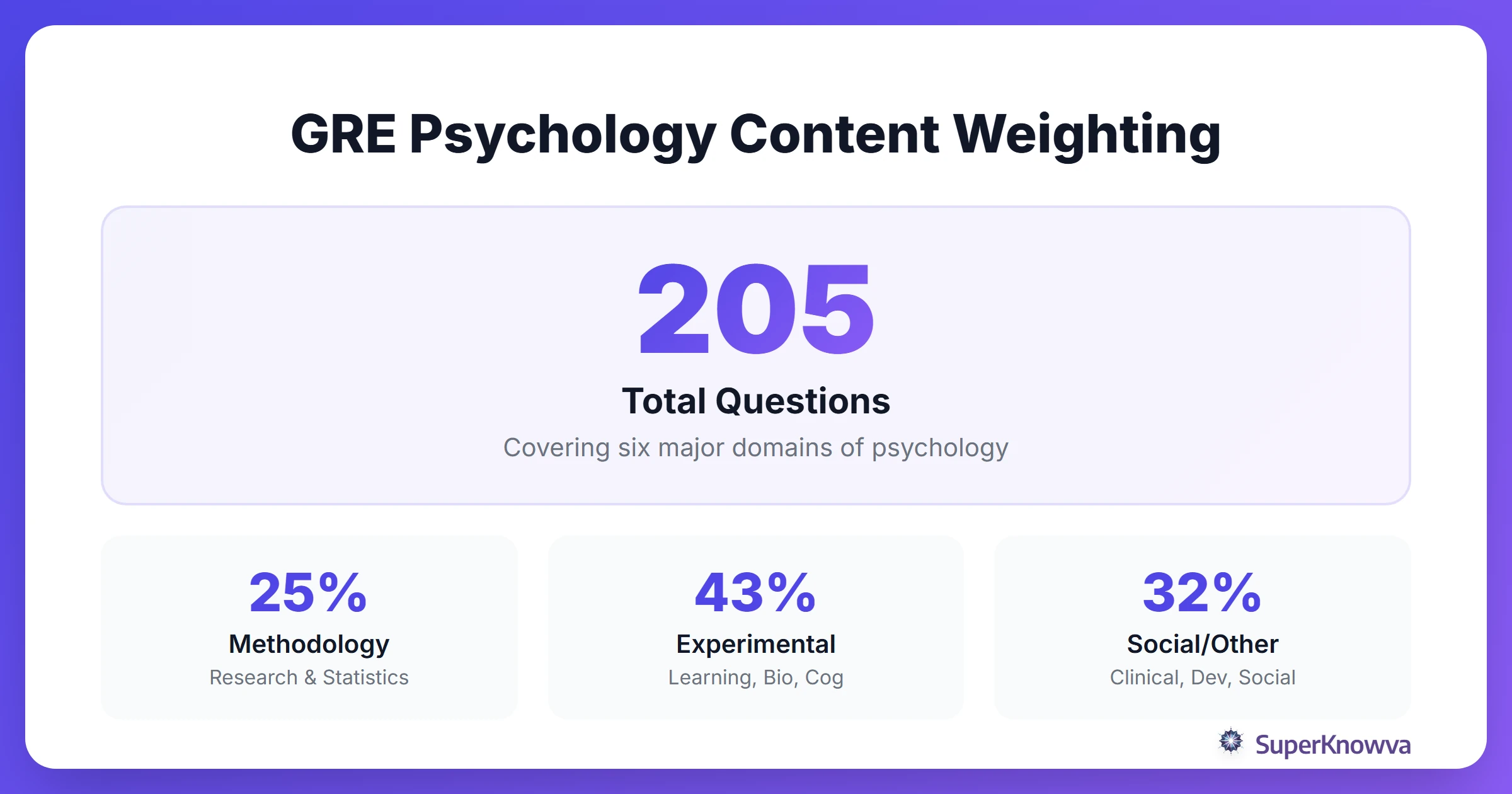
To conquer the GRE psychology subject test, you first need to know exactly what you’re up against. The exam throws about 205 multiple-choice questions at you under a tight clock. It’s a test of speed as much as it is a test of knowledge. You’ll need to recall and apply concepts across six core areas:
- Biological: Sensation, perception, and ethology.
- Cognitive: Learning, memory, and language.
- Social: Social perception and group processes.
- Developmental: Life-span development and socialization.
- Clinical: Personality, psychopathology, and therapy.
- Measurement and Methodology: Research design and statistics.
Rote memorization usually fails here because the scope is just too broad. SuperKnowva psychology tools help by organizing these domains and using AI to highlight your weak spots. It turns a mountain of data into a manageable study map.
The Challenge of Breadth: Why Psychology is Unique
Moving from a specific senior seminar to a comprehensive subject test is a massive leap. Most of us have a "side": you’re either a fan of the "Experimental" stuff (Bio and Cognitive) or the "Social" stuff (Clinical and Developmental). Balancing those two halves is the biggest hurdle in gre psychology prep.
The real danger of self-study is the "fluency illusion." That’s the feeling that because you recognize a term, you actually understand it well enough to answer a tricky application question. SuperKnowva acts as a digital diagnostic. It spots which of the six domains actually needs your attention, so you aren't wasting hours reviewing things you already know by heart.
AI-Powered Concept Drilling and Active Recall
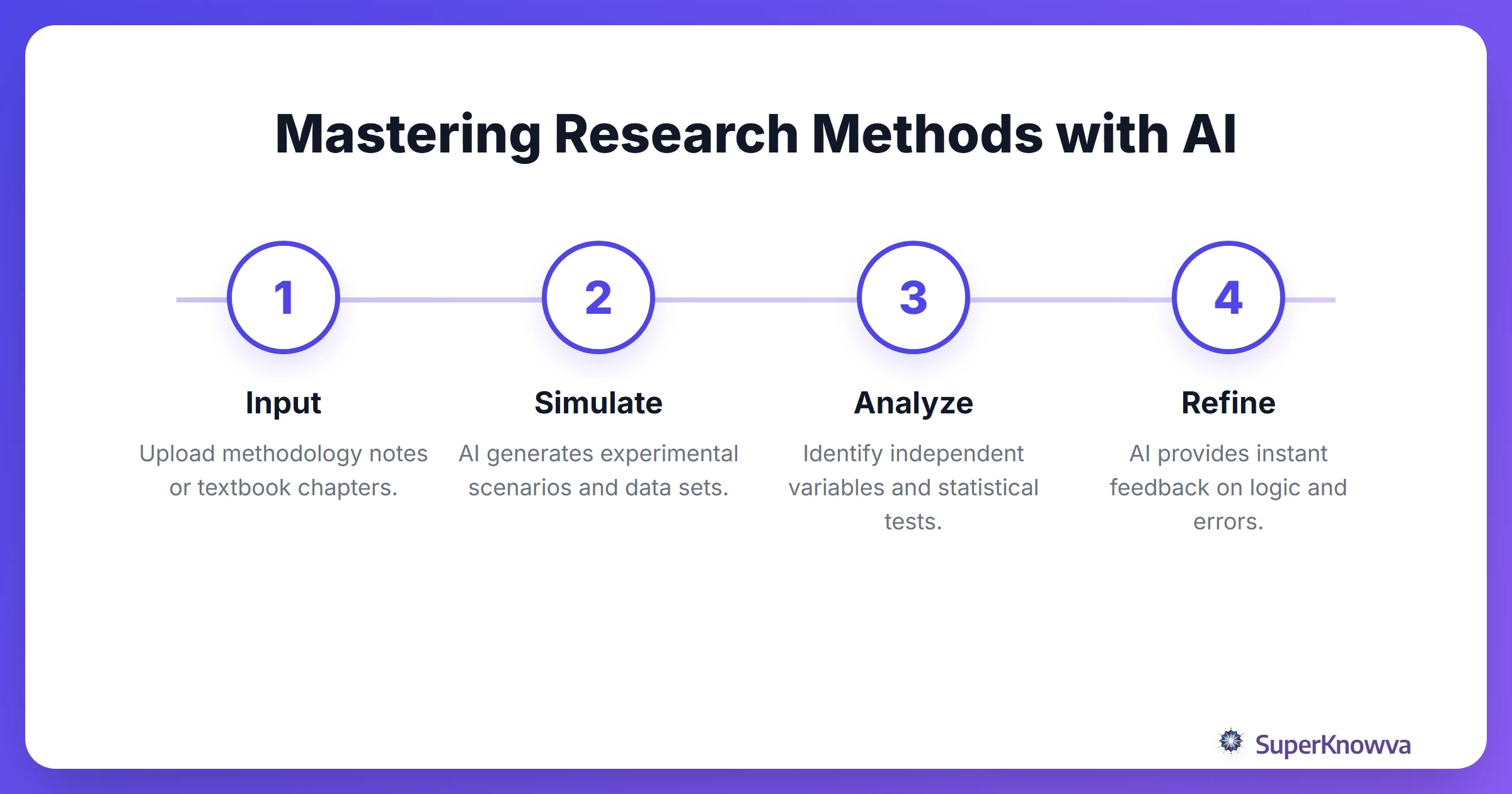
Flashcards are a psychology student staple, but static cards have their limits. AI study tools take things further with dynamic concept drilling.
Instead of just asking for a definition, SuperKnowva generates high-fidelity practice questions on niche theories. For example, rather than just defining Bronfenbrenner’s ecological systems, the AI might ask you to apply it to a specific childhood development scenario.
Then there’s the "forgetting curve." The power of spaced repetition for GRE prep is non-negotiable. AI algorithms track your performance on thousands of terms, resurfacing difficult concepts like Signal Detection Theory right when your brain is most likely to let them slip away.
Mastering Research Methods and Statistics with AI
The "Measurement and Methodology" section makes up about 25% of the exam. For many, it’s the most intimidating part. But mastering psychology research methods is the fastest way to a high score.
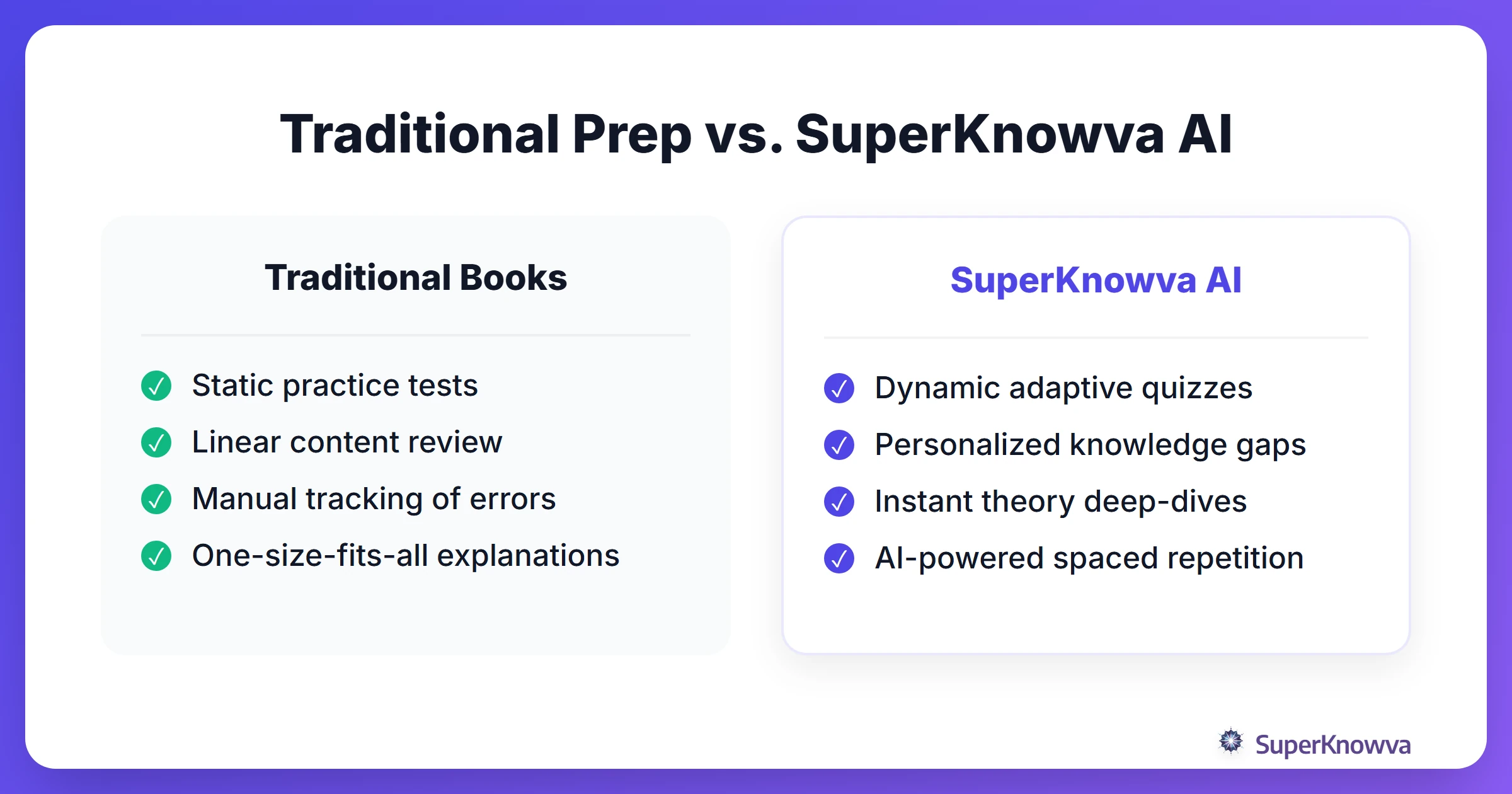
AI can simulate data sets in real-time, asking you to decide if an ANOVA or a Chi-Square test is the right tool for the job. By giving you instant feedback, AI clears up the confusion between things like internal validity and external reliability. If the math-heavy side of psych makes you nervous, you might also want to check out our guide on mastering GRE Quantitative Reasoning to sharpen those analytical skills.
Personalizing Your Prep with SuperKnowva
The best part about modern AI? It’s personal. With SuperKnowva, you aren't stuck with a one-size-fits-all curriculum. You can upload your own notes or specific textbook chapters to generate custom quizzes that reflect your specific coursework.
This creates targeted feedback. If you miss a question on the dopamine hypothesis of schizophrenia, the AI does more than show the right answer. It explains why the other options were wrong based on current theory, identifying and addressing specific knowledge gaps.
Integrating Official ETS Materials with AI Workflows
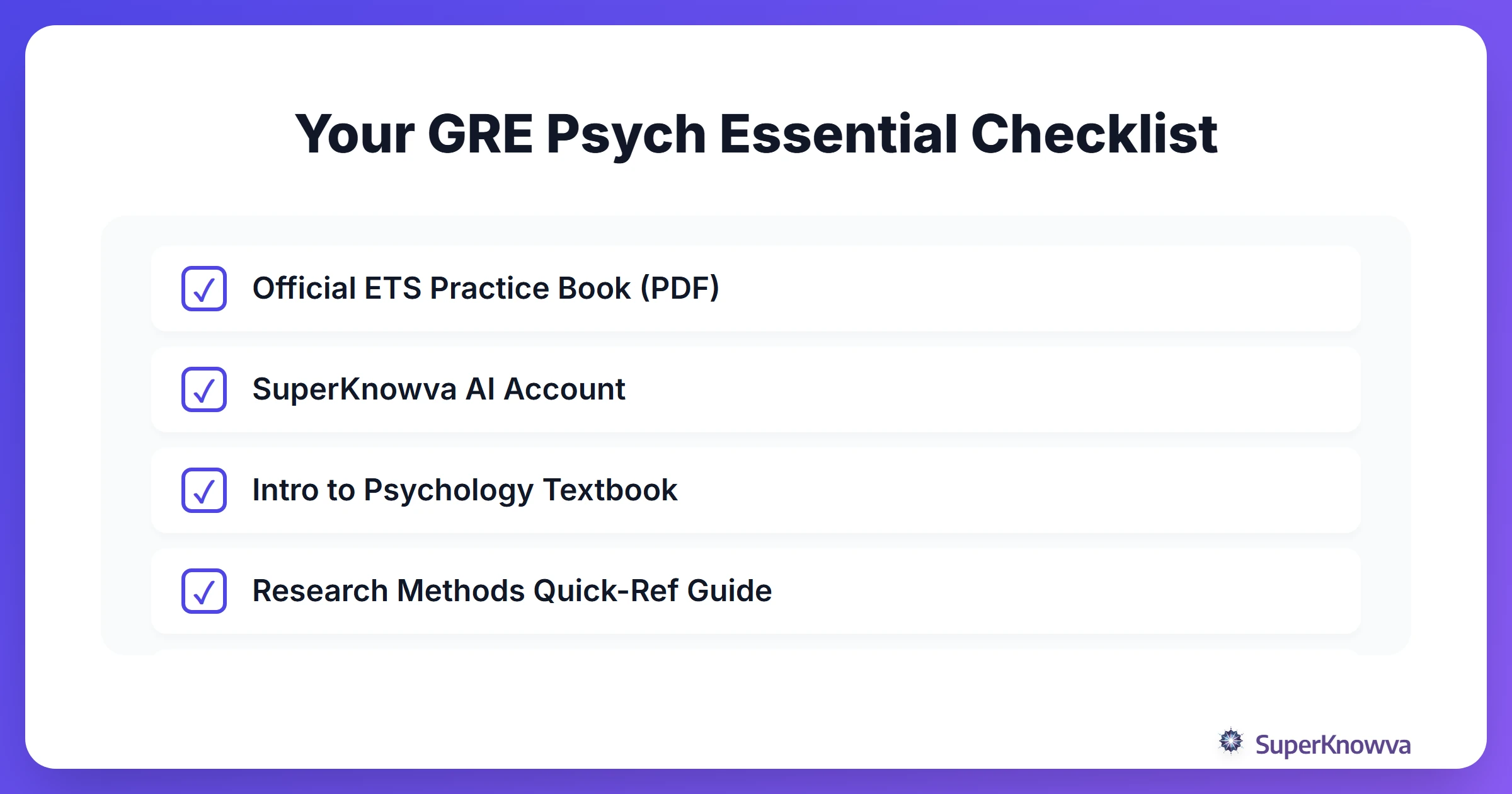
AI is effective, but it works best when you pair it with the source. The Official ETS Subject Test Preparation materials are still the gold standard for how questions are phrased.
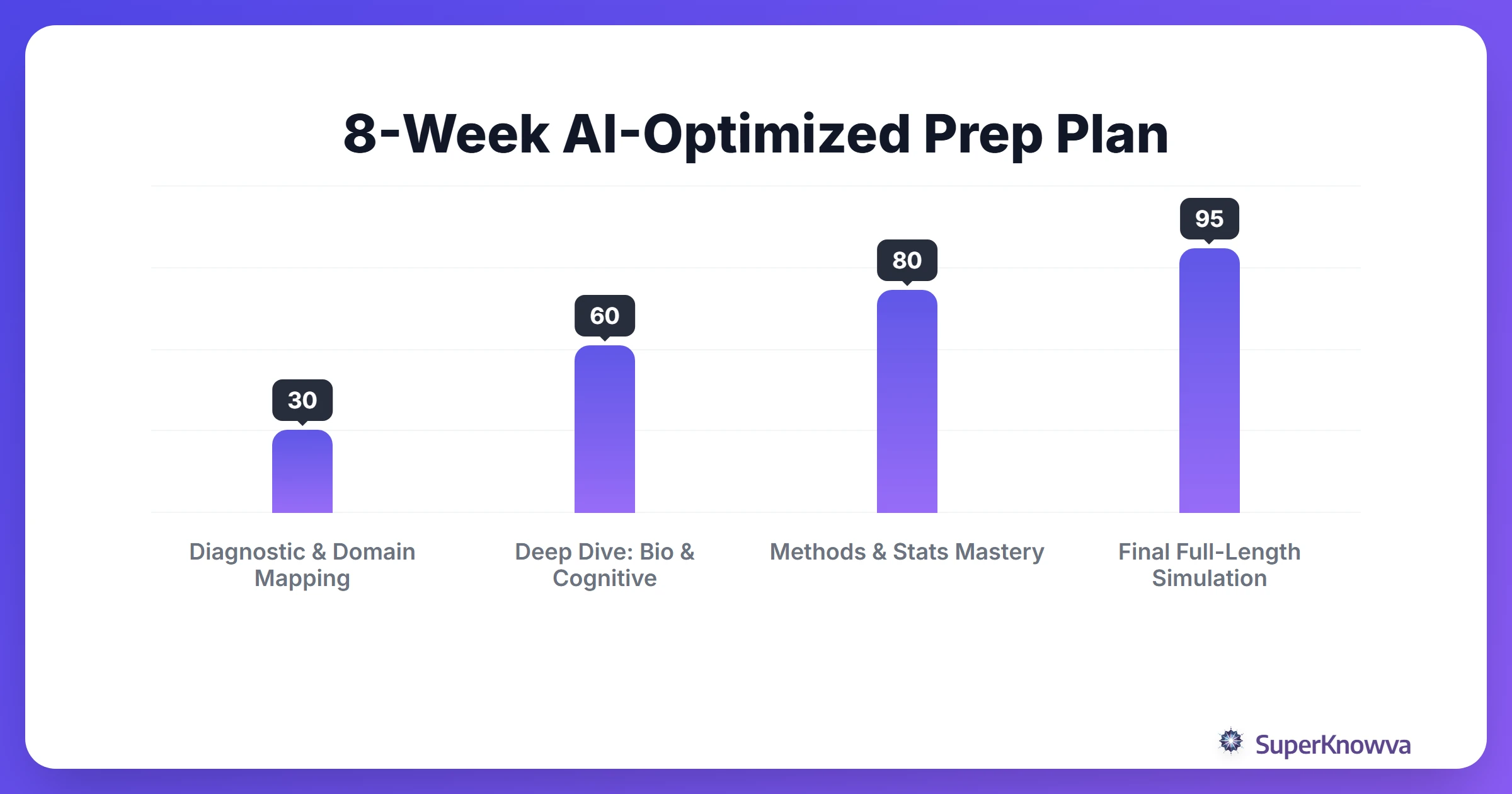
A winning strategy? Use the official ETS Practice Book as your baseline. Take a practice test, then feed those results into SuperKnowva to build a targeted 8-week study plan. This hybrid approach gives you the best of both worlds: official standards and adaptive technology. And if you're looking to boost your overall score, integrating AI-driven Verbal Reasoning strategies can help ensure your whole application stands out.
Test Day Strategy and Mental Preparation
The GRE Psychology test is a marathon, not a sprint. You have nearly three hours to tackle over 200 questions. Use AI to practice your pacing so you don't get stuck on a single methodology question and lose precious time.
Ironically, you can use the very science you’re studying to stay calm. Techniques like cognitive reframing and visualization are backed by the research you’ve been reading about for years. For more tips on keeping your cool, see our guide on managing test-day anxiety. For quick reviews on the move, tools like GRE Psychology Digital Flashcards can keep your memory sharp in the final countdown.
By combining traditional study depth with AI precision, you aren't just prepping for a test; you're mastering the field.