You’ve spent years working for this moment. But instead of feeling like a champion, you probably feel like you’re vibrating at a frequency of pure anxiety. One minute you’re celebrating a finished final, and the next, you’re staring at a job board feeling completely unqualified for everything.
If you’re feeling overwhelmed, you aren't alone and you aren't failing. Learning mindfulness for graduation stress isn't about sitting perfectly still in a quiet room; it’s about surviving the transition without losing your mind.
Let's look at how to stay grounded when the "real world" feels like it’s crashing in, ensuring you finish your degree with a little more clarity and a lot less panic.
The Psychology of the "Graduation Gutter"
Graduation stress is a weird, heavy cocktail. It’s a mix of high-stakes academic pressure and a sudden, terrifying existential crisis. While you’re trying to format a bibliography, you’re also being interrogated by every relative and stranger about your "five-year plan."
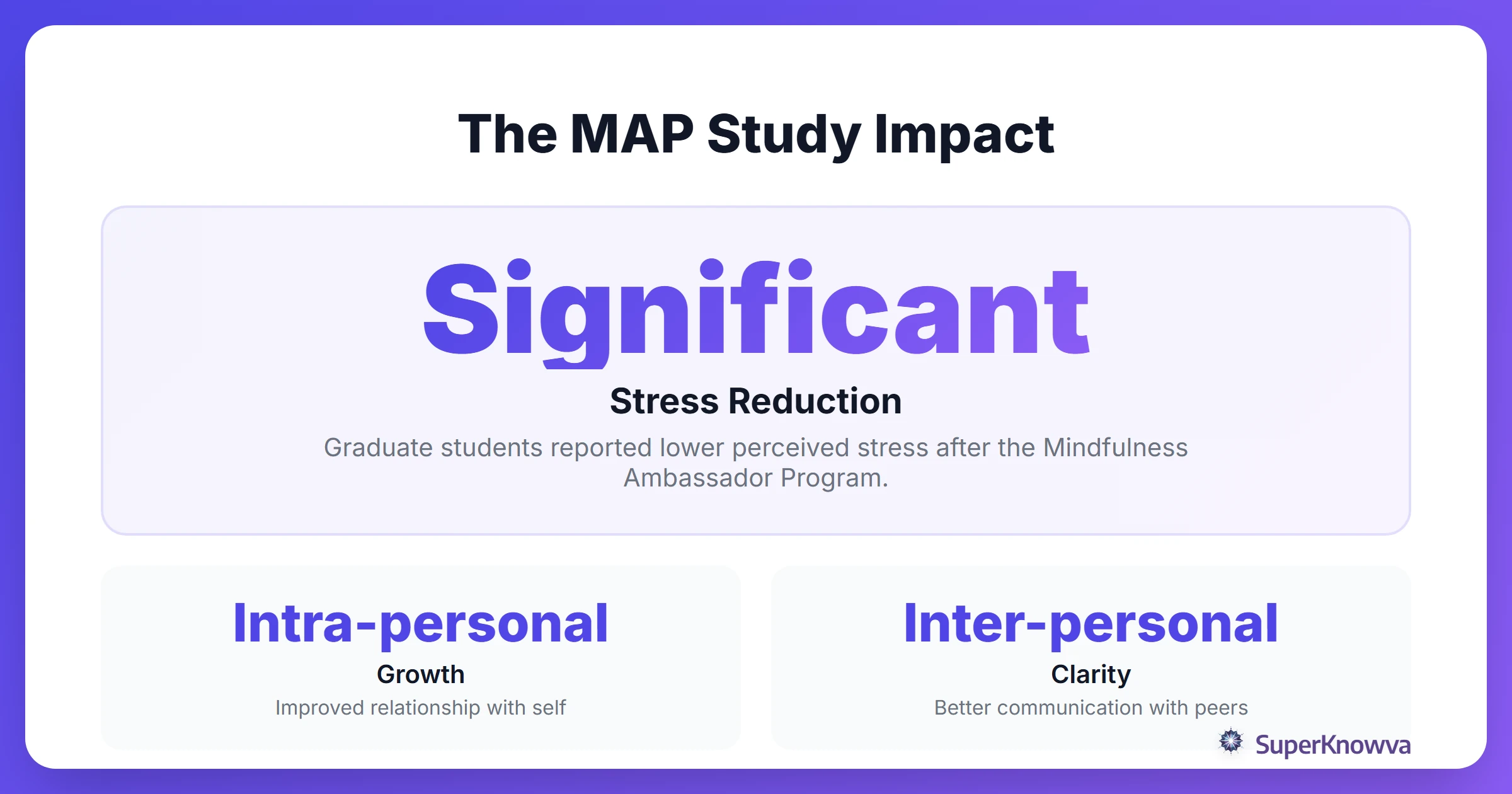
This period often triggers student transition stress. It is more than exhaustion; it is a spike in cortisol as your brain realizes your identity as a "student," a role held for nearly two decades, is about to vanish. According to a PLOS One Study on Mindfulness for Graduate Students, programs like the Mindfulness Ambassador Program (MAP) show that intentional mindfulness provides a buffer. By changing your internal dialogue, you can lower stress levels even when your to-do list is three pages long.
Mindfulness vs. Reactive Stress: Stop the Spiral
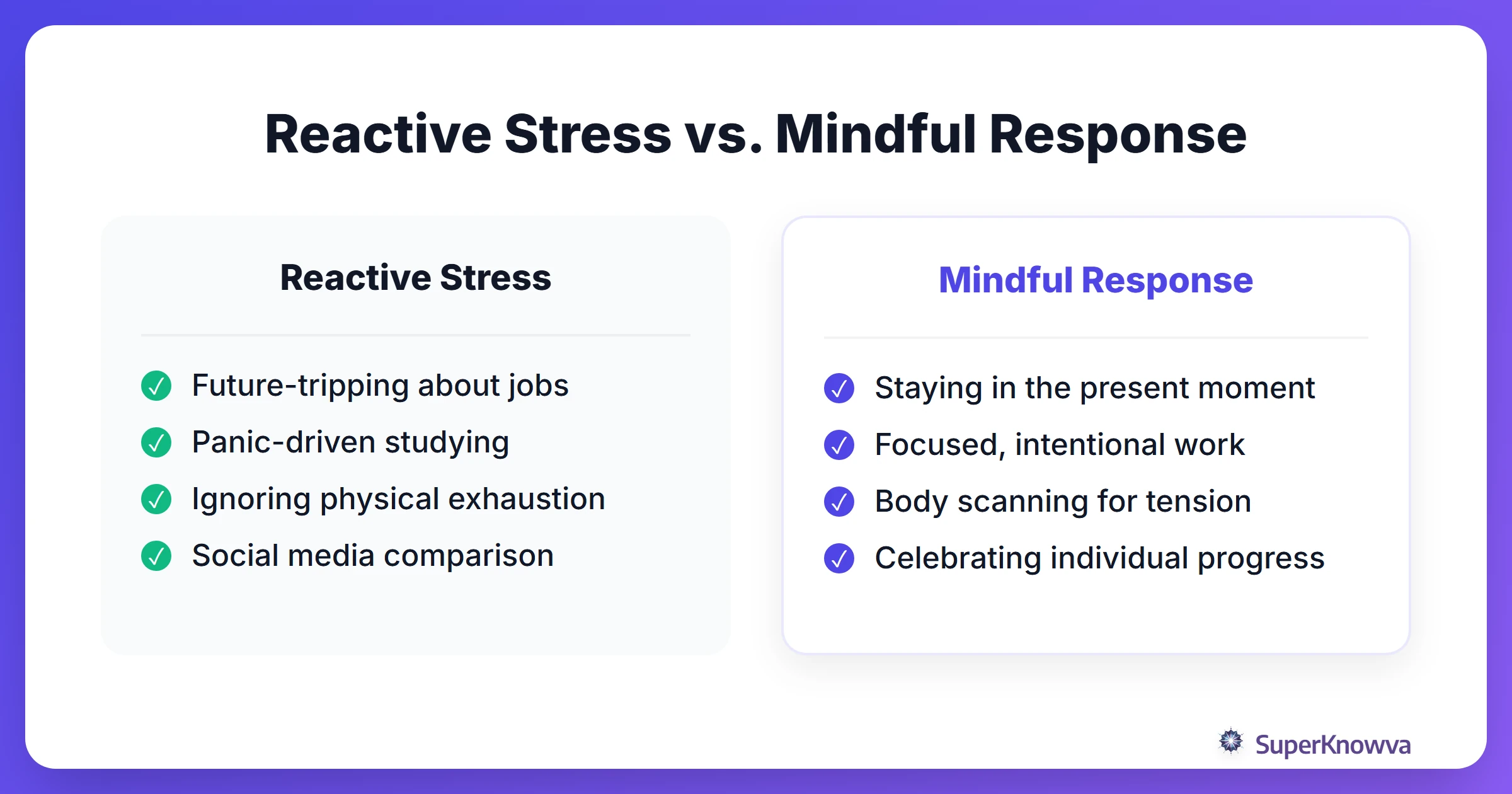
When the pressure is on, we usually fall into "reactive stress." This is that frantic state where every new email feels like a personal attack and a single job rejection feels like a sign that you’ll be unemployed forever.
Graduation anxiety thrives on "future-tripping," the exhausting habit of worrying about things that haven't happened yet. What if I can't pay rent in six months? What if I hate my career path?
Mindfulness teaches you to respond rather than just react. Instead of spiraling over a deadline, you acknowledge the pressure, take one actual breath, and focus on the next twenty minutes. Harvard Research on Mindfulness Education shows that even tiny doses of mindfulness improve your focus and cognitive flexibility. This is a lifesaver during finals, where simple meditation techniques for focus can keep you tethered to the present.
A 4-Week Mindfulness Roadmap for Graduates
You don't need to become a monk. You just need a plan to get through the next month without burning out.
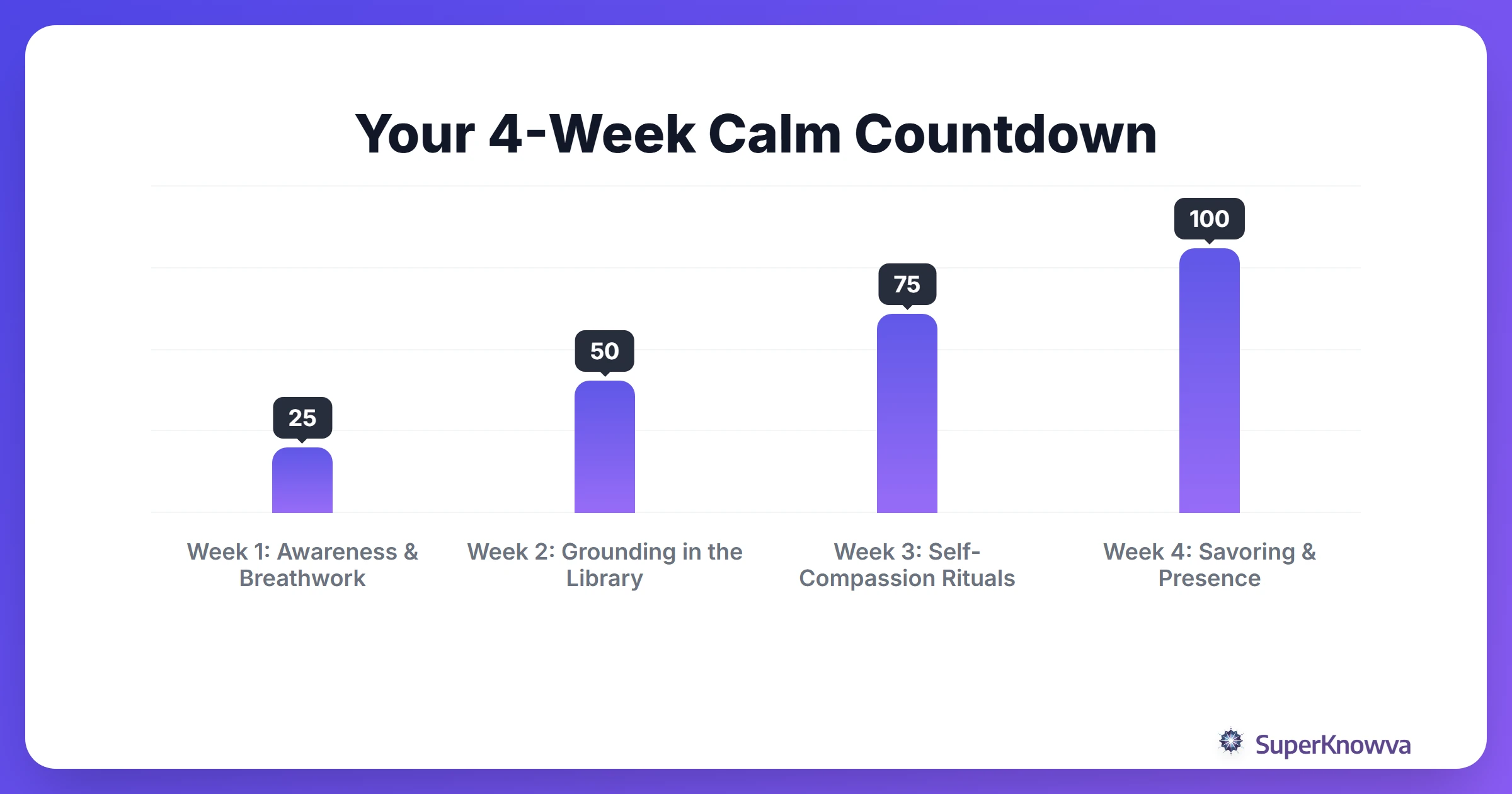
- Week 1: Awareness. Start by recognizing signs of student burnout. Where are you carrying the stress? Is your jaw clenched? Are your shoulders touching your ears? Just noticing it takes away some of its power.
- Week 2: Grounding. As finals hit their peak, use physical grounding. When you’re stuck in the library, feel the weight of your feet on the floor. It sounds simple, but it pulls you out of your head and back into reality.
- Week 3: Self-Compassion. This is the week for academic burnout recovery. If a grade comes back lower than you wanted or a recruiter ghosts you, don't beat yourself up. Treat yourself with the same grace you’d give a friend in the same boat.
- Week 4: Presence. In your final week, practice "savoring." Be fully there for that last walk across the quad or that final, overpriced coffee with your roommates. These are moments you won't get back.
The "Fake It Till You Make It" Trap: Imposter Syndrome
As you prepare to leave the student bubble, you’re going to feel like a fraud. It’s almost a guarantee. You’ll look at entry-level job descriptions and feel like you’ve just been "playing" at being an adult for four years.
Mindfulness helps you create a wedge between your thoughts and the truth. The thought "I’m not qualified for this" is just a thought; it isn't a fact. By overcoming imposter syndrome through meditation, you build the internal quiet needed to actually hear your own accomplishments. You learn to walk into an interview grounded in what you do know, rather than panicking over what you don’t.
Small Rituals for Post-Grad Sanity
Consistency beats intensity every time. You don't need an hour of silence; you need small signals that tell your nervous system it’s okay to relax.
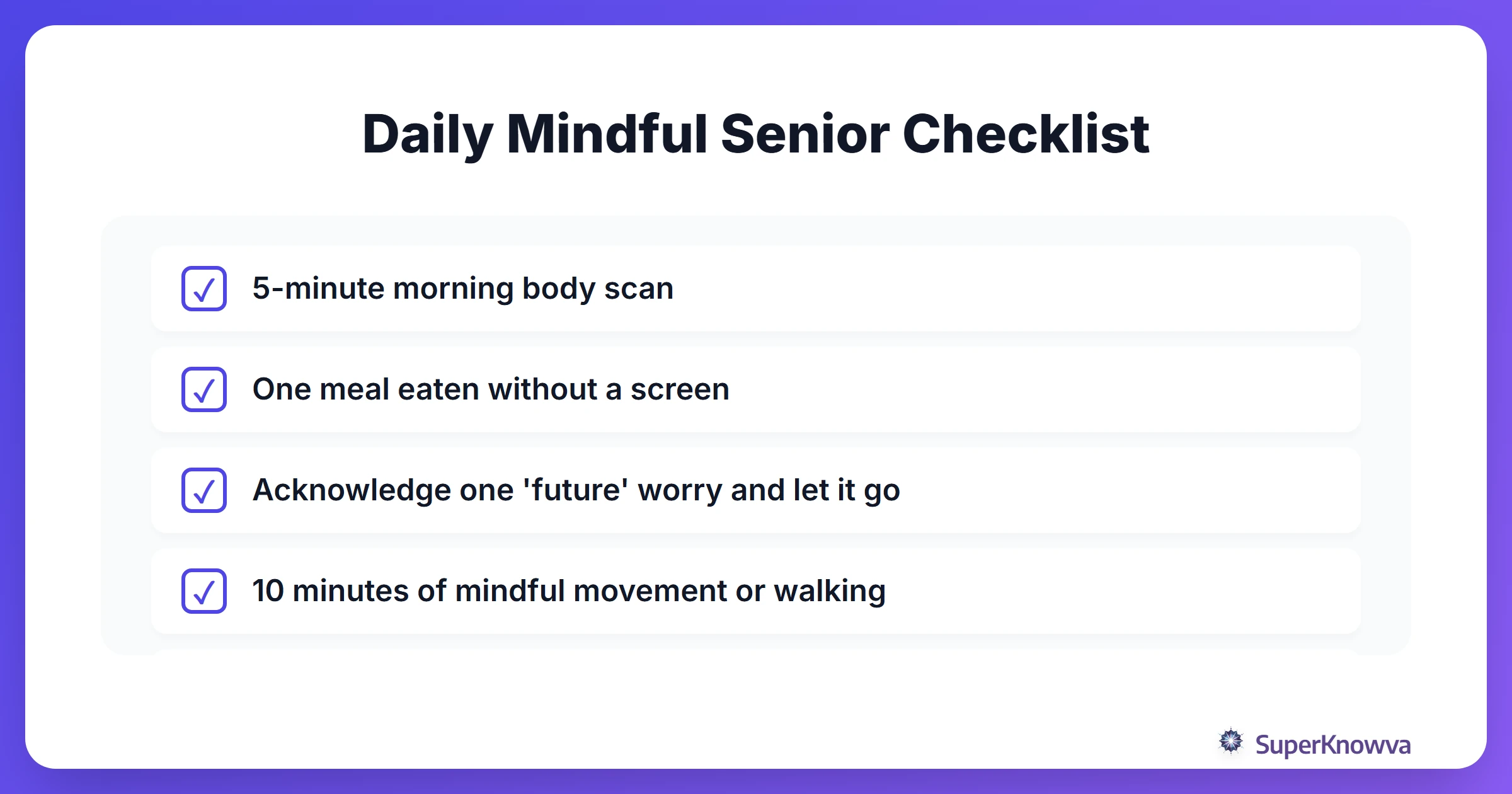
- The One-Minute Reset: Set a timer. For 60 seconds, do nothing but feel the air entering and leaving your lungs. That’s it.
- Mindful Movement: Whether you’re hitting the gym or just walking to your last seminar, notice the rhythm of your feet. Get out of your brain and into your body.
- The Digital Detox: Social media is a poison for mindfulness for seniors. Seeing everyone else’s "I’m so excited to announce..." posts will trigger a comparison spiral. Put the phone down and protect your peace.
Balancing Social Goodbyes and The Final Push
The end of university is bittersweet, and the "guilt cycle" is real. If you’re out with friends, you’re guilty about your thesis. If you’re writing, you’re sad about missing out. You’re constantly balancing social life and academics while trying to process a massive life change.
Mindfulness allows you to be where your feet are. When you’re at the bar with your friends, be there. When you’re at your laptop, be there. Stop letting the "next thing" ruin the "now thing."
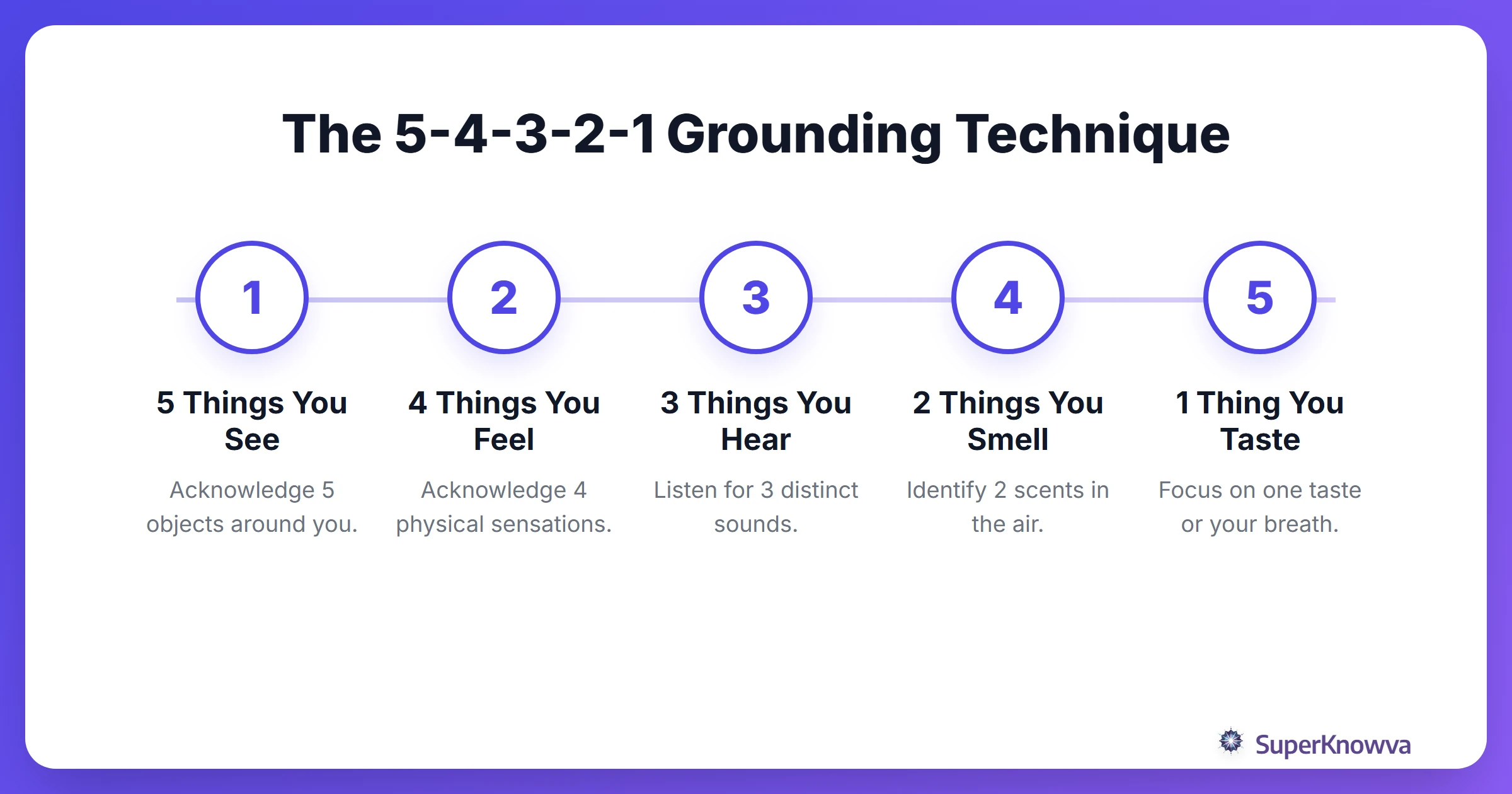
When the transition feels too heavy to carry, use the 5-4-3-2-1 Grounding Technique:
- 5 things you see.
- 4 things you can touch.
- 3 things you hear.
- 2 things you can smell.
- 1 thing you can taste.
The Bottom Line
Graduation marks a major shift in identity. By using mindfulness for graduation stress, you are not trying to delete the stress. You are changing your relationship with it.
Take a breath. Look at how far you’ve come. You’ve survived every "impossible" deadline so far, and you’ll survive this transition, too. One mindful moment at a time.