Is it just us, or does May always feel like one long, caffeinated blur?
Between the high-stakes pressure of AP exams, the intensity of IB assessments, and the weight of final projects, it’s a lot for any student to carry. You’ve done the flashcards. You’ve highlighted the textbooks. But there’s one variable students often overlook: their own head.
Think of your mental state as the engine. If the engine is overheating, it doesn’t matter how much fuel (studying) you put in. The car isn't going anywhere. That’s where mindfulness for high-stakes testing comes in. It is not about sitting on a mountain top; it is about practical tools to turn paralyzing "May Madness" into calm, focused energy.
The Science: Why Your Brain "Blanks Out"
Mindfulness isn't just a trendy wellness buzzword. There is hard data showing it actually changes how you perform under pressure. A 2023 study published in Frontiers in Psychology found that mindfulness-based interventions significantly boosted scores on high-stakes math tests.
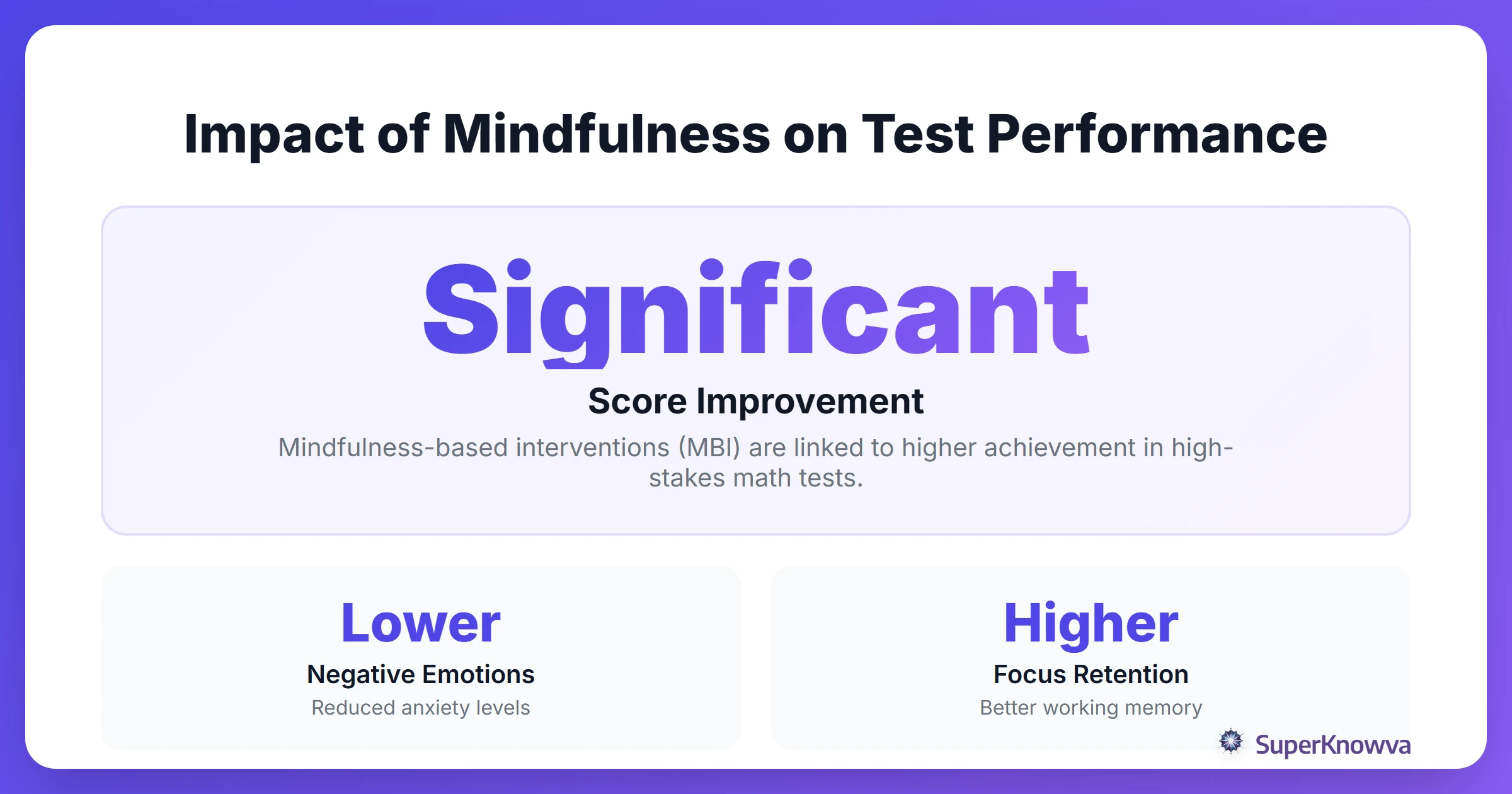
When you panic, your body’s "fight or flight" response takes over. It diverts resources from the prefrontal cortex, the part of the brain that handles working memory. Have you ever looked at a question you knew the answer to minutes ago and felt like your mind went blank? That is the stress response blocking cognitive performance. Mindfulness keeps neural pathways open so you can access what you studied.
Navigating the "May Madness"
The May testing season is a unique beast. It’s not just a quiz; it’s the culmination of an entire year. It’s easy to feel like your whole future is riding on a single three-hour window.
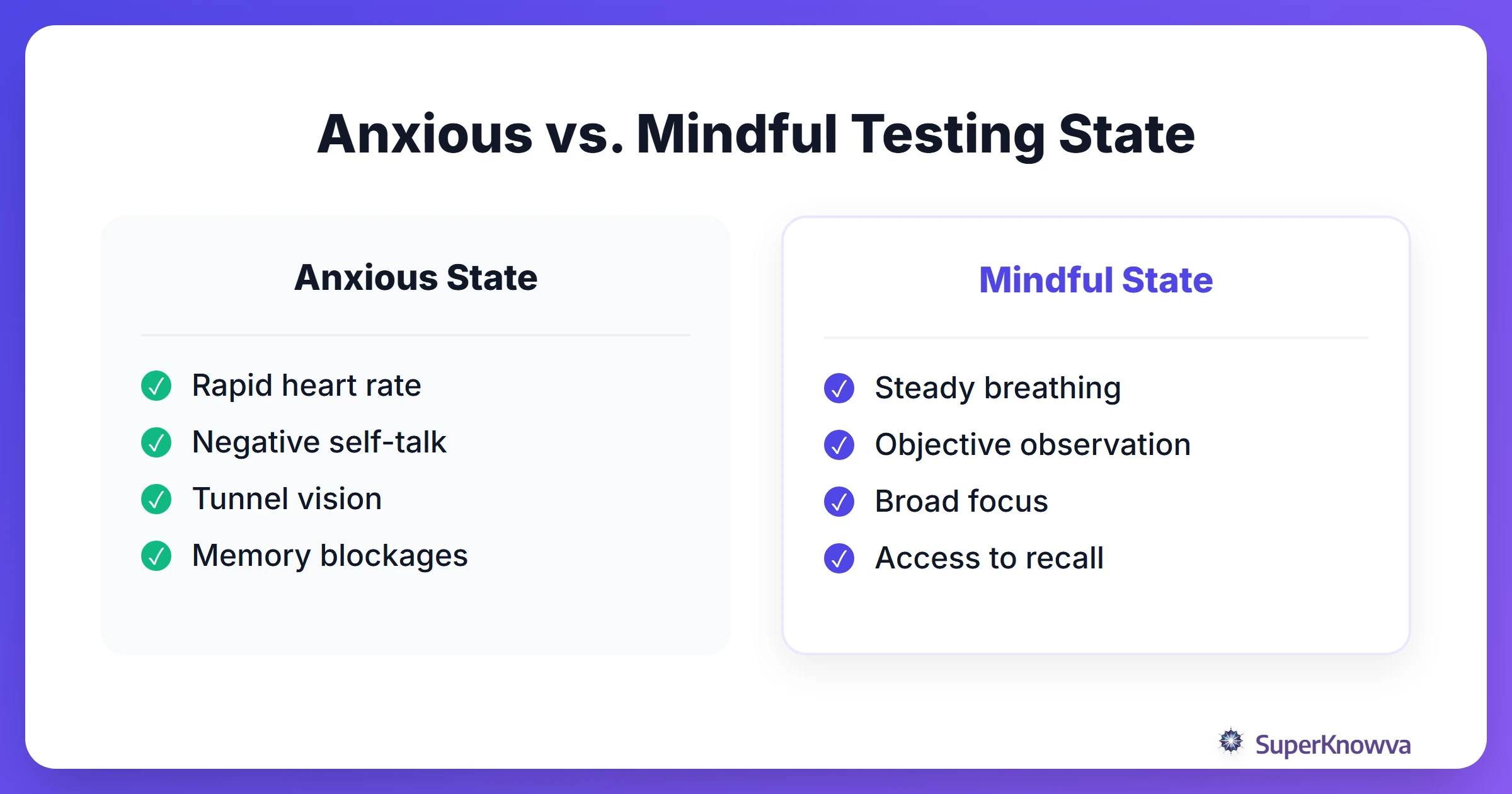
There is a fine line between "good stress" (the kind that keeps you alert) and "bad stress" (the kind that shuts you down). If you feel like you’re shifting from motivated to paralyzed, you might be hitting the wall of student burnout. Mindfulness helps you acknowledge the weight of the exam without letting it crush your ability to think.
Your Pre-Exam Game Plan
Success on test day starts the moment you wake up. Instead of rolling over and immediately scrolling through notes (or TikTok), try building a routine that primes your brain for improving exam focus.
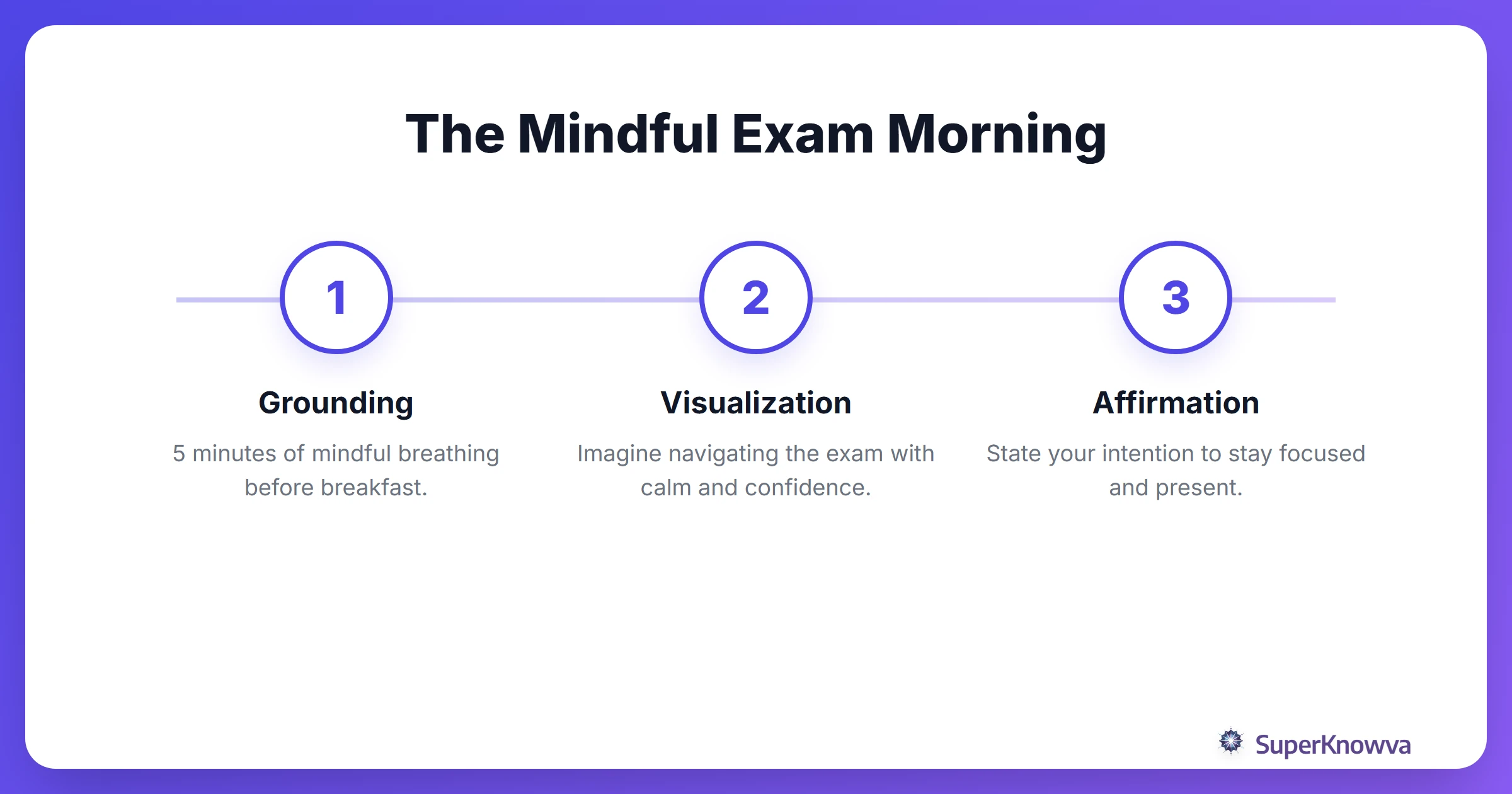
- The 5-Minute Buffer: Before you touch your phone, sit still. Notice your breath. It sounds simple, but building these meditation techniques for focus early on creates a mental "anchor" you can return to when things get stressful later.
- The 5-4-3-2-1 Grounding: If your heart starts racing before you even get to the testing center, stop. Identify five things you see, four you can touch, three you hear, two you smell, and one you can taste. It’s a physical hack to pull your nervous system out of a tailspin and back into the room.
- The Mental Walkthrough: Spend two minutes visualizing the day. Imagine opening the booklet and feeling a sense of steady, quiet confidence. If you can see it happening, your brain is less likely to panic when it actually does.
What to Do When Panic Hits Mid-Test
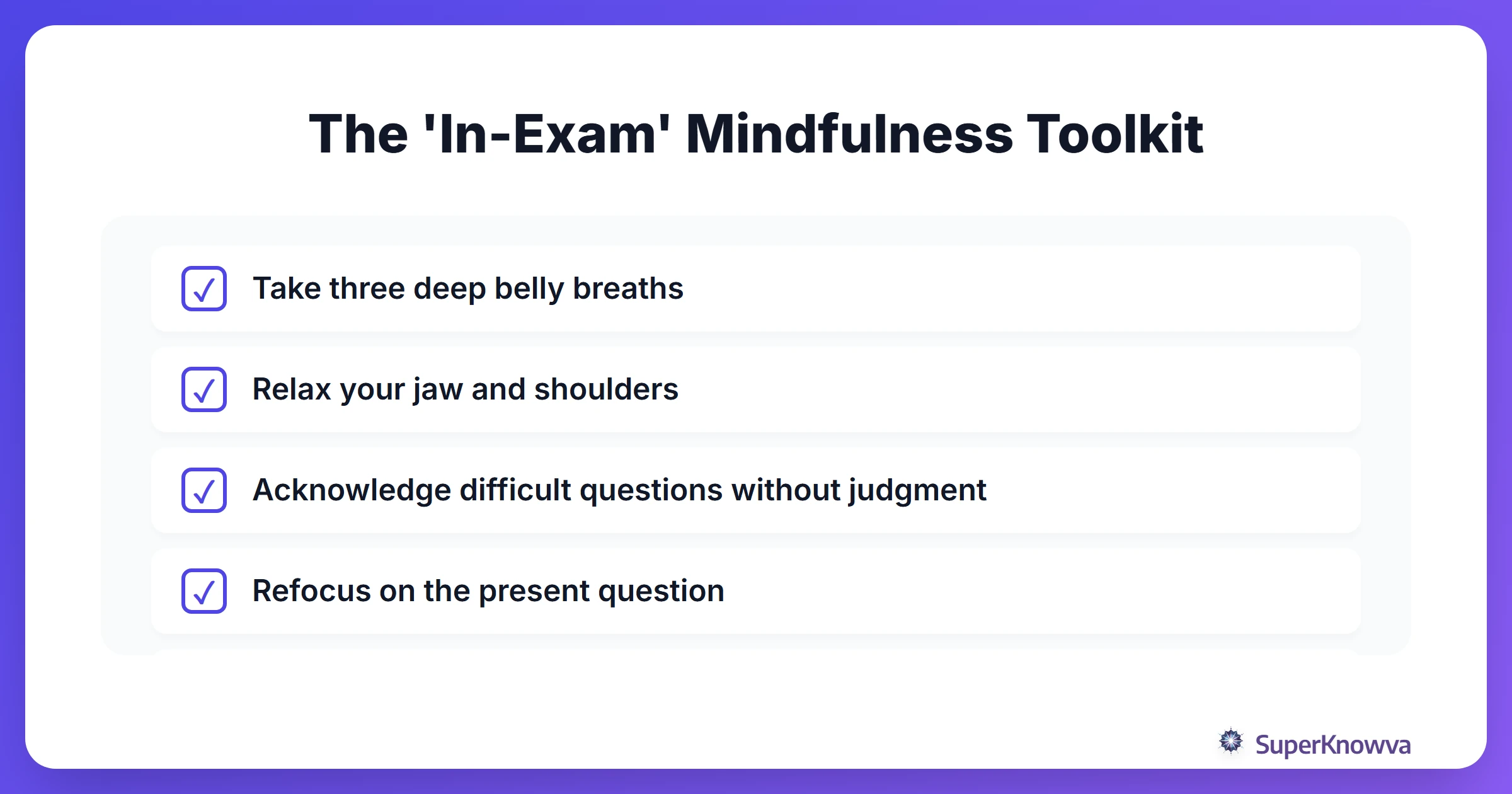
Even the best-prepared students hit a wall. When you feel your mind going blank or your chest tightening, don't try to "power through" the panic. Use these test anxiety relief tactics:
- Box Breathing: Inhale for 4, hold for 4, exhale for 4, hold for 4. It’s a physical signal to your brain that you aren’t in danger. Your heart rate will drop almost instantly.
- The Five-Second Reset: If you're stuck, stop. Close your eyes. Scan your body for tension. Usually, it’s in your jaw or shoulders. Drop your shoulders, take a breath, and look at the question again as if you’ve never seen it before.
- Flip the Script: Don't tell yourself "I'm scared." Tell yourself "I'm prepared." That racing heart? That’s just your body gearing up to give you the energy you need to perform.
Avoiding the Mid-Month Slump
Testing season is a marathon, not a sprint. To keep your edge, you have to balance your mental work with physical recovery.
Did you know that physical activity boosts cognitive function? A quick ten-minute walk between study sessions can clear the "mental cobwebs" better than a third energy drink ever could. Pair your mindful breathing for exams with the best diet for exam performance to keep your blood sugar steady and your focus sharp.
The Post-Test "Rumination Loop"
You handed in the paper. It’s over. So why are you still obsessing over question #14?
This "rumination loop" is an energy killer. If you spend your evening worrying about a test you’ve already finished, you won't have the mental bandwidth for the one you have tomorrow.
- The Clean Break: As you walk out of the room, take one deep breath and "leave" the exam there.
- Acknowledge and Release: When a "what if" thought pops up, label it. "I am having a thought about my score." Then, let it go. You can’t change the past, but you can protect your future energy.
- Celebrate the Discipline: Regardless of the score, you showed up. You did the work. That discipline is a win in itself.
By making May exam preparation about your mindset as well as the material, you build skills that last beyond the testing window. SuperKnowva combines AI-powered study tools with a mindful approach to help you succeed on exams and improve your learning habits.