July is usually synonymous with beach days and road trips, but for aspiring engineers, it’s the high-stakes "Golden Month." With the fall recruitment cycle looming, that familiar knot of anxiety is probably starting to tighten. But here is the good news: starting your technical interview preparation right now is the single best way to kill that stress. By breaking the mountain of material into bite-sized weekly goals, you’ll walk into your interviews looking less like a nervous student and more like a seasoned pro.
In this guide, we’re going to look at how tech hiring is changing and give you a clear, four-week roadmap to help you nail that dream offer.
How the Interview Scene is Changing
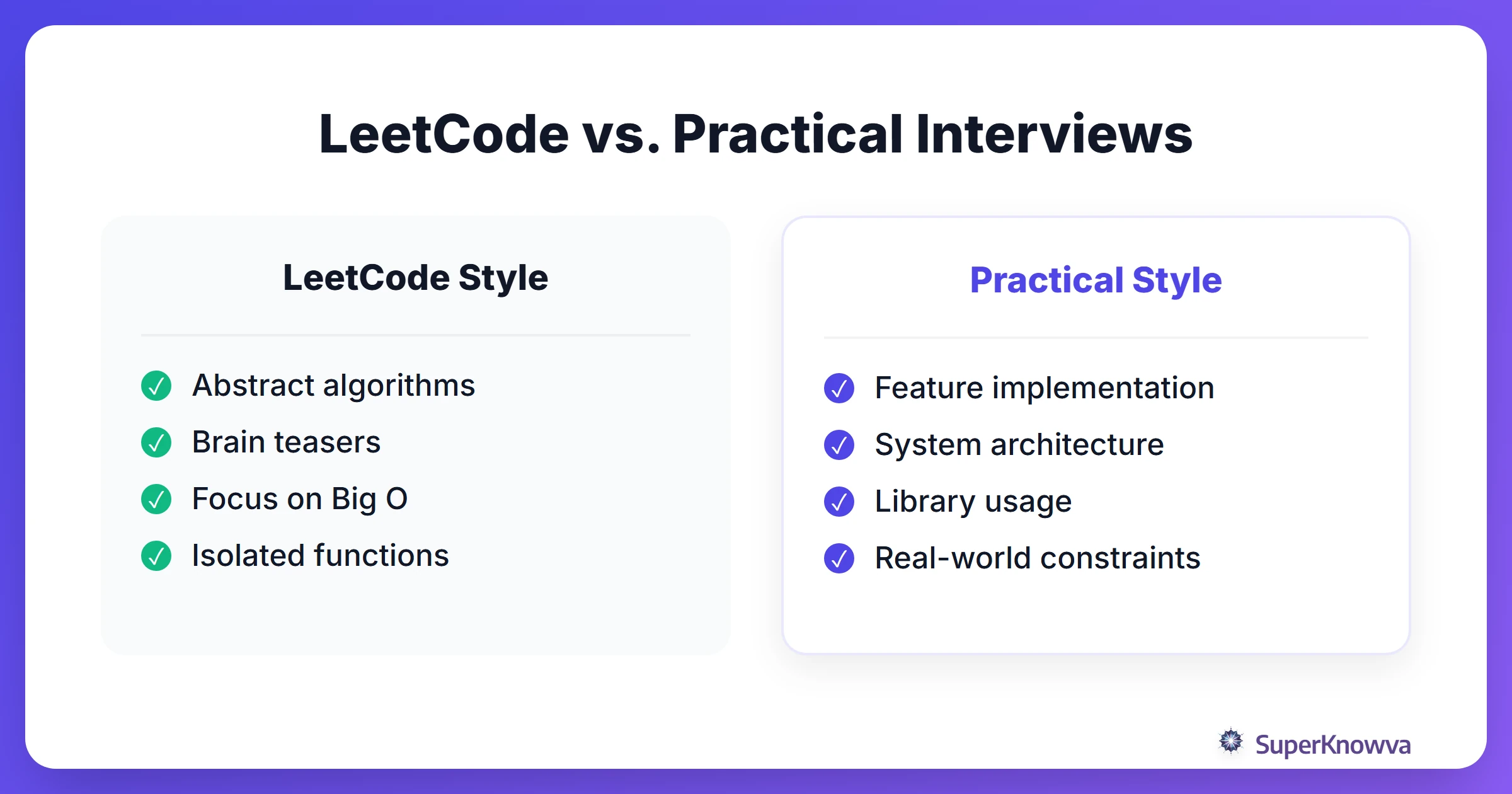
Let's be real: the era of just memorizing the "Top 100 LeetCode Questions" is over. While you still need to know your algorithms, the industry is moving toward practical, feature-building tasks. Companies want to see if you can actually build things, not just solve abstract puzzles. They’re looking for candidates who understand the real-world problems they’ll face on Monday morning.
Today’s interviewers want to see if you understand networking protocols, API design, and how different parts of a system communicate. You might be asked to build a rate-limiter from scratch or figure out why a microservice is crashing. Stay within your "known territory." If you are unsure about a specific protocol, do not wing it. Being honest about what you do not know and showing how you would find the answer is more impressive than a faked response. For those aiming for competitive roles, mastering these strategies for competitive fields is essential.
Your 4-Week July Preparation Roadmap
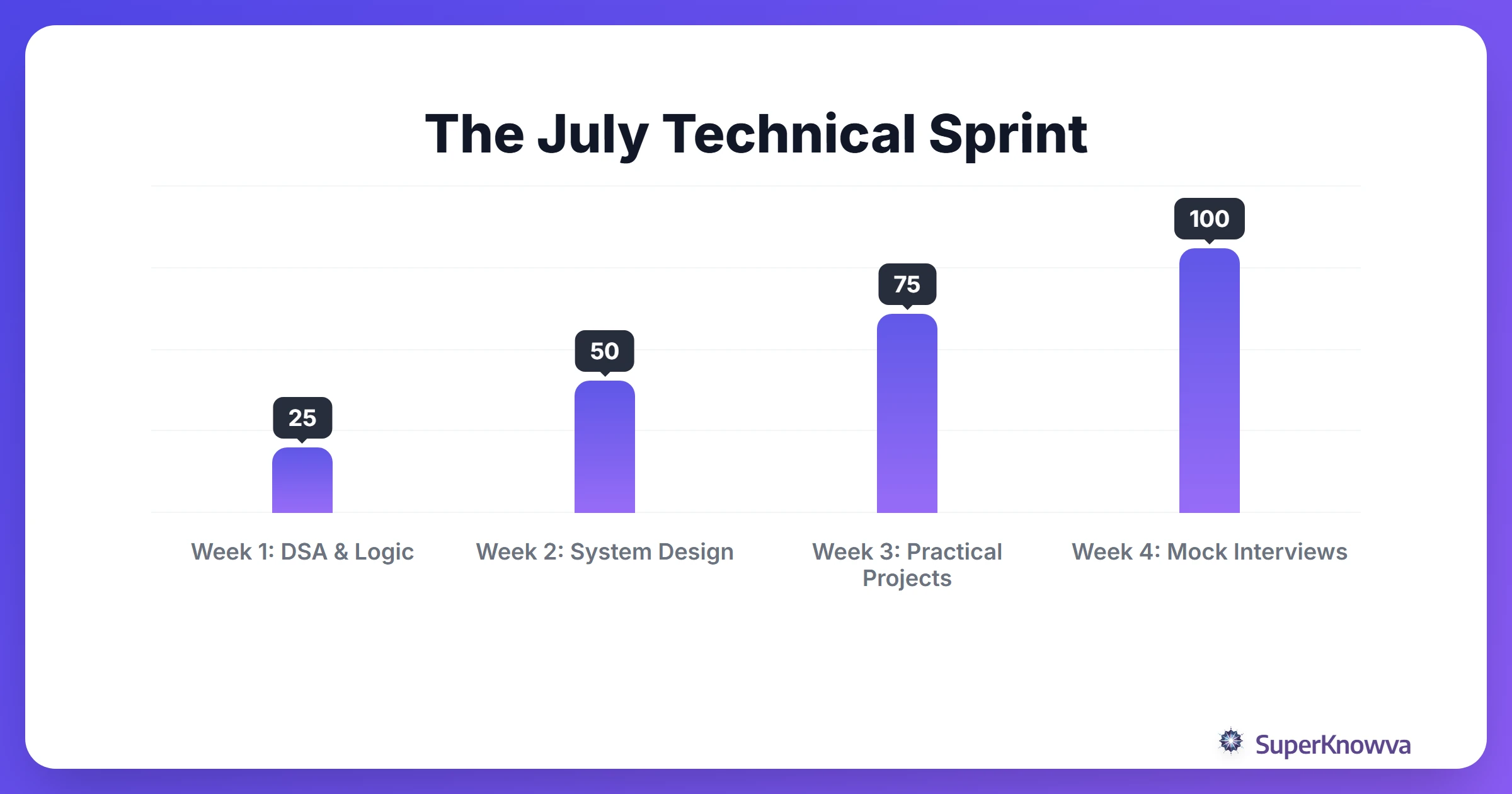
Cramming in late August is a recipe for burnout. Instead, use this technical interview roadmap to build a solid foundation throughout July.
- Week 1: Back to Basics (DSA Fundamentals). Dust off the essentials. Can you implement a linked list, a tree, or a hash map from scratch without looking at a library? If not, start there.
- Week 2: Thinking Big with System Design. It’s time to move beyond the code. How do you scale an app? When do you choose SQL over NoSQL? This is where system design for students becomes a massive differentiator.
- Week 3: Build Something Real. Spend this week on practical application. Try building a basic TCP chat server or a simple CRUD API. This is where you bridge the gap between theory and actual engineering.
- Week 4: The Final Polish. It’s time for mock interviews and behavioral prep. Practice under pressure and refine the "story" you tell alongside your technical work.
Mastering DSA: Identifying the Pattern
Data Structures and Algorithms (DSA) remain essential for technical interviews. The secret is recognizing patterns instead of memorizing solutions. When you see a problem, can you identify if it requires a sliding window, two pointers, or dynamic programming?
One of the biggest mistakes students make is "silent coding." Your interviewer isn't just looking for a "Pass" on the test cases; they want to hear how you think. Use Big O notation to talk through the time and space complexity before you start typing. It shows you care about performance, not just getting the code to run. Remember, technical skills might get you the interview, but the soft skills employers are looking for are what get you the job.
Practical Engineering: Can You Actually Build It?
Stand out in the software engineering recruitment pool by proving you are a builder. Tasks like building a TCP chat server are effective because they force you to handle concurrency, buffers, and error handling. These messy problems do not appear in a standard LeetCode Easy.
Know your documentation. In a timed environment, searching for specific syntax rather than the full answer is a key skill. Find more advice in these tips on Preparing for non-LeetCode technical interviews.
Beat the "Interview Freeze" with Mock Practice
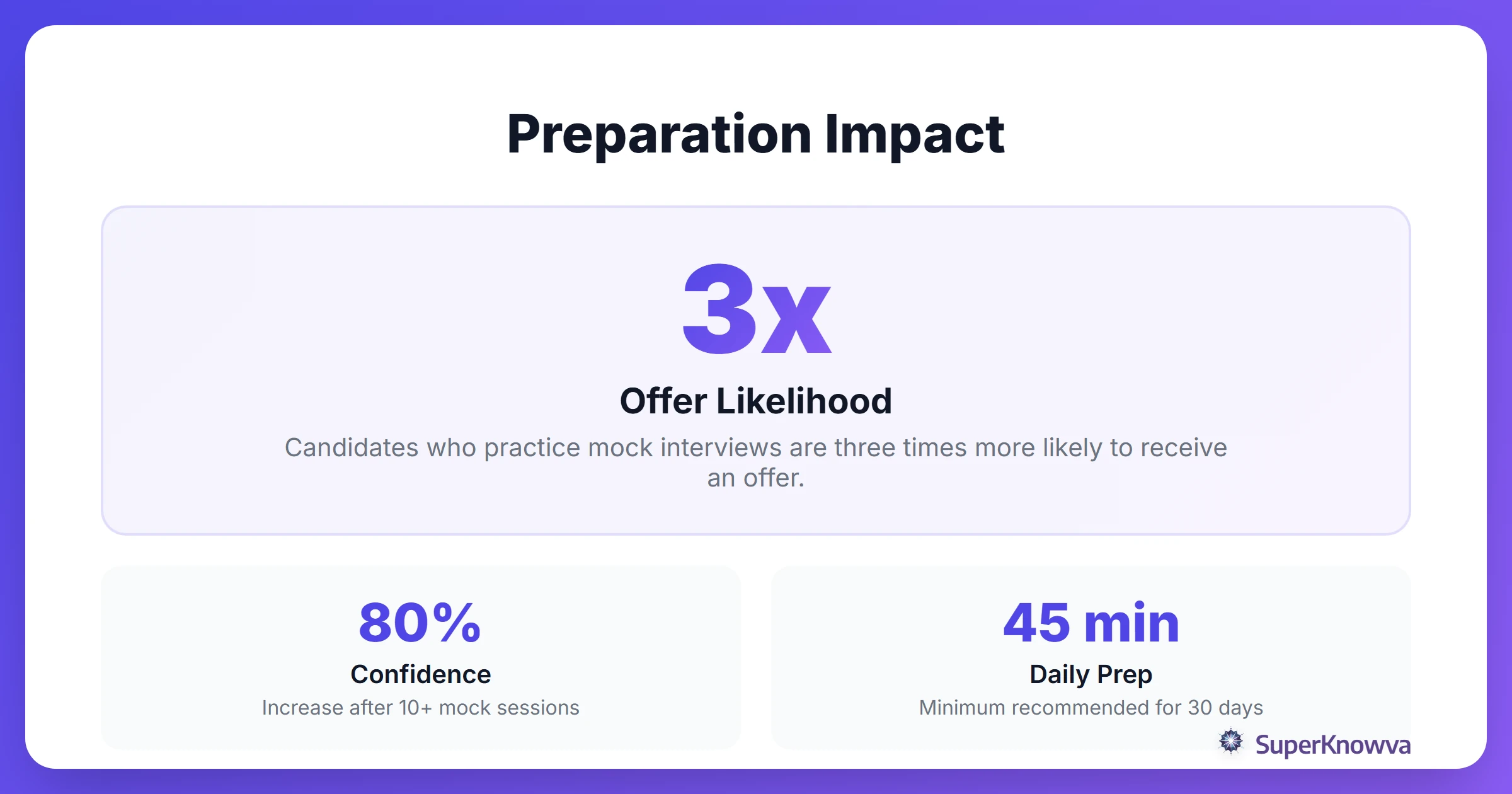
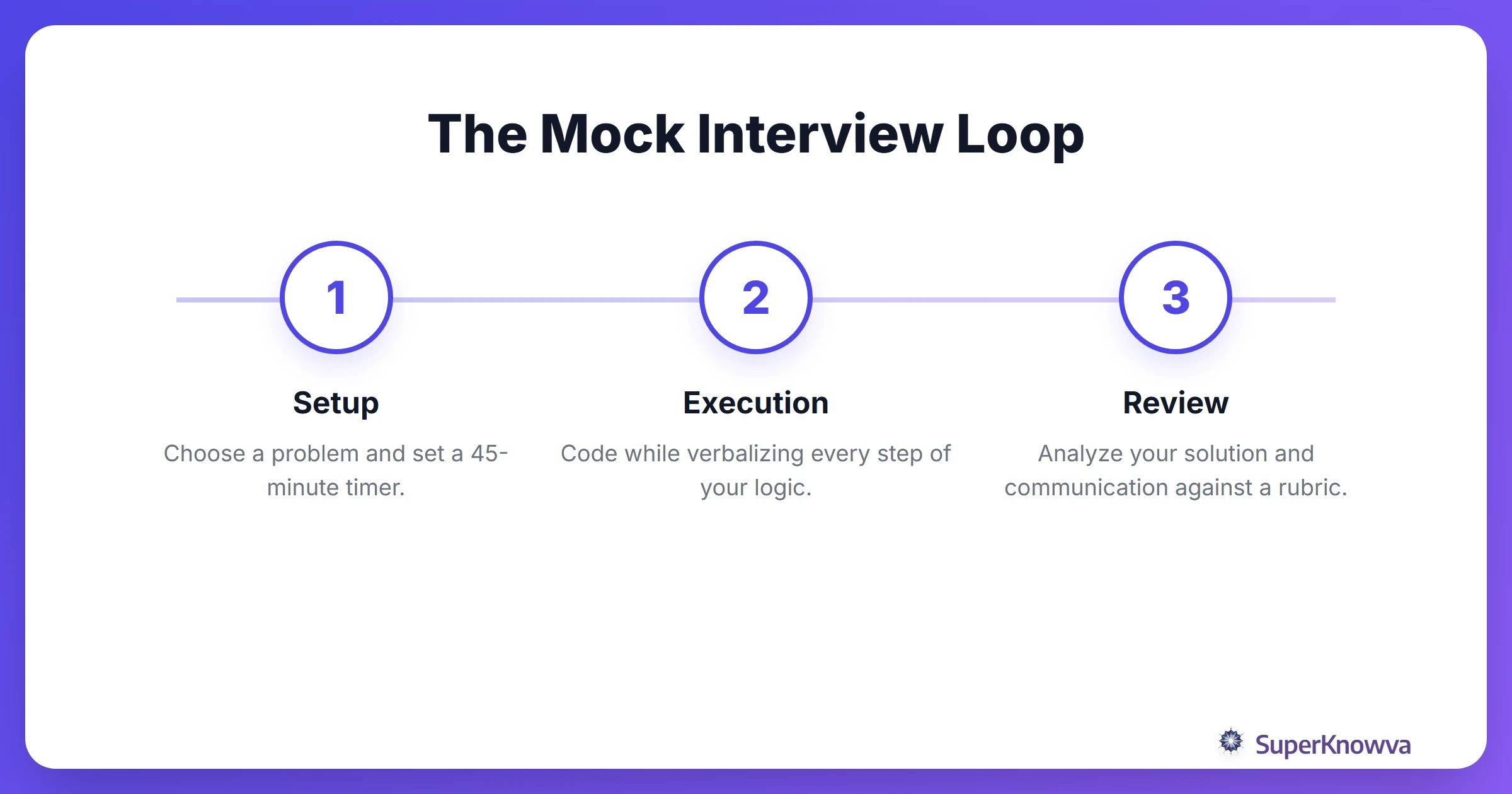
You can be a coding genius at your desk and still completely freeze when someone is watching you work. Mock interview practice is the only way to get used to that pressure. Use peer-to-peer platforms to simulate the real thing.
Here is a tip that feels awkward but works: record yourself. Watching your practice sessions back helps you catch "ums," "uhs," and long, awkward silences. If you hit a wall during a session, don't panic. Explain what you do know and how you’d go about troubleshooting. This Technical Interview Framework is a great resource for structuring your responses.
Using AI as Your Private Tutor
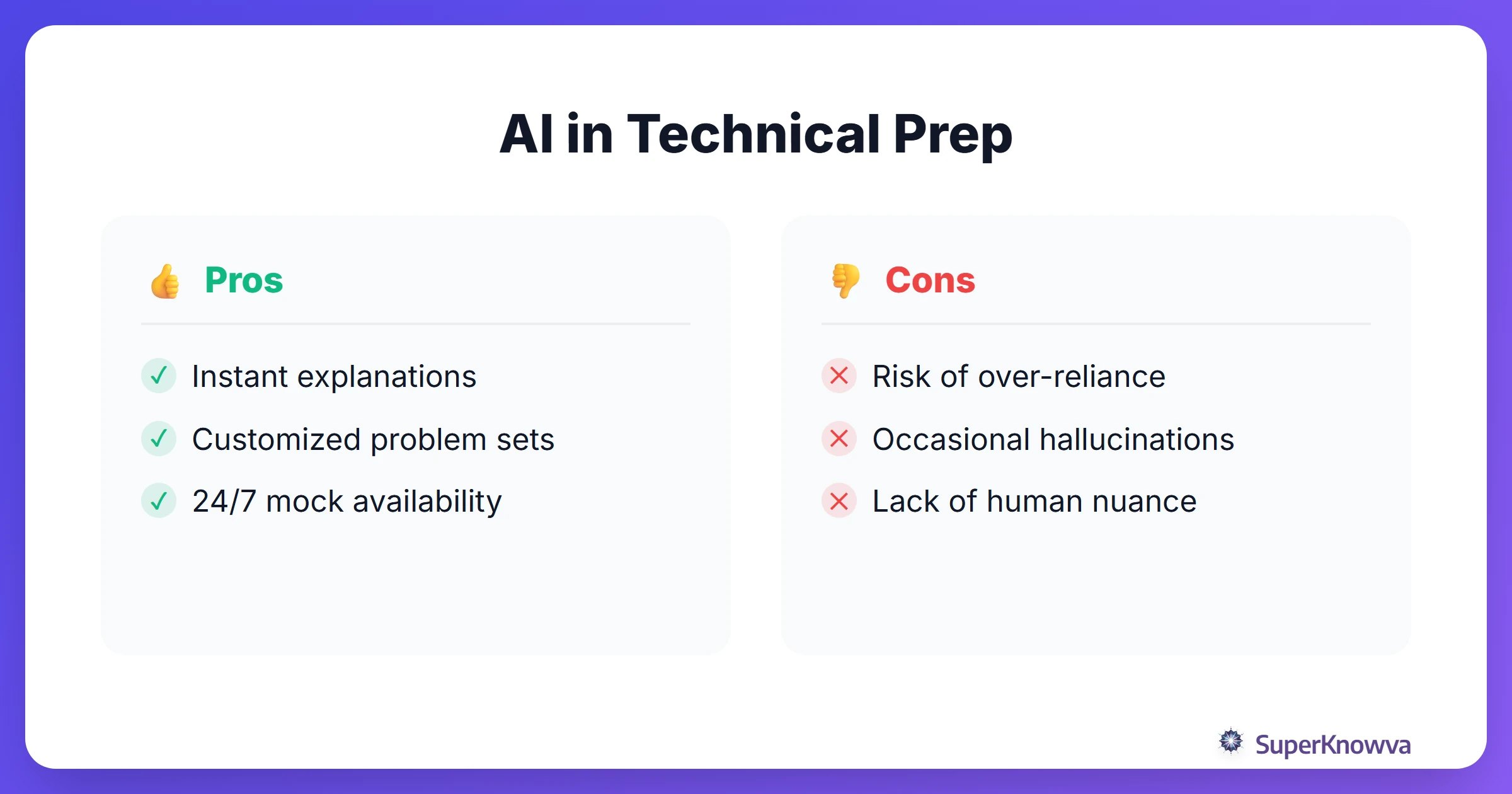
In the age of SuperKnowva, you have a 24/7 tutor at your fingertips. AI can completely change how you study by generating custom problems based on your weak spots or explaining a complex concept until it finally clicks.
Try using an LLM to "act" as a senior engineer. Paste a problem and tell the AI: "Give me hints, not the solution." This forces you to verbalize your logic and work through the problem-solving process. Just remember to keep a balance. Use AI to optimize your schedule and explain concepts, but make sure you’re doing the "raw" coding yourself to build that essential muscle memory. Learning the right way to using AI tools to practice will give you a serious edge over other candidates.
Conclusion
The path to a successful fall starts with what you do this month. By mixing technical skills with practical engineering and AI-assisted study, you are preparing for your career, not just a 60-minute interview. Stay consistent, keep building, and remember: every mock interview brings you closer to that offer letter.