Class is out. The books are closed. Finally.
The temptation to spend the next two months doing nothing is real, and you have earned a break. While you recharge, there is a clear opportunity to get ahead. To return to campus this fall with more than just a tan, pursuing professional certifications for students is a smart move.
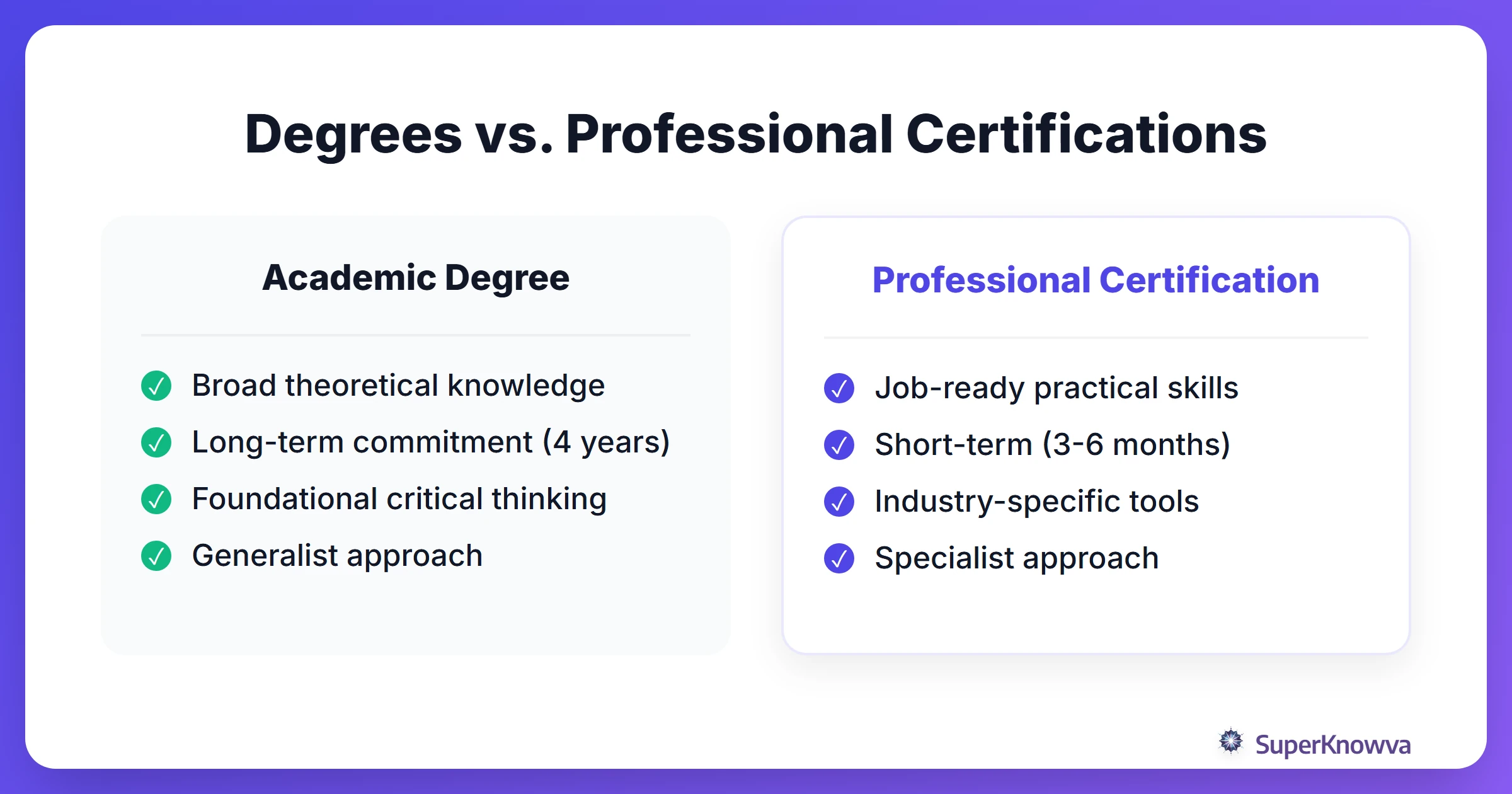
Think of it as a bridge. Your degree gives you the theory, but certifications give you the tools. Let’s look at how you can turn your July and August into a career-launching pad.
Why Summer Is the Perfect Time for Professional Certifications
During the semester, you’re usually drowning in four or five different subjects at once. It’s hard to master anything when you’re just trying to survive finals. Summer is different. It offers the one thing your busy schedule usually lacks: uninterrupted focus.
We talk a lot about the "skills gap": that awkward space between what you learn in a lecture hall and what a manager actually expects you to do on Monday morning. Companies today are moving toward skills-based hiring. They care less about the name on your diploma and more about whether you can actually use a Salesforce dashboard or write clean Python code. Using your summer to master a specific industry tool isn’t just productive; it’s a competitive necessity.
The Impact of Certifications on Your Employability
Does a digital badge on your LinkedIn profile actually move the needle? The short answer: absolutely.
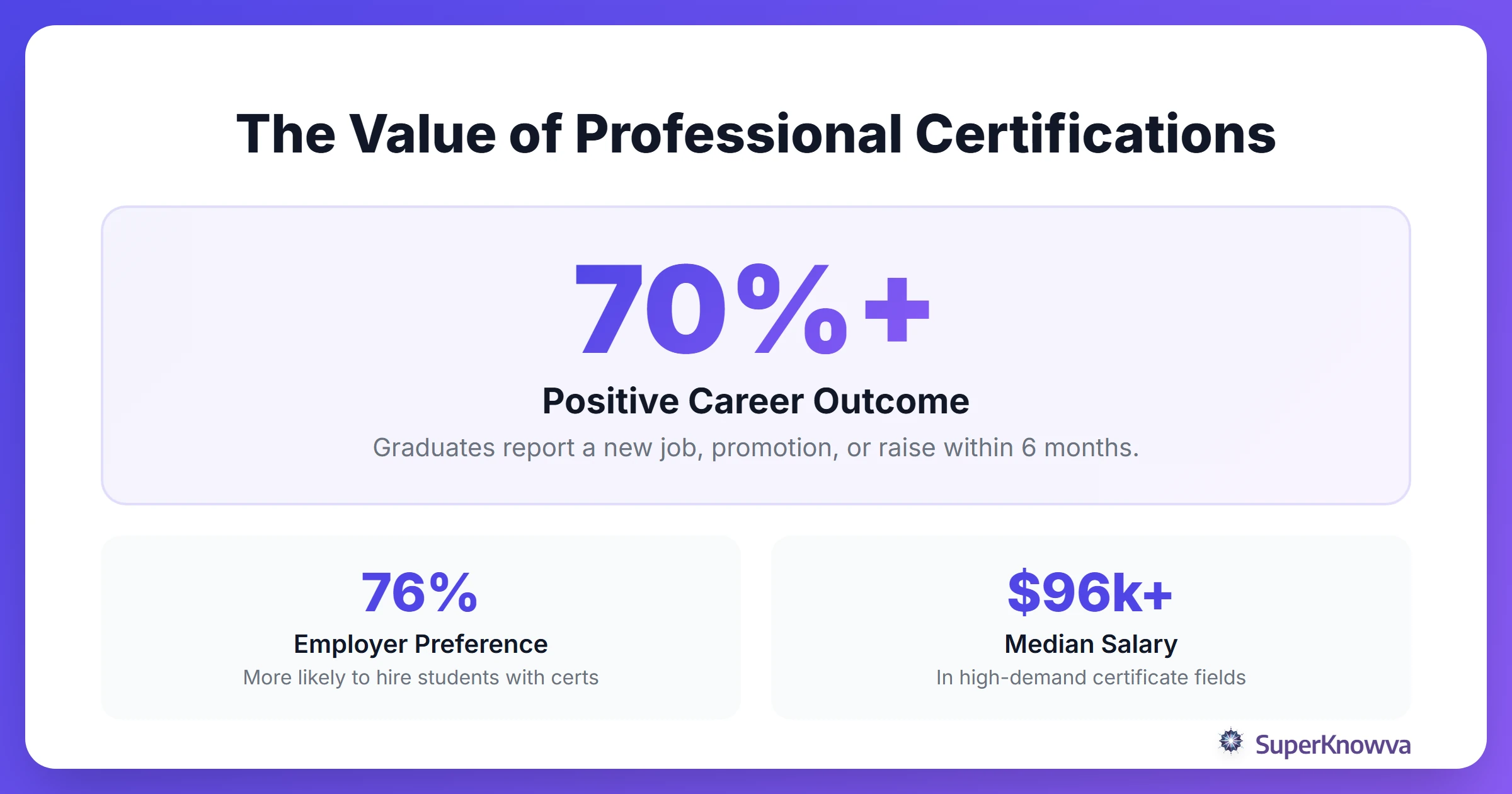
Recent data shows that 76% of employers prefer candidates who hold professional certificates alongside their degree. It’s proof of initiative. It shows you didn’t just do the bare minimum to pass; you went out and sought extra expertise.
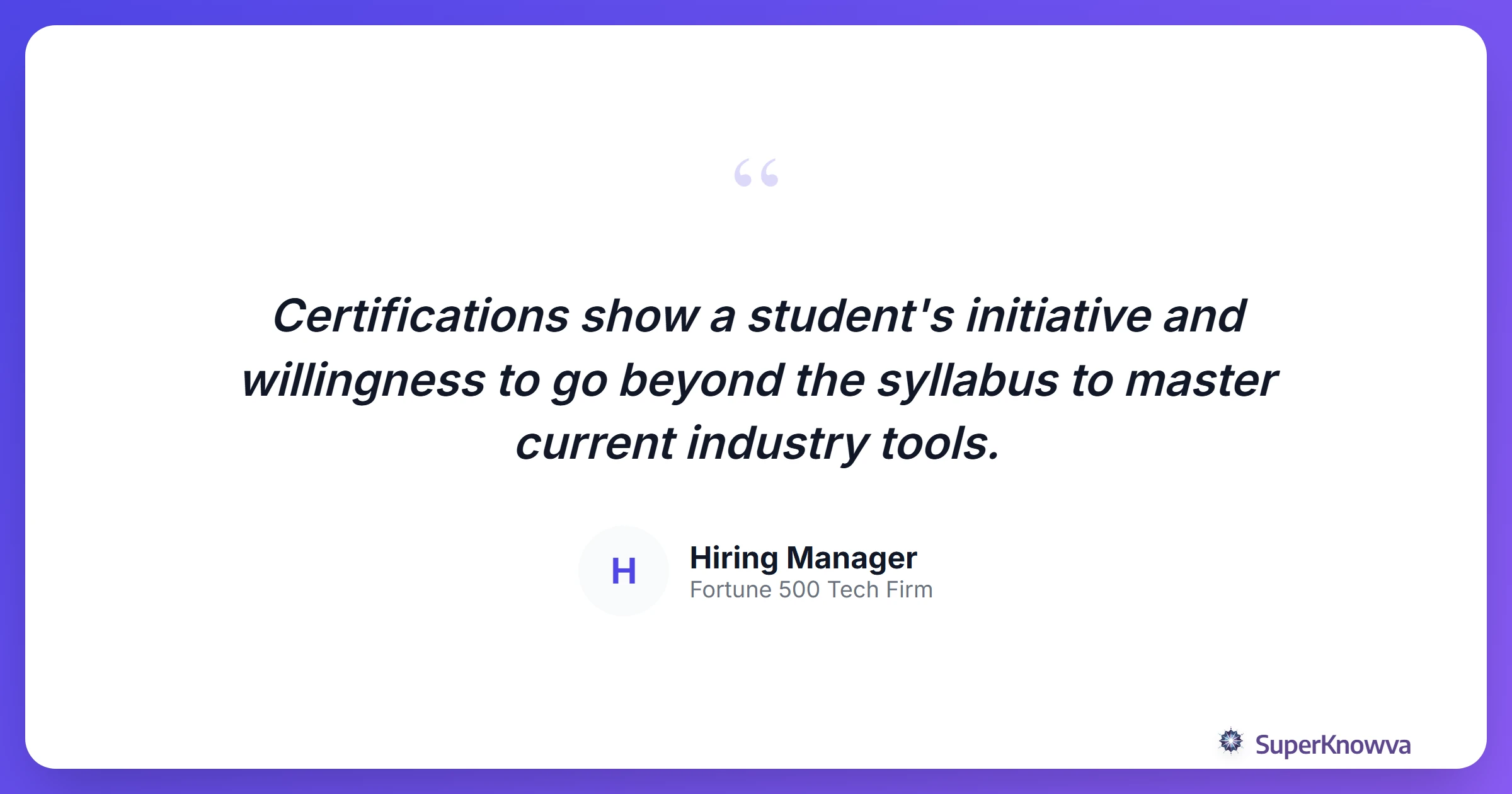
Earning a credential isn't just about padding your resume. It’s about results. A huge majority of learners report finding a new job or even negotiating a higher starting salary within six months of getting certified. For those transitioning from campus to corporate life, these certificates provide the edge you need to stand out to Fortune 500 recruiters who are tired of seeing the same generic resumes.
Top Tech and AI Certifications for 2024
You can’t talk about 2024 without talking about AI. It’s reshaping every industry, and employers are looking for students who know how to use it responsibly. The Google Career Certificates program recently launched the Google AI Professional Certificate, which is a fantastic way to learn how to automate the boring stuff and boost your own productivity.
Not a "tech person"? Don't worry. Many of the most valuable entry-level certificates are designed for students from any major:
- Cybersecurity: Learn how to protect networks (and yourself) from digital threats.
- Data Analytics: Master tools like Tableau and R to turn a mess of numbers into a clear story.
- UX Design: Focus on how people interact with apps and websites to create better digital products.
The best part? You don’t need a Computer Science degree to start. You just need a laptop and some curiosity.
Healthcare and Data Analytics Credentials
If you’re heading toward a career in medicine or healthcare administration, the field is evolving quickly. It’s not just about clinical skills anymore; it’s about data. The AHIMA Certification Overview lists several "gold standard" credentials that can set you apart.
As healthcare goes digital, the demand for Medical Coding and Documentation Integrity Specialists is through the roof. These roles are the backbone of modern hospitals. By picking up a credential in health data, you are effectively future-proof your degree against the rise of administrative automation.
Business and Project Management Essentials
Maybe you aren't a business major, but here’s a secret: every job involves managing projects and people. Foundational certifications like the Certified Associate in Project Management (CAPM) are like a "cheat code" for early-career professionals who want to lead teams.
If you have a creative interest, look into Digital Marketing and E-commerce credentials from Google or HubSpot. You’ll learn how to run real ad campaigns and analyze customer behavior. These skills help you build your online professional presence and make you hireable in the creator economy.
How to Find Free or Low-Cost Certification Programs
You’re a student; you’re likely on a budget. The good news? You don't have to spend a fortune to get certified.
Check your university’s portal first. Many schools, like Texas Tech University (TTU) and the University of Texas Rio Grande Valley (UTRGV), offer their students free access to the entire Coursera catalog.
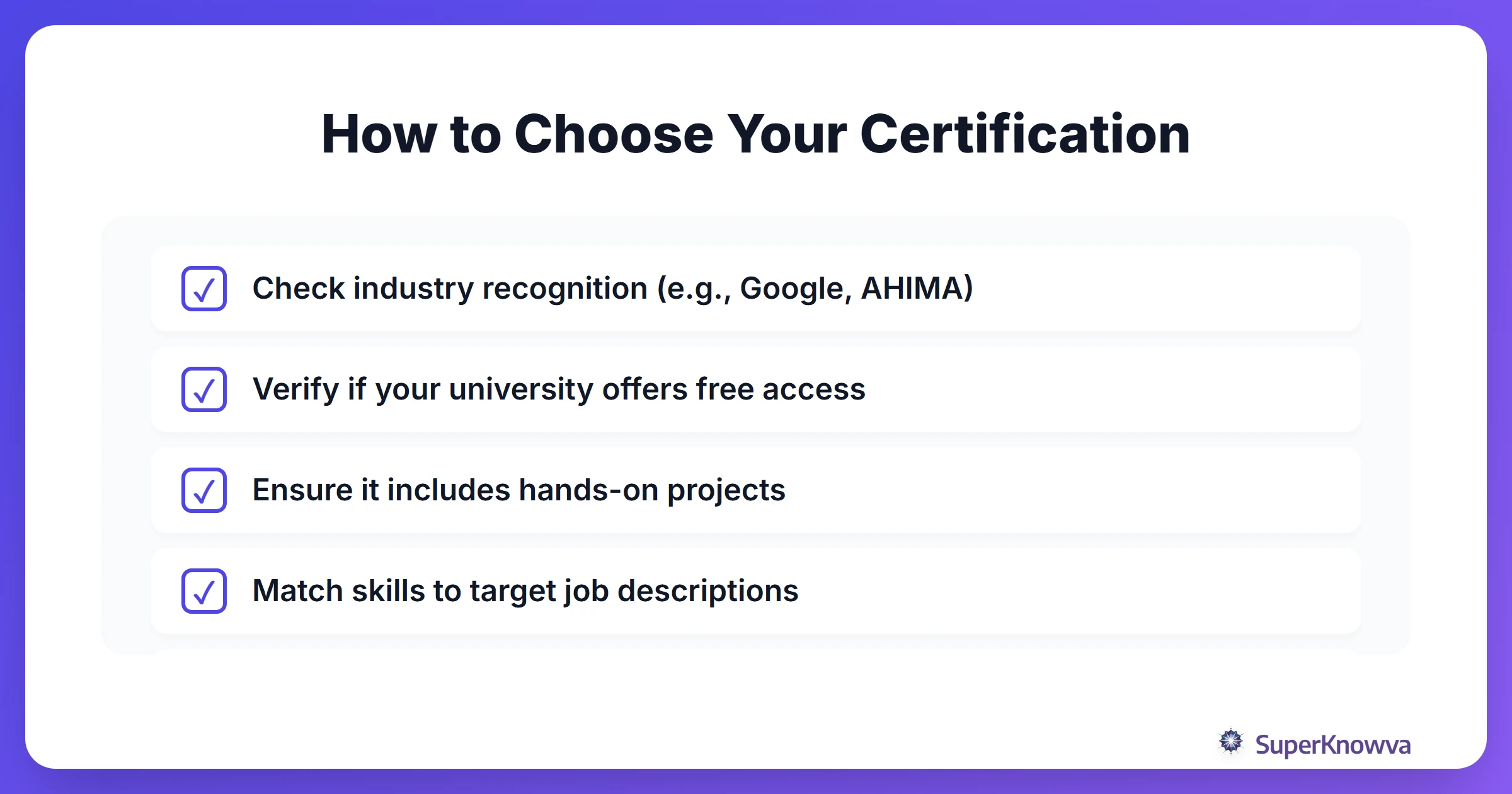
Before you sign up, use this checklist to make sure the program is worth your time:
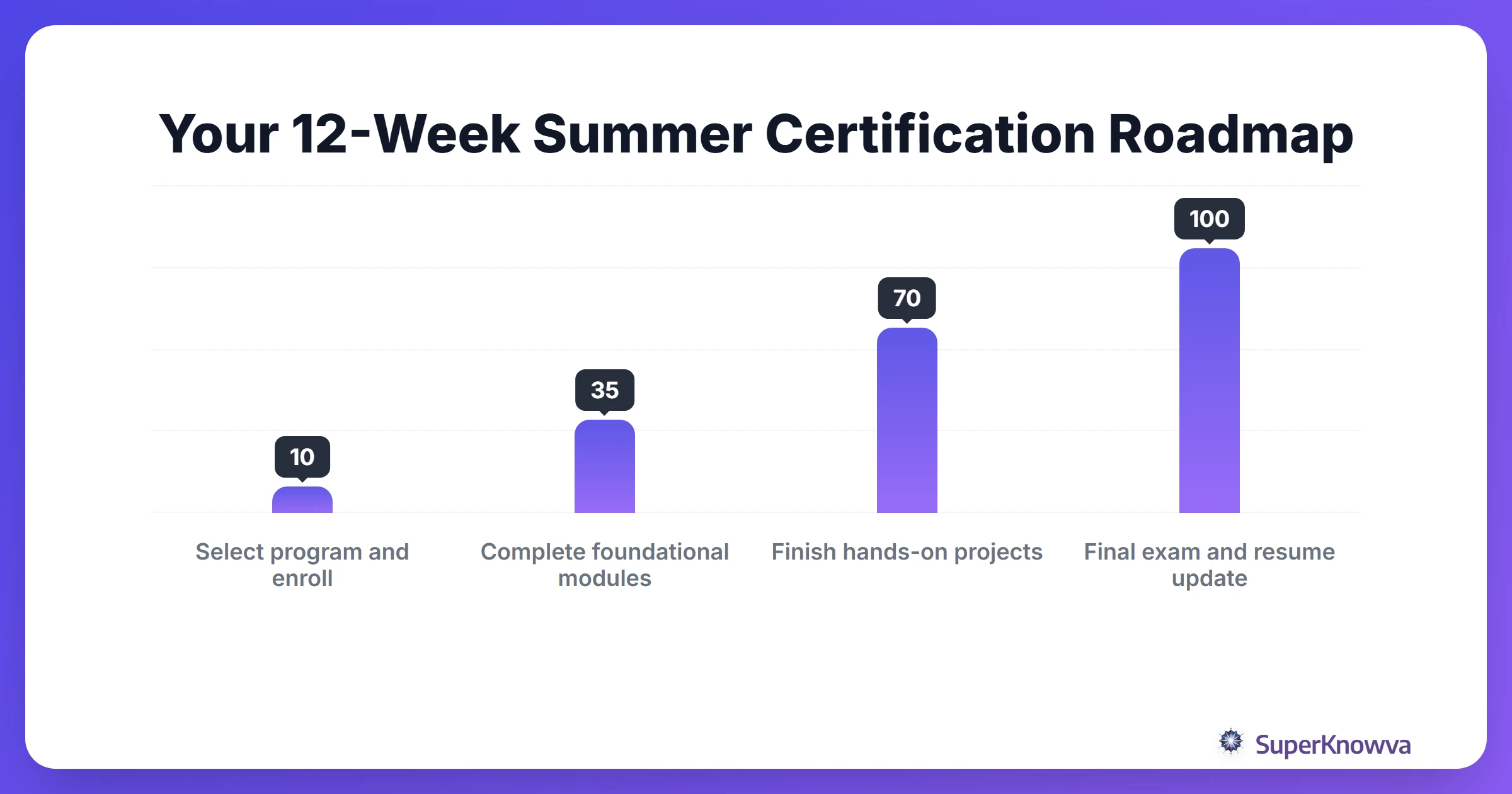
The hardest part of a summer certification is staying motivated when your friends are at the pool. The trick? Treat it like a part-time job. Dedicate 10 to 15 hours a week, set a strict schedule, and you’ll be finished before the first leaves fall.
Maximizing Your New Credentials on Your Resume
Once you get that "Congratulations" email, your work isn't done. You need to make sure recruiters actually see it. To optimize your CV for ATS (those pesky automated scanners), create a dedicated "Certifications" section and list the specific tools you learned, like "SQL" or "Agile Methodology."
Don't stop there:
- Update LinkedIn: Add your digital badge to your profile immediately.
- Share Your Progress: Write a quick post about one thing you learned. It catches the eye of recruiters looking for proactive talent.
- Interview Advantage: Use your certification as a talking point. It’s the perfect answer to the "Tell me about a time you took initiative" question.
By taking the lead this summer, you’re doing more than just adding a line to a piece of paper. You’re proving you have the drive to stay ahead of the curve. Happy learning!