Does searching job boards feel unproductive? The transition from student to professional is a significant step, and the entry level job market 2026 is particularly demanding. The traditional "apply, interview, hire" cycle has changed. Technology has rewritten the entire process.
For many graduates, the search for that first "real" role feels daunting. But here’s the secret: while the market is crowded, it’s also more hackable than ever. By strategically using ai for entry level jobs, you can stop shouting into the wind and start curating a list of opportunities that actually fit your life.
Here’s how to stop playing catch-up and start using AI as your personal career strategist.
The State of Entry-Level Jobs in the AI Era
The ground has shifted under our feet. According to data from Revelio Labs, there has been a 35% decline in entry-level job postings since 2023. This isn't a temporary slump or a bad season; it’s a structural shift in how companies hire.
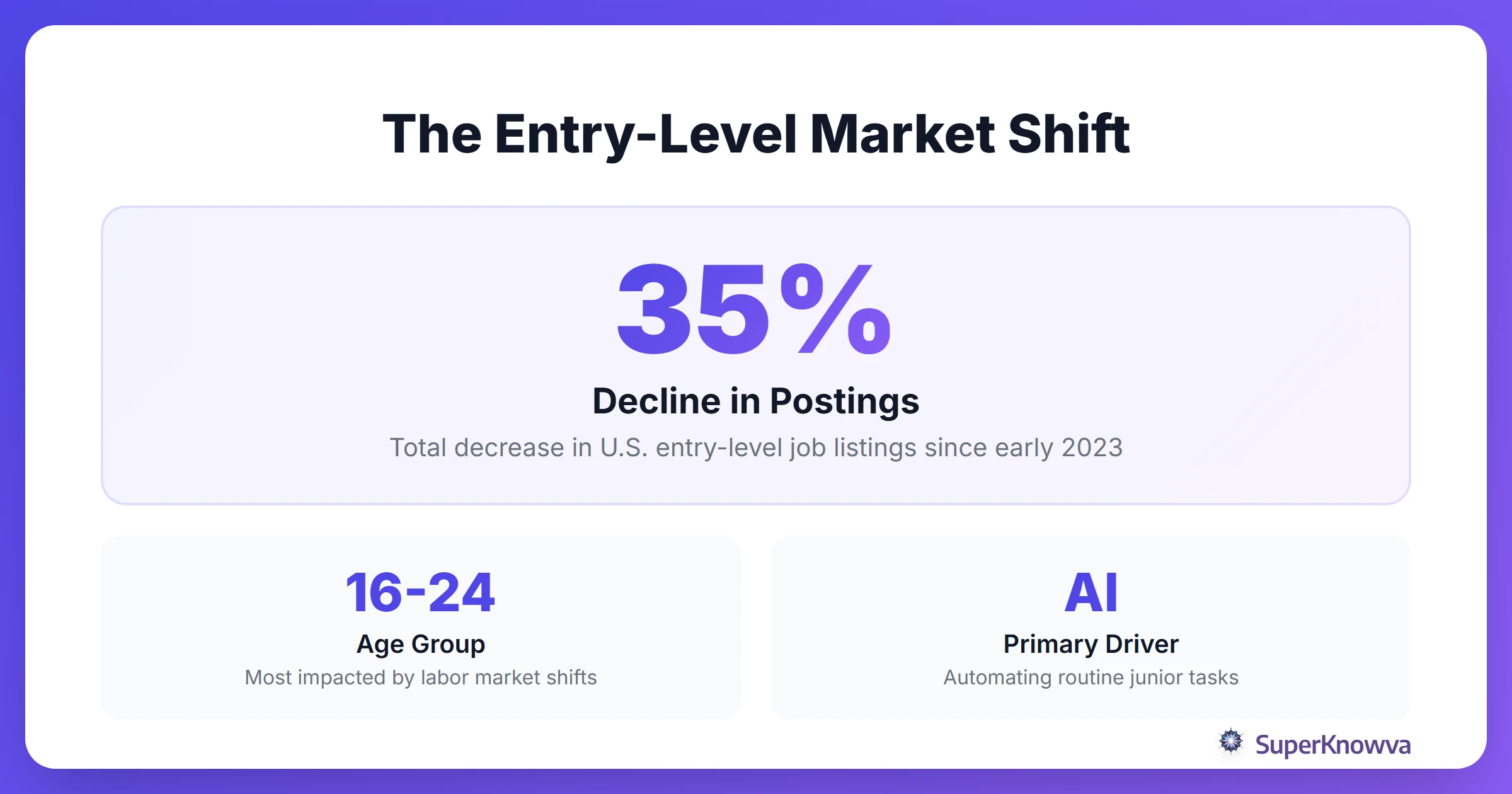
As CNBC reports on AI's impact on the career ladder, the "grunt work" that junior employees once performed, such as data entry, basic research, and entry-level coding, is now handled by large language models (LLMs). This has created a "broken" AI career ladder where the bottom rungs are disappearing.
Jobs are changing rather than disappearing. New "AI-augmented" roles are emerging. Today, employers want to know if you can perform the work and manage the AI tools that support it.
AI-Powered Job Discovery: Beyond the Search Bar
Stop the endless scrolling. If you’re still manually refreshing LinkedIn every ten minutes, you’re working too hard. In 2026, the smartest candidates use entry level AI tools to automate the hunt.
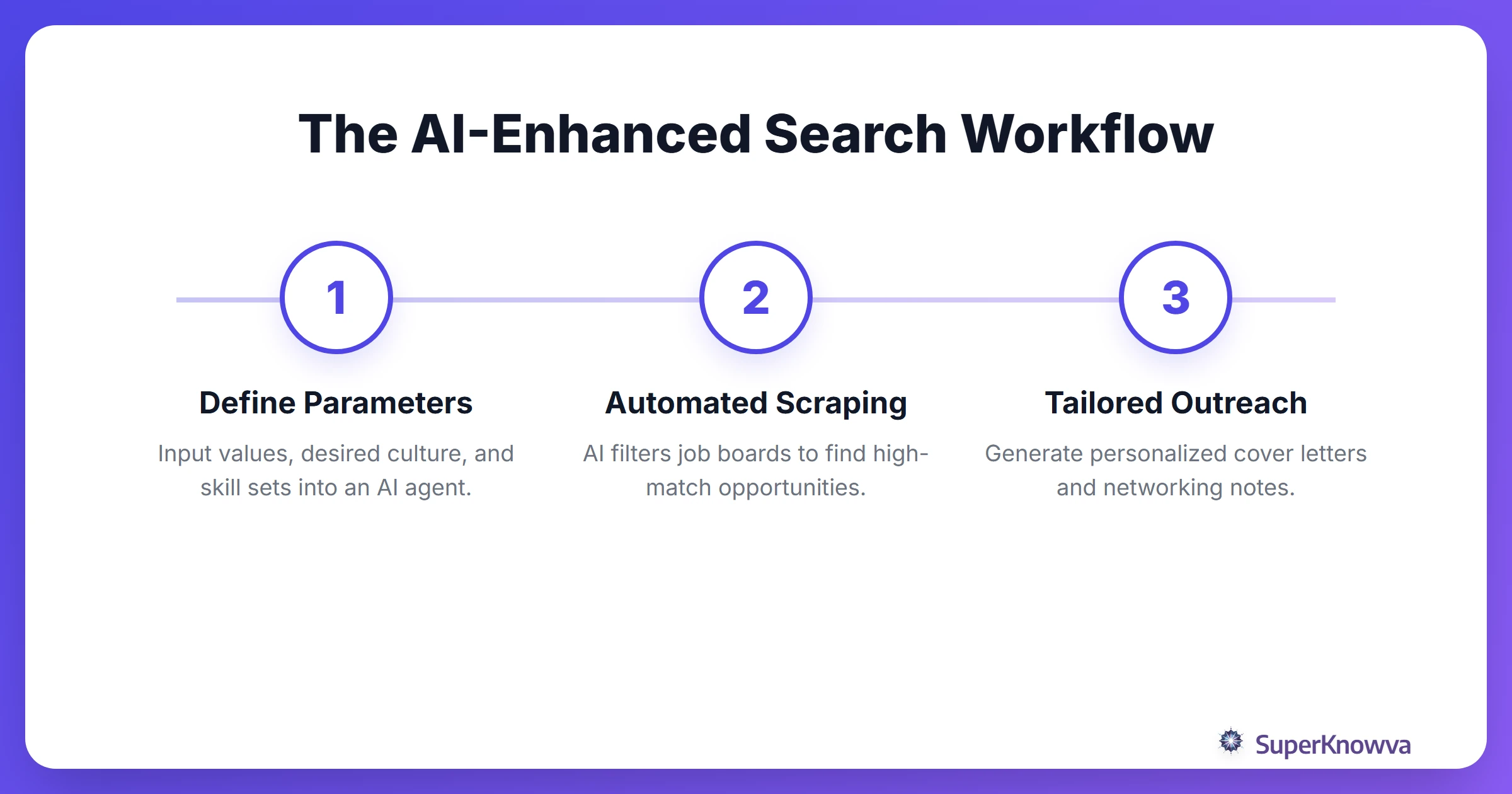
To run a truly automated job search, try these tactics:
- Deploy AI Agents: Tools like Browse.ai or custom GPTs can scan job boards for more than just titles. Instead of searching for "Marketing Assistant," use an agent to find companies with high ratings for "mentorship" or "structured junior training."
- LLM Company Research: Focus on growth. Ask an LLM to identify mid-sized Series B startups in the renewable energy sector that have increased their headcount by 20% in the last six months. These companies are expanding their teams.
- Human-Centric Alerts: Set up filters for roles that require high soft skill density. These positions involve complex stakeholder management or empathy, which are skills AI will not replace.
Optimizing Your Application with Precision AI
Once you find a role, you hit the next wall: the Applicant Tracking System (ATS). It’s a cold reality that most resumes are tossed by an algorithm before a human ever lays eyes on them. This is where AI resume optimization becomes your competitive edge.
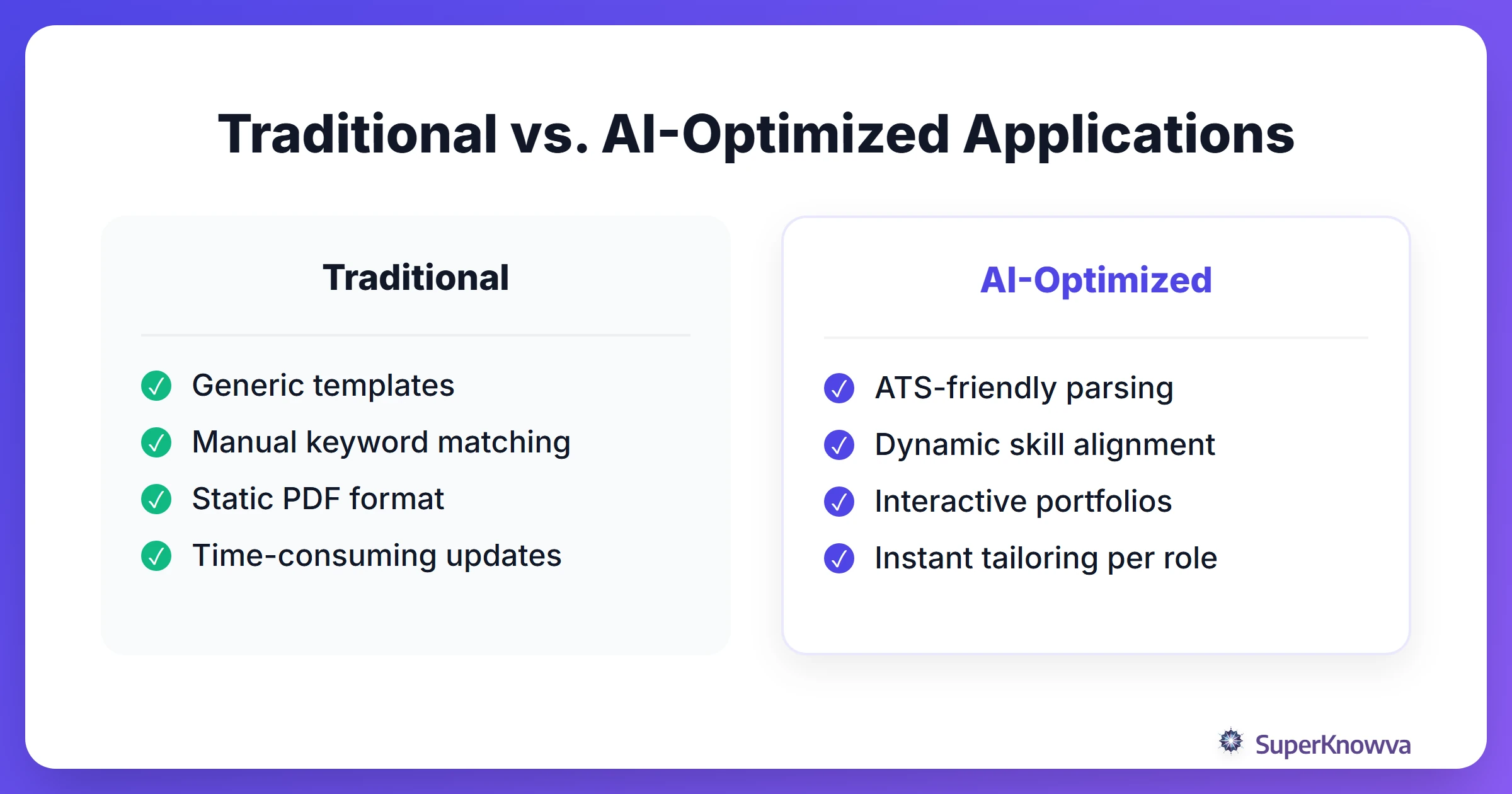
Think of your resume as a dynamic document, not a static PDF. You can use AI to:
- Map Skills to Descriptions: Feed a job description and your current resume into an AI to find "keyword gaps" you might have missed.
- Quantify Your Impact: Turn those vague class projects into "impact statements." AI can help you translate "Worked on a team project" into "Coordinated a 5-person team to deliver a market analysis that predicted a 12% shift in consumer behavior."
- Build an AI-Enhanced Portfolio: Show, don't just tell. Create a portfolio that highlights how you used AI to solve problems, whether it's debugging code or generating a content strategy.
For a deeper dive into the technical side, check out our guide on AI for Resumes: How to Optimize Your CV for Applicant Tracking Systems.
Networking 2.0: AI as Your Digital Wingman
Networking is still the only way to reliably bypass the "black hole" of online applications. But let’s be honest: reaching out to strangers is awkward. AI can help scale that outreach without making you sound like a robot.
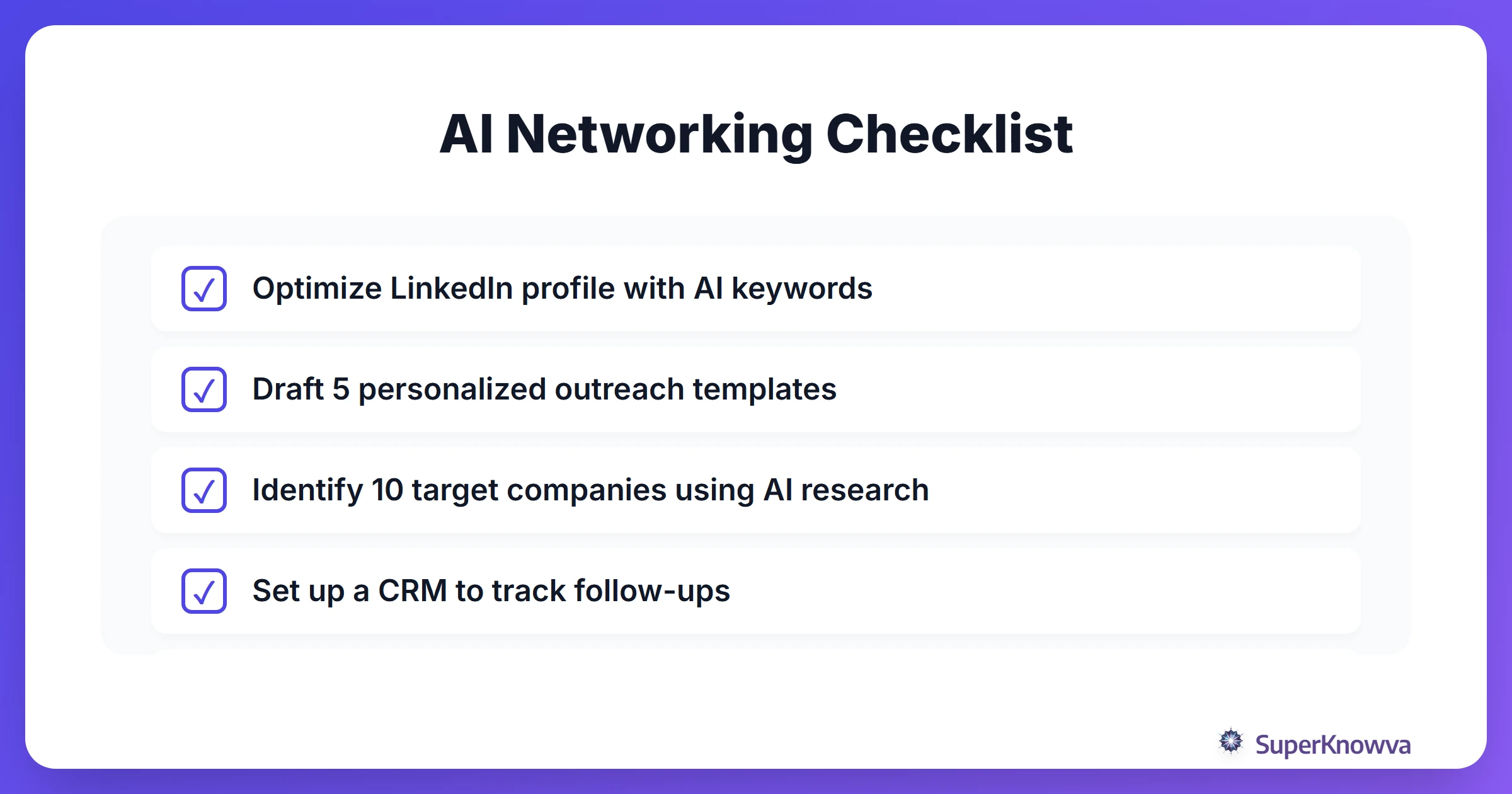
Try this strategy:
- Personalized Outreach: Use AI to draft the "hook" of your LinkedIn messages. Try a prompt like: "Write a short, professional note to an alum from my university who works at [Company] as a [Role], mentioning their recent post about [Topic] and asking for 10 minutes of their time."
- Target the Decision-Makers: Use AI-driven filters to find the specific hiring managers or team leads in the departments you’re eyeing, rather than just the generic HR inbox.
- Keep a Job Search CRM: Use a tool like Teal or an AI-integrated Notion template to track every connection, follow-up date, and response. Organization is half the battle.
If you're new to the game, start with our Networking 101: A Student's Guide to Building Professional Connections.
Mastering the AI-Interviewer and Prep Tools
In 2026, your first "interview" might be with an AI avatar. It’s strange, it’s a little uncomfortable, but it’s manageable if you’ve practiced.
- Mock Interviews: Use AI coaches to record yourself. These tools analyze your pacing, your use of filler words (like "um" and "like"), and even your body language.
- Predictive Questioning: Paste a job description into an LLM and ask it to "Generate 10 behavioral questions based on the STAR method for this specific role."
- The Post-Game Review: After a real interview, feed your notes into an AI to see where your answers could have been tighter.
Learn more about these tools in Acing the Interview: Using AI Tools to Practice and Prepare.
Upskilling: The Skills AI Can't Replace
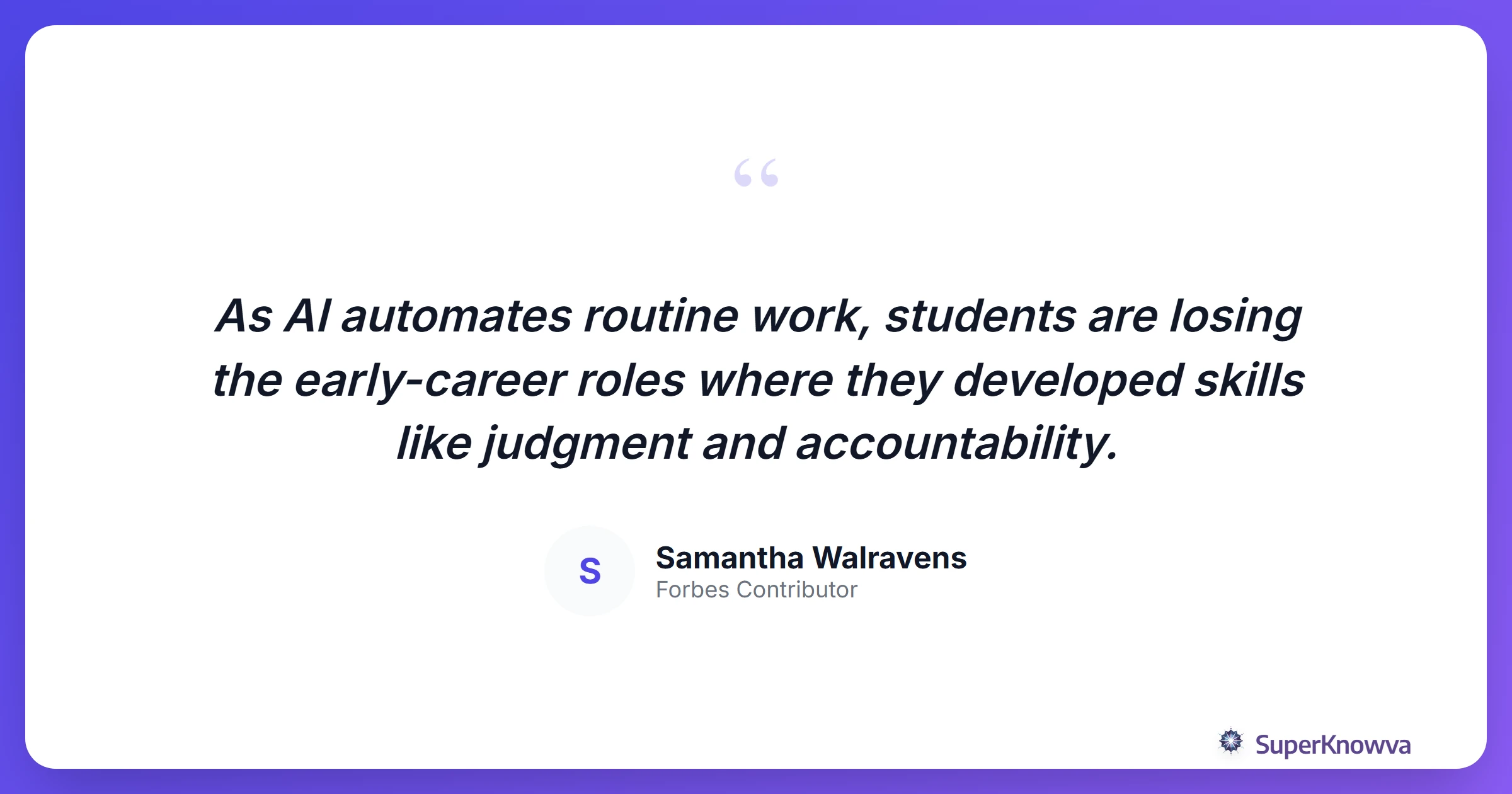
As technical tasks become automated, your "human" value skyrockets. As Forbes contributor Samantha Walravens notes, because entry-level training is disappearing, you need to show up on day one with a higher level of professional maturity.
To stay ahead, focus on:
- Judgment and Accountability: AI can give you data, but it can’t take responsibility for a decision. Show employers you can interpret AI outputs and make the final call.
- Emotional Intelligence (EQ): Conflict resolution, team motivation, and client empathy are the new "hard skills."
- Becoming an "AI Orchestrator": Don't just be a "writer" or a "coder." Be the person who knows how to use three different AI tools to finish a week's worth of work in two days.
Explore how to highlight these in our post on Soft Skills in the AI Era: What Employers Are Really Looking For.
Avoiding the AI Trap: Maintaining Your Human Edge
AI is a power-up, but over-reliance is a trap. If your resume, cover letter, and messages all sound like they were spat out by the same bot, hiring managers will sniff it out in seconds.
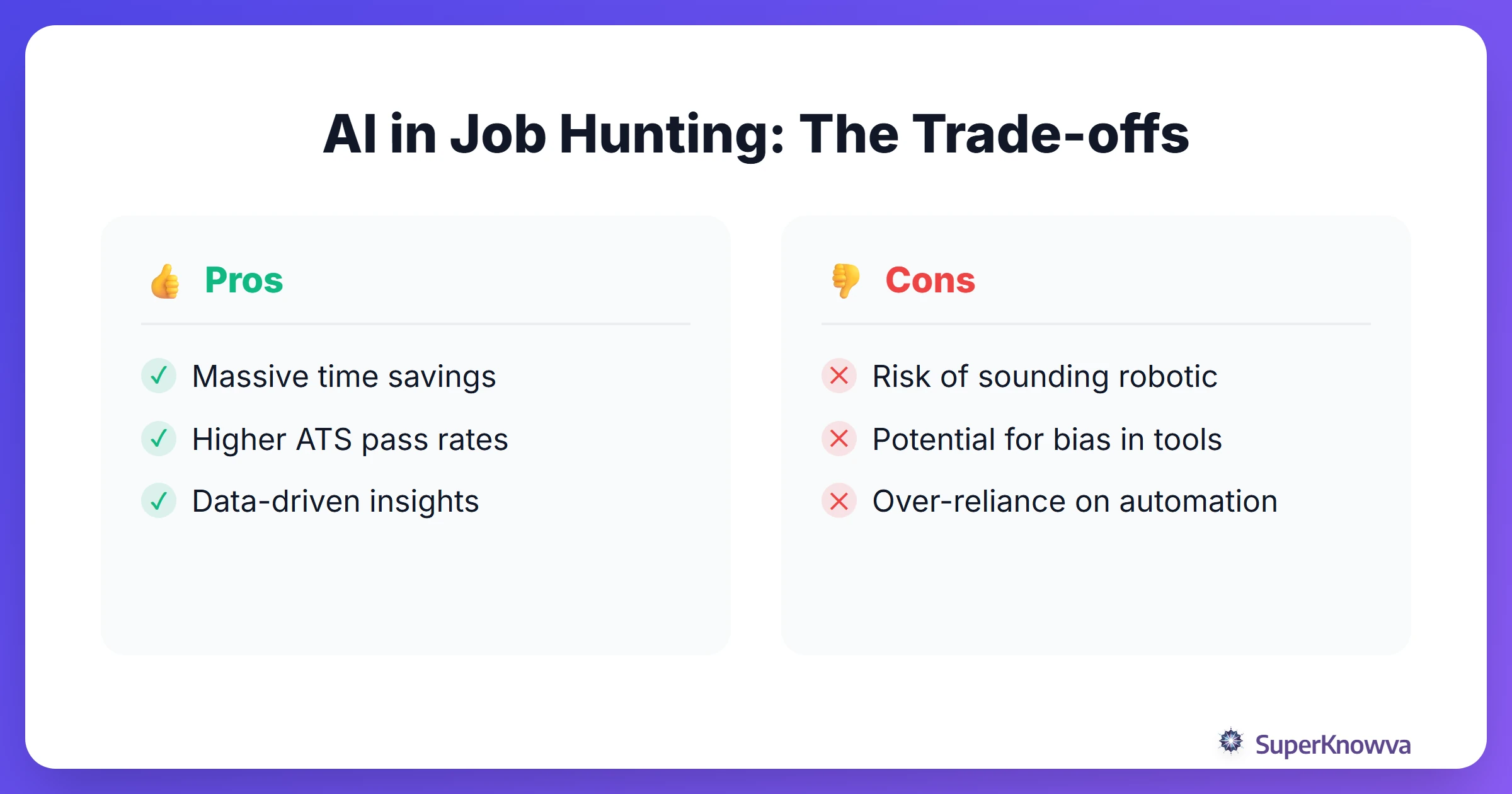
Keep your edge with this final checklist:
- The 70/30 Rule: Let AI do 70% of the research, drafting, and formatting, but make sure the final 30%, the personality, stories, and voice, is 100% you.
- Verify Everything: AI can produce inaccurate information. Never assume the facts it gives you about a company’s history or software are correct. Double-check everything.
- Prioritize Real Conversations: An AI can land you an interview, but a genuine human connection is what lands you the job. Use the time you save through automation to book more coffee chats.
The 2026 job market is competitive. By using ai for entry level jobs, you demonstrate the technical skills employers value. Automate routine tasks to prioritize high-impact work.