The sun is out, the pool is calling, and you’re stuck inside staring at a stack of textbooks that seems to grow by the hour. It’s a special kind of torture, isn't it? If you’ve ever felt like you’re drowning in assignments while everyone else is at the beach, you know that managing heavy course load requirements in the summer is a completely different beast than the fall or spring.
Summer semesters don't just move fast. They sprint. What normally takes four months is condensed into six to eight weeks. It’s intense, but it’s not impossible. With a solid strategy and a little help from AI, you can master a full semester’s worth of material without losing your sanity (or your entire summer).
The Summer Sprint: Why the Rules Change in June
In a traditional 16-week semester, you have the luxury of time. You can afford a "slow week" here and there to catch your breath. In the summer? That luxury evaporates. This is what experts call the "compaction effect." When a semester is cut in half, one week of summer instruction is roughly equivalent to nearly three weeks of regular instruction.
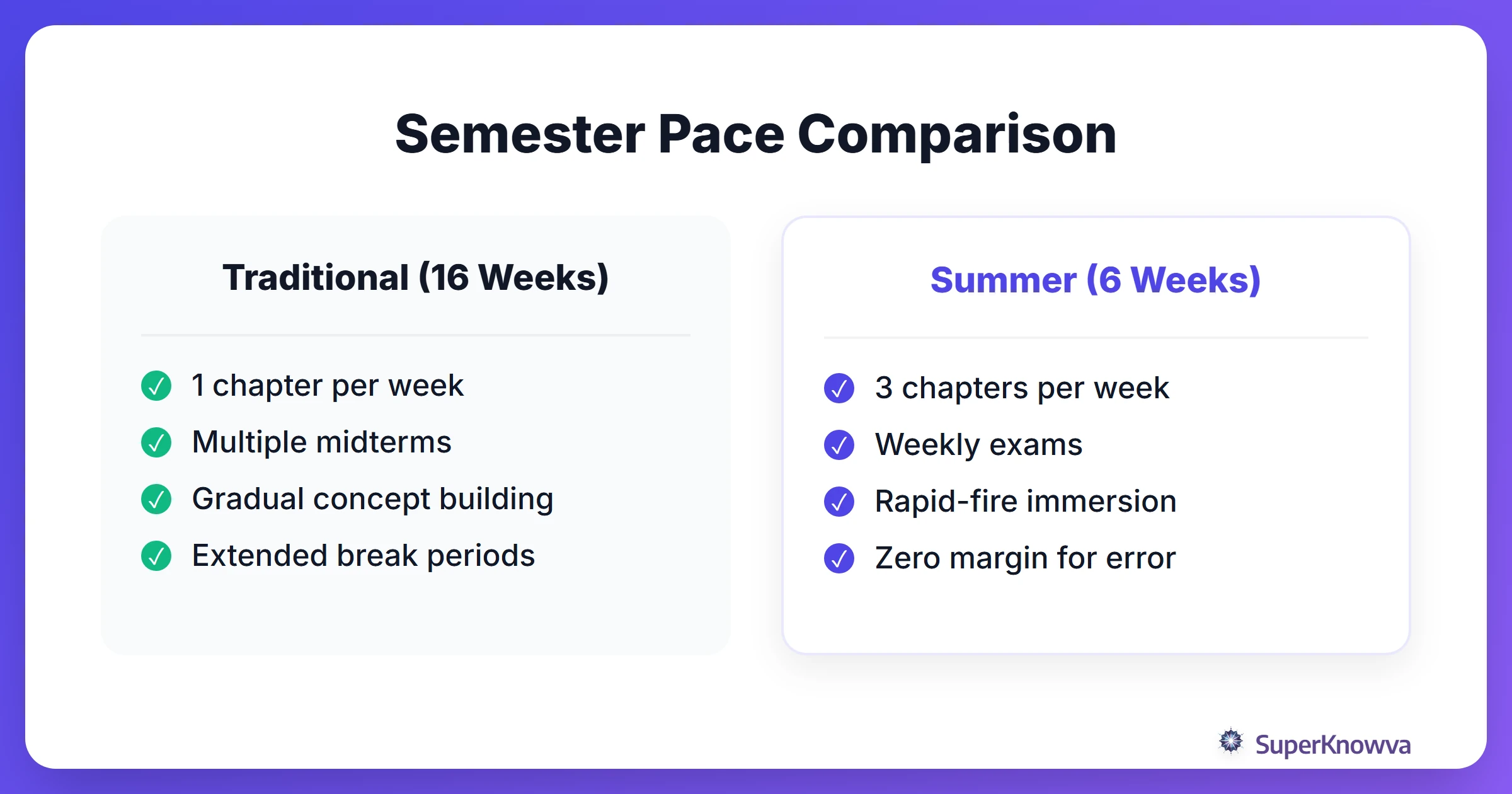
This pace requires a total shift in how you approach your desk. You aren't just "taking a class"; you are in an academic boot camp. To survive, you have to hit the ground running. There is no such thing as "syllabus week" in a six-week course. By Wednesday of week one, you’re likely already staring down your first quiz.
AI Syllabus Auditing: Your First Line of Defense
When you are on an accelerated timeline, your syllabus is your guide. Most syllabi are bloated, 15-page PDFs that are difficult to use. This is where AI organizes the information for you.
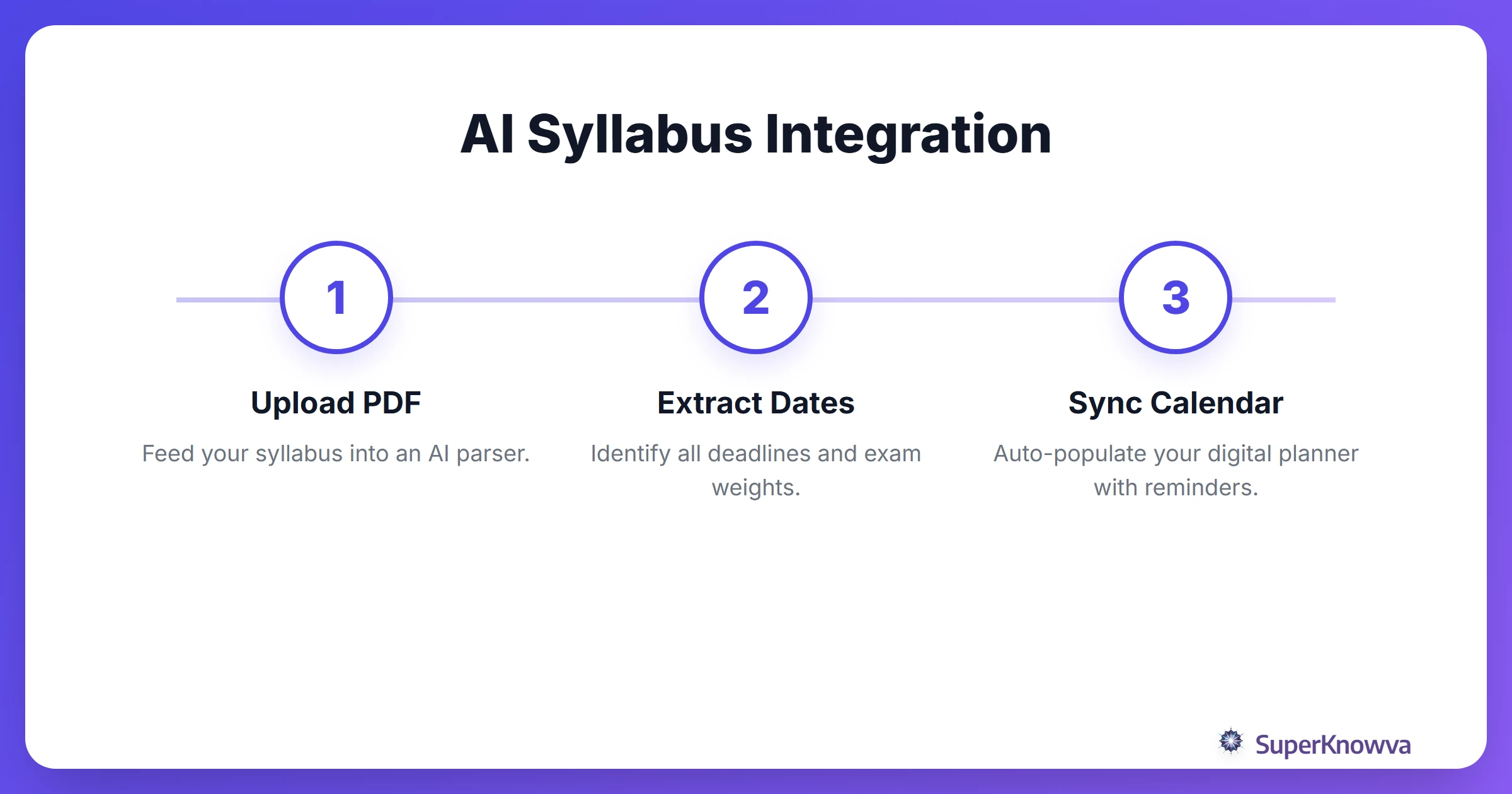
Instead of manually squinting at tables and fine print, use AI tools to parse those complex documents into actionable task lists. By uploading your syllabus to an AI parser, you can:
- Extract key deadlines and exam dates instantly.
- Identify weighted grades to see which assignments actually move the needle.
- Build a "Master Summer Calendar" that accounts for the breakneck pace.
By automating the organization, you ensure no "surprise" midterms ruin your weekend plans. As McGraw Hill's burnout prevention tips suggest, treating your planner like a best friend is the first step toward keeping your head above water.
Strategic Time Blocking for the Accelerated Student
To survive the summer, you need a "study-first" mentality. Because the pace is so high, falling behind by even two days can be a total catastrophe. This is where strategic time blocking comes in to save your schedule.
The trick is to separate deep work (wrestling with complex new concepts) from administrative tasks (emails, formatting citations, or organizing folders). Try carving out 90-minute blocks for deep work in the morning when your brain is actually awake.
If a 50-page reading assignment feels overwhelming, use the 5-minute rule for students. Tell yourself you will only work for five minutes. Often, the hardest part of managing heavy course load stress is simply starting. Once you begin, it is easier to keep going. Remember, even in the heat of July, balancing a high GPA with a social life is possible; you just have to be protective of your time blocks.
Active Recall: The Efficiency Secret for Heavy Loads
When you have only 48 hours to master a chapter before a weekly exam, passive reading is your worst enemy. Highlighting text and re-reading notes feels like productive work, but it rarely sticks.
In an accelerated semester, the debate between active recall vs. re-reading is settled by the clock: recall is simply faster and more effective.
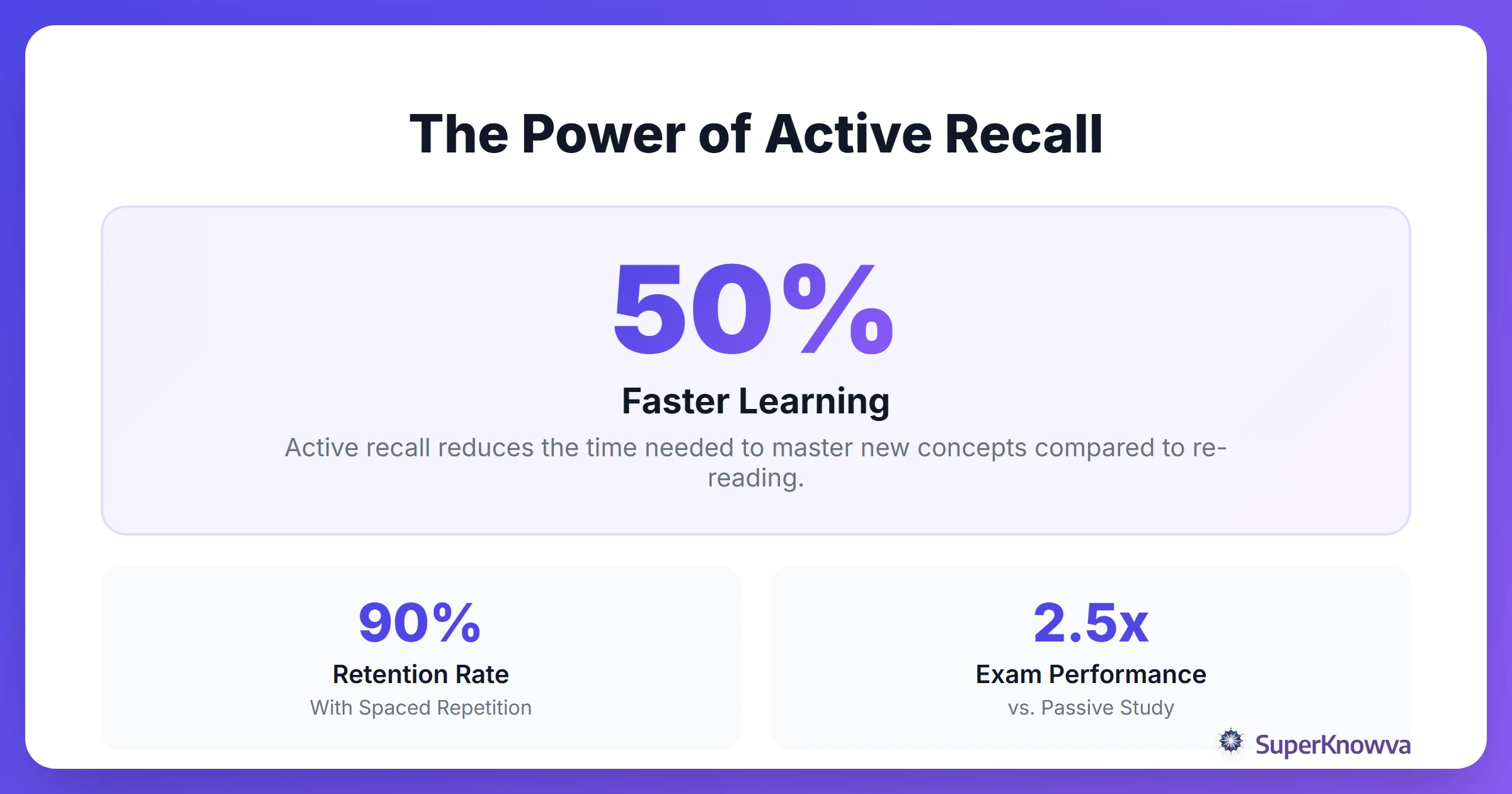
AI tools can instantly turn your lecture slides or PDFs into practice questions. Instead of spending three hours making flashcards, you can spend those hours actually testing yourself. This use of spaced repetition ensures the information stays in your brain, even if you only learned it three days ago.
Avoiding Burnout (Without Becoming a Hermit)
Let’s be real: taking a heavy summer load usually means saying "no" to a few pool parties. It’s a common theme in Reddit community advice on heavy loads, where students emphasize that sacrificing some social time is a temporary, necessary evil.
Total isolation leads to burnout. Try "social snacking": short, high-quality interactions like a 20-minute coffee catch-up or a quick walk with a friend. These keep you connected without disrupting your study goals.
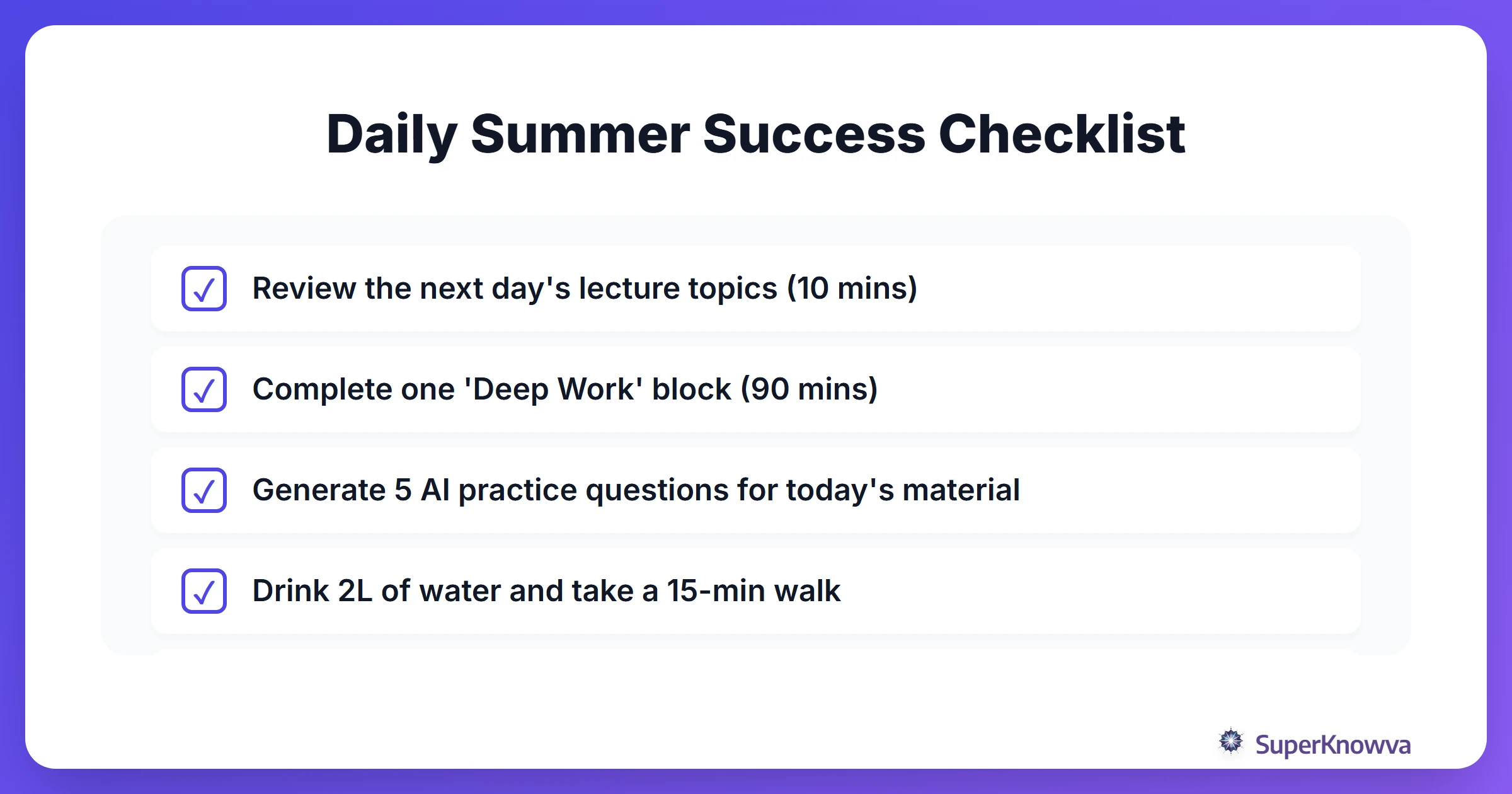
Physical maintenance is just as important as your GPA. When the workload peaks, you need to know how to study for long hours without burning out. That starts with the basics: hydration and sleep. Your brain can’t process information at an accelerated rate if it’s running on fumes.
SuperKnowva: Your AI Co-Pilot for Summer Success
If you're looking to streamline your summer, SuperKnowva was built for exactly this challenge. It helps you manage the "compaction effect" without the usual stress.
- Automated Study Guides: Upload your summer lecture PDFs, and SuperKnowva builds study guides.
- Gap Analysis: Use analytics to find exactly what you don't know before the midterm.
- Time-Saving Notes: Streamline your note-taking to save 5+ hours per week so you can enjoy the sunshine.
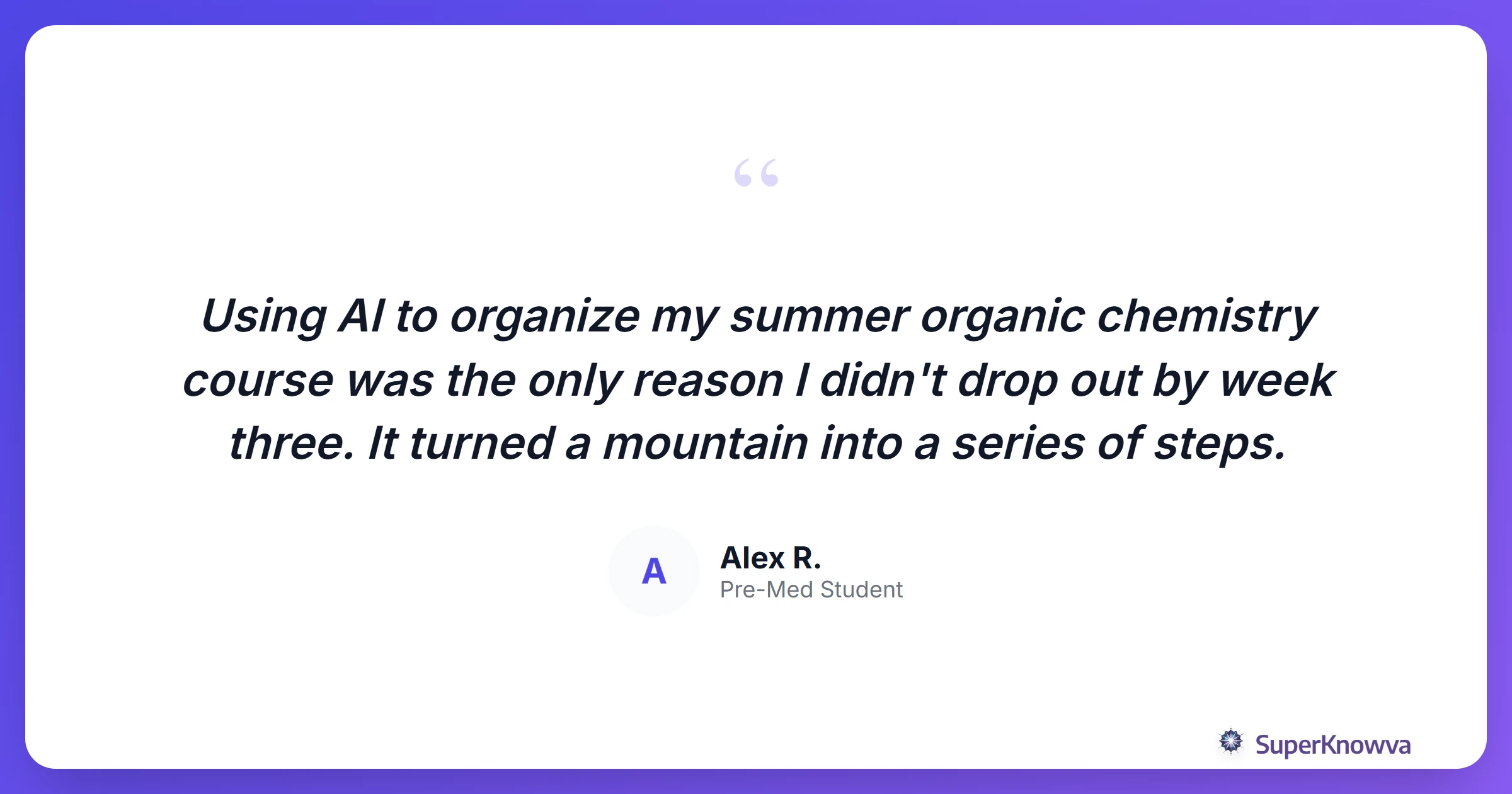
Don't let the summer sprint leave you in the dust. By combining smart time management with the power of AI, you can turn a heavy course load into a series of manageable wins. Ready to dominate your summer semester? Start using SuperKnowva today and experience a better way to study.