Ask any premed student which part of the MCAT keeps them up at night, and you’ll get the same four-letter answer: CARS.
Unlike the sciences, you can’t flashcard your way to a 130 here. There are no metabolic pathways to memorize and no physics equations to plug and chug. The Critical Analysis and Reasoning Skills section is a different beast entirely. If your score has plateaued despite weeks of practice, it’s time to stop "just reading" and start using MCAT CARS AI analysis to crack the code of the exam.
In this guide, we’re diving into how medical school prep AI is flipping the script on traditional studying, helping you deconstruct impossible passages and finally think like the person who wrote the test.
The CARS Challenge: Why Your Current Strategy Isn't Working
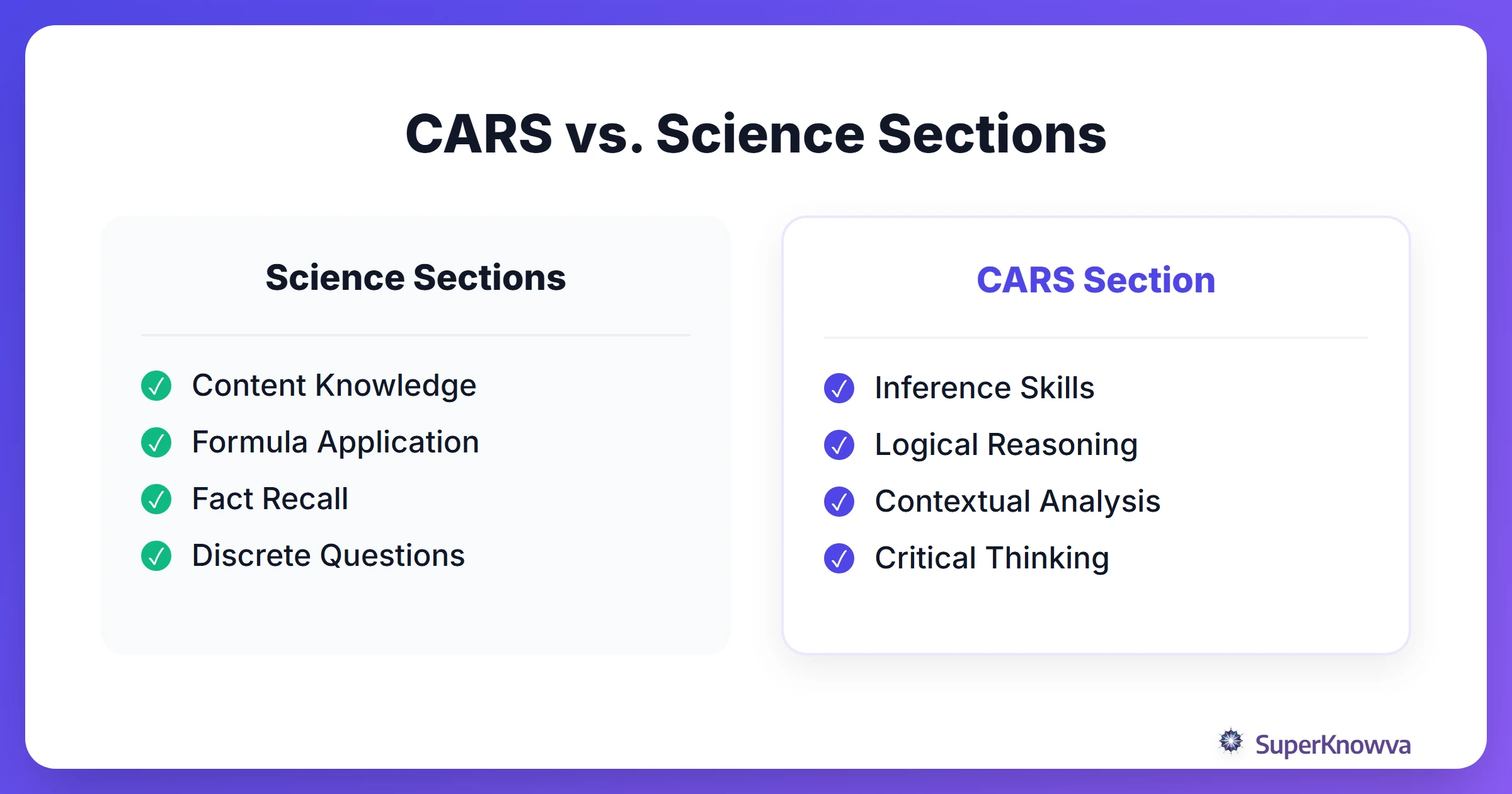
CARS is notoriously frustrating because it doesn't care what you know about the humanities. It cares how you think. While Biology or Chemistry test your memory, CARS tests your ability to map the architecture of an argument. It’s 100% inference-based.
Many students fall into the "exposure trap." They read The Economist or The New Yorker every morning, hoping that dense text will magically translate to a higher score. But passive reading doesn't win points. Without a logical framework, you’re just wandering through a forest of words. This is where AI changes things. By using AI as an objective logic mapper, you can ditch the "gut feelings" and build a disciplined, repeatable MCAT CARS strategy.
Deconstructing Passages: The "Architectural X-Ray"
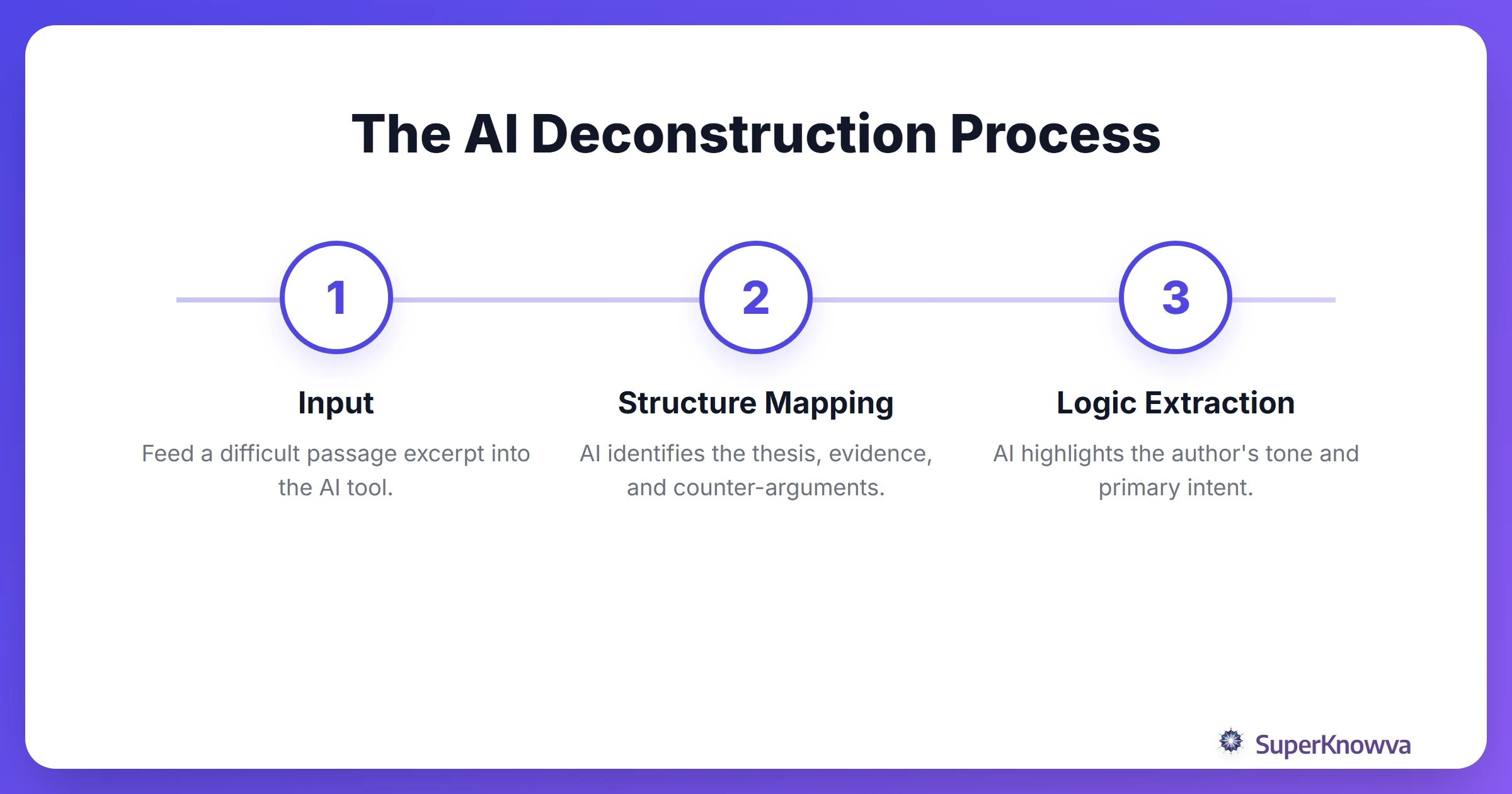
We’ve all been there: staring at a 600-word passage on 16th-century literary criticism or obscure French philosophy that feels like a total brick wall. AI tools help by performing what I call an "architectural X-ray" of the text.
Instead of drowning in high-level vocabulary, you can use AI to:
- Audit Your Main Idea: Feed a confusing paragraph into an AI. Does your summary match the AI’s objective extraction? If not, you’ve found a gap in your comprehension.
- Decode the Author’s Vibe: AI analyzes word choice to determine if an author is being cynical, supportive, or subtly sarcastic. These skills are mandatory for "Tone" questions.
- Spot the Pivot Points: AI can highlight structural shifts, such as "however," "moreover," or "notwithstanding," that signal a change in the author’s logic.
When you move from passive reading to active MCAT passage deconstruction, you stop seeing a wall of words and start seeing the "skeleton" of the argument. This structural thinking is a massive advantage, especially when you're improving MCAT Ethics & Reasoning with AI.
Identifying Logic Patterns: Beat the Distractors
The AAMC divides CARS into three buckets: Foundations of Comprehension, Reasoning Within the Text, and Reasoning Beyond the Text. Most students are good at one and terrible at the others. AI helps you figure out exactly where your logic is snapping.
The real magic? Using AI to explain "distractor" answers. When you get a question wrong, don't just read the explanation and move on. Ask the AI to analyze the incorrect choice you picked. It can tell you if you fell for a "too broad" trap, an "out of scope" error, or a "faulty comparison." These are the classic logical fallacies the MCAT uses to trip you up.
A "logic-first" mindset lets you strip away personal bias. AI doesn’t care if it agrees with the author; it only cares about the evidence provided. Learning to emulate that cold objectivity is the secret to a 130+ score.
Real-Time Feedback: Your 24/7 Logic Coach
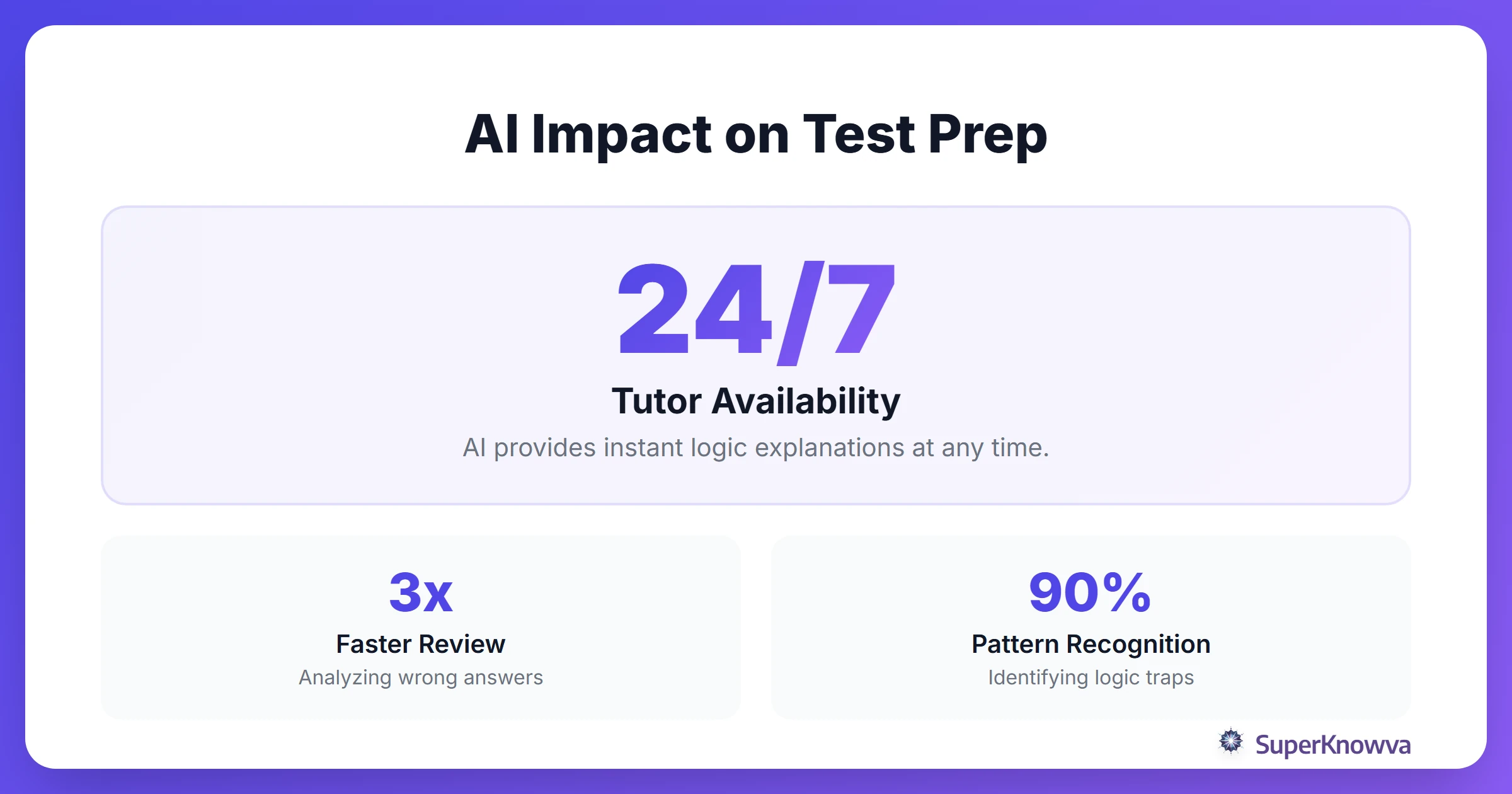
Private tutoring is great, but it’s expensive and rarely available at 11:00 PM when you're mid-grind. An AI tutor for MCAT prep is always on, providing feedback while the logic of the passage is still fresh in your mind.
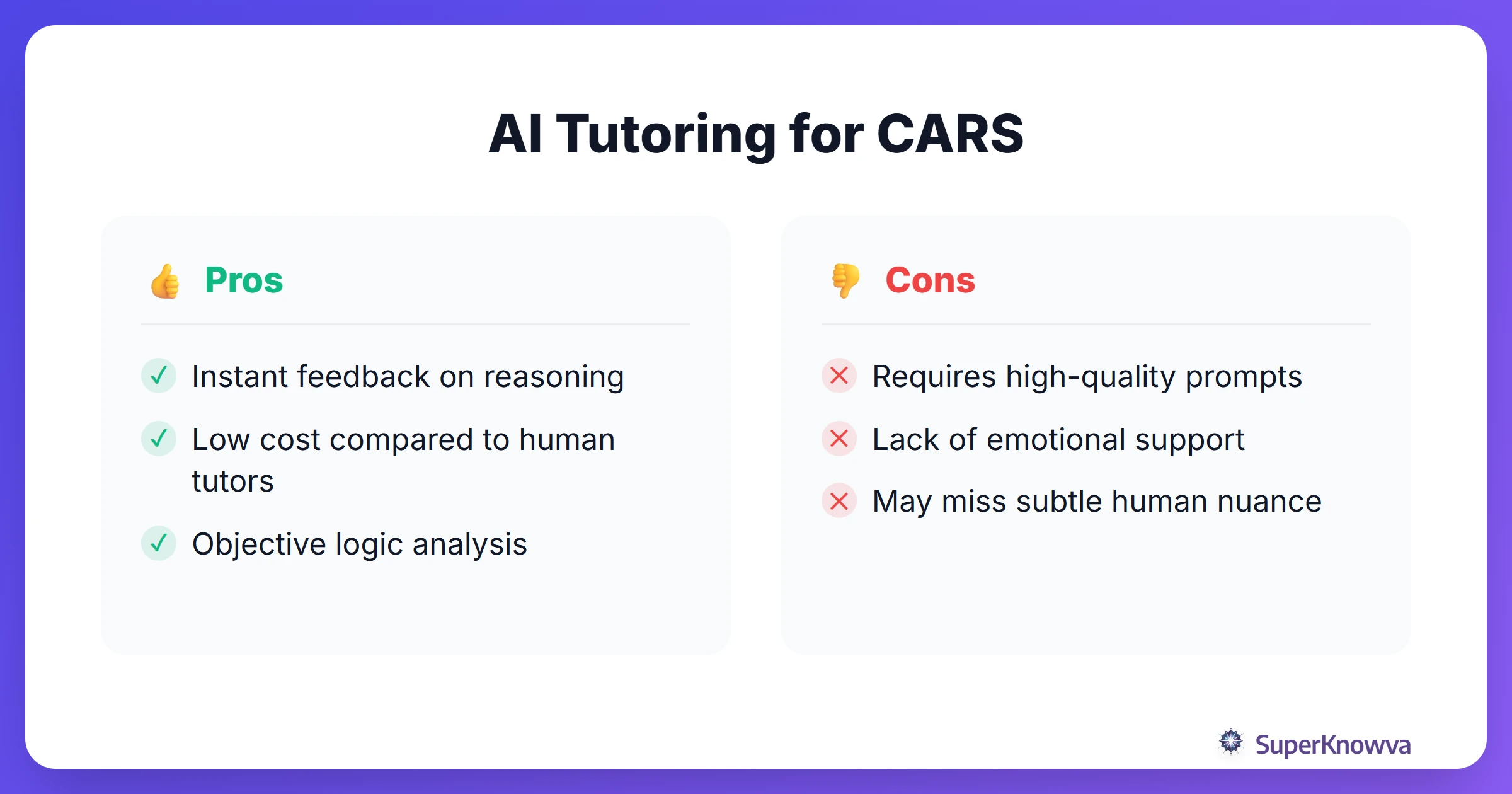
Try using AI for Socratic questioning. Instead of asking for the right answer, tell the AI: "Don't give me the answer. Ask me three questions about the author's intent to help me find it myself." This forces your brain to do the heavy lifting while providing a safety net.
For students looking for specialized tech, Blueprint AI Prep Tools features "Blue," an AI tutor trained specifically on MCAT logic. This kind of personalized feedback for high-stakes exams is the fastest way to bridge the gap between "I think I get it" and "I know I got it."
Active Reasoning vs. Passive Reading
Mastering CARS requires you to be an active participant in the text. You should be "predicting" the author’s next move as you read. Ask yourself: "If the author believes X, what evidence do they have to provide next to prove it?"
You can practice this with AI by feeding it a passage but leaving out the final paragraph. Try to write the conclusion yourself, then have the AI compare your logic to the original. This helps you see the relationships between different viewpoints. It is also a way to boost your reading comprehension skills by learning to distinguish between the "narrowest" and "broadest" answer choices, a nuance that separates the 125s from the 130s.
Building Your Data-Driven Study Plan
Consistency is everything. You can't cram CARS; you have to build the "logic muscle" over months, not days.
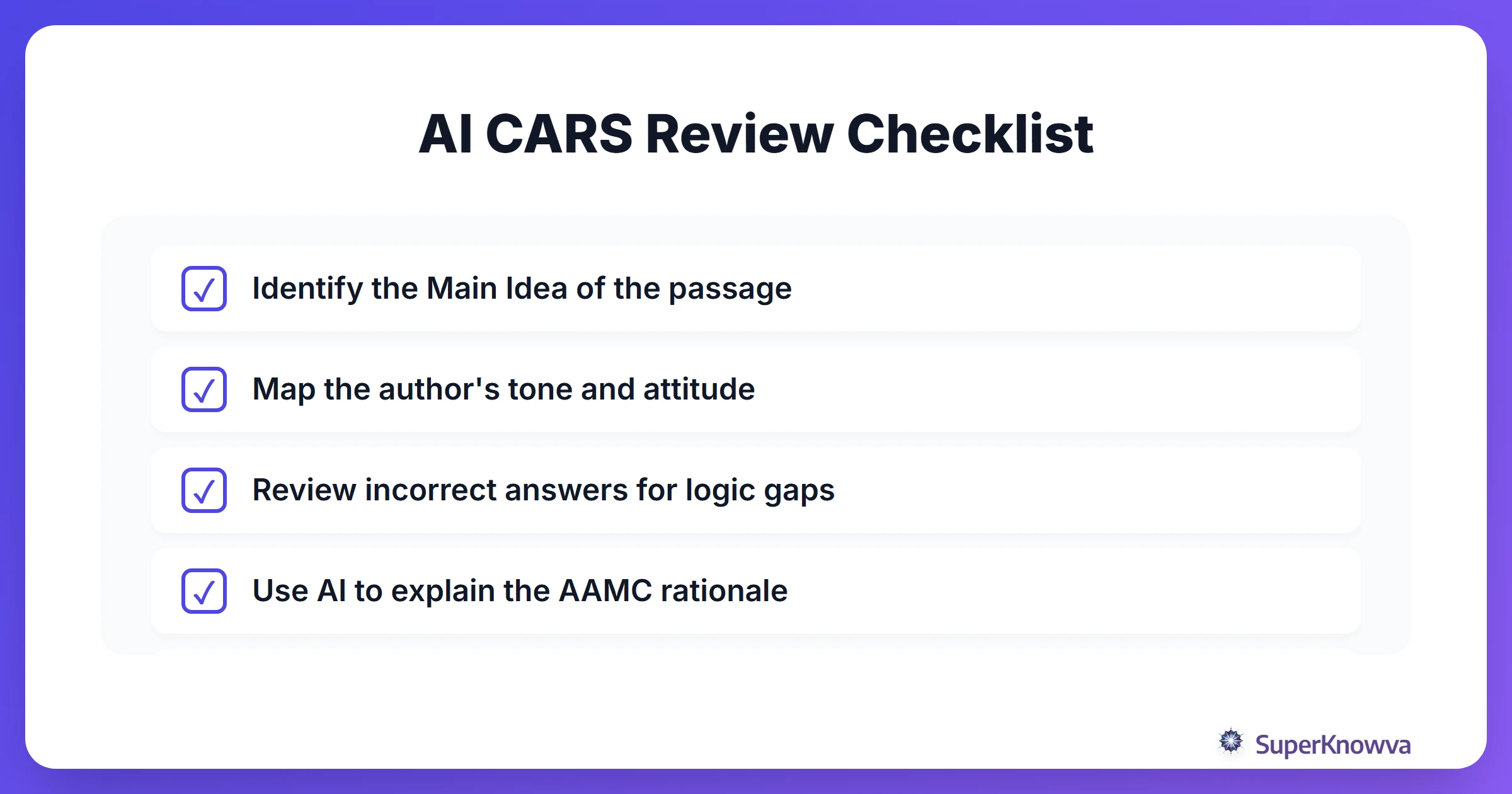
Try integrating AI into a 10-week schedule. After every practice set, use AI to analyze your error logs. Look for the trends: Are you always missing "Reasoning Beyond the Text" questions? Do you freeze up on passages about Art History or Music Theory? By tracking these data points, you can stop guessing and start targeting your weaknesses.
Just remember: AI is the coach, but the AAMC is the referee. Always use AI to understand the why behind official AAMC rationales. For more expert perspectives, check out these AMA Tips for Mastering CARS.
Conclusion
The CARS section doesn't have to be the reason you don't get into your dream school. By leveraging MCAT CARS AI analysis, you can stop being a passive reader and start being a clinical, critical thinker. Use the technology to deconstruct the "impossible," and you’ll realize the MCAT's logic is far more predictable than it looks. Stay consistent, stay objective, and let AI help you close the gap to your target score.