You’ve been staring at that organic chemistry mechanism for forty minutes. It’s not just a brick wall; it’s a fortress. As finals approach, the panic sets in, and most students default to the only survival tactic they know: rote memorization. But memorization is a fragile strategy. It’s the first thing to break when an exam question throws a curveball.
To master your coursework, you don't need a better memory. You need a better way to think. By using mental models for problem solving, you can stop acting like a recording device and start thinking like an expert.
In this guide, we’ll break down the cognitive frameworks that help you deconstruct the hardest subjects and walk into your finals with a systematic, high-performance edge.
What are Mental Models and Why Do They Matter?
Think of mental models as "apps" for your brain. They are internal shortcuts and structured ways of thinking that help you simplify messy information. Instead of treating every exam question like a brand-new, terrifying puzzle, mental models allow you to recognize recurring patterns.
Why bother? Because relying on just one way of thinking is a recipe for getting stuck. You’ve heard the saying: "To a man with a hammer, everything looks like a nail." If you only know how to memorize, every problem looks like a flashcard. To survive multidisciplinary exams, you need a "latticework" of models. This isn't just about passing a test; it's about connecting ideas across different subjects until your knowledge feels like a cohesive web rather than a pile of random facts.
First Principles Thinking: Stripping STEM Down to the Studs
We often solve problems by analogy: we do it a certain way because that’s how the textbook showed us the last one. But what happens when the exam question doesn't look like the textbook?
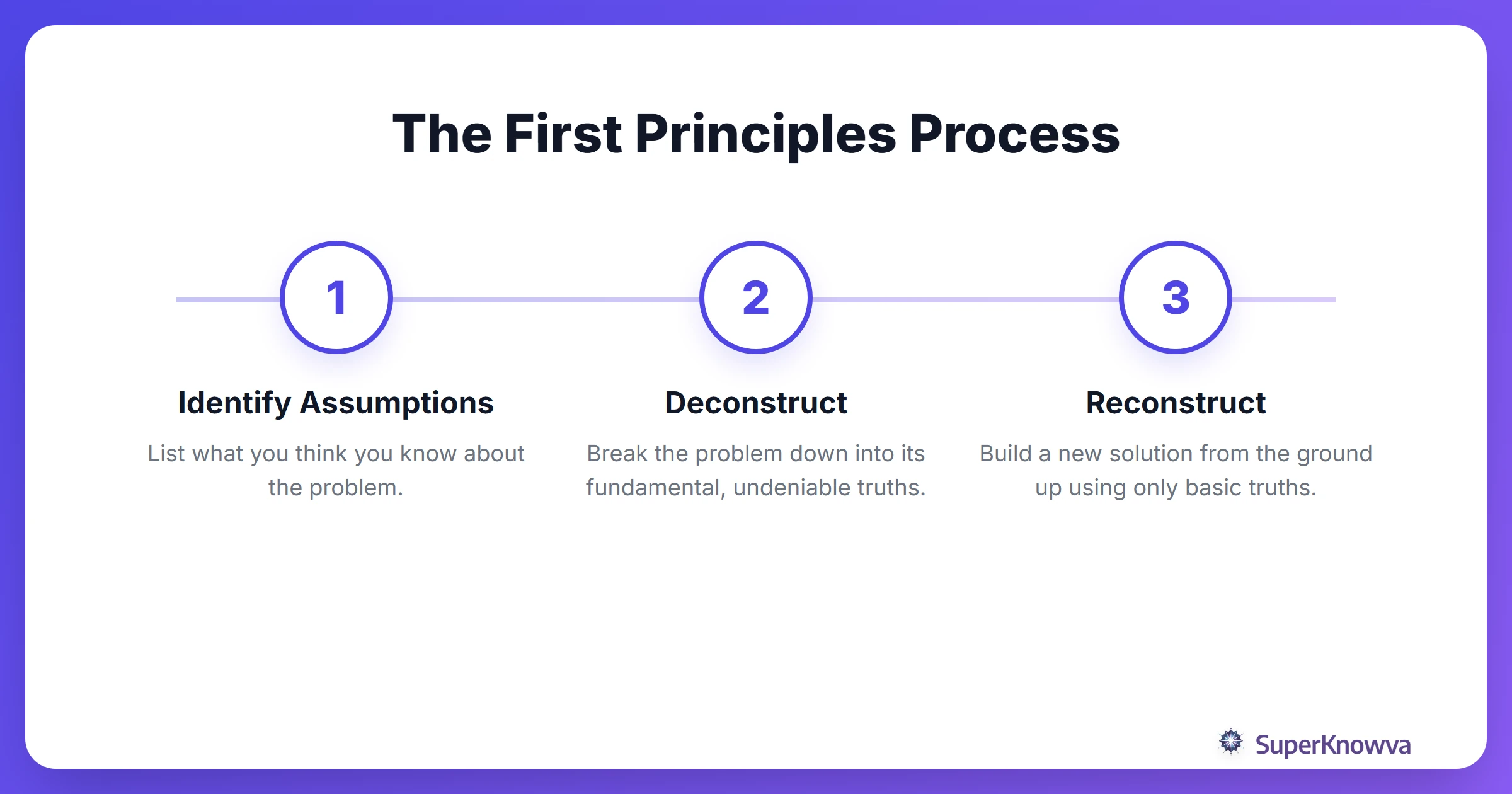
That’s where first principles thinking comes in. This is the practice of hacking a problem down to its fundamental truths. You strip away the assumptions until you’re left with the basic building blocks.
- In Physics: Stop trying to memorize every variation of a formula. Return to the laws of thermodynamics or motion. If you understand the "why," you can derive the "how" on the fly.
- In Biology: Instead of viewing the Krebs cycle as a list of names to memorize, look at the core requirement: how does a cell move energy from point A to point B?
Want to know if you’ve actually mastered a first principle? Try The Feynman Technique. If you can’t explain the core concept to a ten-year-old, you don't own the concept yet. As James Clear notes on Feynman's Mental Models, the ability to simplify is the ultimate proof of mastery.
Second-Order Thinking: Seeing the "And Then What?"
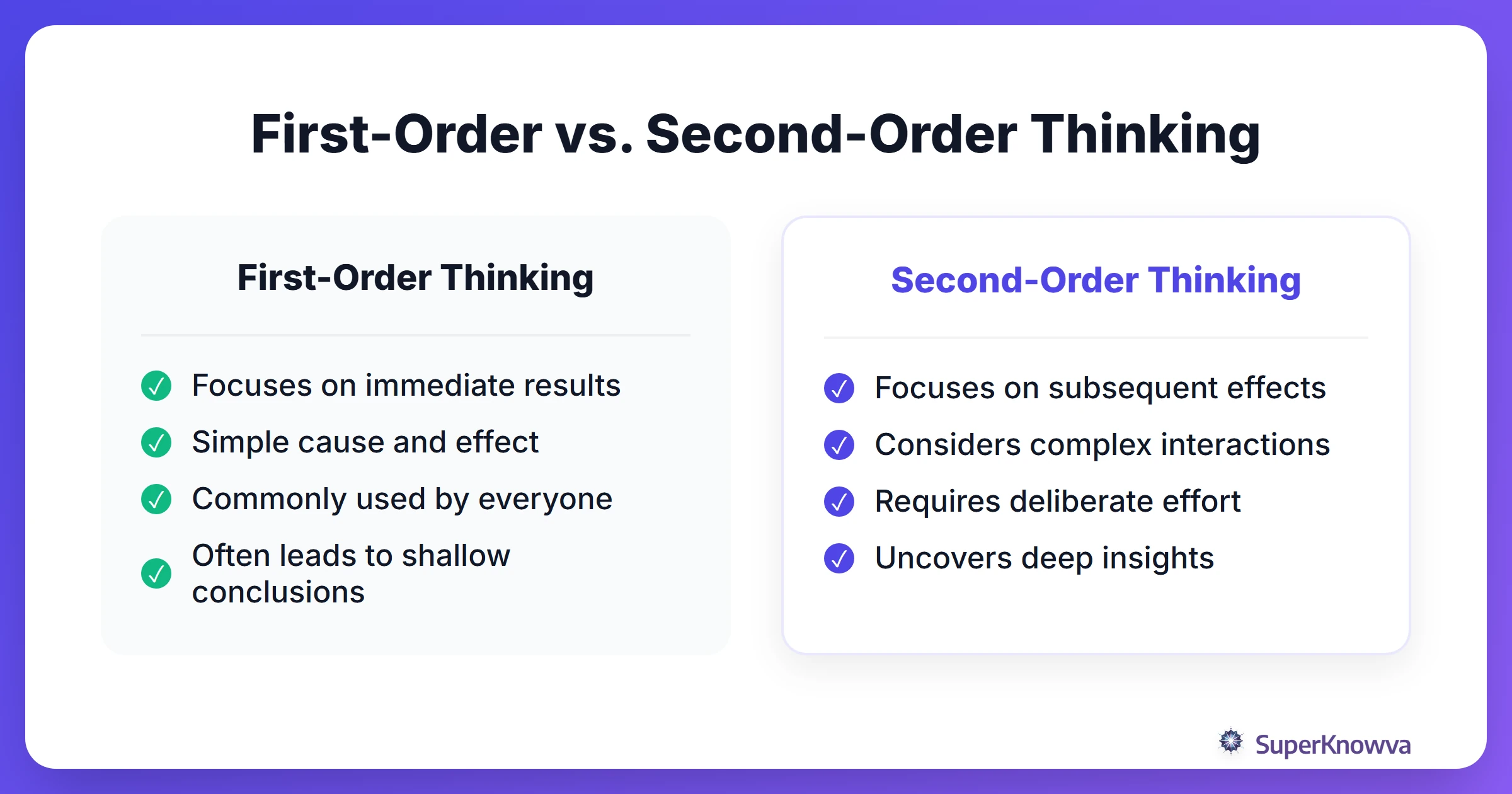
In the social sciences and ethics, things are rarely a straight line. Second-order thinking is the ability to look past the immediate result of an action and anticipate the ripple effects.
Analyzing a new economic policy in a macroeconomics essay:
- First-order thinking: "Lowering interest rates makes borrowing cheaper, which sparks spending." (This is where most students stop).
- Second-order thinking: "Increased spending could trigger inflation, which might eventually kill purchasing power and force a market correction."
Asking "and then what?" gives you a massive advantage in essays and debates. It allows you to predict unintended consequences that your peers will likely miss. Of course, thinking this deeply isn't easy. It requires the kind of focus you can only get through Deep Work for Students.
The Inversion Principle: Planning for Failure to Ensure Success
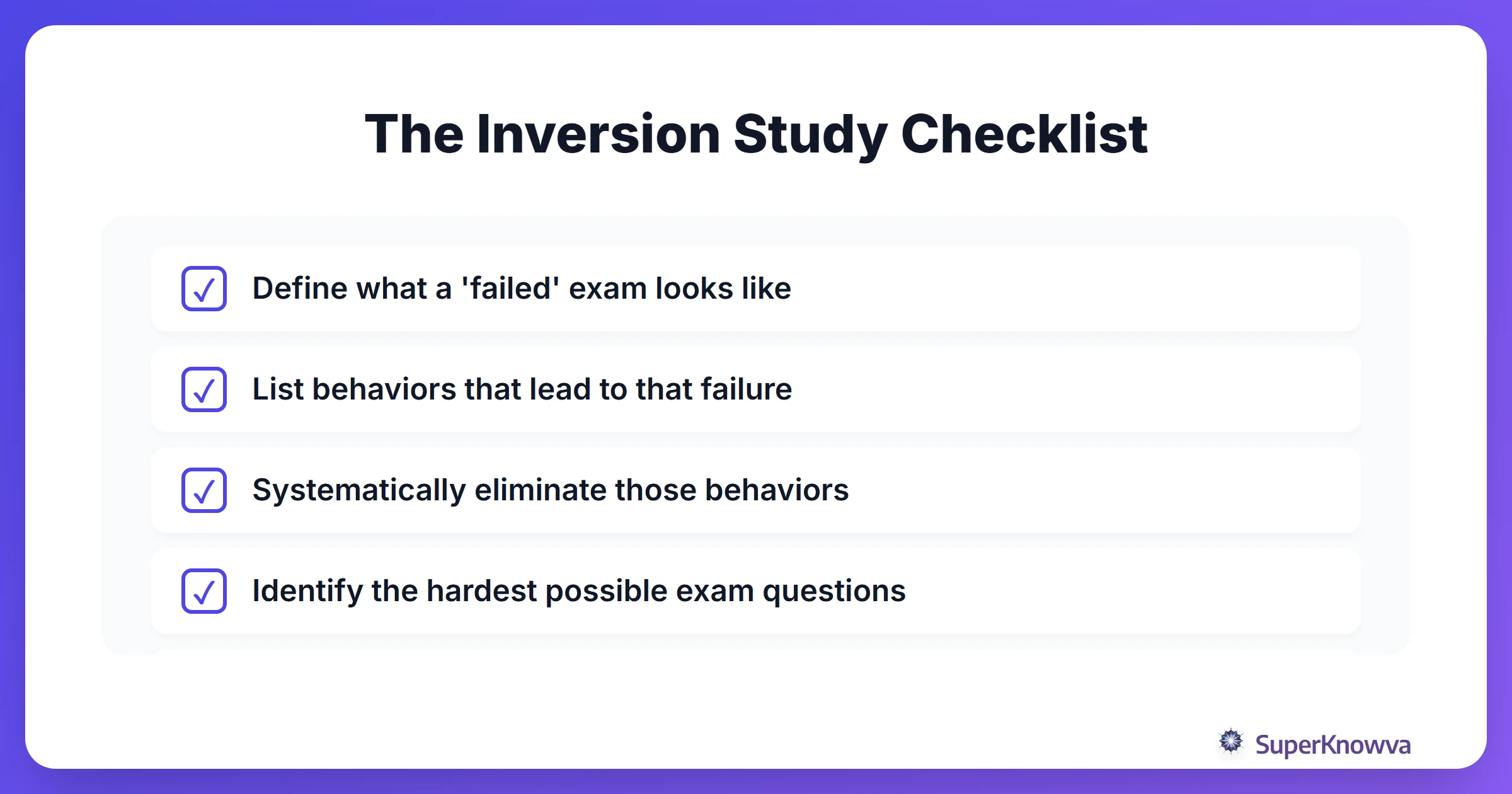
Most students ask, "How can I get an A?" The Inversion Principle suggests you should ask the opposite: "What would guarantee I fail this exam?"
The mathematician Carl Jacobi said, "Invert, always invert." By identifying the behaviors that lead to academic disaster, such as 3 AM cramming, skipping practice tests, or keeping your phone on your desk, you can eliminate them.
Try a "pre-mortem" before your next big final. Imagine it’s the day after the test and you totally bombed it. Why did it happen? Did you run out of time? Did you misread the essay prompt? By spotting these failure points now, you can build a study plan that is essentially bulletproof.
Occam’s Razor: Don’t Overcomplicate It
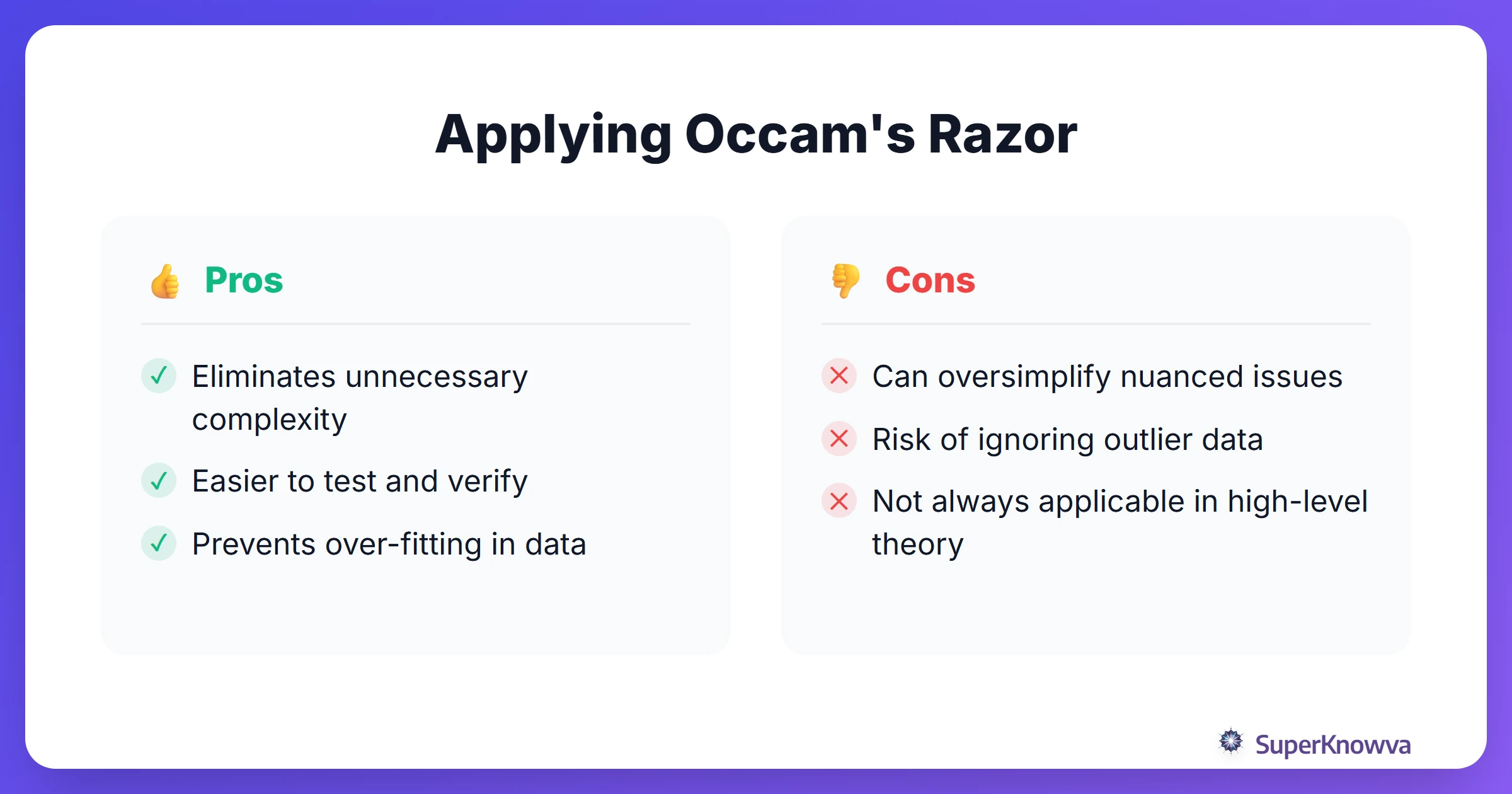
When you’re deep in data analysis or a complex hypothesis, it’s easy to get lost in the weeds. Occam’s Razor is a simple rule: among competing explanations, the simplest one is usually the right one.
In your revision, use Occam’s Razor to:
- Cut the Fluff: If you can explain a theory in one sentence, don't use a paragraph.
- Evaluate Arguments: In research papers, don't reach for a convoluted theory when a straightforward explanation fits the data better.
Just remember: don't confuse "simple" with "simplistic." Nuance still matters, but don't go looking for ghosts in the machine if the answer is staring you in the face.

Building Your Latticework: Making it Stick
The real magic happens when you stack these models together. For a single final, you might use First Principles to grasp the science, Second-Order Thinking to argue its impact, and Inversion to make sure your study schedule doesn't fall apart.
How do you make these frameworks part of your daily routine?
- Keep a Digital Vault: Don't let these ideas float away. Start Building a Second Brain to store and organize your mental models.
- Map it Out: Use Mind Mapping 101 to visually connect different models to your course topics.
- Apply, Don't Just Read: These are tools, not trivia. Use them on your next practice exam.
If you want to go even deeper into the world of cognitive frameworks, check out the gold standard at Farnam Street: The Great Mental Models.
Moving from rote memorization to high-level thinking is a major advantage. You aren't just studying for a final; you're building skills that will last long after graduation. Give these models a try. Your brain and your GPA will benefit.