How’s your 2026 looking so far? Honestly.
We recently set New Year’s resolutions, and now we have reached the halfway point. While many students use July to sleep in and switch off, focused students recognize July as a buffer zone. This quiet period is the time to stop and perform a mid-year academic audit to ensure you are on track to reach your goals.
By taking a beat to reflect now, you can walk into the Fall 2026 semester with a strategy that actually works, habits that stick, and a lot less Sunday-night anxiety.
Why July is the Perfect Time for an Academic Audit
The academic calendar 2026 is moving faster than most of us expected. July offers a unique vantage point: you finally have enough data from the first half of the year to see your patterns, but you still have enough time before the Fall rush to fix them.
A mid-year academic audit acts as a preventative strike against the "mid-degree slump." It involves catching tiny, unnoticed habits, such as "I'll just check TikTok for five minutes" moments, before they turn into a GPA crisis in October. This proactive approach is a powerful academic success strategy because it replaces chaotic "firefighting" with a structured plan.
Step 1: The Grade and Goal Reflection
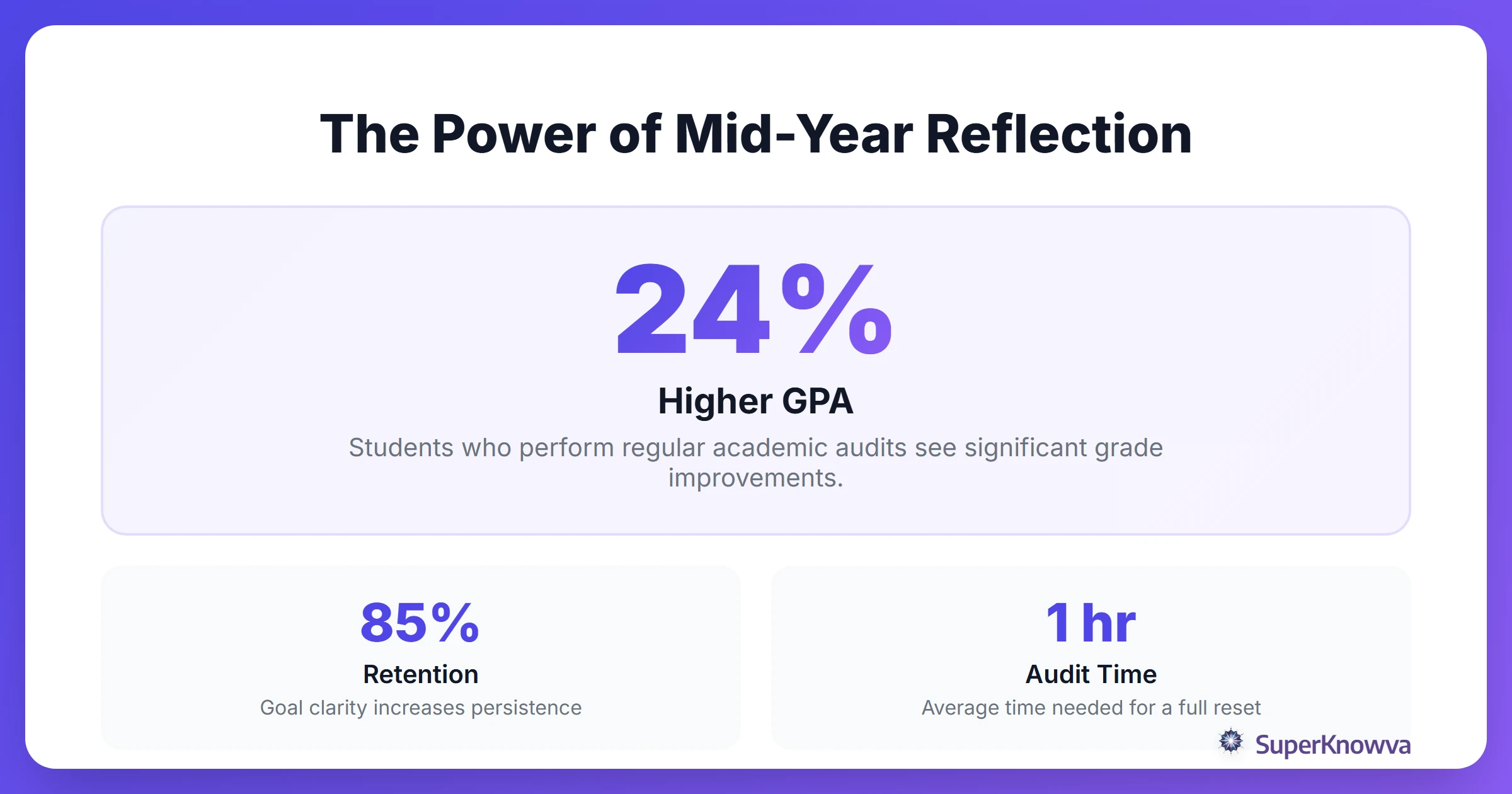
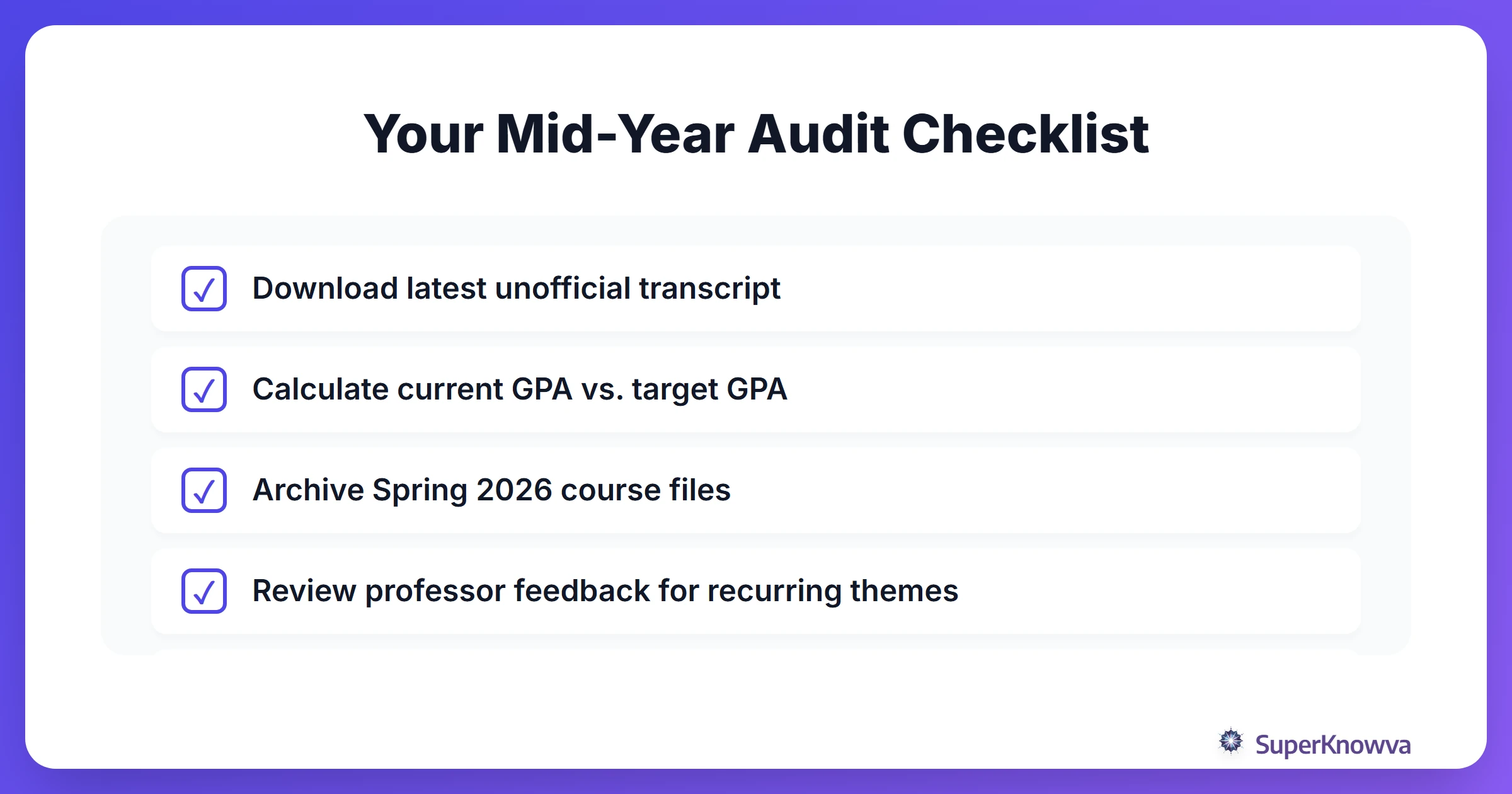
You can’t know where you’re going if you’re ignoring where you’ve been. Dig out those unofficial transcripts and look at the feedback from your Spring professors.
Be real with yourself: How does that GPA look compared to the goals you set in January? If you hit your marks, take the win! Celebrate it. But if the results were... underwhelming? Don't spiral. Use that data as a diagnostic tool, not a reason to beat yourself up. If your audit shows a dip, it’s just a signal to pivot. Take a look at how to recover from a failed exam to learn how to turn those setbacks into a comeback for the second half of the year.
Step 2: The Digital and Physical Cleanup
(Note: We’re jumping to the environment first because it’s hard to fix your head if your desk is a disaster!)
Your environment dictates your focus. If your desktop is covered in random screenshots and your desk is buried under Spring semester handouts, your brain is already tired before you start. Start by archiving. Move those old PDFs and assignments into a "Past Semesters" folder. Out of sight, out of mind.
Next, look at your study space. Is it actually helping you do deep work, or is it just a place where you scroll on your phone? Finally, refresh your "tech stack." Whether it’s updating your OS or hunting down the best study apps for 2026, make sure your digital tools are pulling their weight.
Step 3: Evaluating Your Study Systems
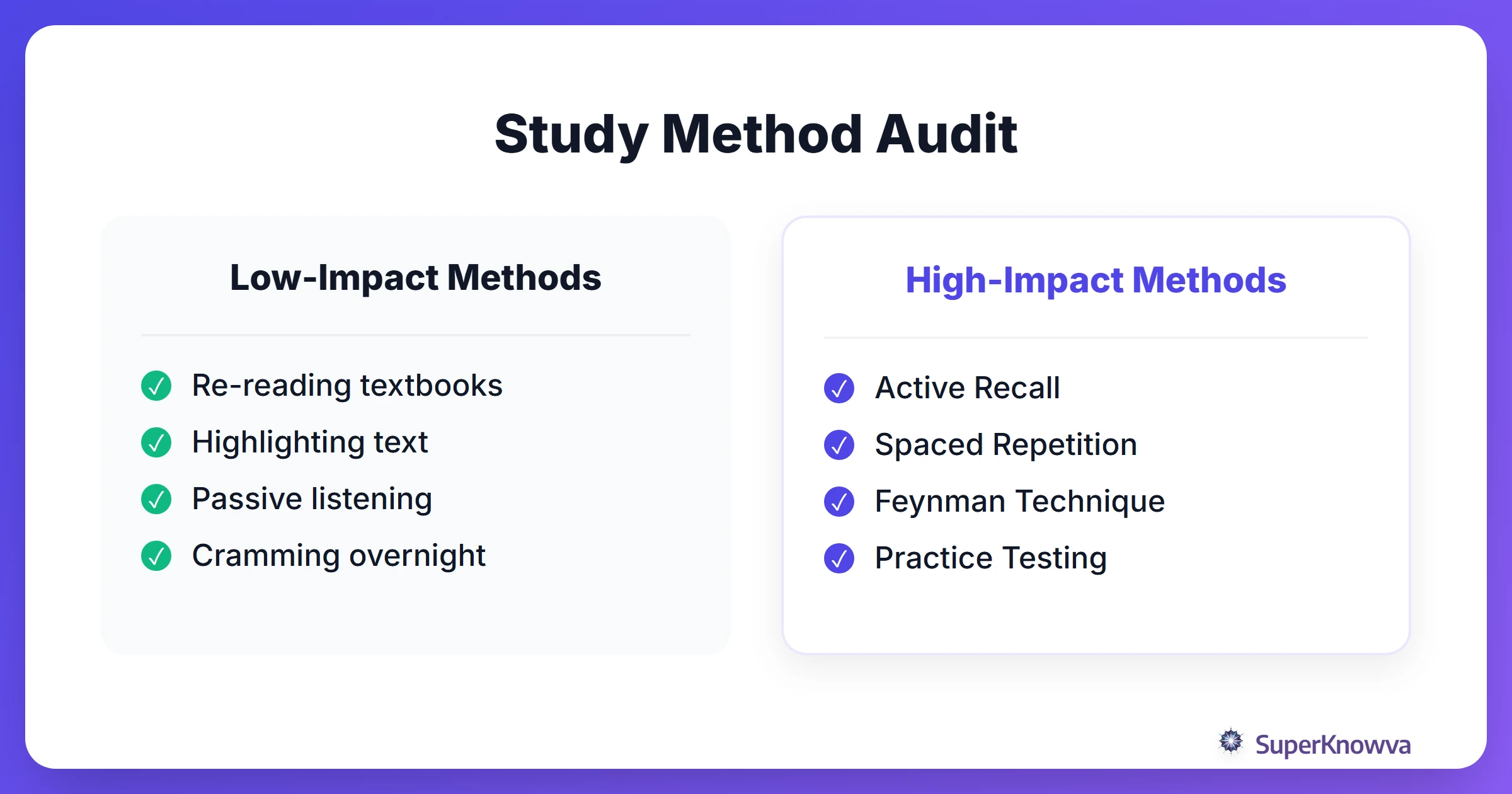
Let’s talk about ROI (Return on Investment). Not for money, but for your time. A huge part of a study habit evaluation is figuring out which habits are actually effective and which are just "performative studying."
Did the Pomodoro technique actually keep you focused, or did the timers just annoy you? Did you use Active Recall, or did you spend three hours highlighting a textbook only to forget everything the next day? Identify your time-wasters now. If procrastination was your biggest enemy this Spring, it’s time to try the 5-minute rule for students.
Mapping Out the Fall 2026 Calendar
The second half of the year is usually a sprint. If you aren't looking at the hurdles now, you’re going to trip. Fall 2026 registration is likely already live or closing soon, and missing a deadline is the fastest way to mess up your graduation timeline.
Check your university’s registrar for the "big" dates. For example, Florida Atlantic University provides detailed calendars for registration and drop dates. Even if you aren't there, most schools follow a standard formula, like the one outlined by the Case Western Reserve University Registrar. Build a master calendar today. Sync your personal life, including internships, trips, and birthdays, with these mandatory academic dates.
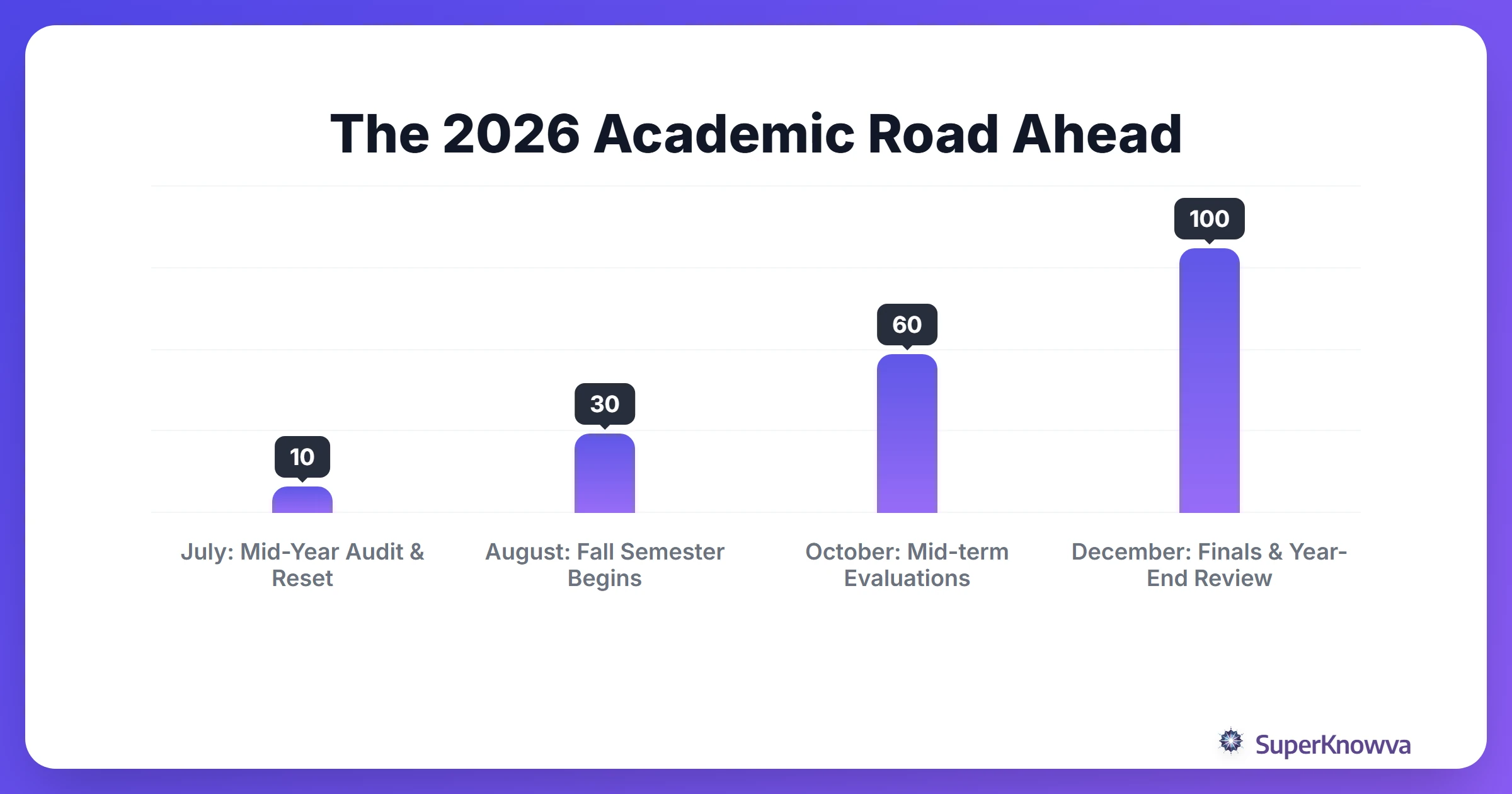
Setting New KPIs for Semester Success
The final step of your audit is student goal setting for the next six months. But let's ditch the vague "I want to do better" resolutions. You need Key Performance Indicators (KPIs). Try these on for size:
- Maintain a study streak of at least 4 days per week.
- Show up to professor office hours twice a month (even just to say hi).
- Finish all practice exams 72 hours before the real deal.
Find a way to stay accountable: a group chat, a habit tracker, or a study buddy. The goal of an audit isn't just to get straight A's; it's about learning to balance your GPA with a social life. If you're exhausted, you aren't winning.
By running this mid-year academic audit in July, you gain a head start. You are not just reacting to the semester; you are planning your progress in advance. Take the rest of the month to reset and recharge. We will see you in the Fall, ready to reach your 2026 goals.