Summer is finally here. You’ve probably already got the beach gear packed and the "out-of-office" vibe going. For most students, the nagging voice in the back of your head about "staying ahead" never really goes away.
Setting summer learning goals for students doesn't have to mean trading your tan for a library cubicle. It’s about finding that sweet spot where you keep your brain sharp without hitting a wall before September even arrives. Whether you’re trying to finally wrap your head around a new language or you're eyeing next year’s Calculus syllabus with a bit of dread, the secret is all in the planning.
In this guide, we’re breaking down how to handle summer academic planning so you can walk back into class in August feeling like a pro, not a zombie.
The Importance of Summer Learning: Beyond the 'Summer Slide'
We’ve all heard the horror stories of the "summer slide." It’s that annoying phenomenon where the math formulas and Spanish conjugations you spent months mastering just... evaporate over break. It’s a real issue, especially in subjects that build on themselves like blocks.
But summer isn’t just about preventing learning loss. It is the perfect time to make progress. According to the Learning Policy Institute, high-quality summer programs are essential for student recovery, often giving math and reading scores a significant boost.
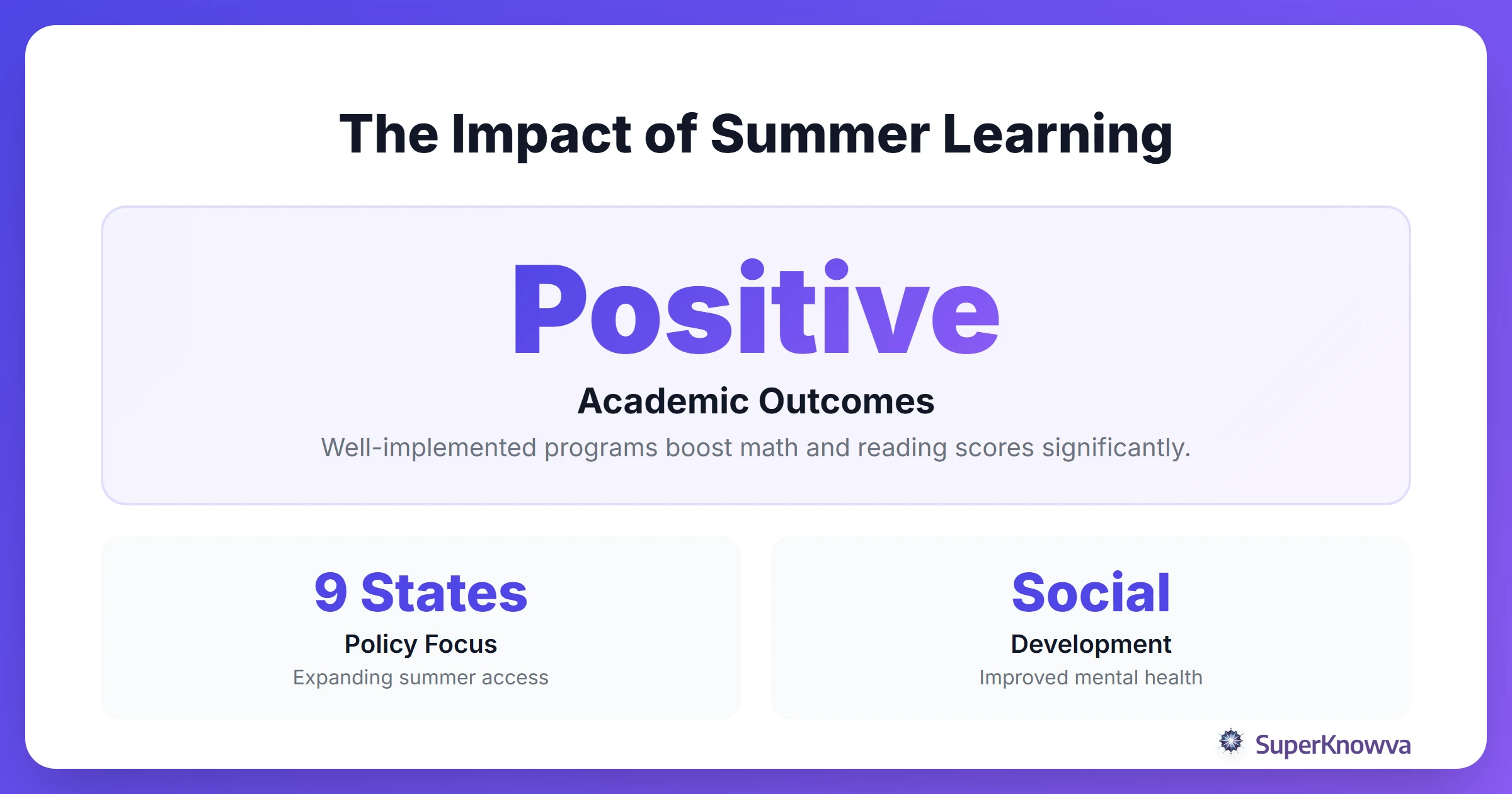
A lot of schools are leaning into this with programs like Summer EXCEL Tracks to help students stay level. When you’re mapping out your own months off, try splitting your goals into two buckets: maintenance goals (keeping what you already know) and advancement goals (learning the new stuff).
The SMART Framework for Summer Success
The biggest trap for students is being too vague. "I want to get better at math" is a wish, not a goal. To see results, you need a framework for accountability. SMART goals provide this structure:
- Specific: What exactly are you learning? (e.g., "The first three chapters of Bio").
- Measurable: How do you know you’re done? (e.g., "I passed the practice quiz").
- Achievable: Be honest. Are you really going to study during that week at the lake?
- Relevant: Does this actually help your long-term path?
- Time-bound: Give yourself a deadline. August 1st is usually a good cutoff.
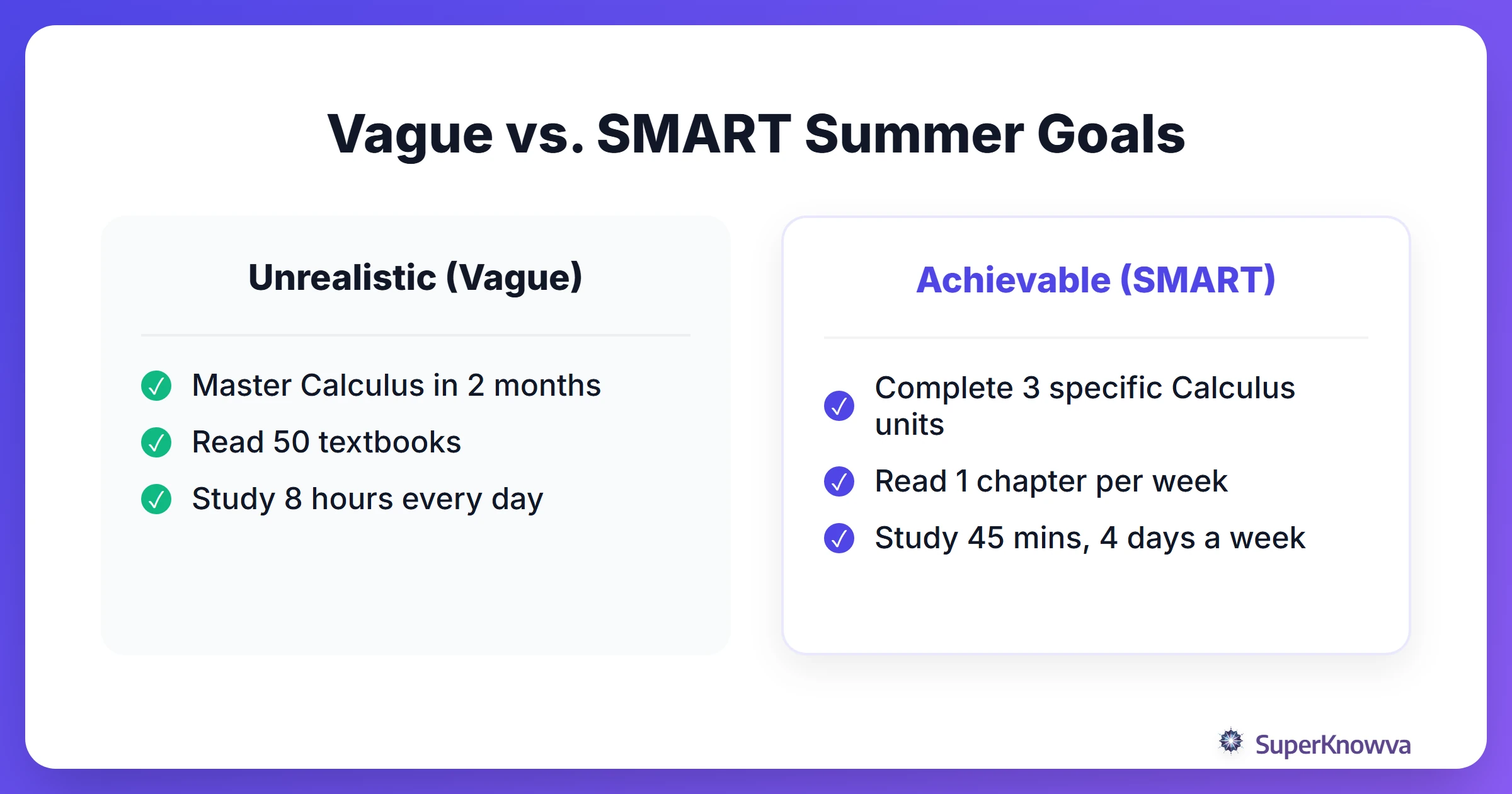
Try doing a quick audit of your week. Look for "study pockets": those 30-to-45-minute windows between coming home from the pool and heading out for dinner. To keep from burning out, pick one major subject to focus on. Don't try to relearn the entire curriculum in eight weeks.
Avoiding the Overcommitment Trap
It’s easy to feel like a superhero in early June. You’ve got all this free time, and you’re convinced you’ll pull eight-hour study sessions every day. Psychologists call this the "Fresh Start Effect." We overestimate how disciplined our "future self" will be. By mid-July, that ambition usually turns into total avoidance.
To keep your student productivity high without the stress, aim for "minimum viable" targets. Tell yourself you’ll just read five pages or solve three problems. If the July heat makes you want to do anything but open a textbook, try the 5-minute rule for students. Usually, the hardest part is just sitting down; once you start, the momentum takes over.
Using AI to Keep You on Track
It’s 2026. You shouldn't have to manually color-code a paper planner unless you really want to. AI study tracking changed how we visualize progress. Platforms like SuperKnowva use your end-of-summer deadline to build a custom curriculum for you.
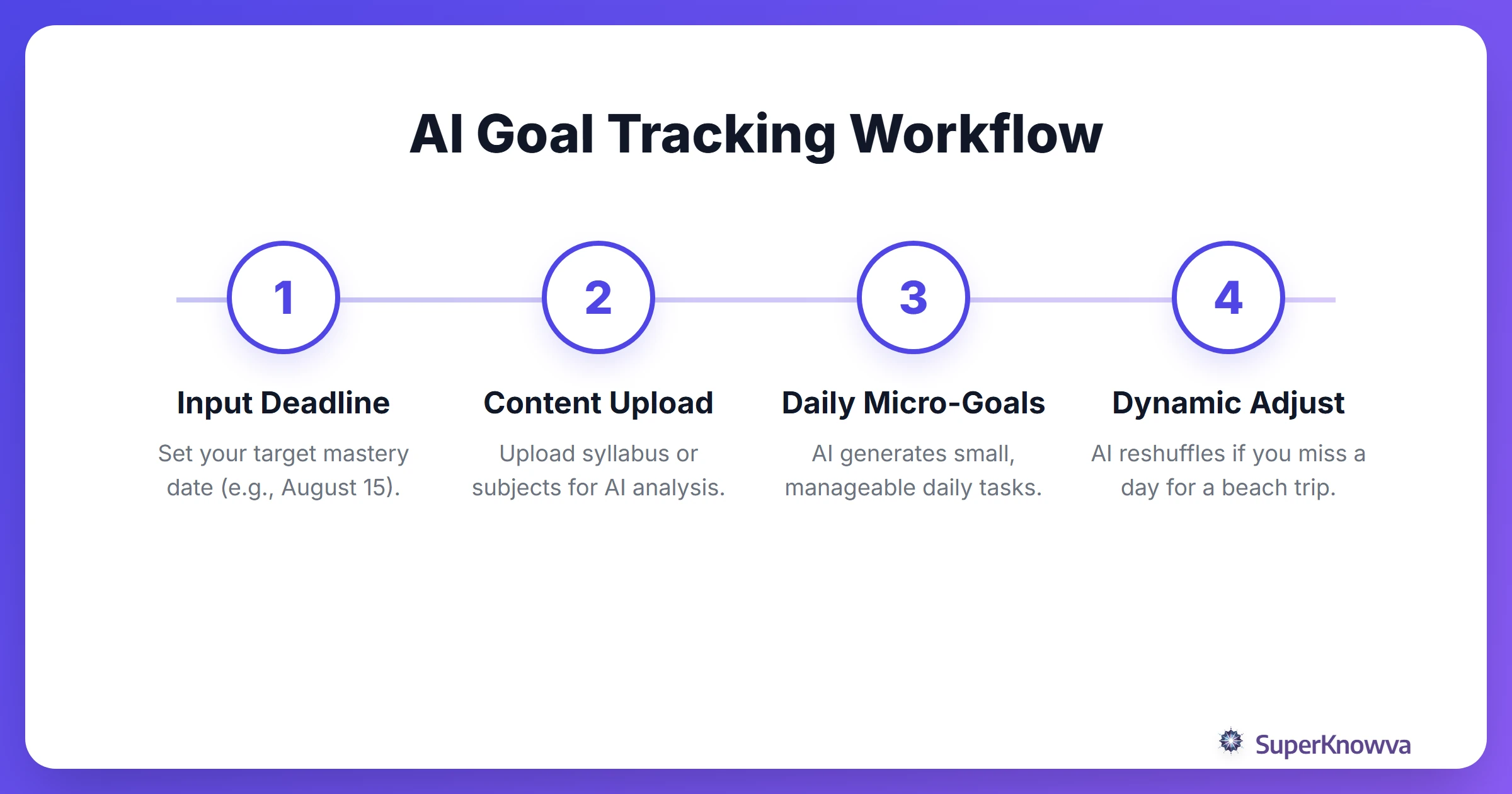
Using AI helps you:
- Automate Spaced Repetition: Make sure the stuff you learned in June actually sticks until August.
- Adjust on the Fly: If a spontaneous road trip happens, the AI reshuffles your schedule so you don’t feel like you’ve "failed."
- Track the Wins: Seeing a visual dashboard of your progress provides that hit of dopamine that keeps you moving.
While you definitely shouldn't spend your whole summer studying, learning how to study for long periods without burning out is a great skill to have in your back pocket for those intensive short-term workshops or certificates.
Balancing Academics with Summer Freedom
Summer is for living. Mastering the art of balancing a high GPA with a social life is the most important lesson you can learn over the break. Your brain actually needs "down time" to process what you’ve learned.
Batching helps manage your schedule. Complete your learning goals between Monday and Thursday to keep your weekends free. You can also work more efficiently by using active recall: test yourself instead of just highlighting a book. This reduces study time and improves retention.
Also, get out of the house! A park bench or a new coffee shop can make the process feel like a summer activity rather than a chore.
Your Summer Learning Toolkit
Ready to turn these ideas into a real plan? You just need the right gear. To stay organized, check out our list of the best study apps for students in 2026. Whether you're a fan of digital dashboards or old-school checklists, consistency is what wins the game.
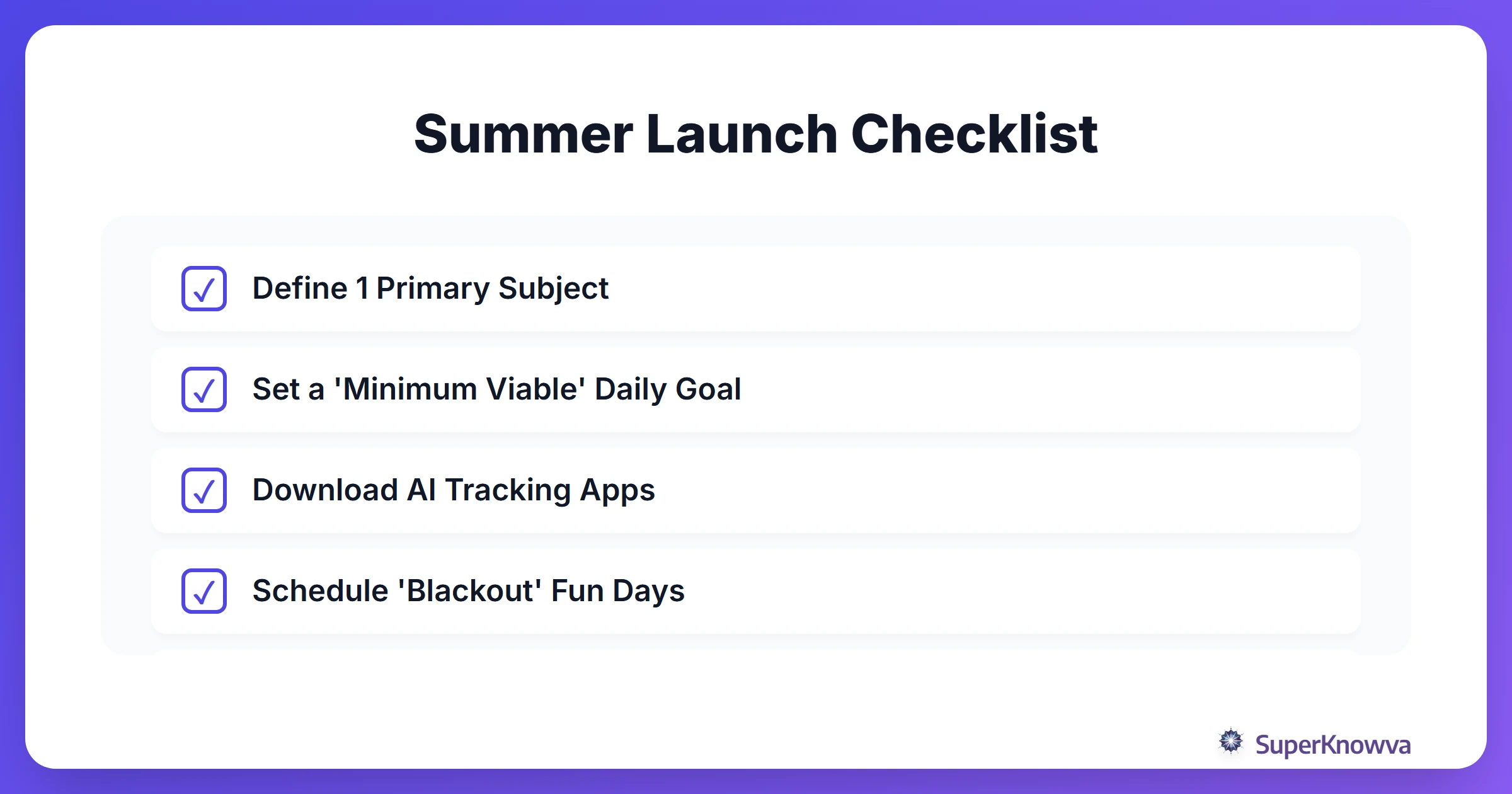
Your Final Launch Checklist:
- Pick 1 Primary Subject: Focus beats scattered effort every time.
- Set a 'Minimum' Daily Goal: Something so easy you can't say no to it.
- Get an AI Tracker: Let the tech handle the scheduling headaches.
- Block Out 'Fun Days': Mark your vacation days in red. No books allowed.
- Change Your Scenery: Find a study spot that doesn't feel like a classroom.
By setting summer learning goals for students that actually fit into a real life, you can enjoy your break and still show up on day one feeling ahead of the curve. Ready to get started? Let SuperKnowva help you map out your smartest summer yet.