The 2026 school year is moving fast, and the pressure to keep up is intense. Whether you are managing AP courses or navigating your first year of university, the difference between struggling and succeeding usually comes down to your plan.
Setting achievable academic goals requires more than wishing for a better GPA. It involves a clear plan to turn large ambitions into daily actions. At SuperKnowva, we believe every student can succeed with the right strategy and tools.
The Psychology of Academic Goal Setting
Why do some students seem to stay motivated while others lose steam by mid-semester? It isn’t just willpower; it’s the psychology of intention.
Without a clear target, your brain lacks a "why" for those late-night study sessions. This makes it incredibly easy to fall into the procrastination trap. Setting a goal is the first step in making the invisible visible.
When you set a goal, you kickstart self-regulated learning. This is just a fancy way of saying you’re taking the wheel of your own education. You stop being a passive recipient of lectures and start actively participating in your own success.
It also helps to know the difference between performance goals and learning goals. Performance goals are all about the outcome (like "I want an A in Chemistry"), while learning goals focus on mastery (like "I want to actually understand the periodic table"). A solid approach to student goal setting uses both. You get the grades you need, but you also retain the knowledge you’re working so hard for.
The SMART Framework for Students
The best way to make sure your targets are realistic is to use SMART academic goals. This framework cuts through the vagueness that usually leads to burnout.
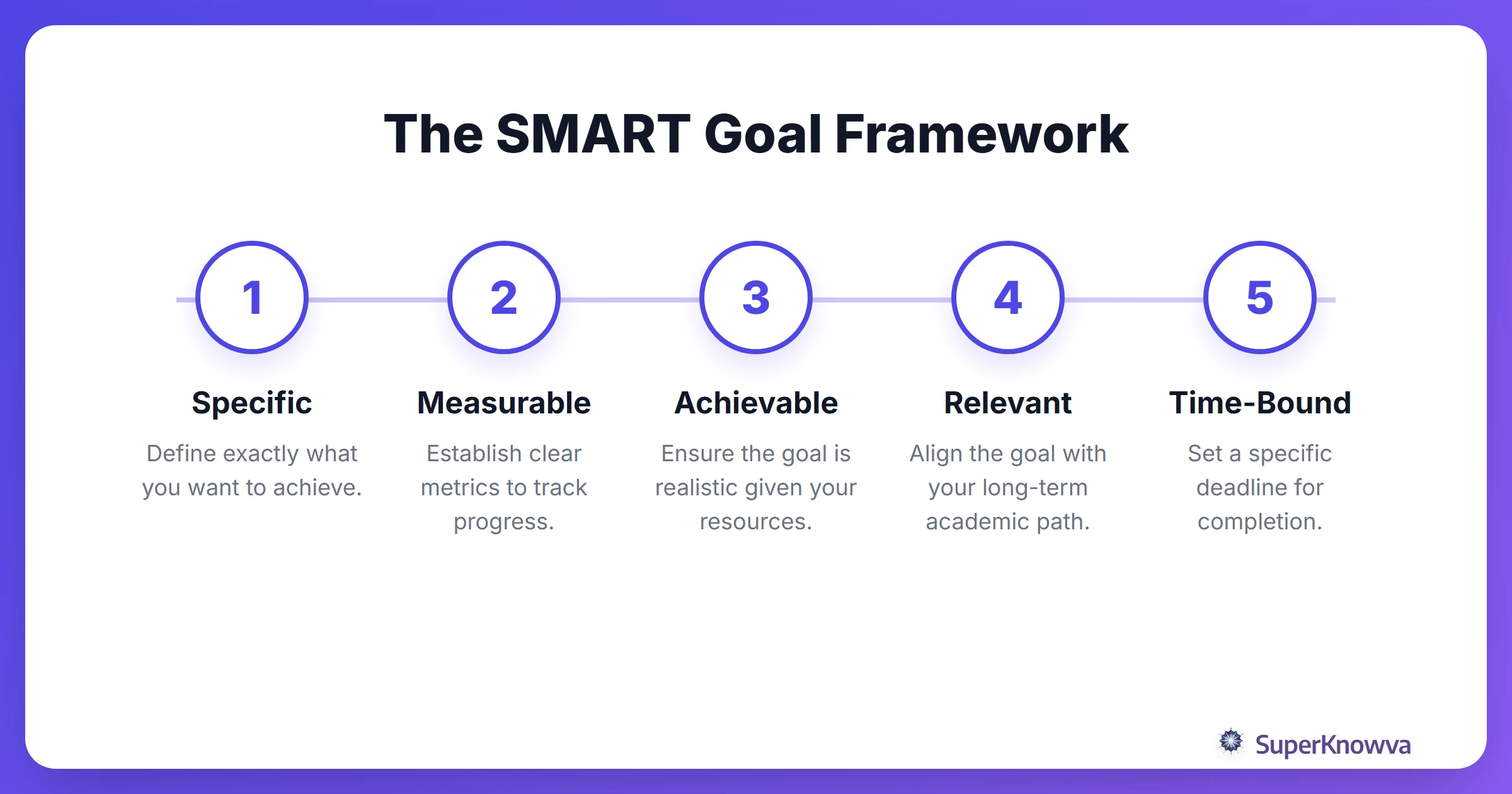
Want to turn a wish like "get better grades" into a concrete plan? Break it down:
- Specific: Instead of "do better in History," try "improve my essay writing scores."
- Measurable: Give yourself a metric, such as "achieve at least an 85% on all upcoming quizzes."
- Achievable: Be honest with yourself. If you’re currently at a 60%, aiming for a 95% by next week is a recipe for stress. Aim for 75% first.
- Relevant: Does this goal actually matter for your long-term path? Ask: "How does mastering this topic help my future career or degree?"
- Time-Bound: Give yourself a deadline. "I will complete my research paper outline by Friday at 5:00 PM."
For a deeper dive into crafting these objectives, check out this How to Write SMART Goals Guide.
Breaking Down Big Goals into Micro-Milestones
Huge goals are intimidating. If you look at a 20-page research paper as one giant task, you’re going to procrastinate. This is where "chunking" saves your sanity. By breaking big objectives into study milestones, you make the work feel doable.
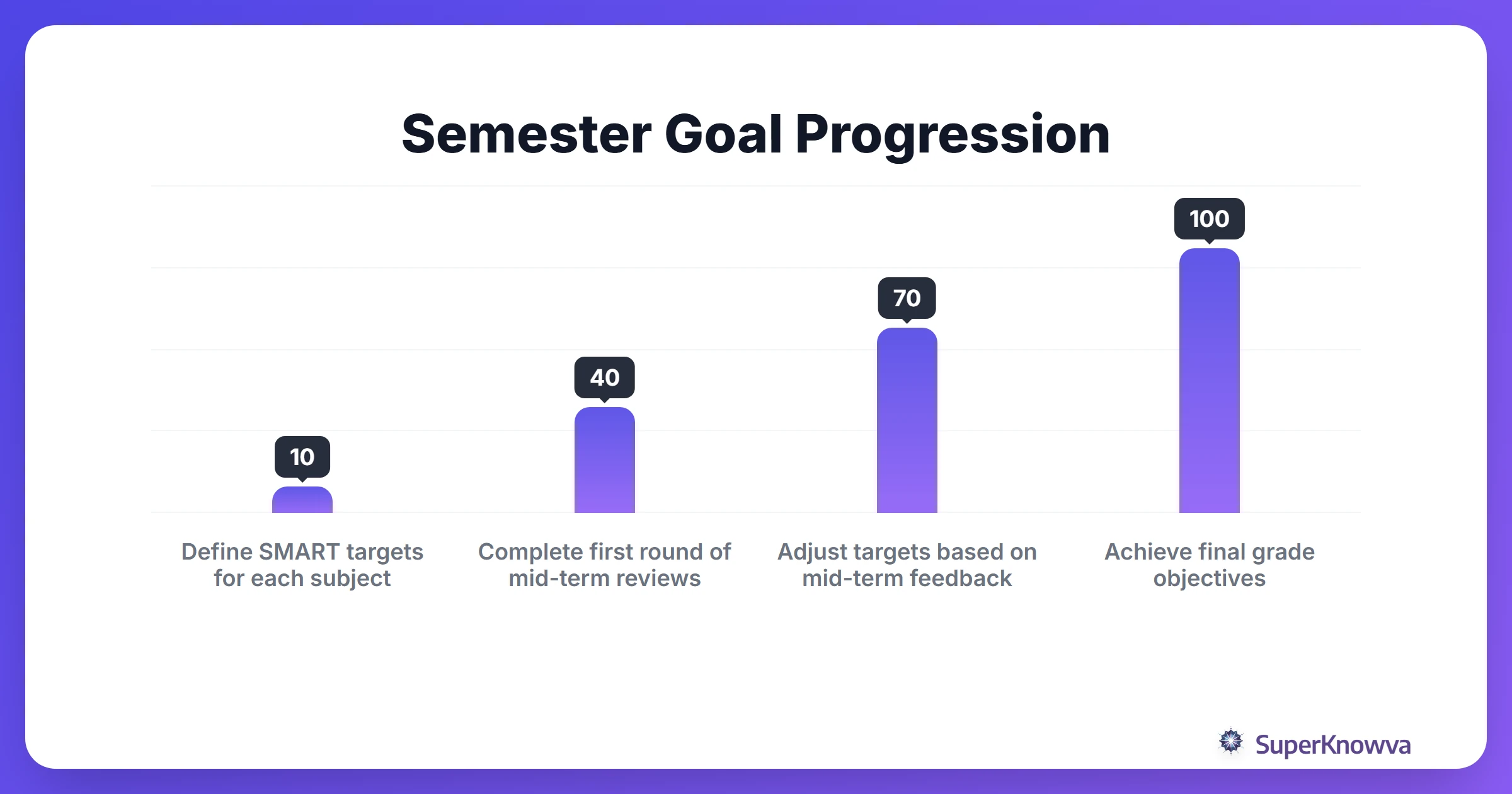
Try creating a weekly study timeline to track your progress in real-time. Instead of a vague goal like "Study for Finals," your timeline should feature micro-milestones like "Summarize Chapter 1 on Monday" or "Complete 20 practice problems on Tuesday."
This approach is how you study for 10 hours without burning out. You’re constantly hitting small wins that keep your confidence high. Mapping out specific sessions for your toughest subjects also ensures you aren't leaving the hardest work for Sunday night when your brain is fried.
Overcoming Common Obstacles to Goal Achievement
Even the best plans hit speed bumps. Identifying "goal-killers" like procrastination and distractions is a huge part of any academic success strategy. If you’re struggling to just start, try how to stop procrastinating: the 5-minute rule to get the ball rolling.
Another hurdle? The "all-or-nothing" mindset. Many students find it hard to balance a high GPA with a social life. The secret is flexibility.
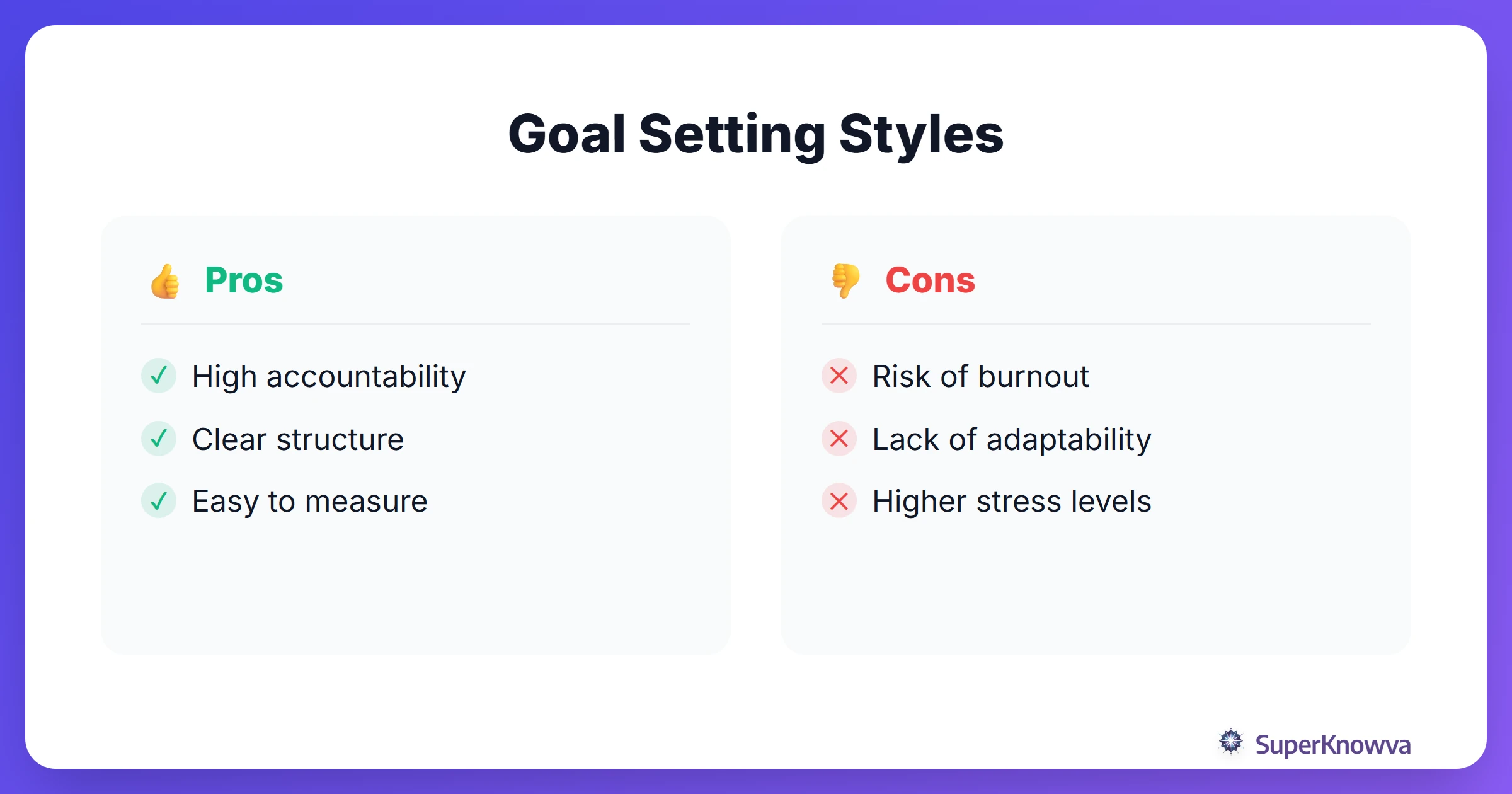
If you miss a milestone, don’t throw the whole plan away. Pivot. If you missed a Tuesday study session because of an unexpected event, just adjust your Wednesday schedule. Flexibility is what leads to long-term success, not perfection.
Leveraging Technology to Track Your Targets
In 2026, you shouldn't be managing your life with just a pen and a prayer. Using the best study apps for students in 2026 can help automate your schedule and keep your deadlines front and center.
AI-driven tools like SuperKnowva take this a step further. Instead of generic study plans, SuperKnowva helps you see exactly where you need to focus based on your actual performance. It lets you visualize your data so you can see your growth over the semester.
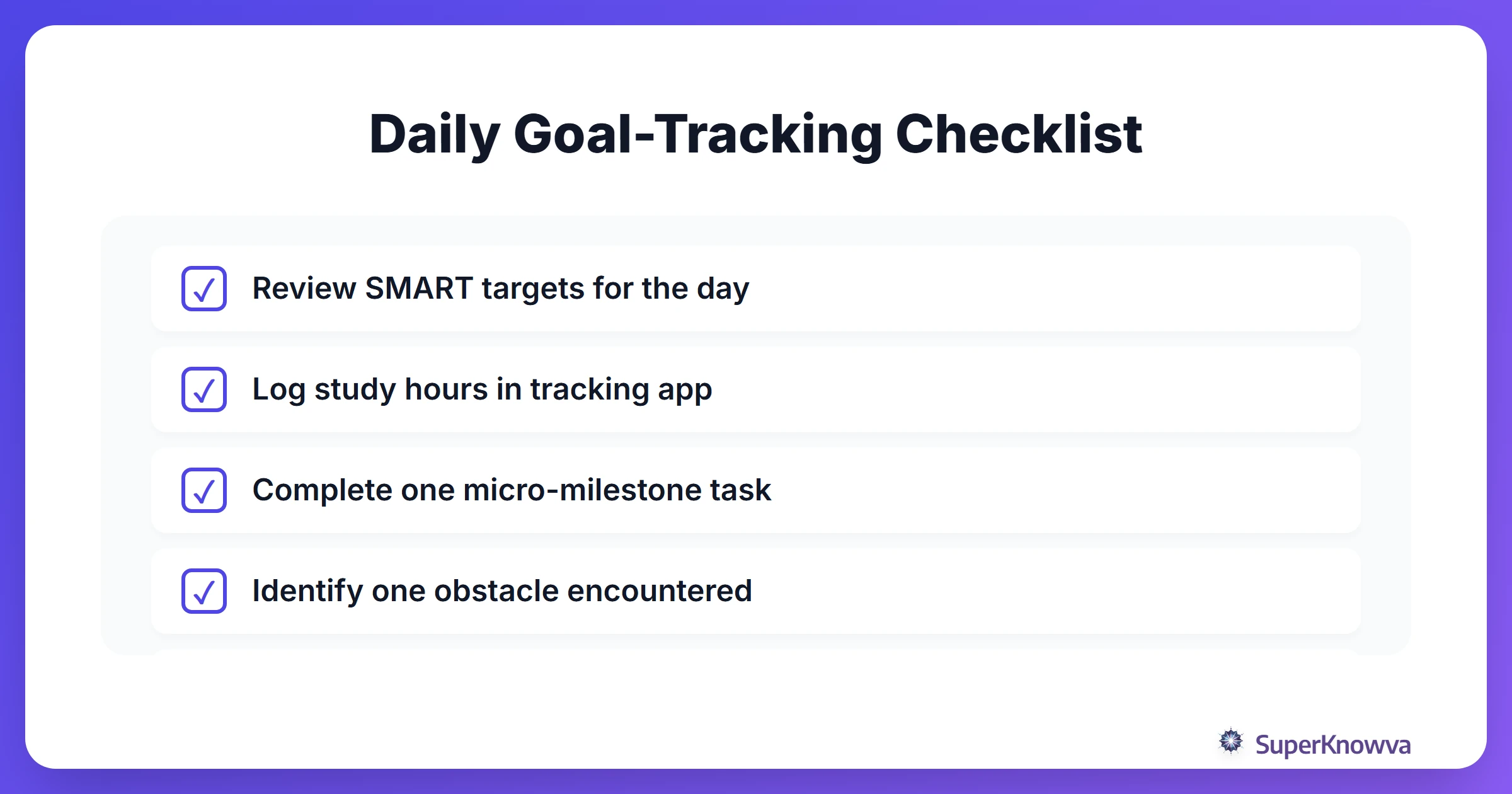
By automating the tracking of your study hours, you can spend less time organizing and more time actually learning.
Reviewing and Adjusting Your Academic Strategy
Goal setting isn't a "one and done" activity. It’s a process. To stay on track, get into the habit of doing weekly and monthly reviews. Ask yourself:
- Did I hit my micro-milestones this week?
- What got in my way?
- Do I need to adjust my targets based on my latest exam feedback?
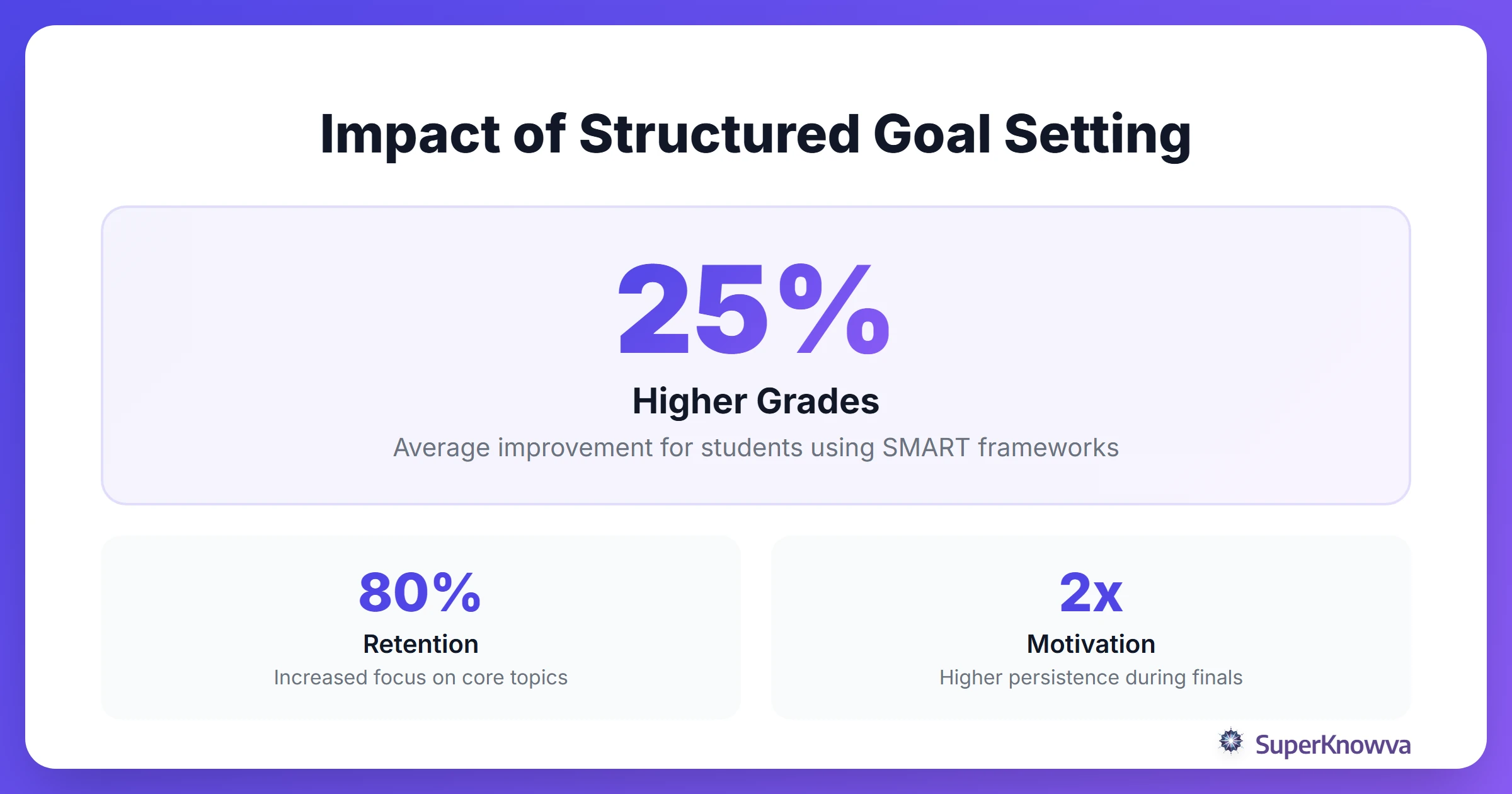
Adjusting your strategy is not a sign of failure; it is a sign that you are an effective learner. For more tips on refining your approach, read these 11 academic goals for online learning success or see how educators are guiding students to set academic goals.
Celebrate small wins. Whether it’s finally finishing a difficult chapter or bumping a quiz grade up by 5%, acknowledging progress keeps you going. Finish the 2026 school year strong.